Every round face has a friend who warns against short hair. You end up in the chair with a photo of a shoulder-length cut that does nothing for you. The trick is not length alone. It is where the shape lands and how the layers break.
33 Beautiful Haircuts for Round Face 2027 fill so many saved boards because they pull one move well: they add angle where your face curves. Pixies, bobs, lobs, long layers. The right cut works with your texture and your morning schedule. The struggle is finding the one that does not add width where you do not want it.
Textured pixie shag with side-swept bangs
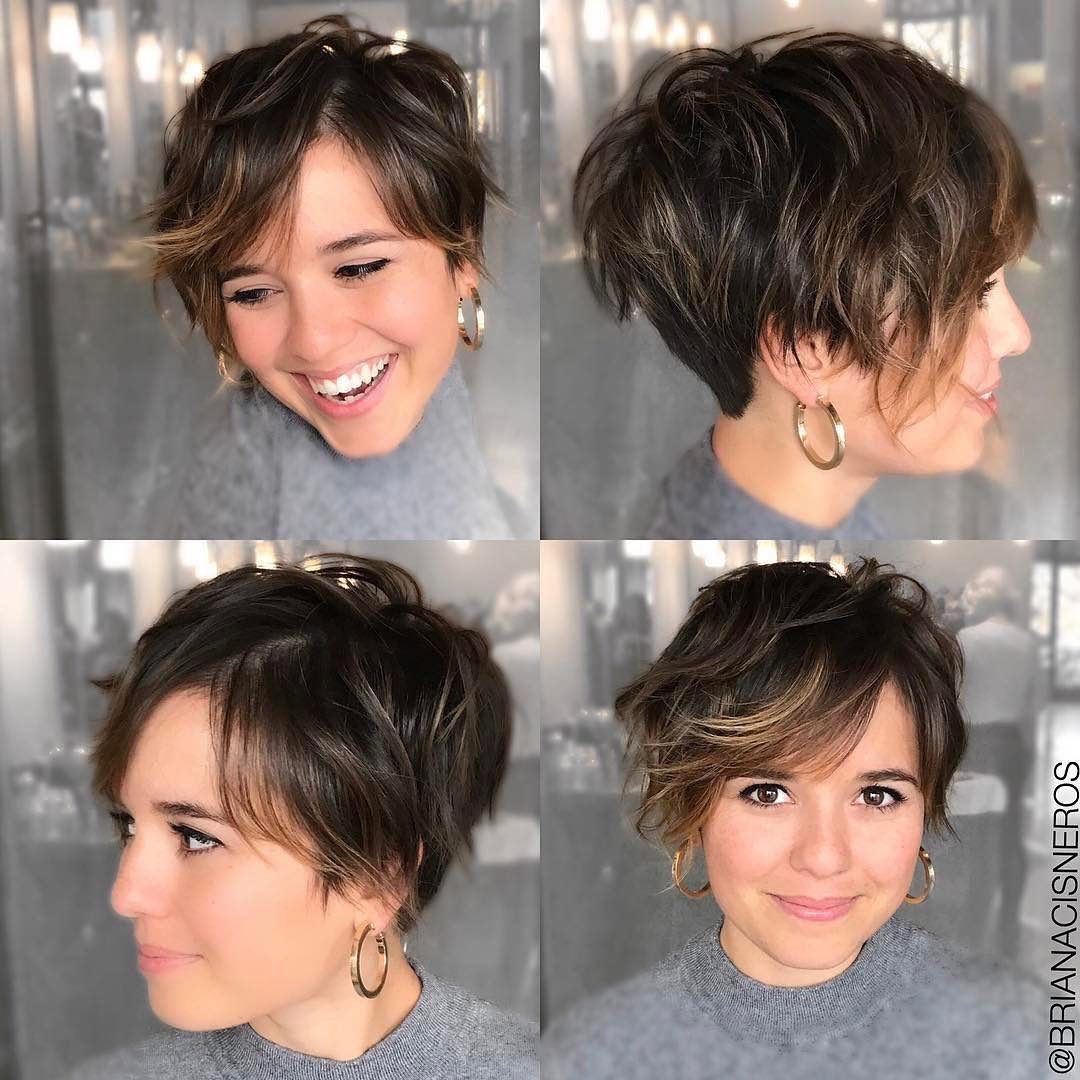
Side-swept bangs hit the sweet spot between soft and sharp. The pixie shag keeps the weight off the sides, which is the whole point for a round face. Wavy, fine texture works best here because the shag needs some grip to hold its shape. Skip it if your hair is very thick and dense. That much volume can push the silhouette wider than you want. Ask your stylist for a textured pixie shag with face-framing volume. A texturizing paste or spray keeps the tousled finish alive for about three days.
A bolder lilac pixie with choppy layers
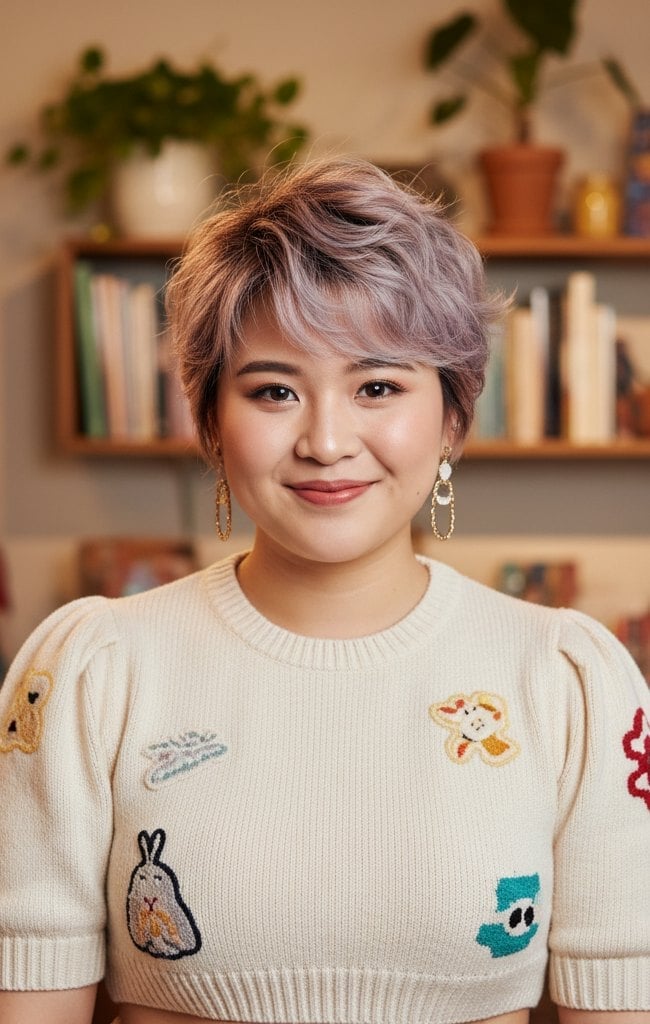
This pixie has a bolder attitude than the previous one. It has no bangs, just choppy layers that stack and leave the hairline bare. Fine, wavy hair carries the lilac tone cleanly because the texture catches the color evenly. This color requires maintenance. That darker root grows in fast and the tone fades by week four. A dry texturizing spray adds the separation the layers need.
Dark brown pixie with textured layers
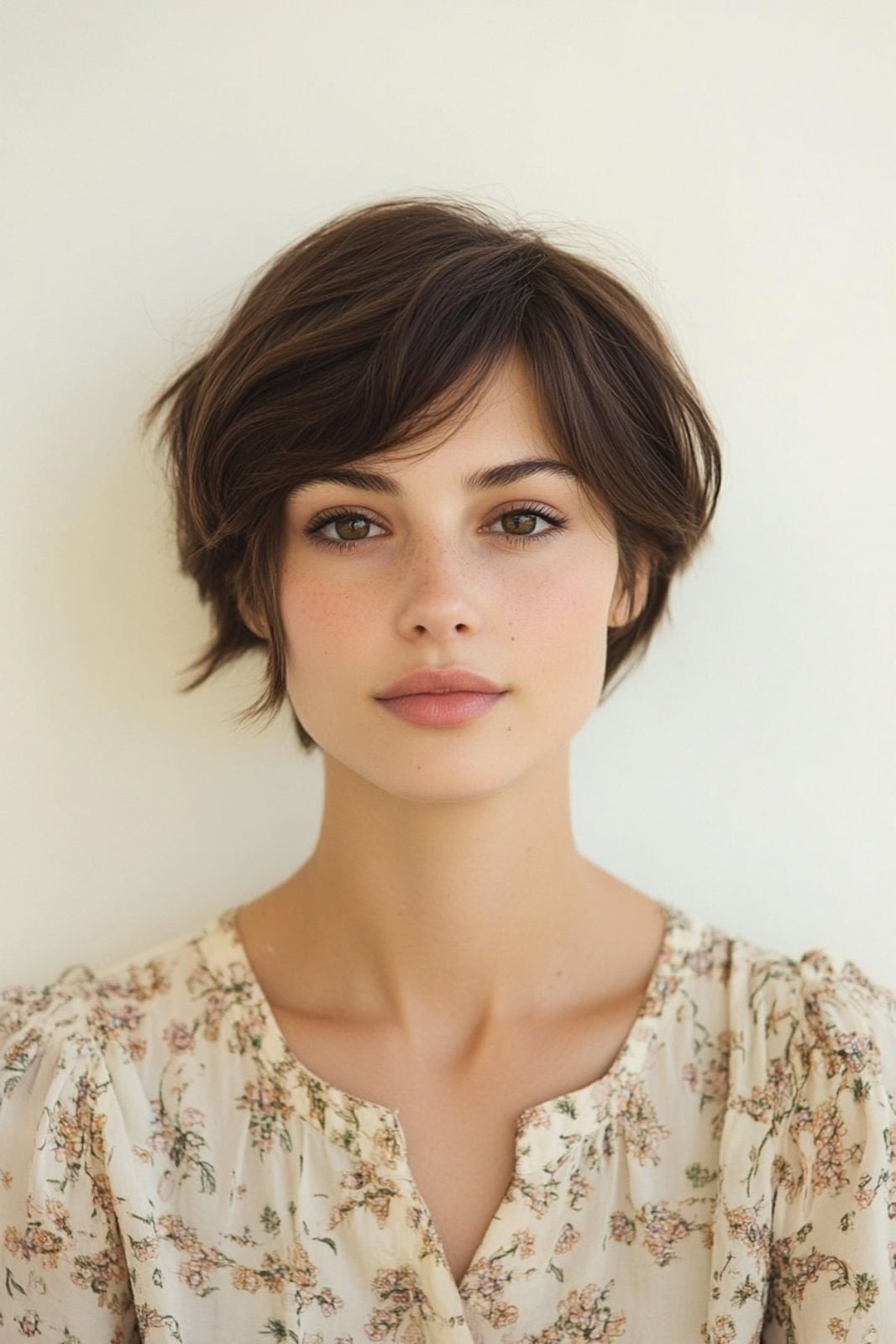
How do you actually describe this to a stylist without getting a standard pixie? Start with the side-swept bangs and the textured layers that break up the line around the jaw. Dark brown keeps it subtle, so the cut does the work instead of the color. Fine, wavy texture air-dries into the right amount of bend here. Pass when you need a pixie that holds a sleek finish. This one wants a little grit. Ask your stylist for a textured pixie with soft, side-swept bangs. A light texturizing cream keeps the layers defined without crunch.
Sleek, blunt bob with side-swept bangs
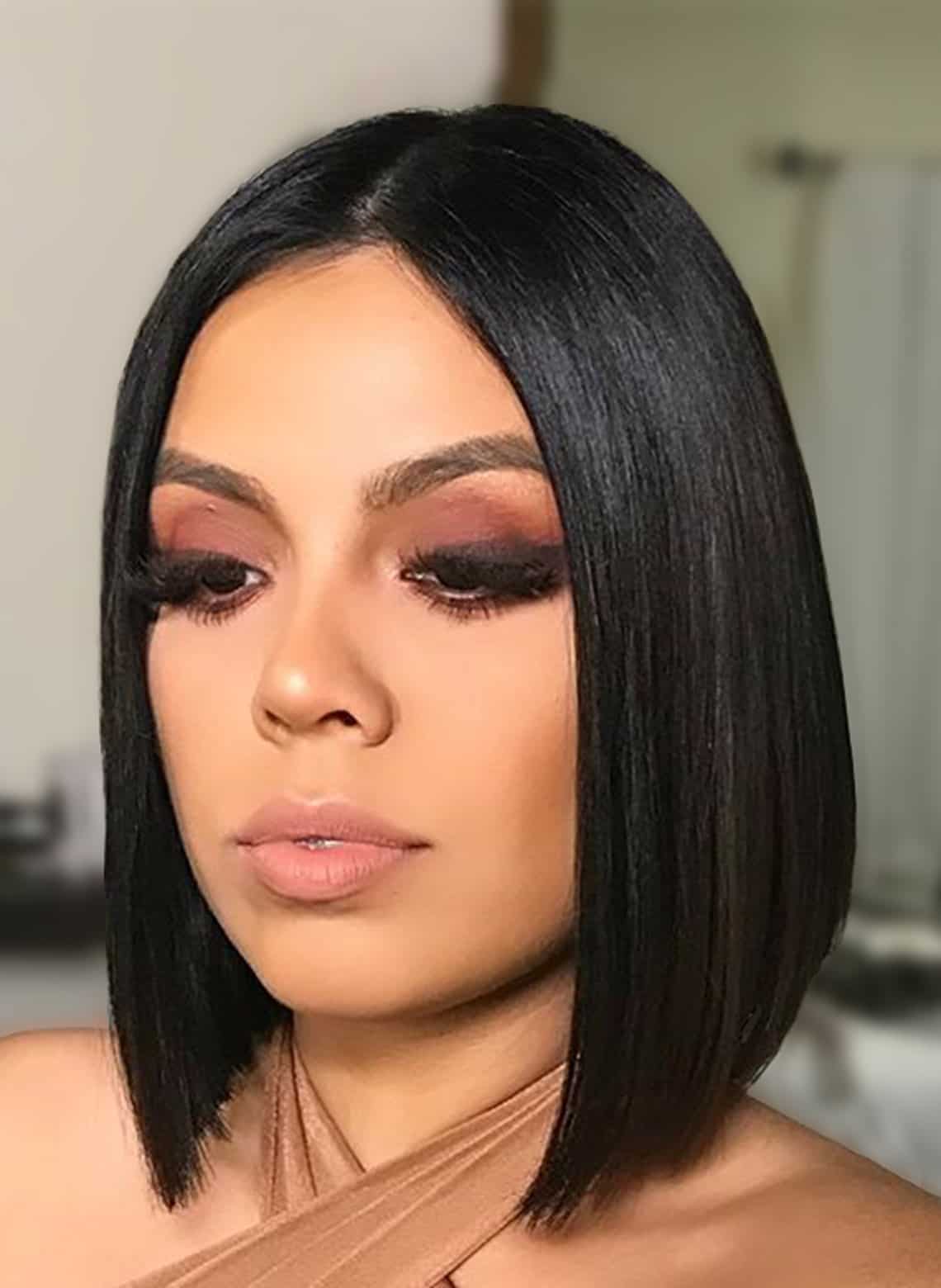
Sharp, straight ends do not soften a round face. They contrast it, which is a different strategy. The middle part and blunt line at the jaw create a clean rectangle that sits underneath the roundness. Straight, fine hair is required here; any wave breaks the precision. The side-swept bangs are subtle, just enough to break the horizontal line. Skip it if you have thick or curly hair that will push the blunt ends outward. Book it as a blunt bob with precise straight ends and subtle side-swept bangs. Expect to style it daily to keep that sharp edge.
Layered bob with angled layers and side-swept bangs
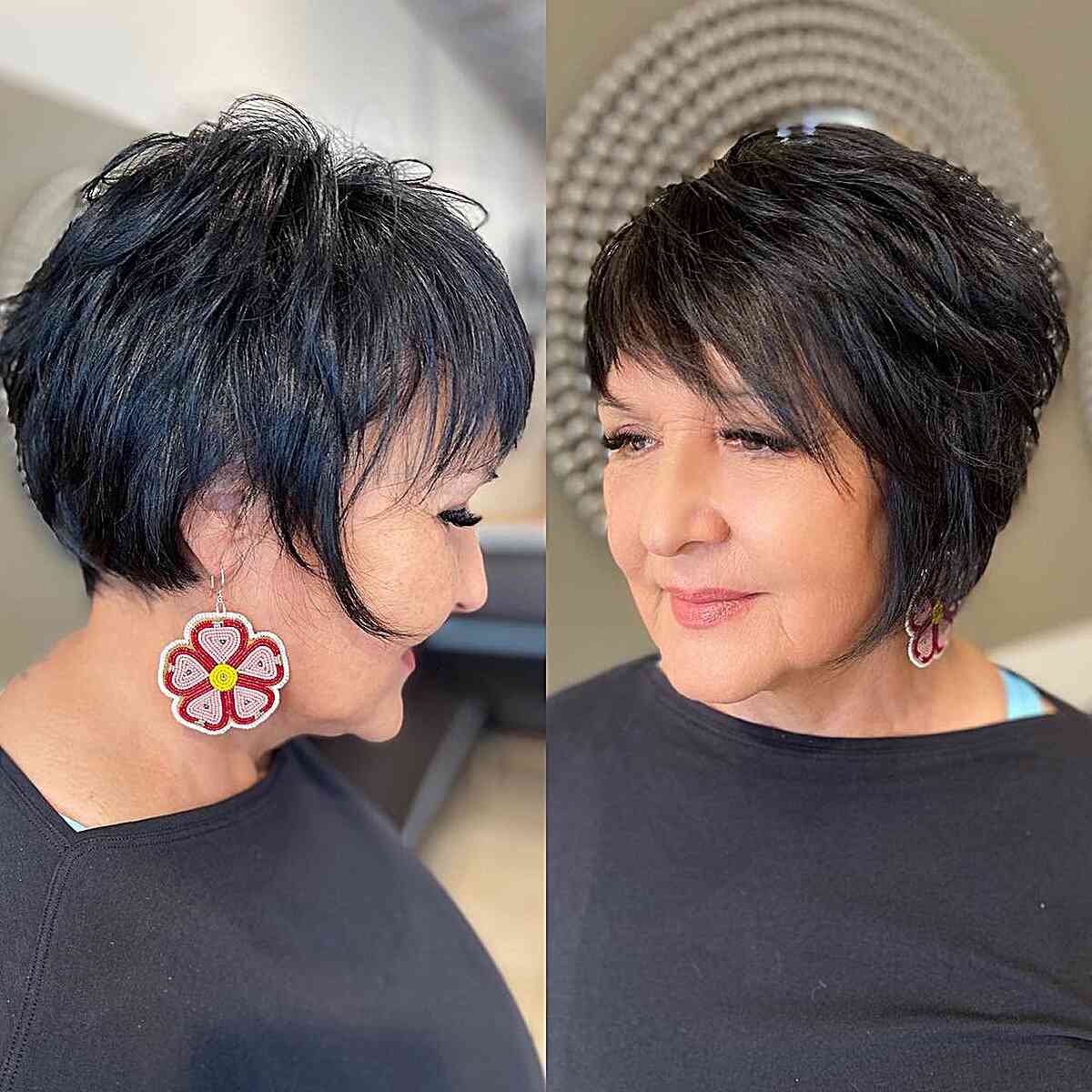
Angled layers shift the visual weight forward instead of letting it sit at the widest part of the face. The dark brown base keeps the line graphic, so the cut reads clearly. Fine, straight hair holds the angle best because it does not bounce back. Suits round faces that want definition without the severity of a blunt bob. Skip it if your hair is very thick. The layering can create an unintended wedge shape. Tell your stylist you want a layered bob with subtle angling and side-swept bangs. A trim every seven weeks keeps the angle from turning into a soft curve.
Choppy ends on a dark brown bob

A choppy bob with side-swept bangs uses textured ends to create movement that air-dried wavy, fine hair actually cooperates with. Dark brown base with no highlights keeps the focus on the cut itself. The catch: very straight hair will make the choppy ends look like an accident rather than a design. Trim every 8-10 weeks to keep the ends sharp.
Angled dark blonde bob with side-swept bangs, straight
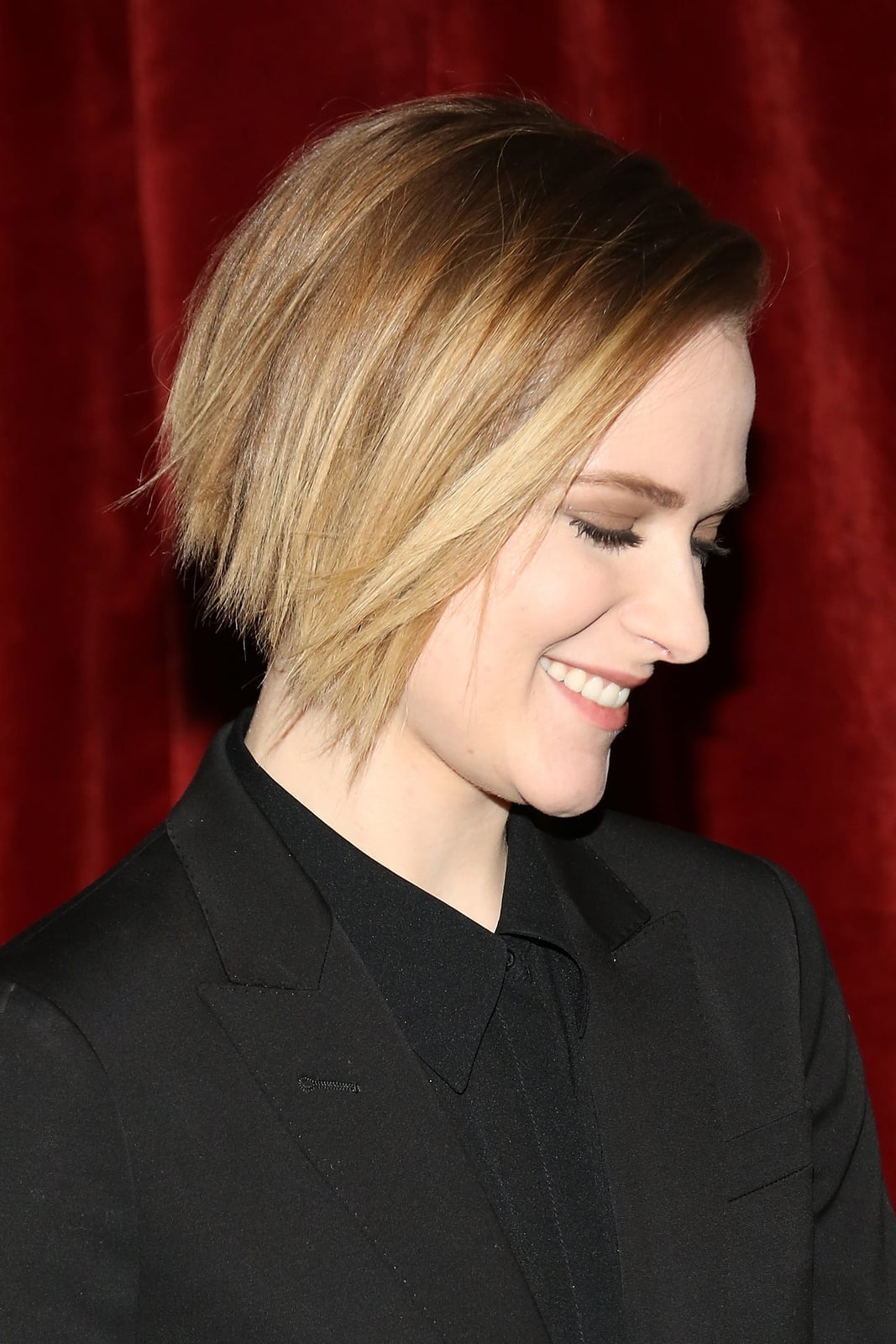
Angled bob means the front drops lower than the back by design. Dark blonde with lighter highlights adds a subtle lift that straight, fine hair needs. Side-swept bangs soften the angle where it meets the jaw. Fine textures hold this shape well because the weight stays forward. Ask your stylist for: angled bob, side-swept bangs, subtle highlights. Curly textures will fight the geometry.
Asymmetrical bob with blonde highlights
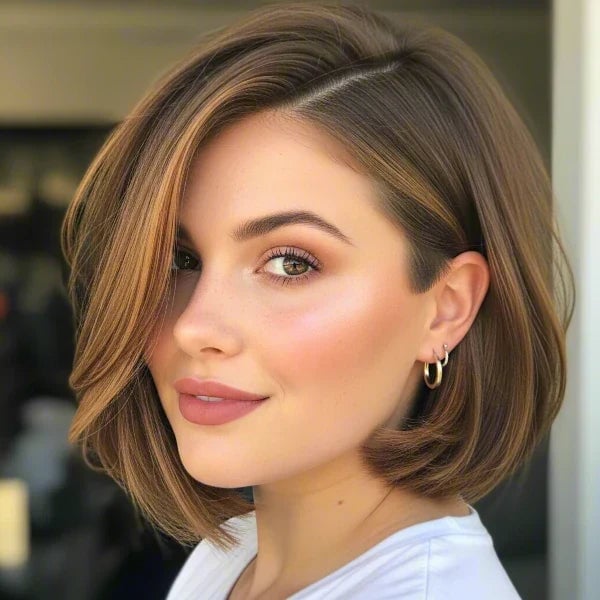
How asymmetrical should the sides be? Visible enough that one side sits clearly longer. An asymmetrical bob with side-swept bangs and subtle blonde highlights works best on straight, fine hair that shows the angle cleanly. A smooth blowout emphasizes the difference in length. Pass when hair is very thick or curly, the asymmetry disappears into the volume.
Bob with subtle waves and side part
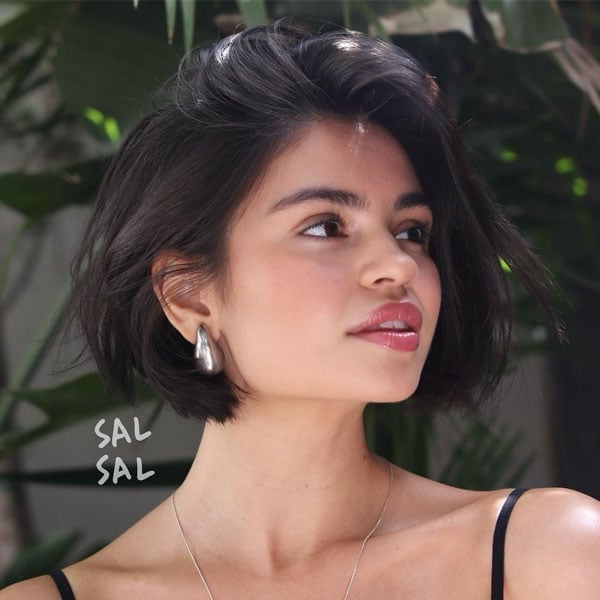
A bob with subtle waves and a side part relies on textured ends to create soft movement. No bangs means the side part does the work of breaking up a round face. Wavy, fine hair air-dries into this finish without fighting it. The textured ends prevent the bob from looking too severe. Ask your stylist for: textured bob, subtle waves, textured ends.
Graduated dark brown bob
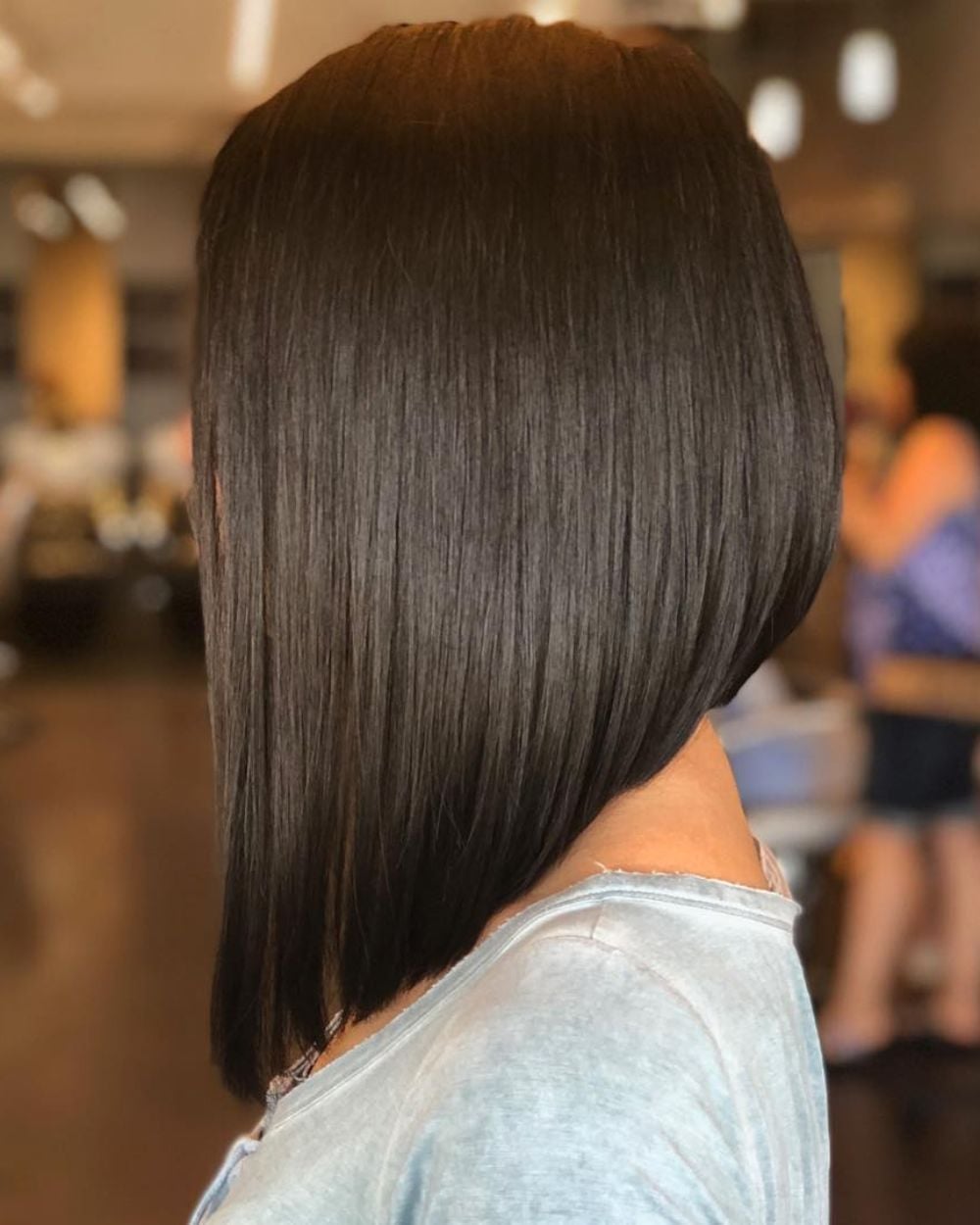
Set this against a one-length bob and the difference is the sharp angle. A graduated dark brown bob stacks shorter at the nape and drops longer toward the front. Fine, straight hair holds that geometric line best. The middle part keeps the focus on the angle rather than adding width at the sides. Not for curly textures that will lift the line.
Long bob with subtle layers and side-swept bangs, straight
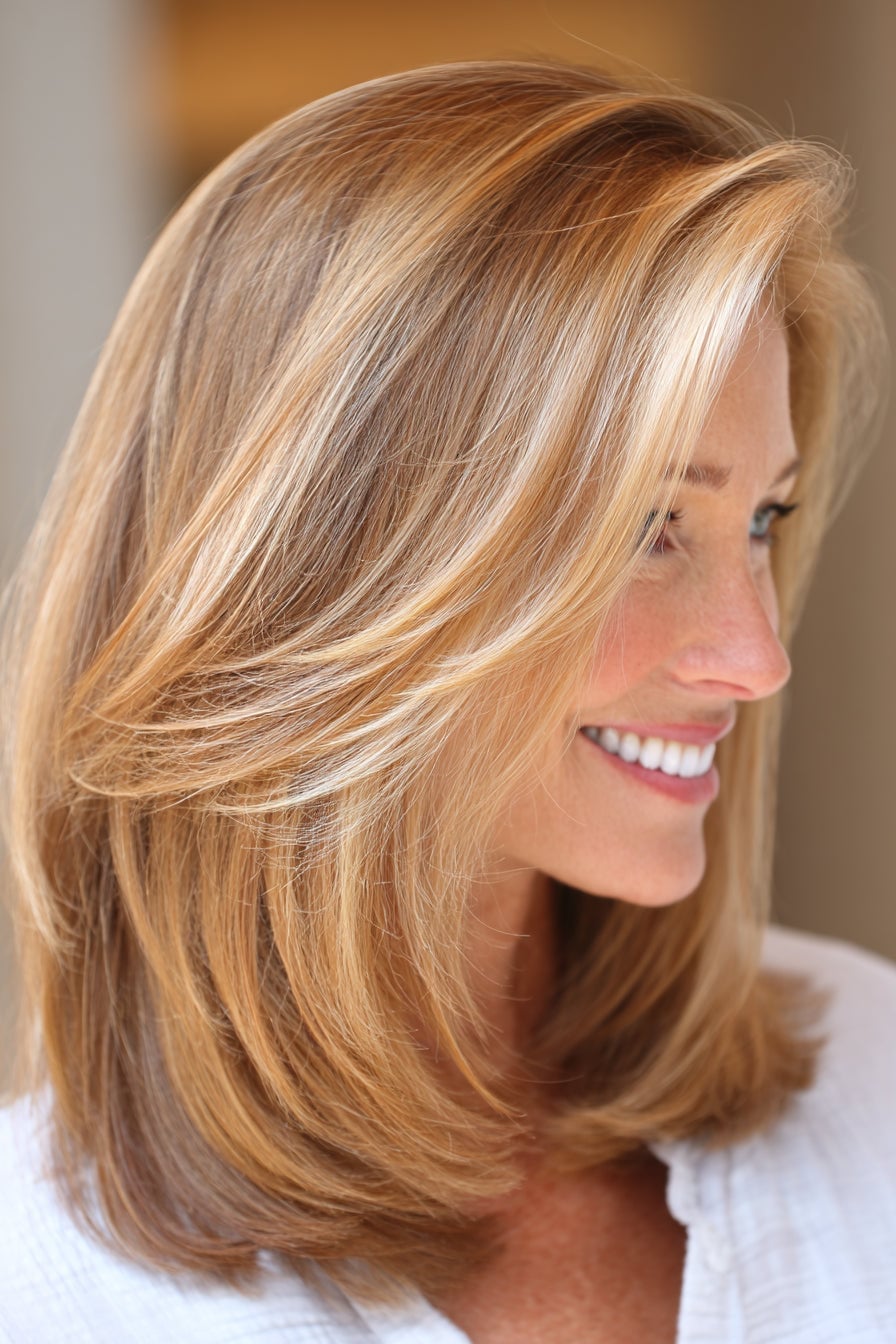
Precision layering keeps this long bob from looking one solid block. The side-swept bangs cut on a diagonal, so they land softer than a blunt fringe. Honey blonde with lighter highlights running through the top and front sections does the dimension work, no chunky streaks needed. Straight, fine texture holds the blowout shape best. Very short hair or extremely thick hair that would bulk out the subtle layers are not ideal for this cut. Ask your colorist for: honey blonde with blonde highlights. To recreate it, look for: long bob, subtle layers, side-swept bangs.
Blow-dry with a round brush to get that smooth finish. Straight texture plays nice with this cut because the layers land exactly where they are placed.
Sharp lob with waves and subtle highlights
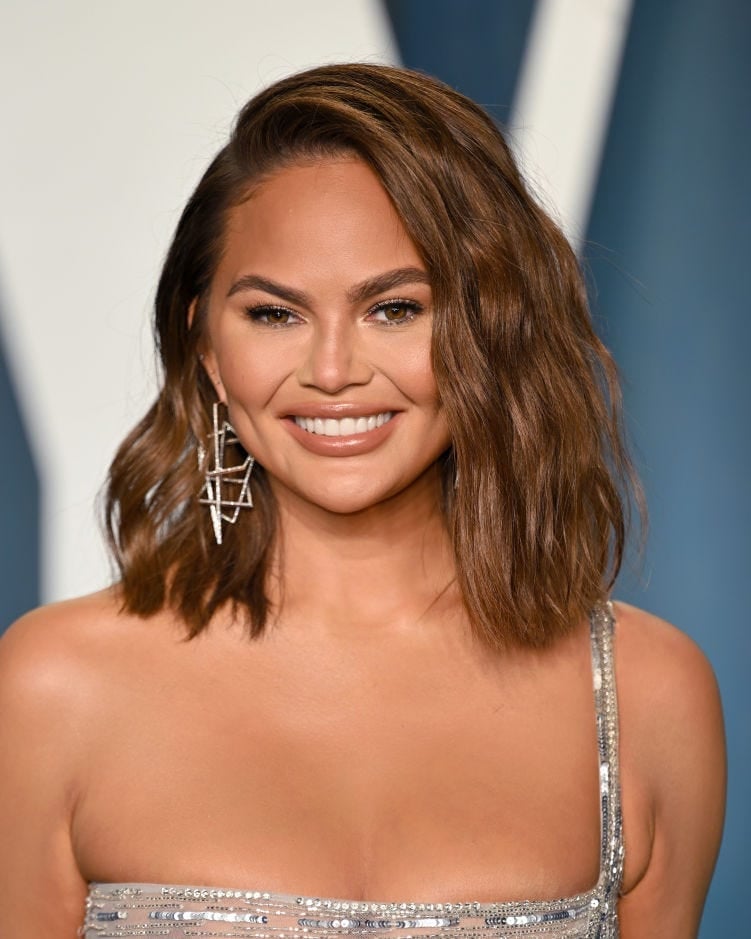
Compare this lob to a blunt one. The waves break up the line around the jaw, so a round face appears longer. Medium brown with subtle highlights adds depth. Fine, wavy texture holds a soft wave naturally. Very thick hair may not hold waves easily, and a straight, sleek finish is another preference.
Enhance the waves with a texturizing spray. This lob elongates without requiring heavy styling.
Layered lob with face-framing bangs
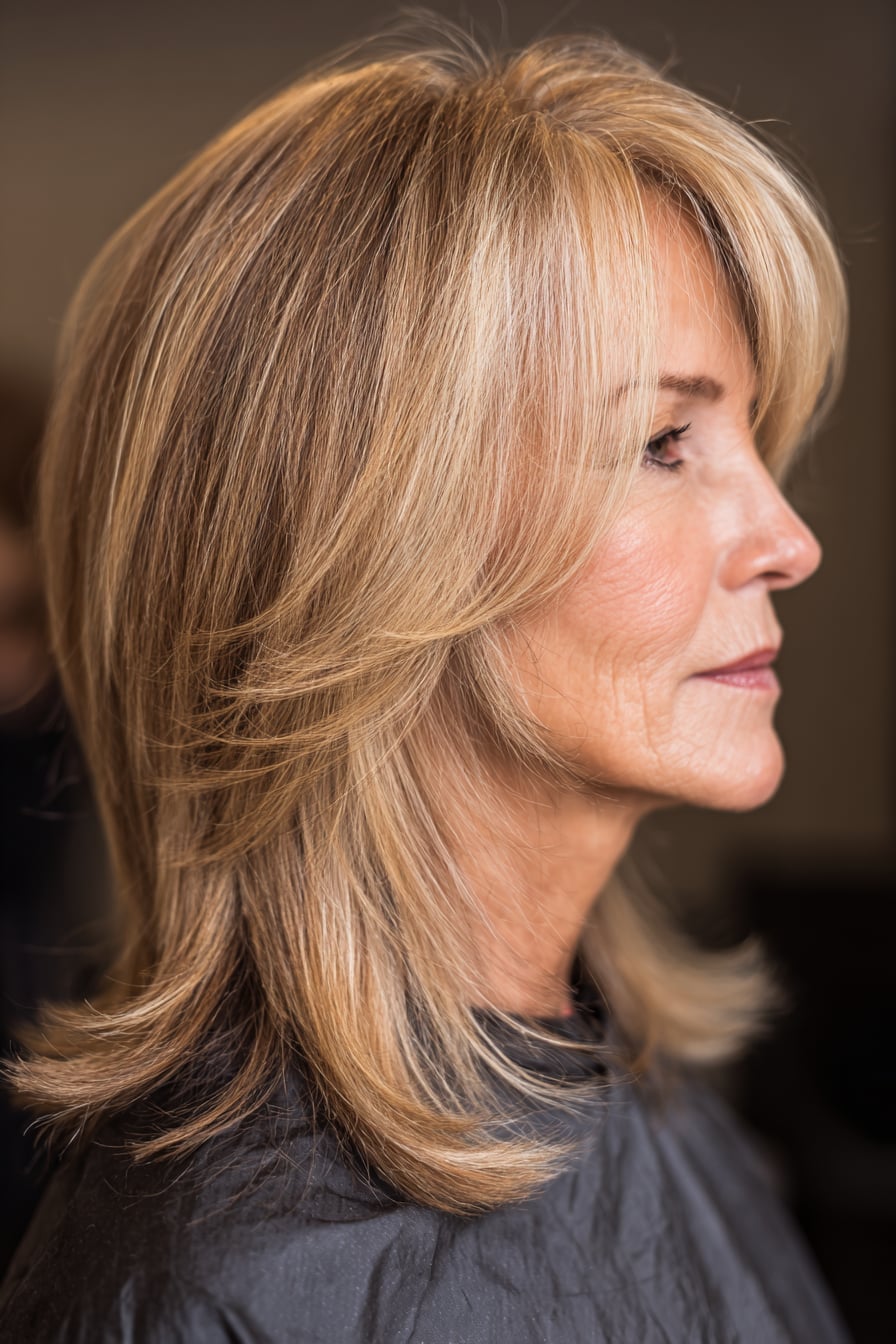
Side-swept bangs on a layered lob shorten the forehead and soften the cheek line. Honey blonde with lighter highlights around the face pulls attention inward. Fine, straight texture lets the layers stack cleanly. Ask your stylist for: layered lob, side-swept bangs, face-framing layers. Blow-dry the bangs forward first, then sweep them to the side.
Dark blonde lob with face-framing waves
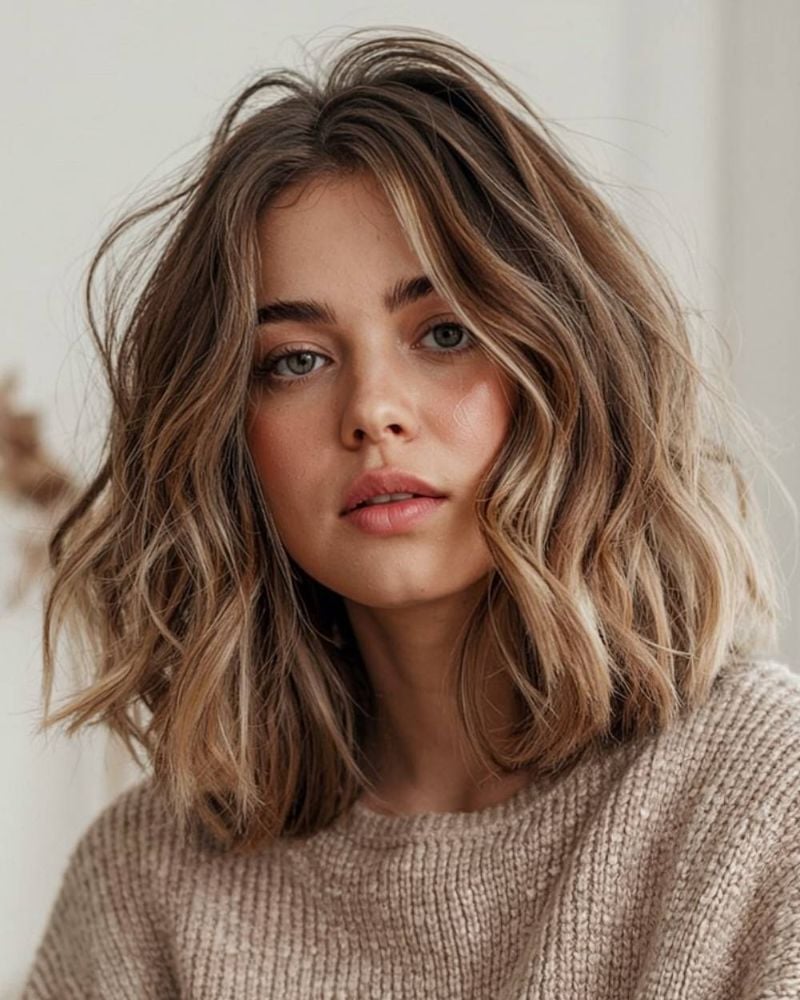
Face-framing waves on a lob work because they curve inward at the chin and then swing out. That arc adds width where you want it, below the jaw, and subtracts it where you do not. Dark blonde with blonde highlights keeps the color from going flat. Fine, wavy texture gives the waves memory. It works best for straight or thick hair. Apply a texturizing spray on damp hair and let it air dry.
Waves like these need a light hand. Too much product and they clump. Too little and they fall out by noon.
Chestnut brown lob with angled ends
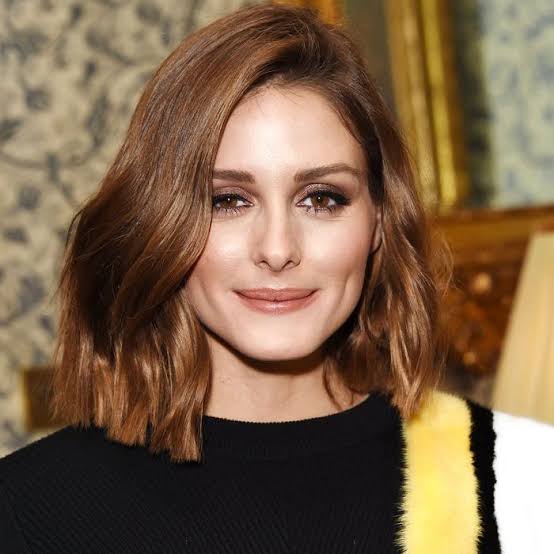
Angled ends on a lob create a diagonal line that cuts across the roundness of the face. The front lands longer than the back, so the eye travels down instead of across. Chestnut brown with subtle highlights stops the angle from looking harsh. Wavy, medium thickness hair holds the shape without collapsing. Blunt ends or very fine hair that would show every uneven strand are not ideal for this cut. Ask your stylist for: lob, angled ends, subtle highlights, side part. Air dry or use a diffuser.
That angled line is key to the style. Lose it and you just have a wavy mid-length cut.
When you want soft bangs without choppy ends
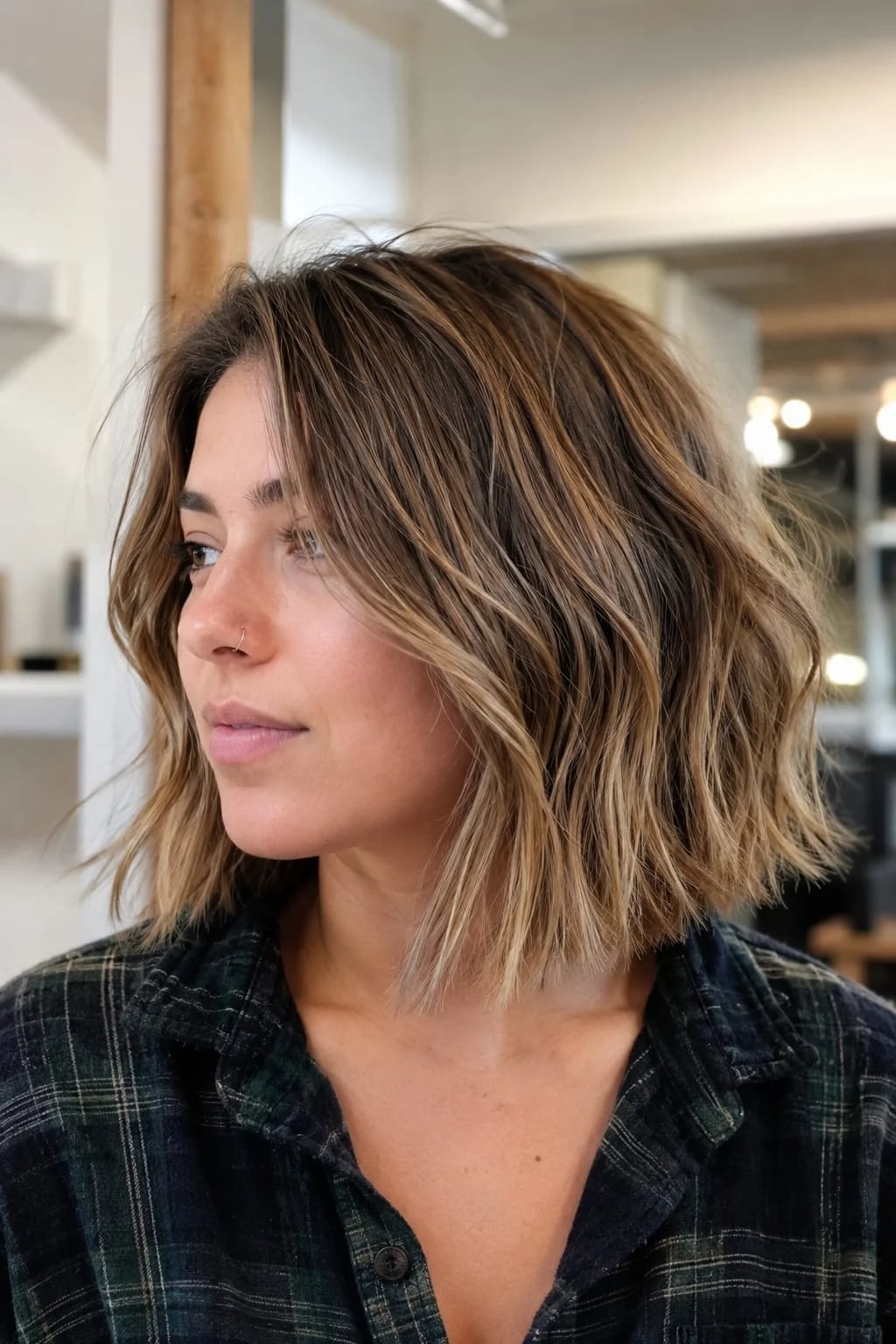
Part the hair to one side and you get a lob where the softness comes from the bangs, not from a blunt chop. The side-swept bangs curve across the forehead while the ends stay piecey, separating just enough to avoid that solid line. Fine, wavy texture works best here. The lighter weight lets the ends lift without getting bulky. A texturizing spray keeps the separation alive. The catch: very thick hair can turn those piecey ends into a wedge.
Dark blonde lob with curtain bangs and layers
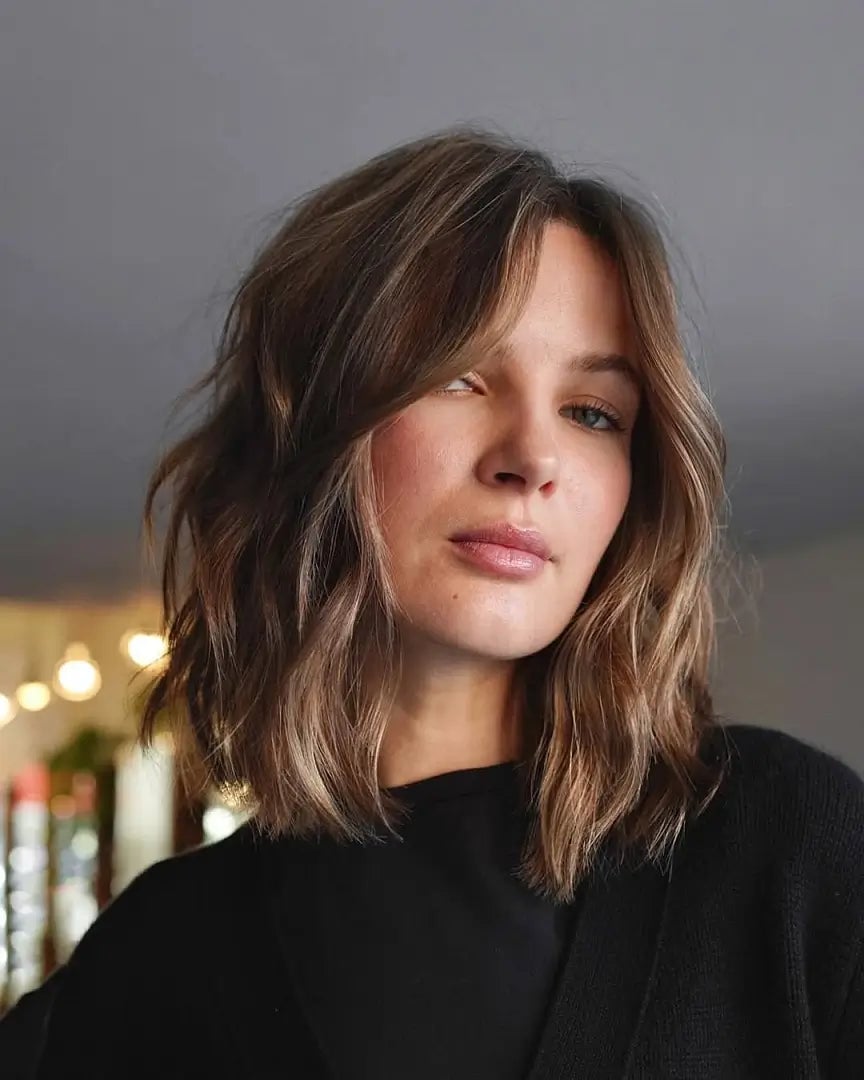
Curtain bangs on a lob create a frame that widens slightly at the cheekbone and narrows again at the jaw. The layers sit subtle, not dramatic. They carry the dark blonde base into the lighter highlights without a sharp transition. Fine, wavy hair takes this well because the layers don’t need weight to hold their shape. A blunt lob cuts the perimeter off clean, while curtain bangs soften it. Blow-dry the bangs forward and let them fall where they want. Very thick hair can make the layers look too broken up.
Dark brown lob with caramel highlights
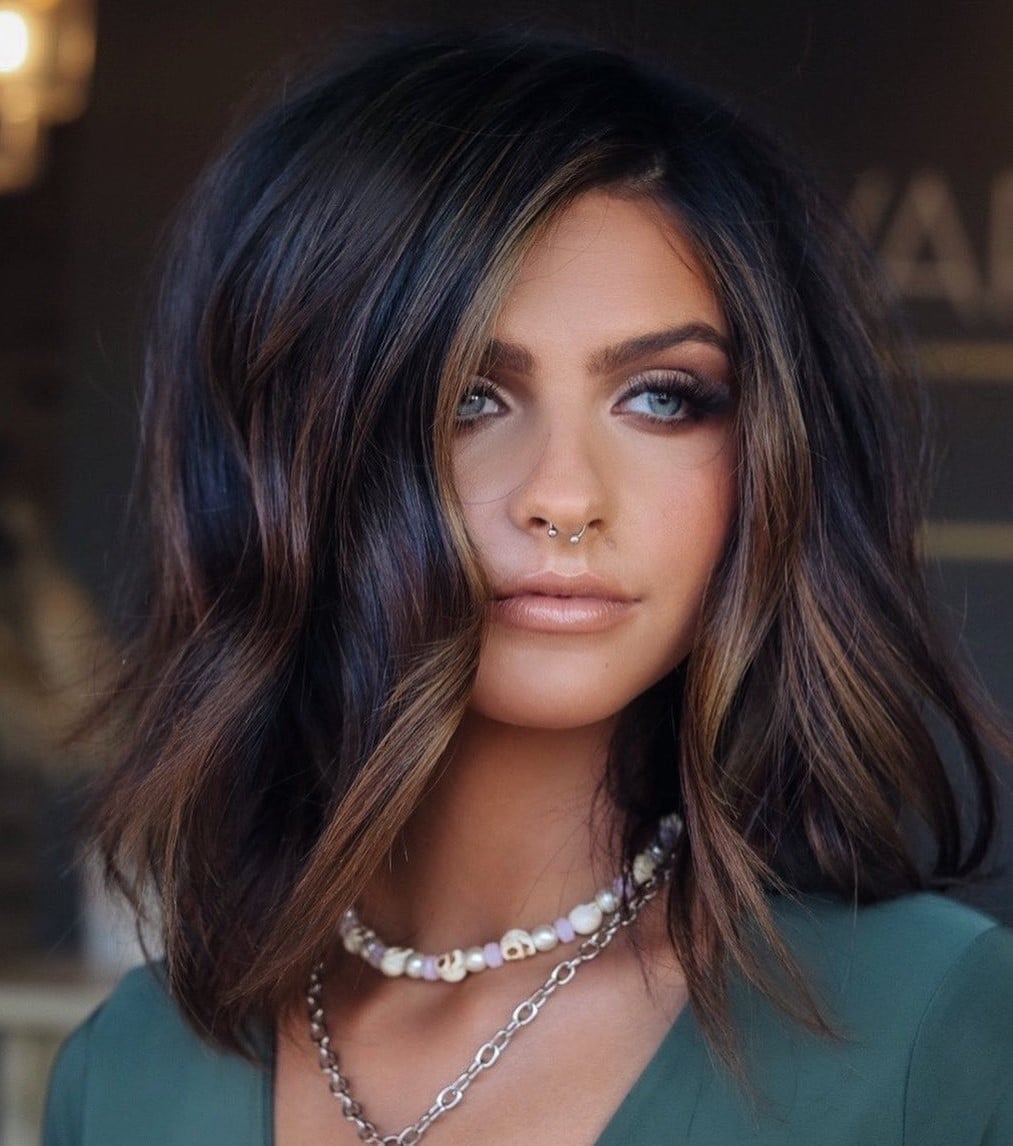
The formula is simple: dark brown base, caramel highlights, side-swept bangs, loose waves. That combination works because the highlights sit just inside the waves, catching light without creating stripes. Thick hair benefits from the lob length. The weight pulls the waves down, so they don’t pouf at the sides. The side-swept bangs cross the forehead at an angle that breaks the roundness. Tell your stylist: lob, side-swept fringe, caramel highlights, soft waves. Waves need a texturizing spray to hold more than four hours. Pass when your hair is very fine; the highlights can look too sparse.
Dark brown lob with face-framing layers
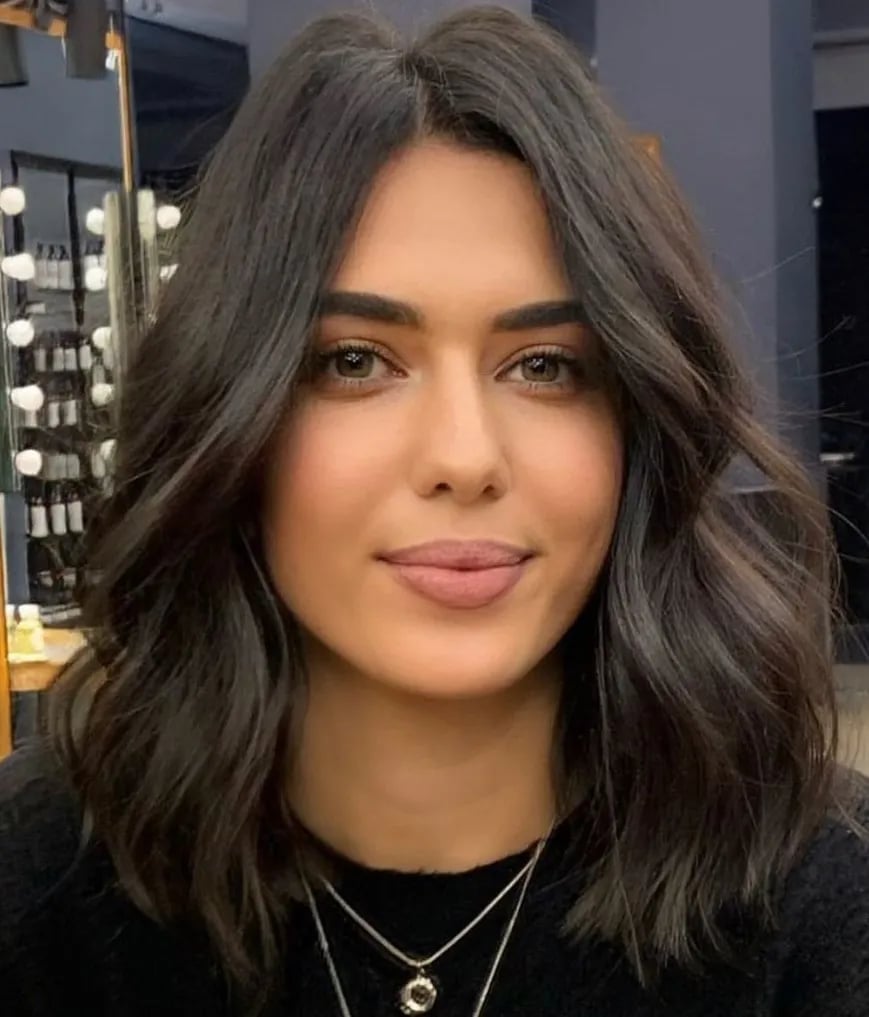
A middle part with face-framing layers changes the silhouette of a round face without removing length. The layers start below the chin and graduate toward the collarbone, so the width stays at the jaw and the face reads longer below it. Dark brown keeps the look low-maintenance, no root line to manage, no brassiness to tone. Thick, wavy hair air-dries into this shape with minimal effort; a diffuser speeds it up without adding frizz. The layers hold their shape for about six weeks before they blend back into the lob. A blunt perimeter is not part of this style.
Lob with face-framing layers and caramel highlights, close-up take
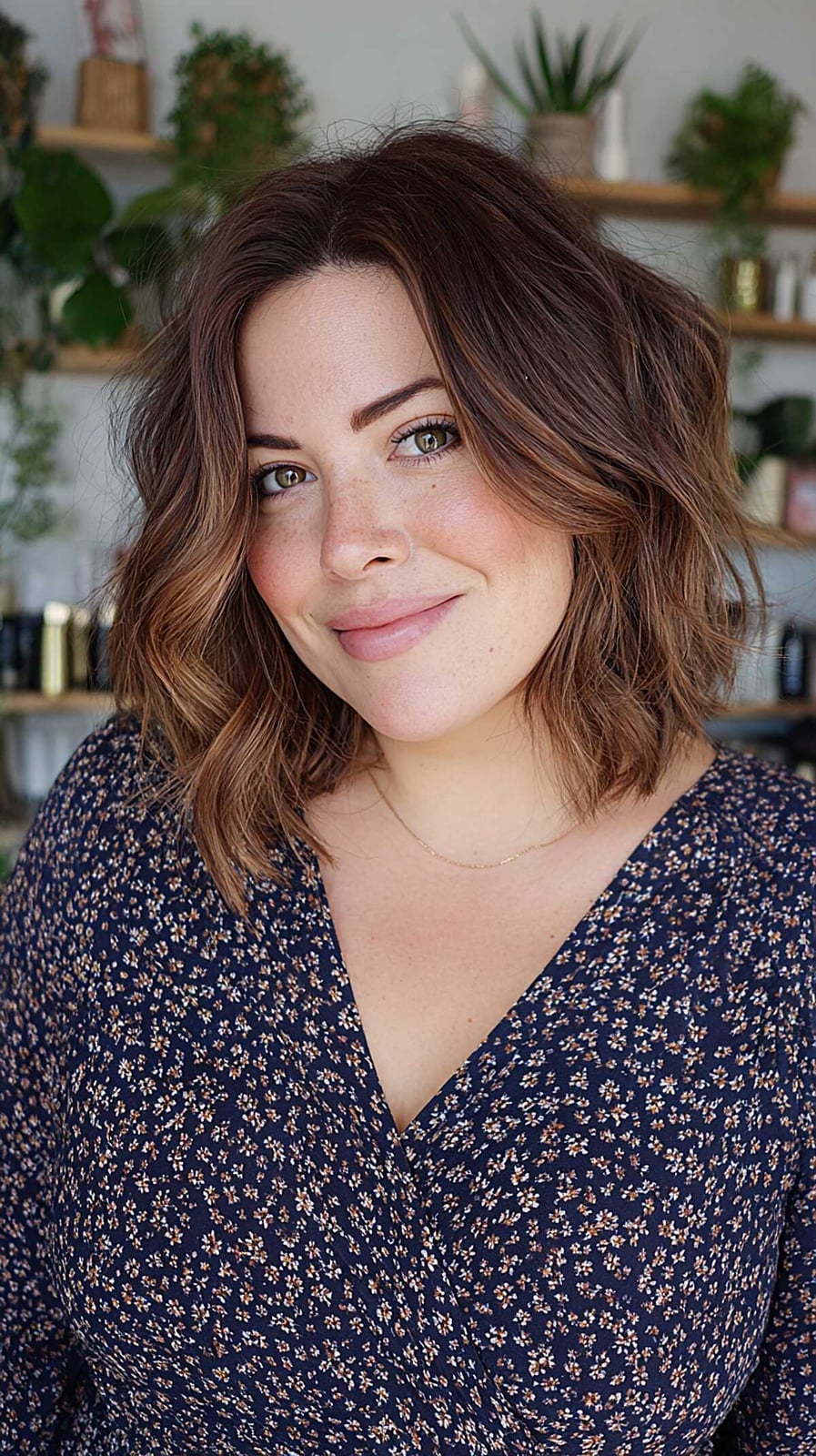
Face-framing layers on a lob are not decorative. They are structural. The front pieces cut shorter than the body, so they sweep forward from a side part and land just below the jaw, creating a diagonal line that visually narrows a round face. Thick, wavy texture gives the wavy blowout enough grip to hold the shape without product. The side-swept bangs add movement across the forehead.
Dark brown with subtle caramel highlights works here because the lighter pieces sit mostly within the face-framing sections. That placement draws the eye to the cheek area, not to the sides. Hair that is very fine can make the layers look too sparse. The lob length lands between chin and shoulder, so the weight stays low enough to keep the texture from puffing outward.
Lob with curtain bangs and subtle highlights
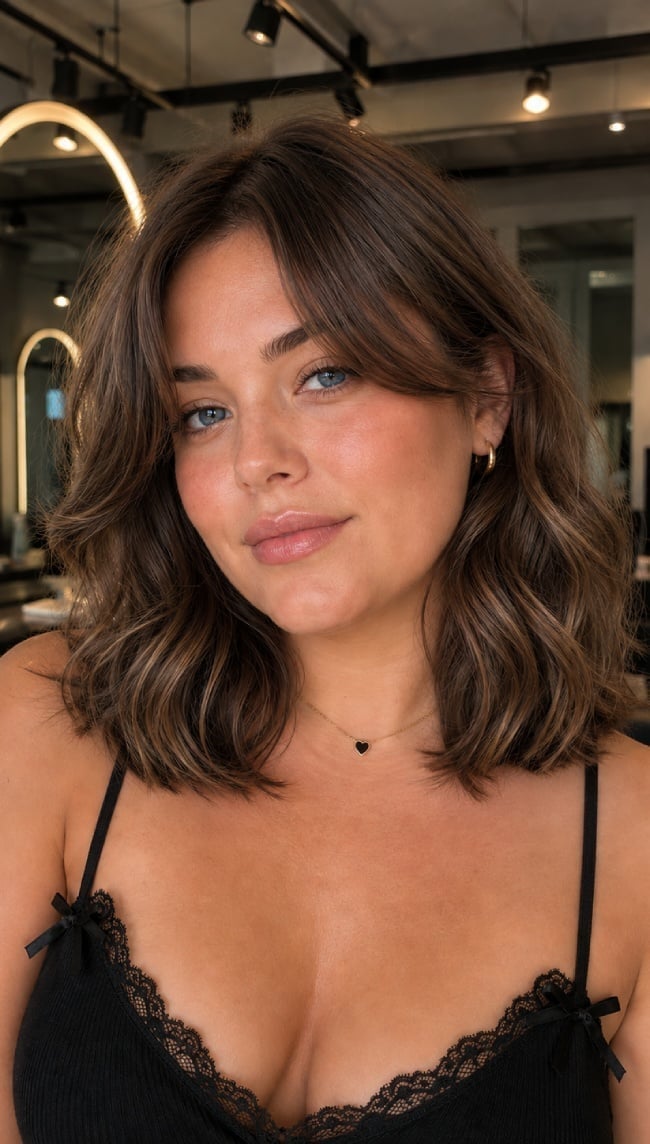
Where a blunt bob reads too severe, this lob lands softer. The dark brown base carries subtle highlights through the mid-lengths, so the curtain bangs don’t sit flat against the face. Medium-thick, wavy hair holds the shape without fighting it. Tell your stylist: lob with layers, curtain bangs, dark brown highlights. The bangs sweep forward, then fall to each side. That diagonal line is what breaks up the roundness. A middle part keeps the weight balanced.
The catch: curtain bangs need a blow-dry brush and ten minutes, not five. Skip them if you plan to air-dry everything and hope for the best. The rest of the wave pattern cooperates. The highlights grow out as a shadow root, so toning visits can stretch to ten weeks.
Thick wavy hair with face-framing layers
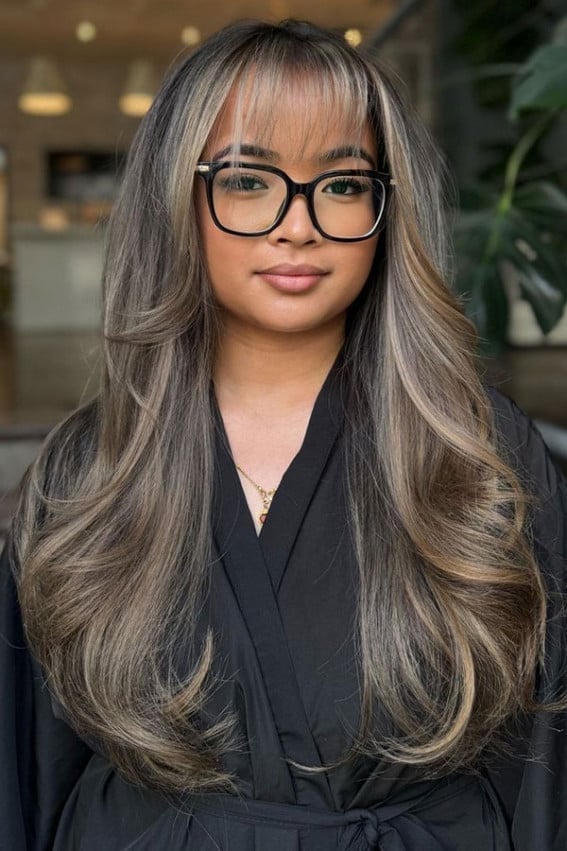
Thick, wavy hair already has volume. The question is where it lands. Here the face-framing layers start just below the jaw, so the width sits low and the top stays narrow. The dark brown base gets ash blonde highlights through the face-framing pieces. That lightness pulls the eye outward, not upward. Wispy bangs add a soft front line without a hard chop. Compare this to a blunt cut on the same density: that stacks width at the ears. This one lets the wave pattern do the separating. Skip it if your hair is fine and the volume would deflate by noon.
Layered cut with curtain bangs
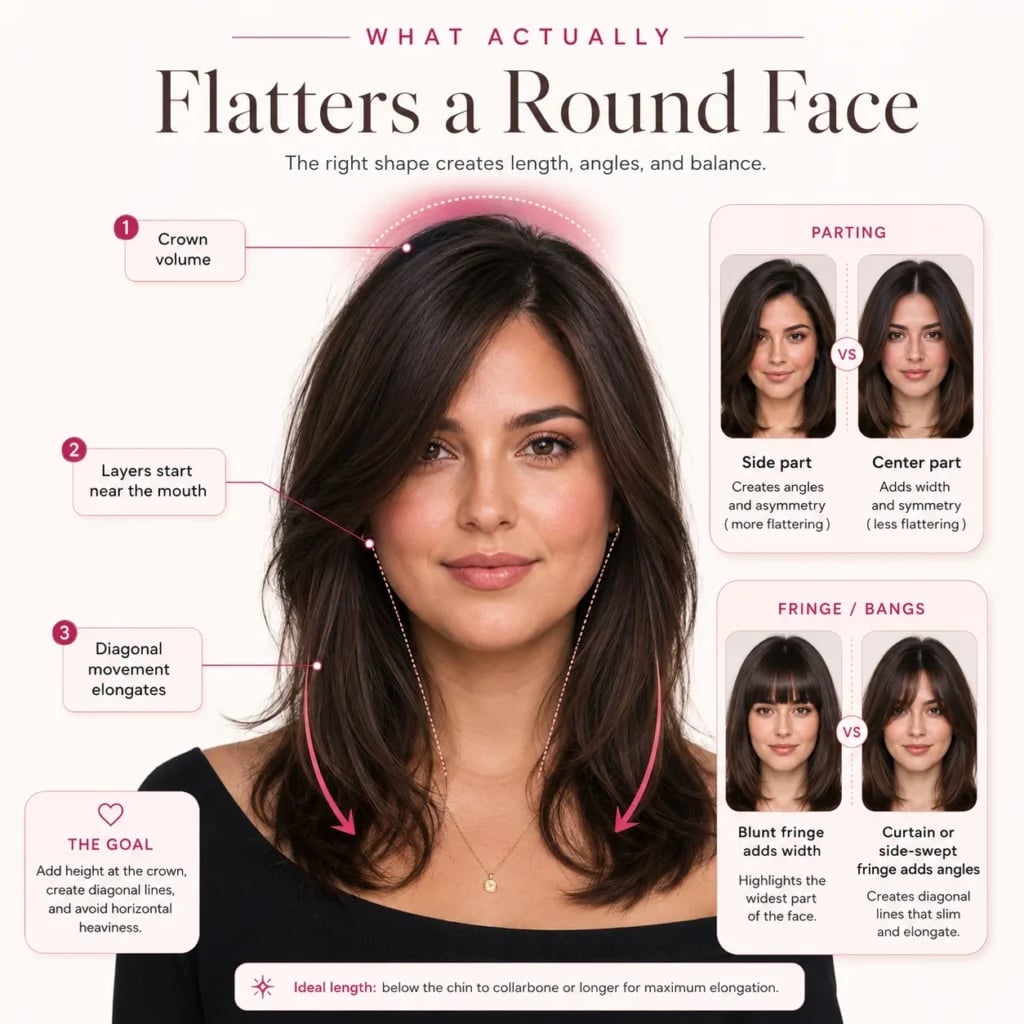
The side part is doing the structural work here. Dark brown thick, wavy hair gets layered through the mid-lengths, and the curtain bangs fall from the part line in two long sweeps. That diagonal line across the forehead is what creates the elongation. The layers are cut so the wave pattern stacks volume at the crown, not the cheeks. Tell your stylist: layered cut, curtain bangs, soft waves, side part. The bangs need to be cut dry so the stylist sees your natural wave pattern. Blow-dry them forward, then sweep each side back with a round brush.
Ash blonde layers with face-framing curtain bangs
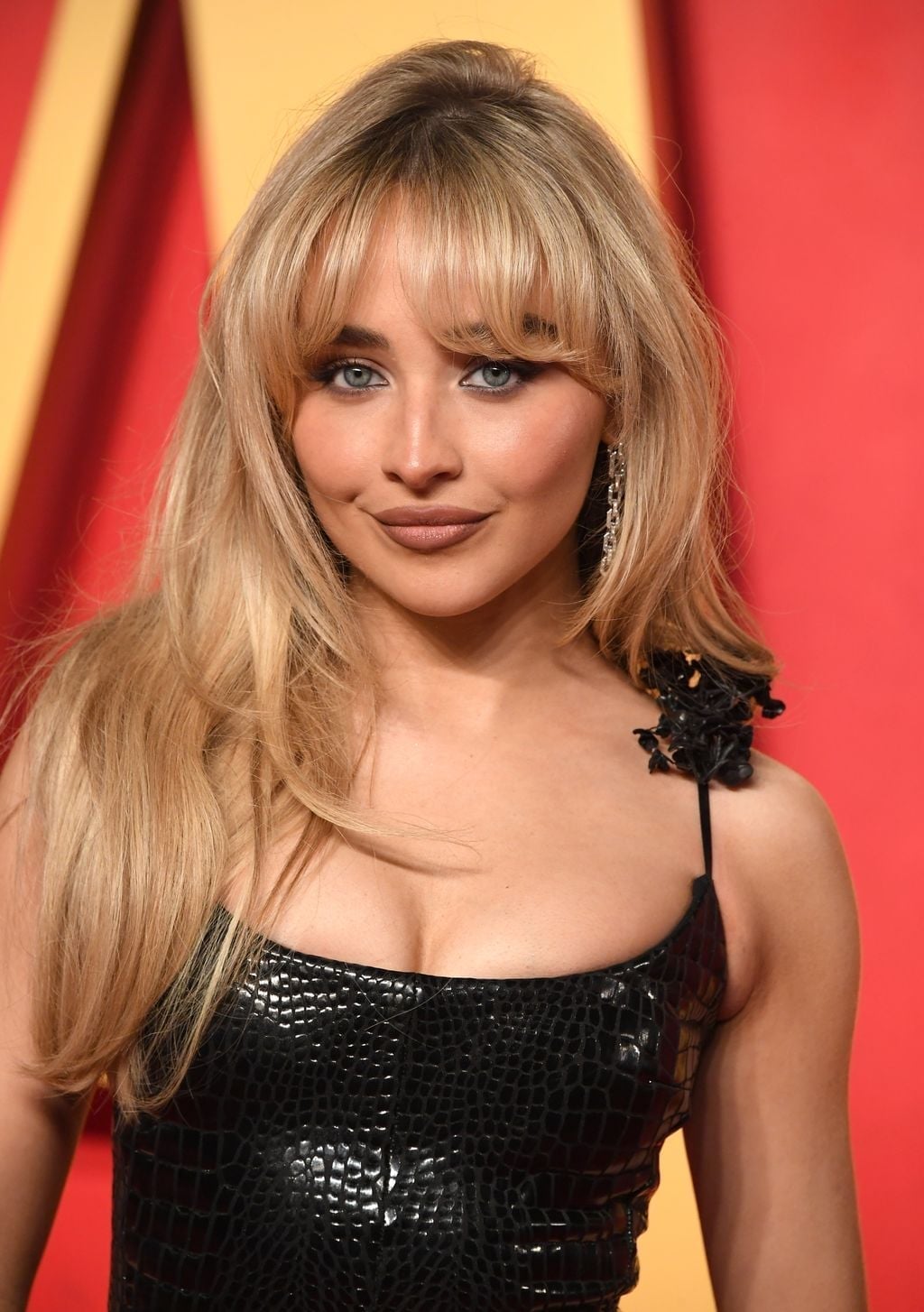
Ash blonde with lighter highlights reads cool, not brassy. The layers here are cut so the curtain bangs blend into the front sections, no hard transition line. Thick, wavy texture gives the air-dried finish a natural wave pattern that holds all day. The lighter highlights sit mostly on the face-framing pieces, so the color works with the cut, not separate from it. The bangs need to be point-cut, not blunt, so they feather. Skip this if your hair is very fine. The ash base can read flat without enough density to reflect the highlights.
Dark brown long layers with face-framing waves
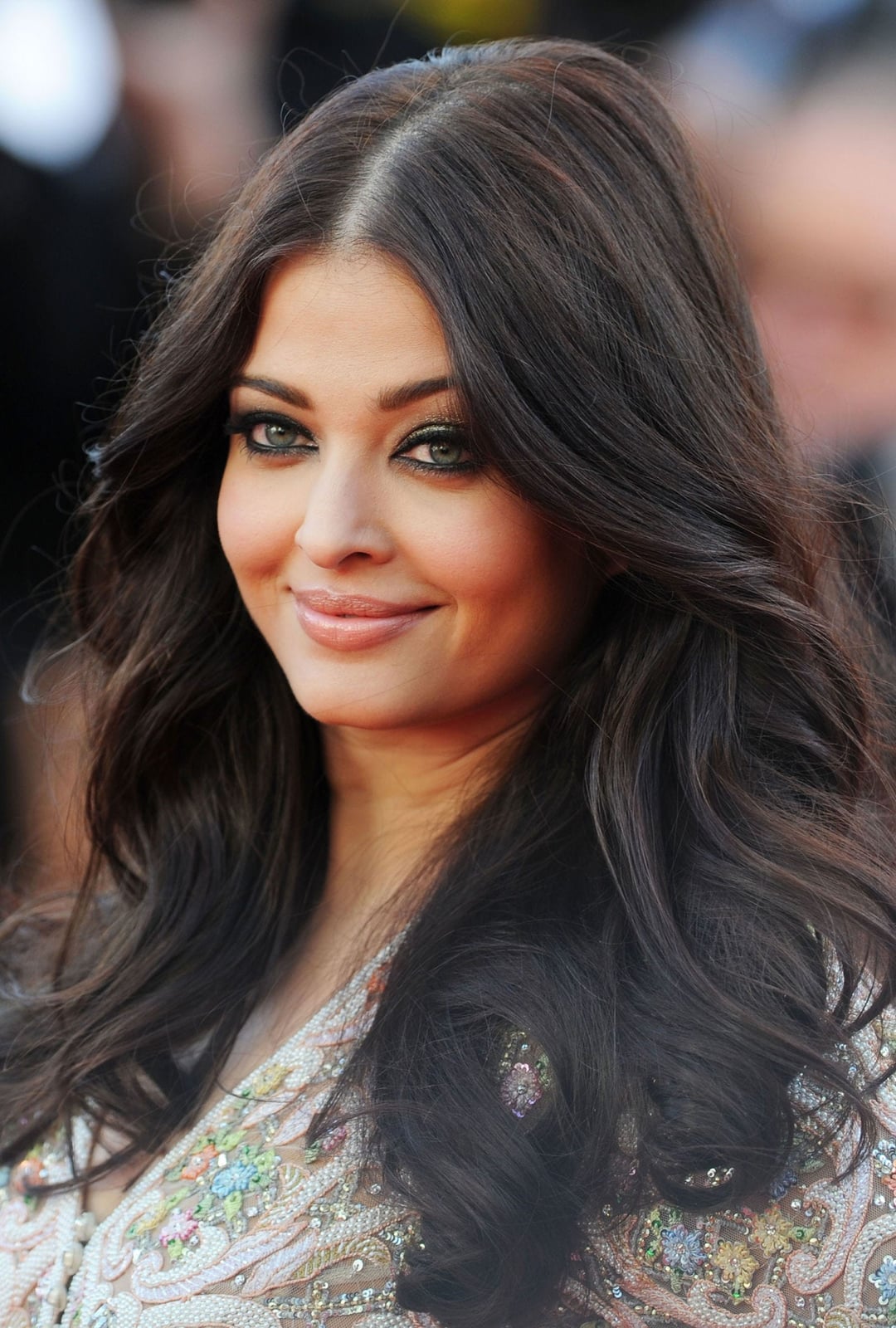
A middle part on a round face works when the hair falls below the chin. Here the long layers start around the jaw and continue down, so the face-framing waves create vertical lines, not horizontal width. Thick, dark brown hair with no bangs keeps the front open. The air-dried wave pattern is the key: the waves need to start high enough to clear the cheekbones. Tell your stylist: long layers, face-framing waves, middle part, dark brown. The layers should be cut into damp hair, then checked dry for the wave placement. Skip it if you prefer a center part with heavy curtain bangs.
Shag with choppy front sections and waves
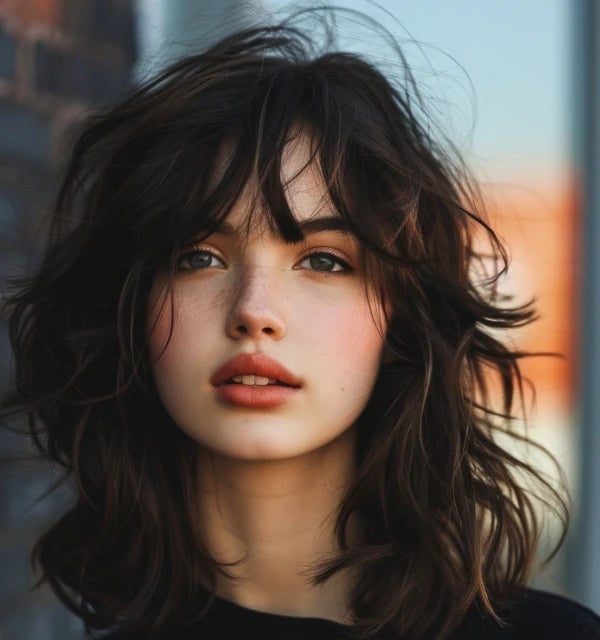
Not every shag needs a full fringe. This one works curtain bangs and choppy front sections into a thick, wavy pattern without committing to blunt bangs across the forehead. The dark brown base keeps it grounded, while the shorter pieces around the face soften the roundness of a round face. Fine hair might struggle to hold the wave pattern, but thick wavy hair gains texture from the layering. An air-dried finish works, though a blast of heat on the bangs keeps them from drooping by midday.
Layers with ash blonde highlights
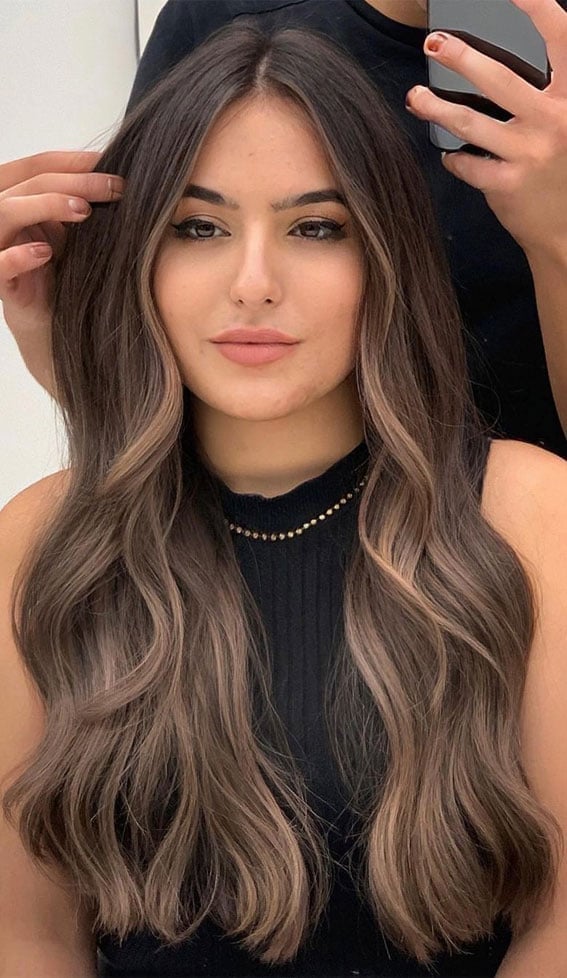
Middle parts get a bad reputation for round faces. Here they work because the layers are cut to fall forward, not straight down. The dark brown base carries subtle ash blonde highlights that catch light at the front, drawing the eye vertically. Thick, wavy hair holds the shape; fine hair might let the layers collapse into a single block. The wavy blowout styling adds volume at the crown, which balances the width of a round face.
Layered shag with curtain bangs and beige highlights
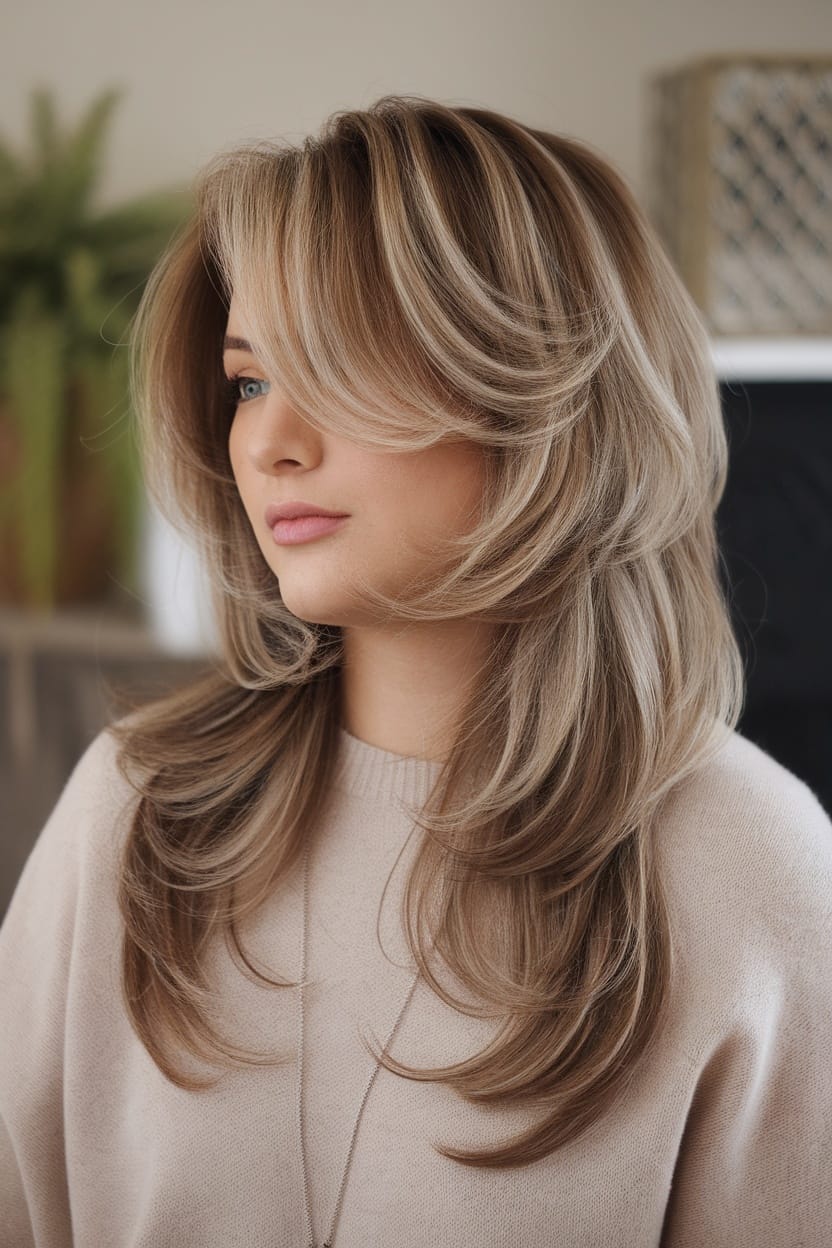
The layered shag with curtain bangs is the haircut that asks for a side part and a blowout. The ash blonde base is fine and wavy, with beige highlights woven through the face-framing layers. These layers are the point. They shorten the visual width of a round face by breaking the hair into vertical sections. If your hair is straight or thick, the shag texture may not hold without product. Tell your stylist: layered shag, curtain bangs, ash blonde with beige highlights. Blow-dry the bangs forward first, then sweep them to the side.
Dark brown lob with layers and curtain bangs and air dried
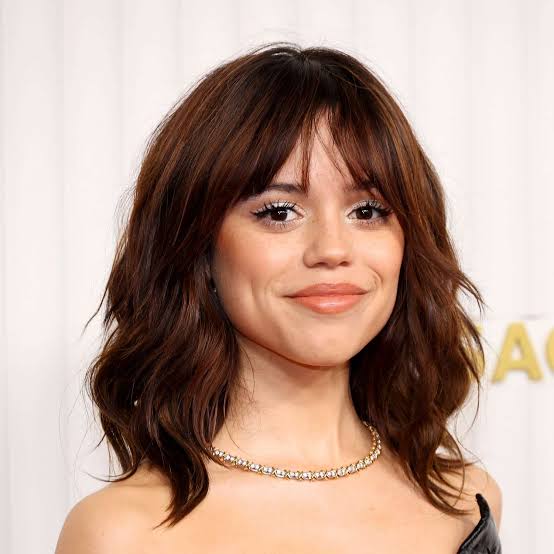
An air-dried lob with layers and curtain bangs is the low-commitment version of a blowout. The dark brown base and middle part let the face-framing pieces do the work. Thick, wavy hair accepts the air-dried texture without fighting it. The length sits somewhere between chin and shoulder, which is the sweet spot for elongating a round face. Skip it if you cannot tolerate bangs touching your cheekbones. No heat styling required.
Dark brown layers with blonde highlights
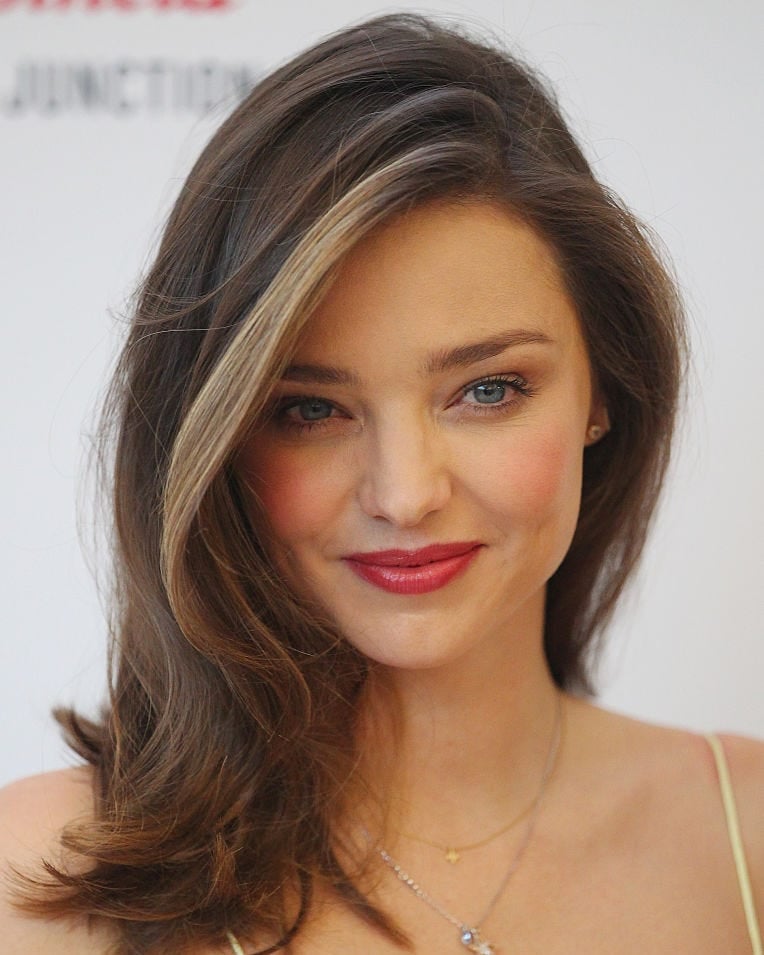
Side parts are a round face’s friend. This cut uses a deep side part and shorter front sections to break the symmetry that can emphasize width. The dark brown base is lifted by subtle blonde highlights at the front, which bring attention to the cheekbones. Thick, wavy hair holds the layers well; fine hair may fall flat. No bangs means the face-framing pieces do all the shaping. Ask your stylist for layers with blonde highlights and a side part.
Long layers with curtain bangs and highlights
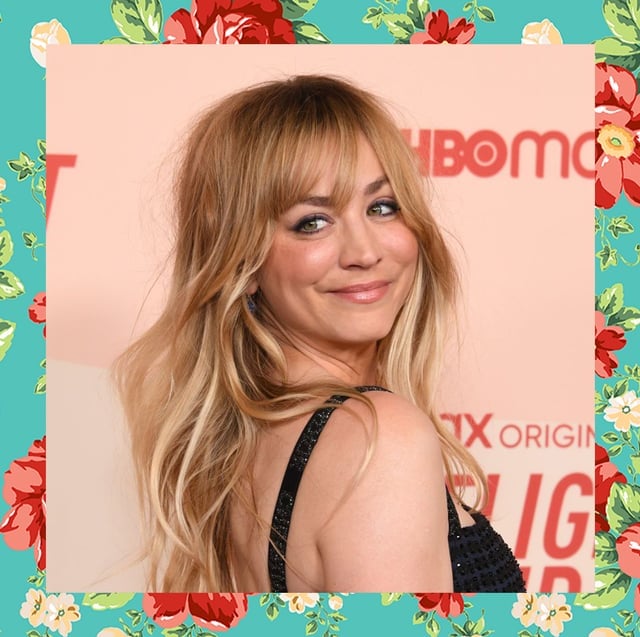
Curtain bangs frame the face while long layers add structure to fine, wavy hair. The side swept curtain bangs open up a round face without shortening it. Blonde highlights add depth through the ends to the air dried texture. It works best for those open to bangs and layered shapes. Blow dry the bangs forward with a round brush.
Dark brown layers with auburn highlights and side swept
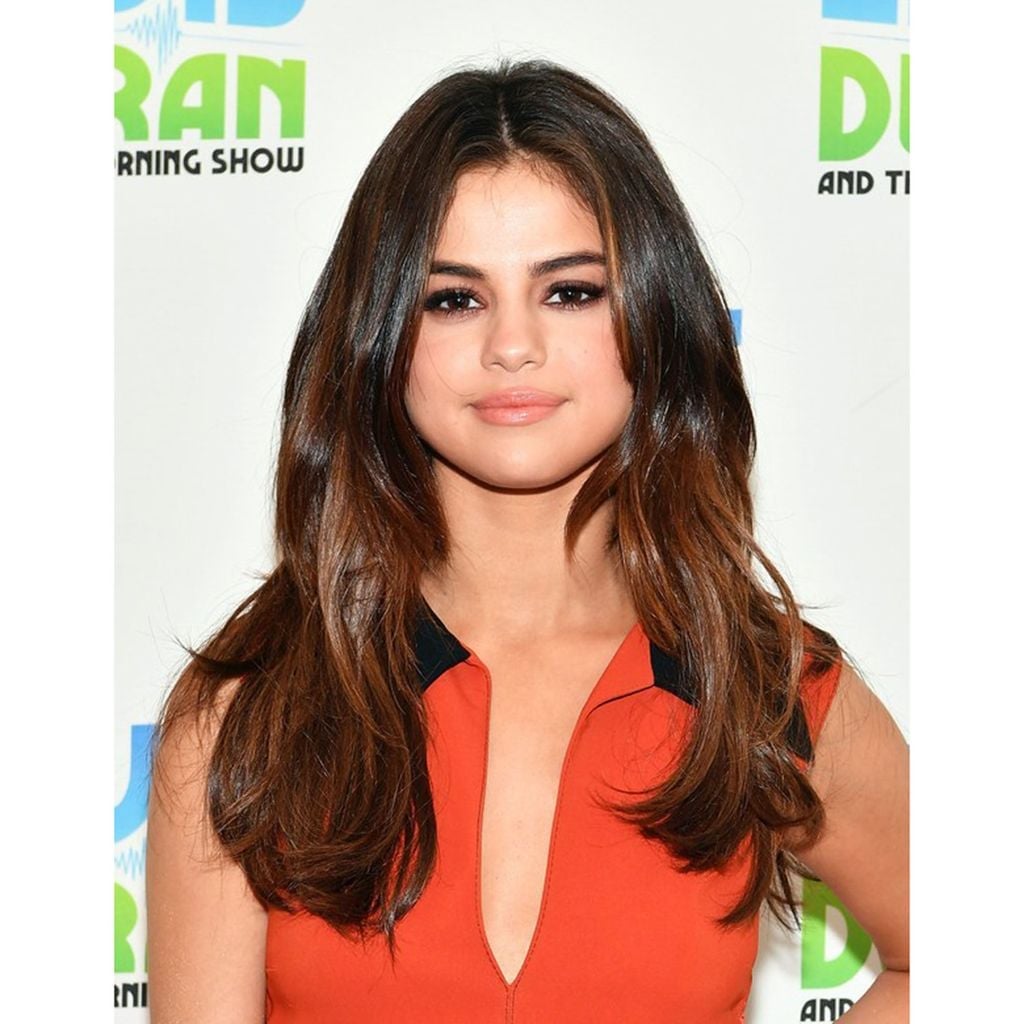
Soft face-framing layers sweep forward from a middle part, creating a diagonal line that visually narrows a round face. The dark brown base anchors the style, while subtle auburn highlights add dimension in the waves. Thick, wavy hair holds this shape best. A sleek, straight finish is not recommended, and very fine strands might get lost in the layers. A texturizing spray on damp hair encourages the air-dried waves.
Long layers with honey highlights
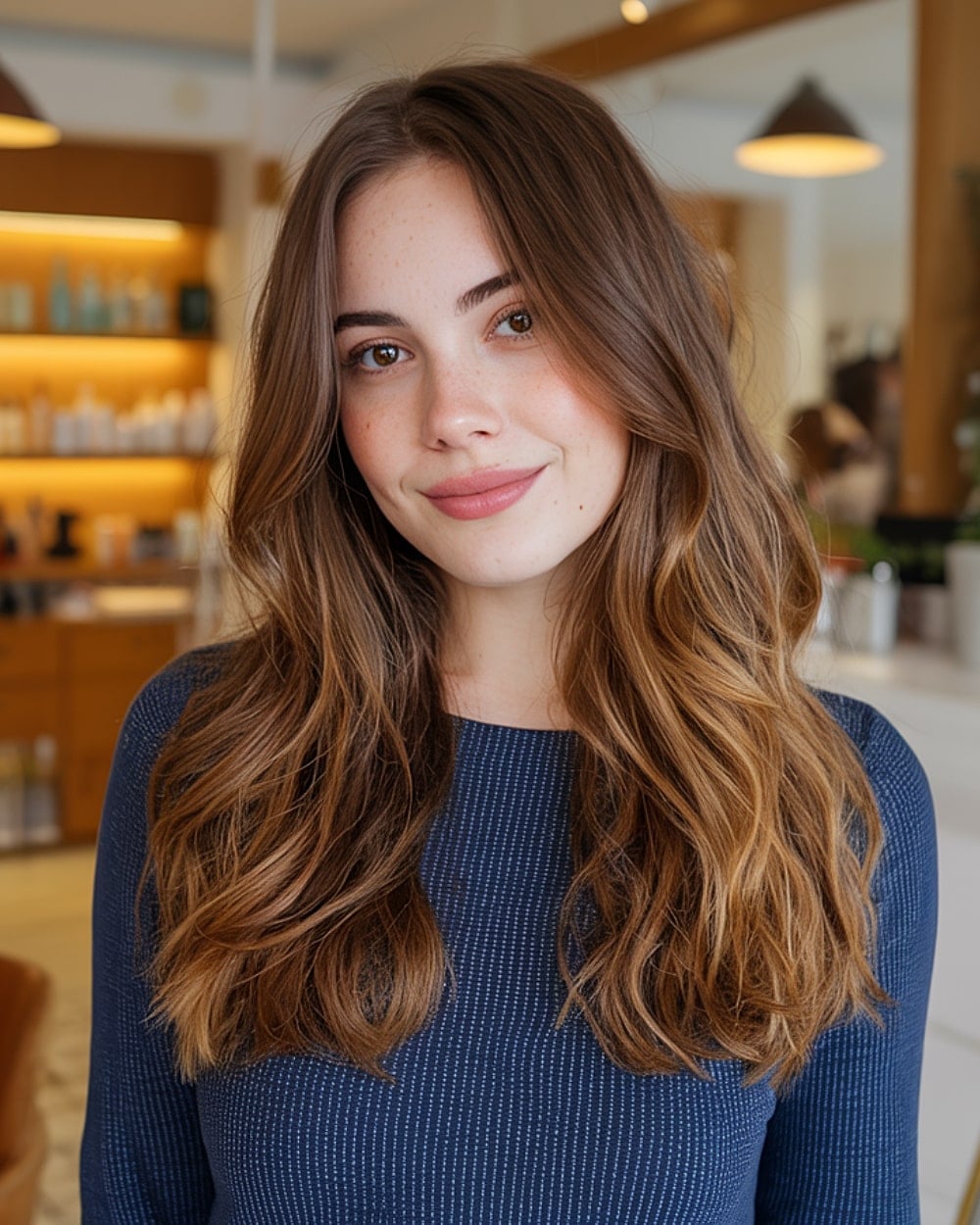
Side-swept bangs and long layers work as a unit here. The bangs sweep across the forehead, shortening the visual width of a round face, while the layers stack through the body to remove bulk from thick, wavy hair. The chestnut base gets broken up by honey highlights placed around the face and through the ends. Skip it if you dislike bangs or prefer a uniform blunt hemline. Tell your stylist: long layers, side-swept bangs, chestnut base, honey highlights. Blow-dry the bangs forward to set the sweep.
Final Thoughts
Pick the cut that matches your daily reality, not the one that looks best on a mannequin.
- Fine hair: a blunt bob or graduated lob keeps shape without falling flat.
- Ten minutes in the morning: side-swept bangs and textured layers hide a lazy blow-dry.
- Thick, wavy hair: curtain bangs and face-framing layers remove bulk without losing length.
- Cool base that pulls brassy: tone highlights every 8-12 weeks to keep the contrast sharp.
Choose a cut that enhances your natural features and fits your lifestyle.