You are sitting in the chair, scroll paused on a photo of neat rows that curve from temple to nape. The question is not whether cornrows suit you. It is which pattern, which finish, which hold matches the weeks ahead. Cornrows buy you time: two to three weeks of waking up and walking out, no comb required.
That is why Charming Cornrows Hairstyles 2027 fill so many saved boards. 27 ideas that run from a quick afternoon of small, precise sections to weekend projects with added lengths and curls. For anyone with natural texture from fine to coily, these styles hold their shape through sweat, sleep, and the work week. The hard part is picking one.
Thick cornrows into a voluminous straight ponytail
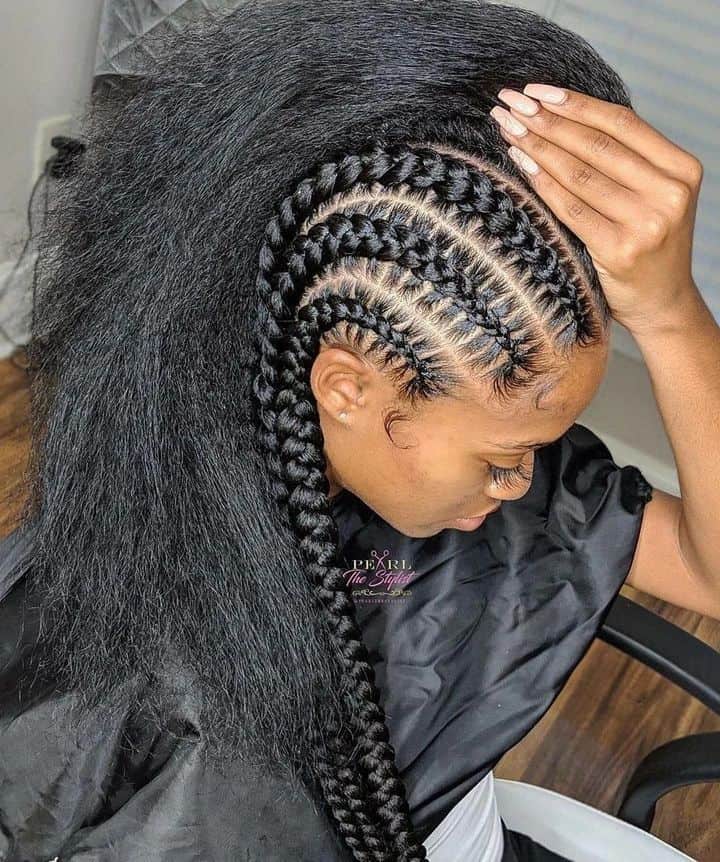
Middle part, neat thick cornrows, and then a voluminous straight ponytail that drops past the shoulder blades. The braids are tight and sleek, with added hair creating the ponytail’s fullness. This design works because the contrast is clean: flat against the scalp, heavy behind the head. It suits anyone with thick, straight hair starting at shoulder length. A middle part and length below the chin do elongate a round face, so that works here. Ask your stylist for: thick cornrows into a long straight ponytail with added hair. Wrap a few braids around the ponytail base to hide the elastic.
Geometric cornrows creating contrast with curly hair
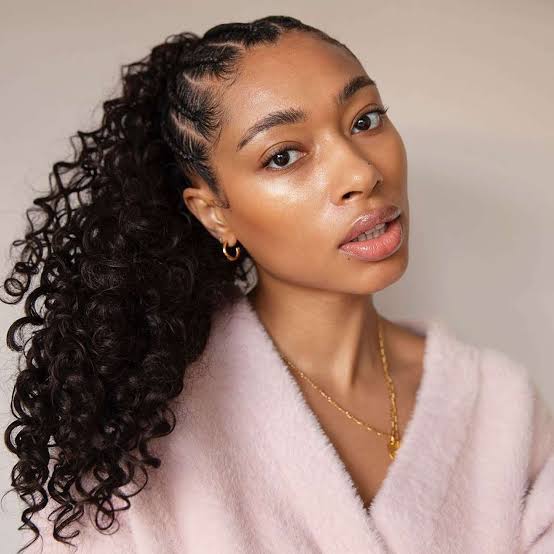
Geometric cornrows at the front pull into a high ponytail, and the rest is thick, loose curls. Two textures, one silhouette. The cornrows frame the face with sharp lines, while the curls add volume and softness. This suits thick, curly hair, and the high ponytail works for most face shapes. A uniform texture from root to end is not the goal here.
Cornrows with clear beads on fringe braids
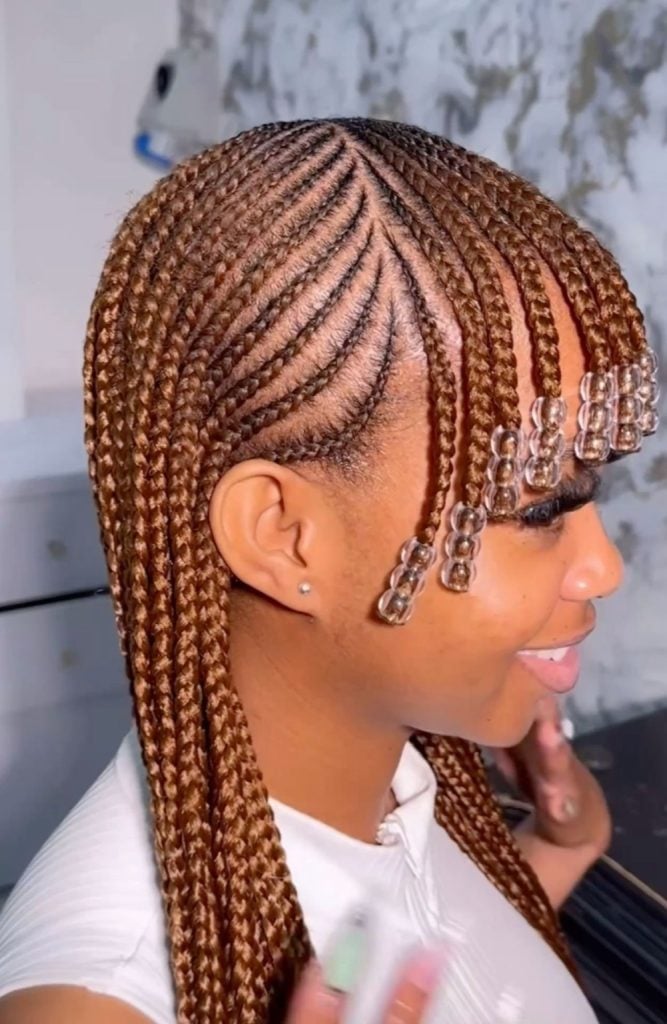
What do you say to get clear beads on the fringe braids? The words matter. Request intricate cornrows with a side parting and beads on fringe braids. The beads sit on the braids that fall near the face, catching light without adding color. The base is medium brown with lighter brown highlights, so the beads look a neutral accent. This works on fine, straight hair that is at least shoulder length. Not for anyone who prefers a bare braid. The beads stay put if secured properly, and a stylist can reposition them later.
Cornrows framing the face with metallic hair accessories
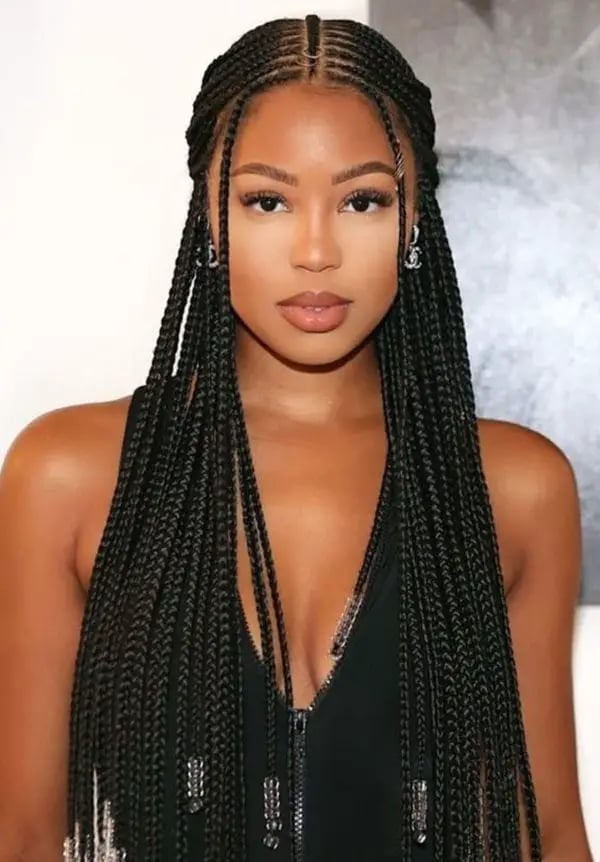
Neat straight cornrows with a middle part, and small metallic accessories clipped onto the sections that frame the face. The metal is the only shine. This style genuinely flatters anyone with thick, straight hair at shoulder length or longer. The face-framing braids shorten a long face by adding width at the sides. The catch: metallic accessories can snag if you sleep on them without a silk scarf. They distribute evenly, so have your stylist space them along the front sections. Ask your stylist for: neat cornrows with face-framing braids and metallic accessories.
Geometric cornrow patterns on the scalp
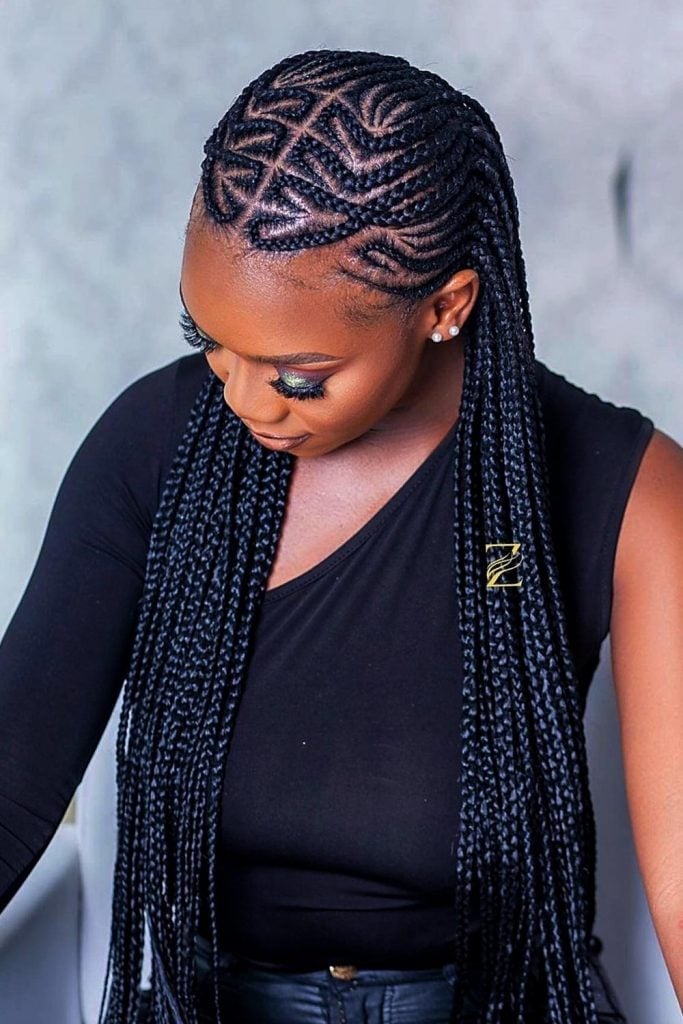
Cornrows that form geometric patterns directly on the scalp, then drop into long thick straight braids. The parting is the design. Angled lines and clean sections create the pattern, and the braids continue the line without interruption. This requires thick, straight hair at shoulder length or longer to hold the geometry. Pass when your hair is very fine. The pattern can lose definition as the braids loosen. The scalp work takes time, but the result stays crisp for weeks.
Long thick cornrows styled down the back
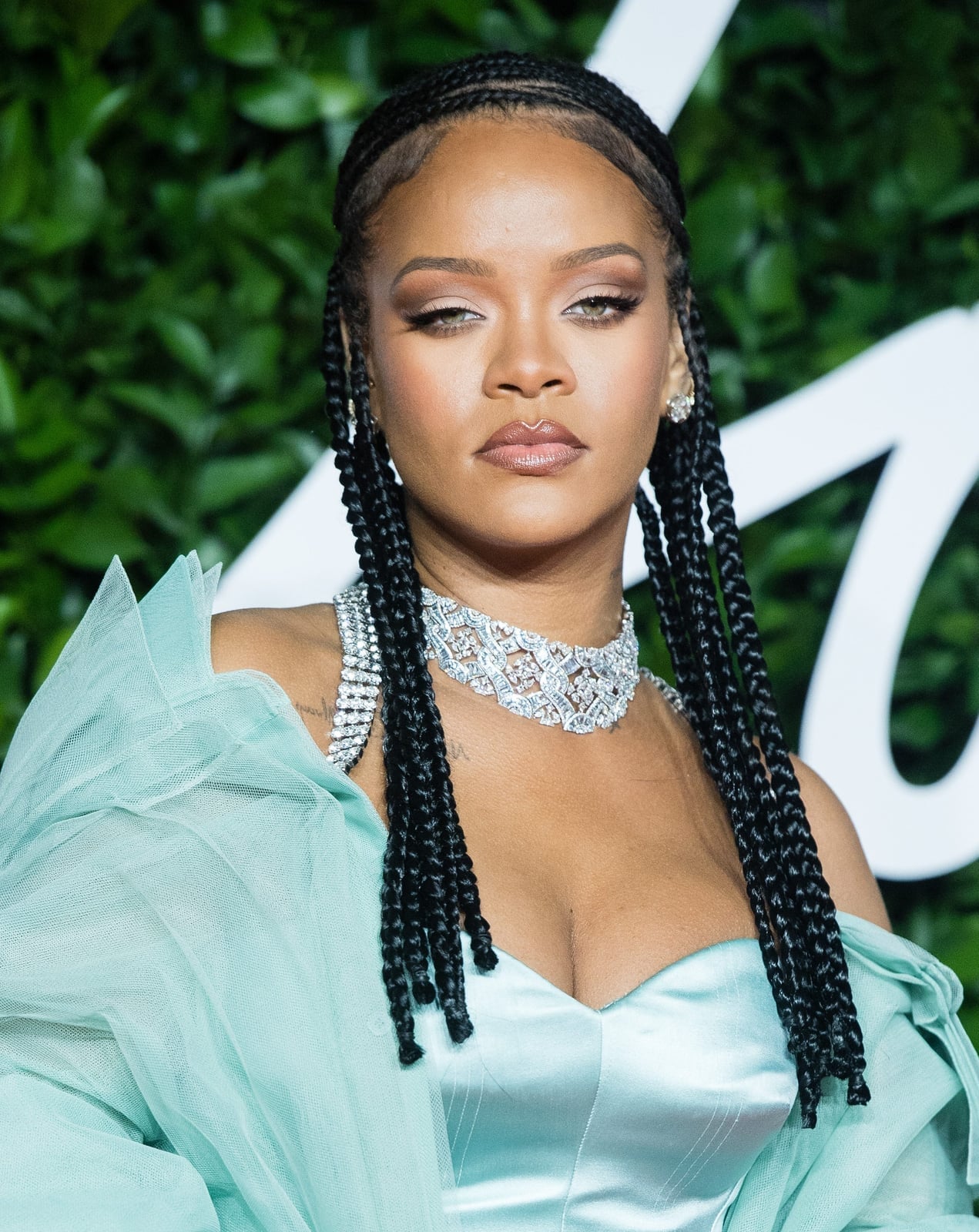
A middle part splits the design cleanly, with each cornrow traveling straight back into a long, thick braid. The deep black color keeps the look neat rather than busy. Ask your stylist for: long thick cornrows with a middle part. Thick, straight hair starting at shoulder length or longer handles the weight best. Keep the ends smooth with a drop of hair serum every few days. The braids hold their shape for two to three weeks before the roots need attention.
A trim before installation prevents the ends from looking ragged as the style wears. You can expect the braids to swing rather than stick, which makes this a practical option for the office or a dinner out. The weight of the braids means you will notice them for the first day or two. That passes.
Curved cornrow design leading to braided pigtails
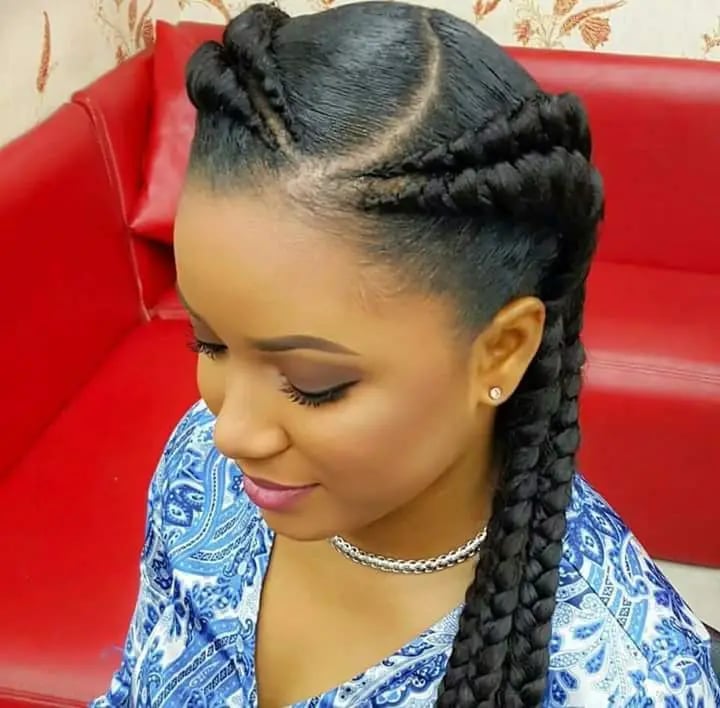
A curved cornrow pattern sweeps across the top of the head before the hair splits into two thick, braided pigtails. The sides are braised flat against the scalp, which gives the whole structure a clean, anchored feel. The sculpted top and the dangling pigtails make the design playful without being severe. Thick, coily hair starting at shoulder length or longer gives the pigtails enough weight to hang properly. It works best for those who want two braided sections. The side part keeps the curved lines visible without them getting lost in the center.
Cornrows with loose wavy curls and highlights
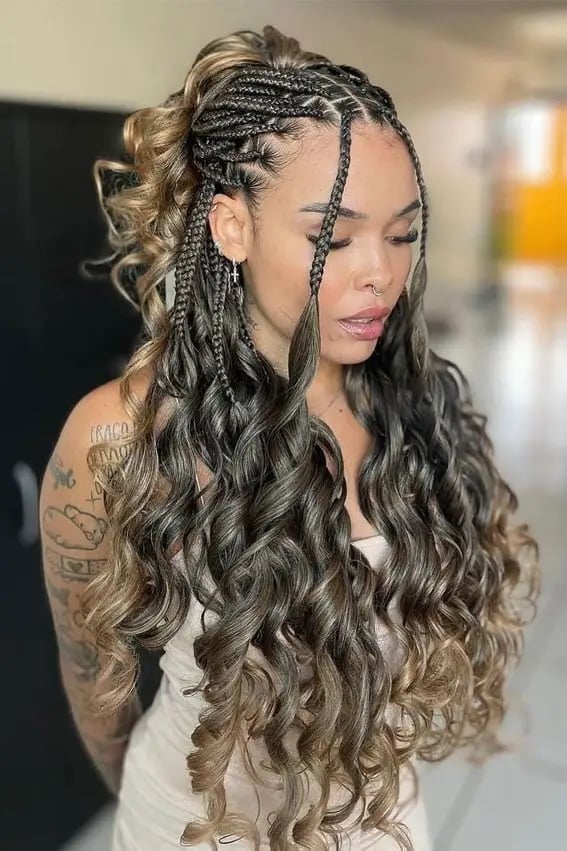
Cornrows at the crown keep the roots neat while the length falls into loose, wavy curls with dark brown and blonde tones woven through. Ask your stylist for: cornrows at the crown into loose wavy curls with highlights. Thick, wavy and curly hair starting at shoulder length or longer gives the curls enough body to hold their shape. It works best as a hybrid of braids and curls, not a fully braided or fully curly look. The centered parting balances the volume on both sides. A curl-defining cream on the ends keeps the texture from turning fuzzy by midday.
Intricate braiding pattern on coily hair
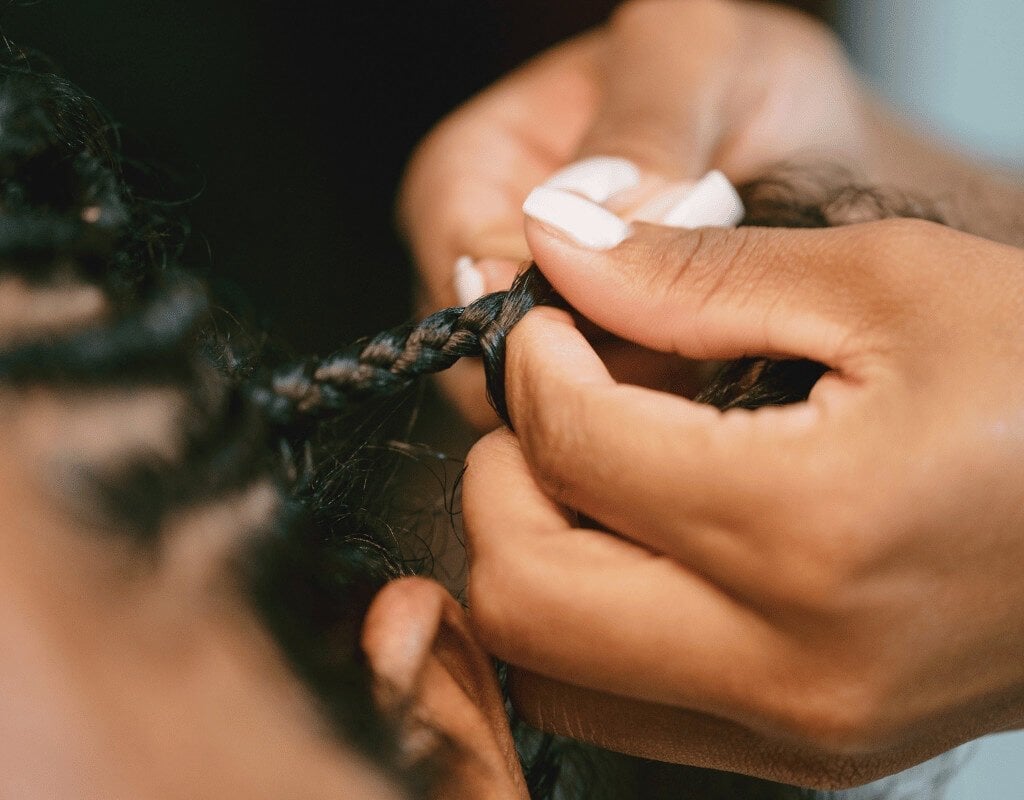
The skill here is in the pattern itself rather than the finished silhouette. Dark brown coily hair is sectioned into neat cornrows with an intricate design that requires steady hands and patience. This is a close-up of the technique, so the focus is on the precision of the rows and the clean part lines. Regular scalp massages between installations keep the hair underneath healthy. The pattern holds best on thick, coily hair because the texture grips the braids without slipping.
Geometric cornrow patterns on the scalp, close-up take
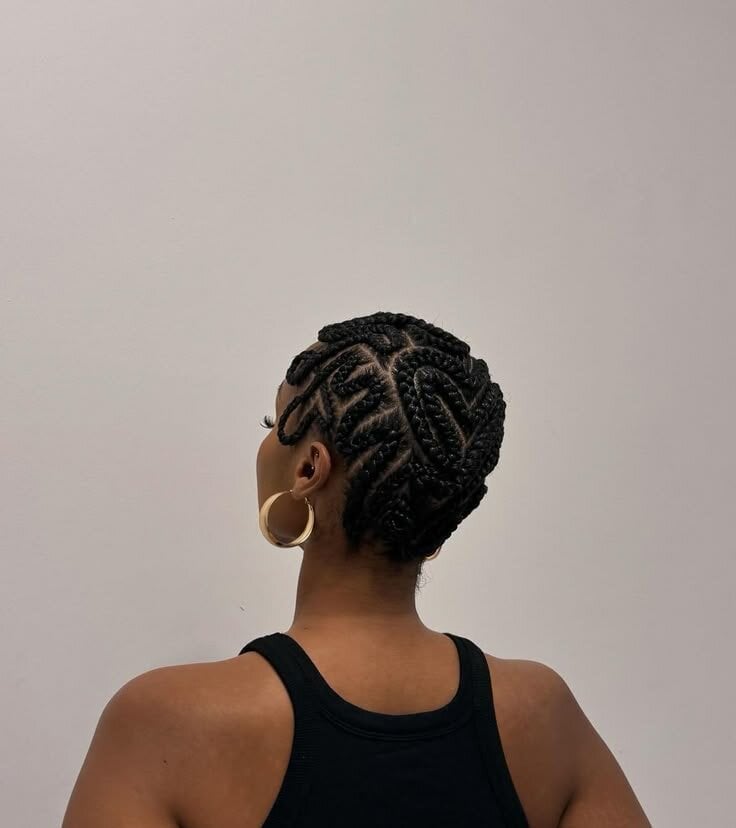
Straight lines intersect with curved sections to create a geometric pattern that sits flat against the scalp. The thick, coily hair is braided close to the skin, which makes the design look deliberate. Ask your stylist for: cornrows in a geometric pattern close to the scalp. A silk scarf at night protects the intricate lines from friction. The pattern works on coily hair of any length because the braids do not need to extend past the nape to make an impact. A style with loose ends or texture is a different look.
Burgundy cornrows styled into a high ponytail
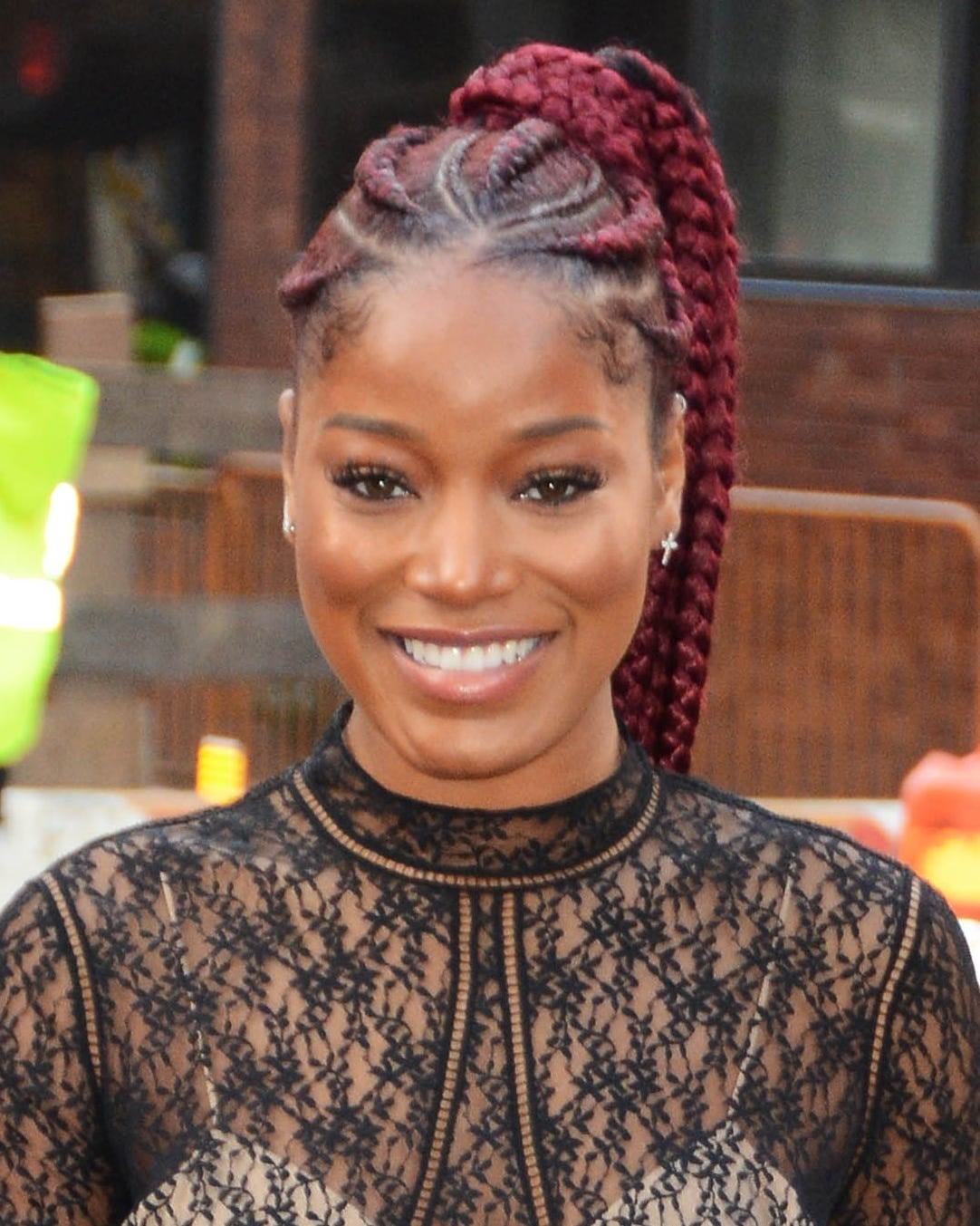
Wondering how to ask for a burgundy shade that actually looks burgundy and not a dark cherry? Intricate cornrows in that color sweep from a middle part into a high ponytail on thick, coily hair. The patterns along the scalp add structure while the ponytail carries the weight. This one announces itself. The ponytail needs a leave-in conditioner every few days to keep the extensions from drying out.
Cornrows transitioning into loose coily braids
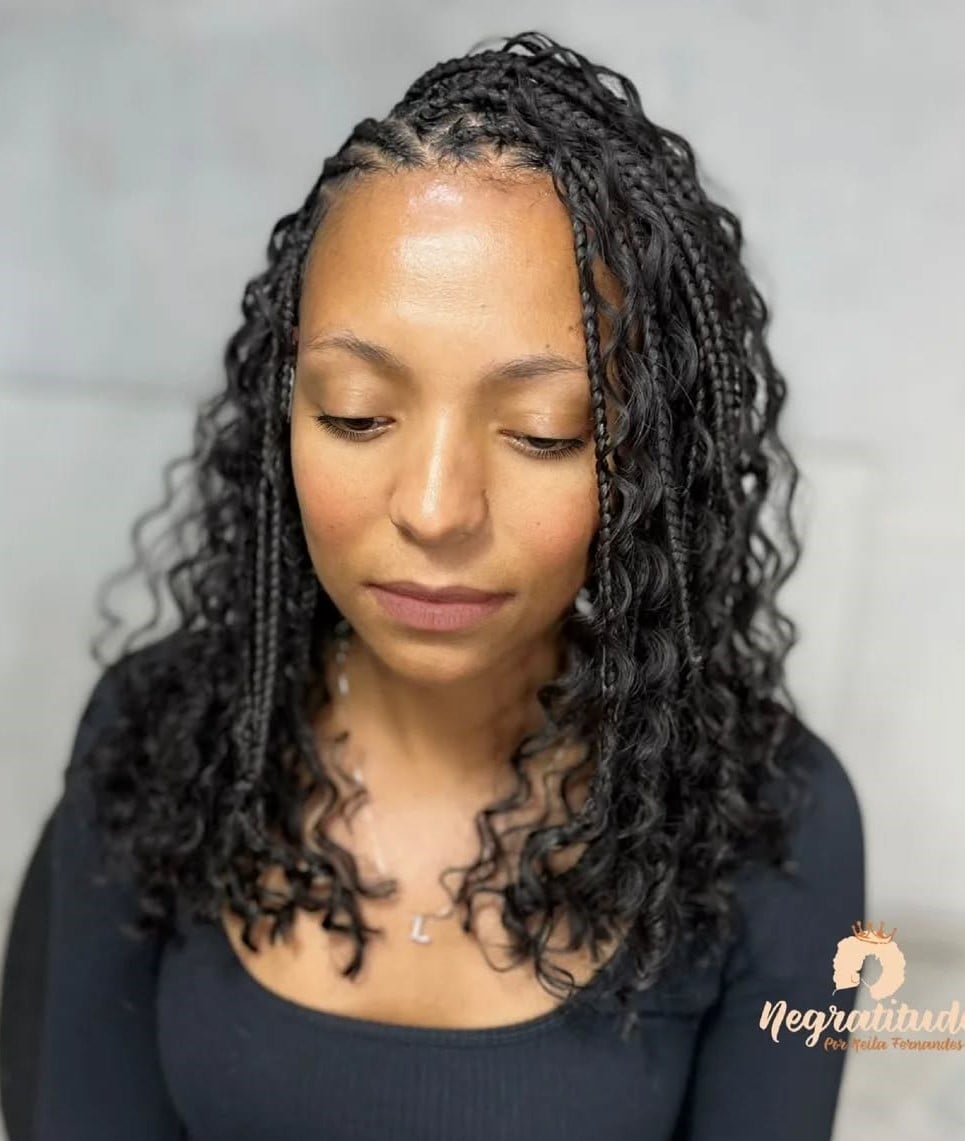
Neat cornrows at the crown give way to loose, coily braids that move like curls but hold their shape. Black, thick, coily hair works best here, starting at shoulder length or longer. The mixed textures mean it suits most face shapes. Ask your stylist for: cornrows at the crown into loose coily braids. The contrast is the point. Gently separate the coily sections every few days to keep the volume up.
Finely braided cornrows with delicate blonde highlights
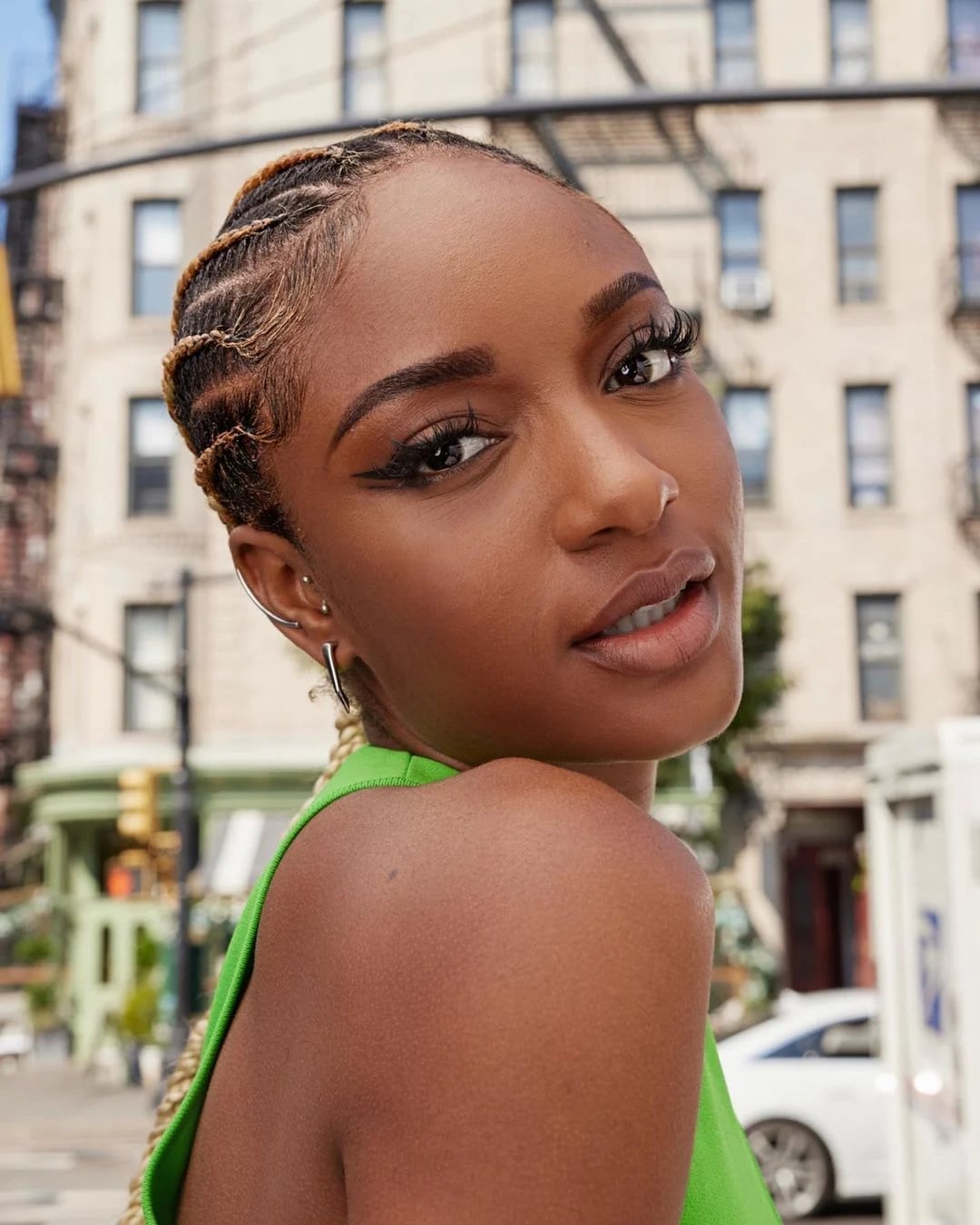
Fine braids running from the hairline, each one carrying a thin blonde highlight that never overwhelms the dark brown base. The precision of the weave makes this look grown-up rather than busy. Coily, fine hair at shoulder length or longer handles the delicate scale best. Pass when you prefer bold streaks or a single solid color. Use a color-safe shampoo at the two-week mark to keep the blonde from warming up too much.
Cornrows into long thin braids with blonde highlights
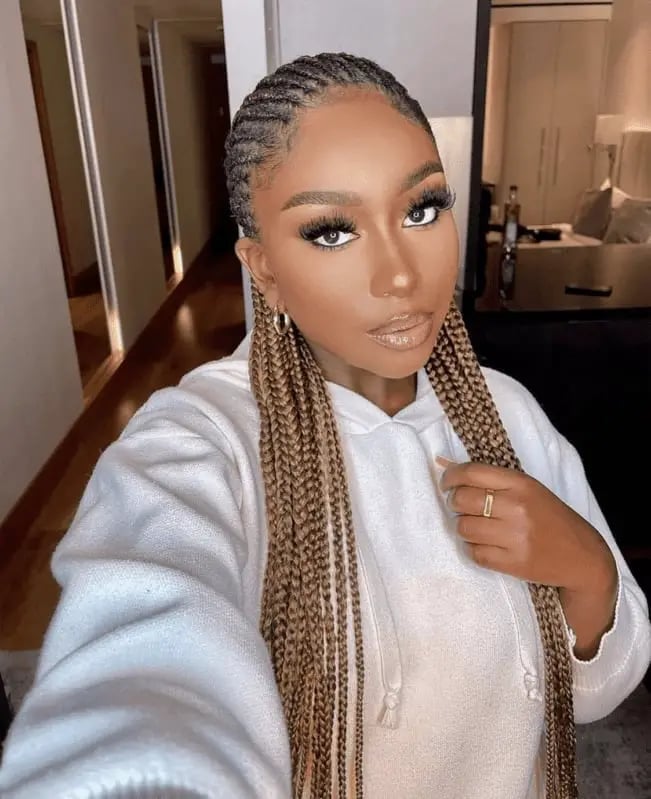
Neat cornrows at the roots lead into long, thin braids that hang past the shoulders. A middle part keeps the symmetry clean. Dark brown forms the base, with blonde highlights threaded through the braids at intervals. Thick, straight hair starting at shoulder length or longer suits this best. The thin braids need weight to hang properly. The catch: skip this if you want thicker braids or a solid color, since the highlights are part of the design. Ask your stylist for: cornrows into long thin braids with subtle blonde highlights. Apply a light oil to the ends every few days to prevent fraying.
Sleek black cornrows in a geometric pattern ponytail
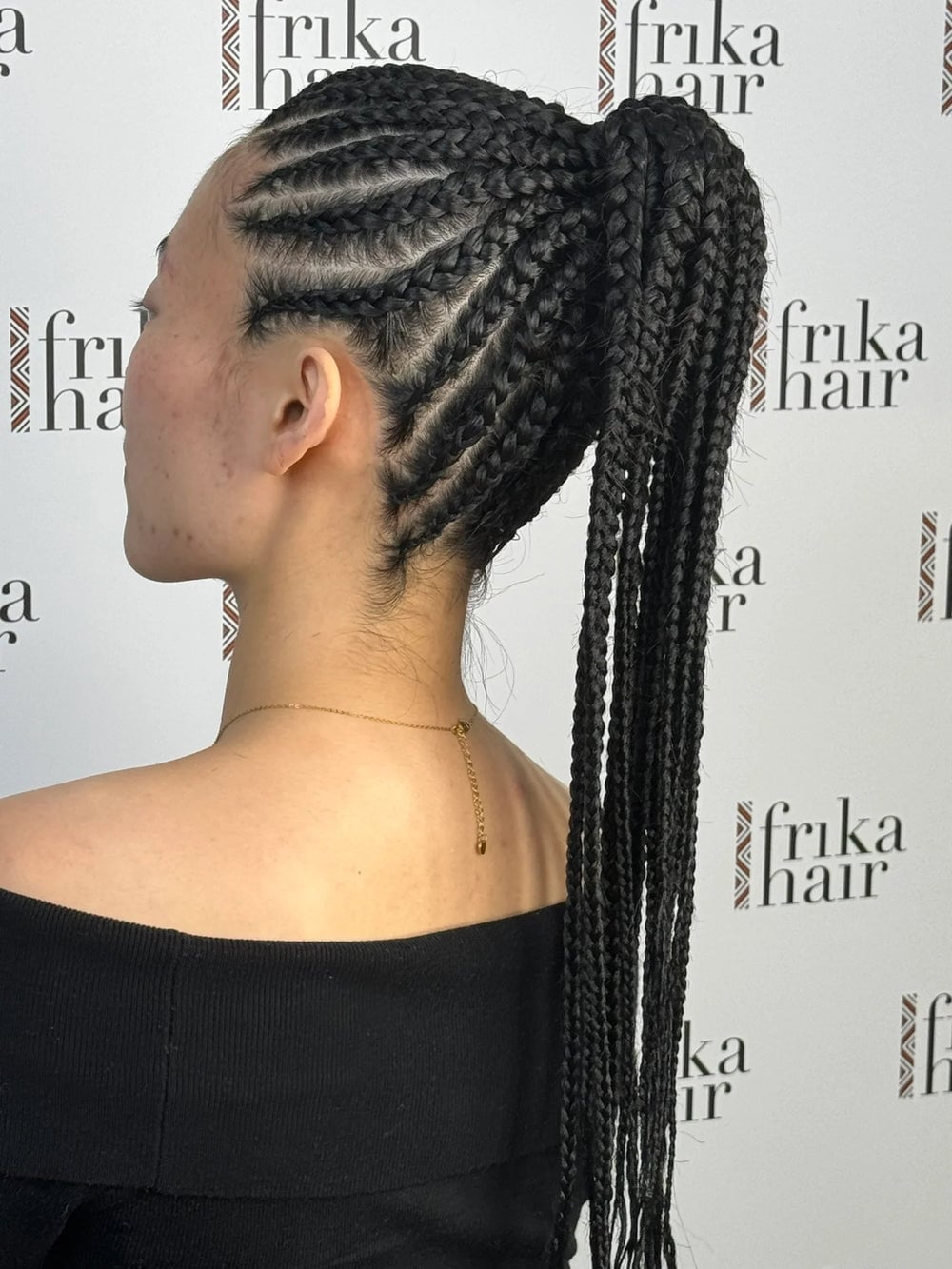
Cornrows parted in sharp geometric lines from the hairline to the nape, all feeding into a high ponytail. The black shade keeps the focus on the pattern rather than the color. Thick, straight hair holds the crisp parts best. A fine-tooth comb during styling keeps the parts sharp for the first week. This is not the style for loose or casual days. It is architectural by design.
Neat cornrows into long thick plaits with undertones
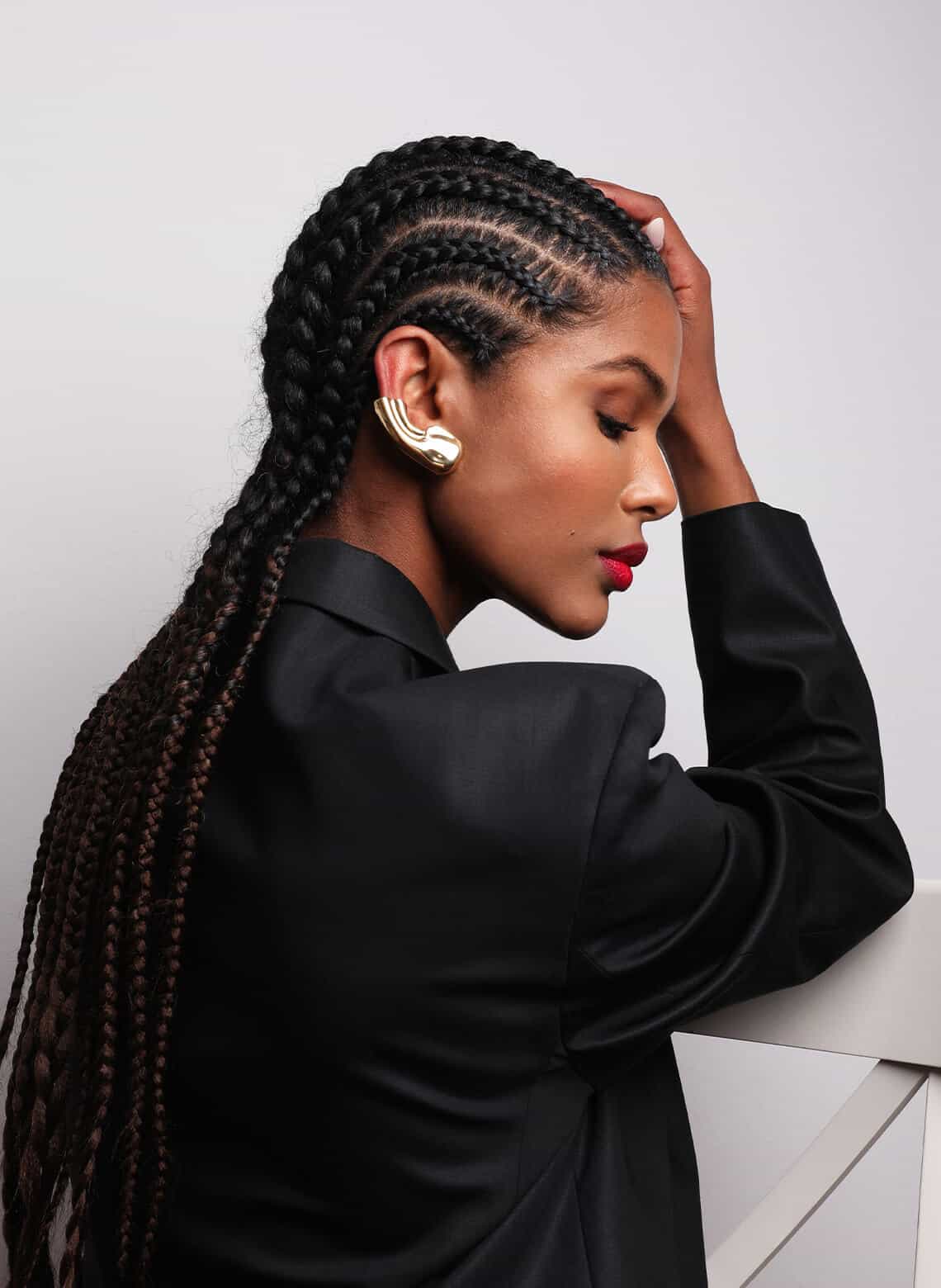
Neat cornrows travel from the hairline into long, thick plaits, the black base warmed by subtle brown undertones. This is a style that holds its shape for weeks, provided you treat the plaits like a commitment. Thick, straight hair starting at shoulder length or longer carries the weight best, and the middle part suits most face shapes. The undertones and the heft are the whole point. Ask your stylist for: neat cornrows into long thick plaits with subtle brown undertones.
Upkeep is about smoothness, not structure. A braid balm worked down the plaits keeps flyaways at bay and the shine even. The intricate braiding takes time in the chair, so plan for a longer appointment. Between visits, wrap the ends at night to stop them from frizzing into a different hairstyle by morning.
Black cornrows with delicate baby hairs
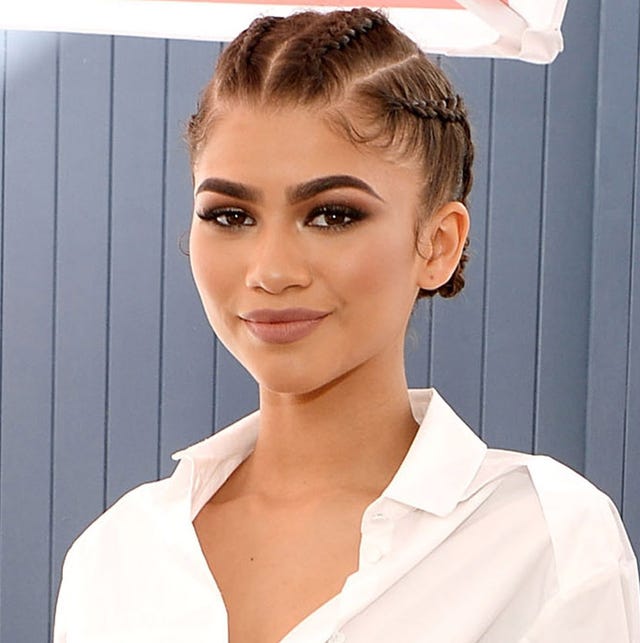
Front parting, backward sweep, and the baby hairs are the quiet star here. They are styled along the hairline in soft shapes that turn a plain cornrow set into a deliberate look. Coily hair starting at shoulder length gives the braids enough grip to stay neat. It suits most face shapes, and the front parting adds a touch of symmetry. The styling is what makes it work. The effect is precise, almost architectural, and it stays salon-fresh for the first week.
Dark brown cornrows with zig-zag parting
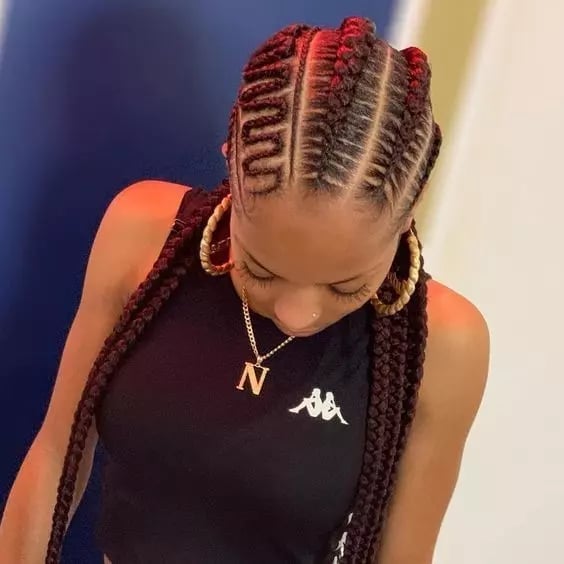
Zig-zag parting down the center turns a familiar style into a conversation. The dark brown braids are thick and straight, and the parting adds a graphic line that draws the eye. Thick, straight hair starting at shoulder length or longer holds these cornrows well, and the pattern suits most face shapes. A traditional middle or side part is simpler; this one is the point. Ask your stylist for: thick dark brown cornrows with a zig-zag center part. The parting needs a steady hand, so book someone who has done geometric work before. The finish is sleek, and the pattern stays sharp for a solid stretch.
Sleek black cornrows parted down the middle
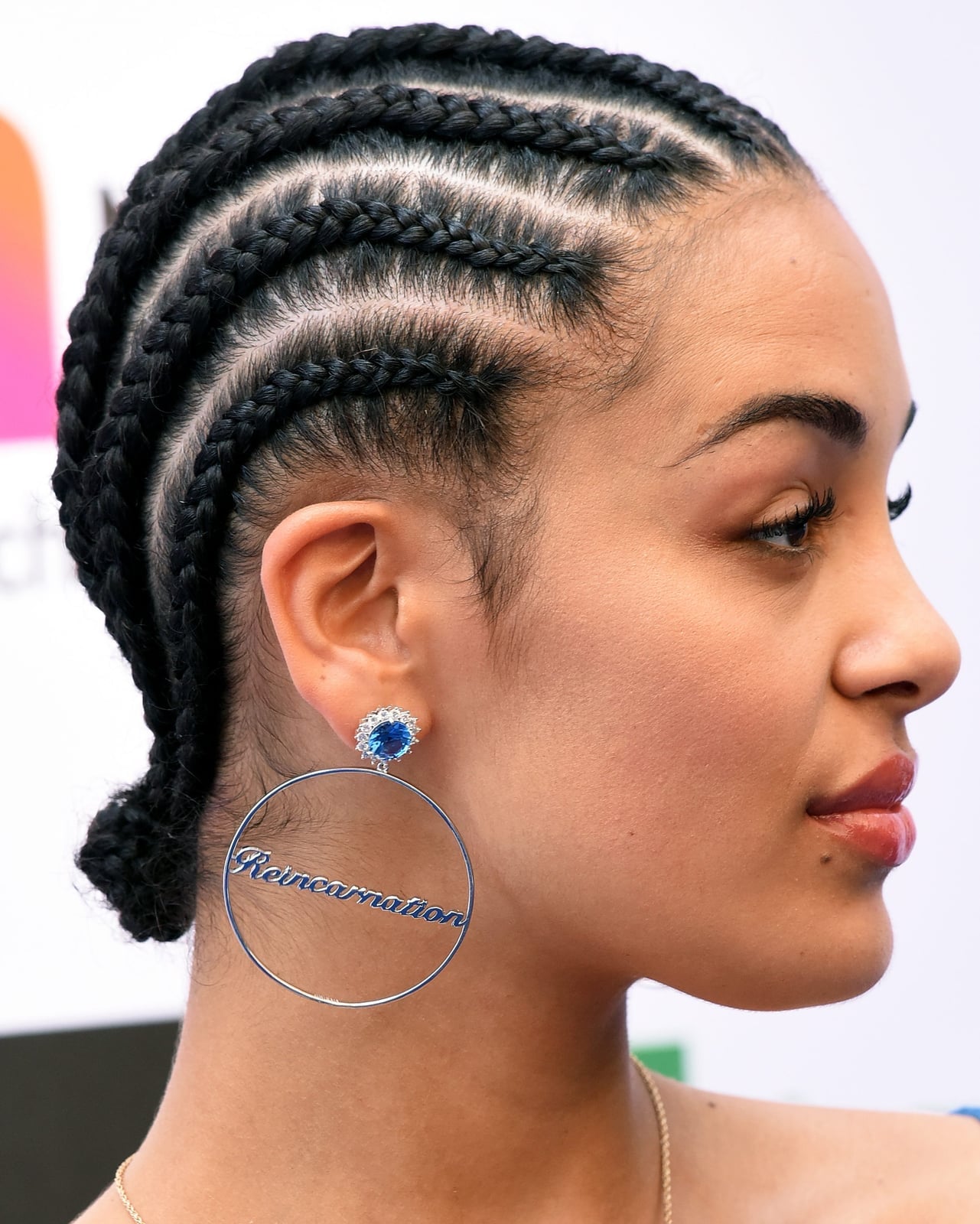
A neat middle part splits black cornrows into even rows, the thick coily texture tight and uniform. It is the plain-spoken cousin of geometric styles, and that is its charm. Thick, coily hair starting at shoulder length gives the braids body, and the symmetry flatters most faces. The sleekness depends on the tension of the braids. The part holds its line, and the overall look looks professional without trying to be anything else.
Cornrows braided into a sleek bun with baby hairs
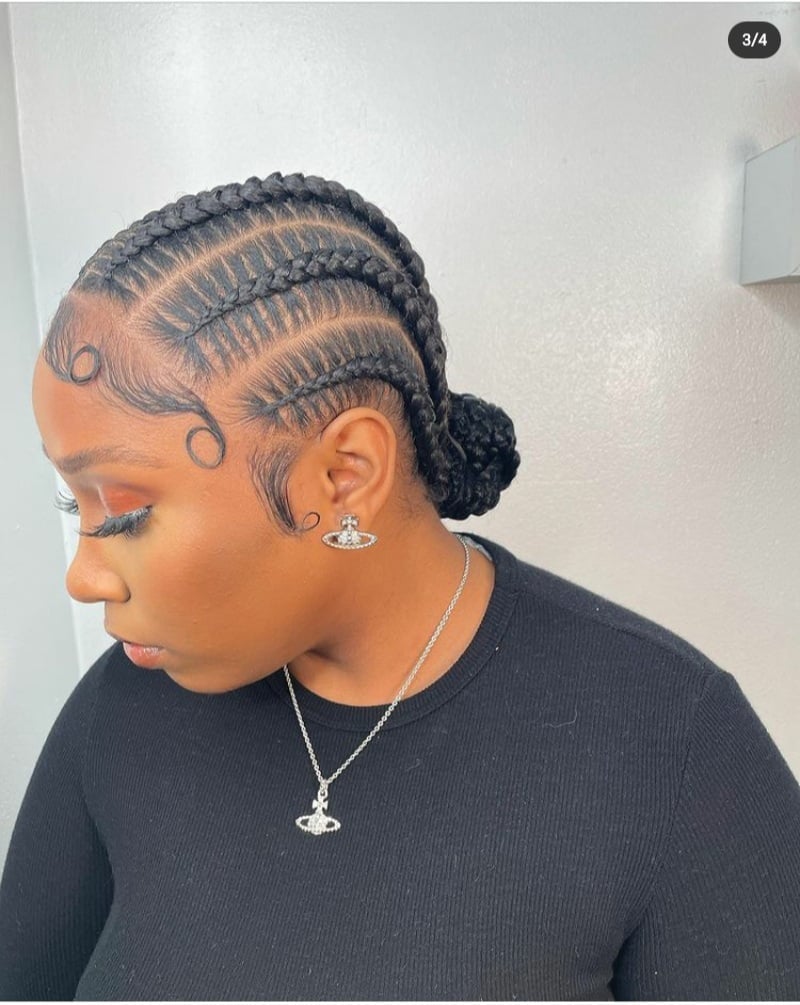
A practical rule for cornrows: if you want a style that stays put, end it in a bun. Here, defined cornrows run from the hairline to the nape, then gather into a small, sleek bun. Baby hairs are styled in swirls along the hairline, which softens the whole construction. Thick, coily hair starting at shoulder length gives the bun enough mass to look deliberate. This suits most face shapes, but the height of the bun can elongate a round face nicely. This is a gather-and-go situation.
Ask your stylist for: cornrows into a sleek bun with styled baby hairs. The parting is intricate, so expect a longer session. The bun holds through a workday and into an evening, and the baby hairs stay put with a touch of edge control. It is a style that looks finished from every angle.
Neatly braided cornrows on thick coily black hair
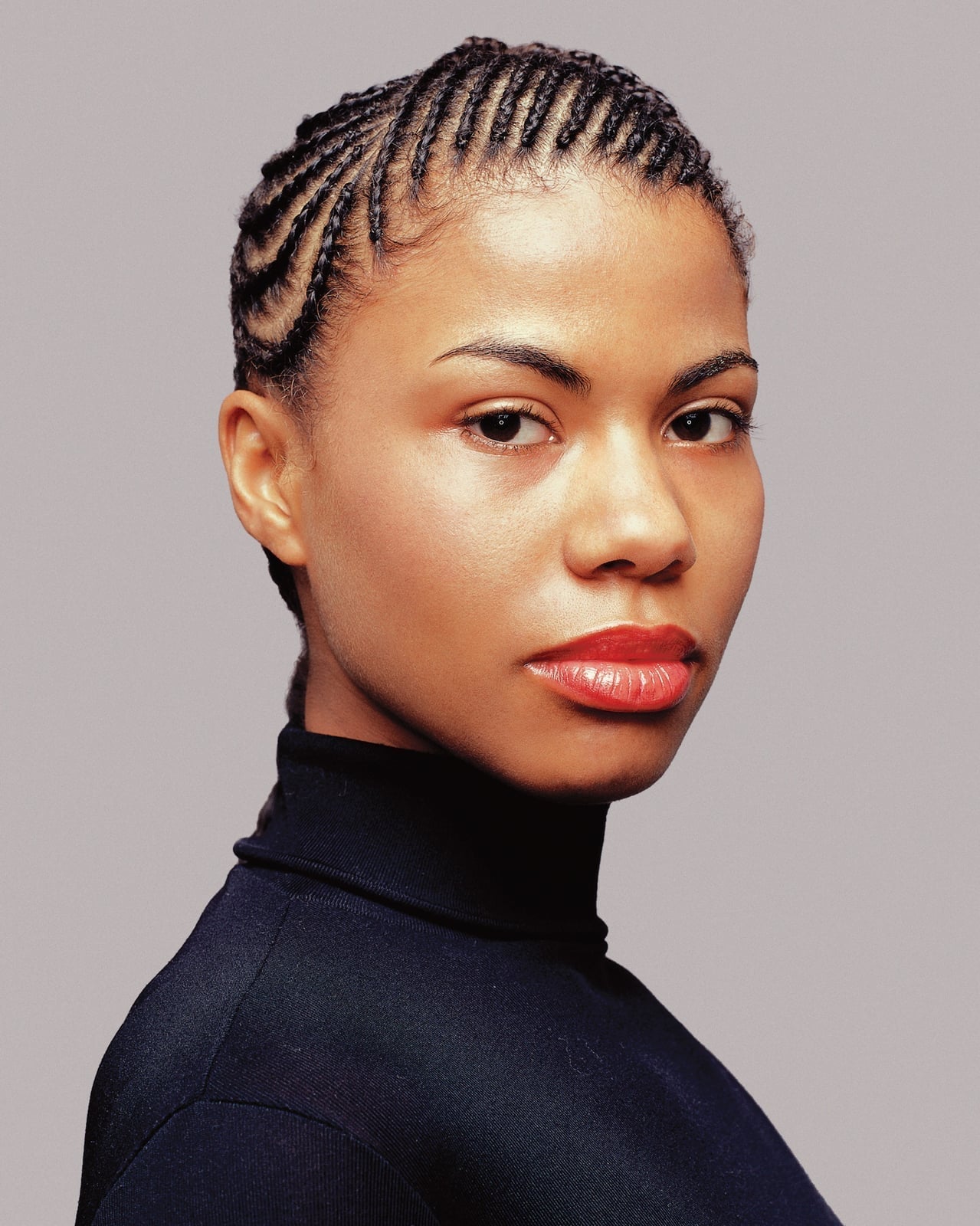
Compare this to a style with looser braids. Thick, coily hair starting at shoulder length or longer holds this look best. The middle part and tightly woven cornrows create a sleek, neat finish that stays put. Skip it if you have fine hair that may not hold such tight braids.
Heart-shaped cornrow pattern into a low bun
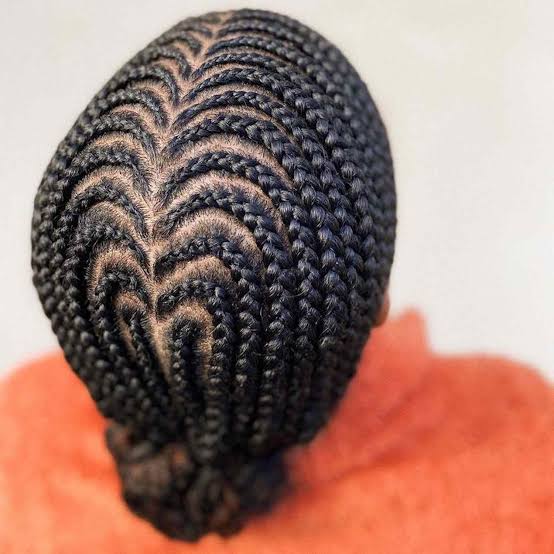
This one is built from the crown forward. The stylist sections the hair into a heart-shaped pattern at the top, then braids each section straight back into a low bun. Black, straight, thick hair at shoulder length shows the clearest shape. Ask your stylist for: cornrows in a heart shape at the crown into a low bun.
Cornrows with curly extensions and a middle part
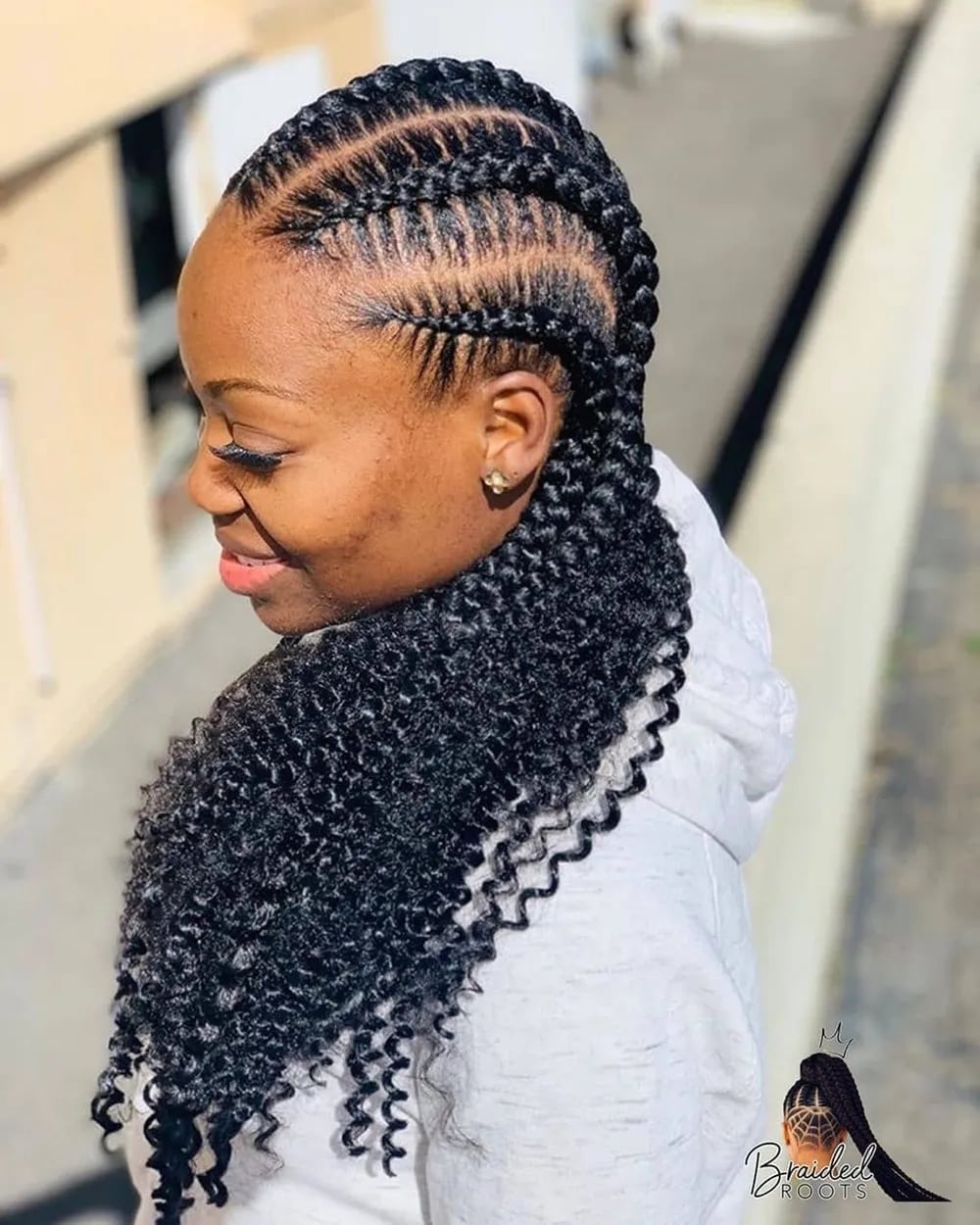
Extensions change the weight. The cornrows at the hairline are braided tight and flat, then transition into long, voluminous coily extensions that hang past the shoulders. A middle part keeps the look symmetrical. Use a wide-tooth comb to detangle the curly ends gently.
The hold on this one is good for two to three weeks before the roots need attention. The catch: the extensions add weight, so the braids at the nape need to be secure.
Neatly parted cornrows on thick coily hair
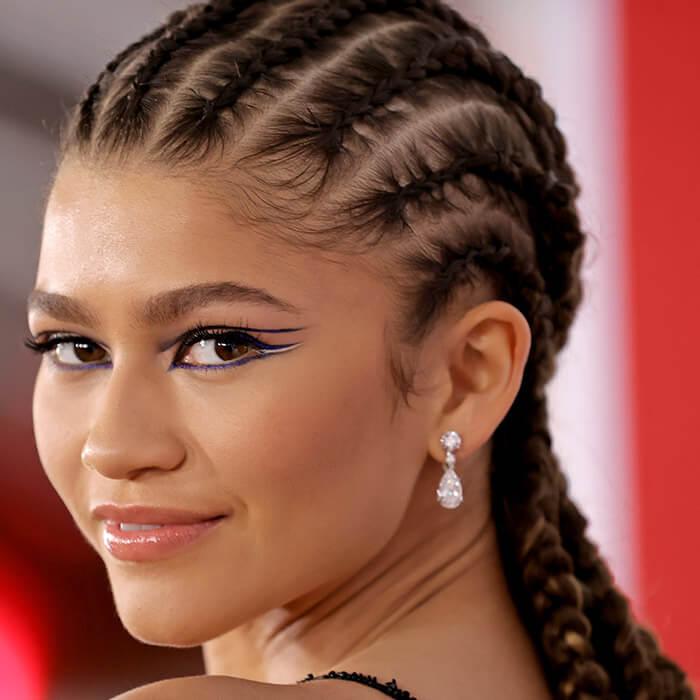
The mistake is letting the parts get uneven. Thick, coily hair in a dark brown shade shows every line, so the parting needs to be precise from the start. Ask your stylist for: neatly parted cornrows on thick coily hair. Skip it if you have fine hair that struggles to hold intricate braids. The pattern holds its shape for a solid week before any frizz appears.
Two large symmetrical cornrows
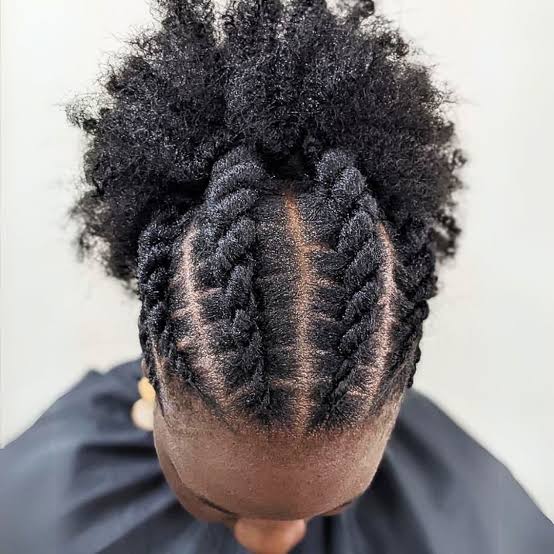
Book it as two large symmetrical cornrows from forehead to back. The part is exactly center, and each braid is thick enough to cover the scalp completely. Coily, thick black hair at shoulder length or longer gives the best volume. Keep the scalp between the large cornrows moisturized. Pass when you prefer a style with many smaller braids.
Swirled cornrow pattern into wavy braids
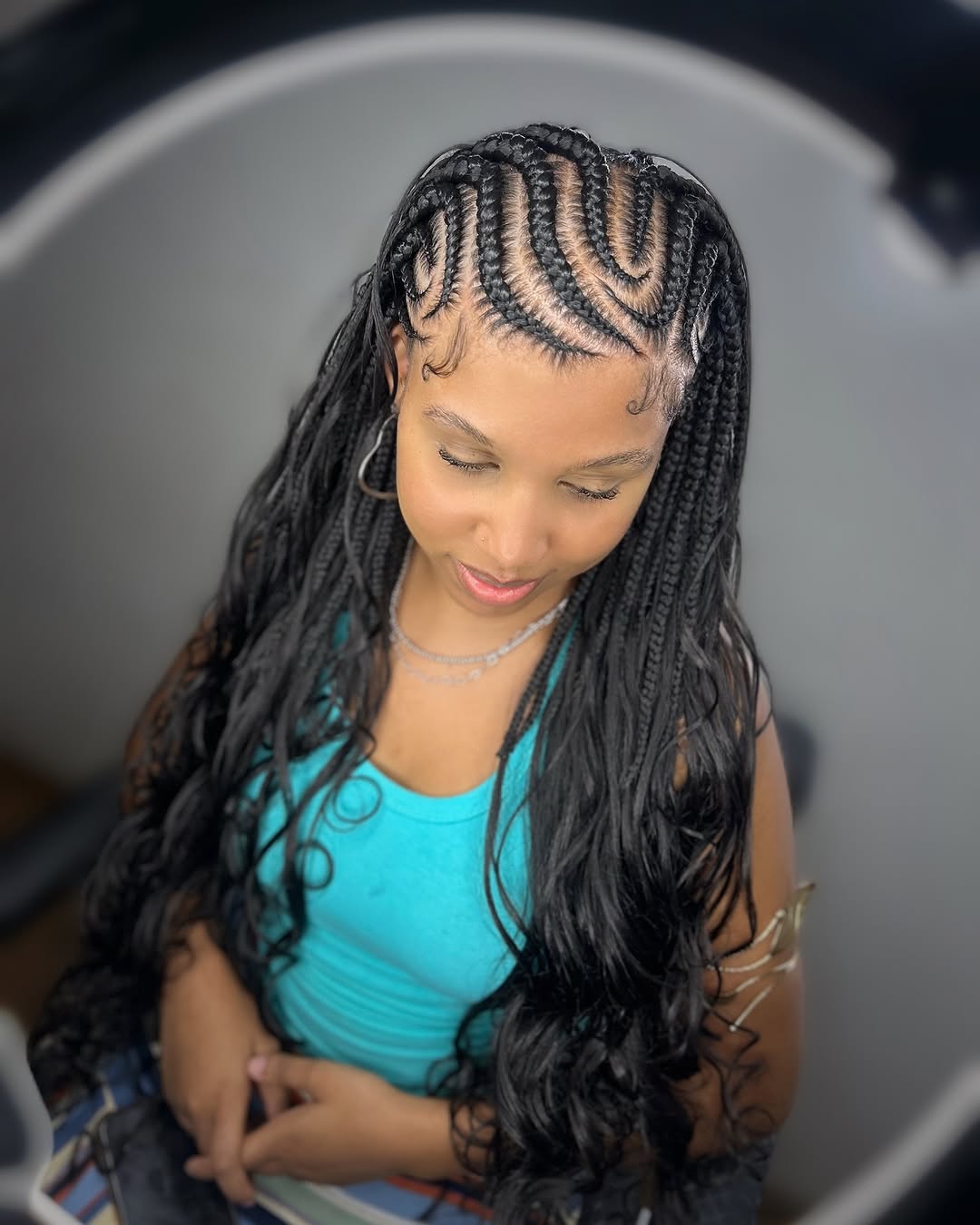
Set this against a standard cornrow style that ends in straight braids. The difference is the crown: a swirled pattern that pulls the eye upward before the hair drops into long, wavy braids. Black, thick hair with a natural wave holds this shape best, and you need at least shoulder length to let the wavy section fall properly. Ask your stylist for: cornrows with a swirled crown pattern into long wavy braids. Skip it if you want a fully braided or fully wavy look, because this one splits the difference.
Face shape matters less here than density. The swirl needs enough hair to read clearly, and the wave needs enough weight to keep from shrinking into a curl. A silk scarf overnight keeps the wavy braids from frizzing at the transition point. The hold is solid for a week, then the wave softens. That is the trade-off for the texture change.
Neat cornrows lead into long braids with blonde tips
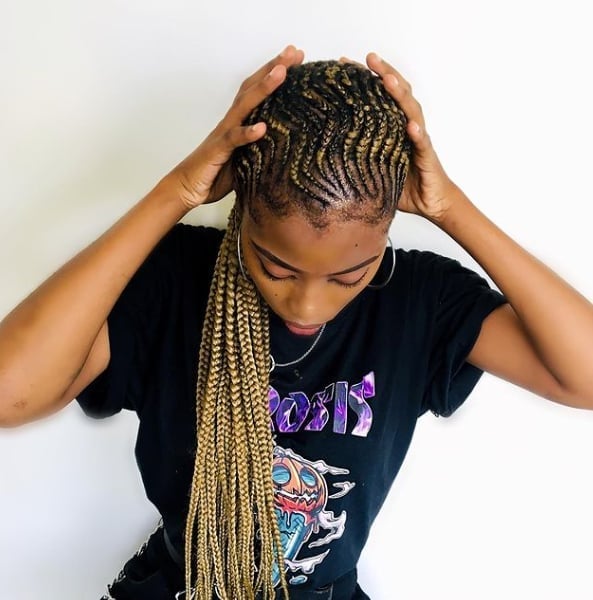
You see the blonde tips first, then the dark brown base underneath. That contrast works because the color is concentrated at the ends, not scattered through the whole braid. Neat cornrows at the scalp lead into long, thick braids that fall straight past the shoulders. Thick, straight hair starting at shoulder length gives the best canvas.
The upkeep rule is simple: the blonde tips need a light serum every few days to stay bright and smooth. Brassiness shows up faster on the ends than it would on a full highlight, so a purple shampoo once a week keeps the tone clean. Skip it if you prefer highlights running through the whole braid rather than concentrated at the tips. The hold is strong for two weeks, and the color placement stays sharp as long as the braids stay sealed.
Final Thoughts
Pick the cornrow style that fits your life.
- Limited time for upkeep: Go for larger, simpler cornrows.
- Want maximum length and drama: Try cornrows with extensions or long braids.
- Love intricate patterns: Book extra salon time for geometric or swirled designs.
- Need to protect edges: Choose a style that avoids tension at the hairline.
Find the cornrow style that speaks to your personal aesthetic and lifestyle.