You are sitting in the chair, the consultation sheet between you and the stylist, and the question is not whether locs suit you but which version you want to live with for the next few months. The answer matters because starter locs have a long grow-out window: the first six weeks are about training the hair to hold its shape, not changing your mind.
That is why Charming Starter Locs 2027 fill so many saved boards: 28 ways to wear the style, from air-dried mornings to geometric updos that last through a workweek. For thick, coily textures and for fine strands that need a firm base, this collection solves the what-do-I-do-with-it problem before the first twist has set.
Natural starter locs for a thick, coily texture
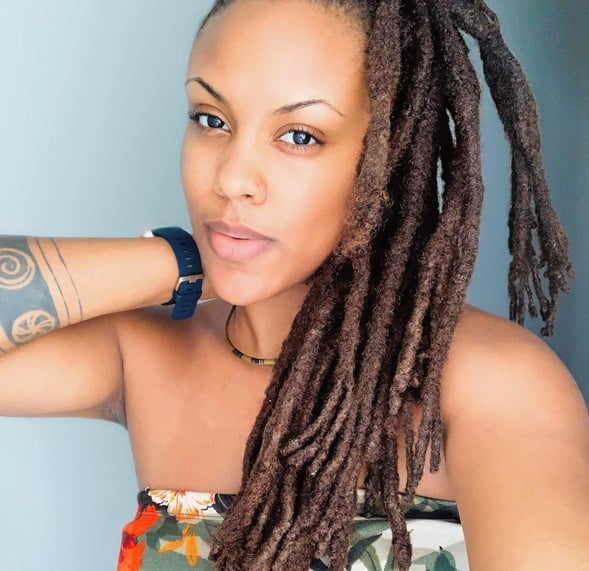
Dark brown starter locs, air-dried and left alone, show exactly what the texture can do on its own. The coily thickness gives each loc body without product or manipulation. A front view confirms the shape is holding, no stray sections, no uneven shrinkage. This is the starting point that proves you do not need a style on top of a style. The catch: maintaining that even shape means salon visits every four to six weeks while the locs settle. Ask your stylist for: natural air-dried starter locs.
Neatly sectioned starter locs ending at the ear
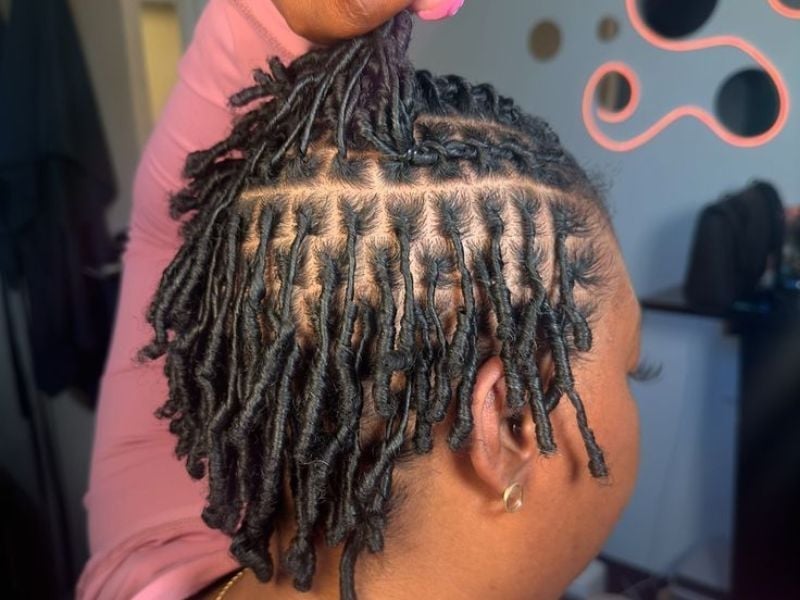
A middle part this clean on starter locs requires precise parting from the start. The ear-length finish keeps the weight off your neck while the coily, thick texture fills each section evenly. The precise parting is the detail that separates a fresh install from a grown-out one. It suits a structured, neatly sectioned grid.
Long, dark brown starter locs styled naturally
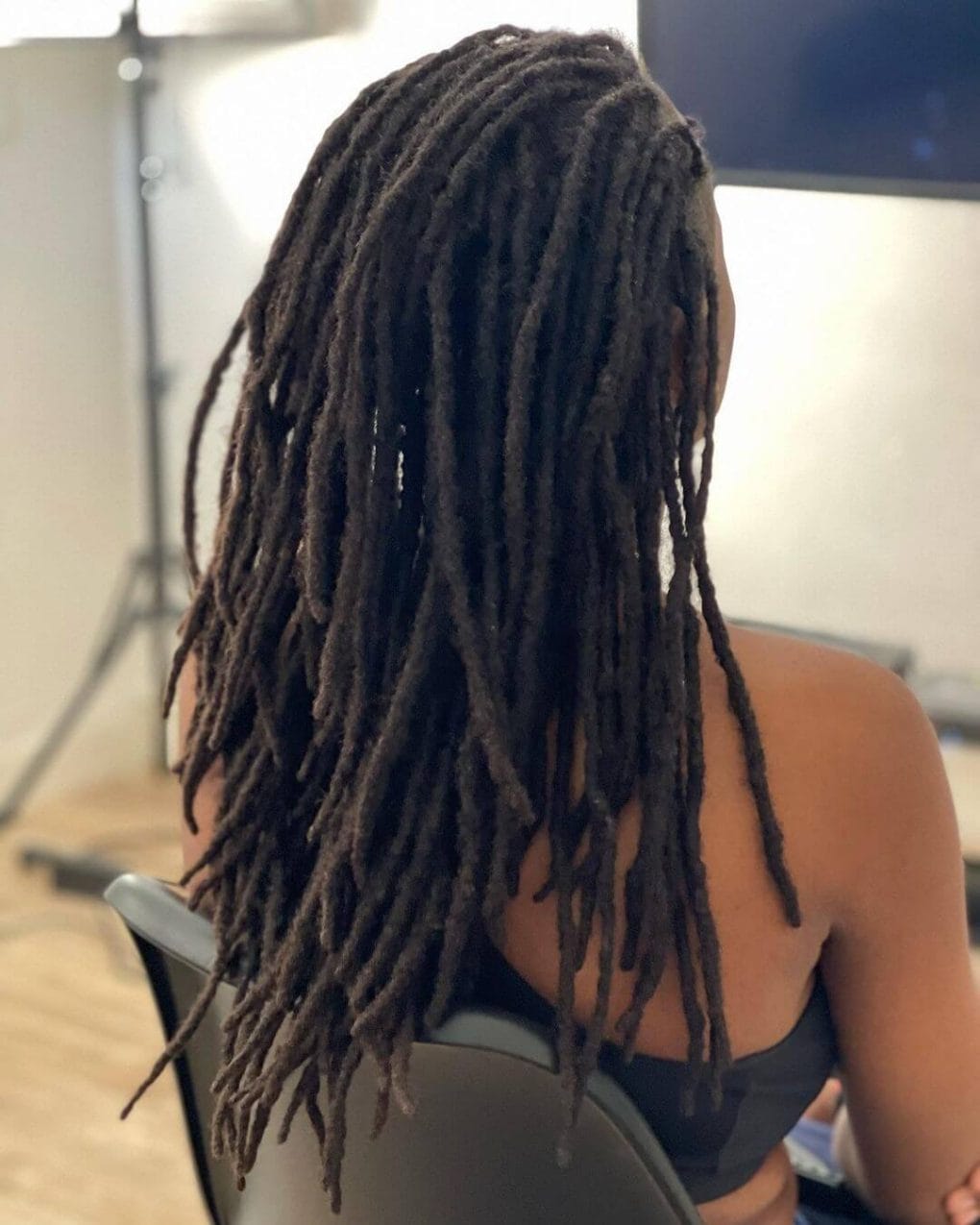
Long starter locs in dark brown, air-dried and falling past the shoulders, prove that length and texture can coexist without a fight. The coily thickness keeps each loc defined rather than fuzzy. A few strands fall forward, which is the kind of detail that happens on its own, not from a curling iron. Upkeep is straightforward but non-negotiable: salon visits every four to six weeks for retwisting and shape maintenance. Satin at night keeps the ends from fraying. A light spritz in the morning refreshes the coil pattern without re-wetting the whole head. That is the routine. It works because it is simple.
Two-toned high ponytail with dark brown and blonde locs
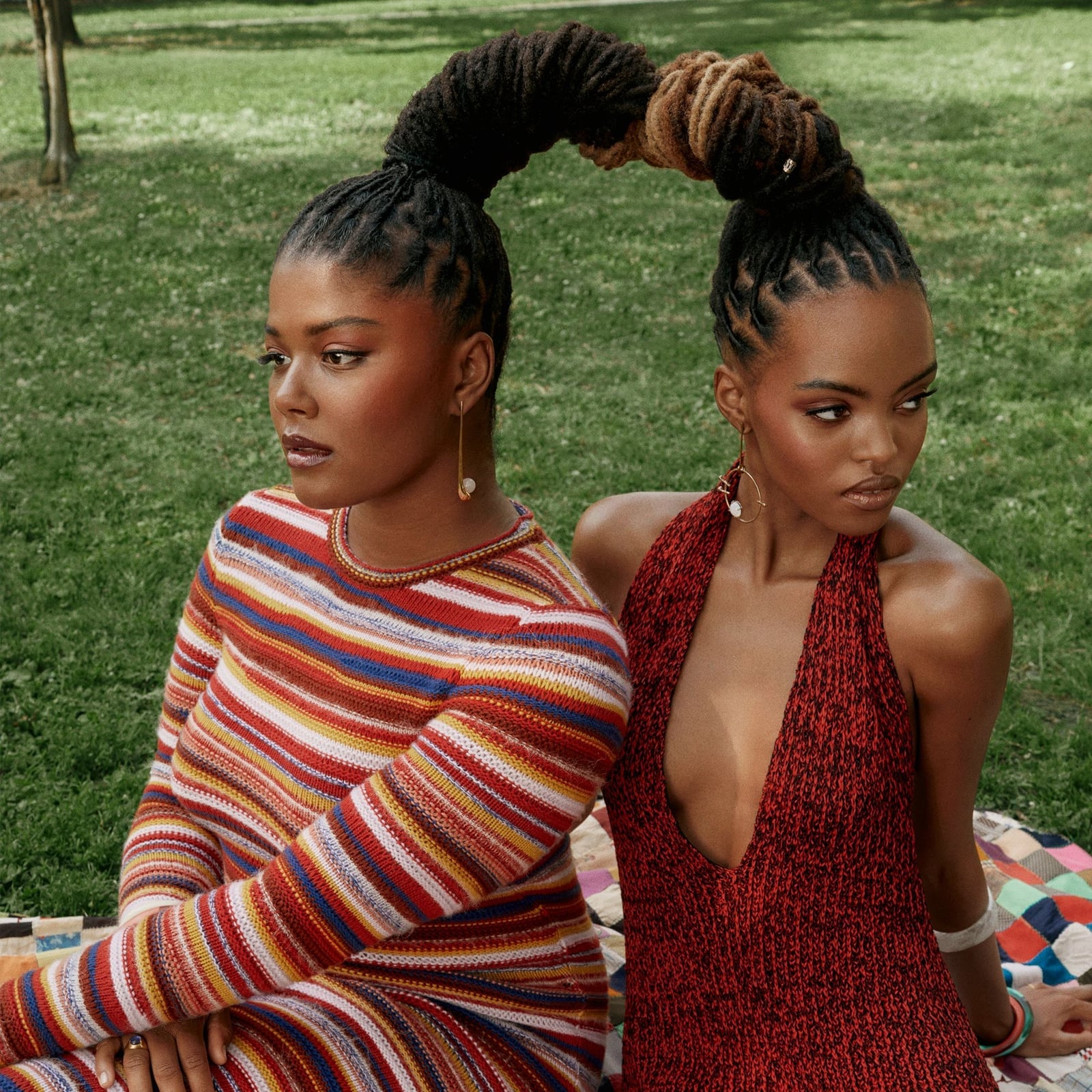
A single-color ponytail is neat. A two-toned one with dark brown roots fading to blonde ends is a different category. The high placement lifts the color transition into view, so the blonde looks deliberate, not grown out. This is a salon-only ask. The color application and the ponytail construction both need a professional hand. A DIY version would lack the clean gradient and the secure hold. Choose the salon version to get the contrast exactly where it lands here. Stick with a single shade throughout your locs if that is your preference.
High ponytail starter locs for thick, coily hair
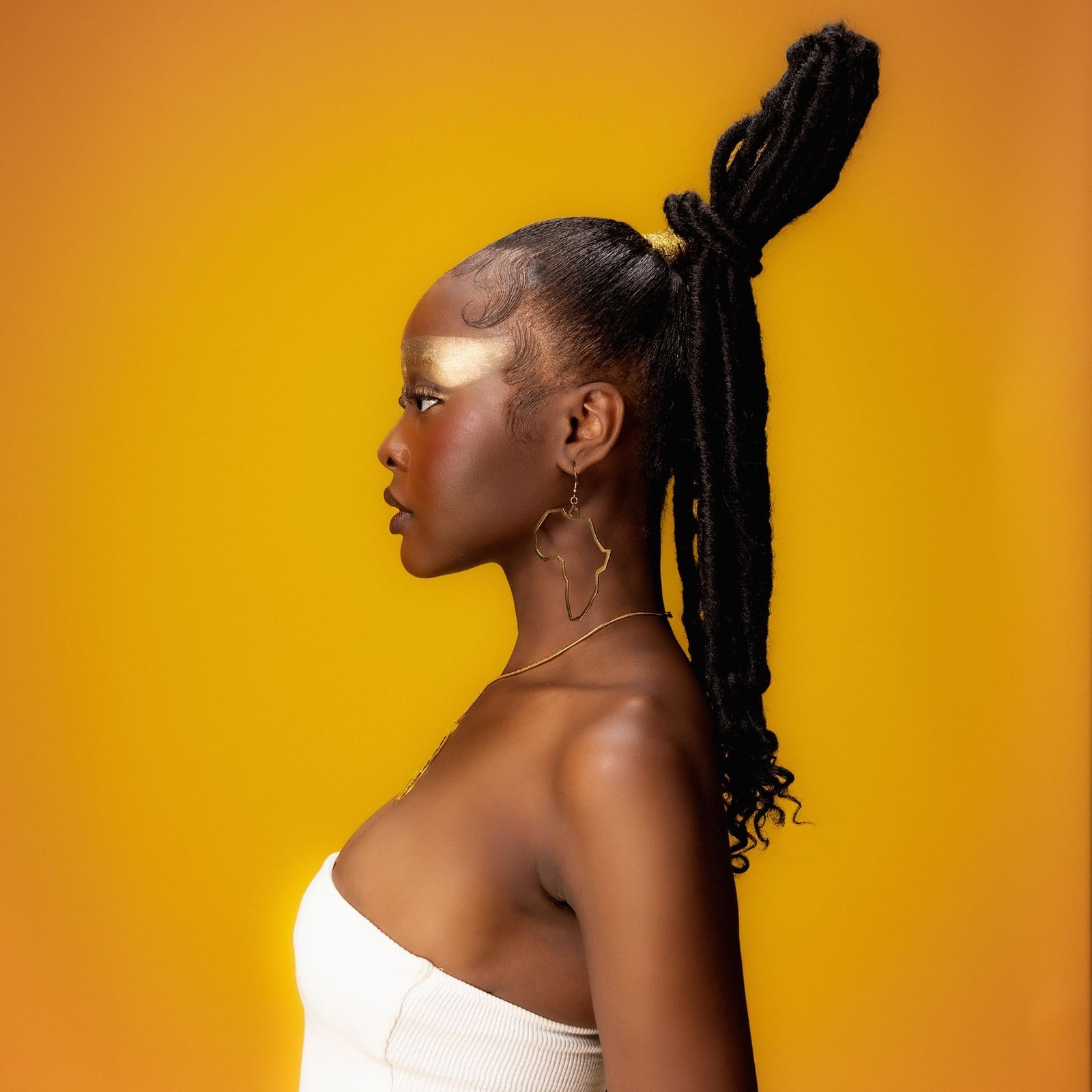
Neatly pulled back, a high ponytail on starter locs shows off the clean lines of the sections and the slight curl at the ends. The coily, thick texture gives the ponytail volume without teasing or product buildup. One real drawback: the tension at the hairline. A high ponytail every day can stress the edges, so alternate with looser styles. The hold is solid, a strong hair tie and the locs own weight keep it in place. Skip it if you prefer your locs worn down and free.
Short bangs framing the face on short starter locs
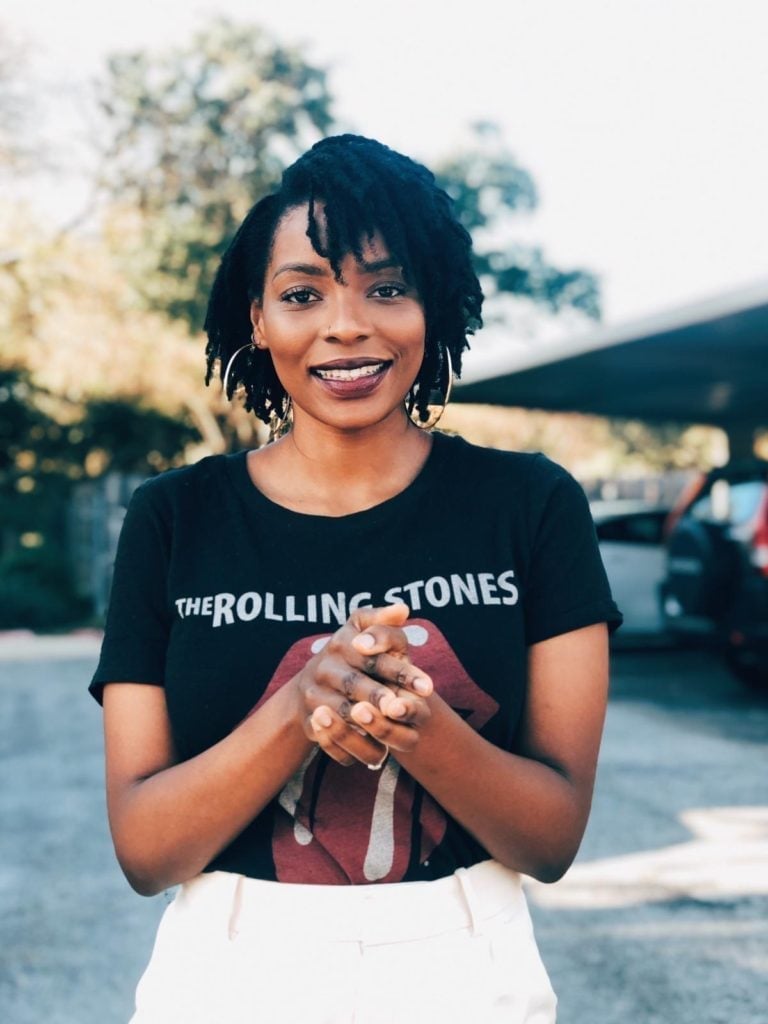
Short bangs cut straight across meet a middle parting and coily texture that stands up from the scalp. You need thick, coily hair starting locs and a willingness to commit to the bang length. Skip it if you do not want bangs. They need trimming every few weeks to stay off your eyes. Tell your stylist: short starter locs with short bangs. Styling means brushing bangs forward with a small brush while the rest is pinned up. The hold relies on the loc formation itself.
DIY starter locs styled naturally with a side part
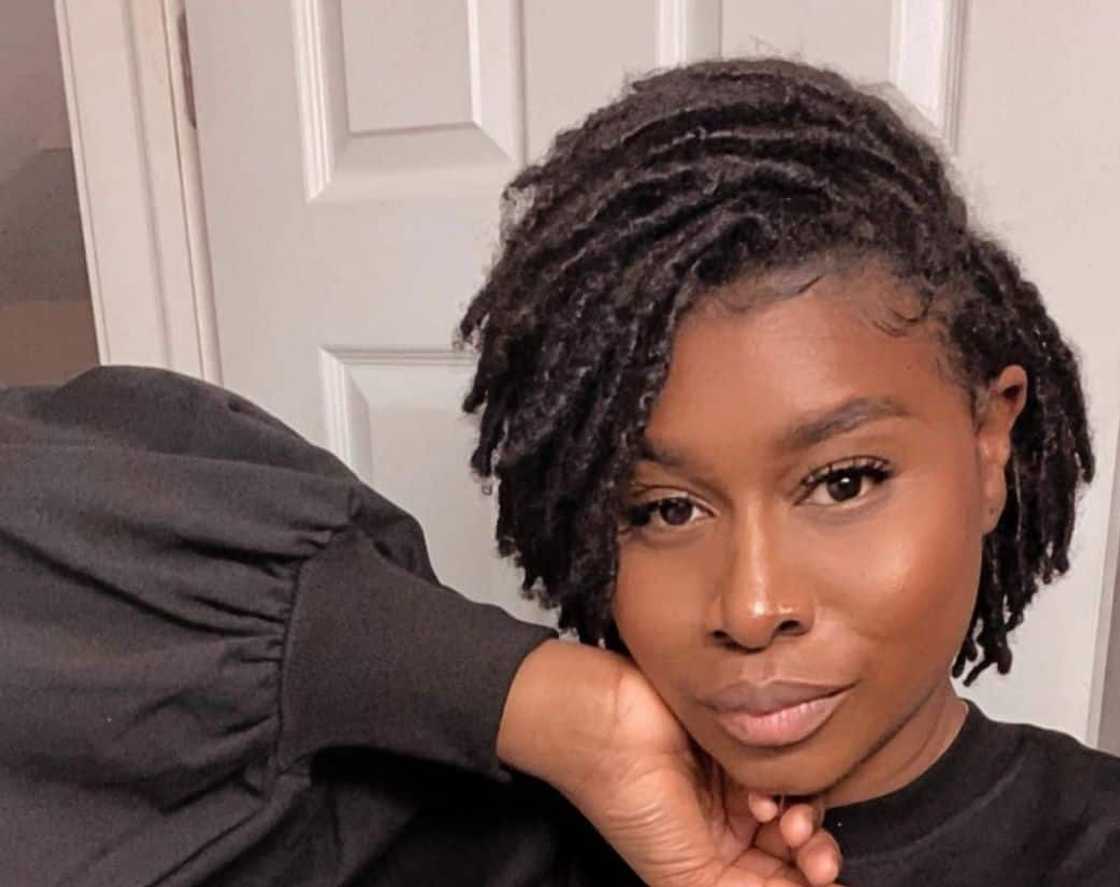
Can you get a side part with coily starter locs without a salon appointment? Yes, and the photo proves it. Part your damp hair where it naturally falls, then let it air dry. Short locs mean less sectioning work, and the wisps framing your face add softness without effort.
A side part works best on short, coily hair that is just beginning to loc. The texture grabs hold quickly, so you need minimal product. A light hold gel defines the wisps. Trim as needed. This is a DIY route, not a salon one.
Lob starter locs with defined square parts
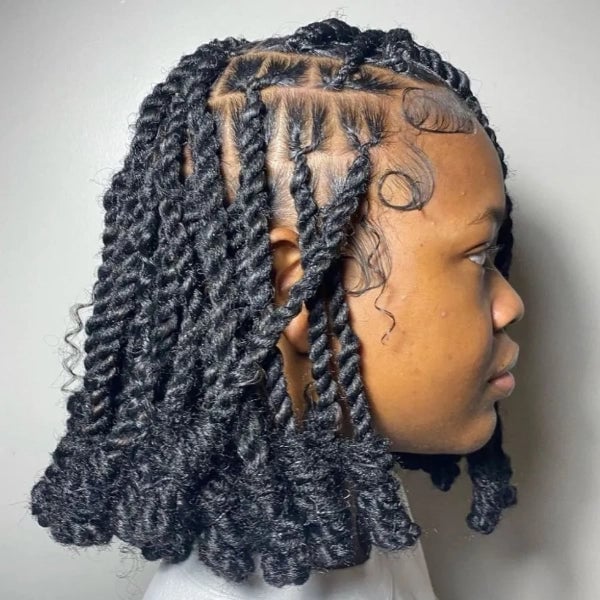
Square parts at the crown create a grid-like precision that looks intentional. The lob length hits between the jaw and collarbone, and the two-strand twists give each loc a rope-like finish. Defined baby hairs frame the face for a neat edge. The catch: those square parts require salon-leaning precision. If you want less intricate parting, this is not the design. Request from your stylist: lob starter locs with square parts and two-strand twists. The twists hold shape well, but you sleep with a silk bonnet to keep them defined.
Brown locs with lighter highlights and beads
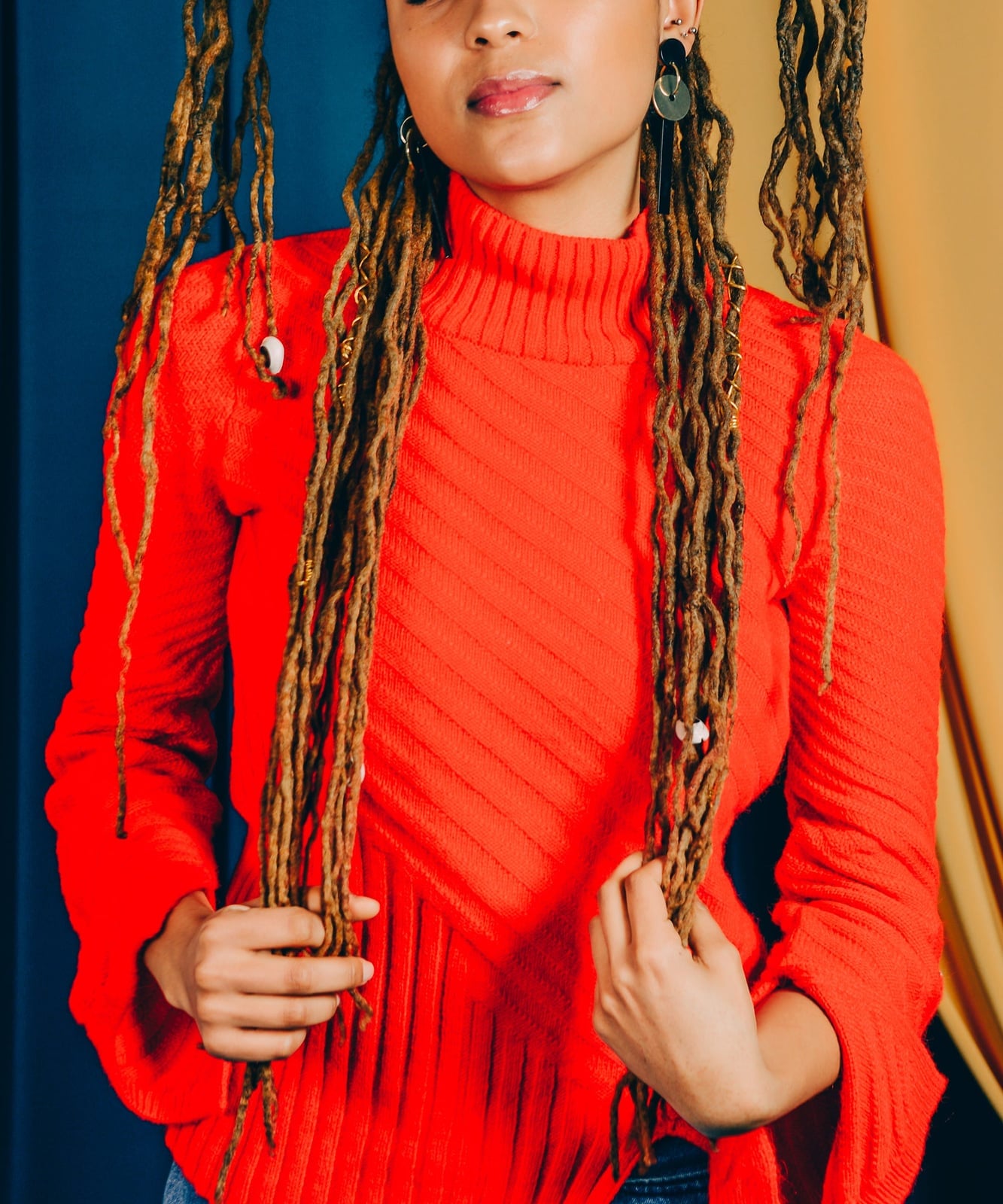
Brown hair gets a lift from lighter highlights woven through the locs. Decorative beads and gold coils add weight and a metallic glint. The coily, thick texture holds the beads in place without slipping. Words for the chair: brown starter locs with highlights and decorative beads. Ensure beads and coils are securely attached, salon maintenance keeps the locs healthy underneath. The highlights need toning every few months to stay bright. A medium length works best for the beads to show.
Starter locs styled away from face with cuff
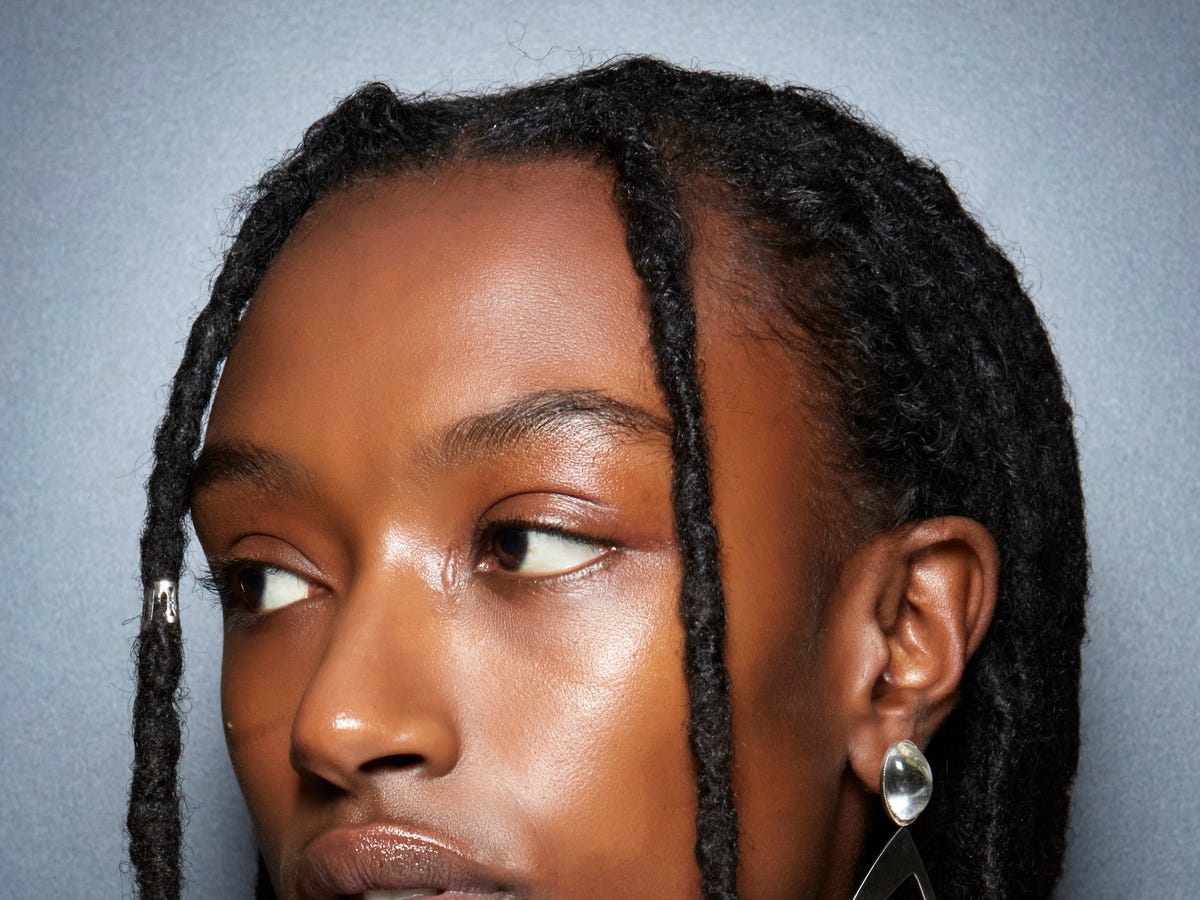
Compared to a full accessory look, a single silver cuff on one loc is a quieter accent. The black coily strands are parted and swept back, keeping hair off your face entirely. Starter locs need a mature enough base for the cuff to grip, not day one hair. Mention to your stylist: starter locs styled away from face with a silver cuff. The hold comes from the loc thickness, not the cuff itself. Place the cuff on a section that has already begun locking. Salon maintenance keeps the part clean and the locs even.
Side ponytail effect from neat loc sections
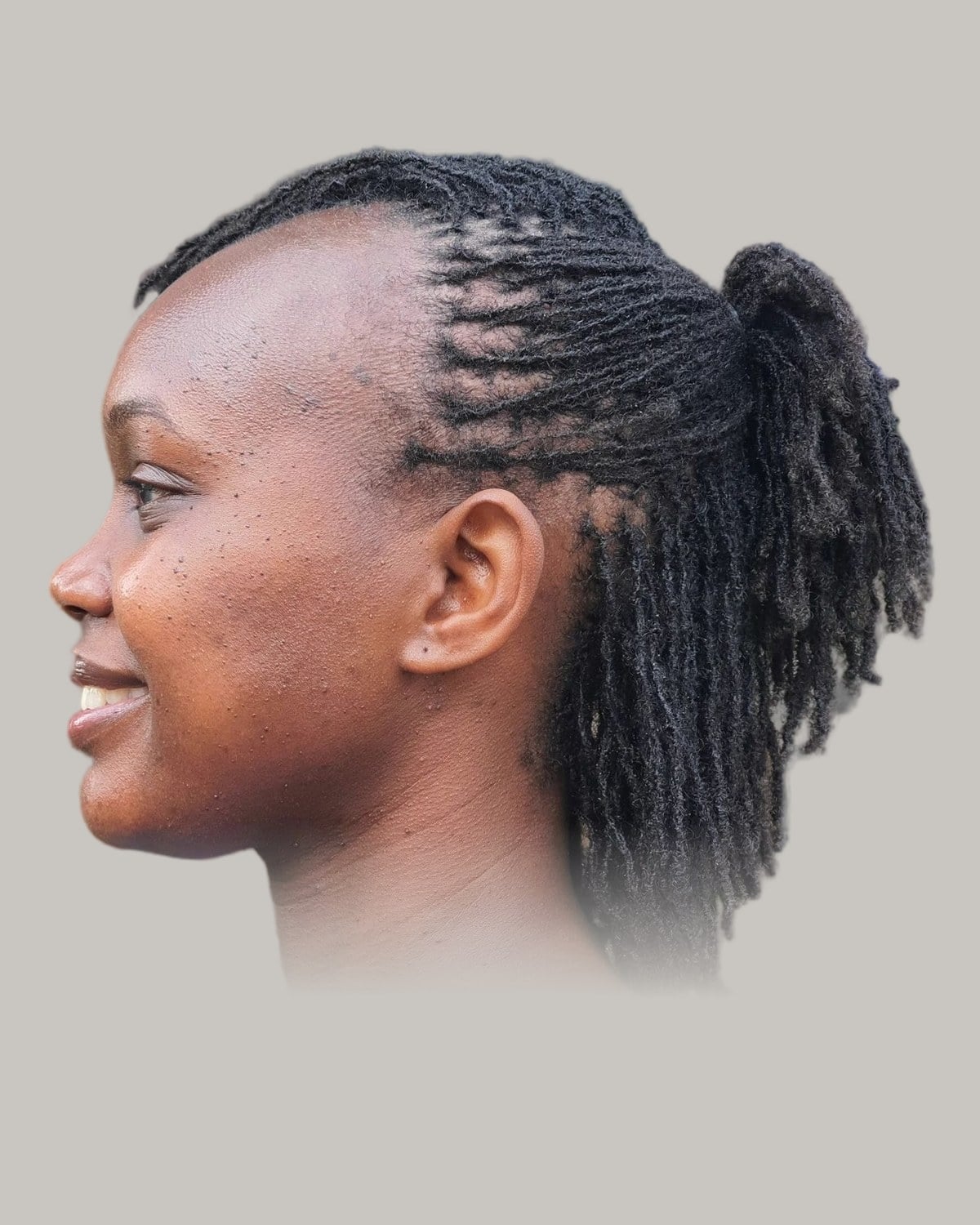
Neatly sectioned starter locs pulled into a high ponytail from a middle part look deliberate from every angle. The thick, coily black hair holds its shape without product, the parting staying crisp while the locs settle. This style may feel heavy during early loc stages. Ask your stylist for: neatly sectioned starter locs in a high ponytail. The precision of the parting requires salon visits for upkeep, not a DIY approach.
Middle part air-dried locs for readers
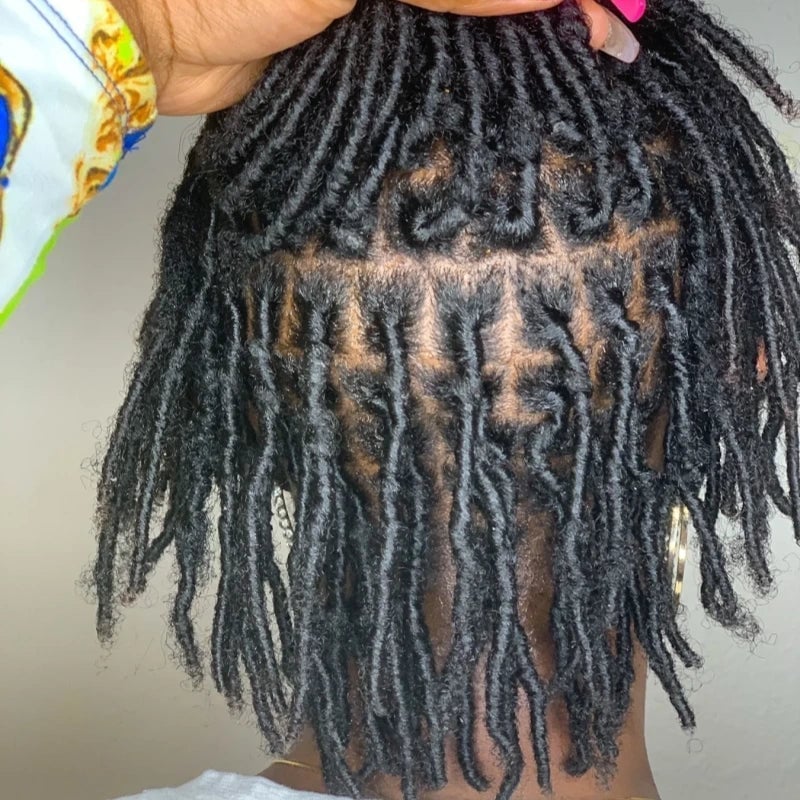
Air-dried starter locs with a neat middle part sit between low fuss and styled. The thick, coily texture dries into its own volume, the part staying visible without constant adjustment. The middle part suits rounder face shapes, elongating the line, while a deep side part works better for long faces. Both require the same salon precision for sectioning. The middle part needs a retouch every few weeks to keep the line clean as the locs mature. Avoid the middle part for a side part that hides uneven growth between visits.
Ear length defined locs with middle part
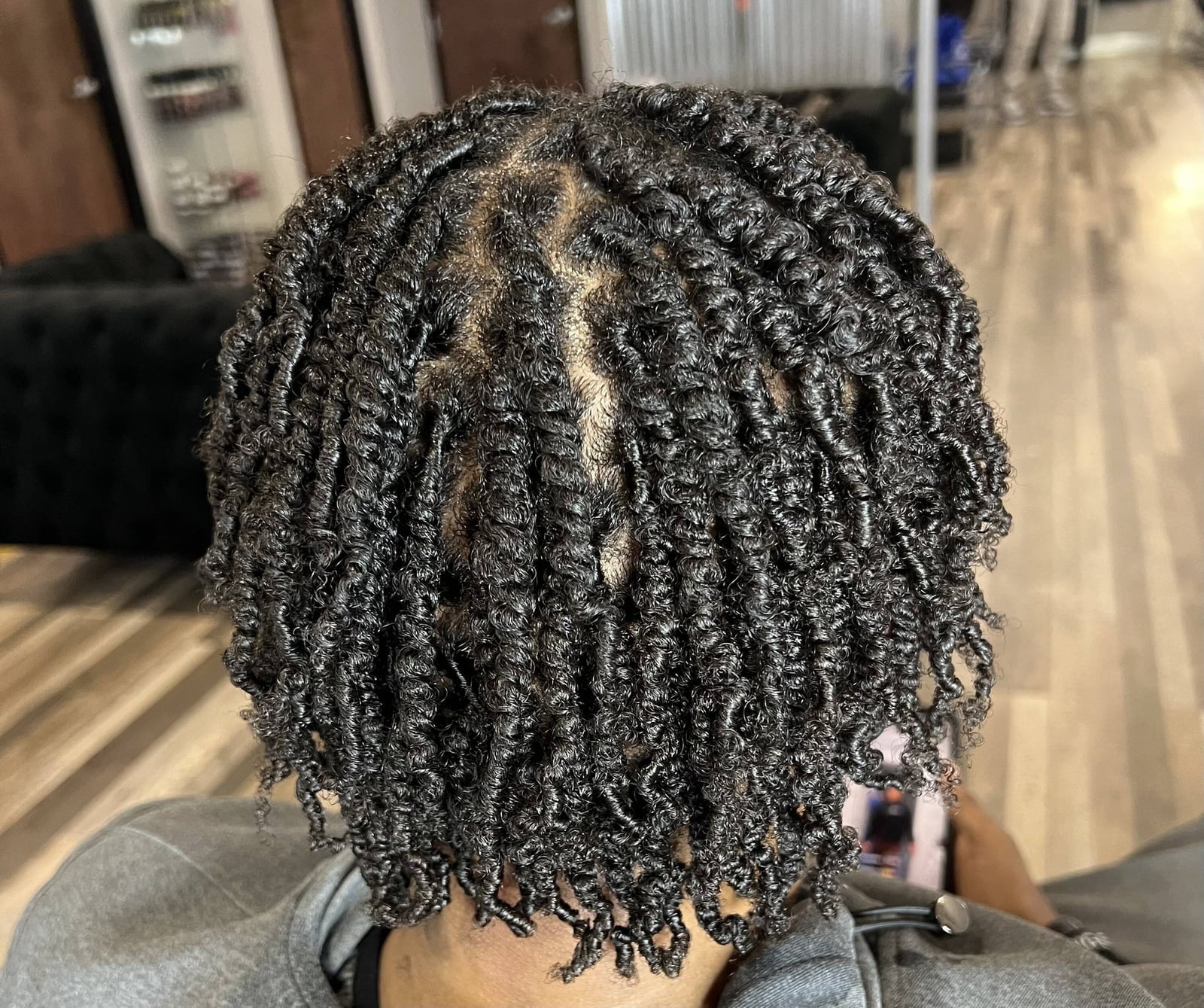
Ear length defined starter locs with a middle part show how much structure matters at the start. The thick, coily black hair is twisted into even spiral locs, each one distinct. The short length keeps the weight off. Pass when your hair is significantly longer than ear length. The definition gets harder to maintain. The middle part keeps the look balanced, ready for the locs to grow into their next stage.
Mid-back ponytail with square-parted starter locs
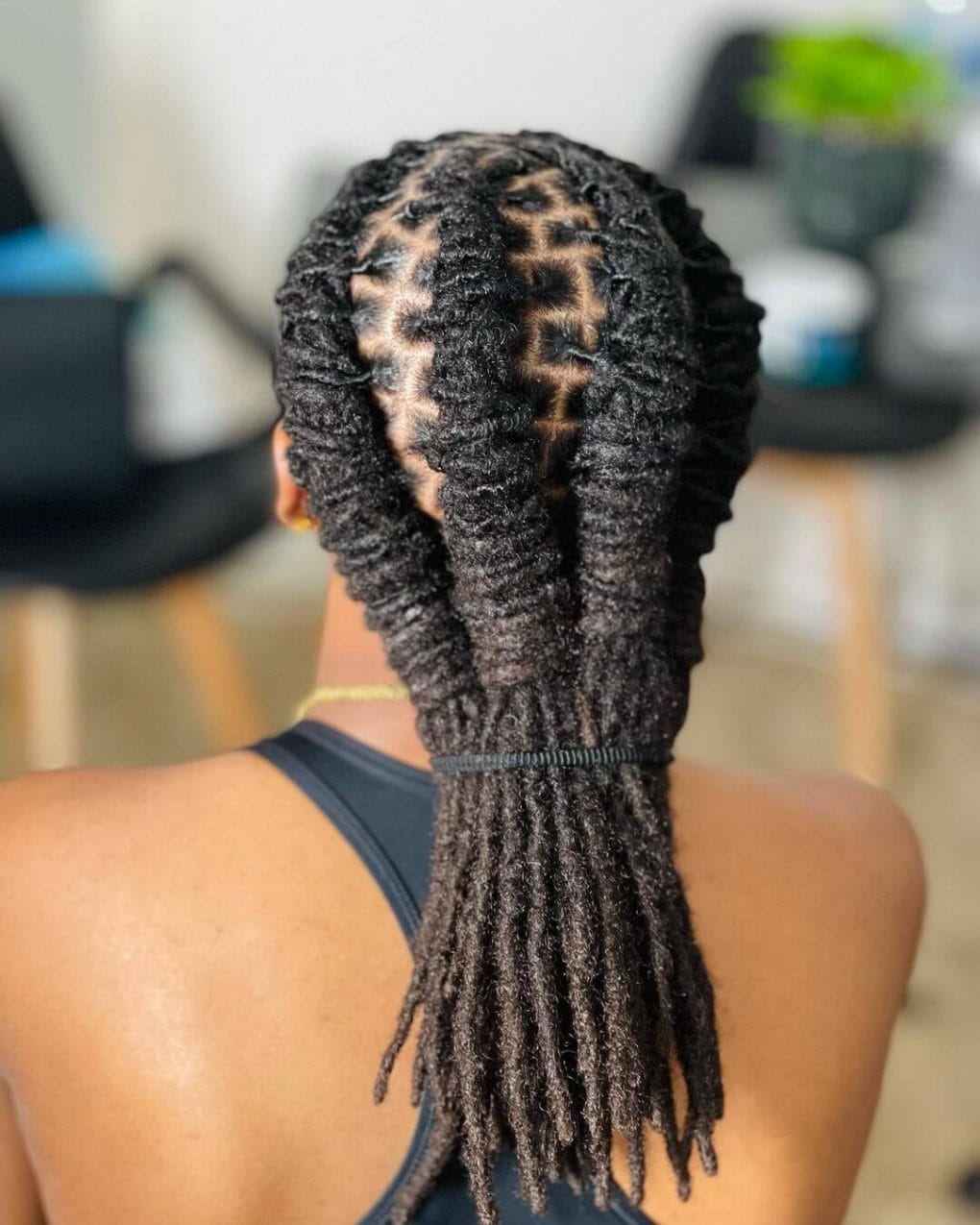
A mid-back ponytail with square-parted starter locs turns a simple style into something structural. The thick, coily locs are parted into neat squares at the crown, then gathered into a ponytail that falls to the mid-back. The square pattern adds visual interest at the scalp. Styling steps: have the sections set at the salon, then gather the locs into a ponytail using a hair tie. The hold is solid for a full day. Secure the ponytail firmly to avoid tension at the roots. The square parting needs a salon visit every few weeks to stay crisp as the locs grow.
Ponytail with geometric sections on starter locs
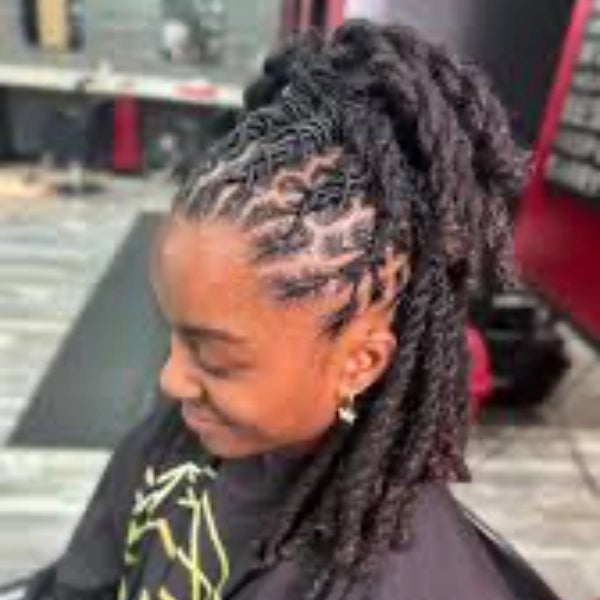
Geometric sections at the front turn a high ponytail into a design choice. The thick, coily black locs are parted from a centered line into angular shapes, then pulled back into a high ponytail. The catch: the geometric pattern shows every bit of new growth, so the style demands regular salon visits. Request from your stylist: high ponytail starter locs with geometric sections. The hold is strong, the ponytail staying put through a workday.
Two buns with geometric parting on black starter locs
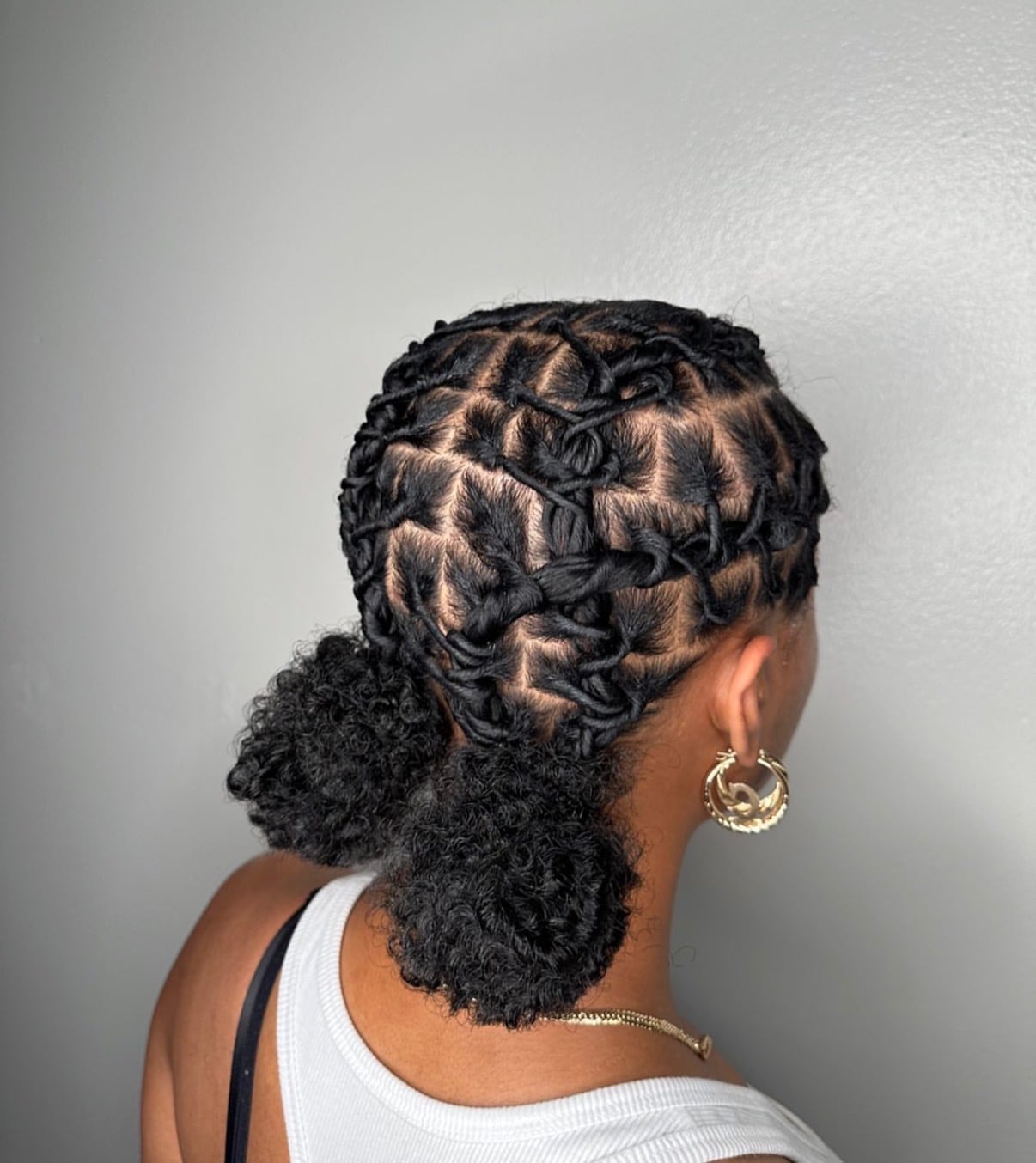
That geometric parting is the whole show, carving clean lines across the scalp before the hair sweeps into two buns at the back. Black, coily, thick, the texture gives the design its weight, so the parting reads sharp instead of lost. The buns sit firm and neat, which suits a round face by adding height at the crown. This design only works when the hair is up. The intricate parting needs a salon touch to stay crisp, and a visit every few weeks keeps the lines from blurring as the locs settle.
Space buns with dark brown and auburn highlights
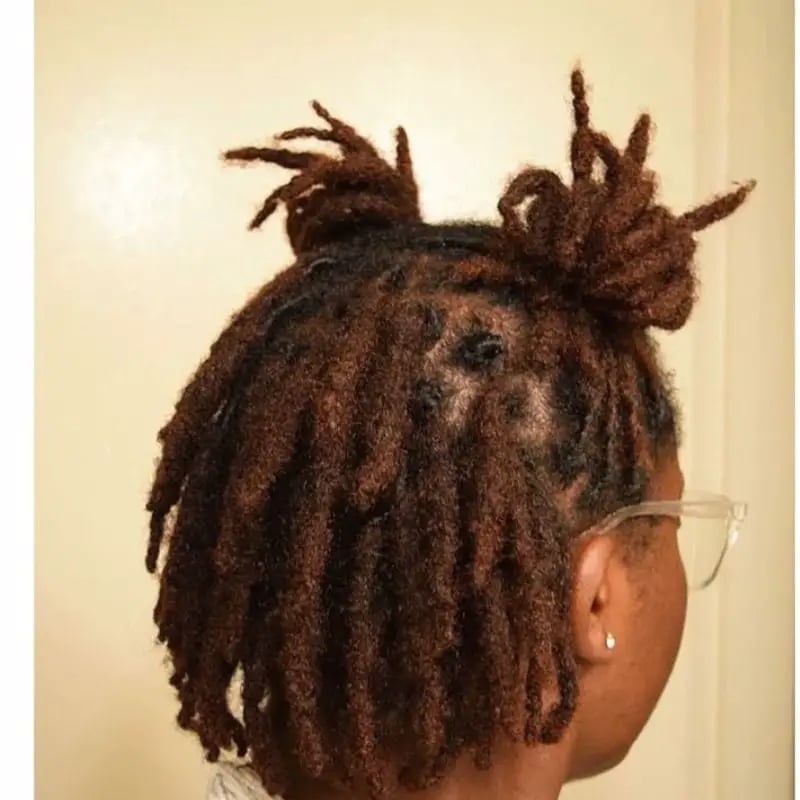
Dark brown base with subtle auburn highlights, the color peeks through as the buns move. The locs end around the ear, so the style reads youthful without being fussy. This one is a DIY win for medium density hair, no salon chair required. Ask your colorist for: two space buns with dark brown and auburn highlights, if you want the color refreshed first. For a casual day out, it holds for hours with bobby pins anchoring each bun. These buns lean playful by design.
Two-strand twists transitioning to loose locs
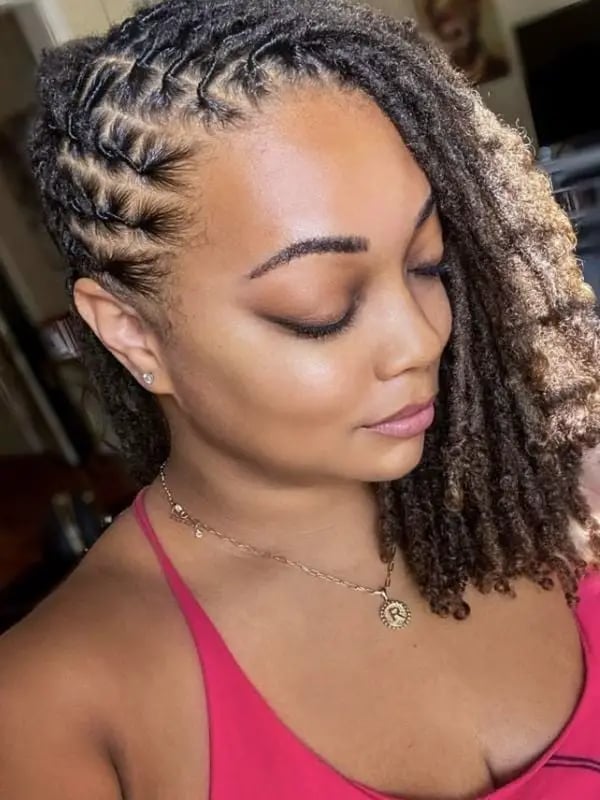
Set this against a uniform all-twisted style and the difference is immediate: one side has intricate two-strand twists, the other lets coily locs hang loose. The geometric parting on the side is what makes the transition work, drawing the eye from twisted to loose without a jarring stop. Black with brown undertones, the color adds depth to the texture. Thick, coily hair carries this best, since the twists need weight to hold their shape. The catch: the loose side can frizz faster than the twisted side, so expect to re-touch the twist pattern more often. Not for anyone who prefers a uniform look.
Salon expertise for neat air-dried locs
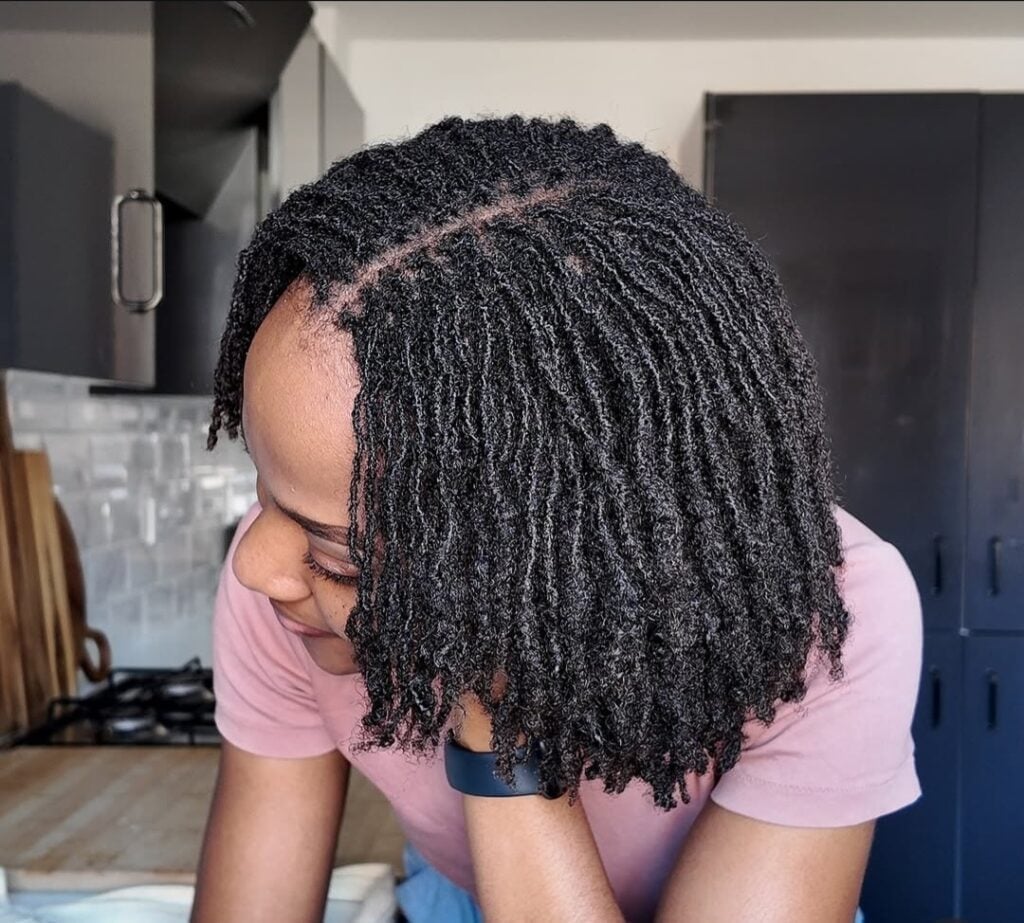
Let locs air dry completely and they settle into their natural shape, but neatness is a skill, not an accident. This look starts with a middle part and relies on thick, coily texture to hold the line. The locs are formed with precision, each one uniform, so the air-dried finish looks deliberate rather than casual. A salon handles the initial formation better than home attempts, because the parting and sectioning set the foundation. Request from your stylist: neatly formed starter locs, air-dried finish. Once set, the style wears low-maintenance, but a salon visit every six to eight weeks keeps the parts from migrating as new growth appears. Avoid this if you prefer styled locs over air-dried, since this look is about texture, not manipulation.
Geometric parting on starter locs
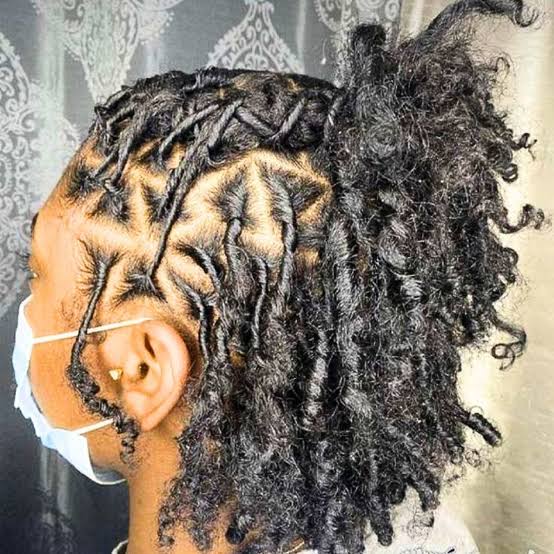
Compared to a natural, unstructured part, this centered geometric pattern is a deliberate statement on the scalp. Thick, coily locs frame the design, the individual locs falling in neat lines that echo the parting. The pattern is the focus, so the hair itself stays simple, letting the geometry lead. This suits a long face by adding width through the scalp design. The pattern demands precision. The salon-leaning approach means the parting needs a steady hand, and maintaining the pattern requires regular touch-ups as the locs grow. The locs themselves hold their shape well, but the design is the commitment.
Pulled up starter locs with face-framing strands

Gather the front sections first. Thick, coily starter locs in dark brown work best for this, with enough length to reach the jaw when pulled back. The face-framing strands soften the pulled-up silhouette, so leave a few out on each side. This style keeps locs partially off your face. Ask your stylist for: pulled up starter locs with face-framing strands. The hold comes from the coil itself, no pins needed for the front pieces, just a secure band at the back. Medium length means the face-framing strands sit at chin level, not shorter.
DIY updo with loose ends on black starter locs
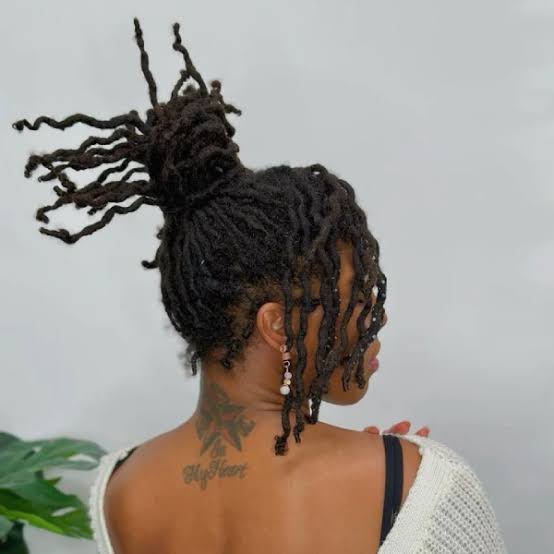
A sleek high bun this is not. Think of it as the cousin who shows up late but still steals the party. Thick, coily black starter locs gather into a bun at the crown, with several locs left loose around the face and crown for that playful undone effect.
DIY territory here, no salon skills required. Gather the locs with your hands, twist into a bun, and pin. The loose ends are the point, not a mistake. A middle part keeps things balanced, and the coily texture holds the shape without product. Avoid this if you prefer a very sleek and tidy style.
Grown-up bun effect from neat locs
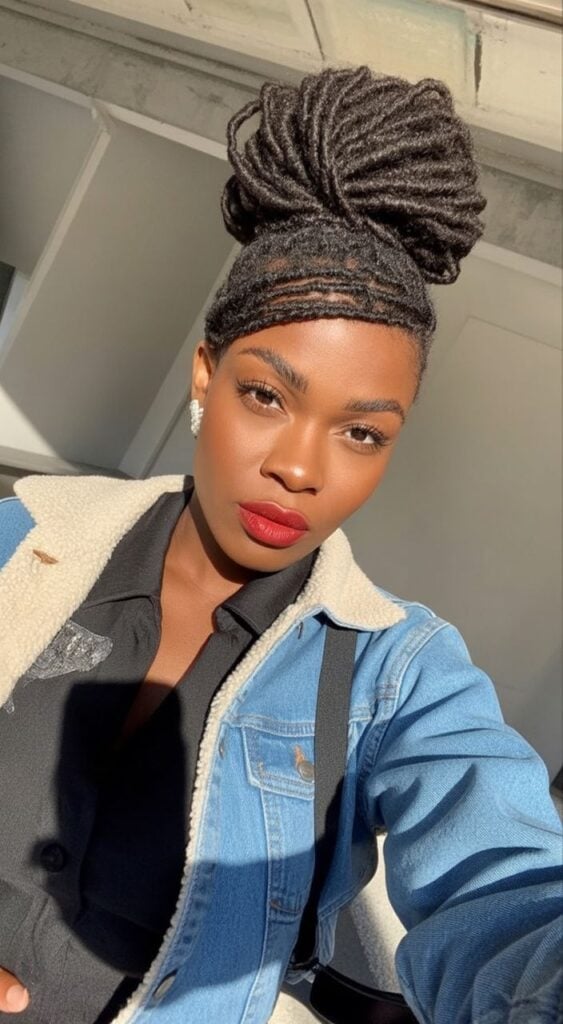
This style works for a meeting that could go either way. Thick, coily black starter locs are neatly gathered at the crown into a high bun, with a middle part that keeps the front tidy. The bun sits high enough to show off the loc texture from every angle.
The catch: this look is put-together only if the sections are even. Uneven parting looks rushed, not relaxed. Request from your stylist: high bun starter locs. Coily texture grips itself, but the shape depends on how clean the gathering is. Medium length gives enough weight to keep the bun from slipping. This style is not for those who want their locs worn down all day.
High bun with an undercut on dark brown locs

Undercut first, bun second. The common mistake is shaving the sides too high, leaving the bun looking disconnected from the shaved area. Thick, coily dark brown starter locs pile into a high bun on top, while the sides are shaved clean. The contrast is the whole point.
The undercut requires precision, too much taken off the sides and the bun looks stranded. Medium length on the locs means the bun has enough volume to balance the shaved sides. The hold is strong: the bun stays put, and the undercut stays sharp for about two weeks before a touch-up.
Updo with a detailed undercut design on starter locs
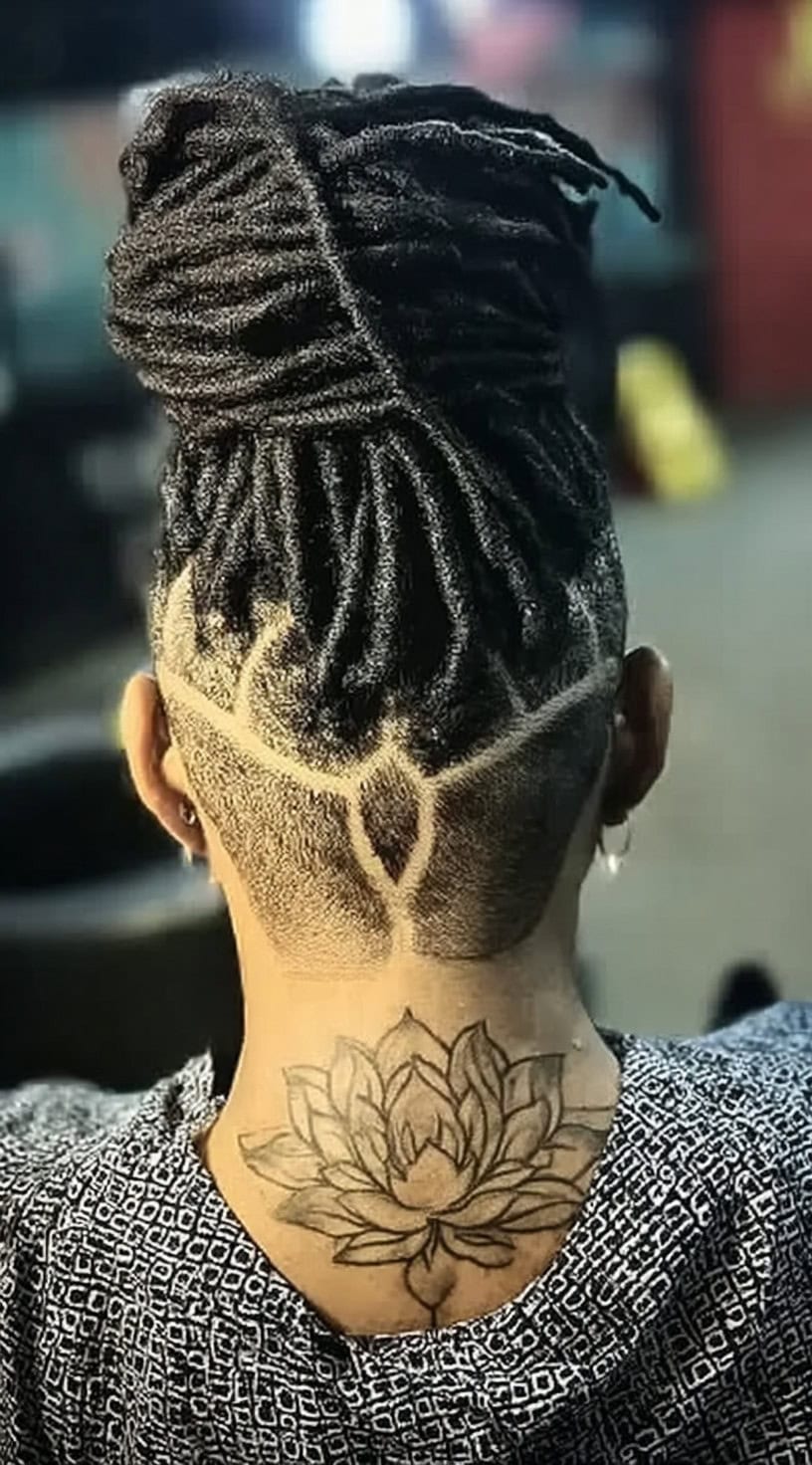
The difference between a plain undercut and a shaved design is night and day. This one has a design shaved into the back, clean lines, geometric shapes, the kind of detail that requires a steady hand and a fresh blade. Thick, coily starter locs are styled into a high updo, leaving the undercut design fully visible.
This style requires precise barber visits every week to keep the design sharp. The updo itself is straightforward: gather the locs high, secure them, and let the back do the talking. The hold on the updo is solid, but the real work is the undercut. Avoid this if you prefer no shaved designs.
V-shaped undercut for bold bun styling
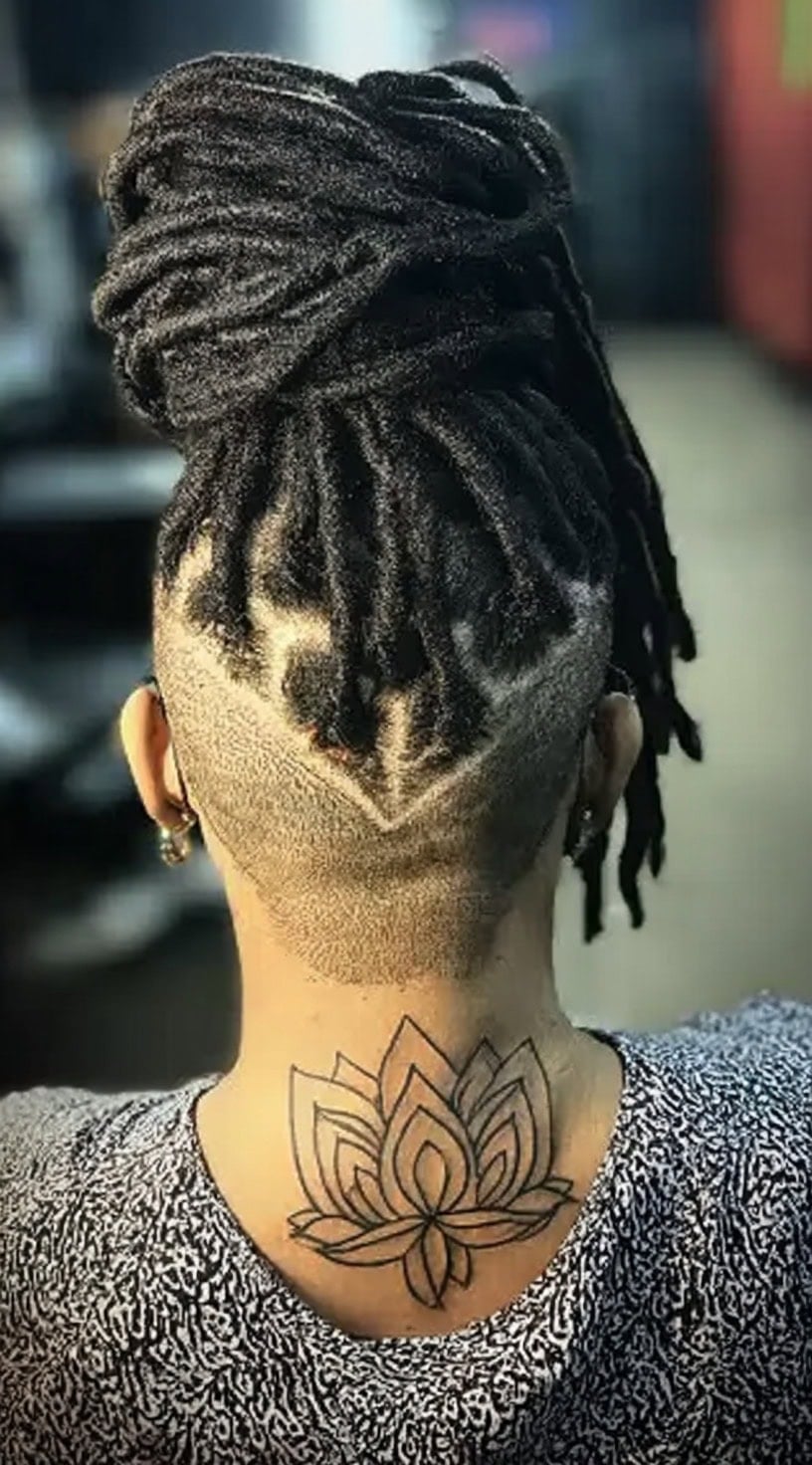
An undercut changes how a high bun sits. The V-shape at the nape creates a sharp, graphic line that contrasts with the thick, coily texture of the locs pulled upward. Medium length gives enough weight to hold the bun in place without slipping.
Not for anyone who wants to wear hair fully down often, the undercut shows. Book it as: updo starter locs with v-shaped undercut. A salon handles the cut, but the styling between visits is DIY. The bun takes about ten minutes once the locs are long enough to wrap. Black hair looks solid and defined against the shaved section, so the shape stays the focus.
Intricate updo effect from neat sections
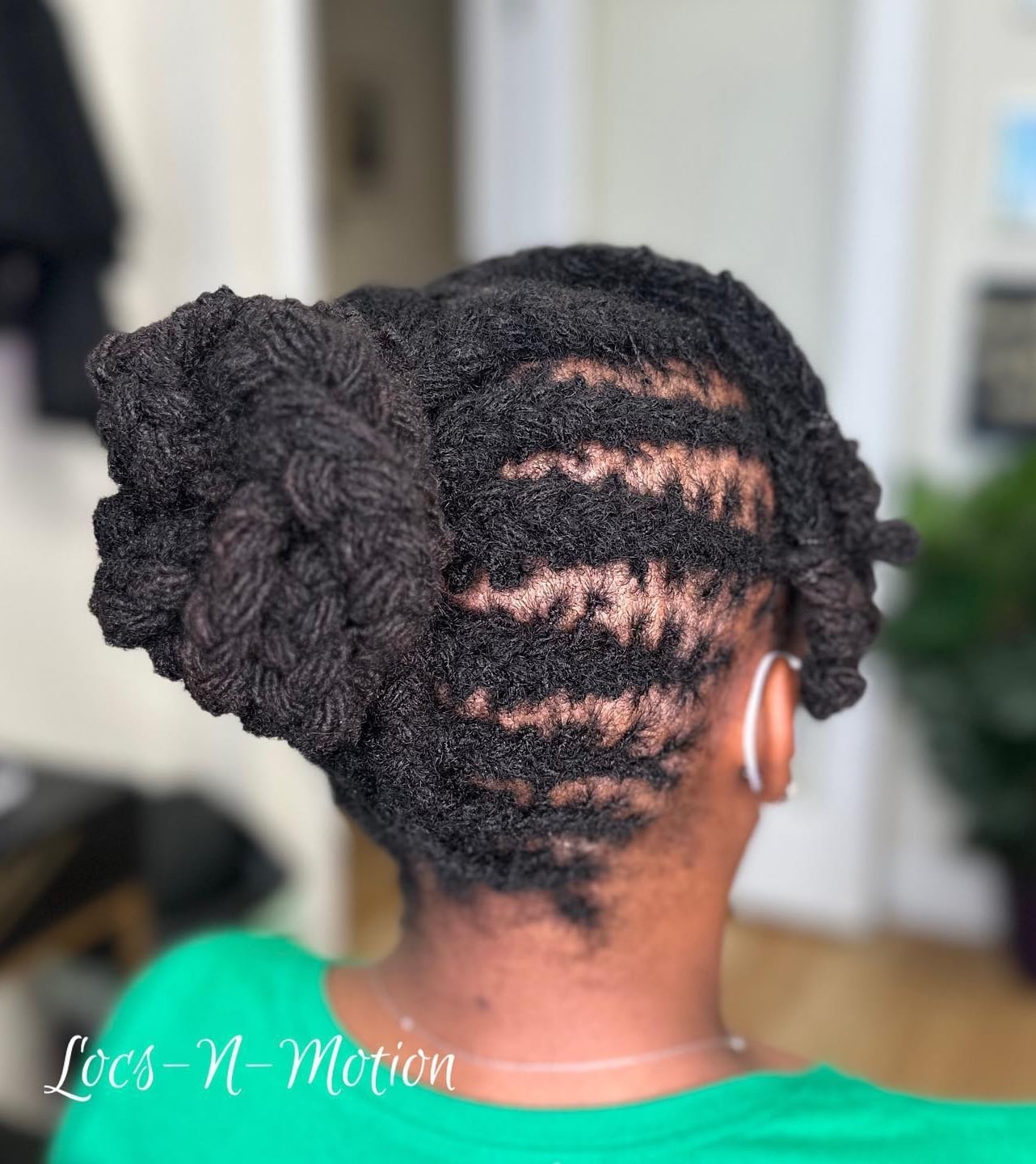
Precise sections make this updo look deliberate rather than casual. Thick, coily locs are arranged into a neat, textured shape at the back, with each part clearly visible. The catch: an updo this clean does not survive a nap or a gym session. It suits events where the hair stays still. Avoid this when you need a style that moves with you through a full day. Salon-leaning precision is the trade-off for the neat finish.
A bolder take on starter locs with short bangs

Long locs stacked into a high updo gain volume from the auburn shade catching light across the coil pattern. The silhouette is striking, dense at the crown, soft at the edges where a few wisps break the line. Short bangs require a trim every three weeks to stay at brow height, not drifting into the eyes.
Styling the bangs takes five minutes with a small roller or a twist. The updo itself holds for two days if wrapped at night. Salon guidance for the initial loc formation keeps the parting clean and the sections even. Black hair with auburn tones looks warm without needing full color commitment.
Final Thoughts
Pick the starter loc style that matches your real morning, not the one you wish you had.
- Low upkeep: air-dried natural locs with a middle part.
- Salon finish: geometric parting with a high bun.
- Growth-friendly: two-strand twists that loosen over time.
- Bold move: undercut or two-toned ponytail.
Embrace your loc journey with confidence and style.