You are eyeing a protective style that actually holds up past week two. Two strand twists deliver that, with a classic look that keeps evolving. They are worth the chair time because they cut your morning styling down to a few minutes and photograph well from every angle.
This collection brings you 25 ways to wear them, from low-maintenance home sets to salon-leaning styles. You will find options for every texture and length, plus the parting, color, and accessory details that make each one distinct. That is why Charming Two Strand Twists 2027 fill so many saved boards: the style bends to your routine, not the other way around.
Defined spiral twists framing the face
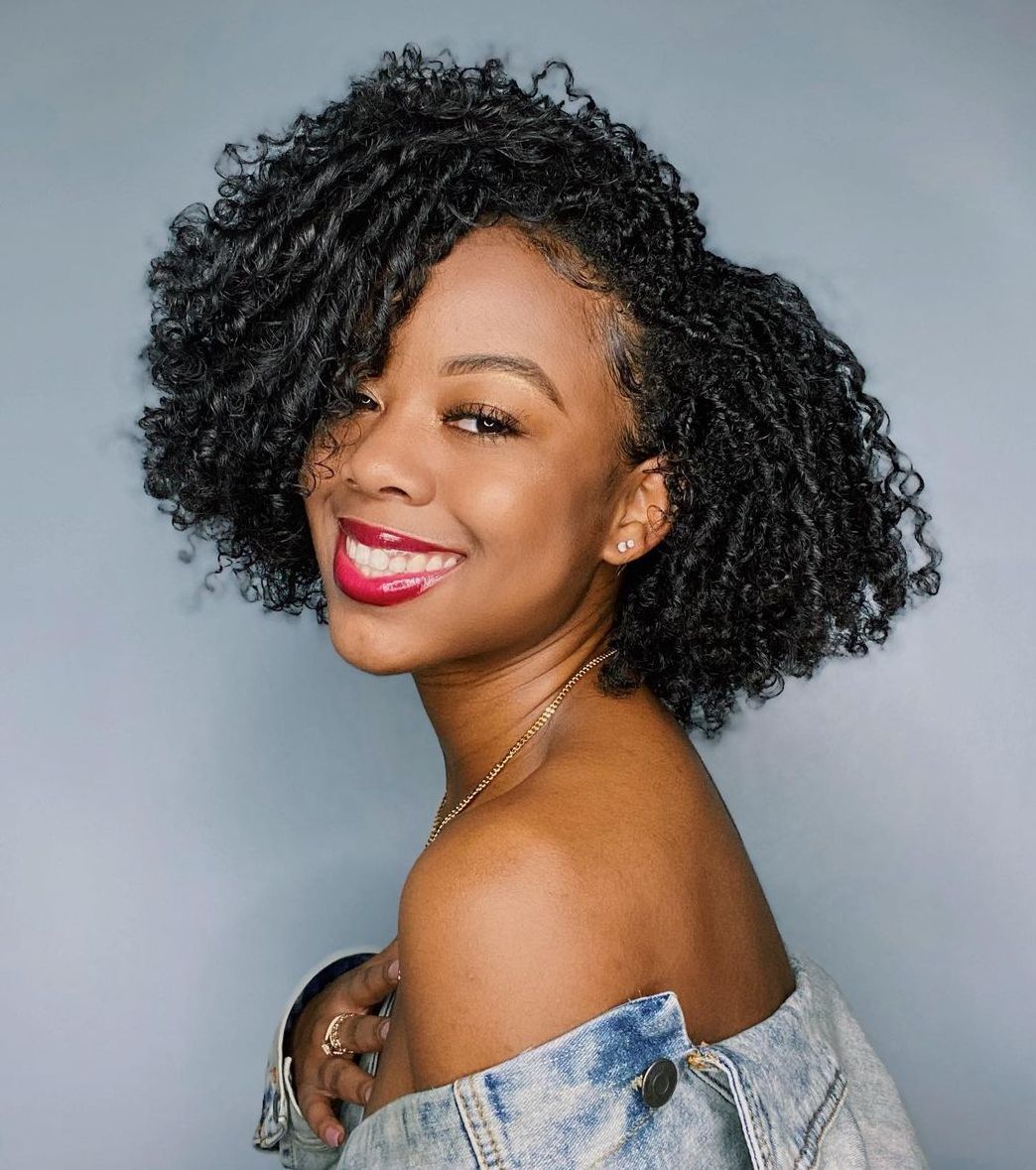
Side part, black curly thickness, and each twist spirals with visible intention. The definition comes from the twist itself, not product buildup or heat. You start with ear-length hair, thick enough to hold the shape without unraveling by midday. Works well for round and oval faces because the side part breaks the symmetry. Skip it if your hair is very fine. The spiral needs density to read clearly. Ask your stylist for: ear length two strand twists with a side part. A curl-defining cream on each section before twisting gives that neat finish. Trim every six to eight weeks keeps the ends clean.
Individual twists with medium length
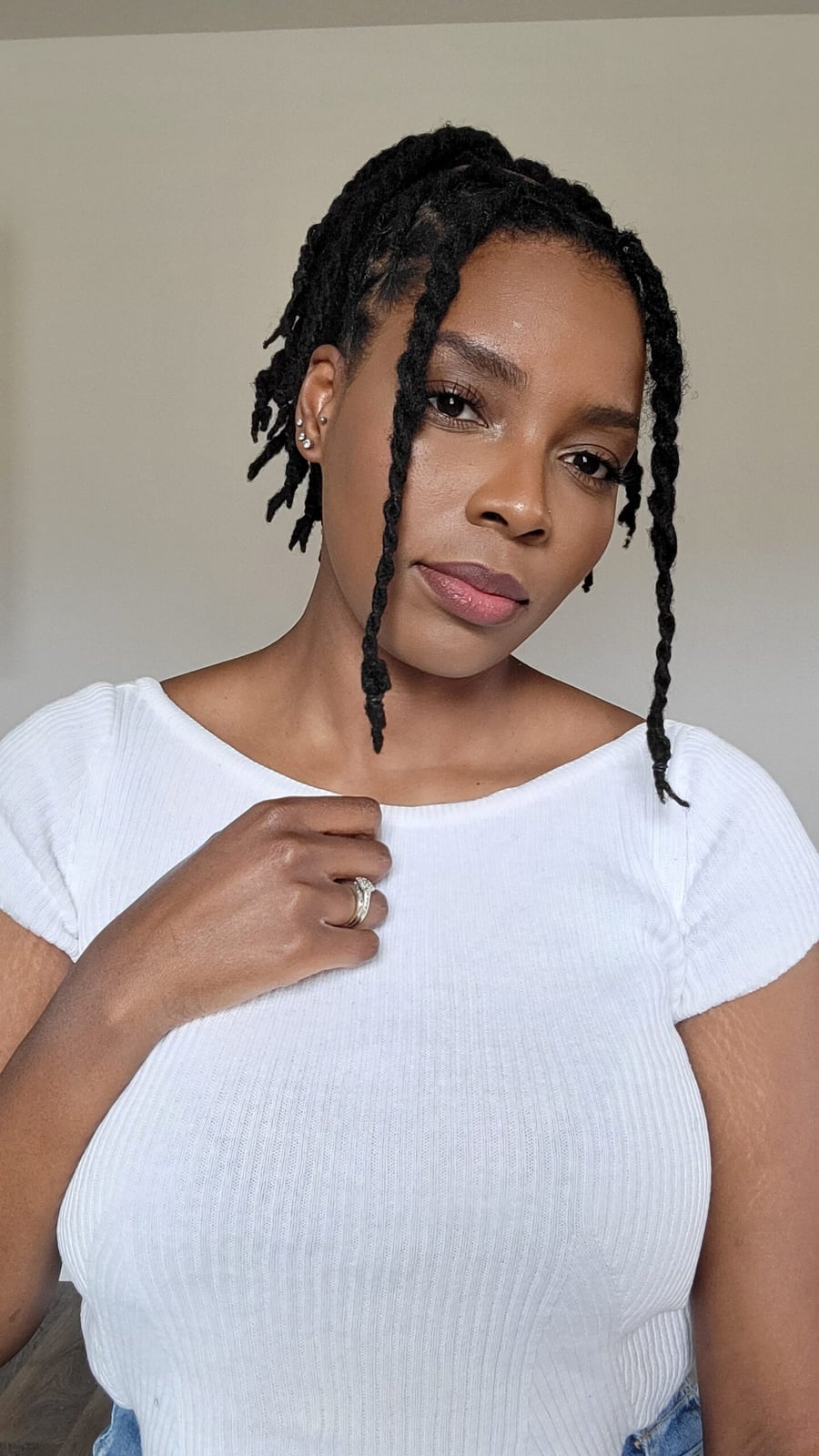
How do you get twists that look like they took effort but actually didn’t? You part down the middle and work in sections. Thick, coily black hair at medium length twists cleanly because each strand grips its neighbor. A middle part suits most face shapes. It balances features without pulling attention. Medium length hits a sweet spot between wearability and visual weight. You can do this at home with a Saturday afternoon and some patience.
Decorative cuffs add flair to side-parted twists
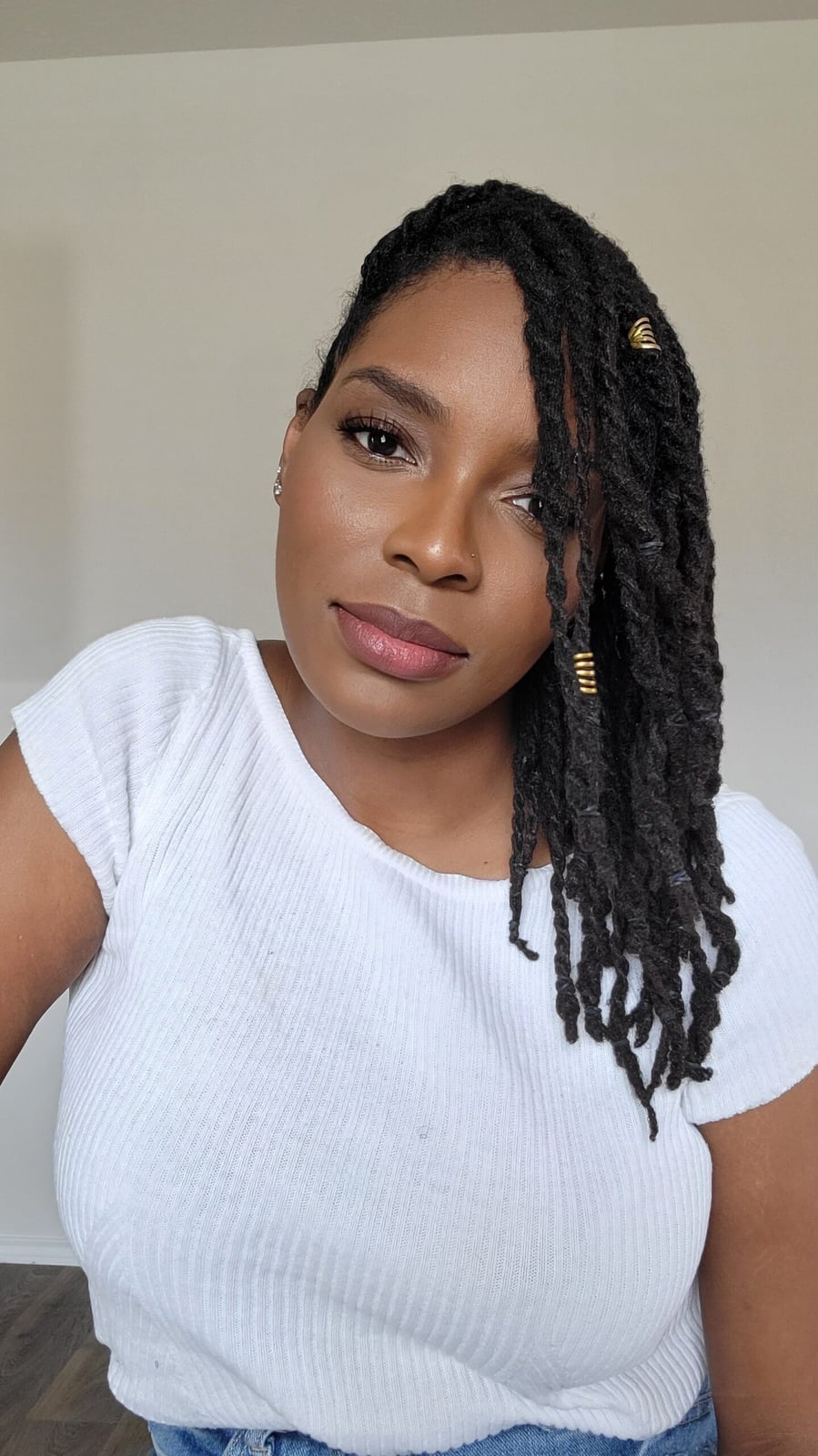
Plain twists feel complete until you add one small gold cuff per section. Thick, coily black hair carries the accessory without looking crowded. A side part shifts the visual weight, and the cuffs catch light at every turn. Tell your stylist: side parted two strand twists with gold cuffs. Works for all face shapes because the cuffs pull the eye outward, not down. Pass when you dislike accessories or prefer a minimalist shape.
Neatly defined twists ending around the ear
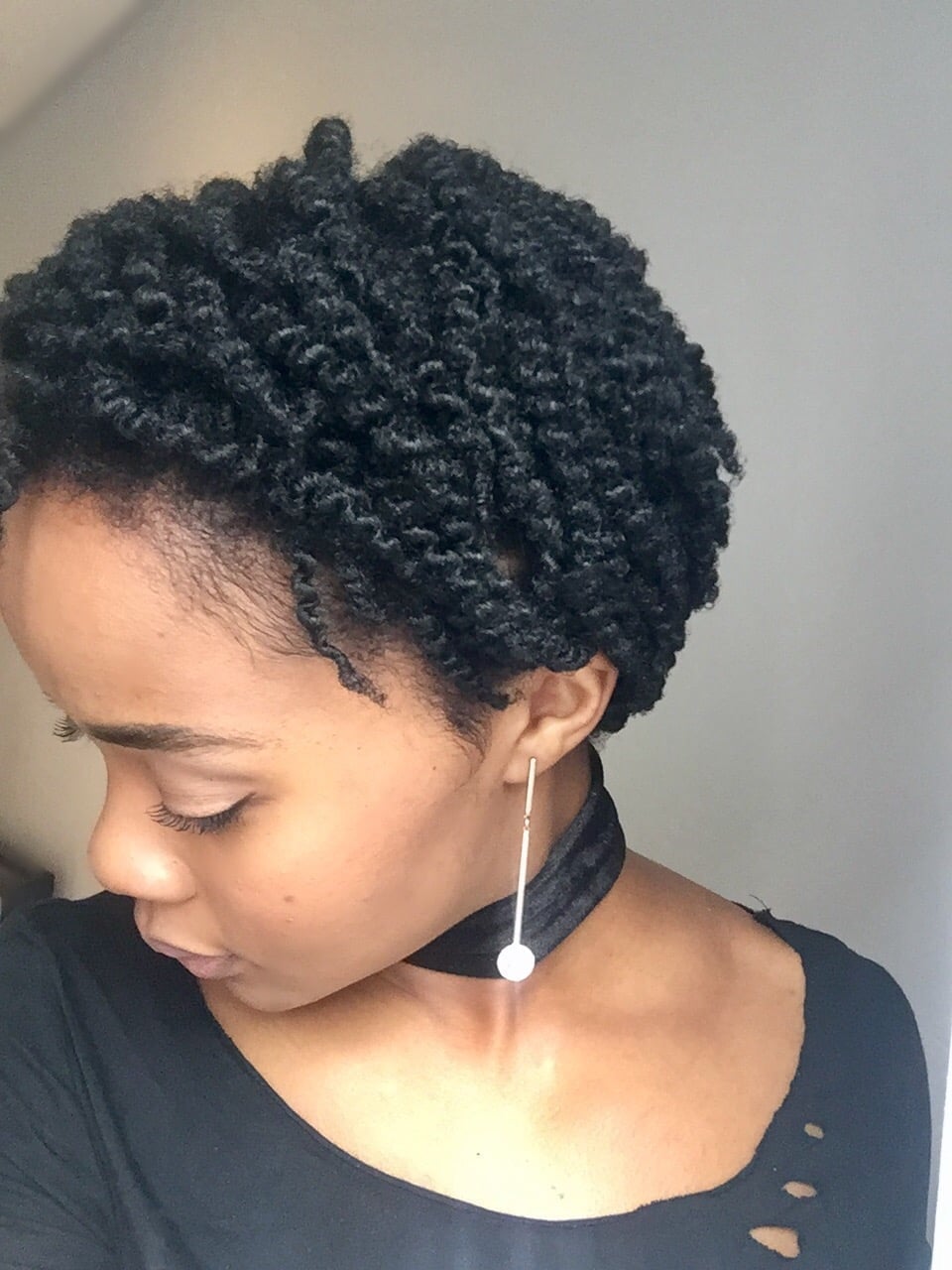
Short twists that stop at the ear mean less tangling and faster drying time. Black coily thick texture holds the definition without constant re-twisting. Oval and heart faces benefit from the shortness. It opens the neck and draws attention upward. A light oil every few days keeps the shine without greasiness. Trim ends every eight weeks to maintain that clean line.
Two-strand twists with gray streaks
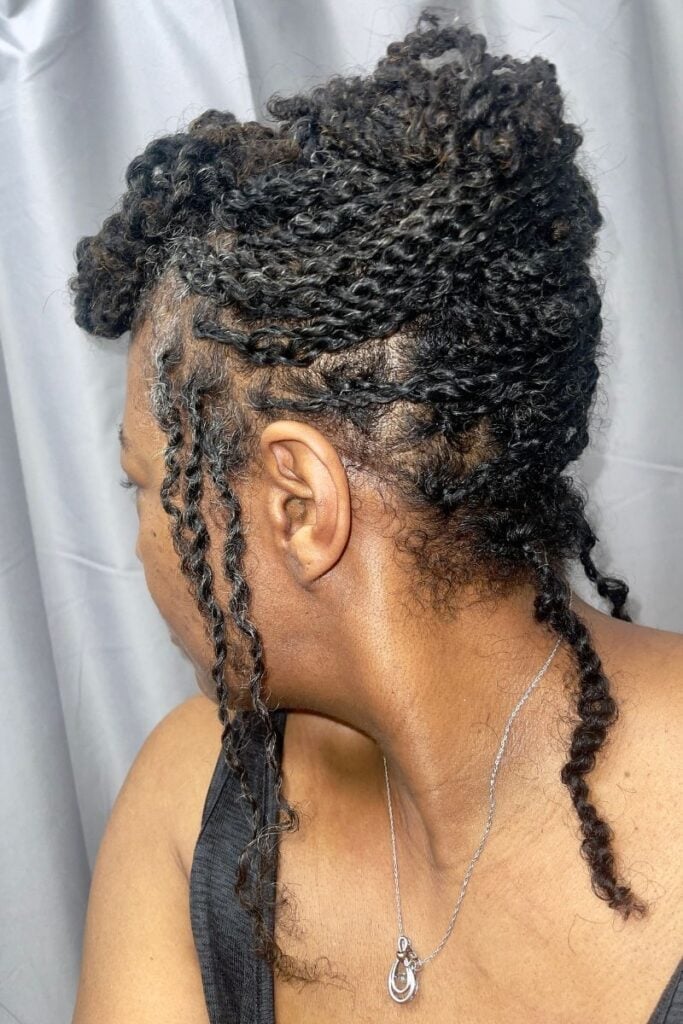
Gray streaks running through thick curly black hair change the whole feel of a twist style. Some twists pin up, others hang loose. The mix creates texture without extra effort. The gray looks intentional because it’s woven in, not scattered randomly. The catch: maintaining contrast requires a color-safe shampoo and a toning conditioner every few washes, or the gray warms toward yellow. Ask your colorist for: two strand twists with gray streaks, mixed styling. Works for all face shapes; skip if you prefer uniform color or very fine hair.
A bolder take on Ombre with honey blonde ends
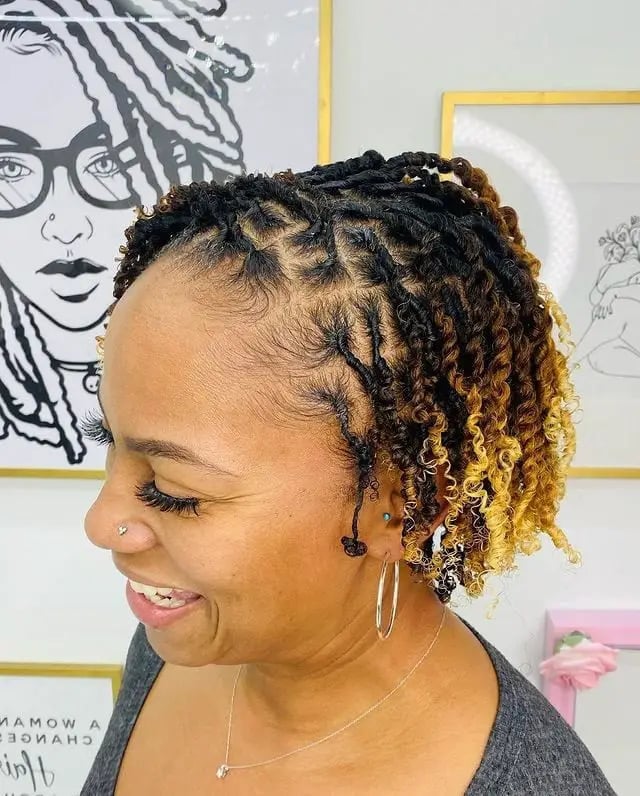
Compare this to the standard black twist and it looks like a different hair language entirely. The ombre transition moves from deep black roots into honey blonde ends that stop around the ear, a color shift that is deliberate rather than grown out. Coily, thick texture holds the two-strand structure well, with each twist staying defined. The middle part keeps the contrast visible from root to tip. This is a salon project, not a weekend experiment. Natural hair colors or very fine hair might show the color line too clearly.
Neat two-strand twists with defined spiral curls
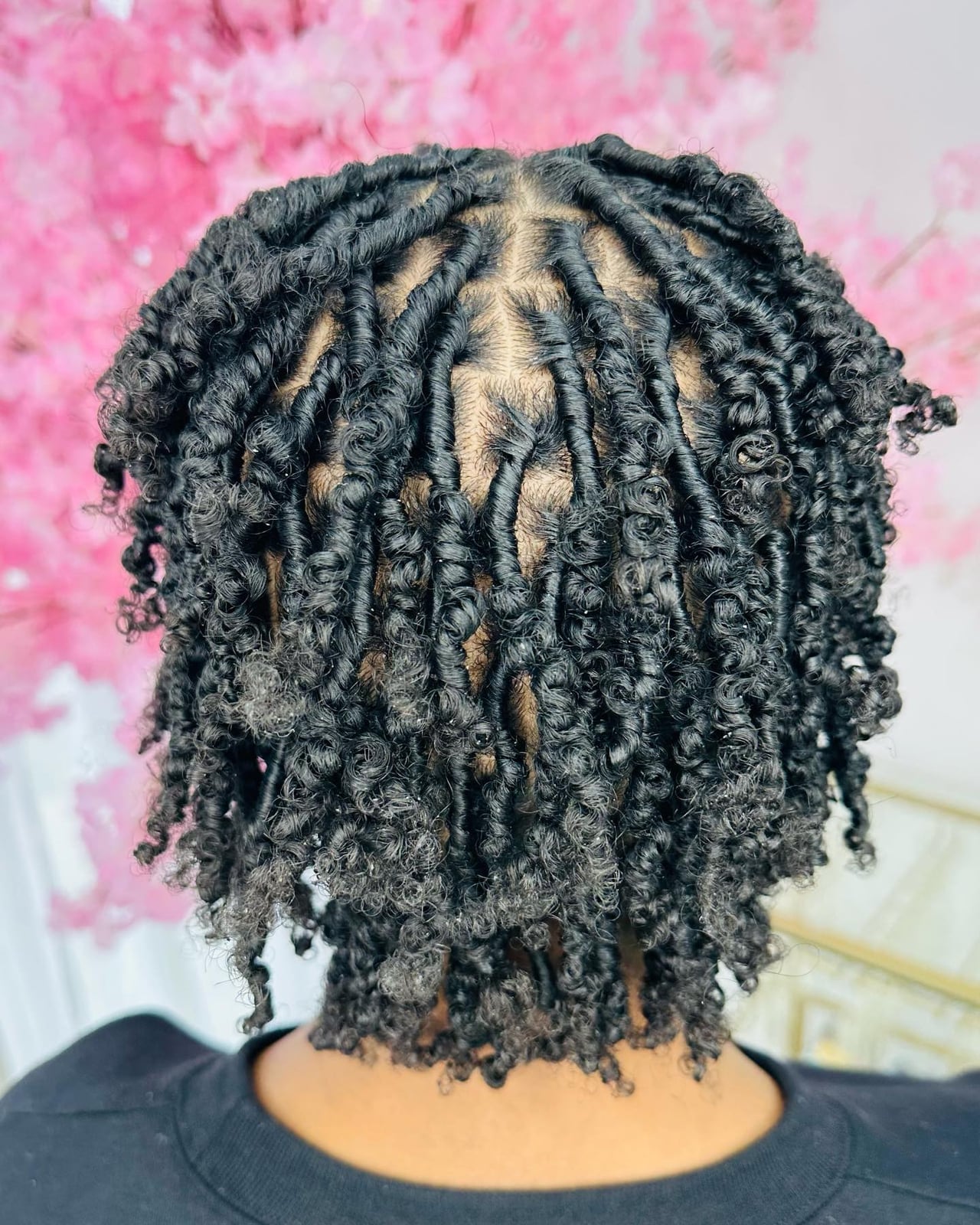
Thick, coily black hair is the foundation here, and the two-strand twists wrap into defined spiral curls that hold their shape without product buildup. The middle parting creates symmetrical sections that make the design look deliberate. Every twist lands with the same tension, which requires precision. Ask your stylist for: neat two strand twists with defined spiral curls, middle part. It suits thick, coily hair of any length and works with all face shapes. It suits those who want a defined spiral pattern rather than a looser texture, and fine hair might not hold the shape.
Dark hair with auburn highlights in twists
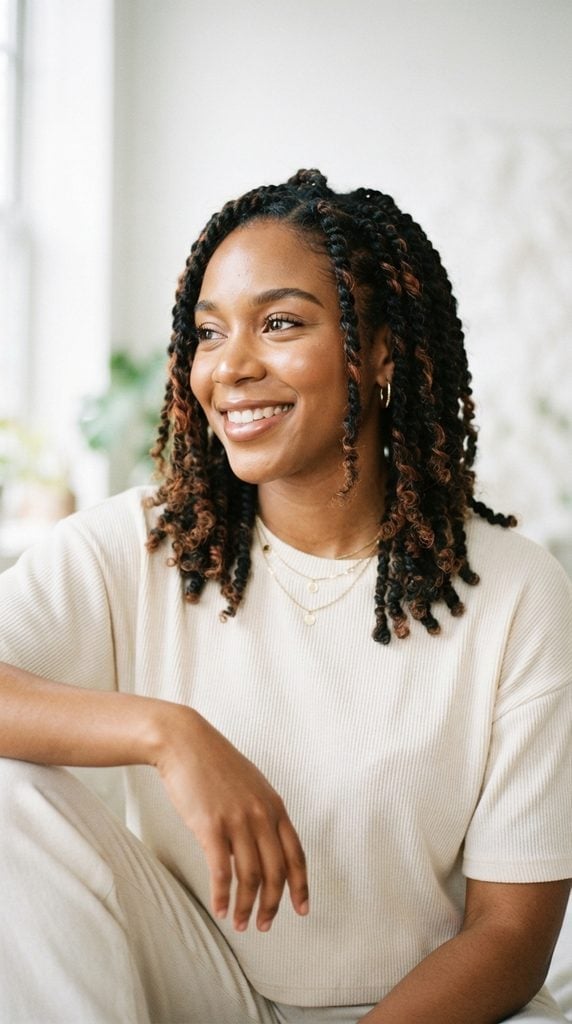
How do you get auburn to blend into a twist instead of looking separate? The answer is placement. Subtle auburn highlights are woven through dark hair before the two-strand twists are formed, so each twist carries the color from root to defined, curly end. The middle part opens the front view, letting the warm tones show evenly on both sides.
Thick, curly hair of any length handles the color weight best. The catch: auburn fades faster than you expect in a protective style.
Auburn highlights add warmth to dark brown twists
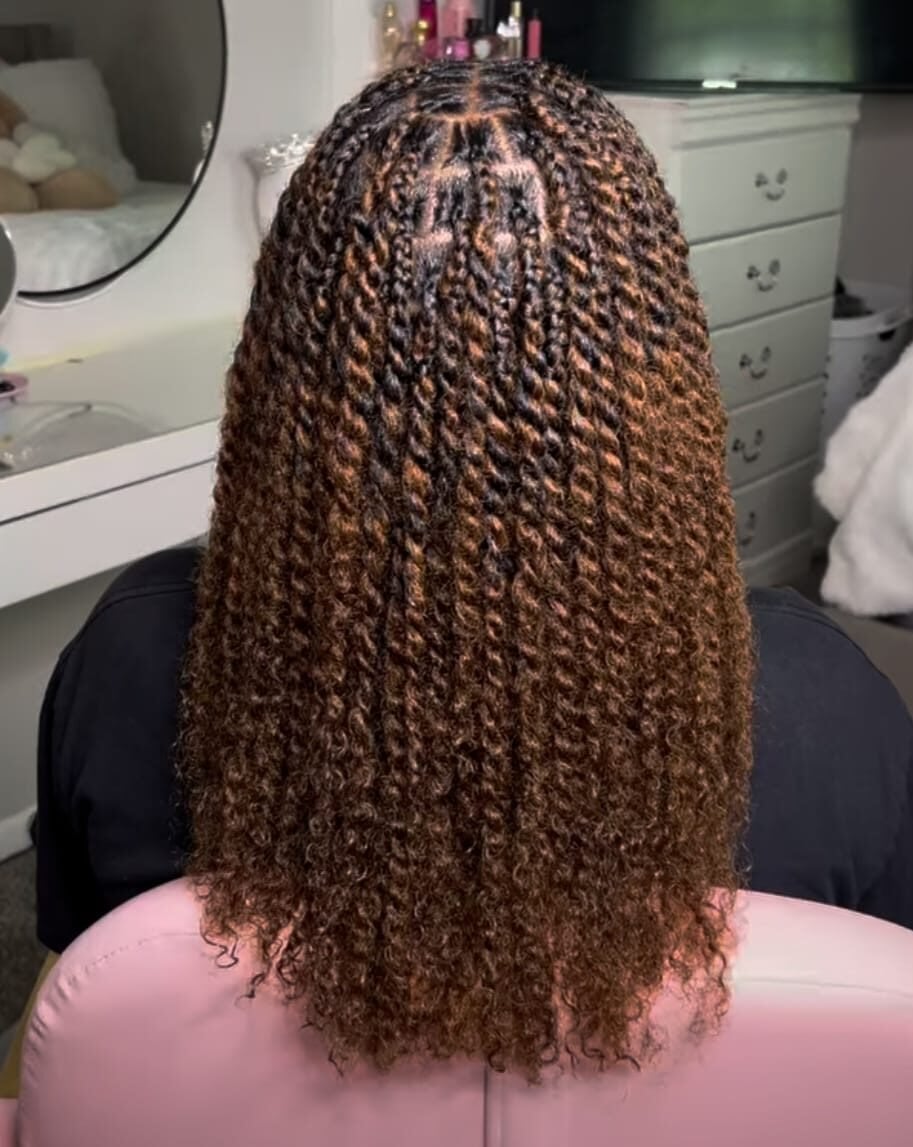
Dark brown as a base can read flat in a two-strand twist. The auburn highlights change that by running through the defined spirals, adding warmth that shows in both natural and direct light. Each twist cascades from a middle part, and the wavy, thick texture keeps the spirals open rather than tight. The technique: the color is sectioned into the twist before it is formed, so the highlight sits inside the spiral rather than on top of it. Ask your stylist for: two strand twists with dark brown base and auburn highlights. One real drawback: the auburn needs a gloss every ten weeks or it shifts brassy.
Long, thick twists cascading down the back
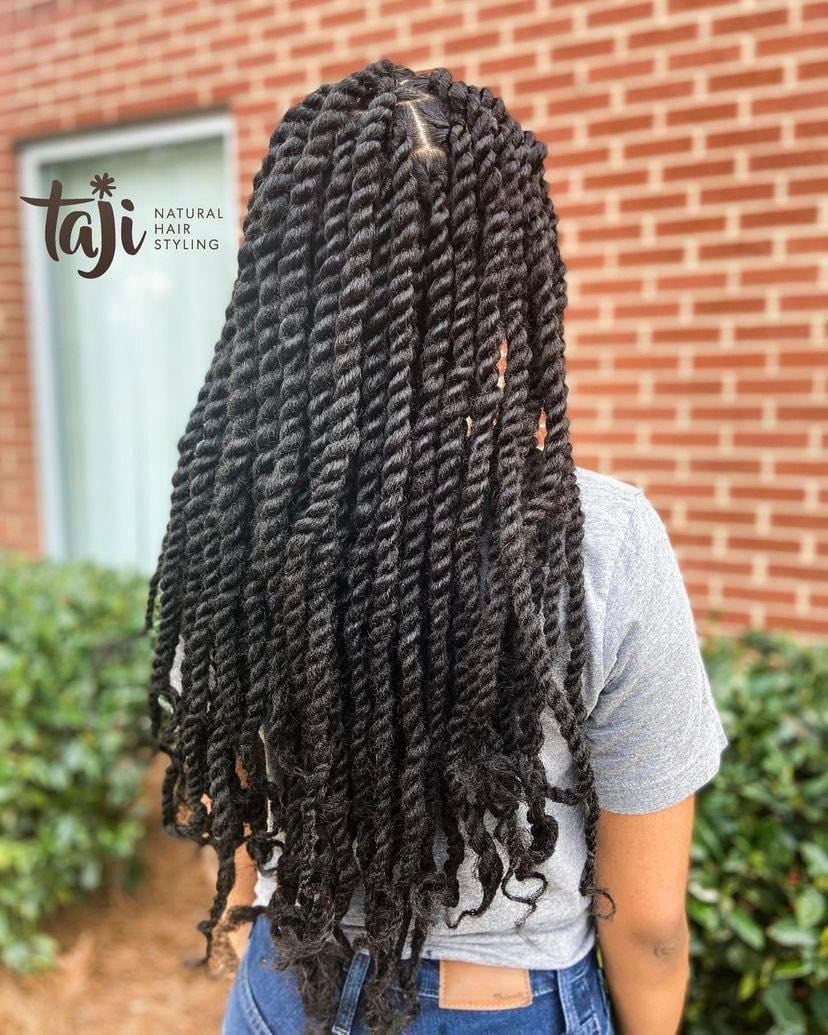
The wear reality: this length requires nightly protection in a silk scarf to prevent friction frizz. Re-twist new growth every six to eight weeks to keep the part lines sharp. Suits thick, coily hair of any length. Pass when you prefer short styles or have fine hair that cannot hold the twist tension over this length.
Warm brown twists with blonde highlights
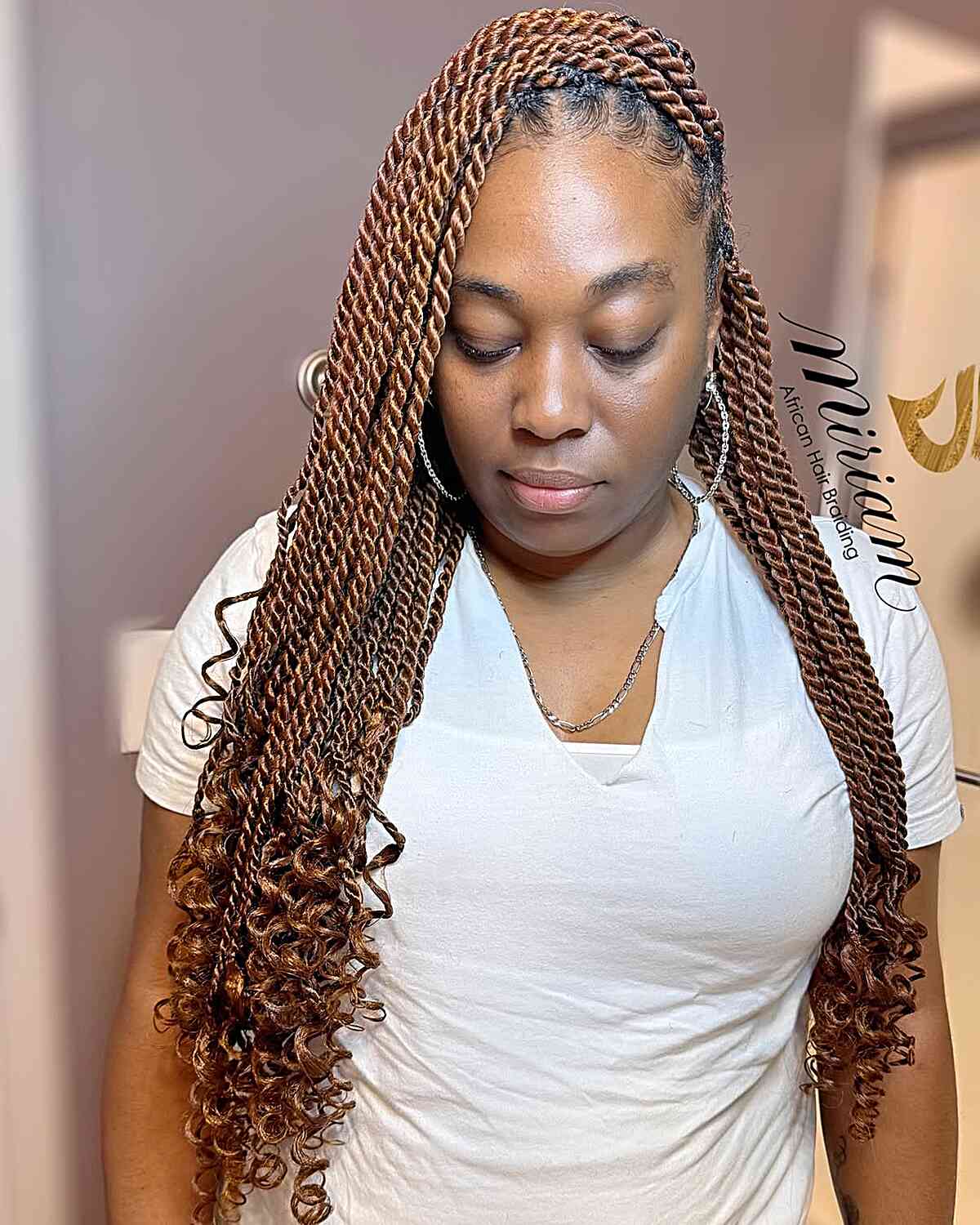
Blonde highlights on warm brown look cooler and brighter than honey or caramel. These long two-strand twists use subtle blonde pieces woven through the front and crown, with defined curly ends that keep the contrast from looking harsh. The middle part lets the lighter strands fall evenly on both sides.
Thick, coily hair holds this shape best; the color shows clearly against the dark base without overwhelming it. A salon handles the braiding and the placement of each highlight. Fine hair may not support the weight of the twists, and a single solid shade avoids the complexity of highlight placement. The blonde needs enough density to stay visible as an accent. Ask your stylist for: long two-strand twists with warm brown and subtle blonde highlights.
Honey brown highlights woven into twists
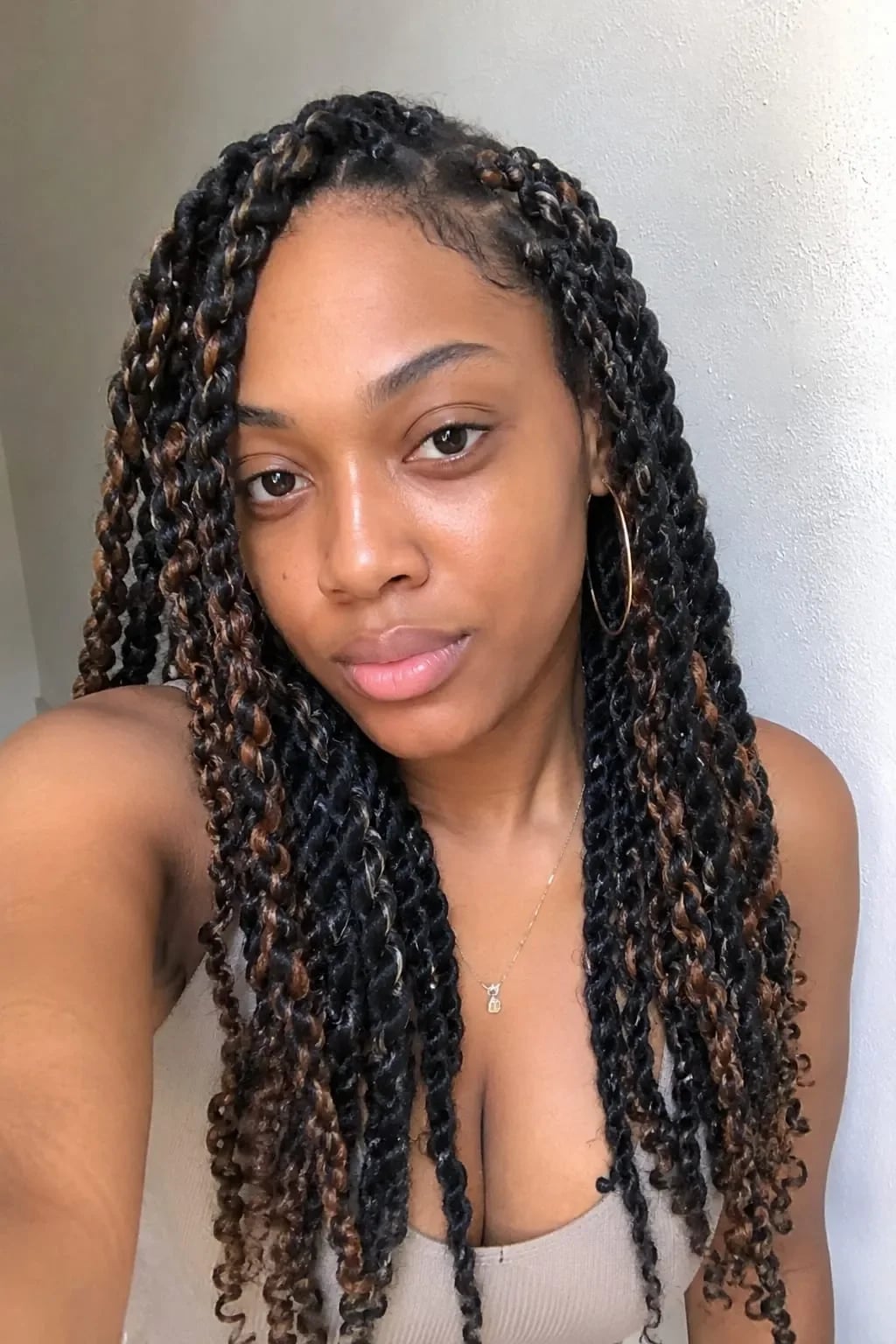
Honey brown highlights woven into a black base give these shoulder-length twists a warmer, sunnier feel than straight black. The coily, thick texture holds each twist defined and full, so the lighter strands don’t get lost. Moisturize nightly and re-twist new growth every six to eight weeks. A single, uniform color or fine hair that might not carry the weight are not ideal for this style.
Gray highlights add dimension to black twists
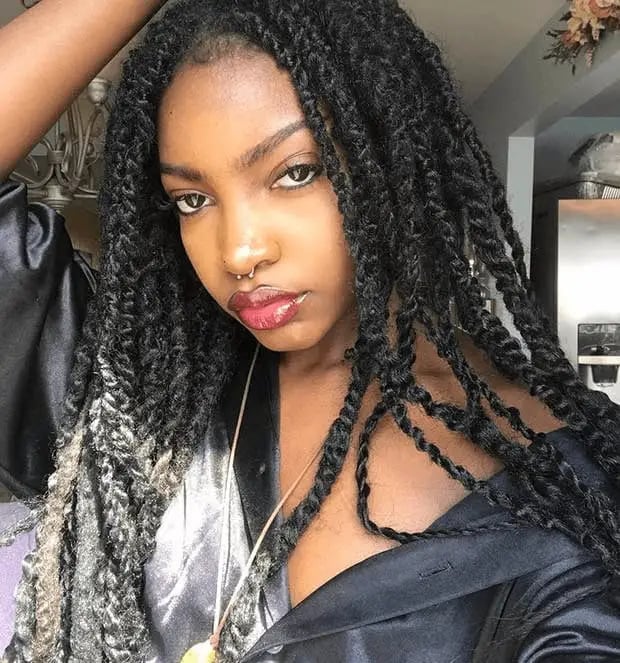
Gray highlights on black hair work because they sit in the same tonal family, cool, not warm, so the contrast looks architectural. These long, defined twists use a black base with subtle gray strands placed through the middle and ends, giving the hair a metallic sheen without going fully silver. Thick, coily texture is the right canvas; the twists stay crisp and the gray looks deliberate.
The catch: gray against black shows every bit of new growth. You will see the dark root line within three weeks, and re-twisting every six to eight weeks is necessary to keep the dimension clean. It suits those who can commit to that maintenance schedule. Ask your stylist for: long two-strand twists with subtle gray highlights.
Small defined twists in dark brown
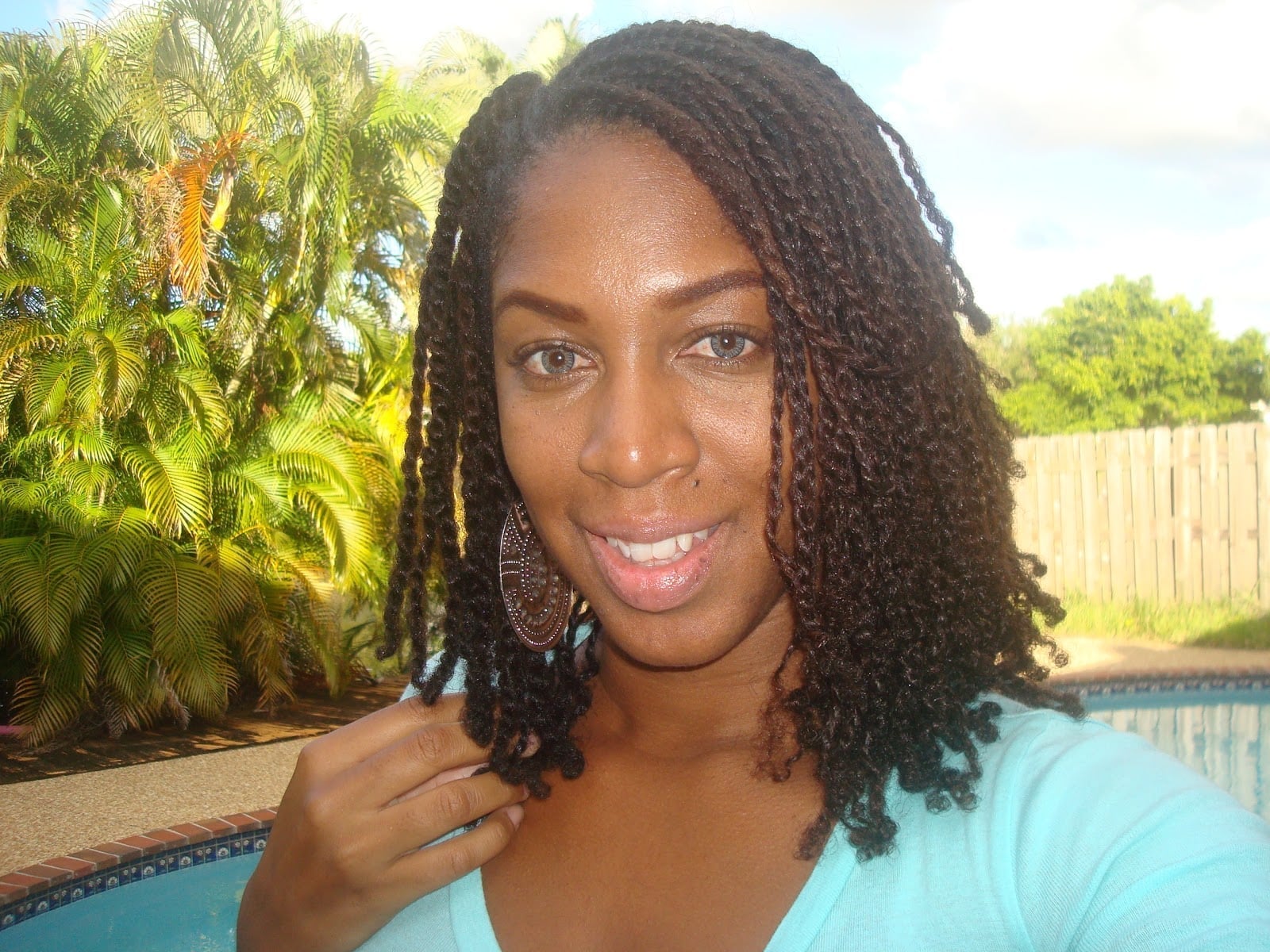
Small defined twists in dark brown versus larger, looser twists: the small ones take longer to install but move more like natural curls and last longer without frizzing. These use a middle part and a curly, thick texture, with layers cut into the ends so the twists taper instead of blunting off. The dark brown color keeps the look low-maintenance, no root touch-up, no toning schedule. Bigger twists take less time in the chair, but they don’t offer the same movement or longevity.
High updo with gold cuffs and face-framing tendrils
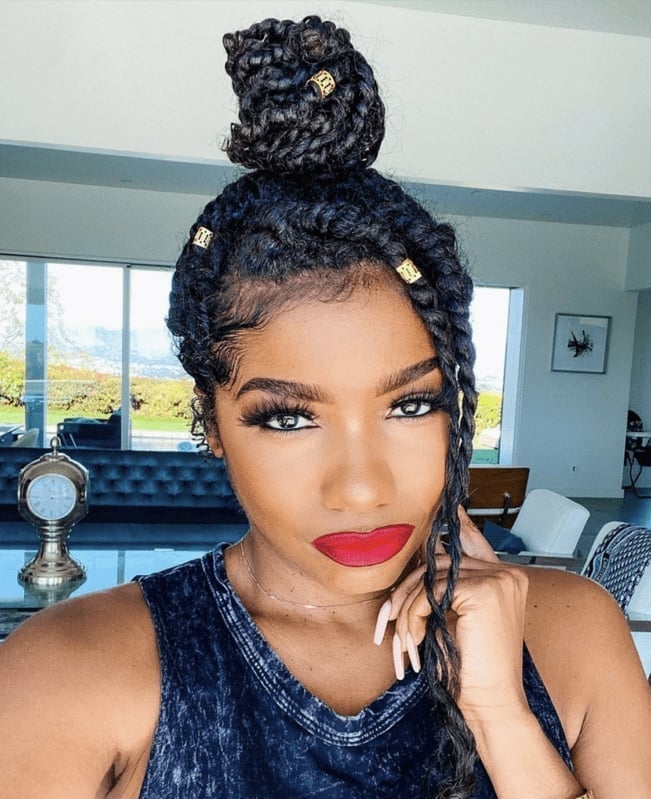
Gold cuffs on black twists in a high updo. The metal catches the light, the hair does the heavy lifting. Thick, coily texture gives the updo enough weight to stay put without slipping. The face-framing tendrils are left loose and twisted, softening the pulled-back shape. A salon builds the updo and places the cuffs; getting the tension even across the updo takes practice. The result holds for a full day or an event without sagging. Ask your stylist for: a two-strand twist updo with gold cuffs and face-framing tendrils.
Two large coiled buns with intricate patterns
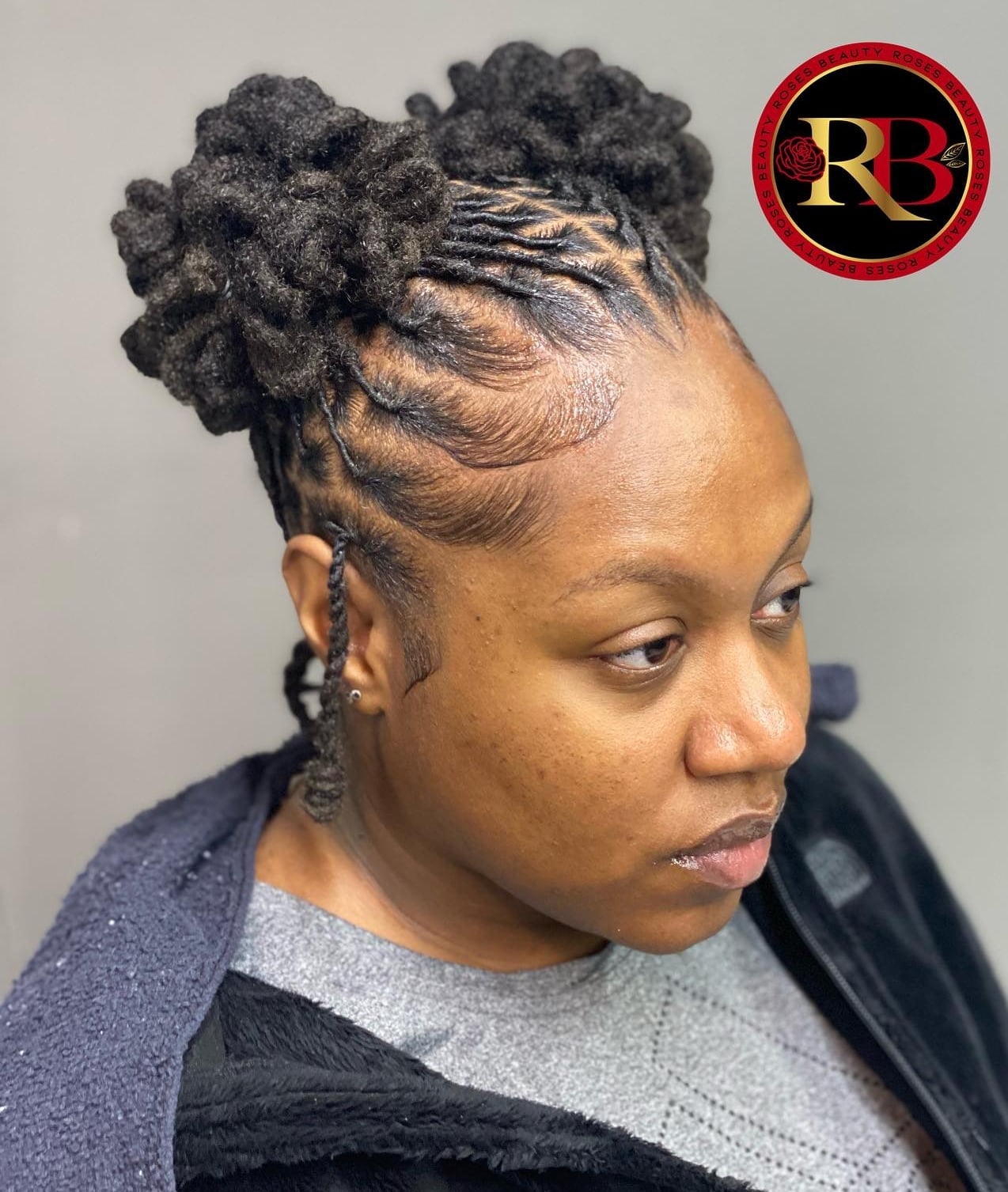
Two large coiled buns sit atop the head, each built from two-strand twists that stay distinct. Thick, coily hair carries the structure well, and the intricate patterns along the hairline and sides keep the eye moving. The buns hold their shape for the day, but a hairspray pass at the edges keeps the tendrils from escaping. It works best for those who want hair up and have thick, coily texture to support the weight.
Gold beads accent dark red twists gathered into buns
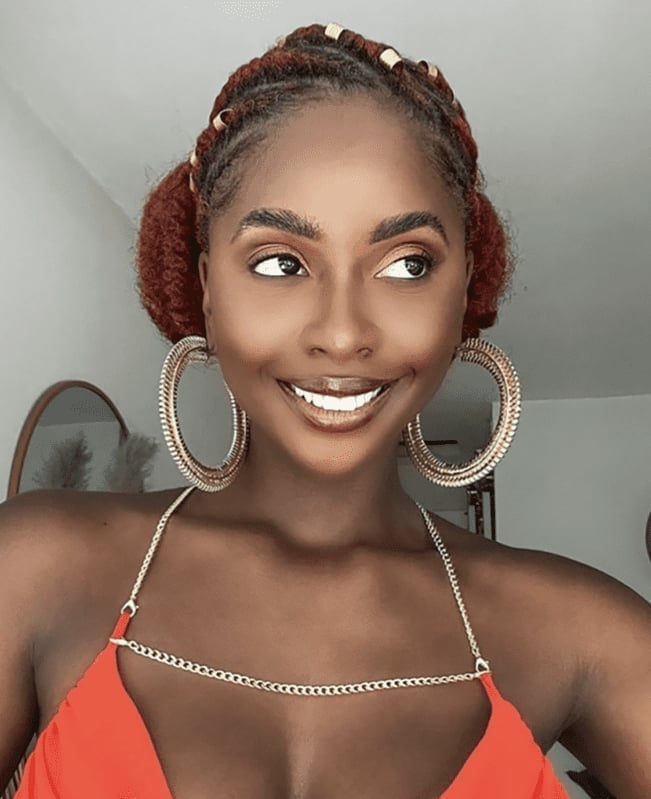
Dark red coily hair takes on a festive turn when gold beads punctuate each twist. The front parts down the middle, and the twists gather into two buns that sit neatly on top. You need thick, coily hair of medium to long length for the beads to hang properly; fine hair lets them slide. The beads stay put if they’re secured tightly at the root, but they add weight, so a re-twist every four to six weeks keeps the pattern sharp. The catch: the beads catch on collars and scarves, so plan the scarf first. Ask your stylist for dark red two strand twists with gold beads in buns.
Low bun secures neat twists for a tidy look
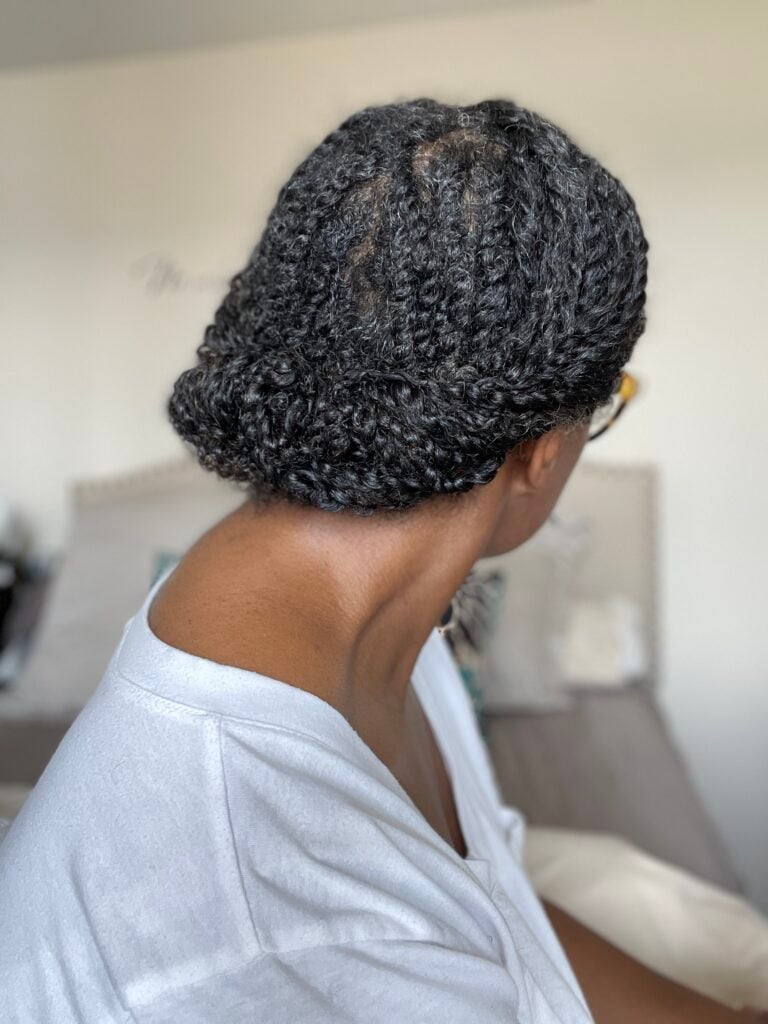
A low bun at the nape turns a classic set of two-strand twists into something you can wear to the office and not think about again. The dark gray base carries lighter gray streaks that look natural dimension, and the neat twists stay defined as they wrap into the bun. Thick, coily hair holds the style without pins slipping, and the bun keeps the length off your neck. A hairspray mist at the hairline tames flyaways for the day. Re-twist every four to six weeks to keep the sections crisp, and the look stays tidy through the week.
Diagonal cornrows leading into side twists
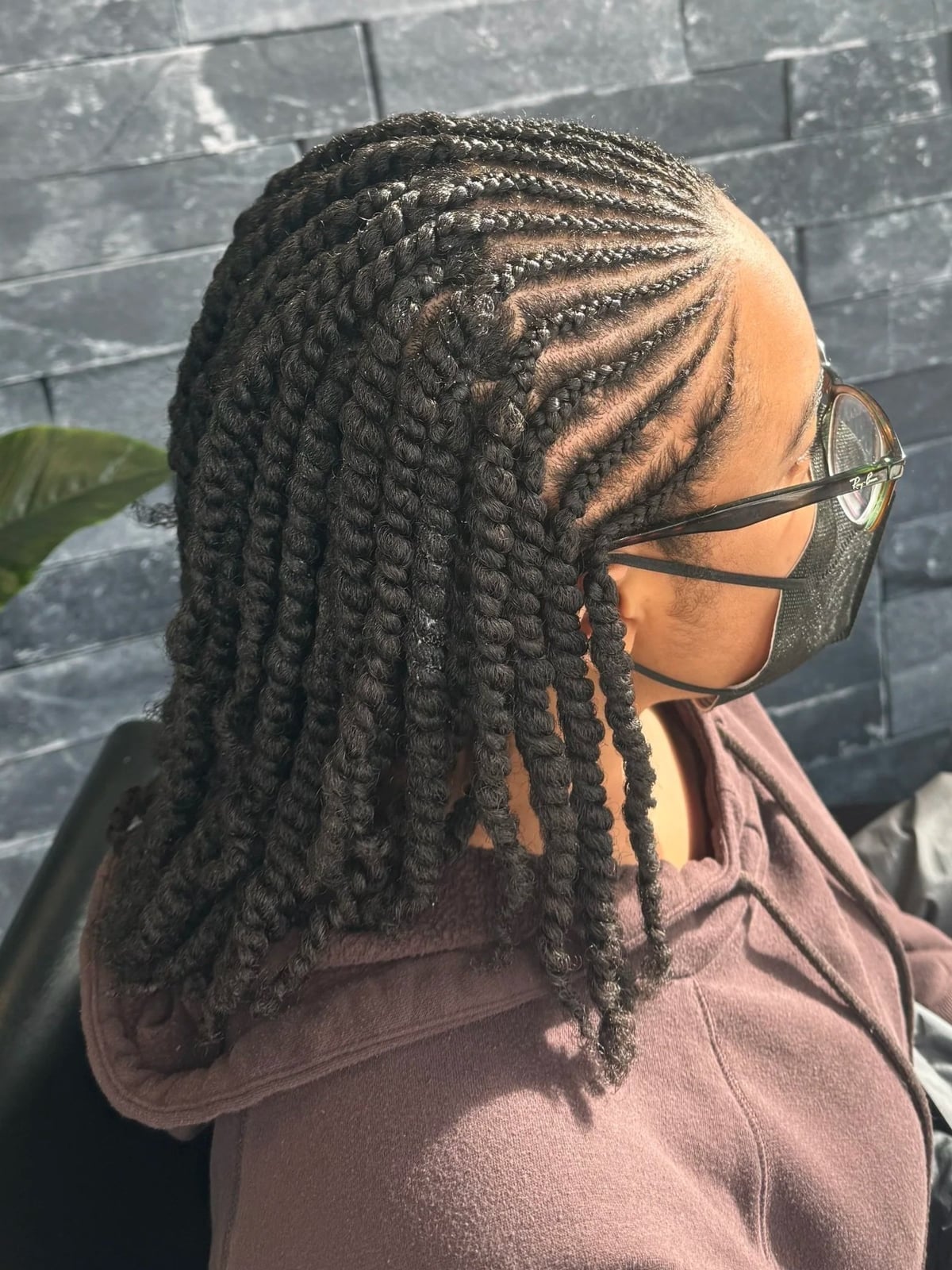
Set against a full head of uniform twists, this version stands apart because the parting does the talking. A middle part splits the hair, and diagonal cornrows run along the side profile before feeding into the two-strand twists. The black coily texture holds the cornrows taut, and the angle of the rows gives the style a directional pull. This one leans salon-leaning for the intricate parting, though a steady hand at home can manage it with practice. Ask your stylist for two strand twists with diagonal cornrows. A uniform twist style or fine hair that won’t hold the rows calls for a different look.
Geometric cornrows transitioning into twists
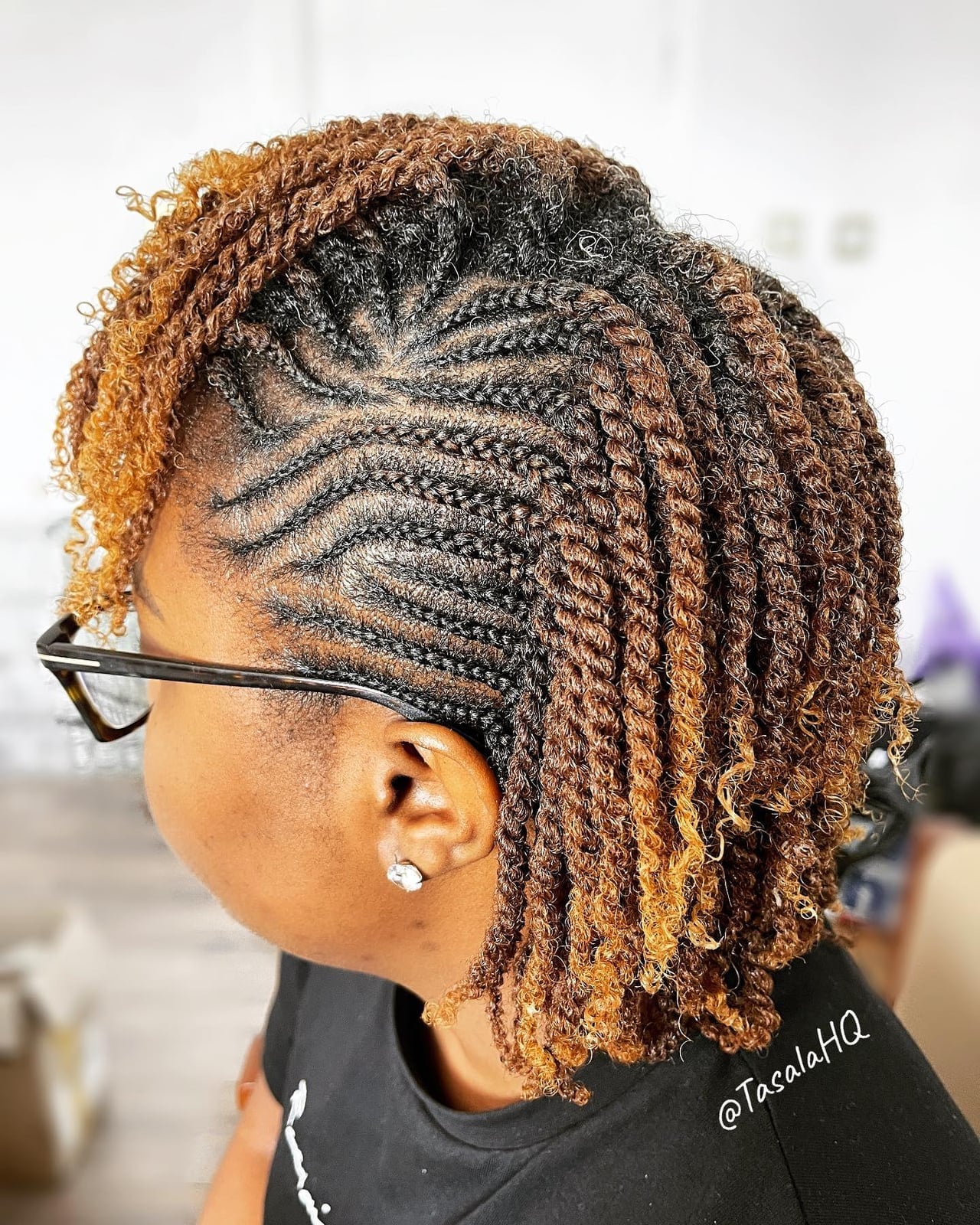
Dark brown twists with honey blonde highlights catch the eye first, but the geometry is what makes this a deliberate style. On one side, a geometric cornrow pattern sits flat against the scalp, then transitions into voluminous two-strand twists that end around the ear. The contrast between the smooth cornrows and the textured twists gives the look a sculpted quality. Thick, coily hair of medium to long length carries the transition well. The parting requires precision, so book extra time for the install, and expect the style to hold for several weeks with a light pomade along the cornrows.
Geometric parting pattern on twisted hair
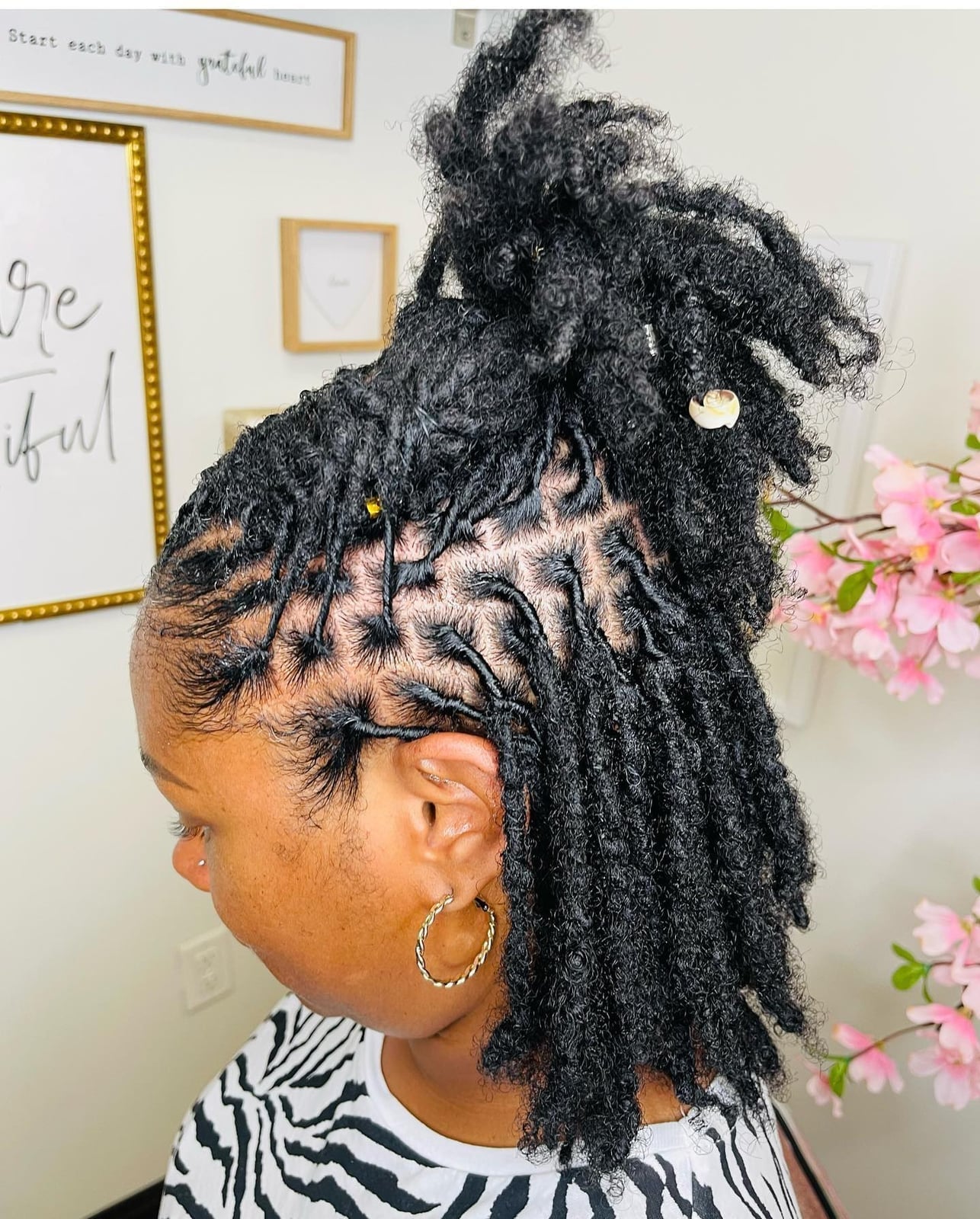
Thick coily black hair in two strand twists gets a precise geometric parting pattern that draws the eye upward. The middle part anchors the design while some twists gather into a high ponytail. This arrangement works best on medium to longer lengths where the pattern has room to read. A strong hold gel preserves the edges, but re-twisting sections every few weeks keeps the geometry crisp. The trade-off: that same precision means touch-ups take time.
Diamond-shaped parting at the crown
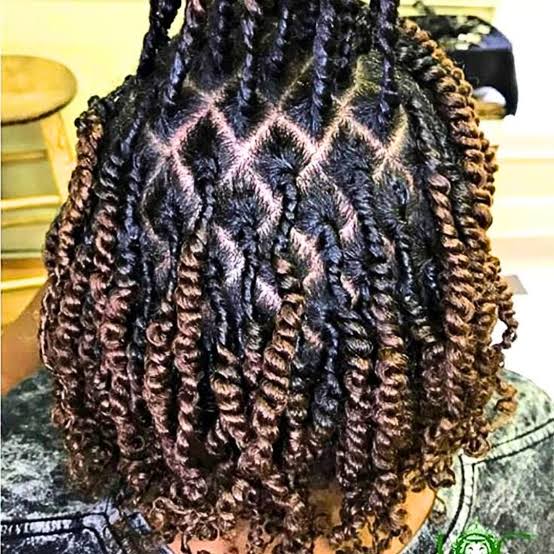
Two strand twists with a diamond-shaped parting at the crown offer a different feel from the geometric pattern above. Where the previous style uses straight lines across the whole head, this one centers a single shape near the top. The black base blends into brown highlights that catch light softly. Coily thick texture gives the twists body without extra bulk at the roots. A middle part keeps the look balanced. Suits anyone who wants an artistic detail without a full head of intricate sections.
Thick, defined twists framing the face, black
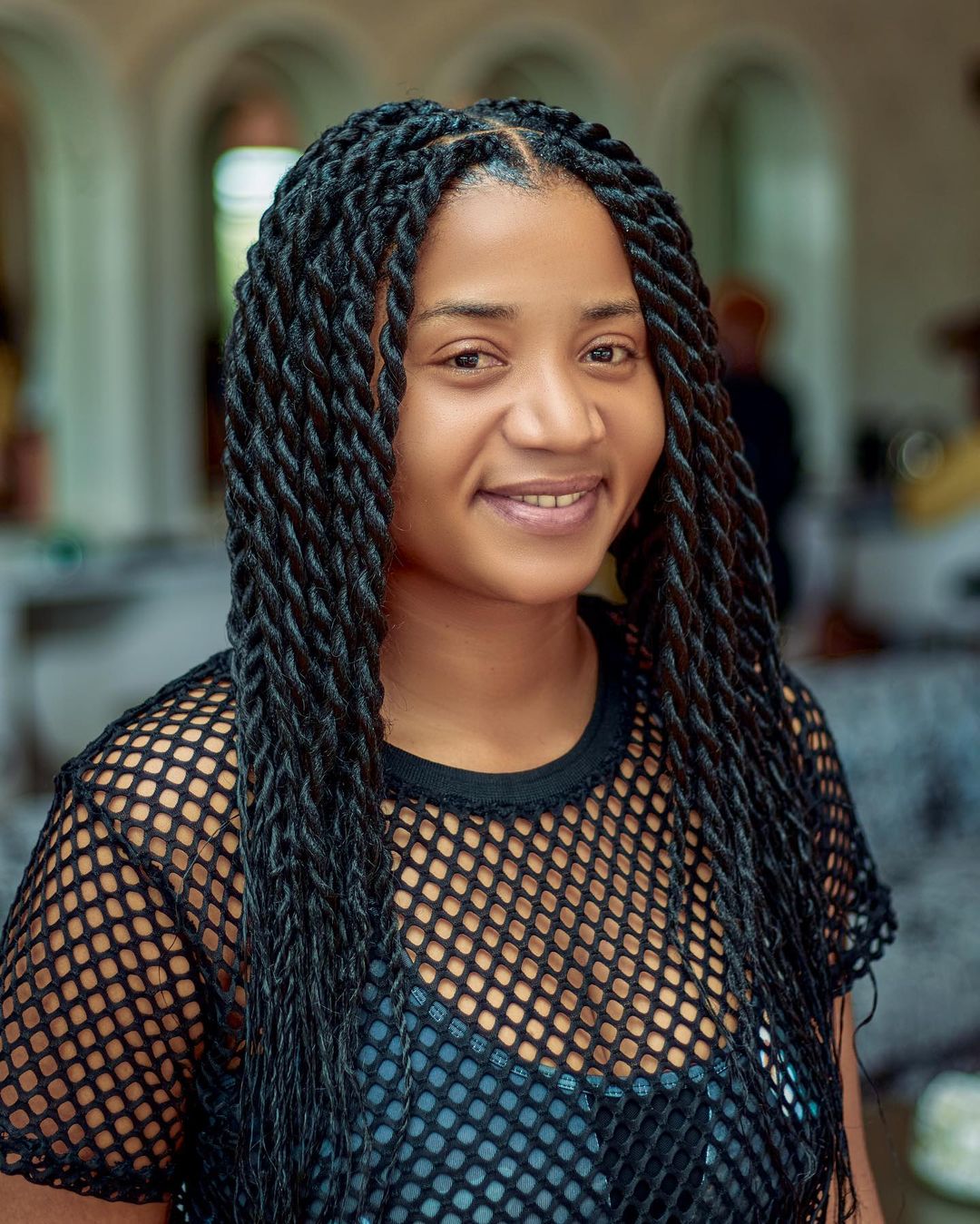
Keep the twists thick enough that each one looks a distinct shape rather than a blur of hair. That is the common mistake: sections cut too small lose definition fast. Thick coily black hair parted down the middle allows each twist to frame the face with clear edges. A salon handles the division best, because even section size matters more here than with looser styles. At home, the risk is uneven parts that throw off the symmetry. Ask your stylist for: thick defined two strand twists, middle part. The result holds its shape for weeks with minimal fuss.
Medium length or longer gives the twists enough weight to hang neatly. Shorter hair can work, but expect the ends to flip more.
Square part frames face with medium brown twists
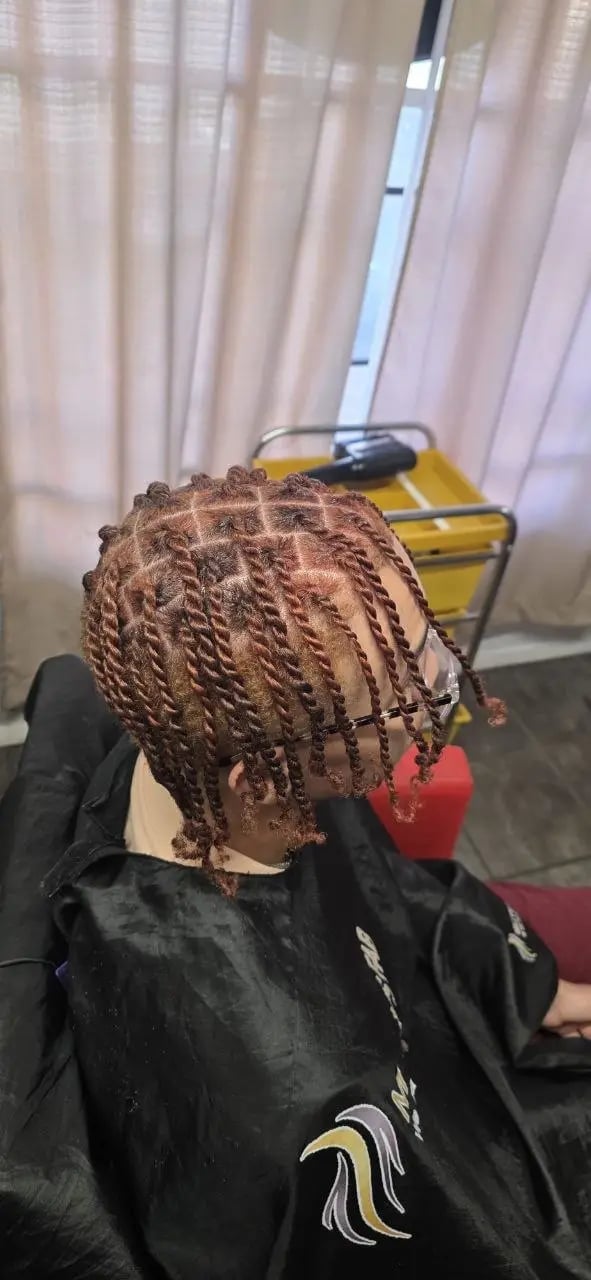
Medium brown twists with subtle red undertones land between a neutral brown and a warm tone. The square parting at the top of the head frames the face with clean lines, while the ear-length ends keep the style contained. Coily thick texture holds the shape without extra product. Compare this to the diamond-shaped parting above: that one draws attention to the crown, while this square part pushes focus outward to the face. A light gel maintains the part between washes. Re-twist every four to six weeks to keep the edges sharp.
Twists fall forward creating a stylish fringe
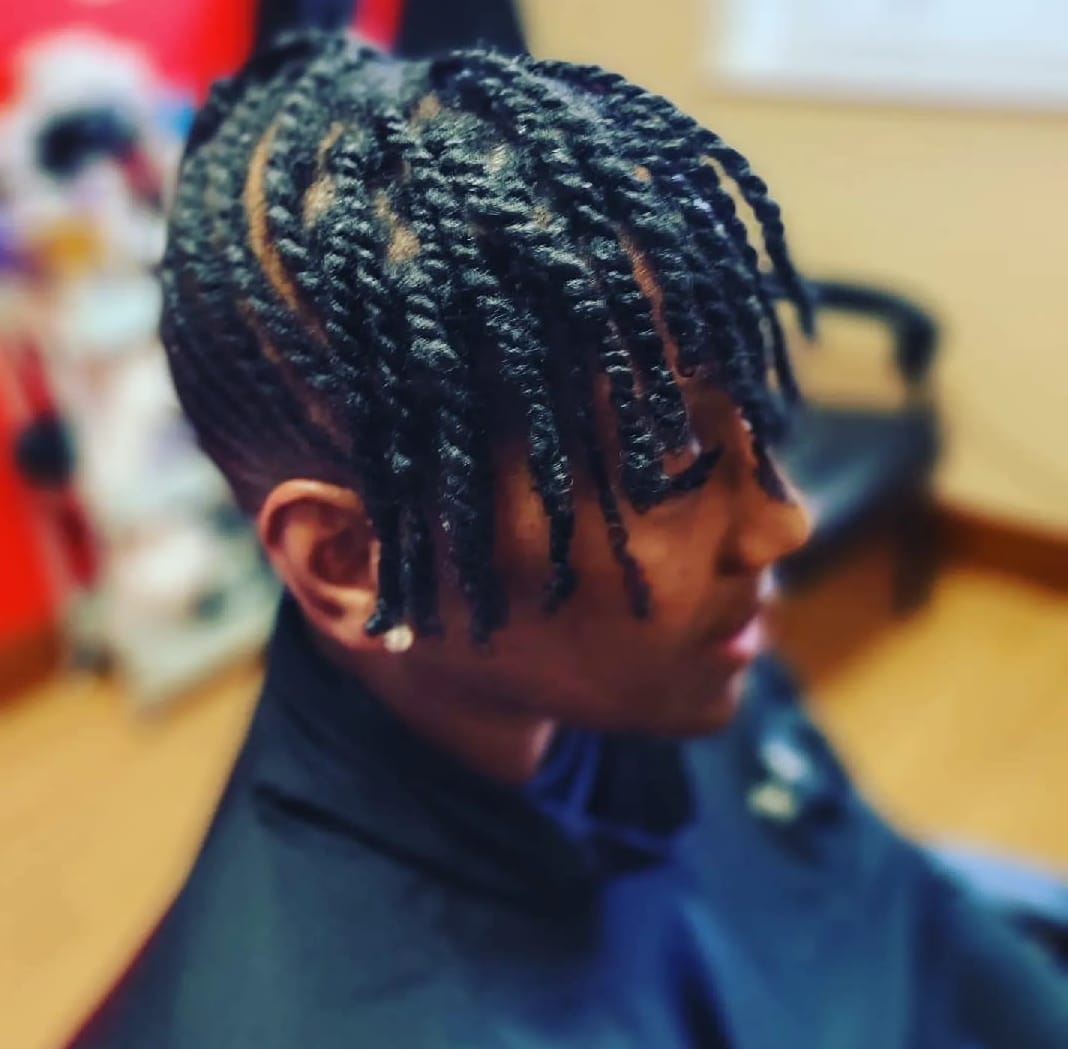
Neat defined two strand twists falling forward create a fringe effect without cutting any hair. The sides stay closely cropped, blending into the twisted crown for a clean transition. Coily thick texture gives the front volume that holds its shape through the day. The drawback: the fringe needs a re-twist every four to six weeks to keep the forward lean tidy. Suits round and oval face shapes best, because the volume at the crown balances the length. Not for anyone who prefers hair away from the forehead.
Final Thoughts
Pick the version that matches your morning routine and your patience for parting.
- Refresh twists weekly with a leave-in conditioner or spray.
- Sleep with a silk or satin bonnet to preserve the twists.
- Re-twist new growth every 4-8 weeks, depending on growth rate.
- Avoid excessive manipulation to prevent frizz and breakage.
Find your perfect two-strand twist style.