You have the pink picked out, but the chair conversation stalls on the cut. That is where most color plans fall apart, because a shade that works on a board often fights the shape on your head. Layering, bangs and length decide whether the pink looks intentional or accidental, which is why Sharp Pink Hair Ideas 2027 fill so many saved boards.
This collection covers 31 looks, from a bold pixie that needs a trim every four weeks to long layers that let you air-dry and walk out. Each one names the cut, the texture and the upkeep rhythm so you know exactly what to say at the consultation. No guesswork, just the shape that makes the color work.
Spiky platinum pixie with pink tips
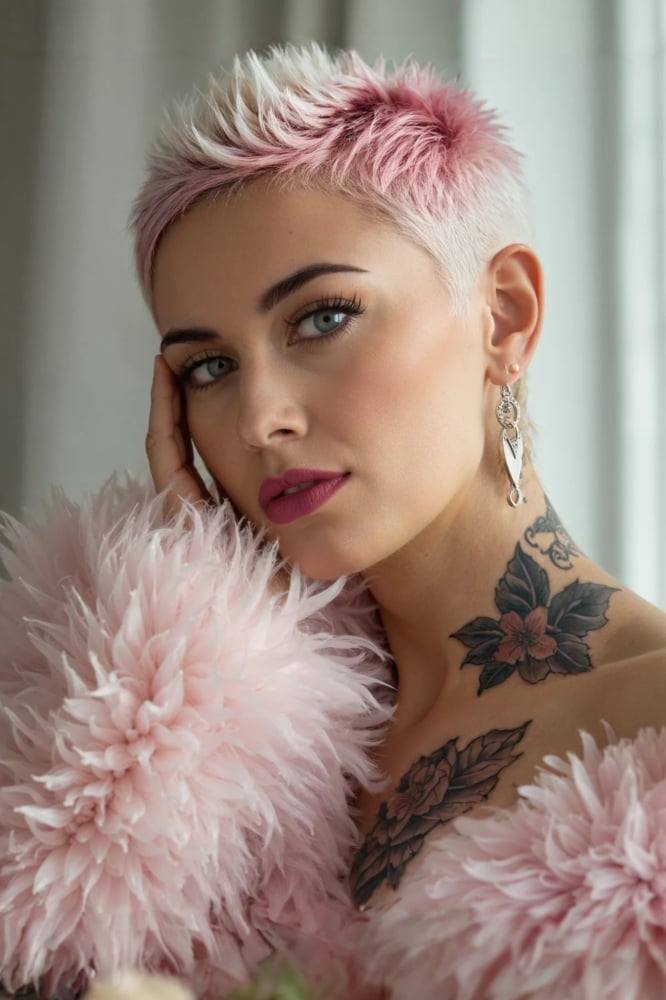
Platinum blonde with pink tips works because the base is pale enough to let the color pop without a dark grow-out line. This is a pixie cut with no bangs, relying entirely on spiky texture for shape. Fine hair holds that lift better than medium or coarse density. Skip it if you want a style you can sleep on and walk out the door. Tell your stylist: pixie cut, platinum base, pink tips, spiky finish. A strong-hold wax in the morning and a trim every four weeks keep it from looking shaggy.
Textured pastel pink pixie with side-swept bangs
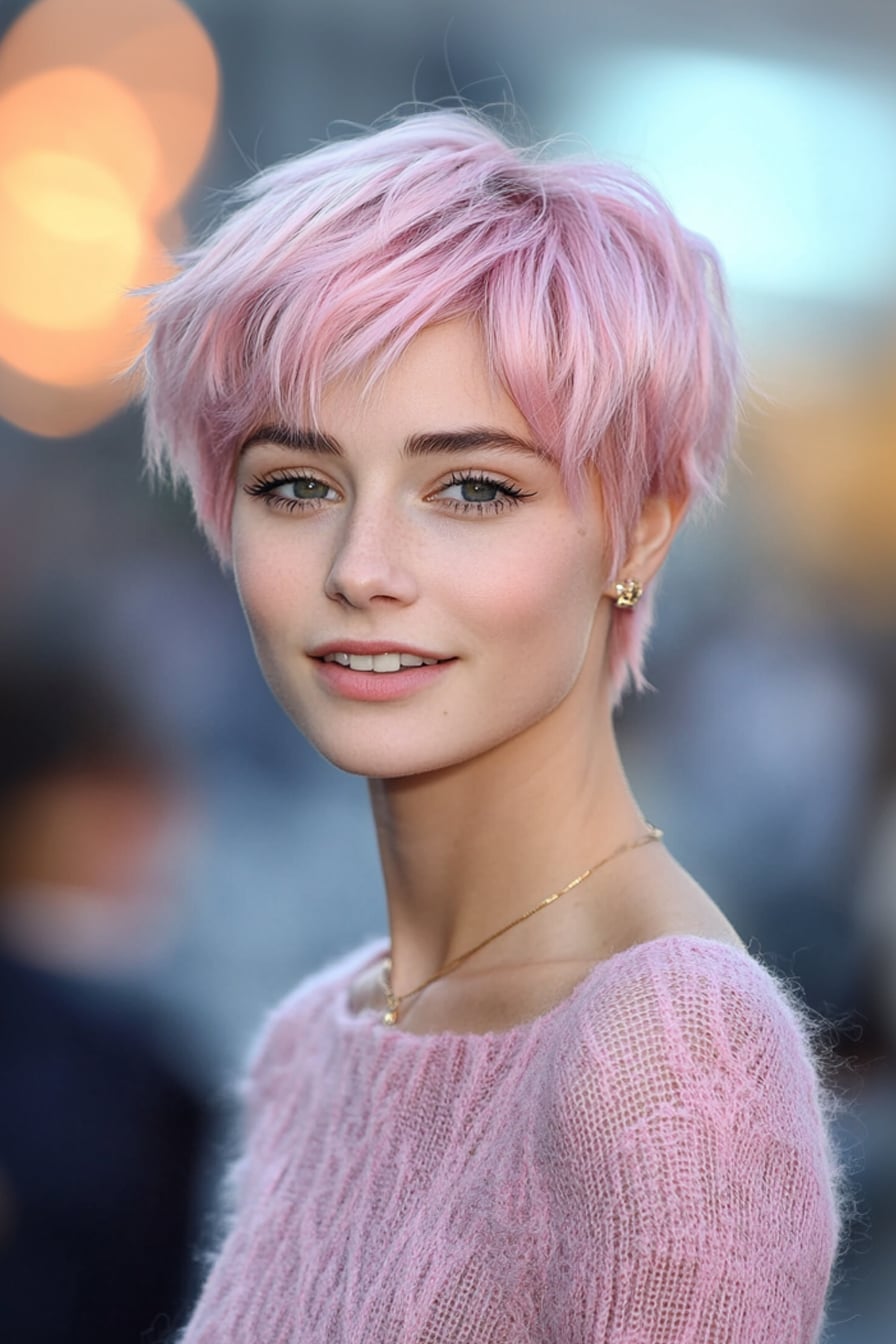
Wondering how to make a pixie feel soft instead of severe? Side-swept bangs in a pastel pink hue do exactly that. The cut stays short on the sides and back, with the bangs sweeping across the forehead. The texture comes from a light product worked through damp hair, not from layers. Fine, straight hair is ideal here, coarser textures tend to puff the bangs out. A quick tousle with your fingers each morning is all the styling it needs.
Ear-length pastel pink pixie cut
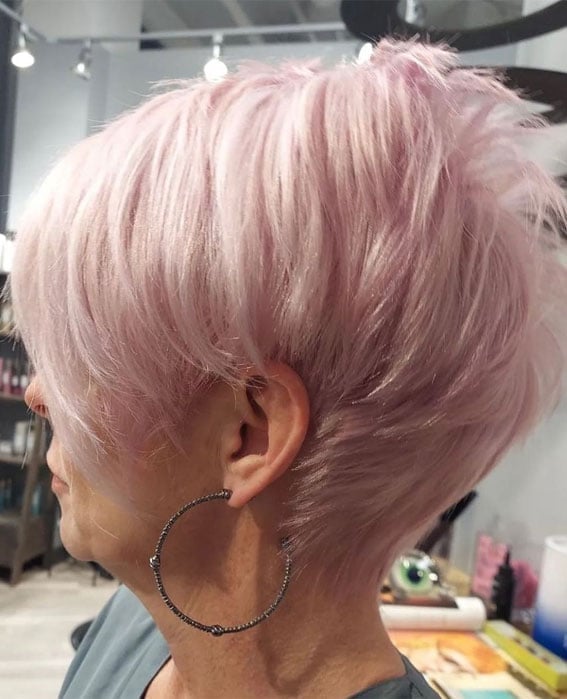
An ear-length pixie lands between the micro-short crop and the longer bob, short enough to feel bold, long enough to run your fingers through. The cut has no bangs, so the pastel pink color looks a solid block rather than a pattern. Textured styling breaks up the silhouette slightly. Pastel pink demands upkeep: the color lifts out in about six weeks unless you use a color-depositing conditioner. Trim every four to six weeks keeps the ear-length line clean. Fine hair wears this density well; thick hair may need more internal layering to avoid a helmet effect.
Blunt bob with micro bangs in pastel pink
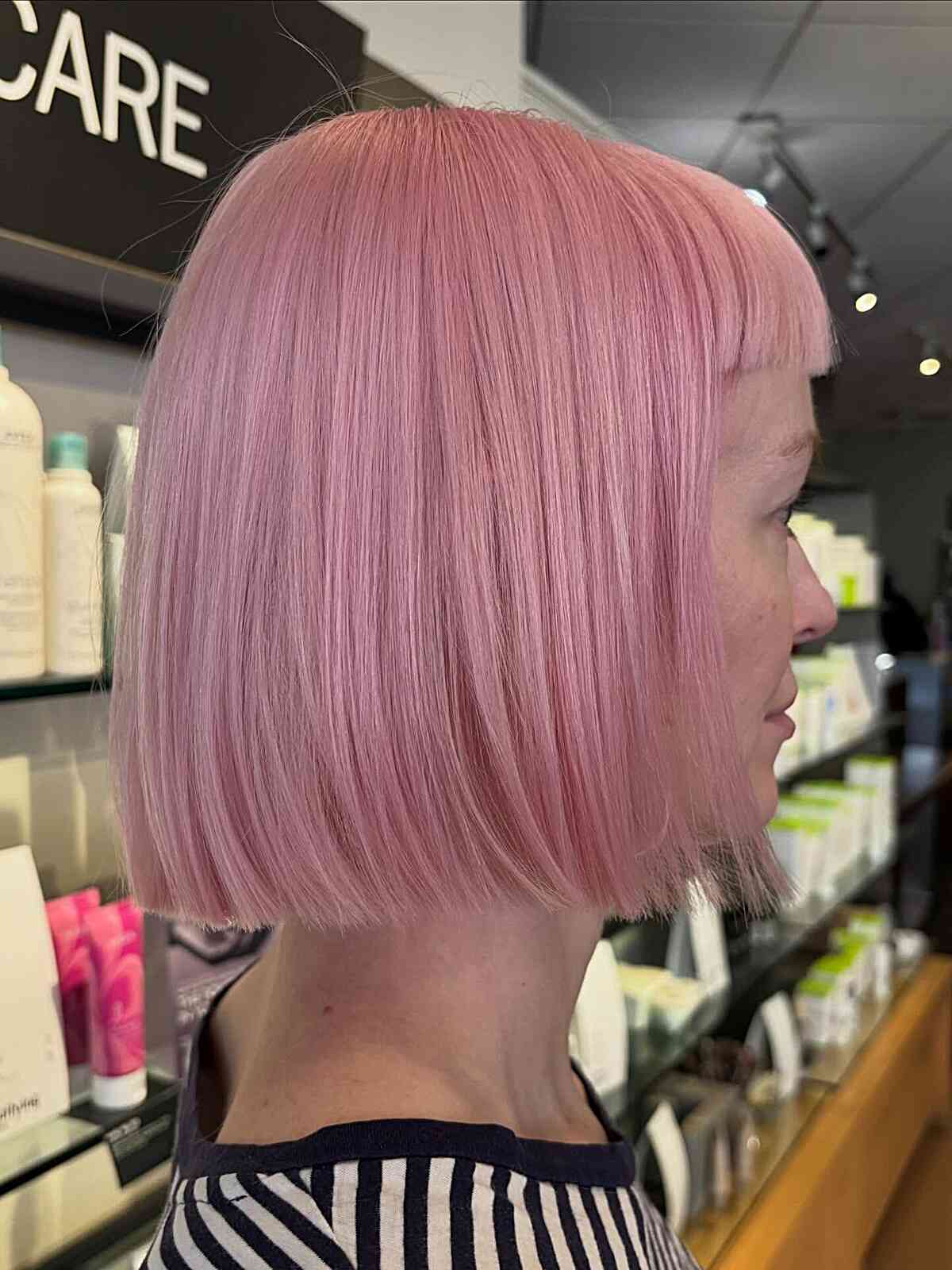
Micro bangs and a blunt bob share one trait: neither forgives a crooked cut. The bob hits without layers, creating a solid pastel pink block from crown to ends. Micro bangs sit well above the brow, exposing the forehead completely. Tell your stylist: blunt bob, micro bangs, straight finish. The precision of both lines means you cannot hide an uneven trim behind texture. Fine, straight hair produces the cleanest silhouette; wavy texture will push the bangs off-center. A flat iron smooths the bob daily, and the bangs need a touch-up every three weeks.
Blunt bob with wispy bangs in pastel pink, fine
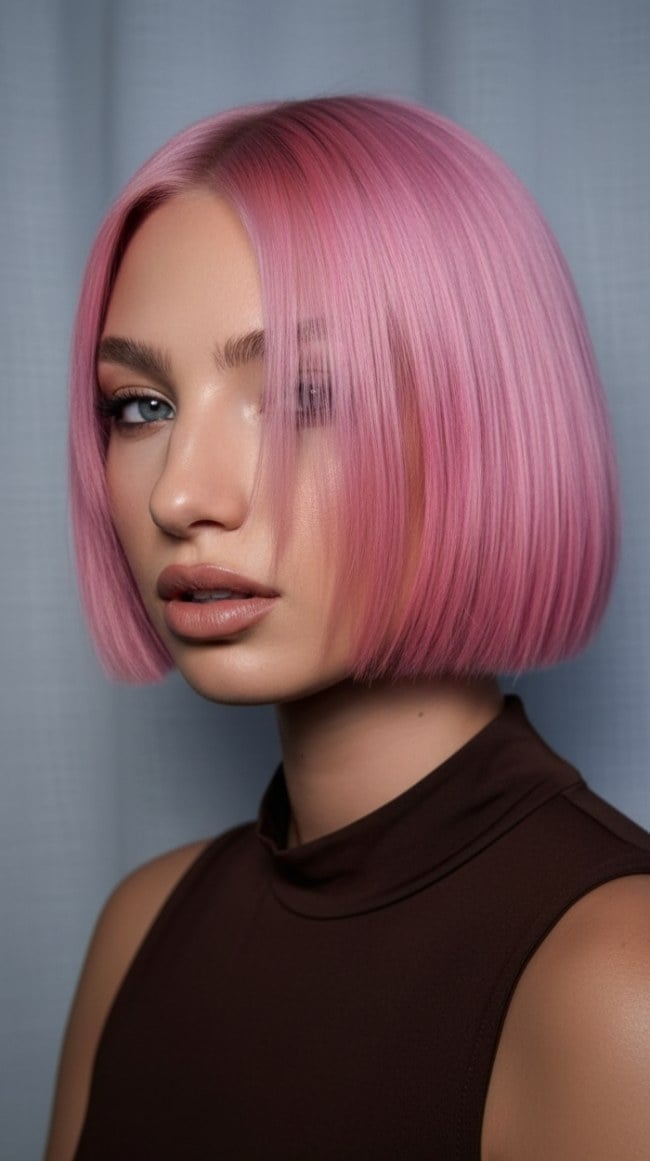
Wispy bangs soften the blunt bob in a way micro bangs cannot. The bangs feather across the forehead rather than cutting straight across, which makes the pastel pink with subtle peach undertones look more dimensional. A middle part keeps the face symmetrical. The blunt baseline still requires a sharp scissor line. That is the trade-off. Skip it if you plan to air-dry, because the bob needs a sleek finish to hold its shape. Straight, fine hair is the only texture that gives this cut its intended clean edge.
Collarbone bob with curtain bangs and pink highlights
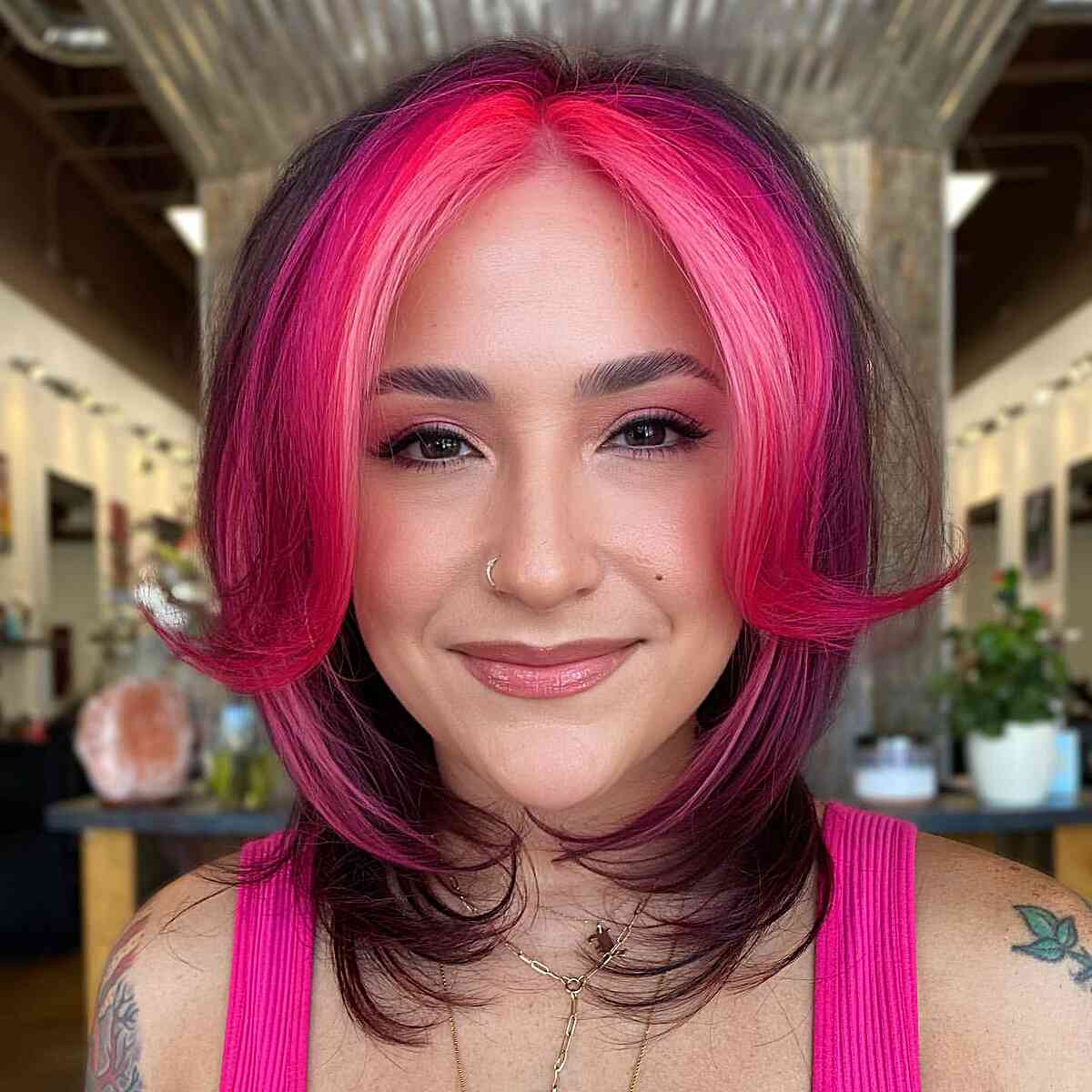
A collarbone length bob with layers keeps weight at the jaw while pink and magenta highlights wrap forward from a dark base. Curtain bangs and outward-curled ends frame the face. Straight, fine hair holds that blowout curl best. This cut requires regular styling. Ask your stylist for: collarbone bob with layers, curtain bangs, blowout with outward curled ends.
Lob with loose waves in vibrant pink
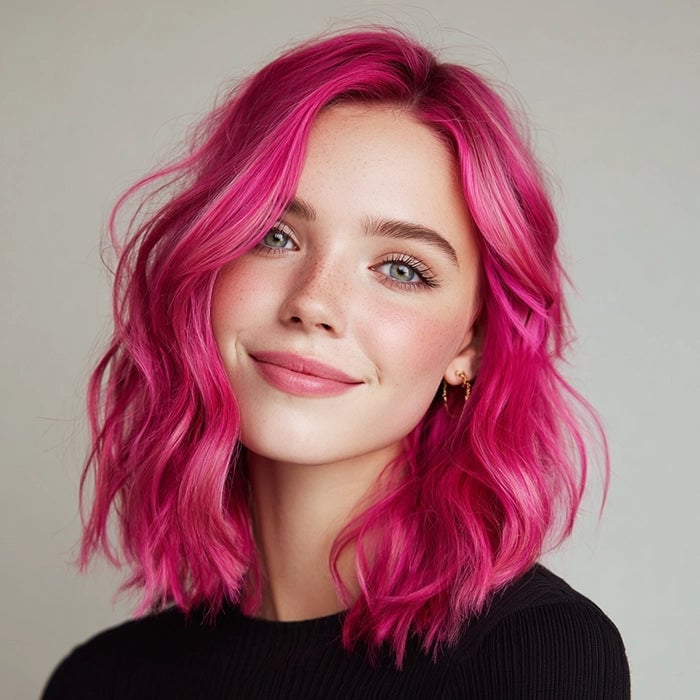
Can a lob carry a shade this loud? Yes, when the cut lands at jaw or collarbone length and the texture is wavy, not fried. Vibrant pink with lighter pink highlights keeps the color from flattening into one note. No bangs here means the middle part does the work. Fine hair benefits from a texturizing spray on dry waves for hold that lasts.
Pastel pink lob with root shadow
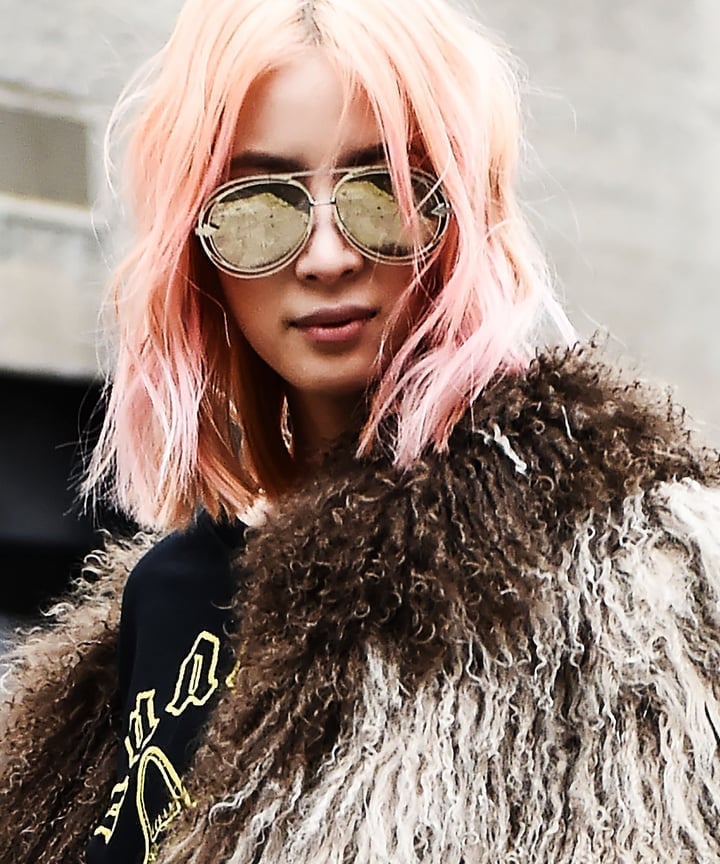
A pastel pink lob with a root shadow solves the problem pastels create: visible regrowth. The soft wavy texture and middle part keep the look relaxed rather than precious. Fine hair air-dries well here with a diffuser on low heat. Root shadow means a longer gap between touch-ups, but pastel pink still needs a toning session every four weeks to avoid turning beige. Skip it if you dislike visible roots or prefer a single-dimensional color. Ask your colorist for: lob, pastel pink color with root shadow, soft waves.
Blunt bob with lilac highlights
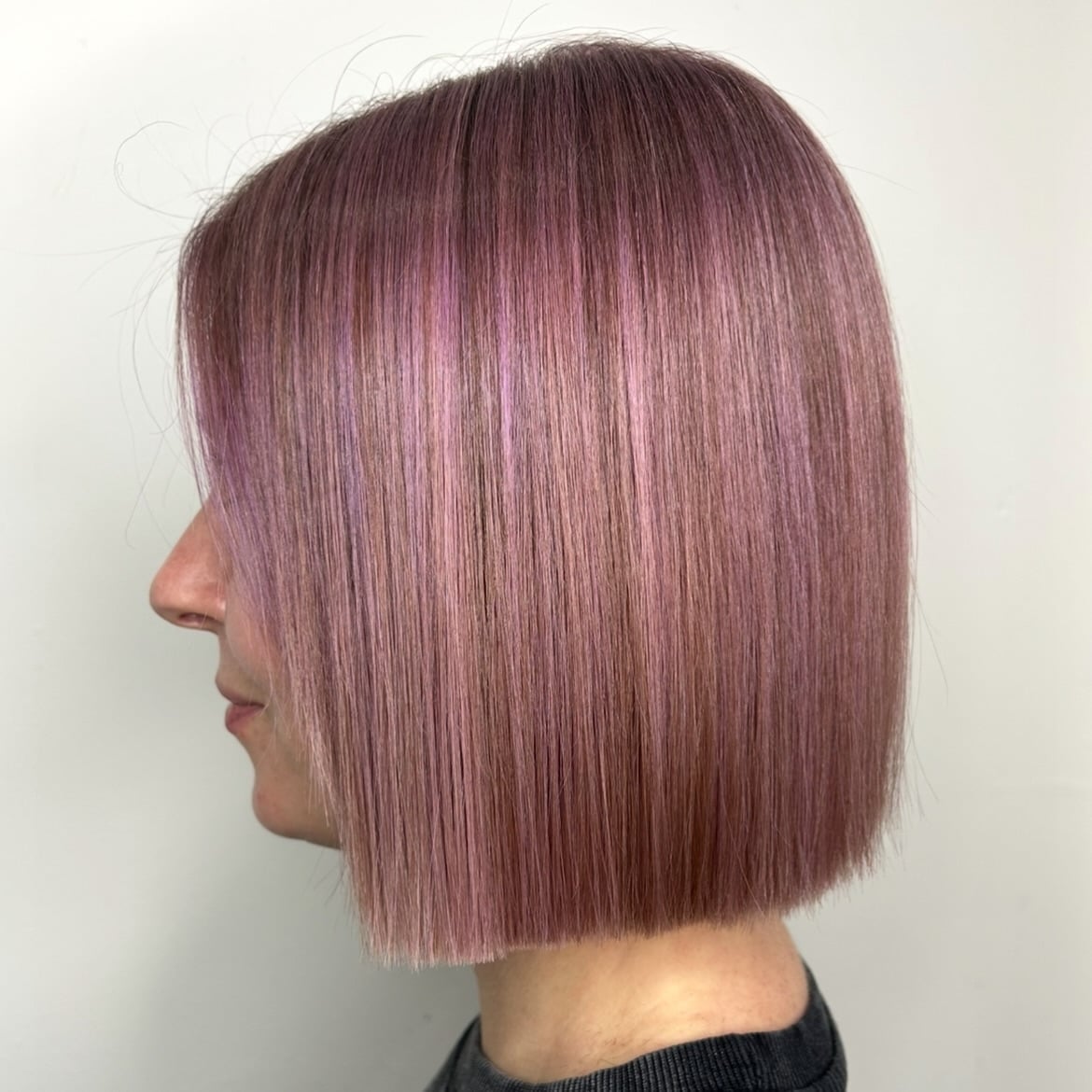
A rose gold base with lilac highlights sounds subtle until you see the contrast on a blunt bob. The straight, poker-finished cut relies on clean lines, so fine hair that lies flat works best. No bangs means the middle part and the precise hemline carry the silhouette. Daily straightening is the price of entry here. Pass when your natural texture is curly or wavy and you refuse to heat-style.
Air-dried layers with vivid pink and dark roots, close-up take
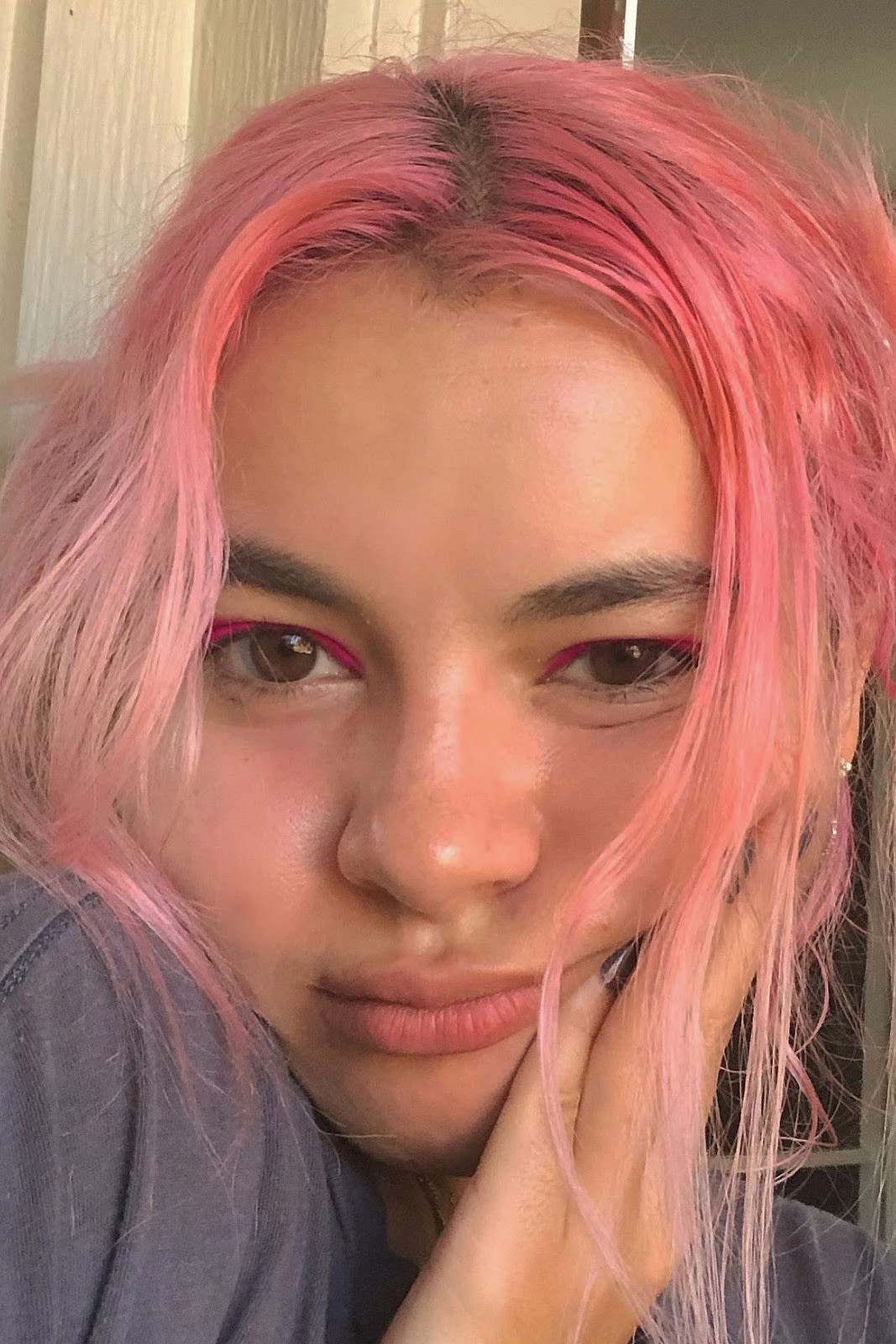
Middle part, air-dried wavy texture, and a vivid pink that starts darker at the root. The layers are subtle, cut to keep fine hair from falling flat when there is no heat involved. Works best on collarbone length or longer, where the hair length helps the waves form naturally. This design relies on the imperfect wave. Ask your stylist for: layered cut, air-dried texture, vivid pink with dark roots. The catch: vivid pink on fine hair requires a double process to reach that saturation, and the color fades faster than a deeper shade would. A sea salt spray enhances the wave without adding weight.
Soft waves hide grown-out line
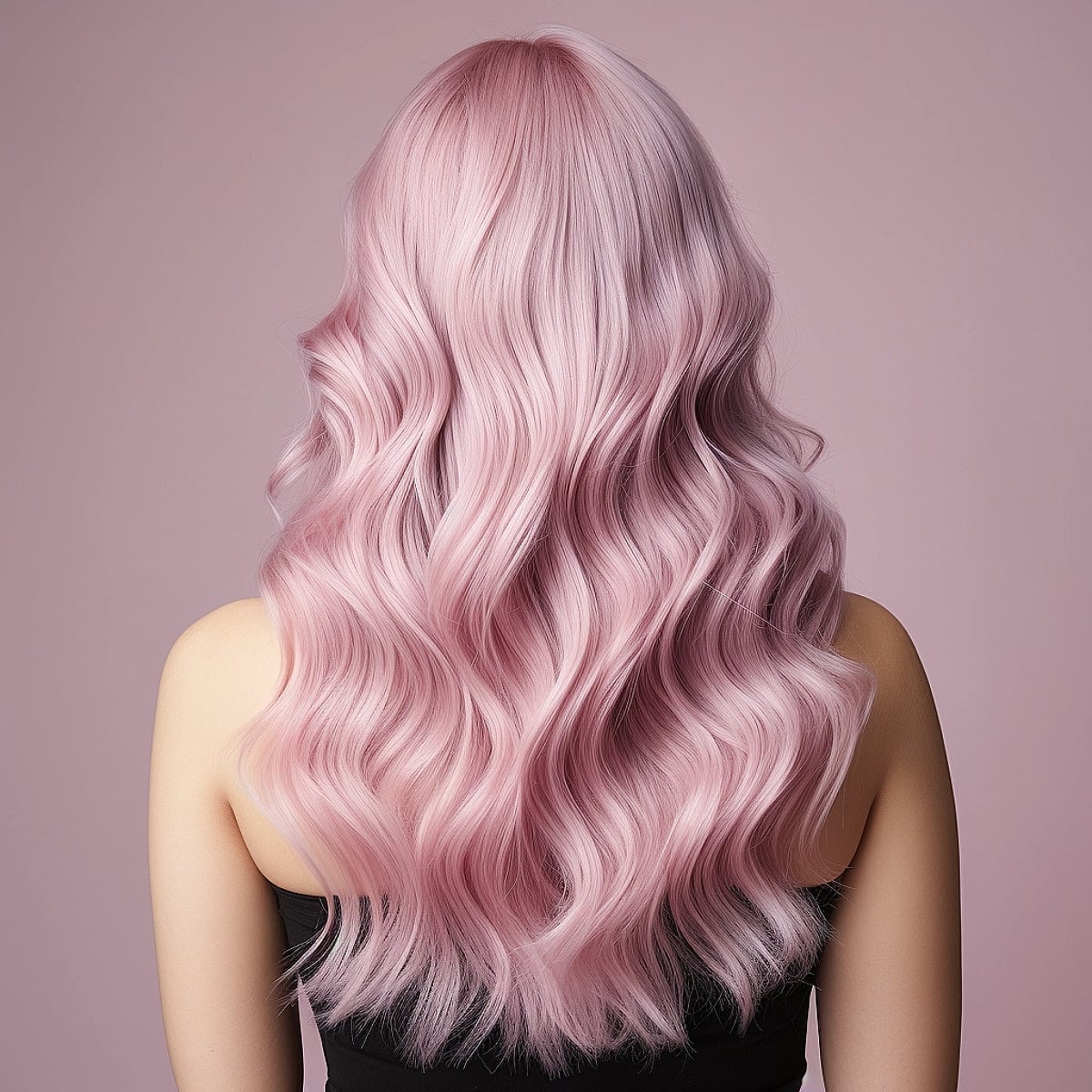
Set this against the air-dried version: loose waves reflect light differently, and that matters when your pastel pink color starts to grow. The back view shows subtle layers that give fine hair a lift without losing length. No bangs here, just a soft sweep that blurs the root line. This shape needs movement to work.
Wavy blowout in pastel pink with blonde undertones
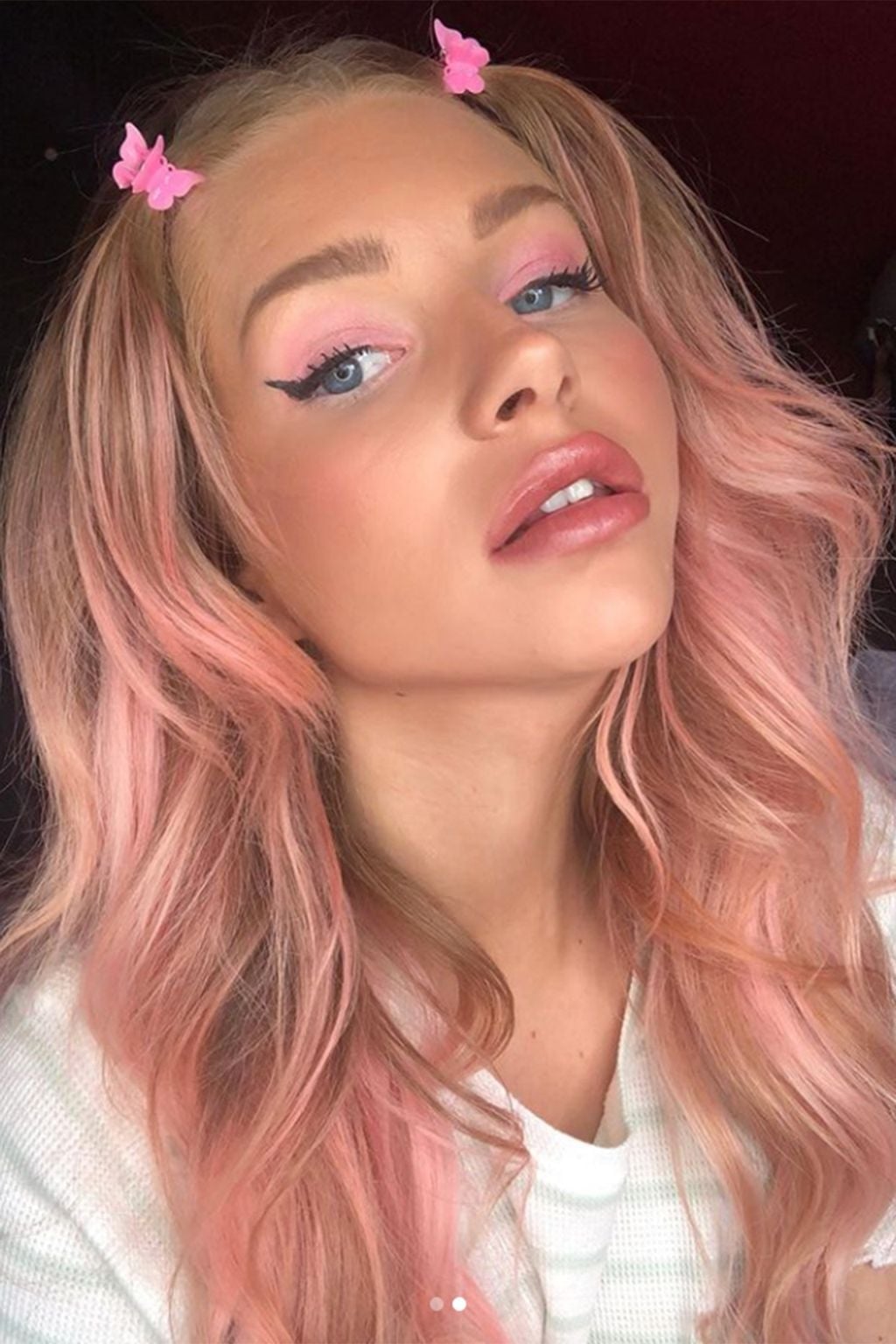
Pastel pink with blonde undertones reads cooler than a straight candy shade. Fine hair gains body from a wavy blowout, and the middle part keeps the look grounded. Suits most face shapes because the volume sits at the ends, not the crown. Skip it if you prefer air-dried styles. This finish requires heat and a light hold spray. Tell your stylist: layered cut, wavy blowout, pastel pink with blonde undertones. The result holds about two days before the wave drops.
Pastel pink waves with darker roots
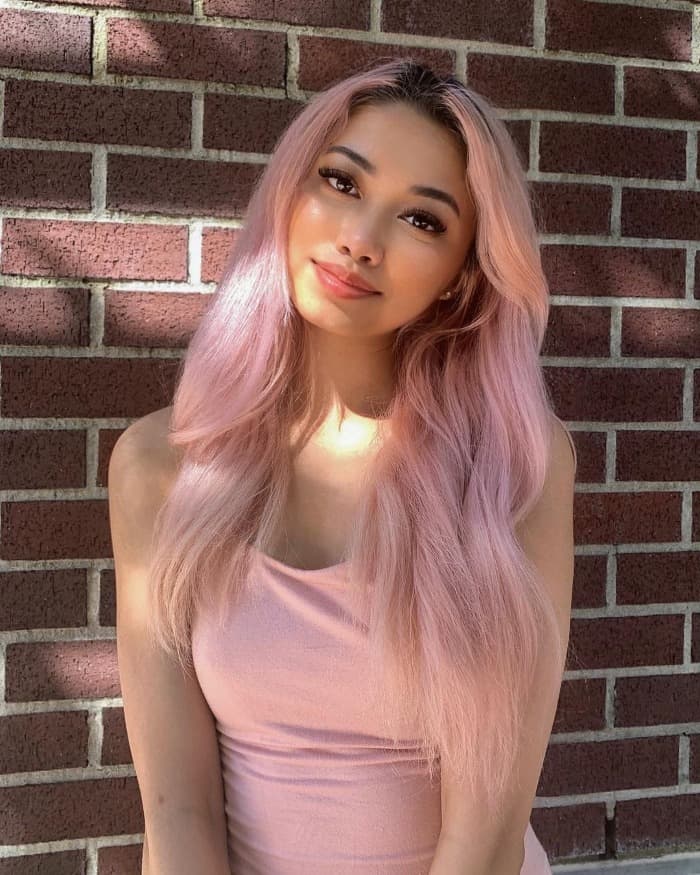
Long, flowing layers and a middle part, the base is simple. What makes this look intentional is the darker root: it buys you three to four weeks before a touch-up feels urgent. Pastel pink fades fast on fine hair, so the darker base acts as a visual cushion.
Loose waves blur the grow-out line further. No bangs, just soft face-framing pieces that land below the chin. The upkeep rhythm: a toning gloss every four weeks to keep the pastel from turning butter-yellow, and a quarter-inch trim at the same interval. A texturizing spray on damp hair, then air-dry, gives the wave pattern without heat.
Pastel pink waves with long layers
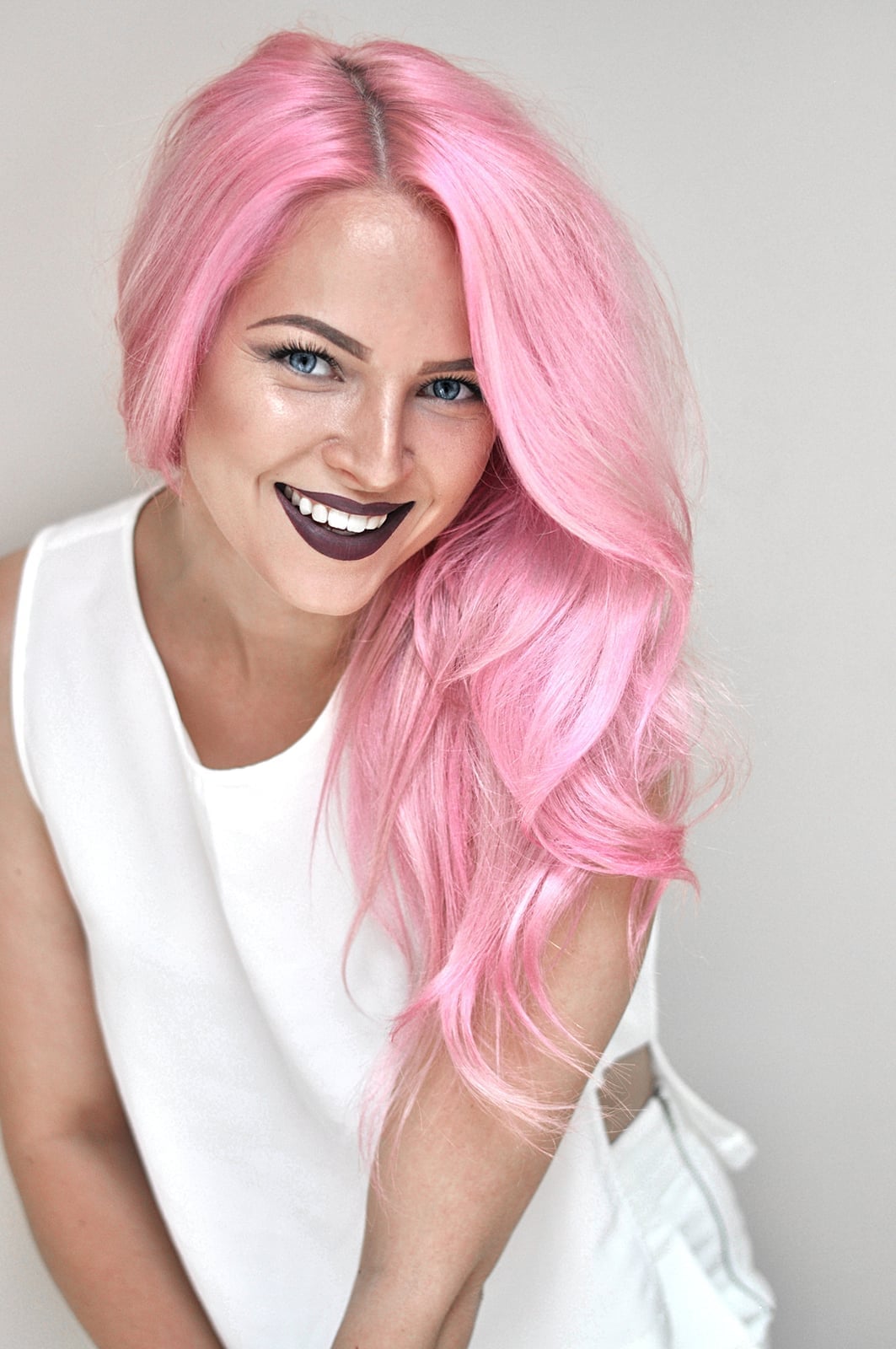
Long layers cut into fine hair create the illusion of density without actual bulk. The pastel pink hue is even from root to tip here. That takes a double process in the chair. A centered part and loose waves give the silhouette a soft, slightly romantic weight.
Technically, the stylist carves the layers so the longest piece stays at collarbone while the shortest layer grazes the jaw. No bangs, but the front pieces are cut to sweep forward. The catch: pastel pink on fine hair needs a bond-building additive in the bleach step, or the texture goes cottony. A wave-enhancing mousse on soaking-wet hair, then a diffuser on low speed, sets the pattern.
Long layers with pastel pink waves, close-up take
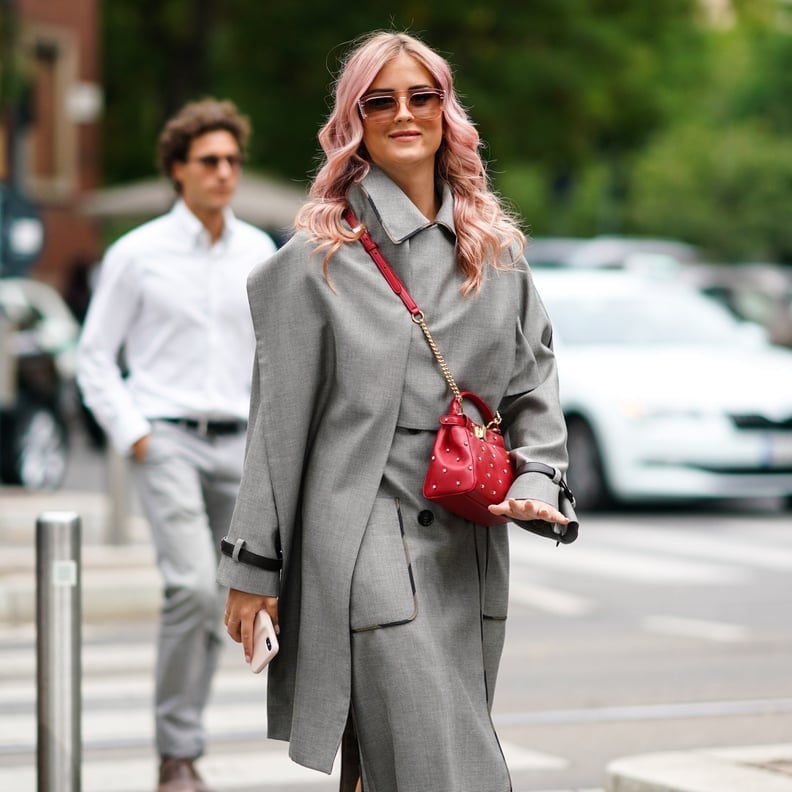
Subtle layers and a middle part, all in pastel pink. The honest trade-off: fine hair at this length can look stringy between washes, and the pastel shade shows every hint of brass by week three. A purple shampoo used once a week keeps the tone cool. Tell your stylist: long layers, pastel pink color, loose waves. Skip it if you prefer straight hair, the layers fall flat without bend. The wave is built with a one-inch iron, then broken up with fingers, no comb.
Dusty rose long layers with lighter ends
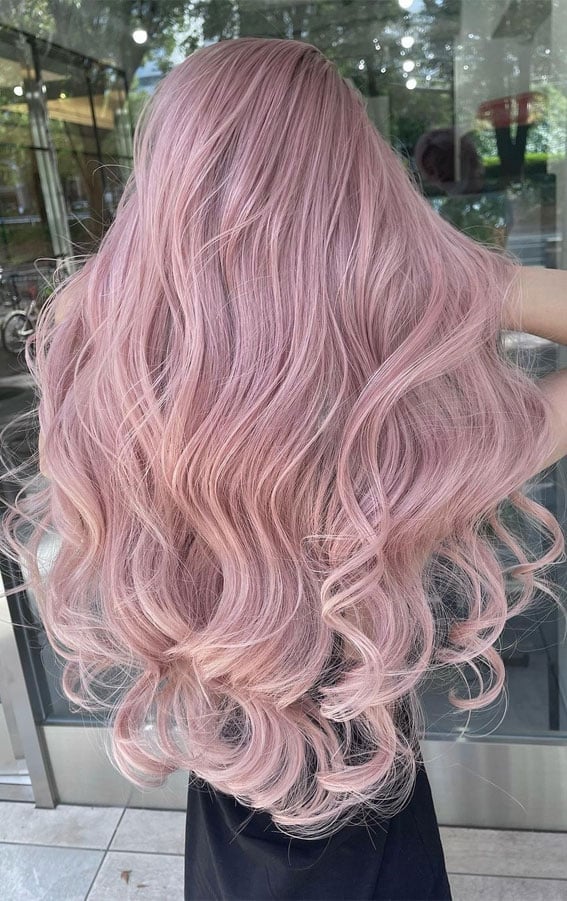
Set this dusty rose shade against a straightforward pastel pink, and the finish is a soft fade. Long layers cut through fine, wavy hair keep the silhouette from falling flat, while the color lightens toward the ends for a grown out look. No bangs here, so the eye moves straight down the length.
You need collarbone-length hair or longer to let those lighter ends register. It works best with a blunt cut or very vibrant colors.
Long layers in dusty rose pink, air-dried
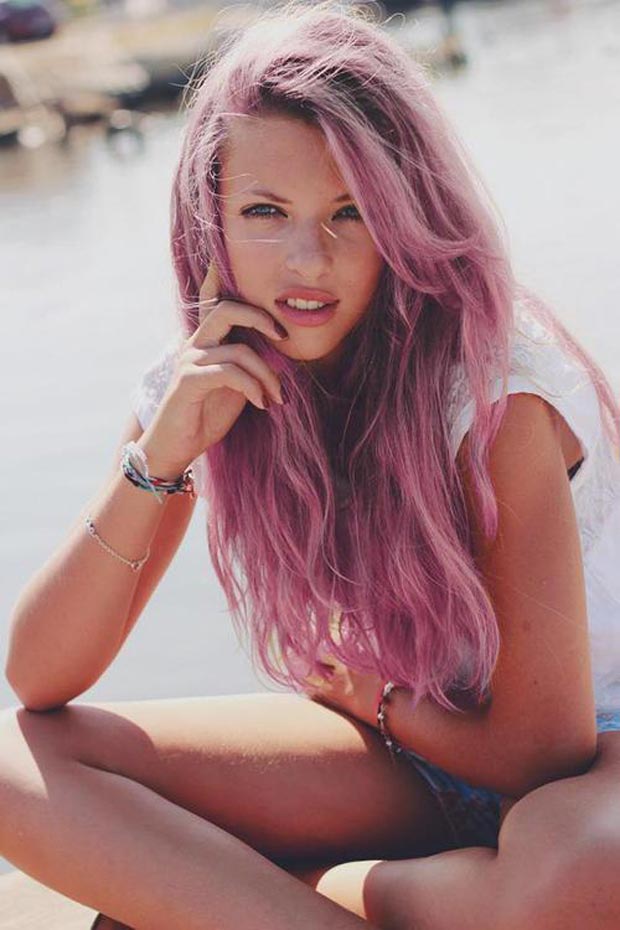
A middle part and air-dried texture give this dusty rose pink a soft, confident finish. Long layers shape fine, wavy hair without a curling iron, and the even color keeps the look neat on low-effort days. No bangs, no heat styling required.
Collarbone length or longer is the starting point for those layers to show. Ask your stylist for long layers, dusty rose pink color, air-dried texture. It suits those who prefer natural texture over neat, heat-styled hair or very short cuts.
Bold pink hair dynamic look
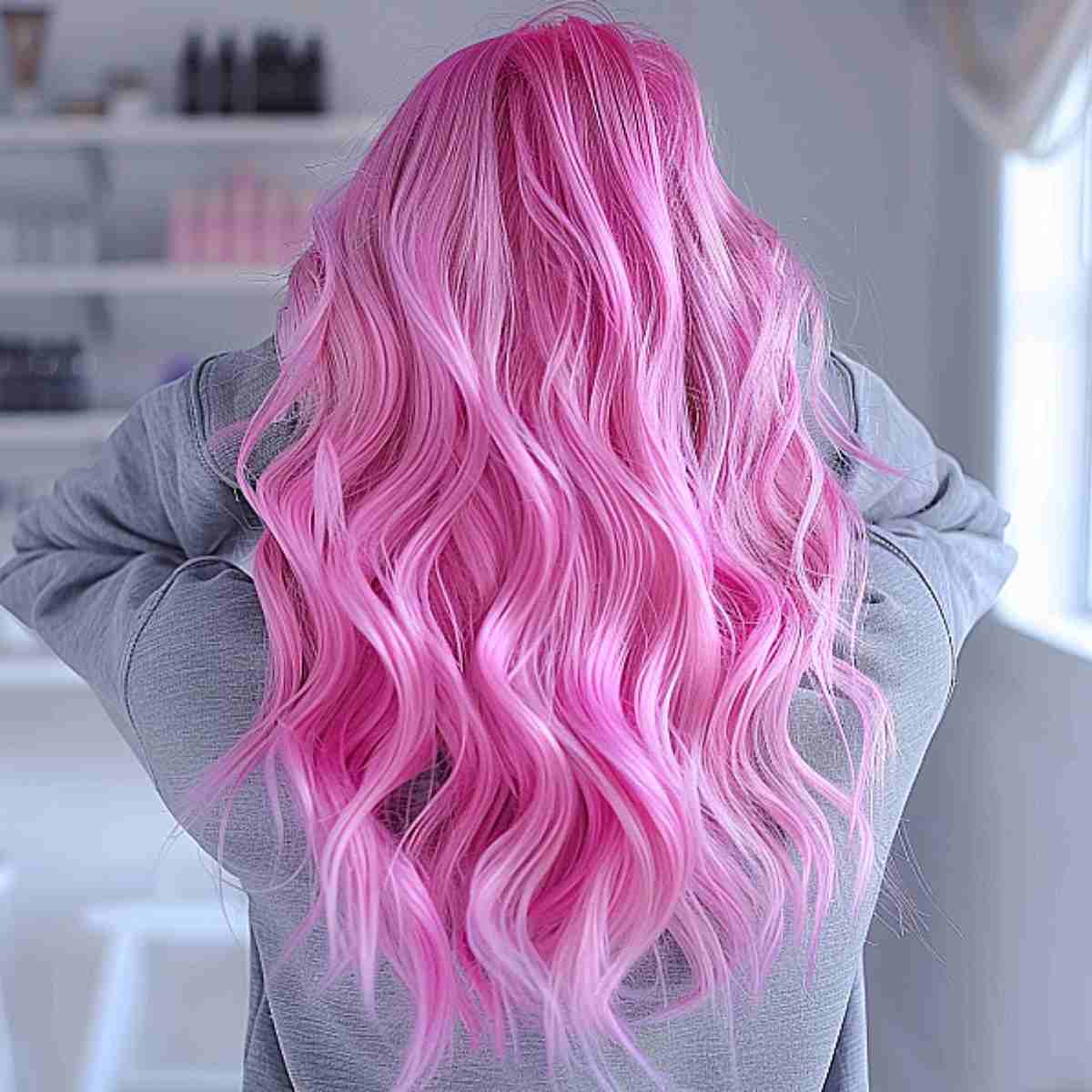
Loose waves and a vibrant pink base with lighter pink highlights create a look that moves with you. The layers are cut to add volume through fine, wavy hair, and the highlights prevent the color from looking flat. No bangs, so the focus stays on the dimension. This is a salon-leaning color job, so booking a consultation for even highlights is the smart move.
Vibrant pink dynamic playful silhouette
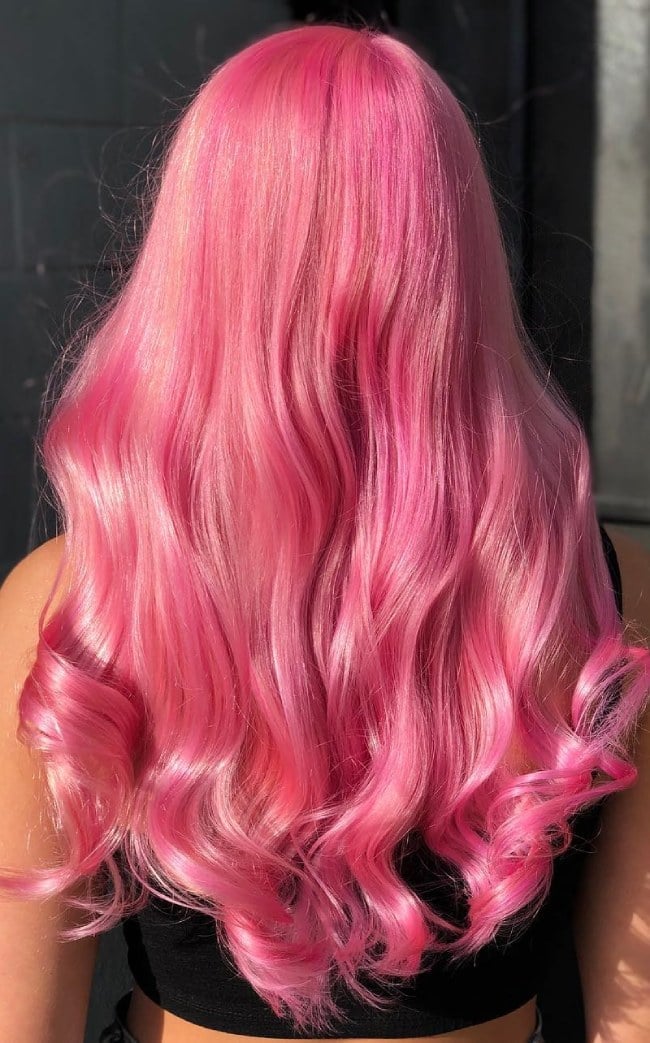
Vibrant pink with lighter pink highlights lets the cut show off the color. Long layers through thick, wavy hair create a playful silhouette that moves with each step, the lighter pieces catching the eye. No bangs, no heavy front section weighing it down.
Collarbone length or longer lets those layers swing freely. Ask your stylist for: long layers, vibrant pink with lighter pink highlights, loose waves. A wide tooth comb on damp hair preserves the wave pattern. A solid, uniform color or very short hair is not the best match for this look.
Striking effect professional coloring expertise
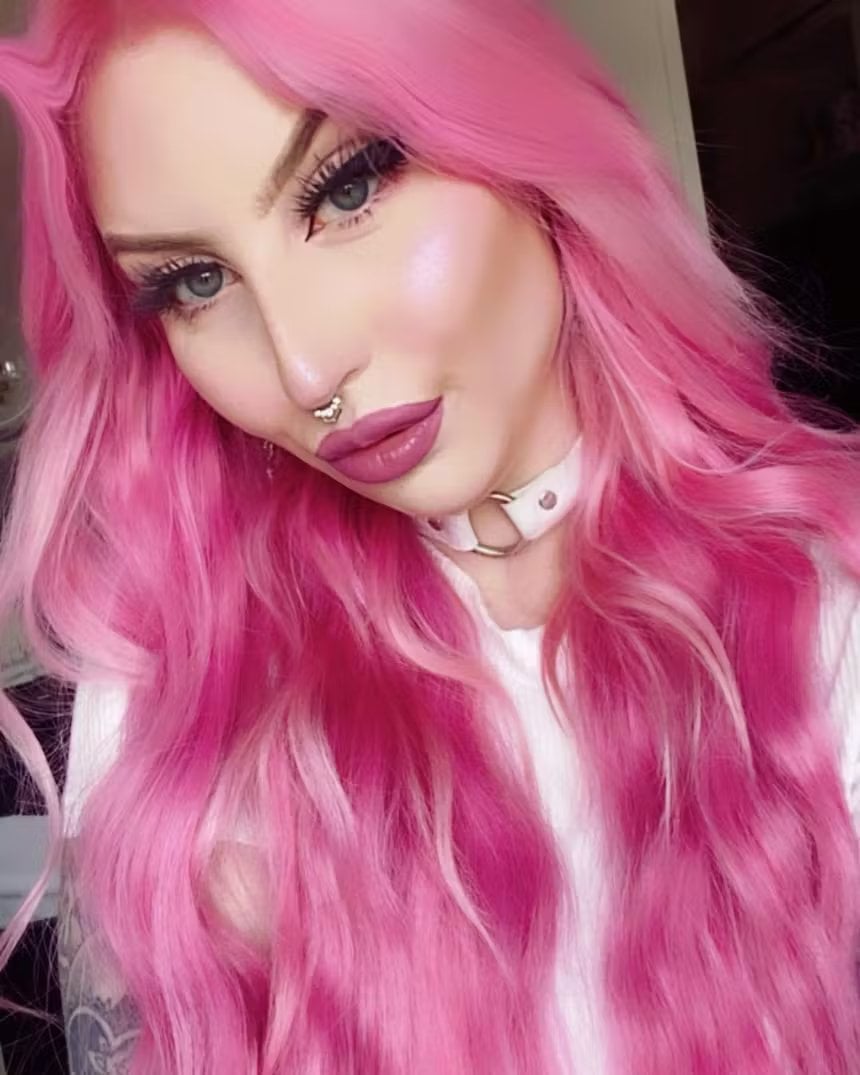
A middle part and loose waves frame the face evenly, with vibrant pink and lighter pink highlights working together on thick, wavy hair. The long layers keep the silhouette from becoming heavy, while the highlights add dimension that reads differently from every angle. No bangs means the color is the star.
Here is the trade-off: achieving vibrant pink on thick hair requires a skilled colorist and multiple sessions to lift evenly. Collarbone length or longer is ideal.
Vivid pink ribbon bows unique touch
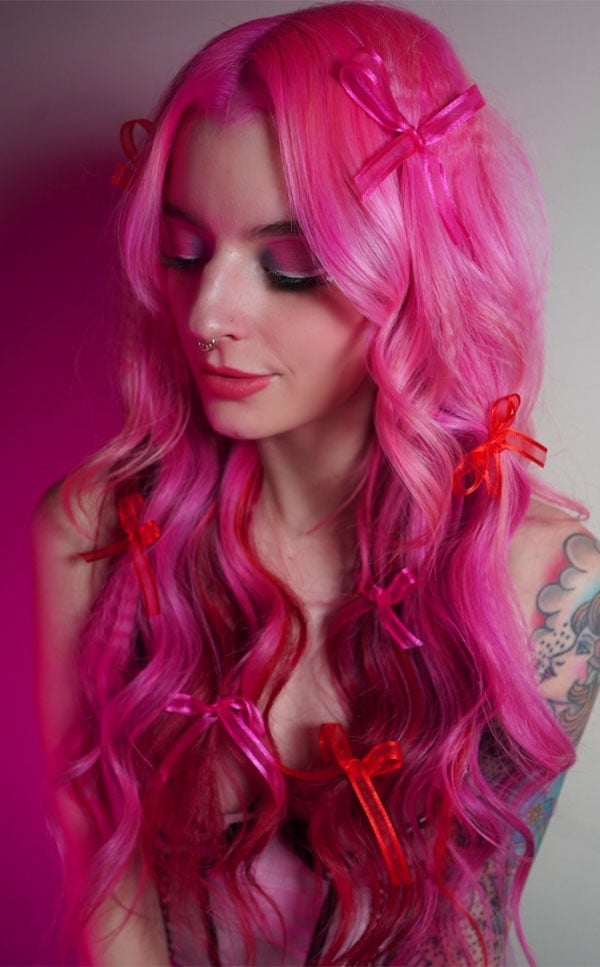
Long layers cut through thick, wavy hair keep the vivid pink from feeling heavy, and the darker pink undertones add depth without a second dye session. No bangs here. The middle part and loose waves do the framing. The ribbon bows are the real decision point. It works best if you enjoy accessories and want the color to share the spotlight with a styling choice. Ask your colorist for: vivid pink with darker undertones. Ask your tech for: long layers, loose waves. Arrange the bows evenly in sections, and you will spend about five minutes placing them.
Vibrant pink long layers with side-swept bangs
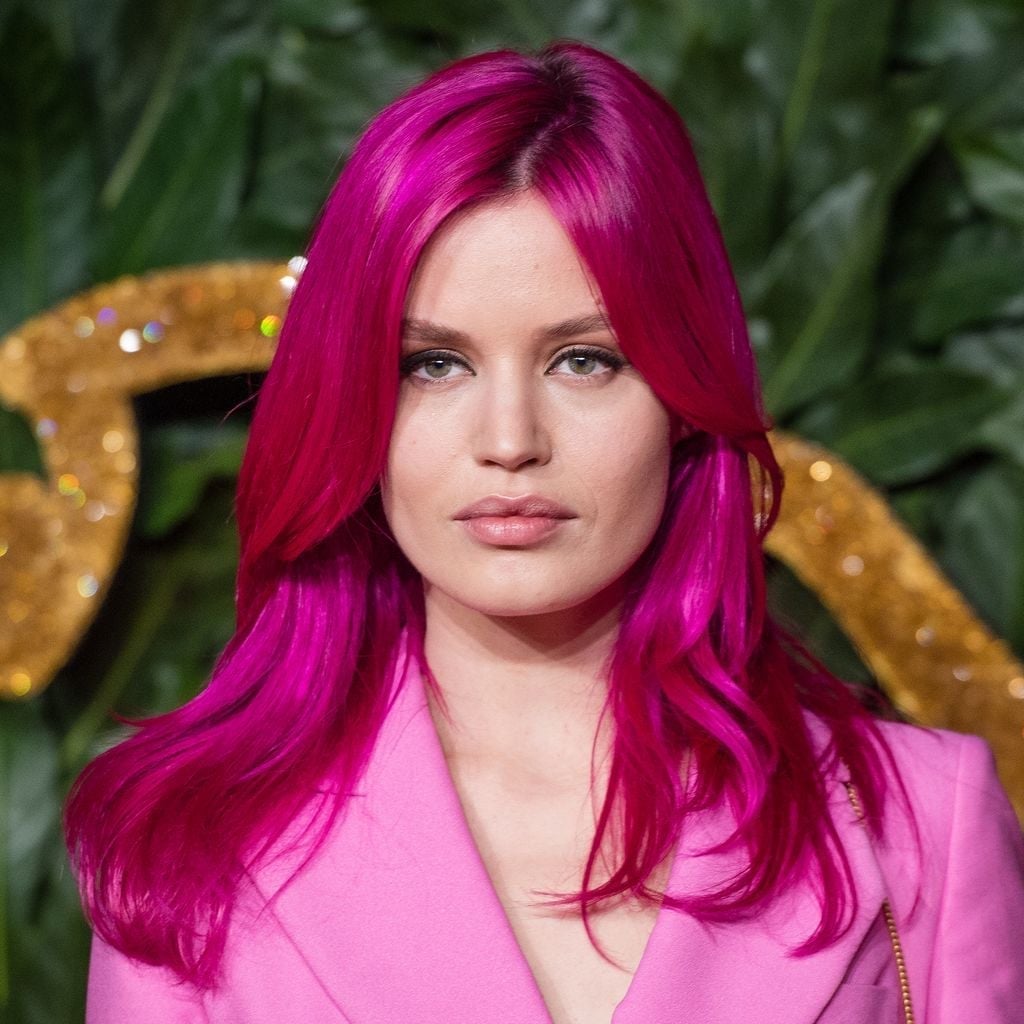
Vibrant pink at this saturation relies on the cut to give the color movement. Long layers with a centered part and loose waves let the shade appear bold without looking flat. The side-swept bangs soften the overall look. They land at cheekbone level and blend into the layers, so the color frames the face without a hard line. Fine hair benefits from the internal weight removal; the layers create volume that the texture alone cannot hold. It works best with bangs and soft wave patterns rather than very defined curls. The darker roots mean the grow-out is gentle, not a chalk line. You will want a toning shampoo every third wash to keep the pink from shifting orange.
Pink highlights stylish middle part
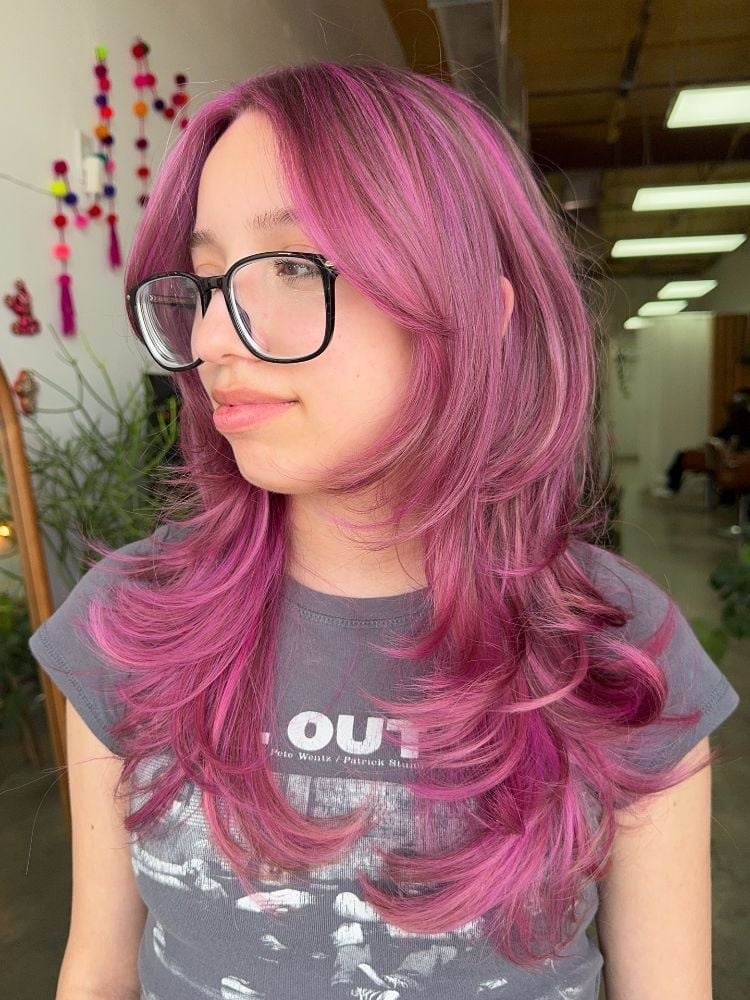
A blowout hides nothing, so the cut and the color have to earn their keep. Long layers with face-framing curtain bangs create a soft cascade that works with fine, wavy texture. The middle part splits the highlights evenly, and those darker pink highlights add a shadow effect that keeps the overall pink from looking washed out in natural light. Curtain bangs at this length, grazing the cheekbone, mean you can tuck them behind the ear or let them fall forward. A round brush and a blow-dryer are the daily tools; plan on eight minutes for the bangs alone. Tell your colorist: long layers, curtain bangs, soft blowout, pink highlights. The real wear detail: the darker pink highlights mean the root grow-out looks intentional, not urgent.
Pastel pink long layers with curtain bangs
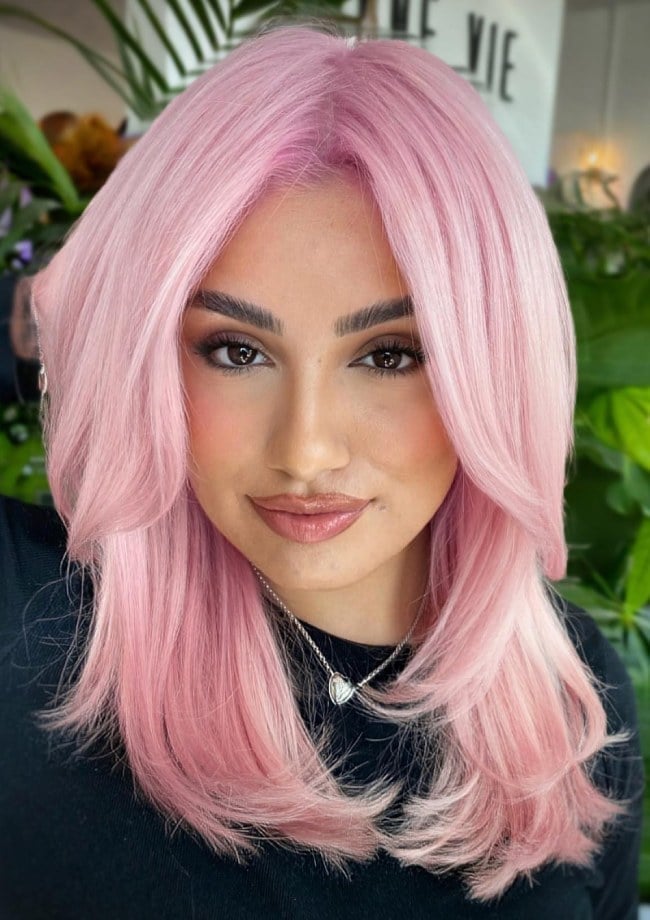
Pastel pink on straight, fine hair is a transparency test. The cut must be sharp enough to hold its own against a delicate color. Long layers with face-framing curtain bangs give the smooth blowout a clean line without looking severe. The layers start below the chin and graduate down, so the pastel pink lands evenly across the surface. No heavy texture here, just a straight finish that reflects light uniformly. The middle part keeps the bangs symmetrical and the color distribution even. This is a neat look that requires a blow-dryer and a round brush; the payoff is a finish that looks modern rather than sweet.
Rose gold curls with curtain bangs
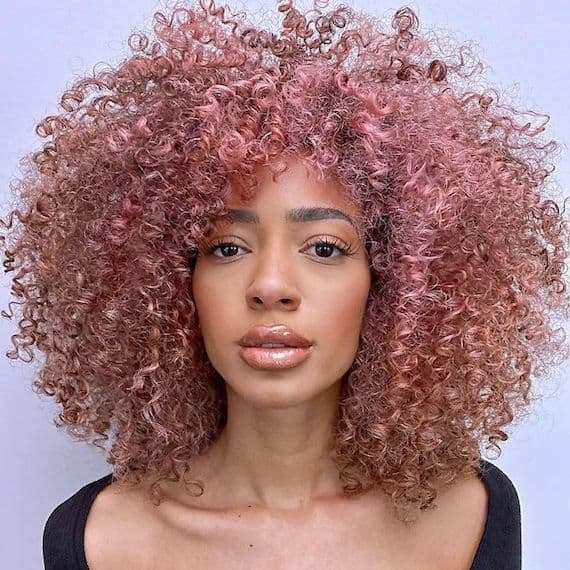
Curly hair and rose gold is a combination that looks natural only when the color is applied with precision. The catch: achieving even saturation on thick curls requires a stylist who understands how pigment absorbs differently along the curl pattern. Layers cut through the density prevent the curls from forming a single heavy block, and the curtain bangs break up the roundness at the face. The darker roots give the rose gold a grown-in feel that saves you from the every-four-weeks root touch-up. Tell your colorist: layered cut, curtain bangs, rose gold color, thick curls. Skip it if you have straight hair or prefer a smooth finish. This texture is the whole point.
Rose gold waves with blonde highlights
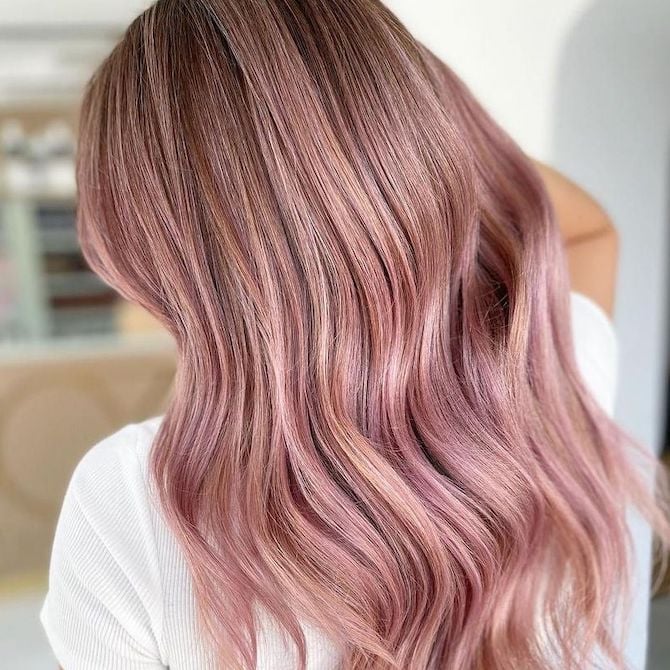
The rose gold here lifts lighter, with blonde highlights running through the layers. Fine hair benefits from that subtle lift, especially when the cut stays soft and the waves carry the color through. The middle part keeps it clean, no bangs to negotiate. The whole point is the interplay between the two tones. A texturizing spray keeps the waves from falling flat by afternoon.
Pink and purple balayage with waves
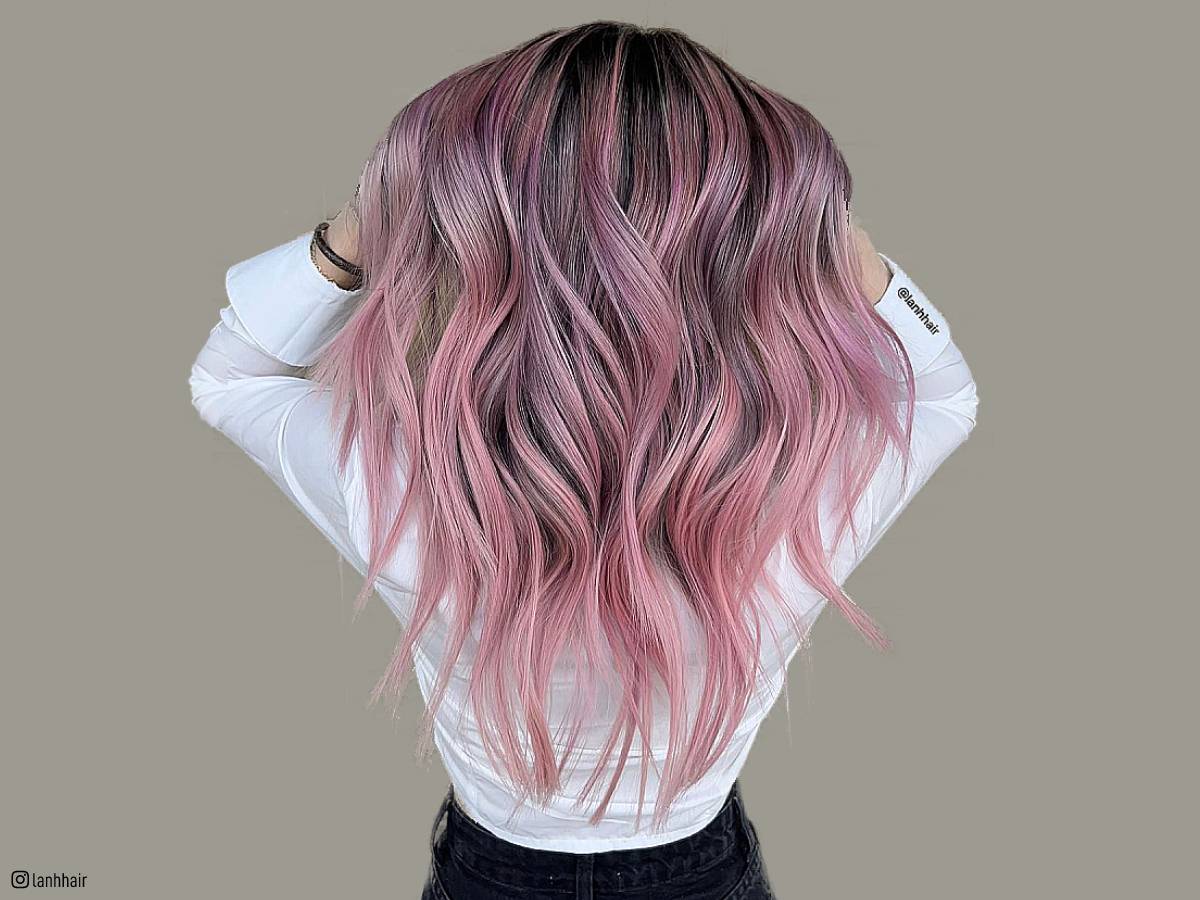
Two tones work best when one sits darker at the root. Here the pink and purple balayage starts below a dark root shadow, so the grow-out lands softer than a solid pastel would. The layers keep the loose waves from looking stringy, and the fine texture lets the color shift read clearly. Pass when you prefer a single solid shade or a very blunt cut. This needs movement to show its hand. Ask your colorist for: dark root shadow with pink and purple balayage. That is the whole conversation.
Vibrant pink with magenta streaks
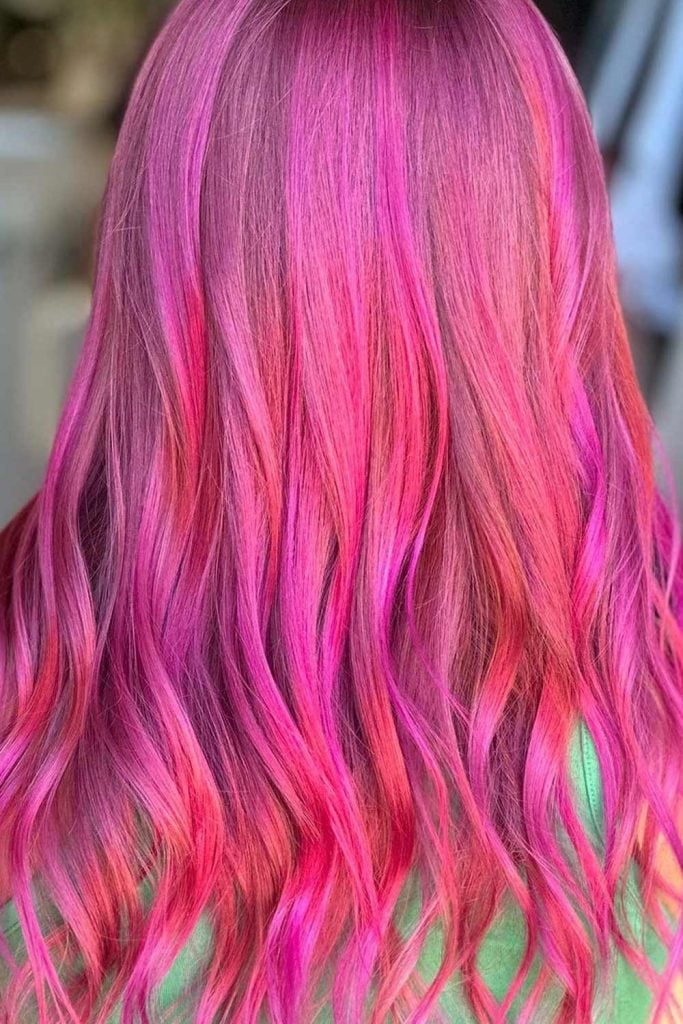
Compare this to the single-tone pink: the magenta streaks add a second layer of intensity, which means the color stays interesting longer as it fades. Thick hair handles the multi-tonal application well, holding the waves and the contrast between the vibrant base and the deeper streaks. No bangs here, so the focus stays on the color placement running through the lengths. The catch: the magenta fades faster than the base pink, so a color-depositing conditioner becomes part of your wash routine around week four.
Vibrant pink with purple undertones
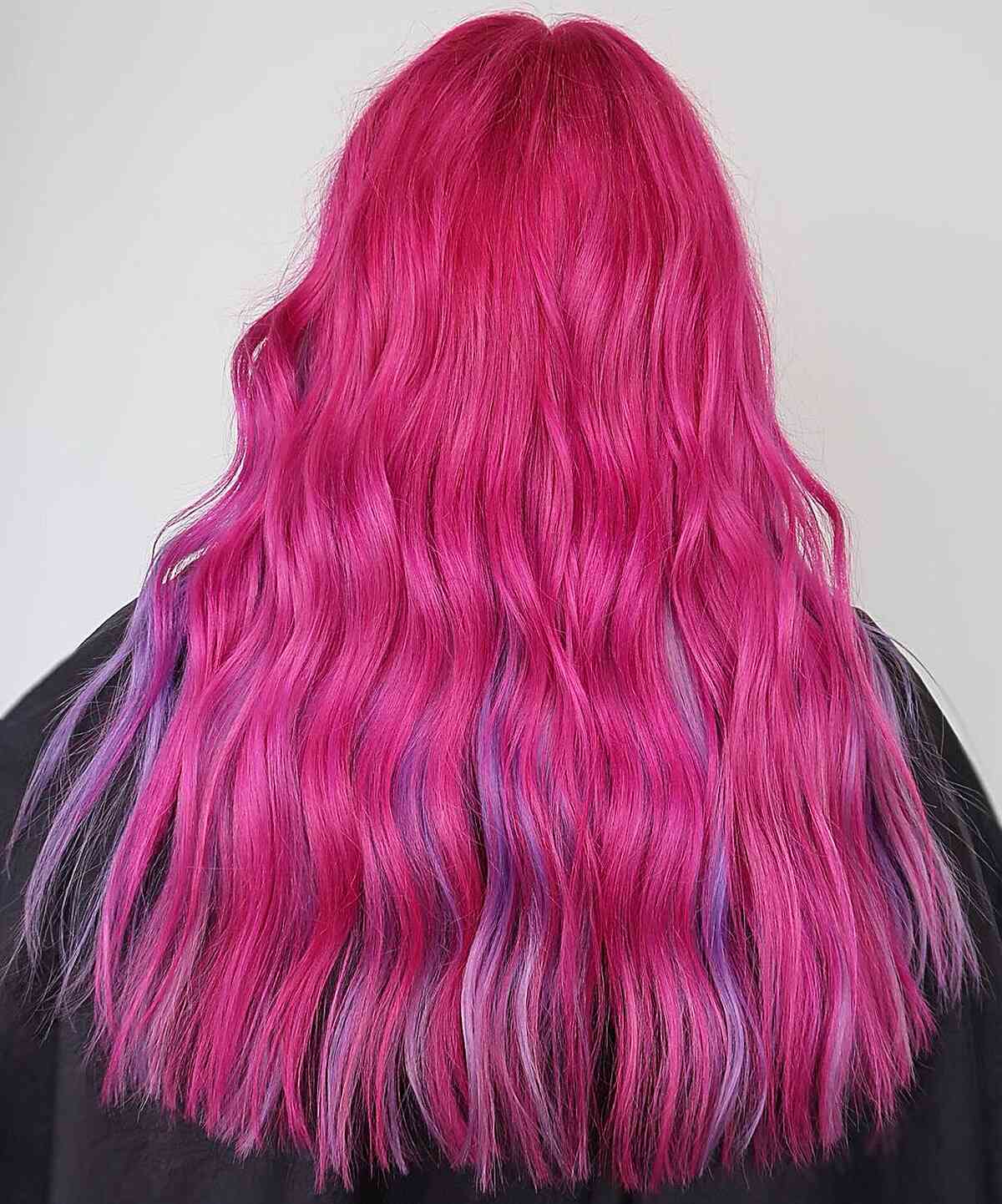
This is a color built from the ground up: the purple undertones sit beneath the vibrant pink, so the shade shifts depending on the light and the wave. The long layers give the thick texture room to move, and the middle part lets the color read evenly on both sides. No bangs, no distraction. Ask your colorist for: vibrant pink base with purple undertones blended through. The technique matters here. The purple needs to be woven, not painted in chunks, to avoid a stripe effect. Not for anyone who wants a solid, flat pink.
Deep pink box braids Ombre effect
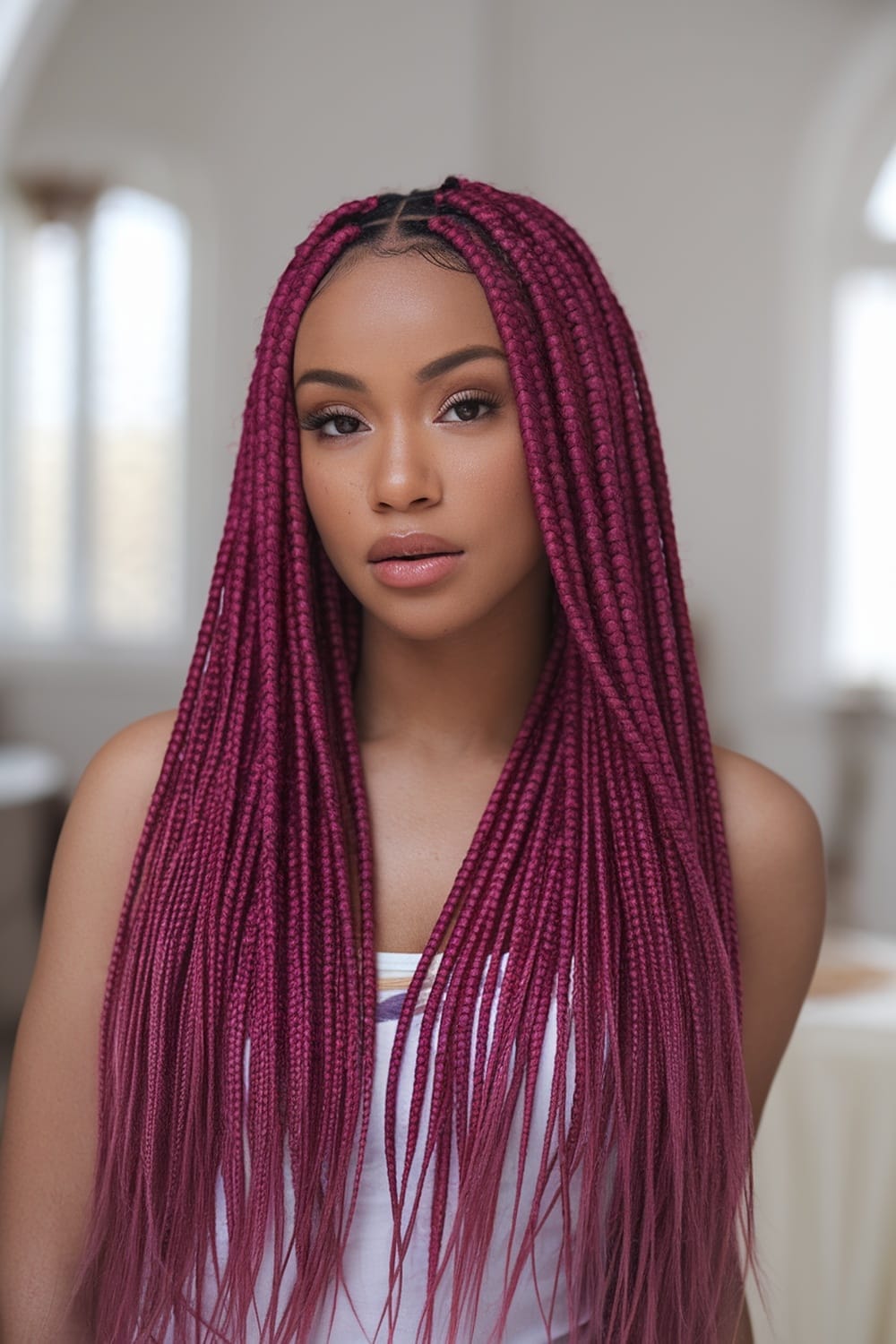
Box braids solve the grow-out problem in a different way: the ombré transition from deep pink to lighter pink is built into the braid, so there is no root line to manage. The middle part keeps the look clean, and the straight styling lets the color gradient show from root to tip. No bangs, just a neat frame. The honest trade-off: fine hair needs careful tension during installation to keep the braids from slipping, and the ombré effect requires a skilled colorist to pre-lighten the ends before braiding.
Ombré bold hot pink air-dried texture
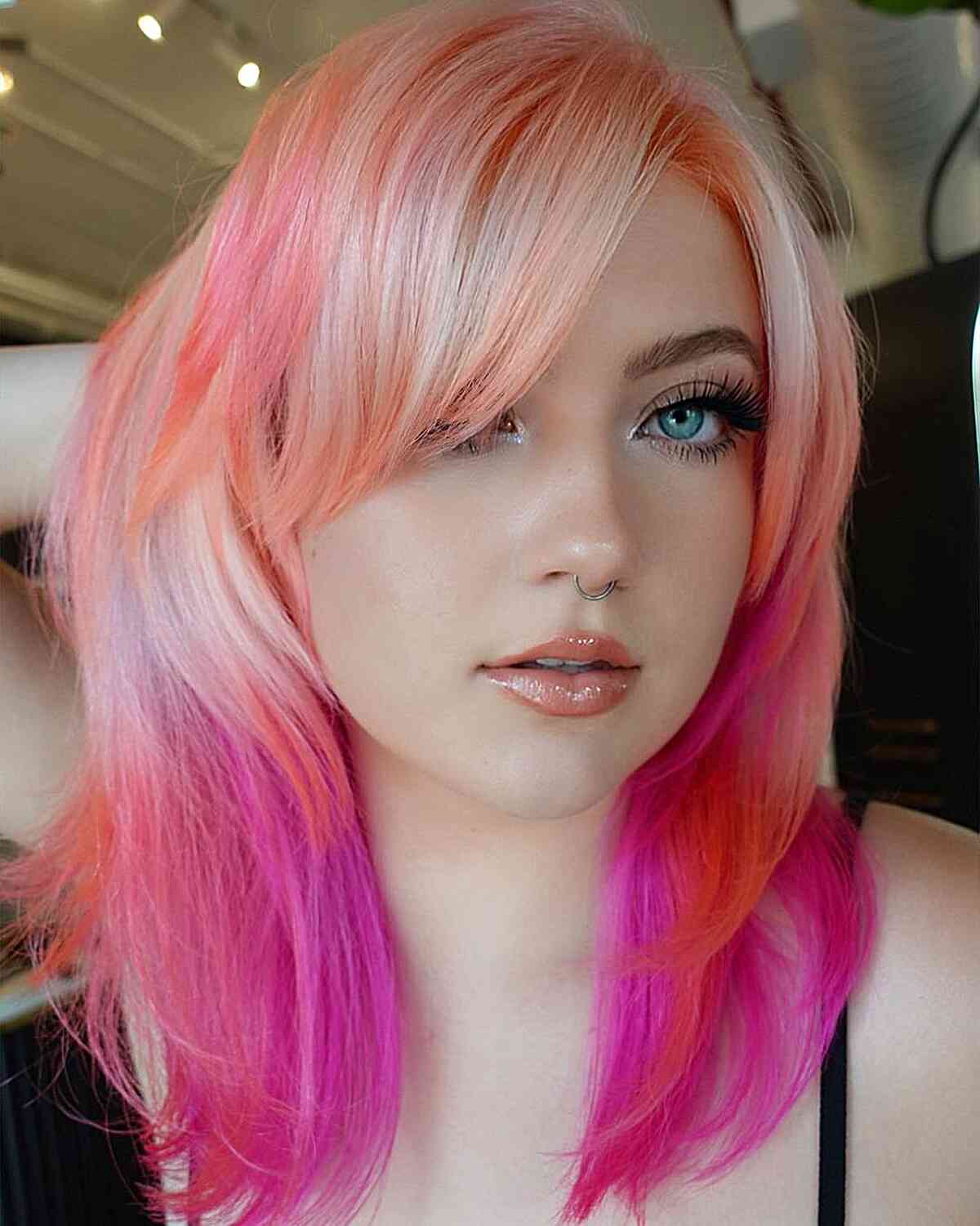
Layered cut with a side-swept bang and a pink to hot pink ombré. The color starts soft at the roots and builds to a bold hot pink at the ends, so regrowth blends naturally. You need fine to medium hair starting at collarbone length or longer, and the side-swept bang softens most face shapes. It works best with air dried texture, not blunt cuts or very neat styles.
Book it as a salon job. A DIY ombré this precise with two pink tones is a gamble. Ask your stylist for: layered cut, side-swept bang, pink to hot pink ombré. Then style it dry with a sea salt spray and your fingers.
Final Thoughts
Your pink starts with the shape that suits your texture and your schedule. Pick by what you actually do in the morning, not by what you admire on a screen.
- Fine hair: blunt ends and minimal layers keep density.
- Thick hair: internal layers remove bulk without losing shape.
- Ten minutes in the morning: air-dried layers with a texture spray.
- Salon every six weeks: a pixie or a bob with bangs.
Find the pink that speaks to you and own it.