You scroll past another set of braids on your saved board and wonder if they actually hold past brunch. The answer depends on the technique, the finish, and how honest you are about your morning routine. Which is exactly why this collection skips the Pinterest-only looks.
34 styles that range from four-hour salon commits to weekend DIY projects, all built to last. Dreamy Braiding Hair 2027 fill so many saved boards for a reason: the right braid doesn’t just look good, it stays put through sweat, sleep, and a Tuesday meeting. This collection solves the gap between what you want and what actually works.
Thick black hair in long, thin box braids
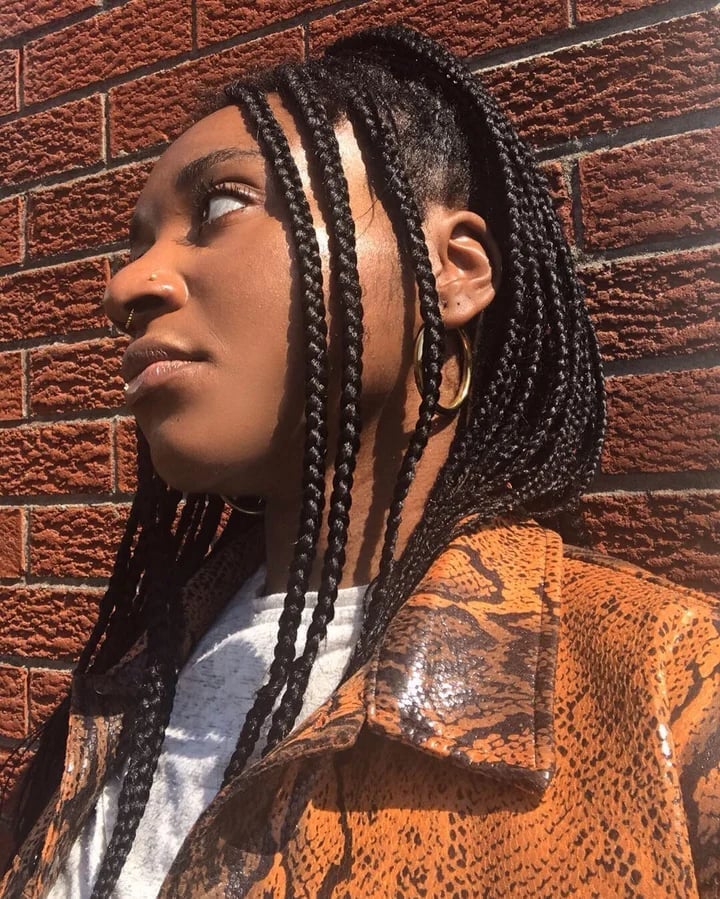
Middle part and thick black hair divided into long, thin box braids that fall forward around the face. The density of the braids creates a uniform, sculpted shape that holds its structure through the day without re-pinning. Thick hair is the ideal starting point here. It provides the weight and grip these braids need to stay smooth at the root. Skip it if your hair is fine or you prefer styles that take under an hour to take down. These require a salon visit for installation; expect several hours in the chair. The deep black color keeps the look clean and does not show new growth quickly, so you can stretch the trim rhythm to eight or nine weeks.
Ask your stylist for: long, thin box braids, middle part.
Whimsical braids with pink flower petals
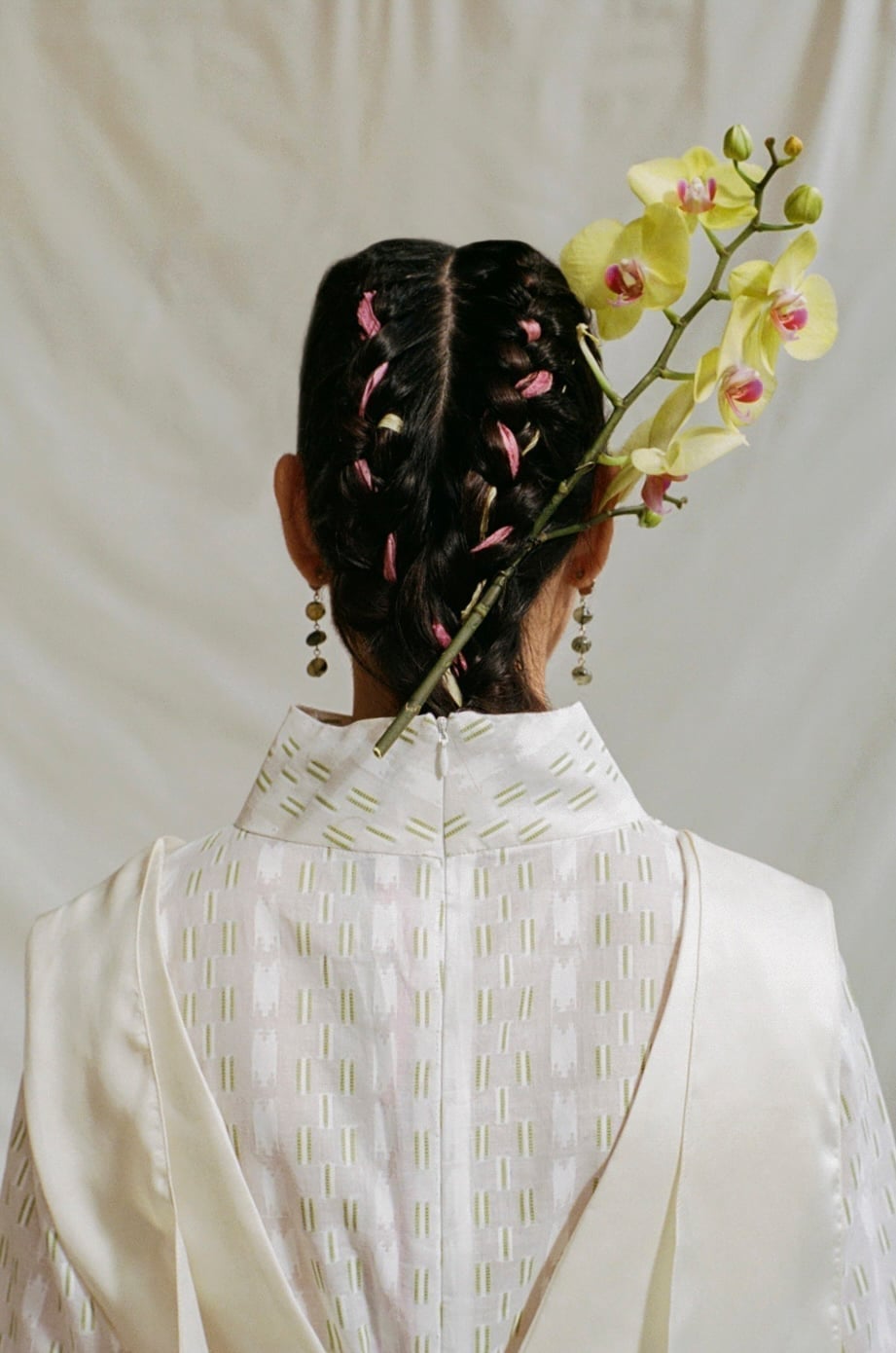
Set this against a standard two-strand twist. The difference is the embellishment. Two thick, dark brown braids run down the back, but the real detail is the pink flower petals woven directly into the sections. A branch with yellow orchids tucks behind one braid, adding a second floral note. The petals stay put for the day but will not survive a night of sleep without some re-positioning. Thick hair holds the braids firmly at the root, so the weight of the flowers does not pull the style loose. Pass when you want a braid you can toss into a ponytail without worrying about the decorations.
Dark brown box braids with curly ends
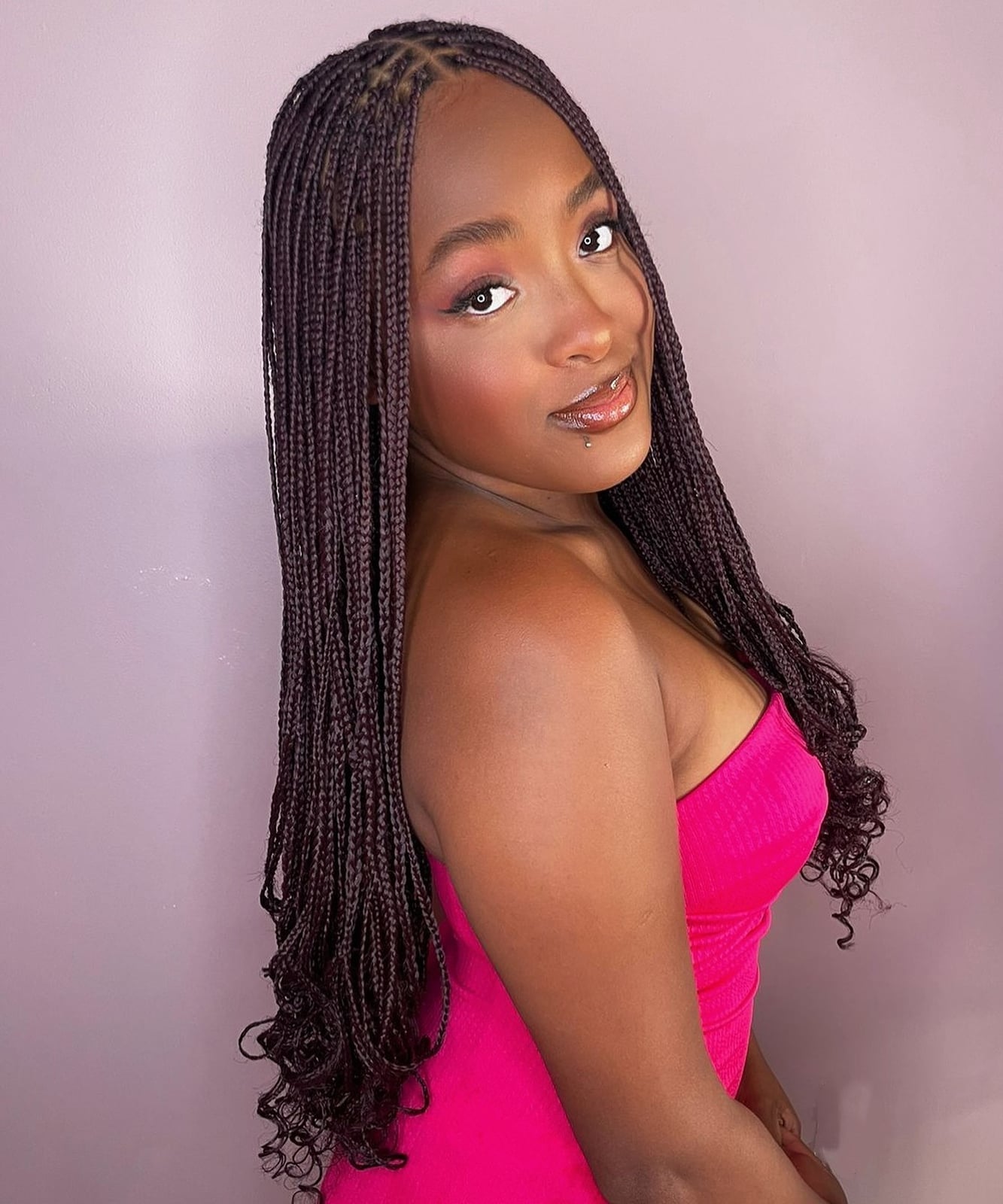
Does the end of a braid have to match the shaft? Not here. Long, thin box braids in dark brown run from a middle part down past the shoulders, then the last few inches loosen into soft coils. The texture shift gives the style a finish that does not look cut off or blunt. Fine to medium hair works well for this. The braids stay neat at the root while the coily ends add visual weight. The curly ends need their own styling step each day to keep from tangling with each other. A trim every six weeks keeps the transition from braid to curl looking intentional instead of frayed.
Soft, ethereal effect with loose framing strands
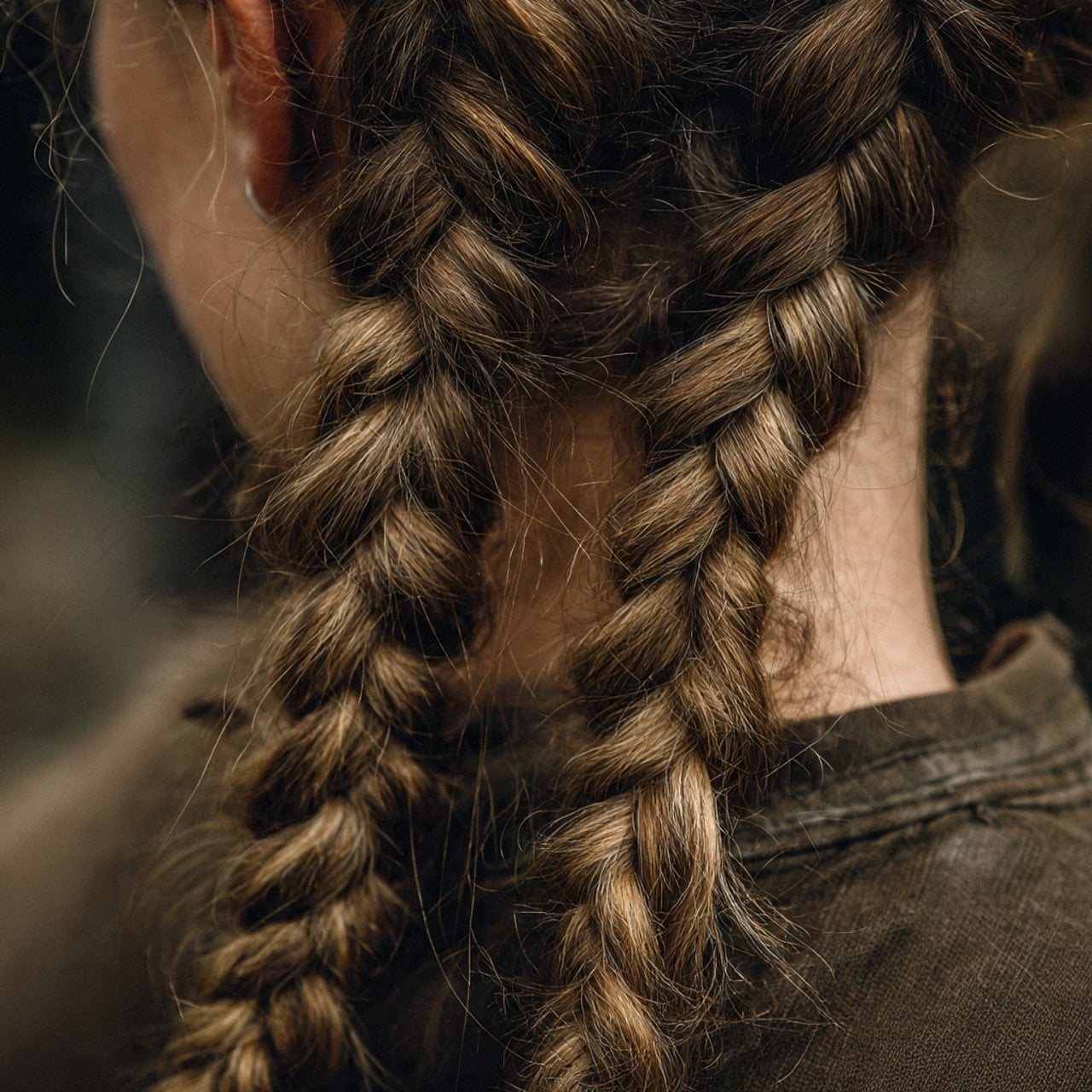
Two thick, wavy braids fall down the back, but the key detail is what happens around the edges. Dark brown hair with subtle lighter strands runs through the braid, and loose, wispy pieces break free near the temples and nape. That framing softens the braid line so it does not look a single, heavy rope. This one you can do yourself, section the hair into two halves, braid loosely, then pull a few strands out at the front and sides. A dab of pomade on your fingertips keeps those wisps defined without turning them stiff. The braid holds its wave pattern for a full day if you start with slightly damp hair.
Sleek cornrows leading into two thick braids
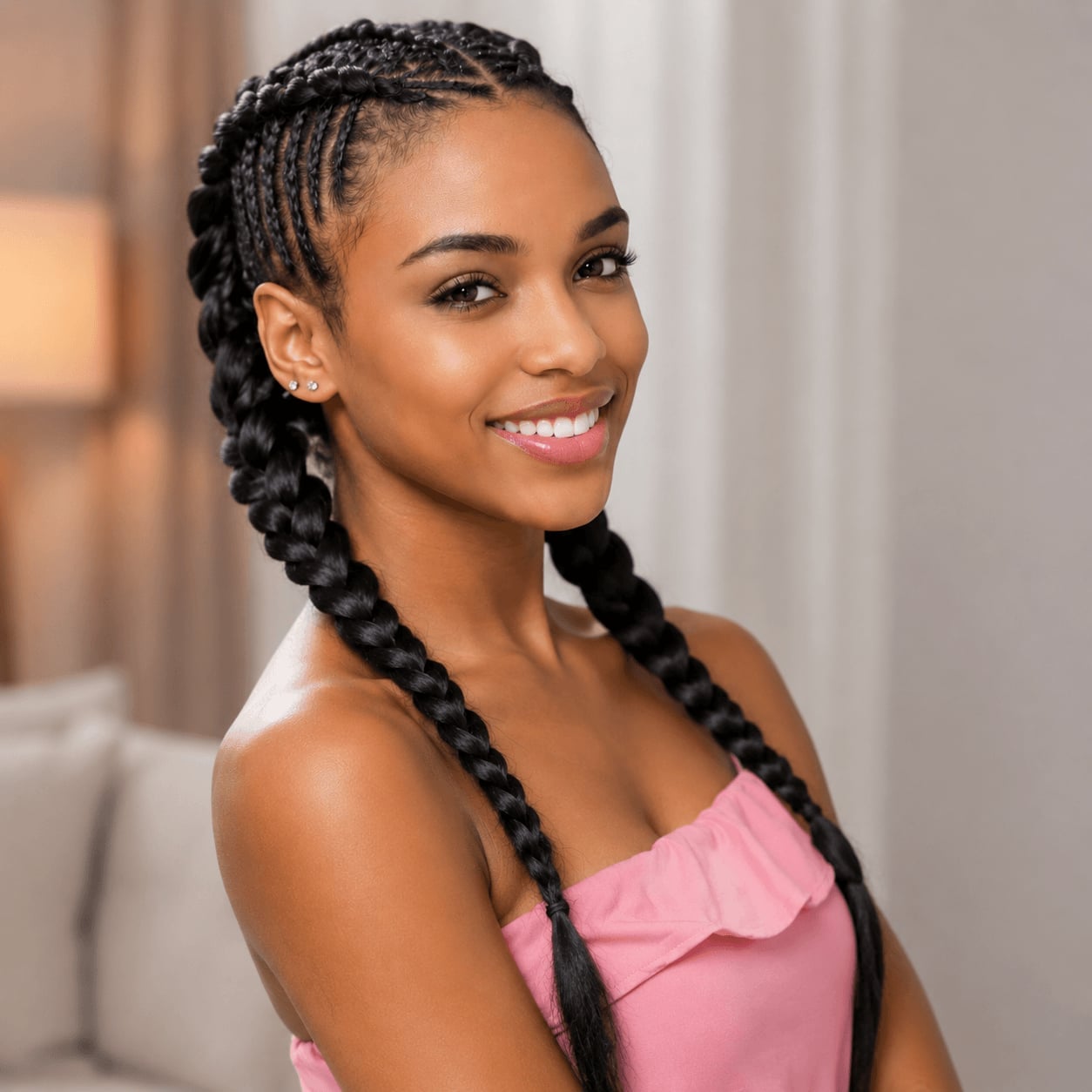
Cornrows at the crown feed directly into two thick, straight braids that fall past the shoulders. The middle part keeps the scalp pattern symmetrical, and the absence of bangs means the cornrow lines run uninterrupted from hairline to nape. Thick, straight hair holds this shape best. The cornrows lie flat and the braids stay smooth without puffing. One real drawback: the cornrow section requires careful maintenance at night to prevent frizz at the root, and a silk scarf is not optional. The braided portion holds its polish for about a week before the ends start to soften. A salon visit is needed for the cornrow work; the braiding itself can be done at home if you have the technique.
Box braids with ends left loose and wavy
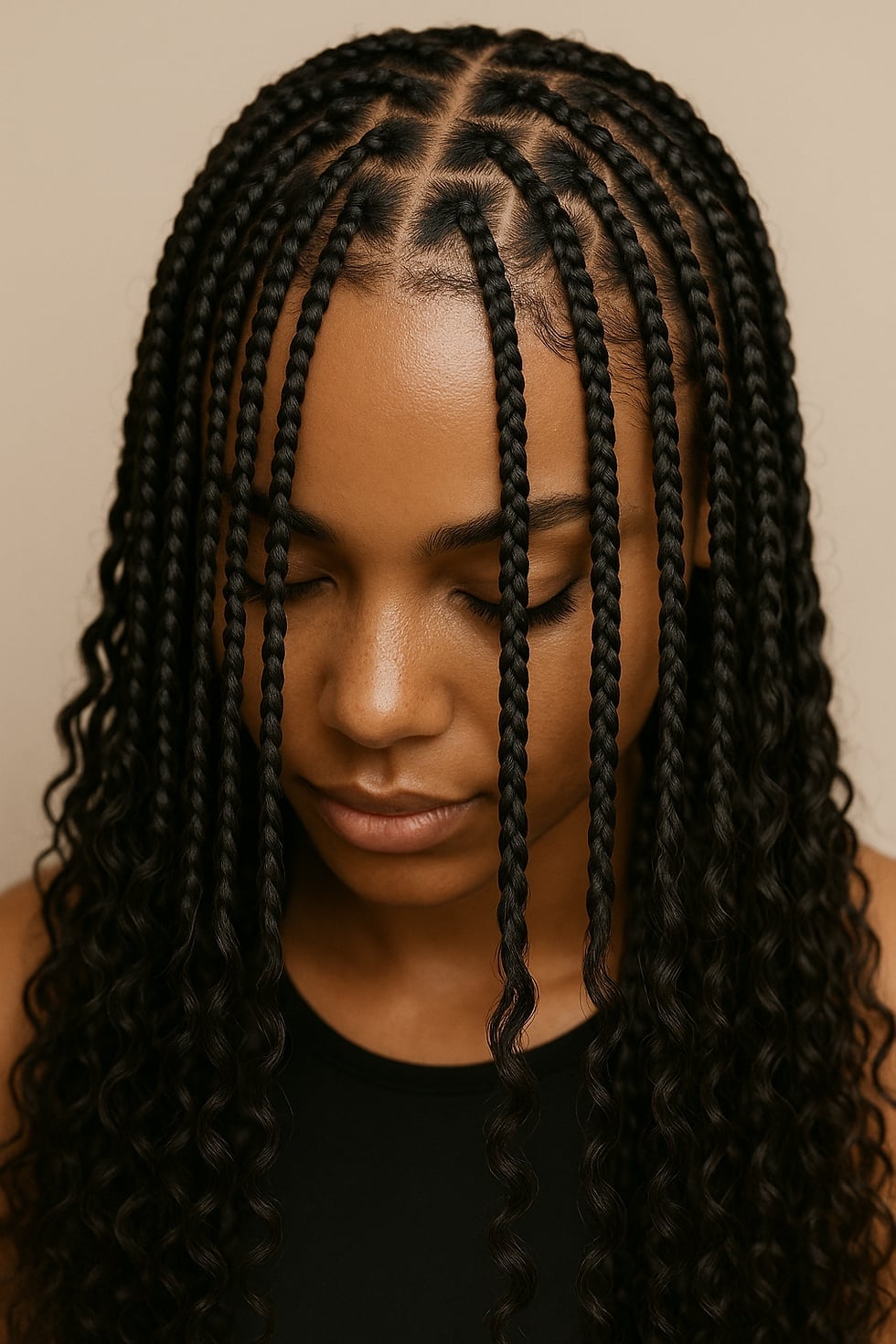
Compare this to the version with uniform ends. The curly finish changes the look. Neat box braids with a middle part give an orderly structure, then the wavy ends break that formality. The texture contrast creates the style. You want thick hair to carry the braids and enough length so the wavy section looks deliberate, not accidental. Black hair creates a sharp divide between the straight braided body and the looser texture. The mistake is treating the ends like an extra detail. They need their own curl pattern or they look frizzy, not finished. It suits those who want a mixed texture; a uniform texture or a style that stays completely off the face would not work the same way. A curl-defining product on the ends keeps the two textures distinct.
Request from your stylist: box braids with loose wavy ends, middle part. The precise parting and even braid thickness make this a salon-only booking. The wavy ends last about a week before they need refreshing with a damp curl cream. After that, you trade definition for a softer, lived-in wave.
Long, thin box braids with metallic beads
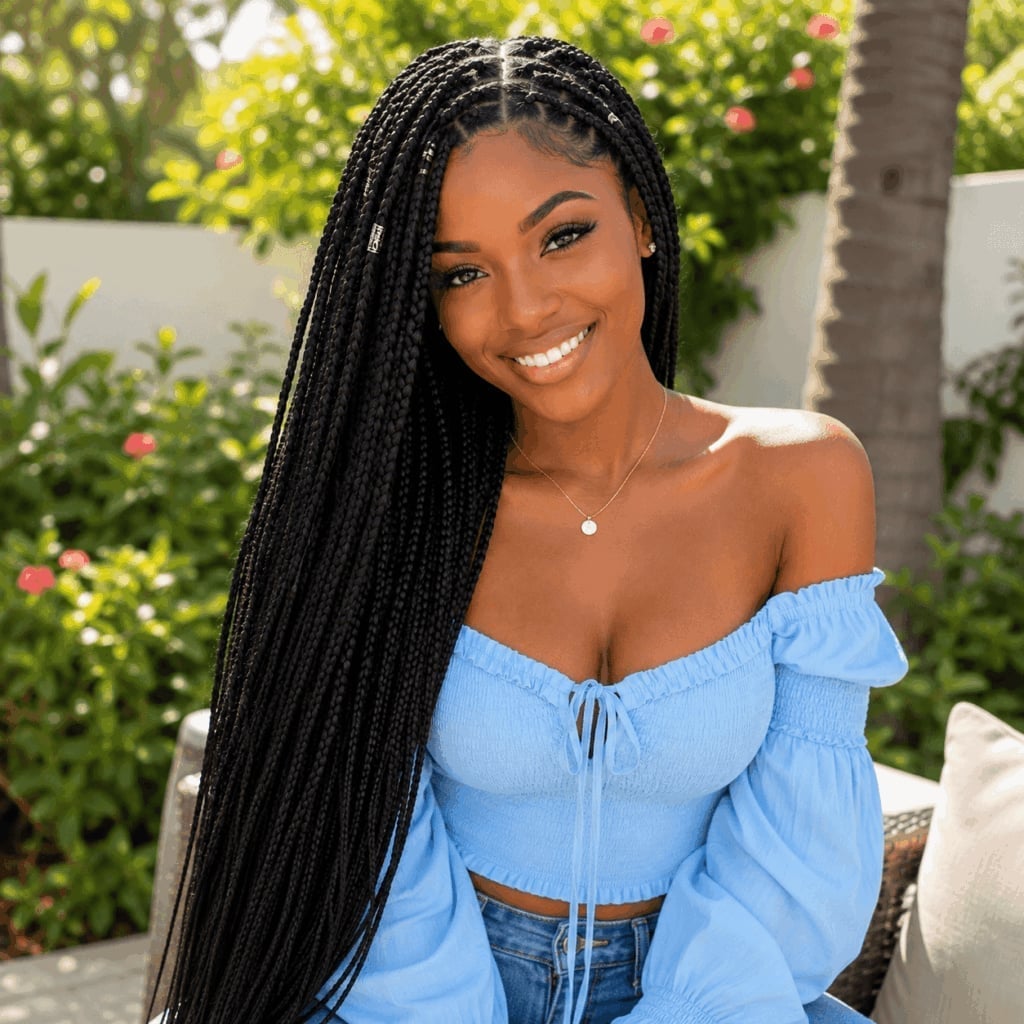
Metallic beads land best in festival season. Long, thin box braids in a deep black color take a clean middle part and a precise finish. The beads are small, silver-toned, and added to only a few braids, enough to catch attention, not enough to look like a costume. Thick hair supports the thin braid width, and the beads add weight, so your hair needs to handle that pull without strain. Straight texture keeps the braids sleek, which the metallic accents need. The beads can be removed for a cleaner look or swapped out for a different event.
Dark brown box braids with long, wavy ends, thick
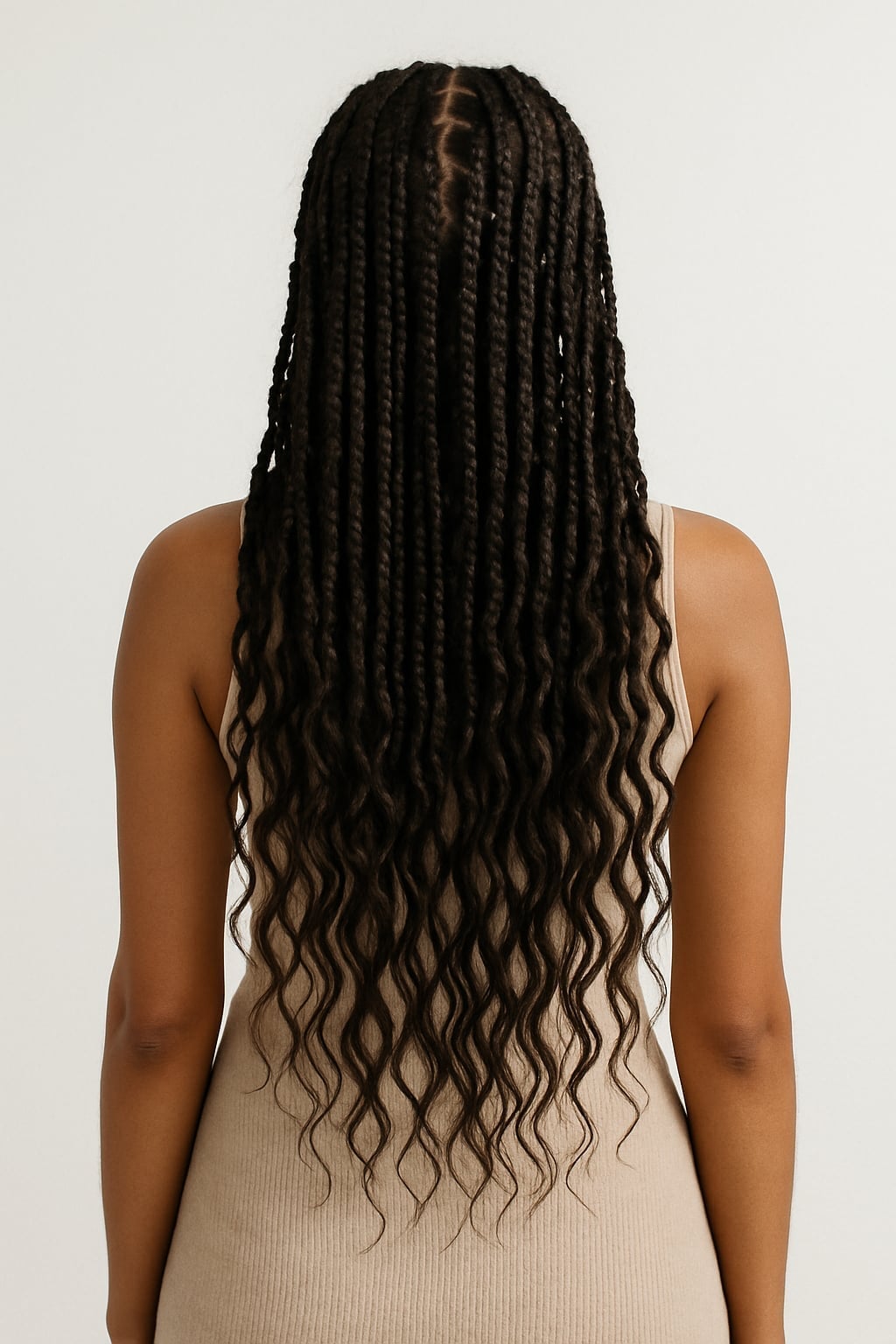
Dark brown box braids with a centered parting stay sleek through the braided section, then release into loose, wavy ends. The texture shift gives a softer silhouette than uniform ends. Thick hair carries the transition well, and the dark brown color keeps the braids looking dense rather than stringy. The centered parting adds symmetry, which helps balance the looser ends. Uniform ends are not the goal here. The wavy section needs a few inches to look deliberate. Request from your stylist: dark brown box braids with wavy ends. The wavy finish looks neat for about a week before the ends start to soften further.
The back view shows how the waves fall evenly, which requires the braid length to be consistent. A curl-refreshing spray on the ends resets the wave pattern without remoisturizing the entire braid. The texture contrast defines the look, but it also means two separate styling steps each morning.
Dark gray braided bun with silver streaks
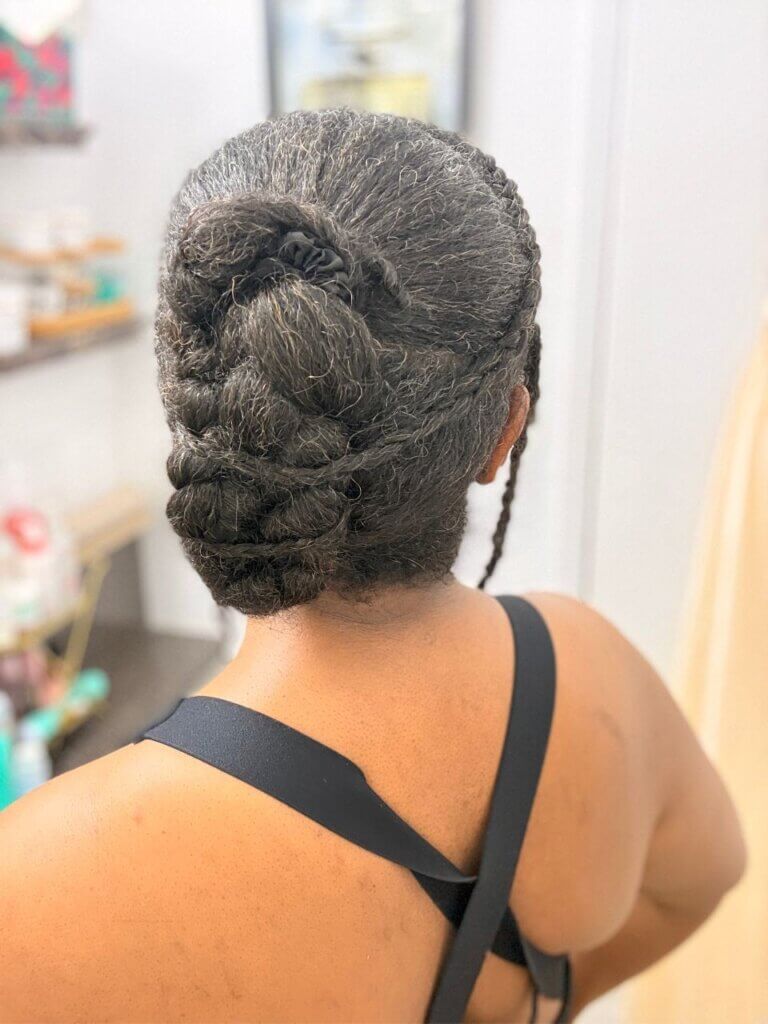
The design starts with the color. Dark gray hair with silver streaks, thick and coily in texture, braided into an intricate bun at the back of the head. The silver streaks catch light differently than the base gray, so the bun looks layered rather than flat. Coily texture holds the braid pattern tightly, which means fewer flyaways. The honest drawback: this is a complex technique. The bun requires a stylist who understands how to braid coily hair without tension damage. The silver streaks need toning every six to eight weeks to keep the cool tone from warming up.
Auburn crown braids around the head
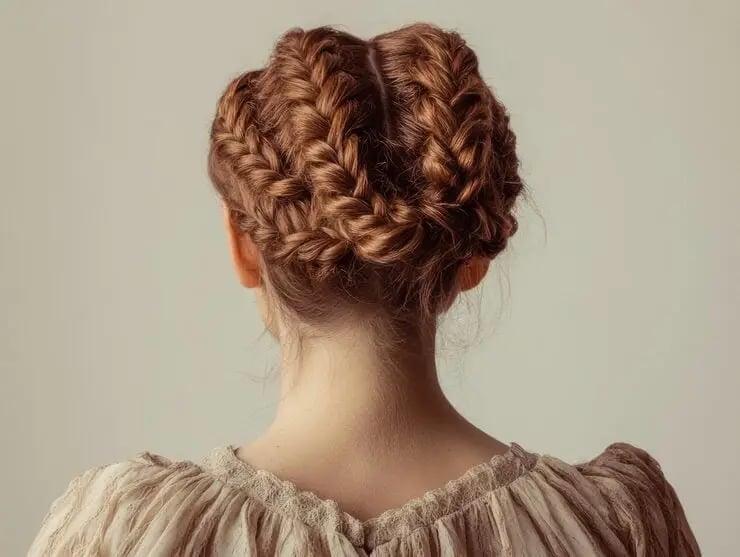
Does a crown braid suit your face shape? Two thick, wavy auburn crown braids woven around the head, styled with a middle parting. The auburn color has a subtle warmth that is rich, not brassy. Wavy texture gives the braids body, so they sit full, not flat against the scalp. Oval and heart face shapes benefit most from the symmetrical crown placement. It widens the forehead visually and balances a narrower chin. Skip this style if you prefer braids that hang down or dislike styles that require significant styling time. The crown braids need bobby pins and a light-hold spray to stay in place through a full day. Request from your stylist for: two intricate auburn crown braids. The middle parting must be precise for the crown to look even. Upkeep every eight weeks for the auburn tone and the braid tension.
Unique heart-shaped braid pattern
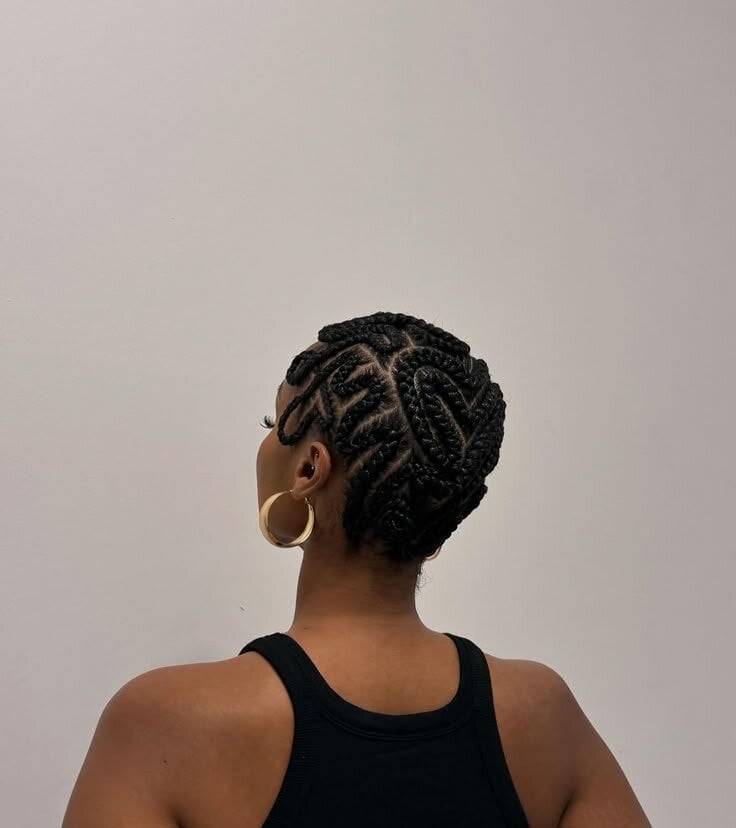
Heart shapes woven into a short, dark black cut with a middle part. The pattern is precise and symmetrical, worked into thick hair that holds the design clearly. This is a salon-only request; the mapping and tension require a practiced hand. A DIY attempt risks uneven curves and a pattern that reads more abstract than intended.
Simple dutch braids for everyday
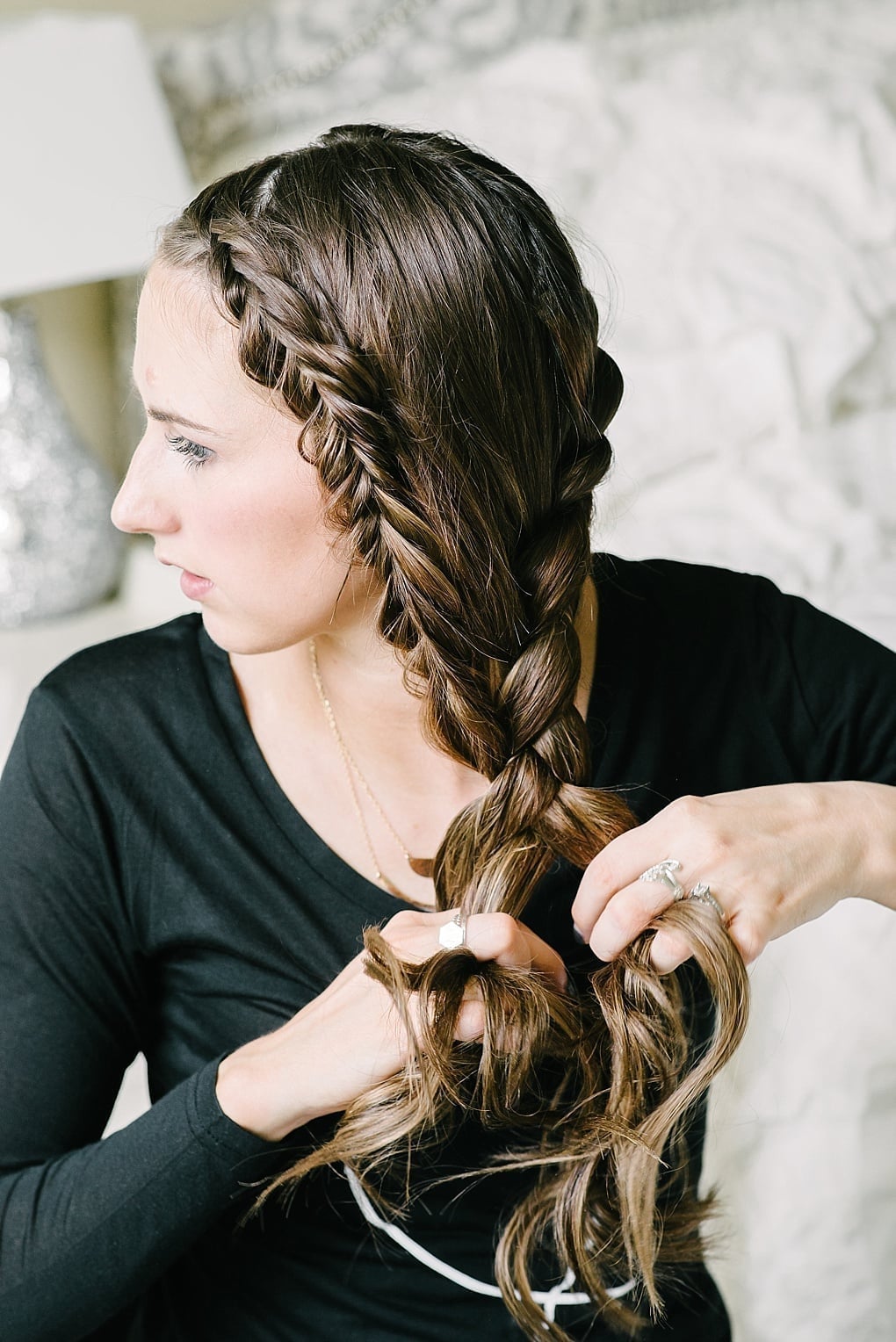
Two Dutch braids start at the hairline and merge into a single, thick braid down the back. The dark brown, wavy texture stays visible through the sections, and the centered parting keeps the look balanced. The catch: the merge point sits at the nape, which means the single braid can feel heavy by midday. Dutch braids are a solid weekday option for thick, wavy hair, but the weight accumulates faster than you expect.
Ash blonde braids with delicate pink flowers
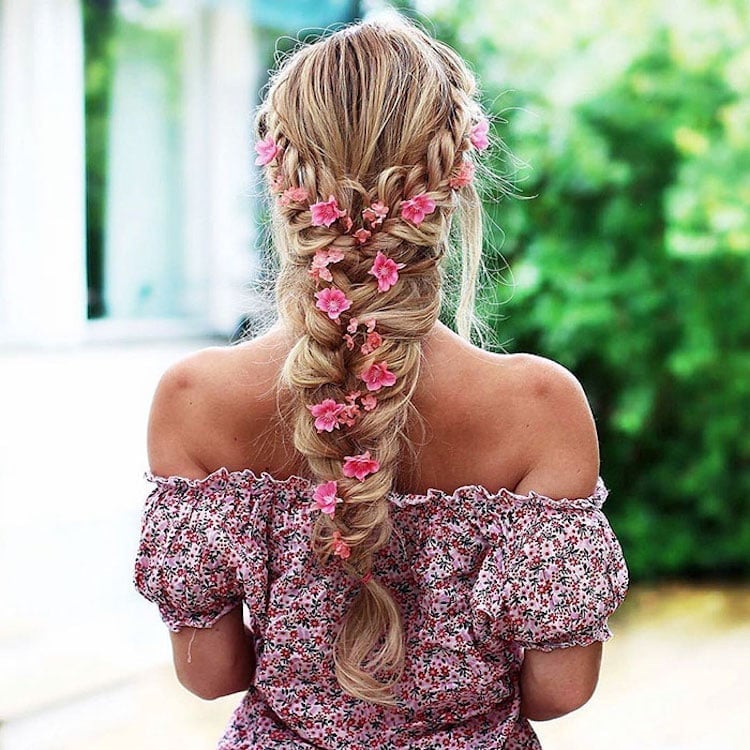
Ash blonde braids with lighter highlights already have dimension; the pink flowers add a separate layer of visual weight. The mistake people make is treating the flowers as a quick add on. Fresh petals wilt within hours. Faux flowers in matching pinks hold longer, but they need to be woven into the braid at the same tension as the hair, not pinned on top. A middle part and wavy, thick texture give the flowers a natural nest. Request from your colorist for: ash blonde braids with floral accents. Secure each stem with a small elastic, not a bobby pin.
Honey blonde high braided bun with cornrows
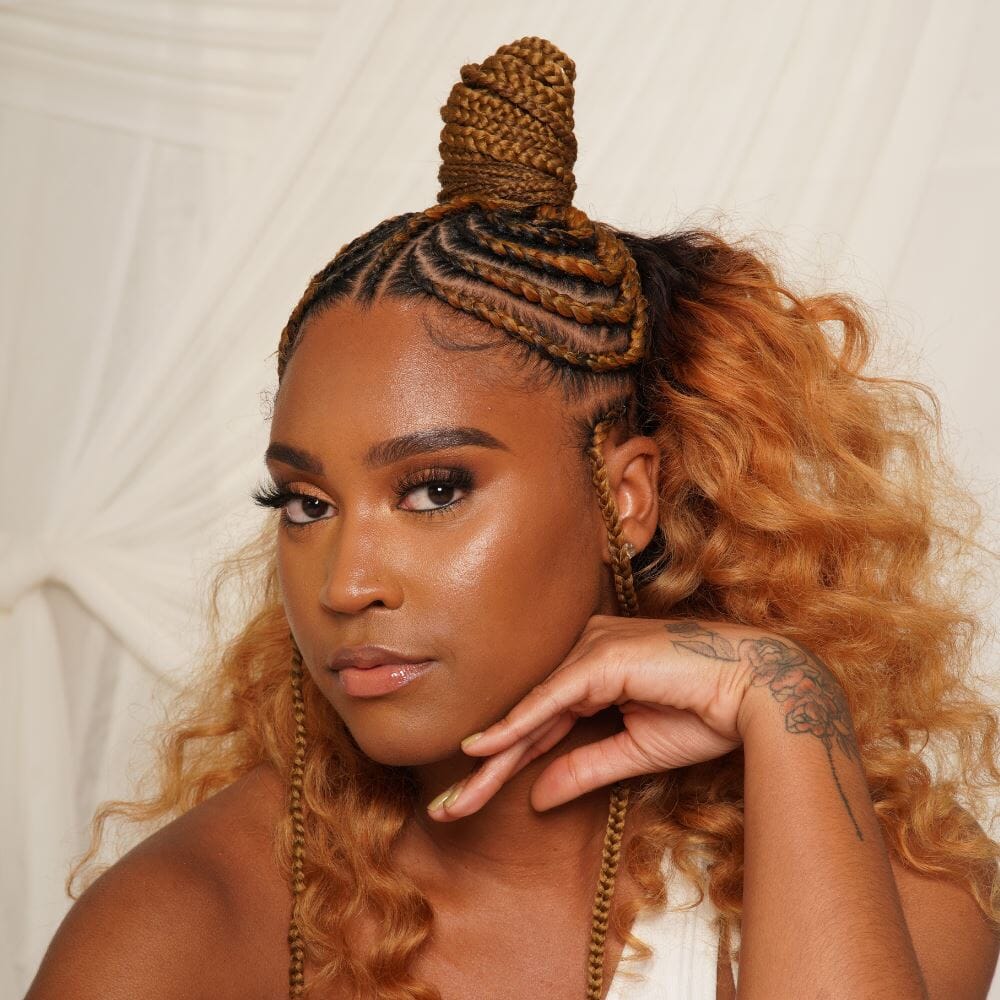
Intricate cornrows lead the eye up to a high braided bun, while the remaining honey blonde hair falls in loose waves. A few delicate braids frame the face. This lands best in cooler months, when the updo stays tidy under a coat collar and the waves don’t frizz in humidity.
The honey blonde with darker roots gives the cornrows depth; a single flat shade would read flat against the volume of the bun. A middle part and thick, wavy texture support the structure. The style holds for a full evening, but the cornrows need a firm hand on tension to avoid soreness by hour four.
Dark brown braids in a nape bun with beads
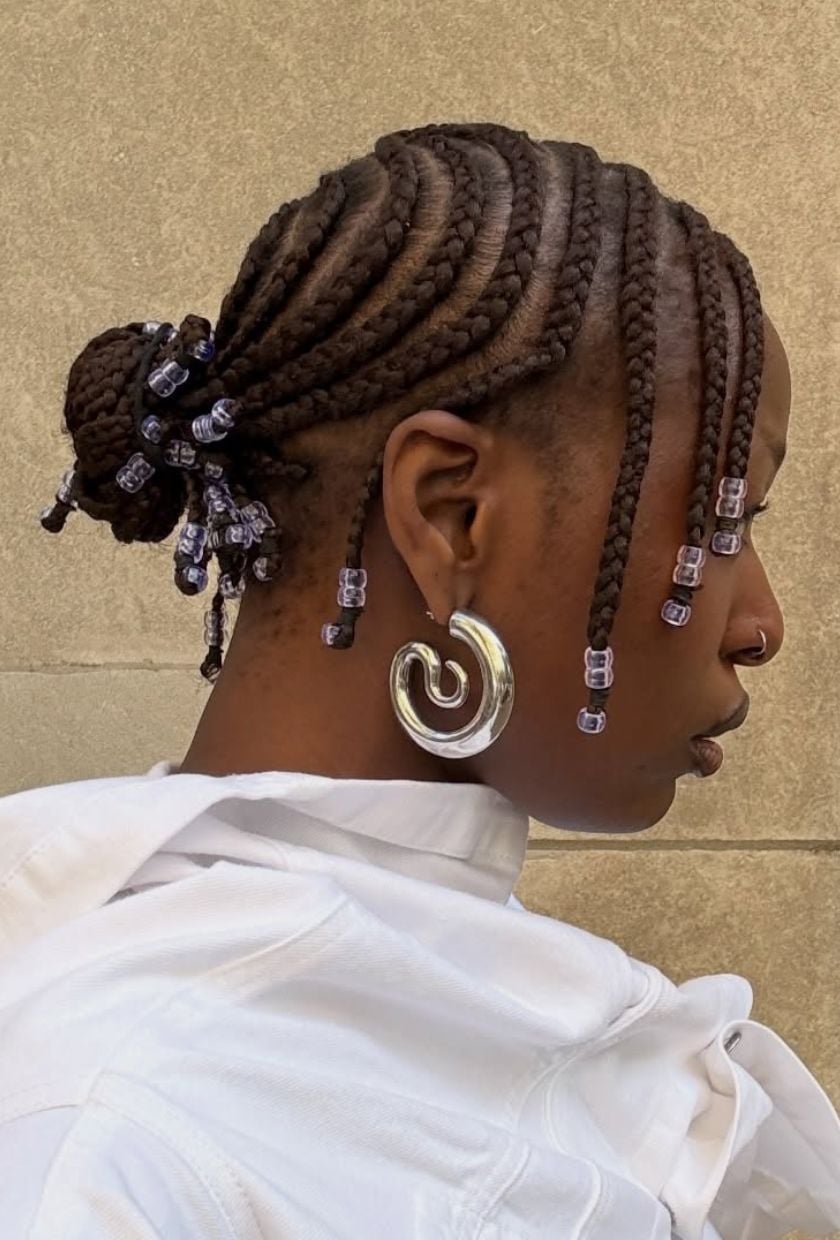
Thick, dark brown braids coil into a neat bun, with clear plastic beads catching light at the ends. The beads add a subtle sparkle and a bit of heft, so the bun feels grounded rather than precarious. Request from your stylist for: braids into a nape bun with clear beads. The side profile shows the bun’s clean line; no loose strands needed.
Two-strand twists with curled ends
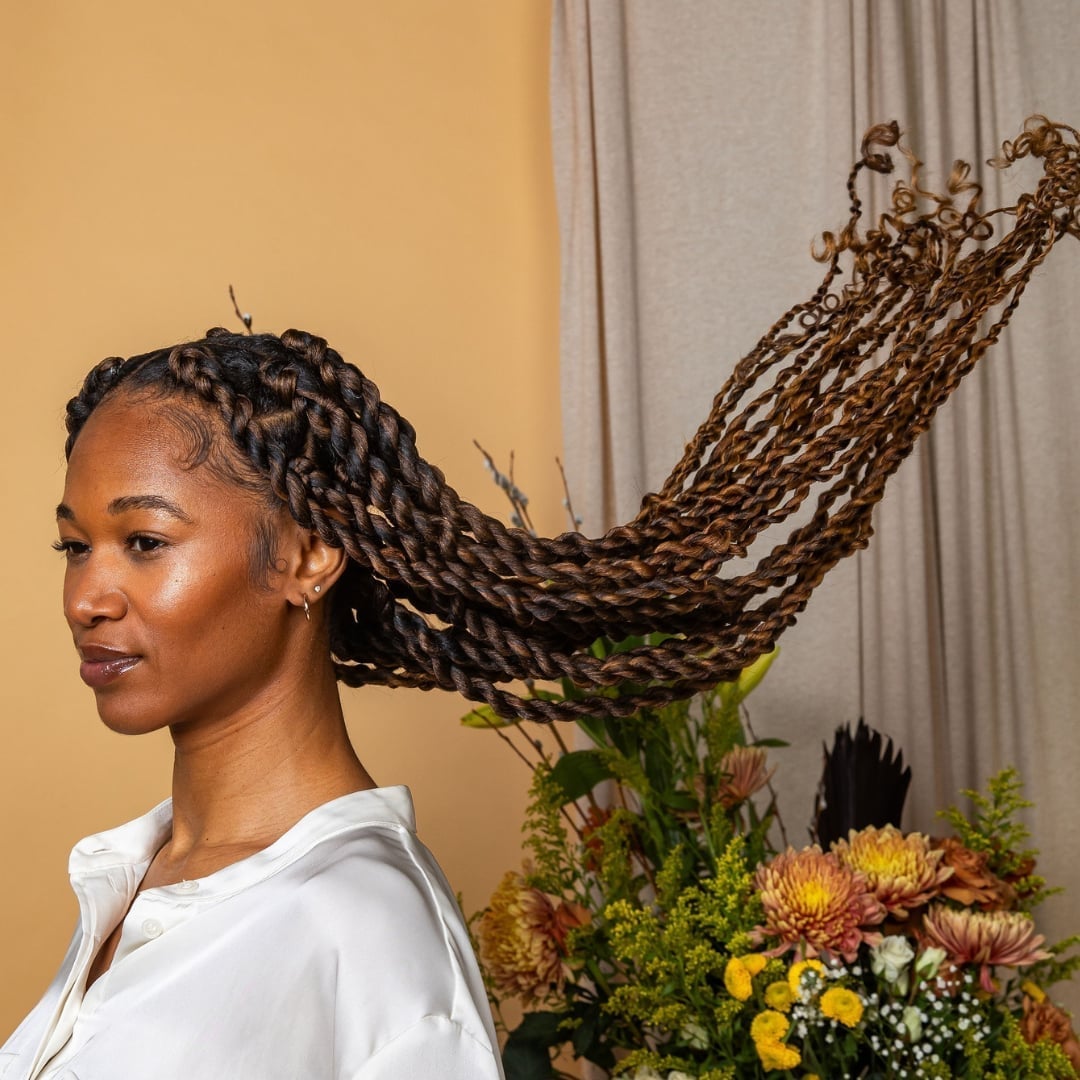
Dark brown twists with lighter brown highlights catch the eye before you notice the technique. Each twist is built from two strands, then the ends get a curl, a small detail that changes the whole silhouette. That middle part keeps everything symmetrical, which matters when the twists are this long. The texture is thick and coily, the kind that holds a twist without slipping.
The catch: the curled ends need heat. A wand or curling iron, not a no-heat method, so factor that into your morning. Skip fully braided looks or styles that skip hot tools entirely. The hold is solid for days, but those curls soften by day three.
Intricate braided updo for a neat look
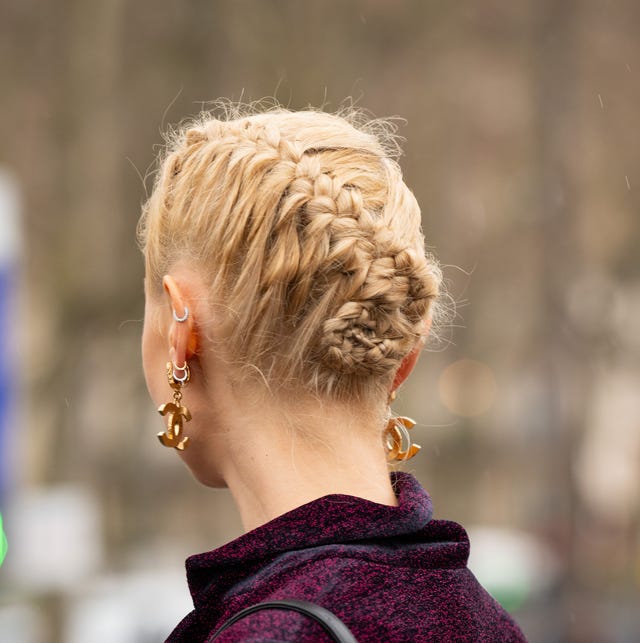
A complex weave of blonde waves sits at the crown, built from sections that cross and tuck into themselves. The updo pulls everything up, which changes how the face reads, good for oval and heart shapes, less ideal if you prefer the weight of hair around your jaw. Thick, wavy texture gives the braid body; fine hair would need padding to match the scale.
Once it is pinned, it stays. Plan a trim every four weeks to keep the ends clean and the braid crisp. The hold is firm enough for a full day of events. Request from your stylist for: complex braided updo.
Black cornrows with geometric parting
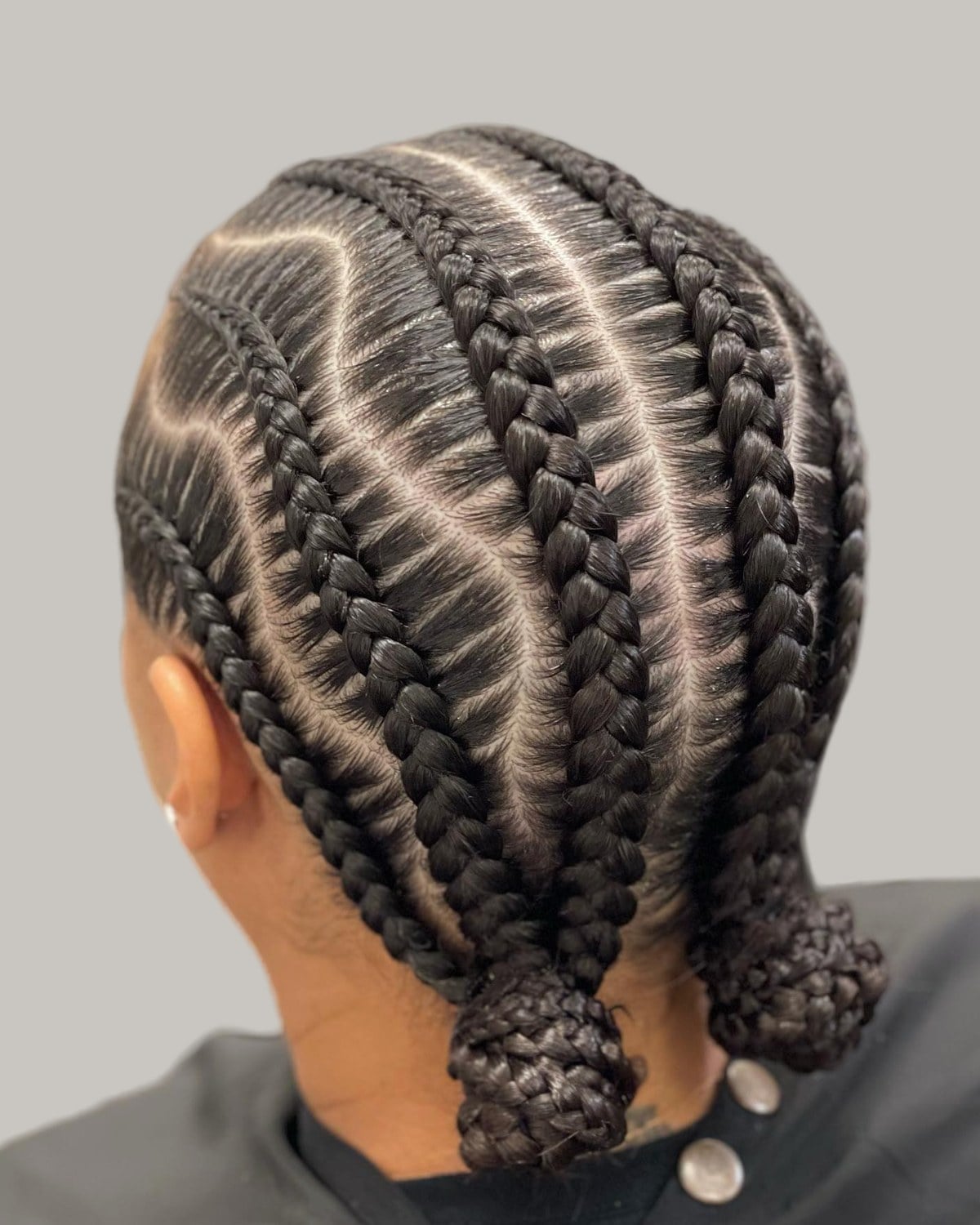
Precision is the whole point here. The cornrows follow a geometric pattern, straight lines that angle and meet at sharp corners, and end in two neat buns at the nape. Thick black hair makes the lines read clearly. The middle part anchors the symmetry.
The words for the chair: cornrows with geometric parting into two buns. This is not a DIY project. The parting alone takes a skilled hand, and the tension needs to stay even across the scalp. The hold lasts until you take it down, no touch-ups needed between washes.
Ombre fishtail braids down the back
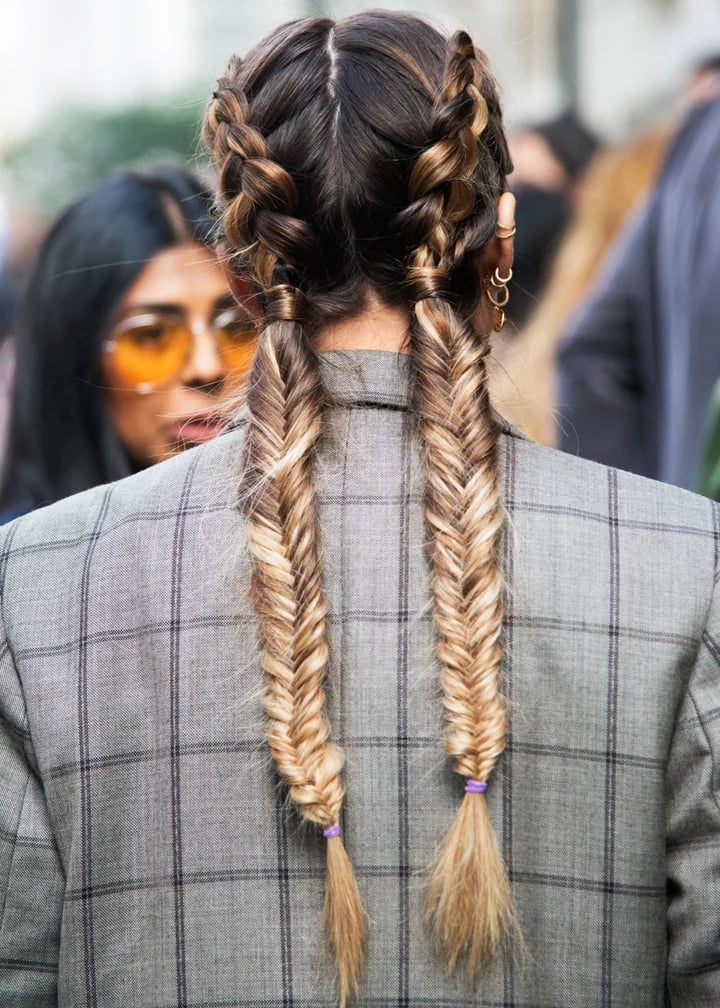
Two fishtail braids drop from a middle part, shifting from dark brown at the roots to lighter blonde at the ends. The ombre transition is gradual, not striped, so each braid looks a single gradient. Thick, wavy texture keeps the braids from looking skimpy, fine hair would show scalp between the sections.
The honest minus: frizz. Fishtail braids have more exposed surface area than a standard three-strand, so flyaways creep in by day two. A light oil on the palms helps, but the look is never as crisp as day one. The ombre also needs toning every six to eight weeks to keep the blonde from warming up. Request from your stylist for: fishtail braids with ombre effect.
Neatly parted cornrows into long black braids
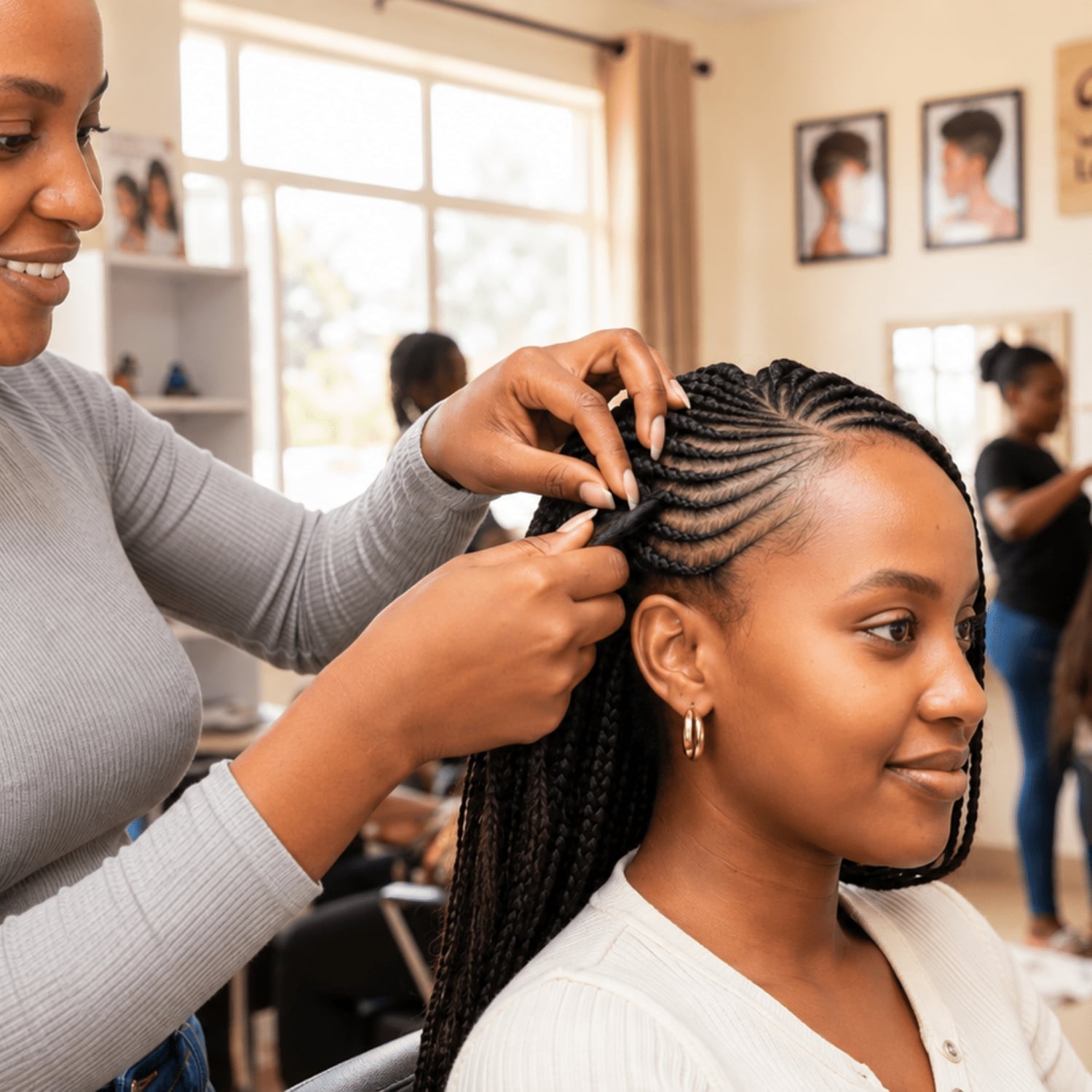
Cornrows at the hairline transition into long, thick braids that fall past the shoulders. The mistake people make: rushing the part. A crooked foundation line throws the whole braid off, and once the braid is in, you cannot fix it without starting over. The middle part here is clean, each side mirroring the other.
Set this against a style where the braids start directly at the scalp with no cornrow base. That version is faster but puts tension on fewer anchor points. Here, the cornrows distribute weight across the crown, which means less pulling at the edges. Thick black hair fills each braid without gaps. The hold is long, two weeks before you need to check the edges.
Black braids with long, curly ends
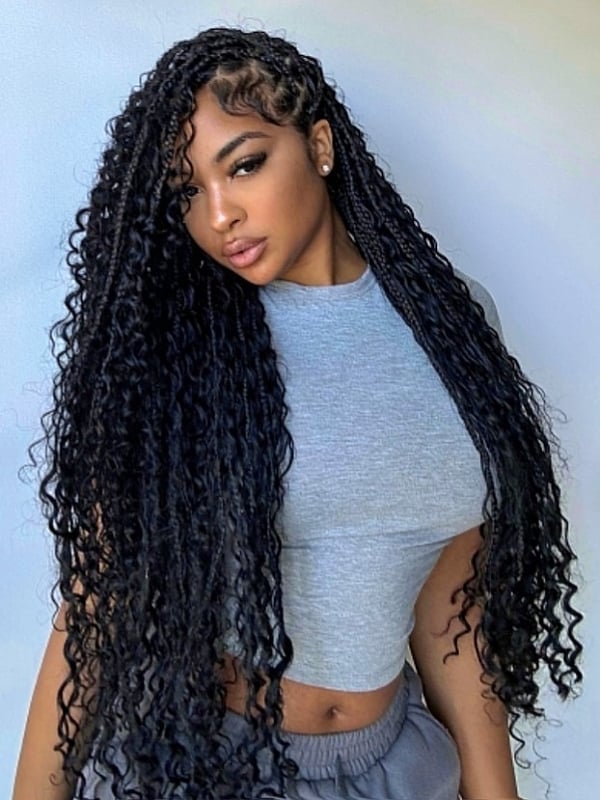
Intricate braiding meets loose, curly ends in a look that knows when summer ends and fall begins. The deep black color keeps the transition sharp, while the wavy, thick texture at the bottom softens everything. You get the structure of a salon style without the rigid finish. The long, curly ends move differently than the braided sections above, which means this works for a warm September evening or a cool October afternoon. Request from your stylist for: intricate braids with long curly ends. The contrast between tight braid and loose curl holds best when you use a curl-defining cream on the ends.
Thick coily braids with gold hair cuffs
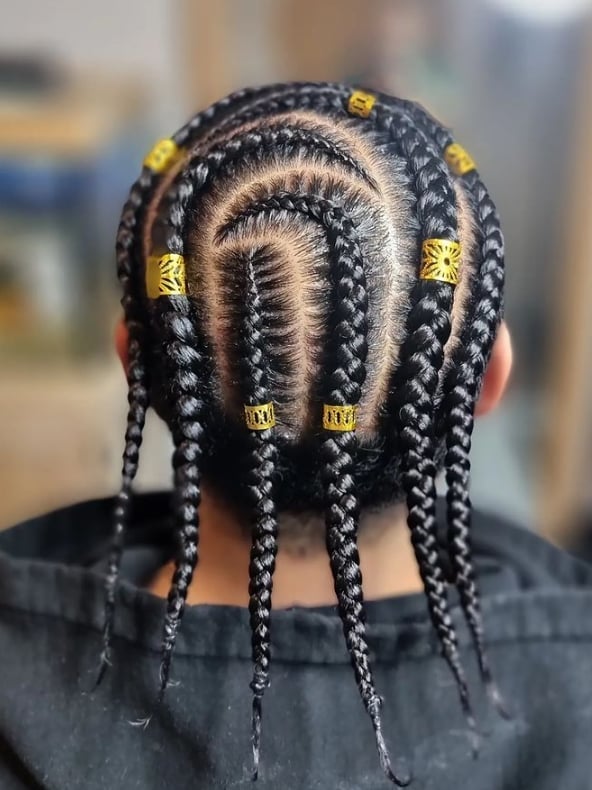
Set this against the previous style and the difference is clear. Where the black braids with curly ends lean soft and transitional, these thick coily braids with gold cuffs lean deliberate. The coily texture gives each braid a density that holds the cuff in place without slipping. The precise middle part and detailed pattern keep the look salon-finished. Gold hair cuffs add weight and a metallic glint that changes with movement. Not for anyone who dislikes embellishments or wants a style that disappears into the background. The cuffs reposition easily, so you can change the placement as you go.
The thick, coily texture means the braids keep their shape well. The hold is strong enough for several days of wear. The gold cuffs work as a standalone detail, so you do not need additional accessories.
Box braids with natural coils at the ends
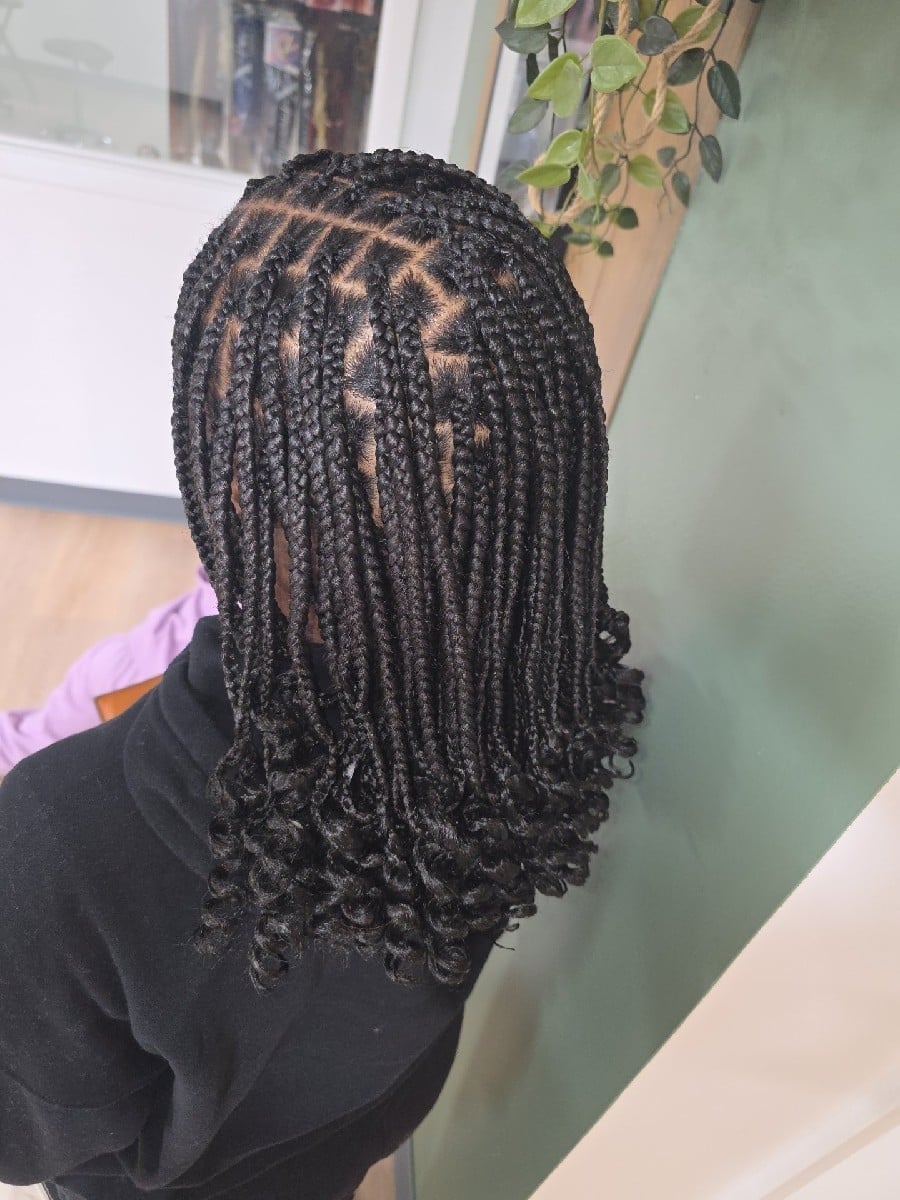
Neat box braids with a precise middle part sound straightforward until you see the ends. Instead of a uniform seal, the hair is left in loose, natural coils. That choice creates a soft, textured finish that contrasts with the clean lines of the braid. The catch: the intricate parting and careful coil transition require a stylist who understands how natural texture behaves. The natural coils at the ends add a subtle bounce that keeps the style from looking too rigid. The hold is solid through the braid, with the coil ends needing a light refresh every few days.
The thick, coily texture of the ends means they hold a curl pattern without extra heat. The middle part balances the softness of the coils.
Swirled cornrows into loose coily braids
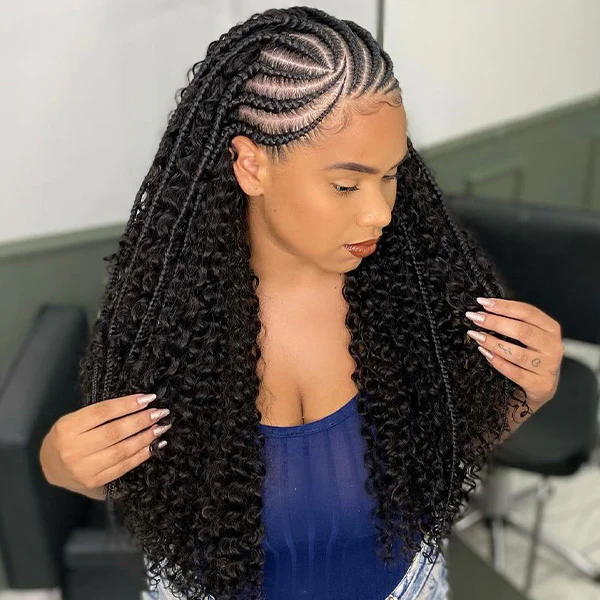
Swirled cornrows on the scalp flow into loose, coily braids that fall past the shoulders. This is a two-texture style that works best on thick, wavy and coily hair. The centered parting keeps the swirl symmetrical. The loose coily ends move freely while the scalp braids stay anchored, so you get movement without losing the structure. Upkeep every ten weeks keeps the cornrows neat and the ends fresh. Swirled cornrows into loose coily braids. The hold is strong at the root and relaxed through the ends, which means the style lasts well but does not feel tight.
Geometric cornrow pattern on the side
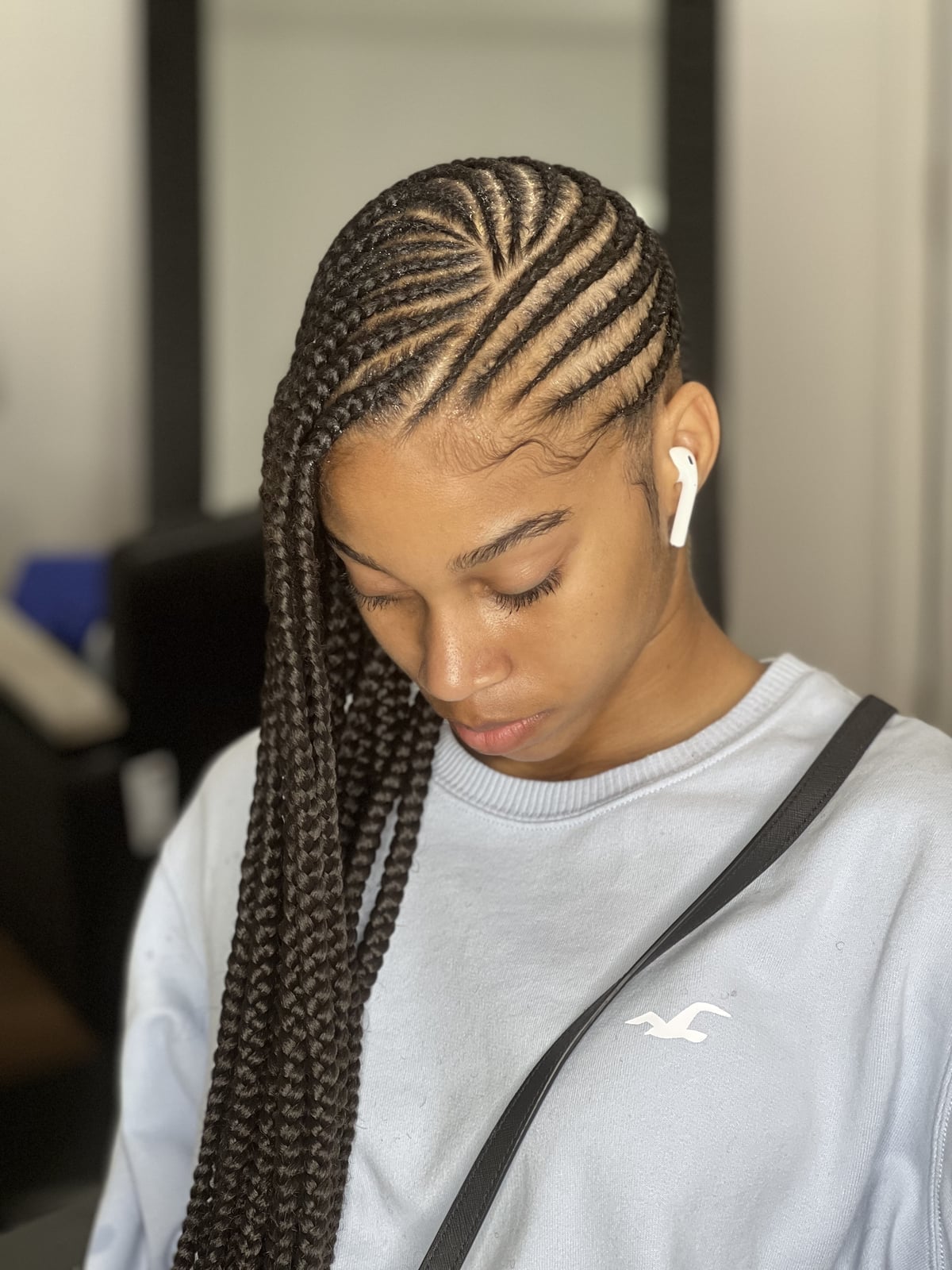
A geometric cornrow pattern on the side transitions into long, thick braids that fall evenly. The precise middle parting balances the asymmetry of the pattern. This is a salon-only design. The geometry requires a stylist who works with angles, not just straight lines. Book it as: geometric side cornrows into long braids. The dark brown color keeps the pattern readable without competing with the braids. The thick texture of the braids gives the ends weight, so they hang straight rather than frizzing out. The pattern holds its shape for several weeks with proper care.
Micro braids with loose, curly wisps
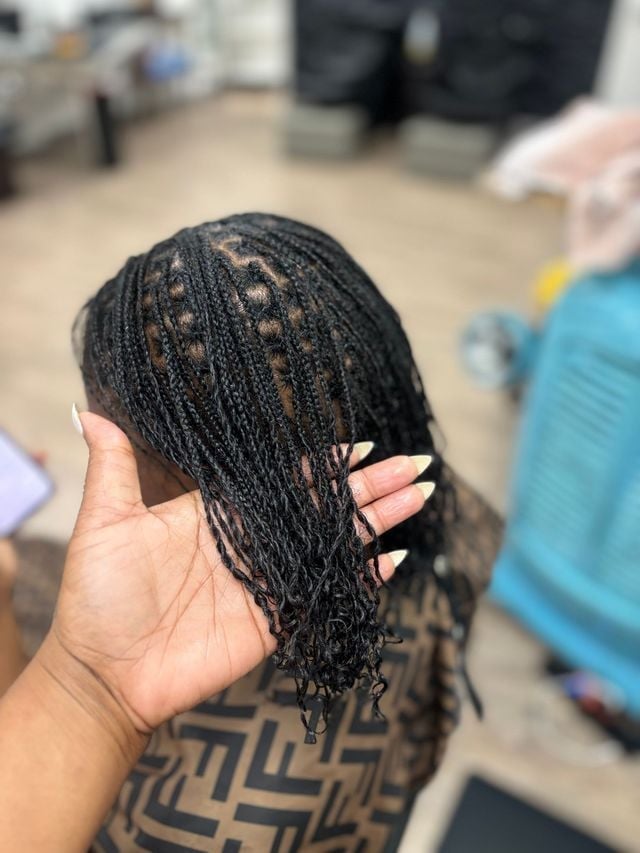
Micro braids take time. A full install runs several hours in the chair, and that is the honest trade-off for a finish this delicate. The strands are thin enough to move like hair, not like rope, with a wavy texture running through the length. Black micro braids hold their shape well, but the real detail is at the ends: loose, curly wisps that break up the uniform line. The middle part keeps the scalp visible, which helps the braids look balanced. Styling in the morning is about fifteen minutes, smooth down the part, fluff the ends, go. The catch: the wispy ends tangle faster than sealed tips, so a gentle finger-comb every few days saves you from a matted mess by week three.
Black and gray box braids with pink accents
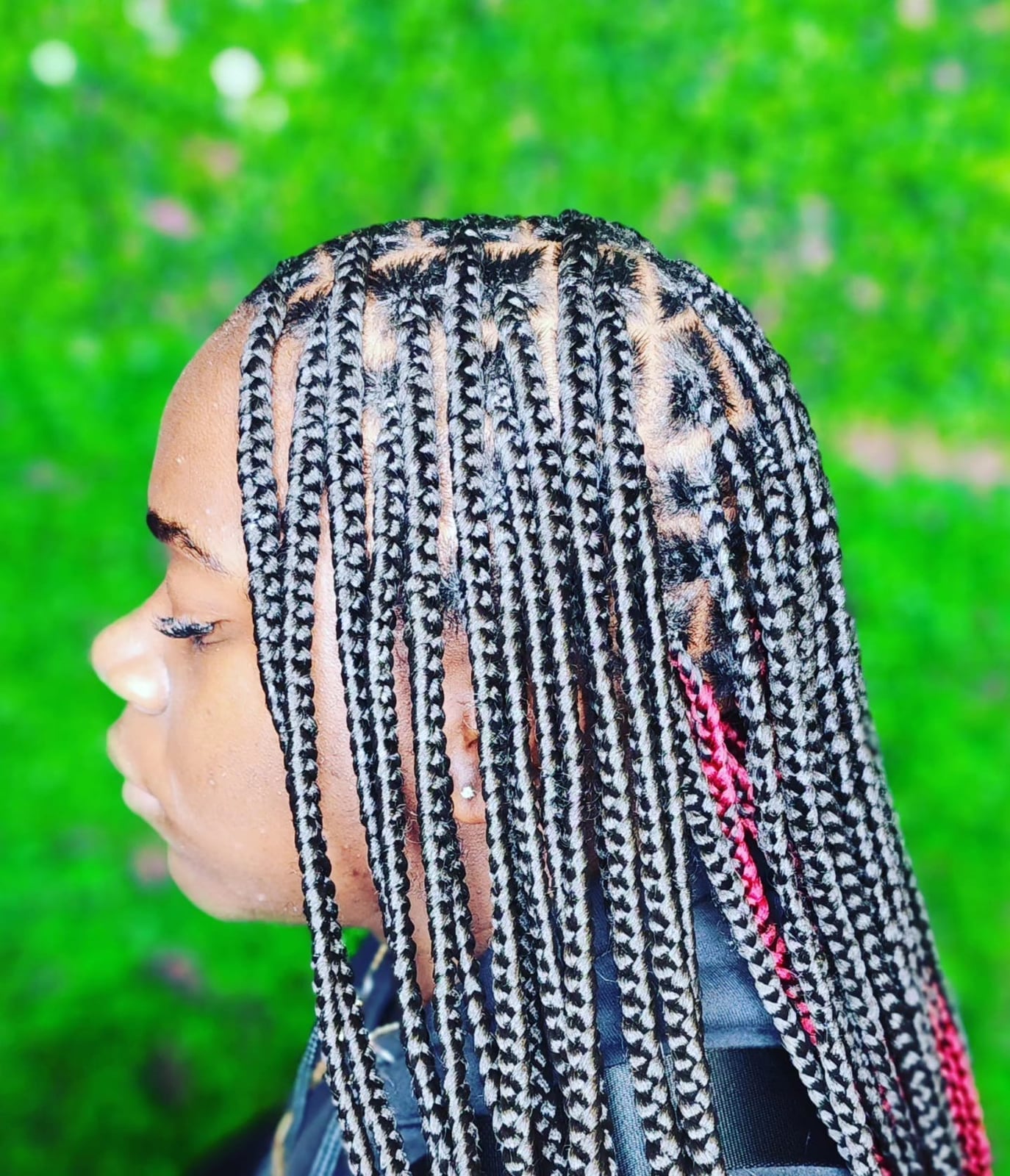
The mistake with accent colors is going too wide. A few pink braids placed through a black and gray blend look deliberate; a whole section of hot pink can seem like a costume piece. These are long, thick box braids, neatly parted into square sections, with the pink strands scattered to catch the eye without overwhelming the base. Black and gray together already give a dimensional effect. The pink just adds a pop. Choose a single-color look or plan to wear the braids for more than six weeks, because the pink will fade faster than the dark tones. A color-depositing shampoo on the accent braids only keeps them bright without staining the rest.
Mix of braids and loose curls
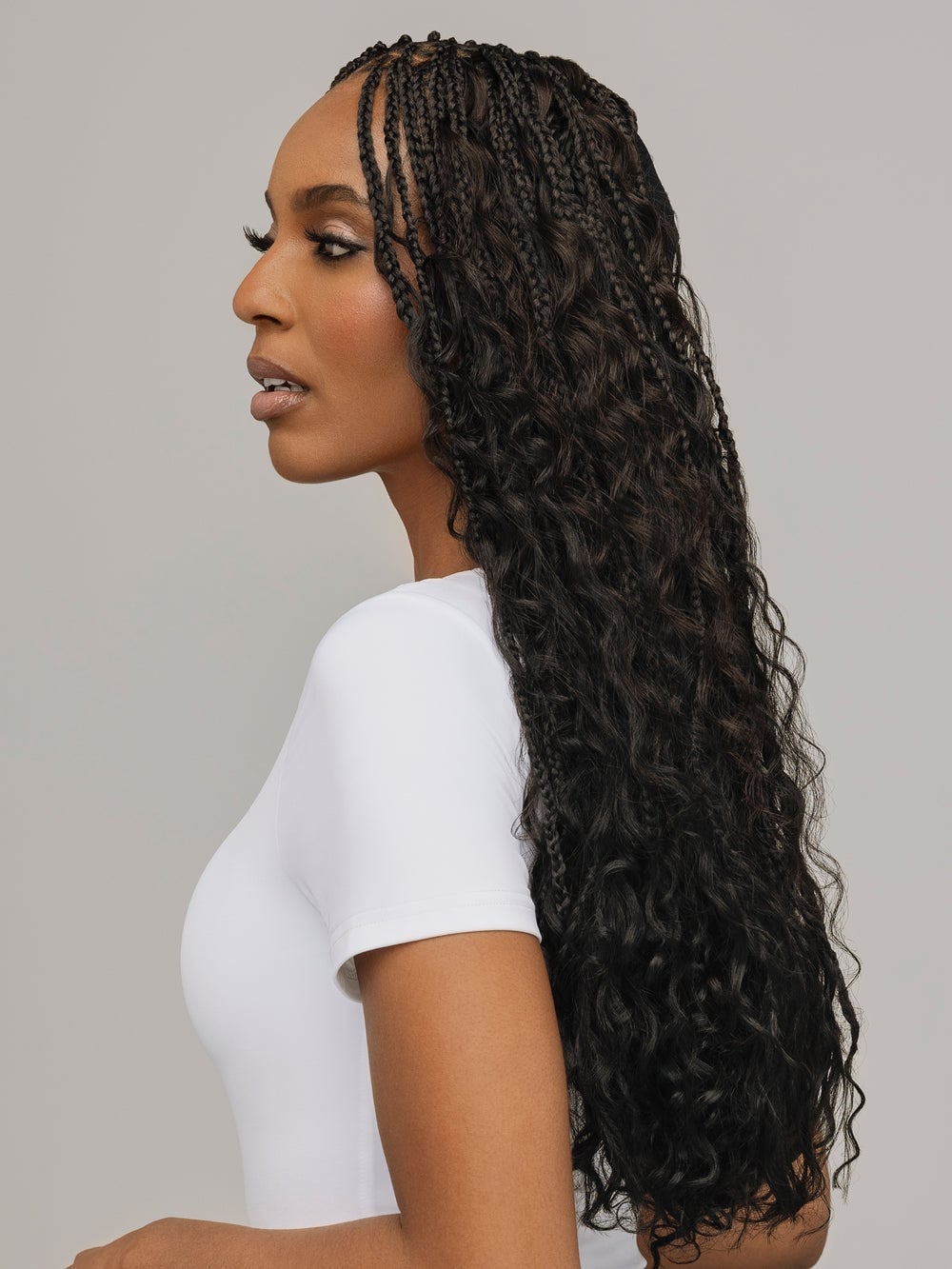
Fall is the season for this one. The mix of dark brown braids and loose wavy curls hits mid-back, which means it layers well under a coat collar without bunching. The braids give structure; the curls give softness, and the two textures keep the eye moving. A texturizing spray on the loose sections stops them from looking an afterthought against the braided parts. You need thick wavy hair to start, thin hair would lose the curl definition by midday. The hold lasts through a workday and into dinner, though the curls will soften by hour eight. A quick spritz of water and a scrunch resets them for evening.
Dark brown braids with two-texture curls
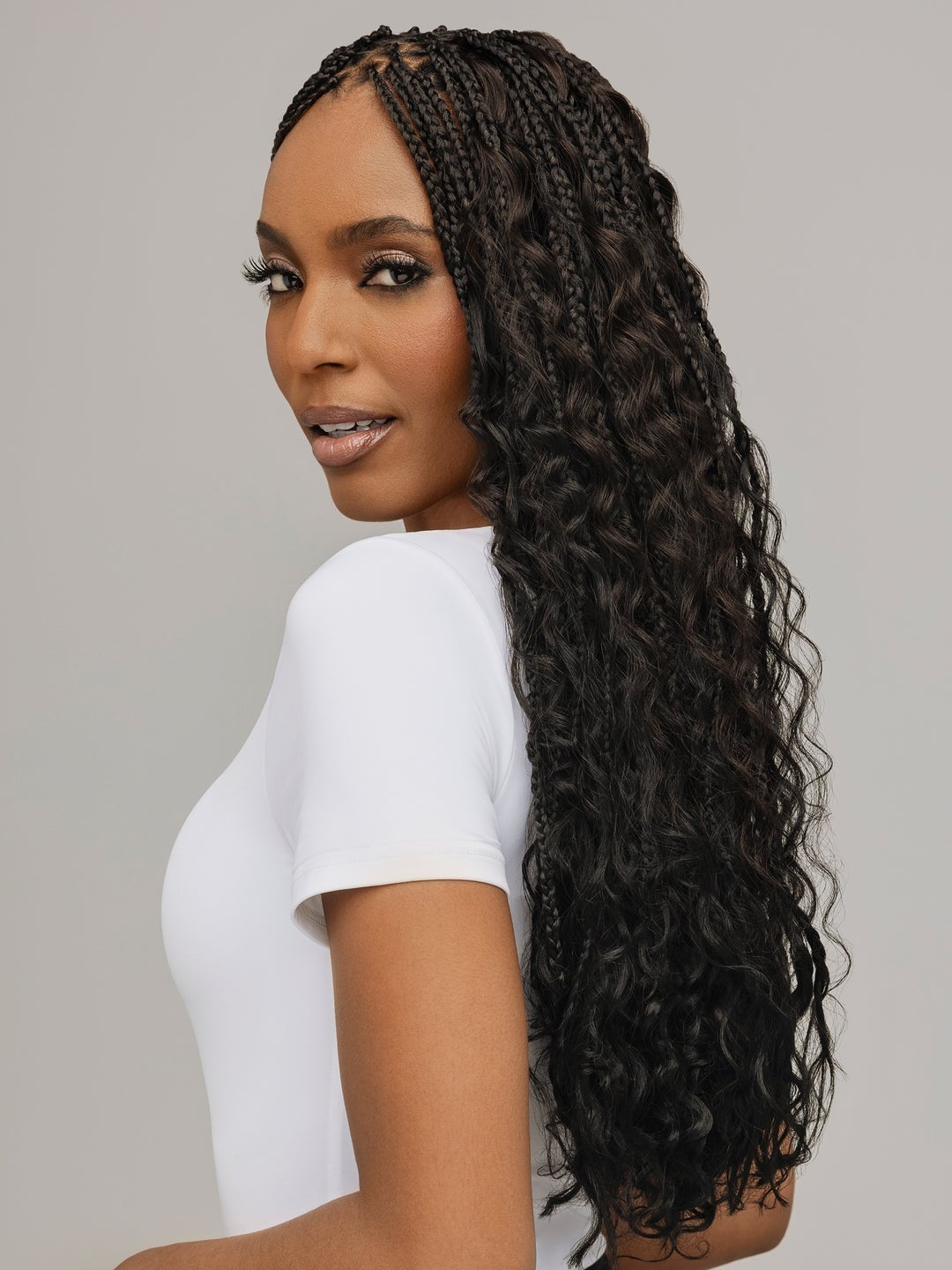
Set this against the previous style. Here the transition is the point: intricate braids shift into loose wavy curls at the ends, with a centered parting that keeps the look grounded. The previous mix braids and curls side by side; this one braids the top and lets the bottom go free. Two-texture styles work best on thick wavy hair. The weight of the braid section needs enough density to pull cleanly, and the curl section needs enough body to hold its shape. The dark brown hue looks natural from the roots to the braided crown, so grow-out is a non-issue. The chair line is longer because the braiding goes further down the strand before the transition.
Geometric cornrows with thick braided ends
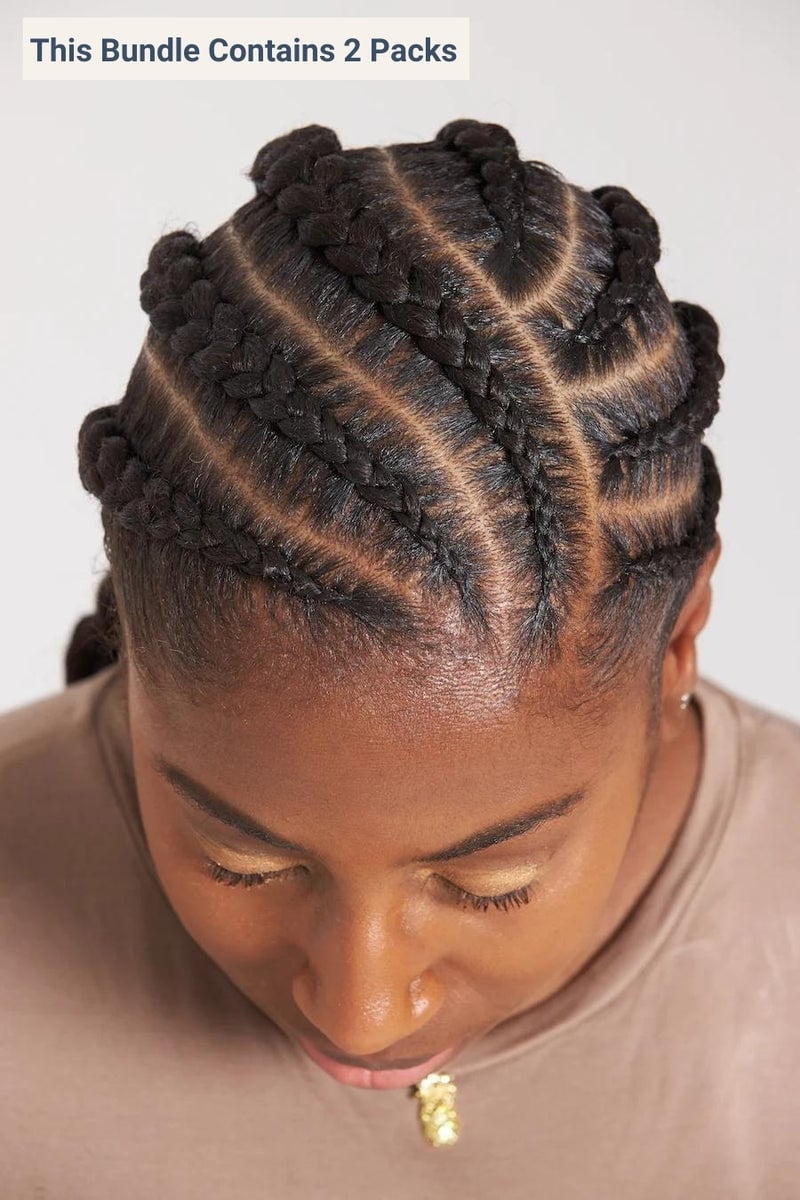
Geometric cornrows are a technical commitment. The pattern across the scalp requires precise sectioning, straight lines, clean angles, no stray parts. The braids then release into thick, braided ends that hang past the nape, giving the scalp work a visible payoff. Black hair in a middle part keeps the geometry symmetrical. The honest drawback: the cornrowed section will feel tight for the first two days, and you cannot sleep in a bun without distorting the pattern. A satin scarf or bonnet every night preserves the lines. The ends are thick enough to hold their shape without product, so morning styling is just a check for flyaways at the part.
Half-up half-down braid with auburn highlights
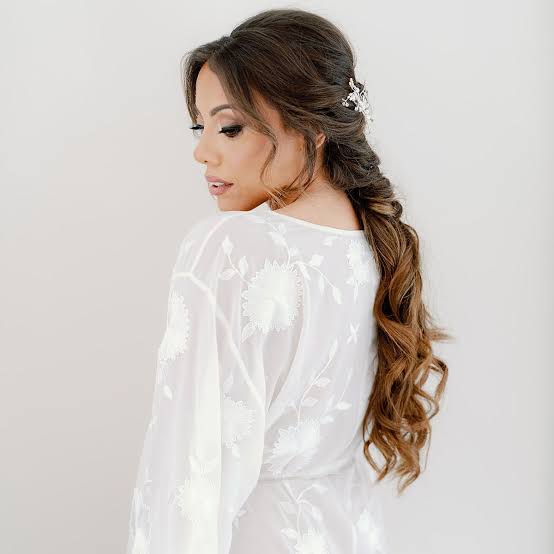
Half-up half-down works on thick, wavy hair and most face shapes. A thick wavy braid falls past one shoulder, the dark brown base carrying subtle auburn highlights. A decorative accessory sits at the crown, holding the gathered section in place.
Skip it if you never wear your hair in an in-between state or dislike hardware at the crown. Tell your stylist: half up half down braid with auburn highlights. About five weeks between trims keeps the braid edges clean and the accessory from looking buried.
Mixed braids and loose waves with blonde highlights
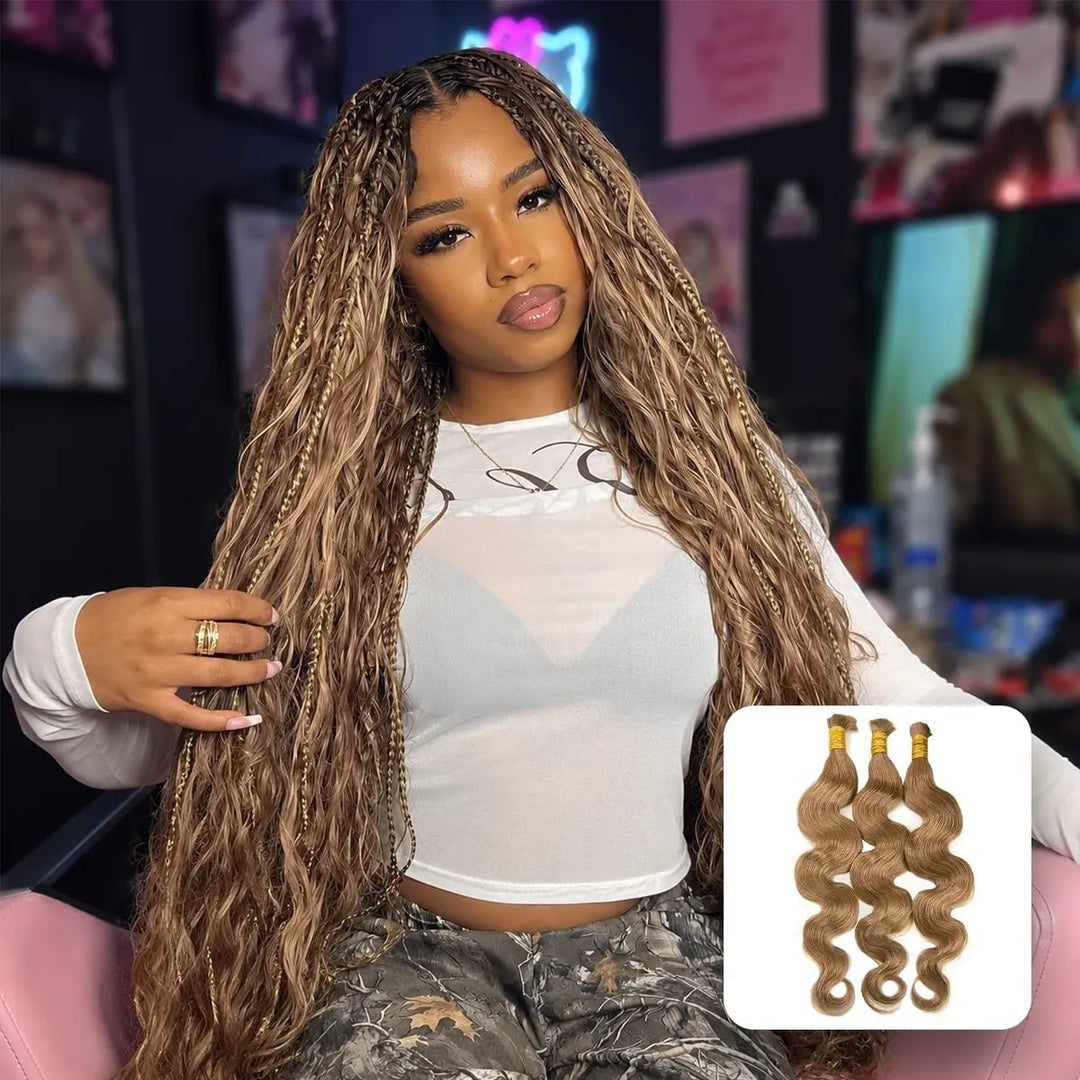
A middle part runs through dark brown hair with blonde highlights, then the length divides into braided sections and loose wavy strands. The mix is deliberate, not messy.
A salon handles this faster than a DIY attempt because the braids need to sit cleanly against the waves. No heat on the braided parts, a curl refresher on the waves, and the contrast stays sharp.
Thin box braids with lighter brown tones
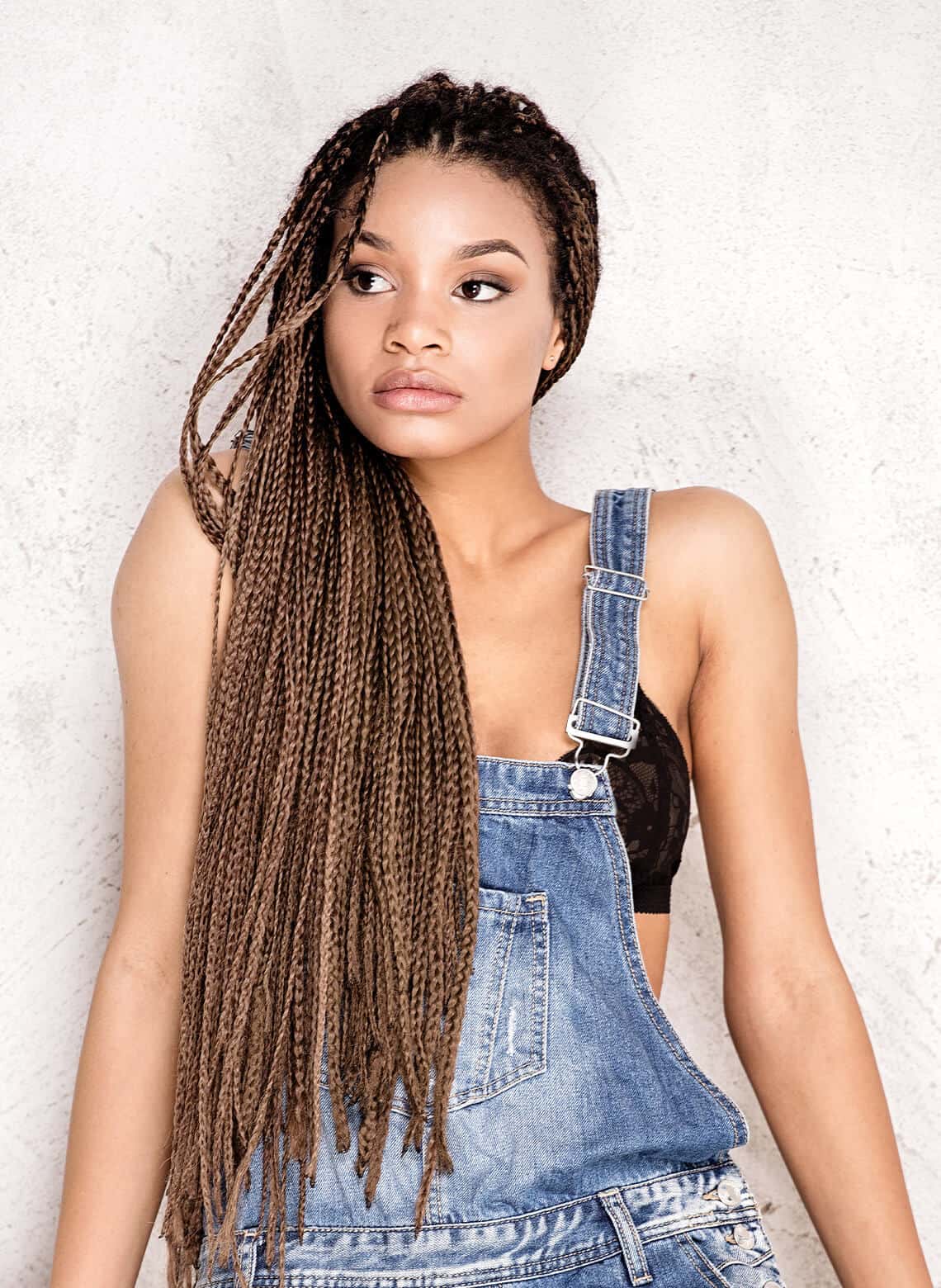
Thin box braids require patience in the chair. A middle part divides the head, then dozens of fine braids run to the ends in rich dark brown with lighter brown highlights. The dimension comes from the subtle tone shift, not bulk.
The catch: thin braids take longer to install and need more daily handling than medium or thick ones. A few strands will loosen at the root by week three. That is normal. The overall effect stays intact and the lighter brown tones keep the look from looking one flat shade.
Dark brown braids with face-framing curly ends, thick
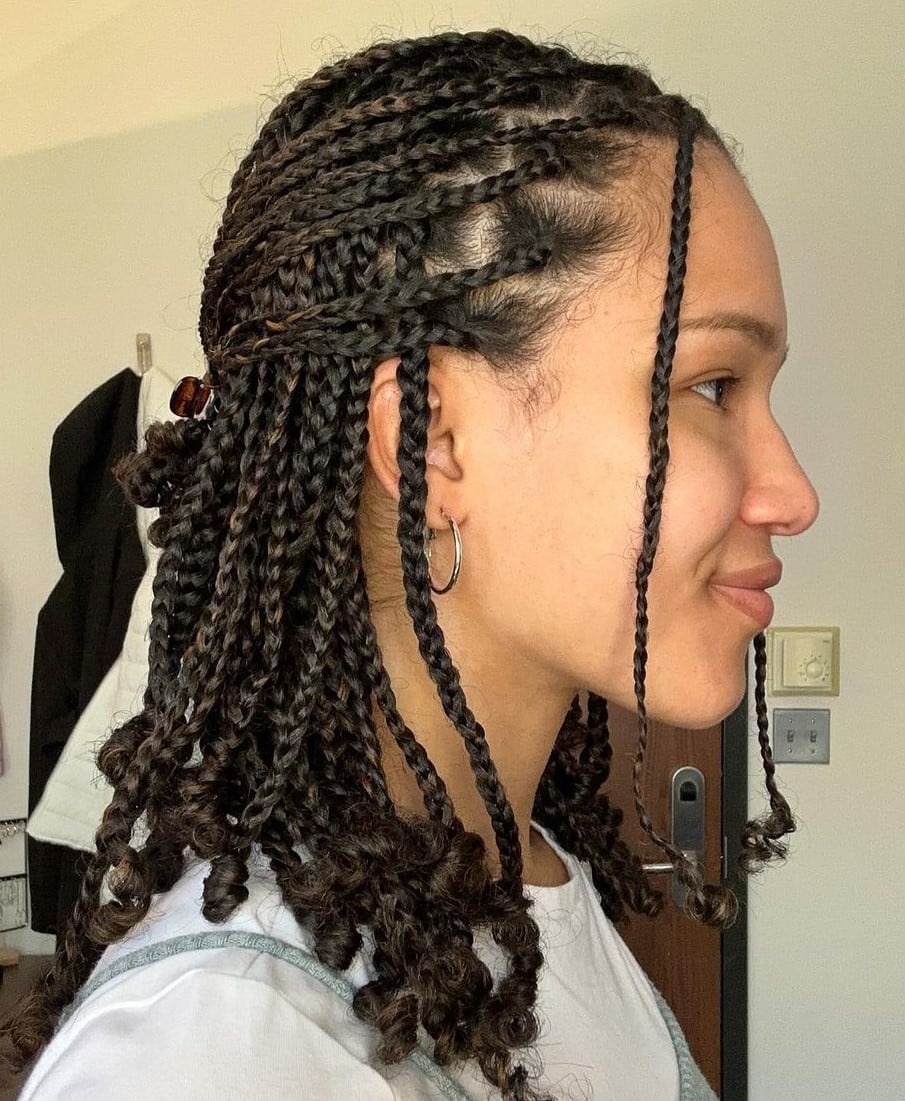
The mistake with curly-end braids is leaving the transition too abrupt. A middle part frames the face, then thick dark brown braids travel down and end in loose curls. Some braids stay loose around the face. Tell your stylist: braids with loose curly ends and face-framing pieces. The curl needs a defined start point, not a fuzzy fade, so the braid-to-curl line looks planned, not broken.
Final Thoughts
Pick the braid that matches your real schedule, not your aspirational one.
- Twenty minutes in the morning: simple Dutch braids or two-strand twists
- Salon visit every six weeks: intricate cornrows or geometric patterns
- Fine hair that needs grip: micro braids or tight box braids
- Wavy texture that tangles fast: loose braids with curled ends
Find the perfect braid for your next look.