You have the photos saved, the beads picked out, and a Saturday blocked on the calendar. Now you need a style that actually works with your hair texture and holds for the next month without turning into a frizzy mess by week two. Which is why Dreamy Fulani Braids 2027 fill so many saved boards this year.
35 options span from low-complexity square partings to intricate geometric patterns, with every texture from tight coils to loose curls and every adornment from wooden beads to silver cuffs. For thick hair that needs weight distribution, fine strands that need grip, or anyone who wants a protective style that photographs as well as it wears.
Square parting at the crown with dark brown and blonde highlights
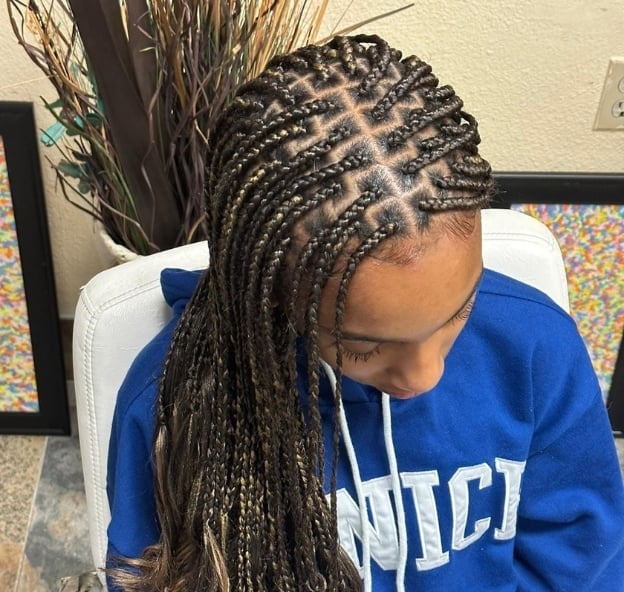
Square parting at the crown changes the whole geometry of the style. You get dark brown braids with subtle blonde highlights running through the thick, coily texture, and the square section adds a clean structural anchor. Skip it if you prefer a softer, rounded hairline or have very fine hair that lets parts blur after a week. Tell your stylist: fulani braids with square crown parting, dark brown with blonde highlights. The square shape stays crisp for about two weeks before new growth softens the lines.
Curved pattern braids with silver beads and loose curls
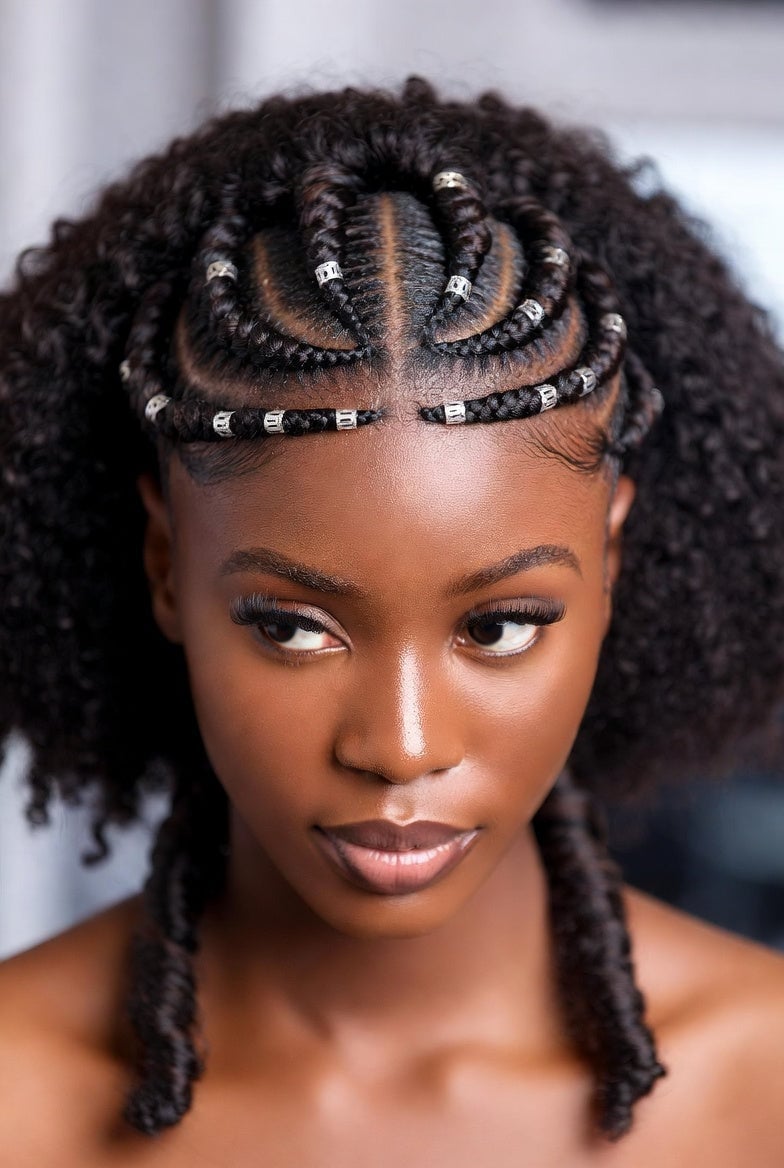
Compare this to straight-back feed-in braids. These curved fulani braids sweep toward the crown, then release into loose curly tendrils that frame the face. Small silver beads catch at every turn. This style includes facial framing pieces and braids with adornments. The loose curls need a curl-defining cream every few days to stay separate. Curly hair with good thickness holds the pattern best.
Black braids with silver tips and clear bead accents
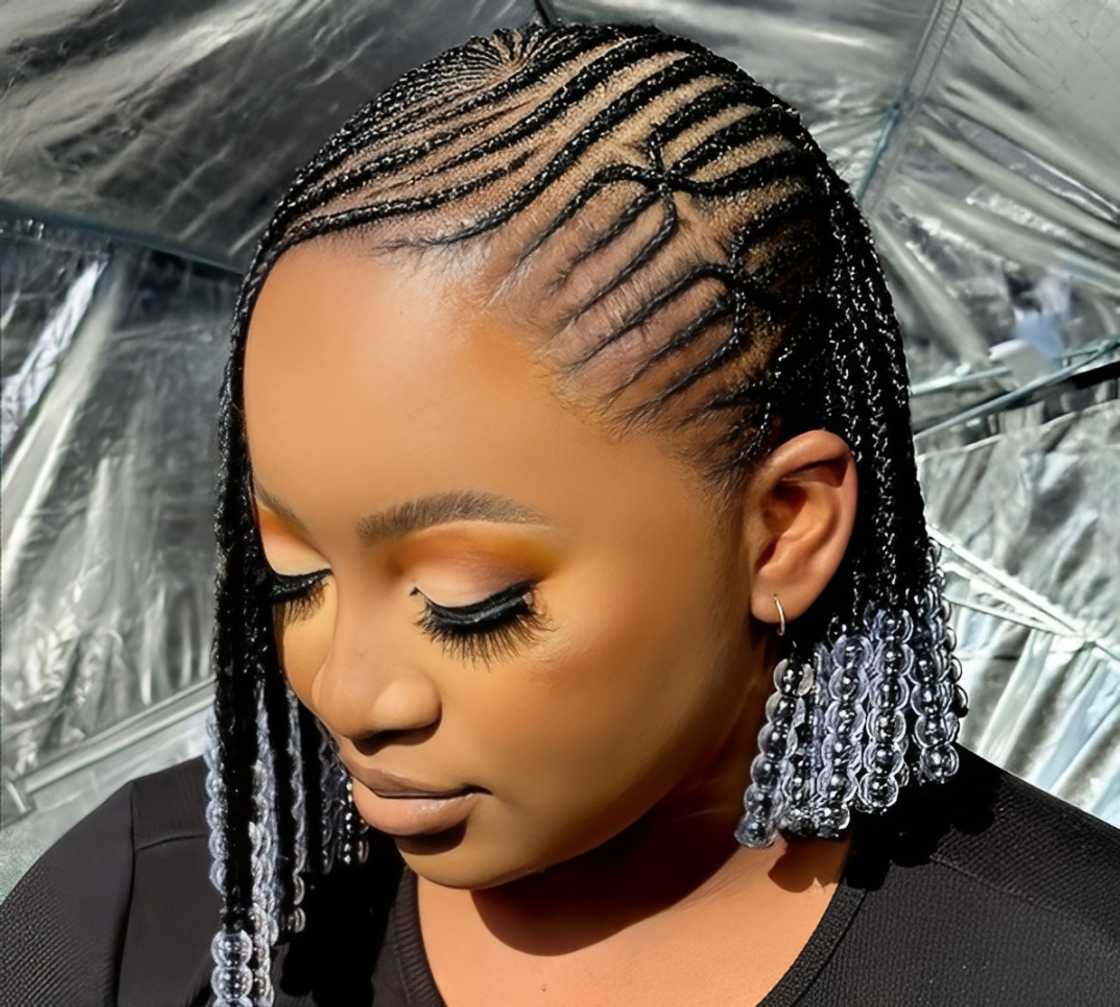
How do you get silver tips without the dip-dye commitment? Ask for pre-colored extensions woven into the last few inches. The braids stay deep black until the ends shift to silver, with clear beads capping each tip for weight. Coily hair with good thickness keeps the braids from slipping. Skip if you prefer a single color or are not a fan of tip coloring. The whole look requires professional skill for the intricate cornrow base.
Dark brown braids with gold beads reaching mid-back
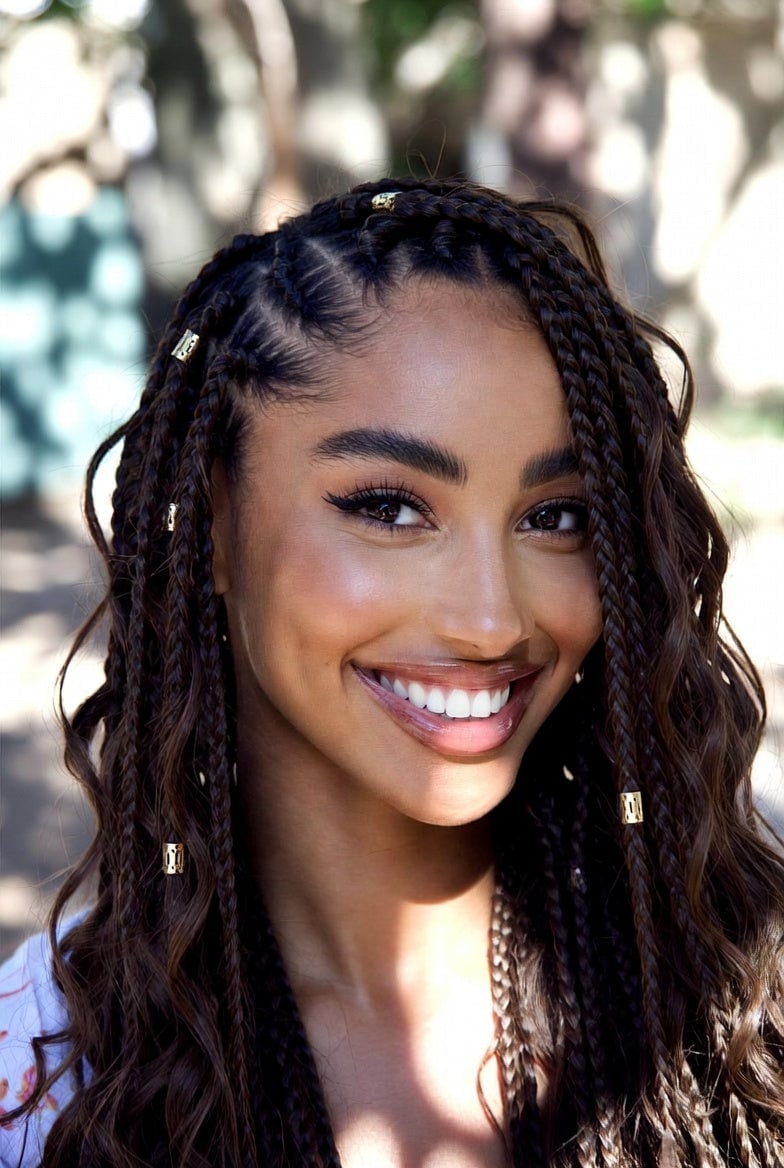
Gold beads spaced down mid-back braids add weight that changes how the style moves. The dark brown hue looks solid from six feet away, but the wavy texture and precise middle-part cornrows give it structure. Thick hair carries the length well.
Upkeep is the real conversation. New growth shows at the hairline around week four, and the gold beads can tug if you sleep without a scarf. A silk bonnet every night keeps the beads from shifting. The wavy ends need a quick finger-comb and nothing else.
Dark brown braids with lighter brown highlights and clear beads
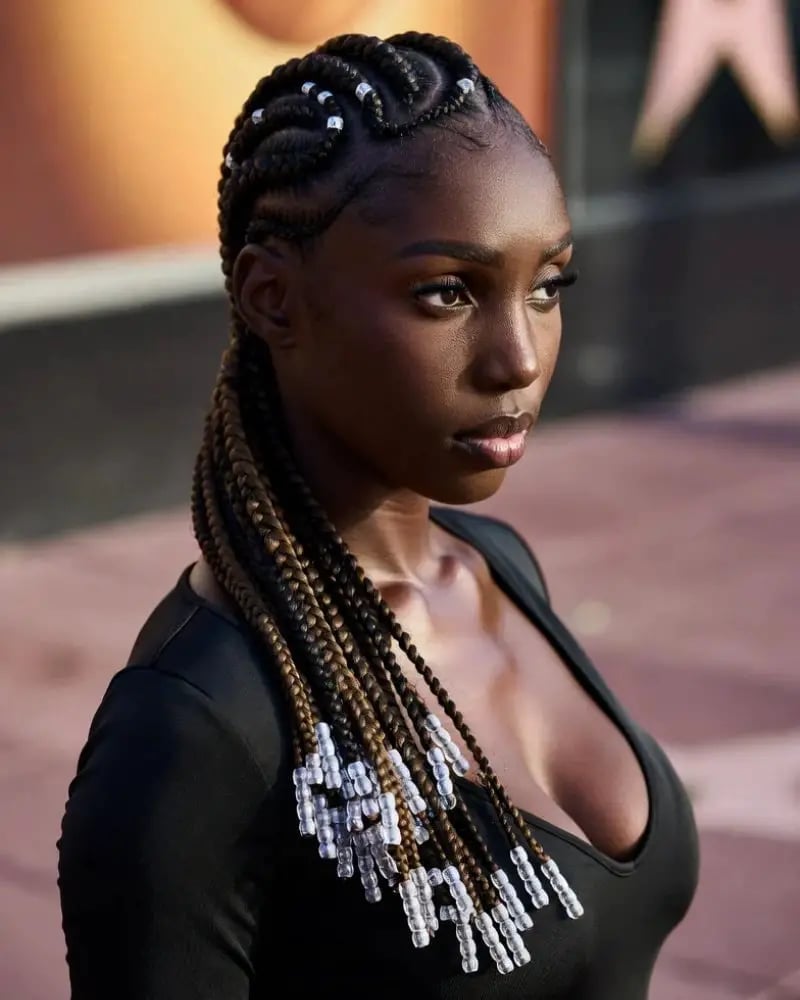
Two tones here: a dark brown base with lighter brown highlights woven through, not painted on. The clear beads sit at random intervals, breaking up the color without adding shine. Coily, thick texture gives the braids natural volume. Skip if you prefer solid color braids or are not a fan of bead adornments. Tell your stylist: fulani braids, dark brown with lighter brown highlights, clear beads. The highlights look subtle, never chunky.
Black braids and twists with intricate scalp patterns
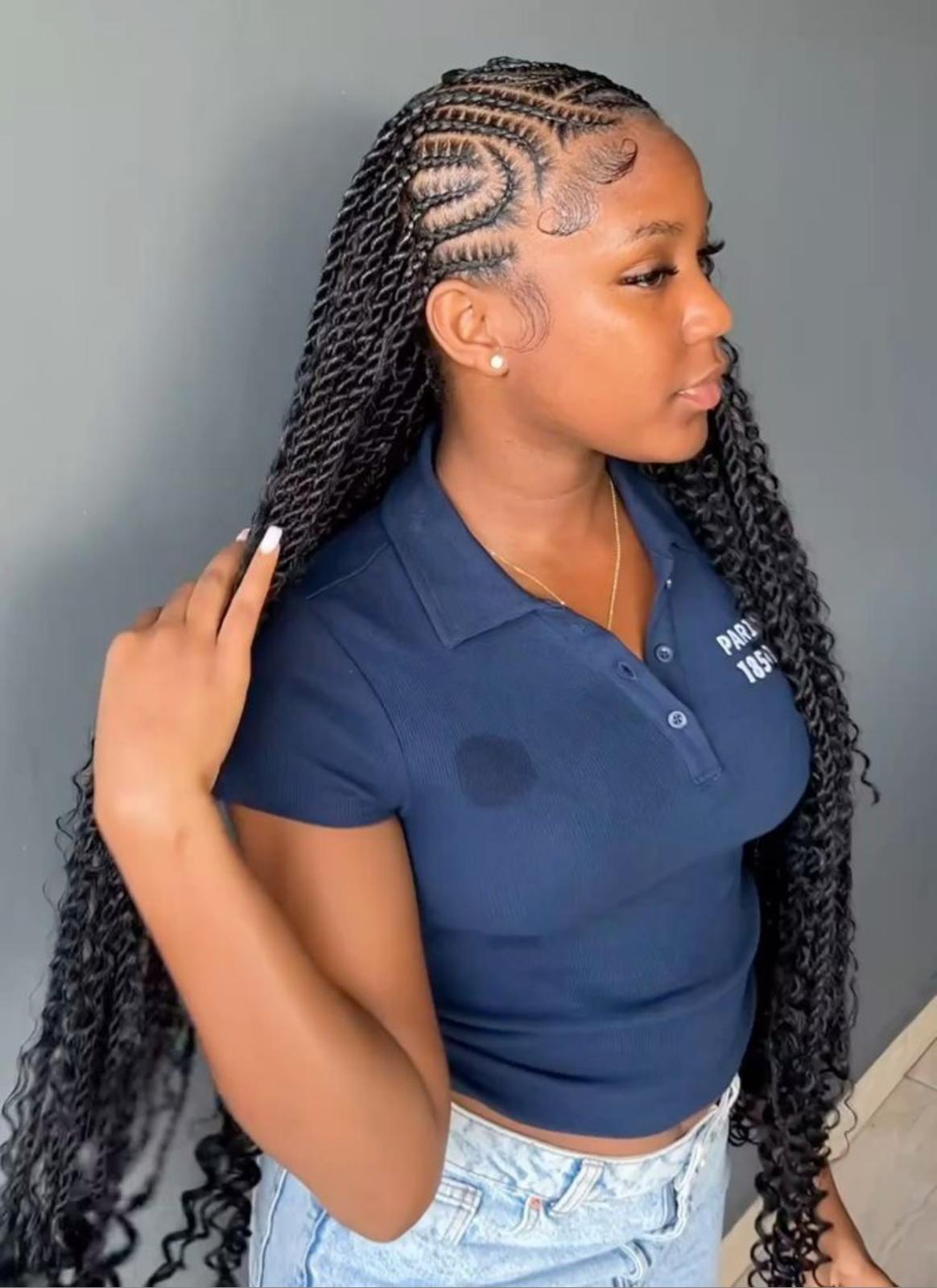
The braids shift into twists, which changes the weight and the drape. The deep black color keeps the focus on the scalp pattern, that detailed geometry that takes a steady hand and about three hours in the chair. You need thick, wavy and coily hair for the twists to hold their shape. The length adds drama but also pull, so a satin scarf at night is your friend.
Braided bun with wooden and clear bead accents
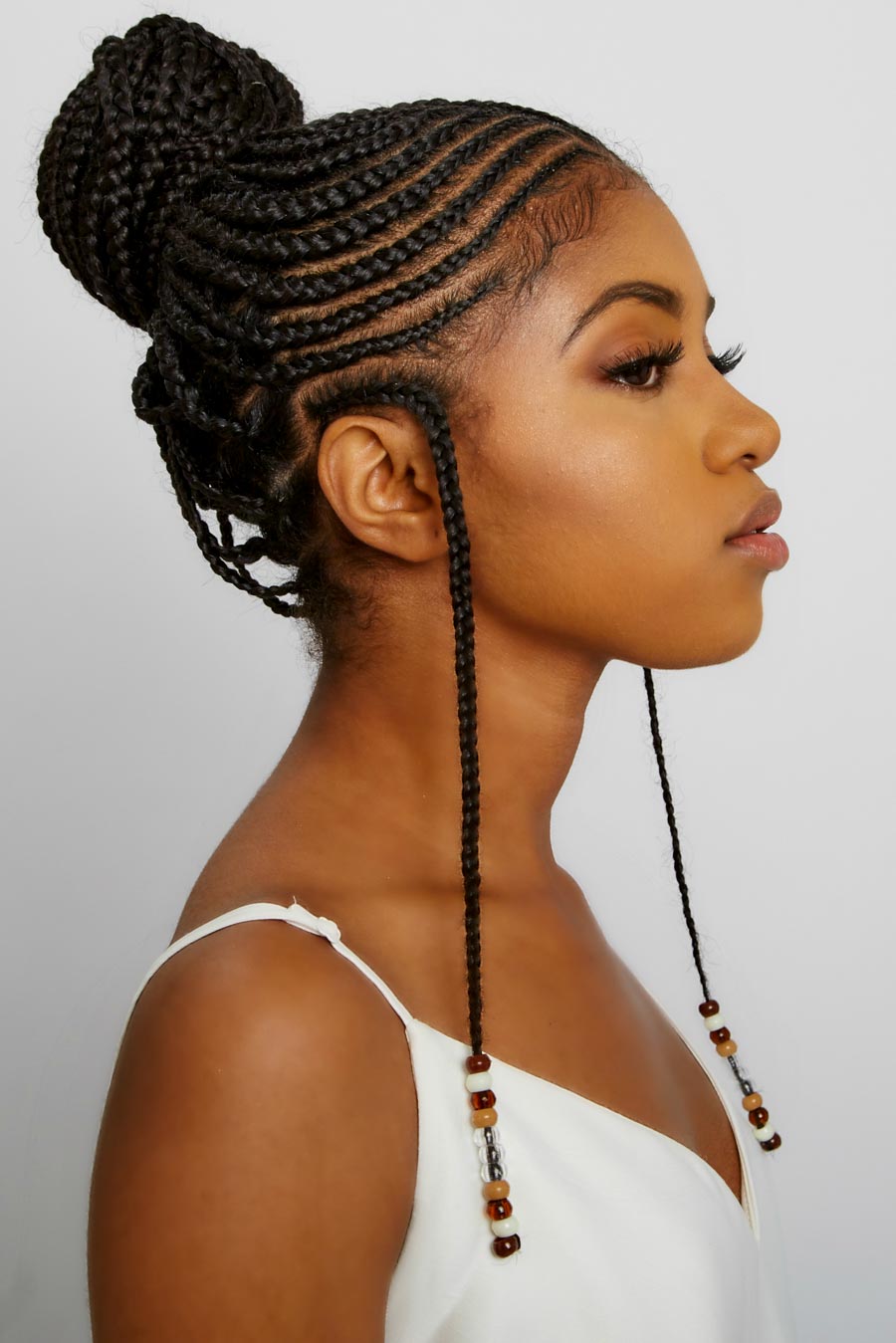
A high braided bun with loose strands hanging down is a deliberate sculpted style. The wooden beads add weight, and the clear beads provide subtle shine. You need thick, coily hair for the bun to look full rather than sparse. Updos suit most face shapes because they clear the neck and jaw, letting the face do the work. Not for you if you prefer hair worn down or styles without beads. The beads click against each other when you move, so know that walking becomes a soundtrack. Ask your stylist for: fulani braids into high bun, beaded hanging braids.
The contrast between the tight cornrows and the loose hanging braids keeps the shape from feeling top-heavy. A trim every eight weeks keeps the ends blunt.
Ombre braids with beads and charms
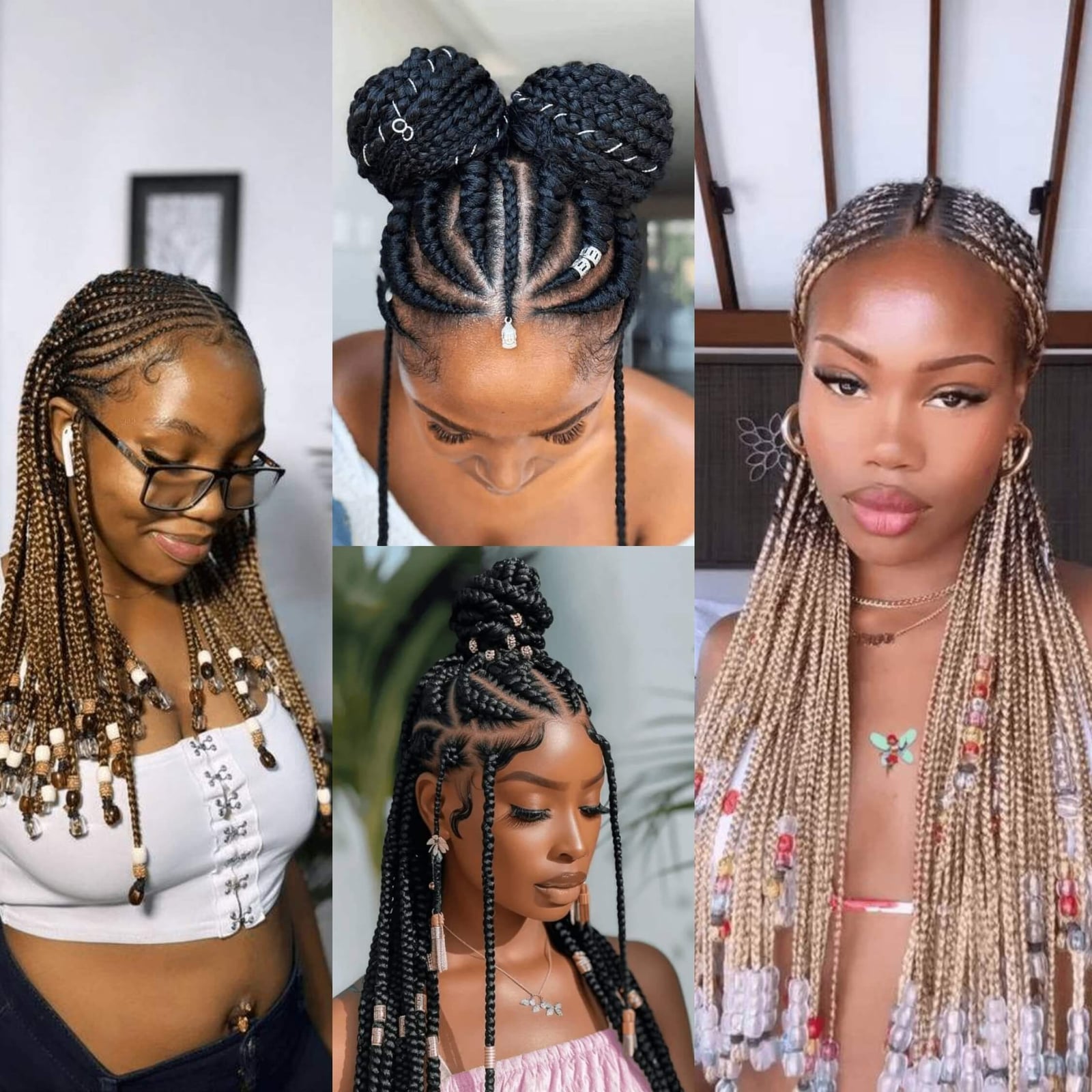
Dark brown at the roots shifts to a blonde ombre, which means the color change happens over the length of each braid. That takes planning in the chair, because the stylist has to color the extensions before braiding them in. The beads and charms add weight, so the braids hang with a slight tension. You need thick, coily hair to support the weight without strain. The downside: the ombre line can look harsh if the transition is too short, and the blonde sections show buildup faster than the brown base. A purple shampoo every two weeks keeps the blonde from turning brassy.
Black braids with cowrie shell and metal bead accents
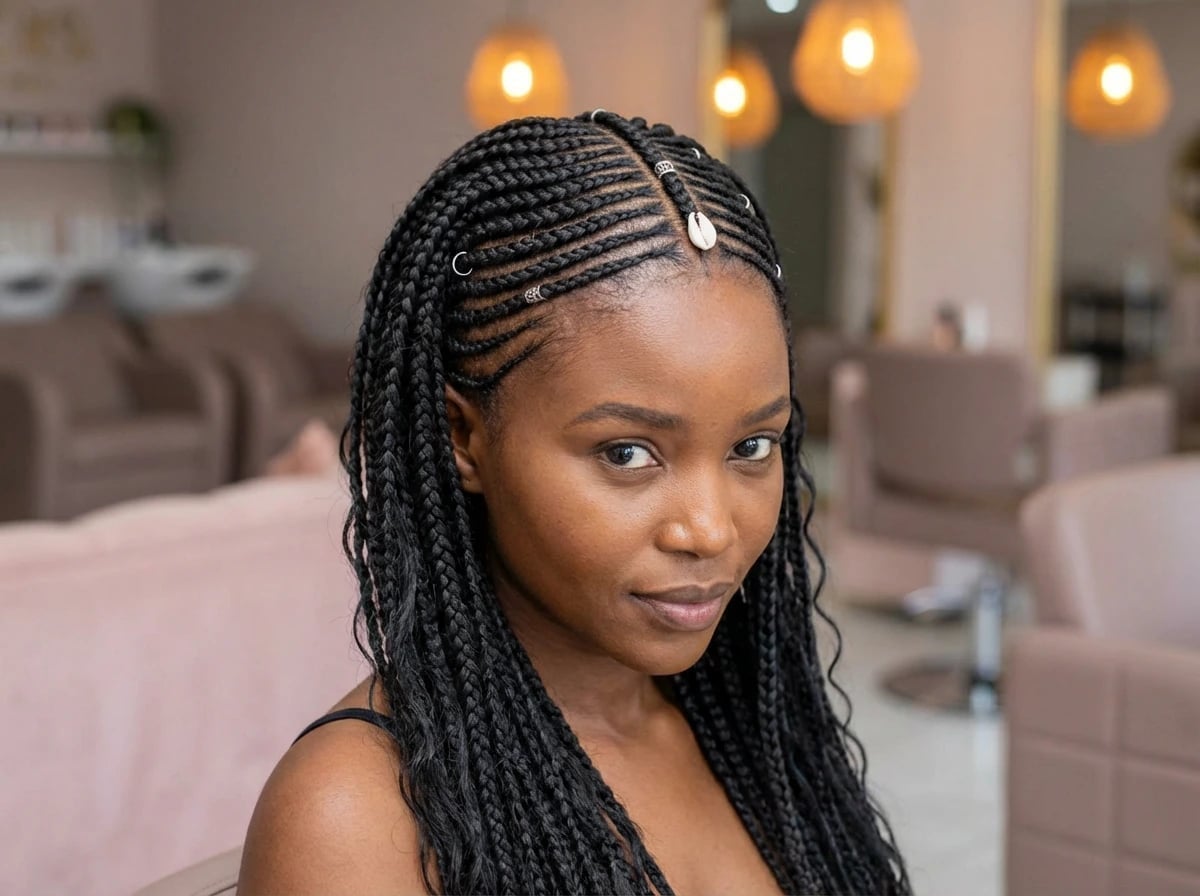
A cowrie shell sits at the center of the scalp, with small metal beads spaced along the braids. The middle parting keeps the symmetry, and the black color lets the adornments stand out. You need thick, coily hair for the braids to hold the shell without shifting. Pass when you prefer a clean look without decorative elements. The shell adds weight at the crown, so the braids pull differently than a bead-free style. Ask your stylist for: fulani braids, black, with cowrie shell and metal beads.
Side cornrows with honey blonde curly extensions
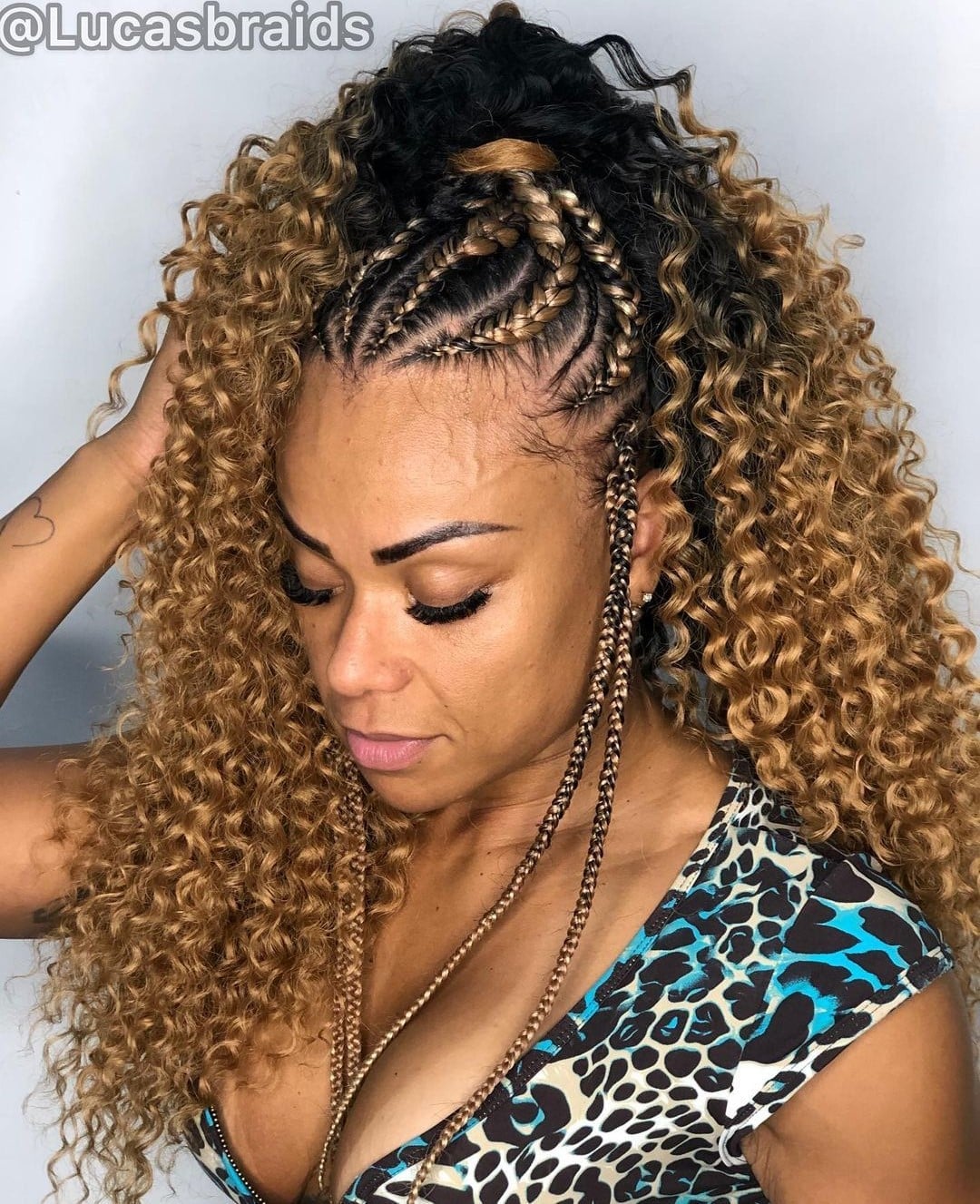
The cornrows on one side feed into honey blonde curly extensions, while the rest stays black and coily. The contrast is the point. You need thick, curly and coily hair for the transition to look deliberate. The curly extensions require more maintenance to keep from tangling at the root line where the black and honey tones meet. A wide-tooth comb and a leave-in conditioner handle the bulk of the upkeep.
Dark brown braids with caramel highlights and cornrows
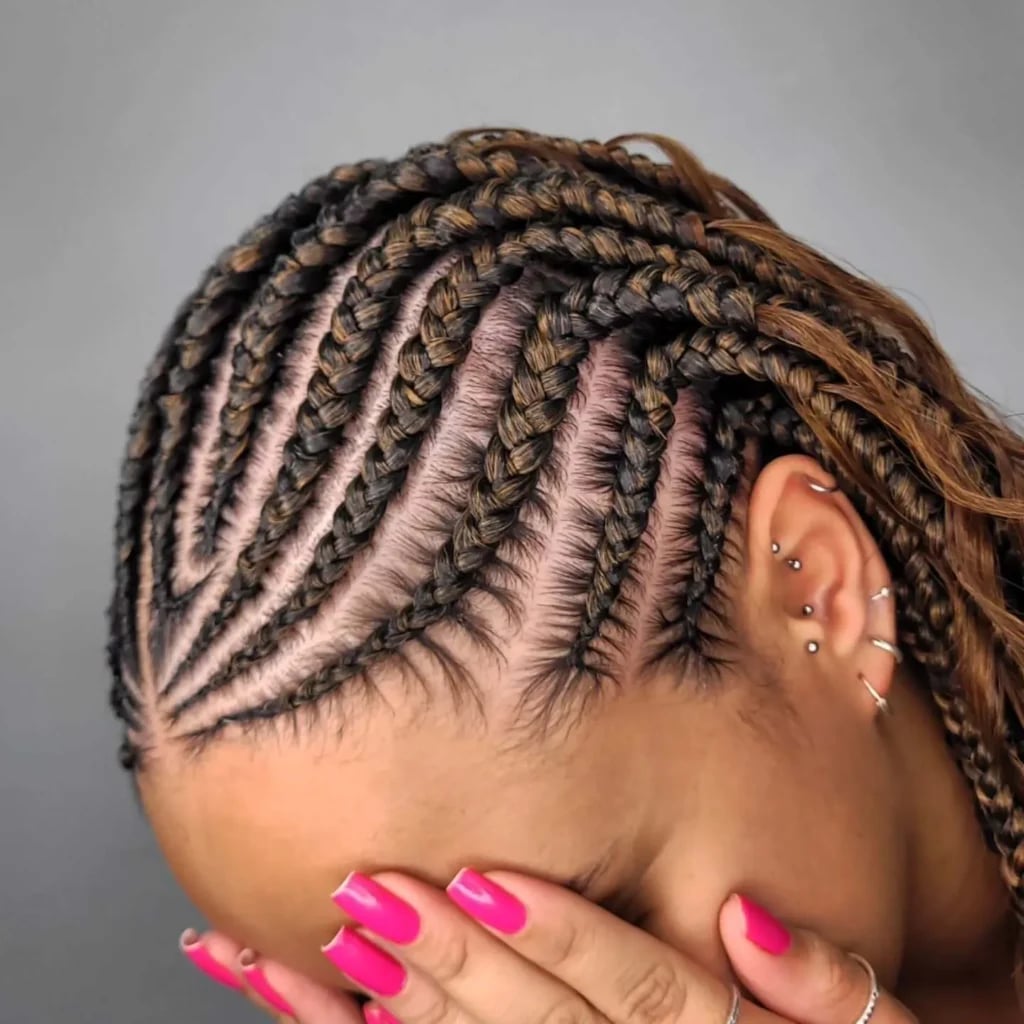
Wondering how to get that warm, dimensional look without the whole head going brassy? Dark brown base, caramel highlights woven in, the cornrows start right at the hairline, not pulled back an inch. Coily hair with good thickness holds the color shift cleanly. Ask your stylist for: fulani braids, dark brown with caramel highlights, cornrows from hairline. The caramel adds a warm glow. The highlight placement needs a tech who spaces the threads evenly.
Long black braids with a cascading curly effect
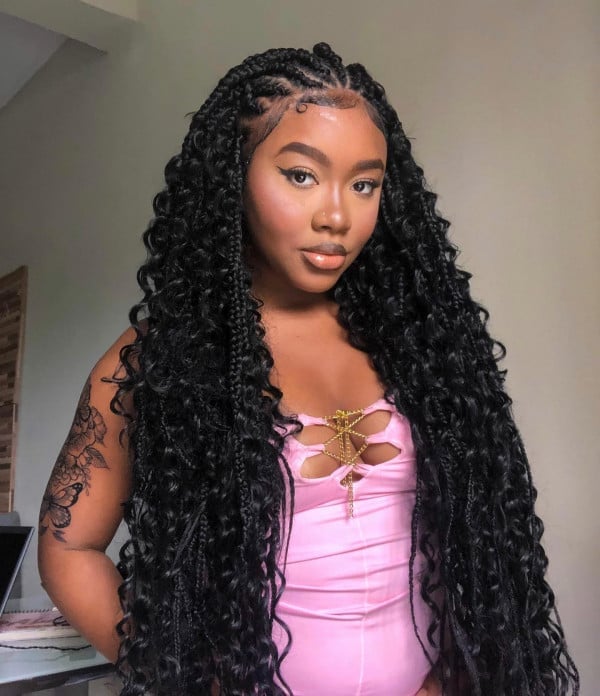
The cascade starts at the crown and builds downward, each braid ending in a loose curl that lands past the shoulders. Middle part keeps the weight balanced. Curly hair with good thickness gives the braids body. They don’t flatten against the scalp. About three hours in the chair for the braiding alone.
Upkeep runs every six weeks for the edges and the curl ends. A silk scarf at night keeps the cascade from tangling into a single mat. The length means you lift it to sit, every time.
Deep black braids with a cornrowed hairline
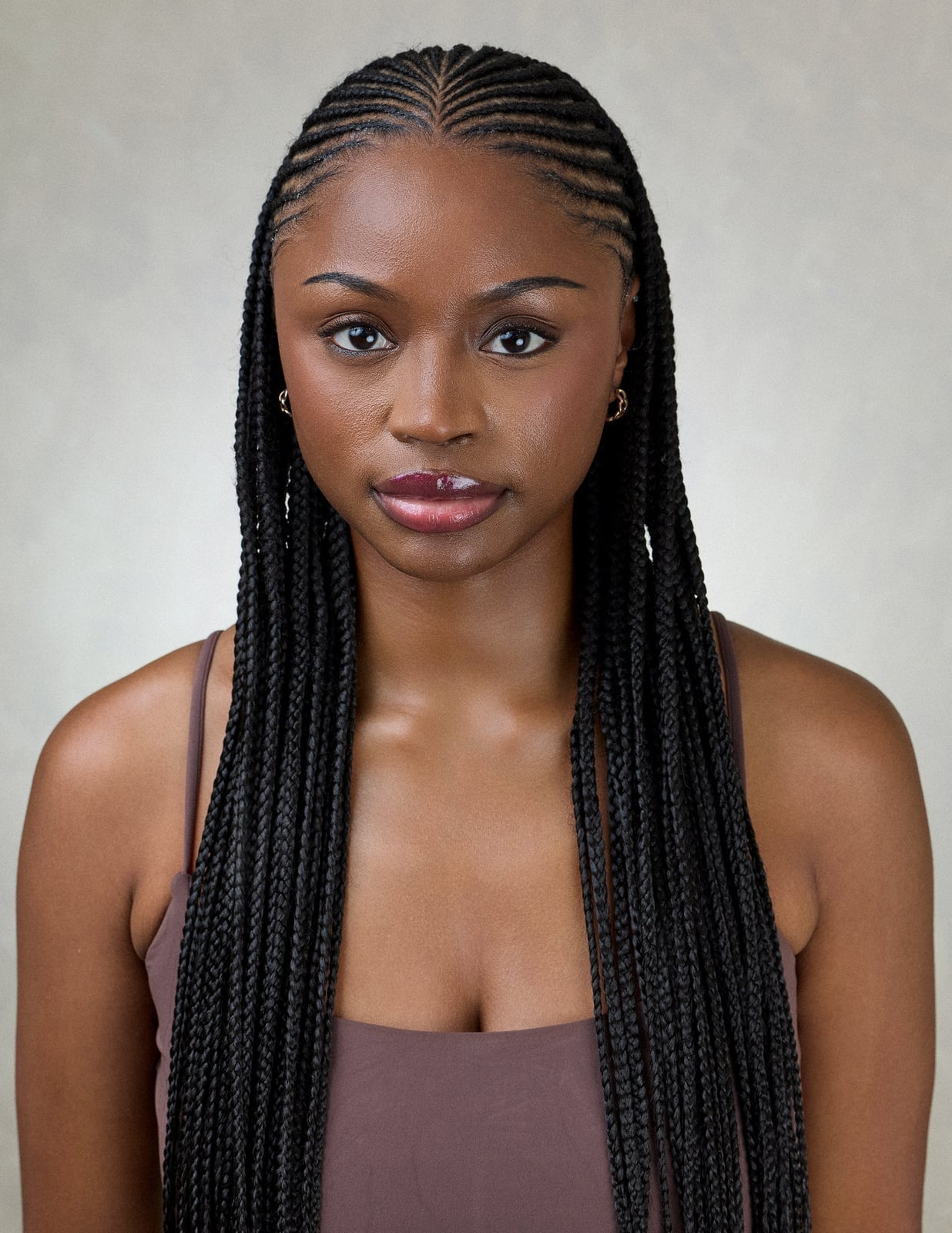
The hairline gets its own row of cornrows, laid flat against the skin before the long braids begin. Deep black, no highlights, middle part down the center. Coily hair with good thickness keeps the cornrows tight against the scalp for weeks. Ask your stylist for: fulani braids, deep black, with cornrowed hairline. This style covers the hairline completely. The precision of the part lines determines whether the final look is neat or rushed.
Vibrant blue braided updo with face-framing strands
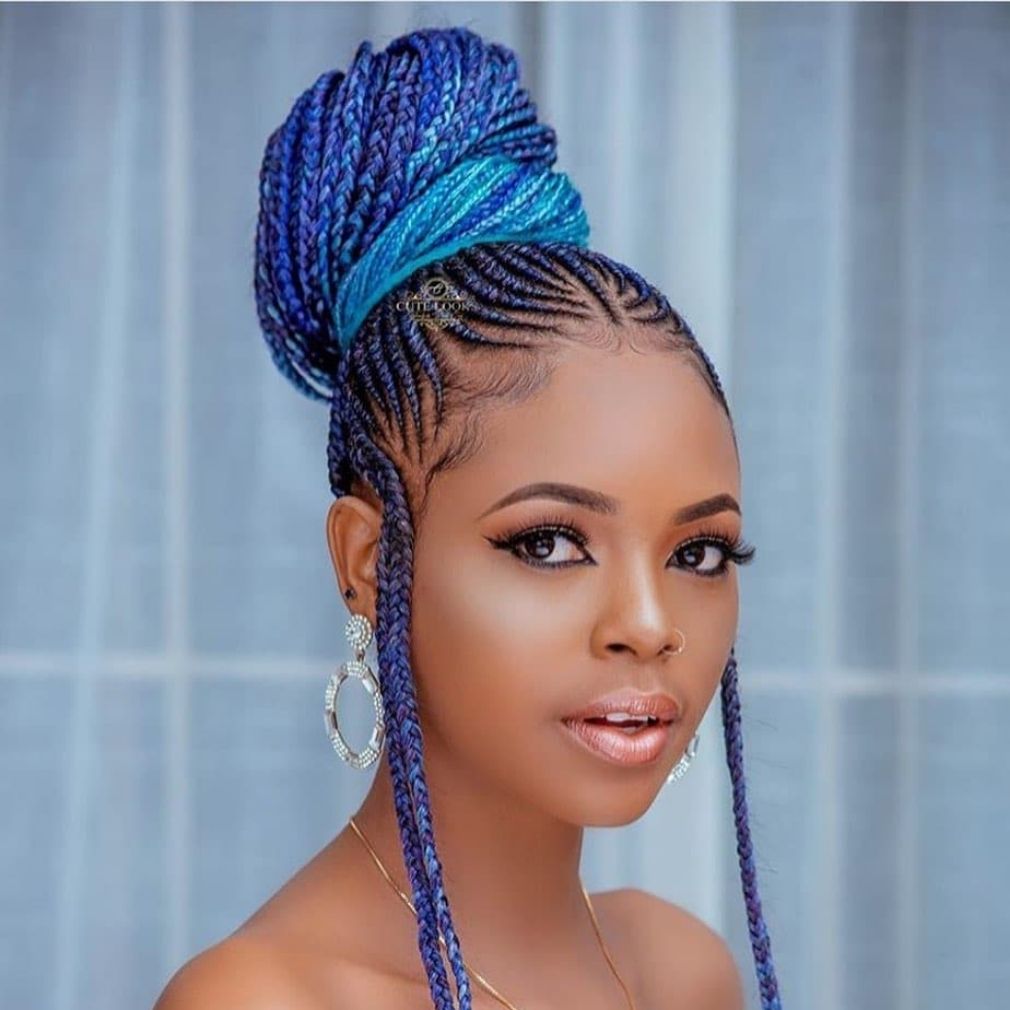
Set this against a standard black updo and the difference is immediate. Vibrant blue with lighter blue highlights, swept into a high bun, with a few strands left loose at the temples. Coily hair with good thickness holds the bun’s volume without pins slipping. The face-framing pieces soften what would otherwise be a solid block of color at the crown. Pass when you prefer neutral tones or hair that stays down all day.
Black braids with wooden beads and intricate cornrows
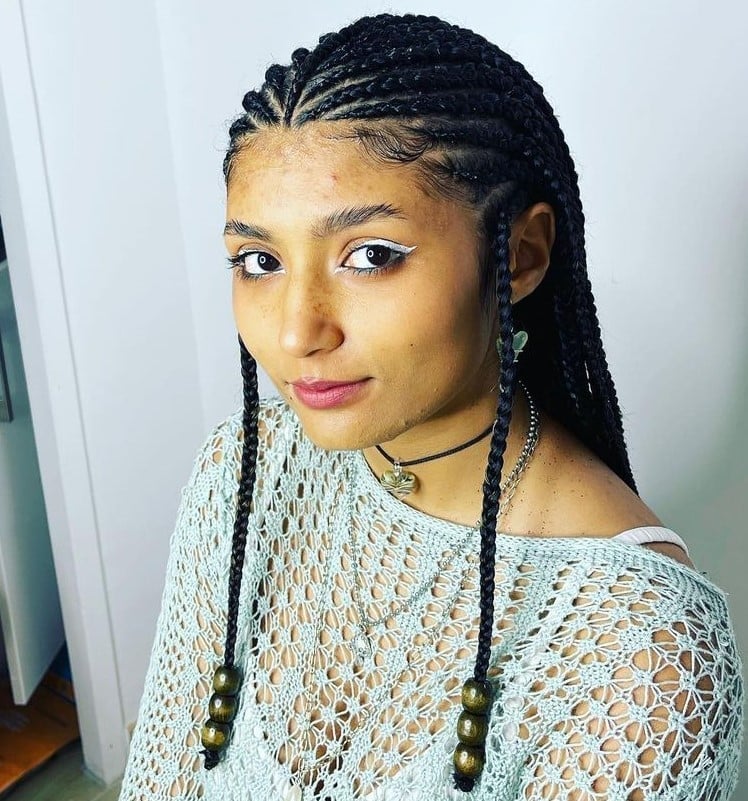
Three wooden beads per braid, centered on the thickest sections, not scattered randomly. Deep black base, middle part, the cornrows feed into long braids that hit below the shoulders. Coily hair with good thickness keeps the beads in place without shifting. Ask your stylist for: deep black fulani braids, centered parting, with wooden beads. The beads add a natural touch to the style, but they also add weight and a soft clatter with every head turn.
Two thick braided pigtails framing the face
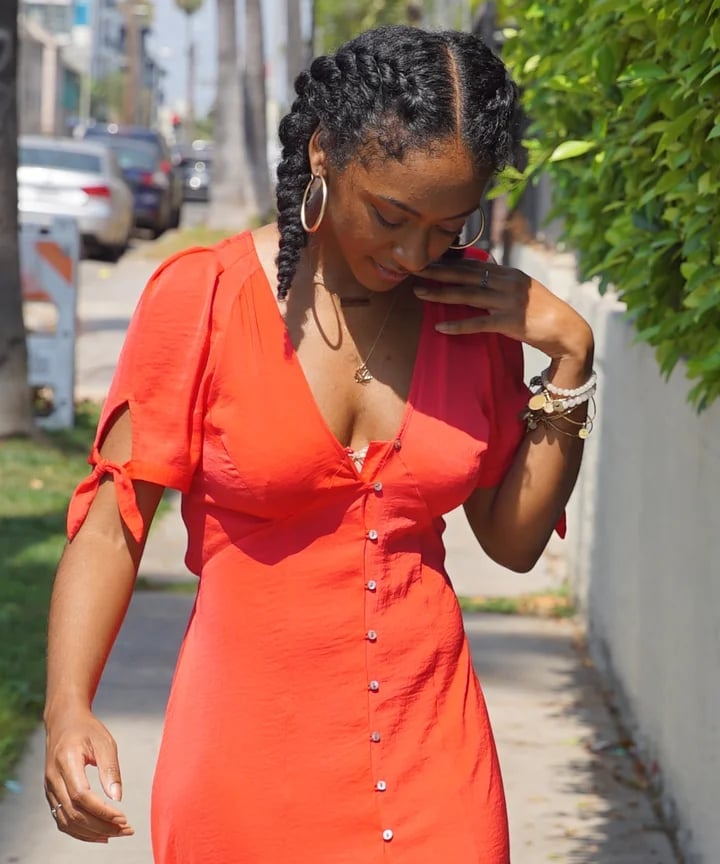
Two thick braided pigtails split by a clean middle part. Each pigtail sits thick and coily, landing just past the jaw so it frames the face without swallowing it. The symmetry is the point here. Every braid pulls back evenly, nothing strays. Upkeep lands at every three weeks for the parts to stay crisp. A satin scarf at night prevents edges from frizzing before the week is up. Choose a single braid or wearing the hair down instead.
Dark brown braids with auburn highlights and gold beads
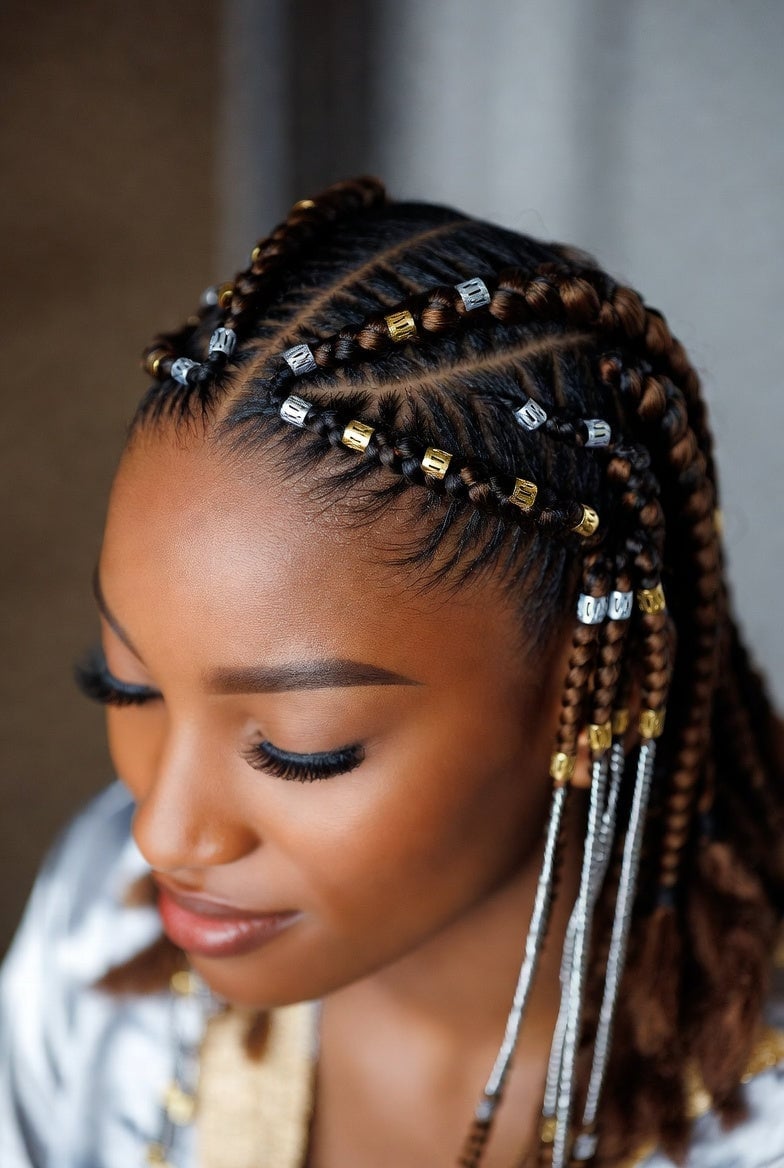
Dark brown gets subtle auburn highlights threaded through each braid, with gold and silver beads woven at intervals. The middle part keeps the scalp pattern clean so the color shift reads clearly. Coily hair with good thickness keeps the beads in place without shifting. Skip it if solid colors are your preference or beads feel like too much maintenance. The auburn tones catch warm light and deepen the brown base without going brassy.
Braids with wooden beads and cowrie shells
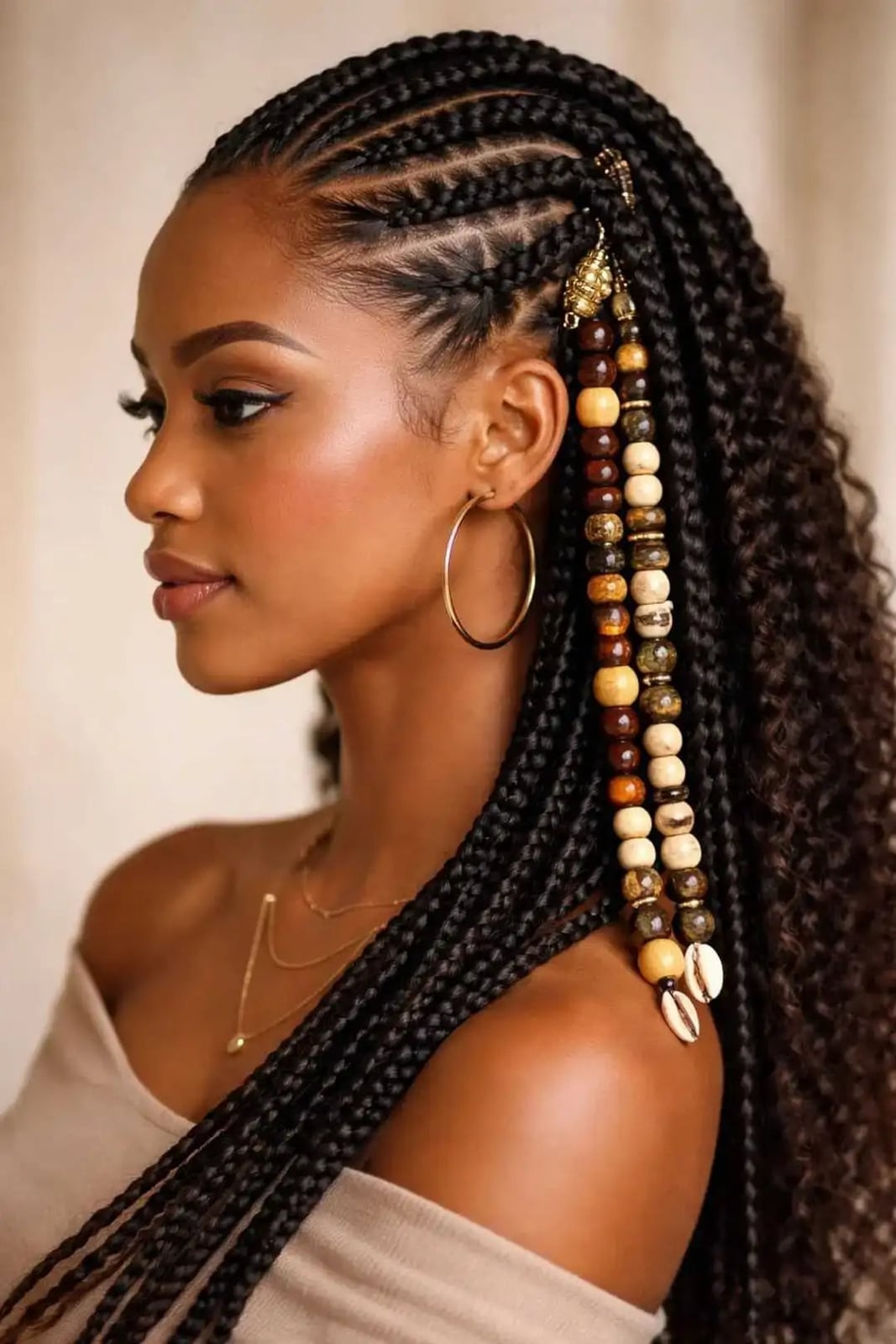
Wooden beads and cowrie shells give a quieter texture than metal or clear plastic. Black, coily braids split by a middle part carry the adornments without competing with them. The shells click softly when you move, a sound that may not suit everyone. Cowrie shells suit thicker hair that can support the weight without pulling at the roots. It works best for those who prefer a natural, textured finish over a minimalist or metal-accented one.
Blonde highlight braids with dark brown base and gold accents
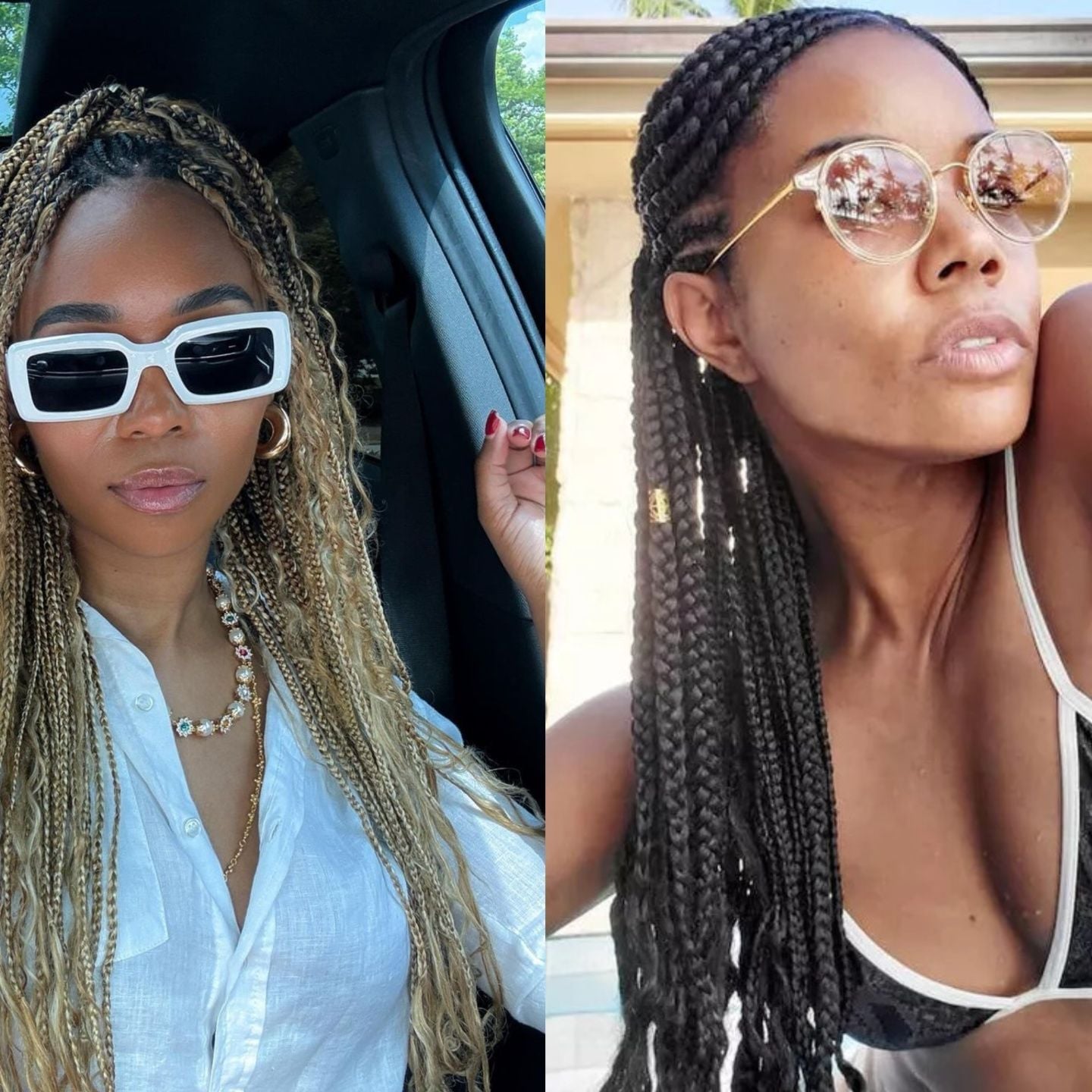
Blonde highlights against a dark brown base create a high-contrast ribbon effect through each braid. Gold beads and small rings add shine without overwhelming the color work. A centered parting keeps the pattern readable. Tell your stylist: Fulani braids, blonde highlights and dark brown base, with gold beads and rings. The color blend means retouching the part every few weeks. The braids themselves hold the tone for the full wear cycle.
Striking scalp pattern braids with thick curly texture
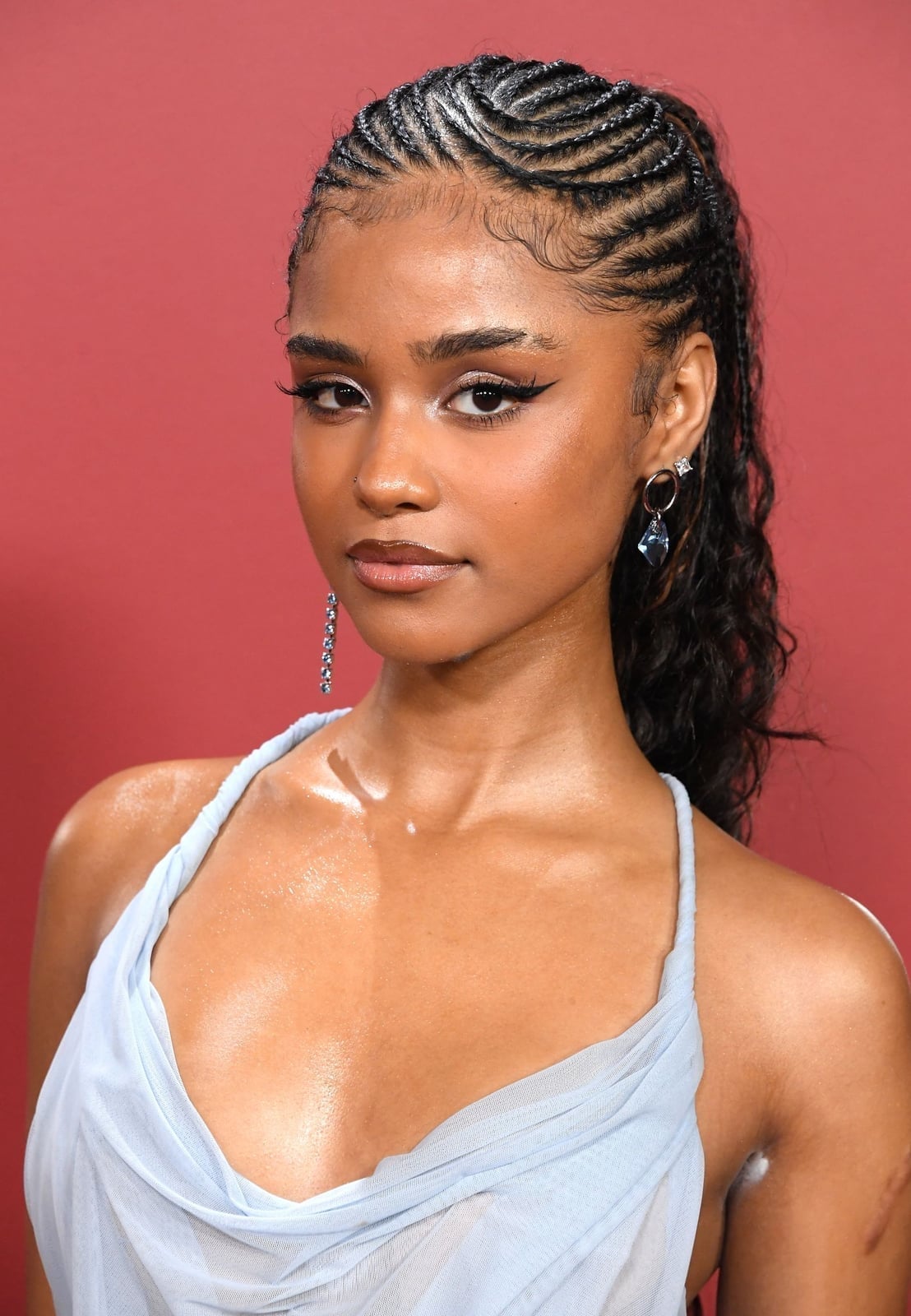
A middle parting anchors a striking scalp pattern that fans out across the crown. Curly hair with good thickness fills each braid so the design looks both precise and voluminous. The scalp work stays visible for about five weeks before new growth softens the lines. A boar bristle brush along the part helps maintain the pattern between washes. The downside: fine hair may not show the scalp detail as sharply.
Cornrow braids with baby hairs and wavy curls
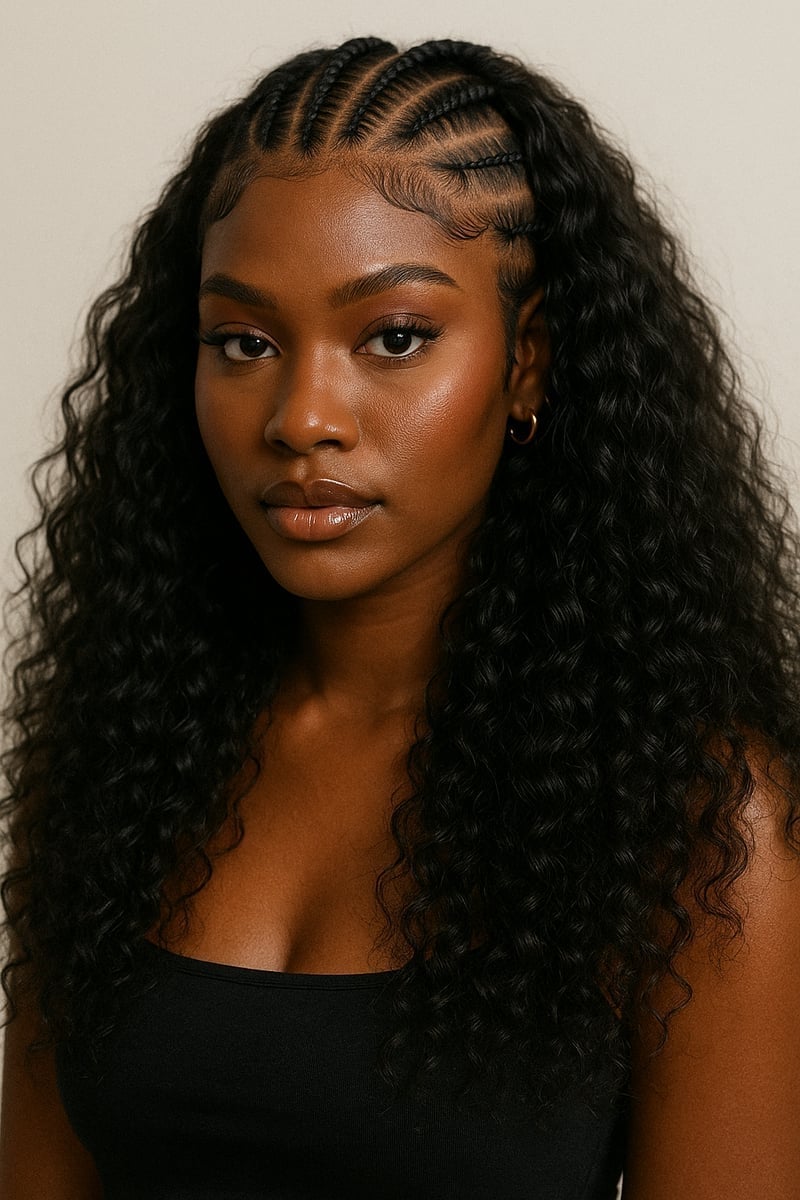
Cornrows start at the hairline and feed into a middle part, with defined baby hairs softening the edges. The rest drops in voluminous wavy curls. You need thick, wavy hair to hold the shape. Skip it if you prefer a clean hairline or braids without loose curls. The hold comes from the cornrow base, so the curls stay bouncy for days. A satin scarf at night keeps the baby hairs neat.
Swirled cornrows with blonde highlights and curly ends
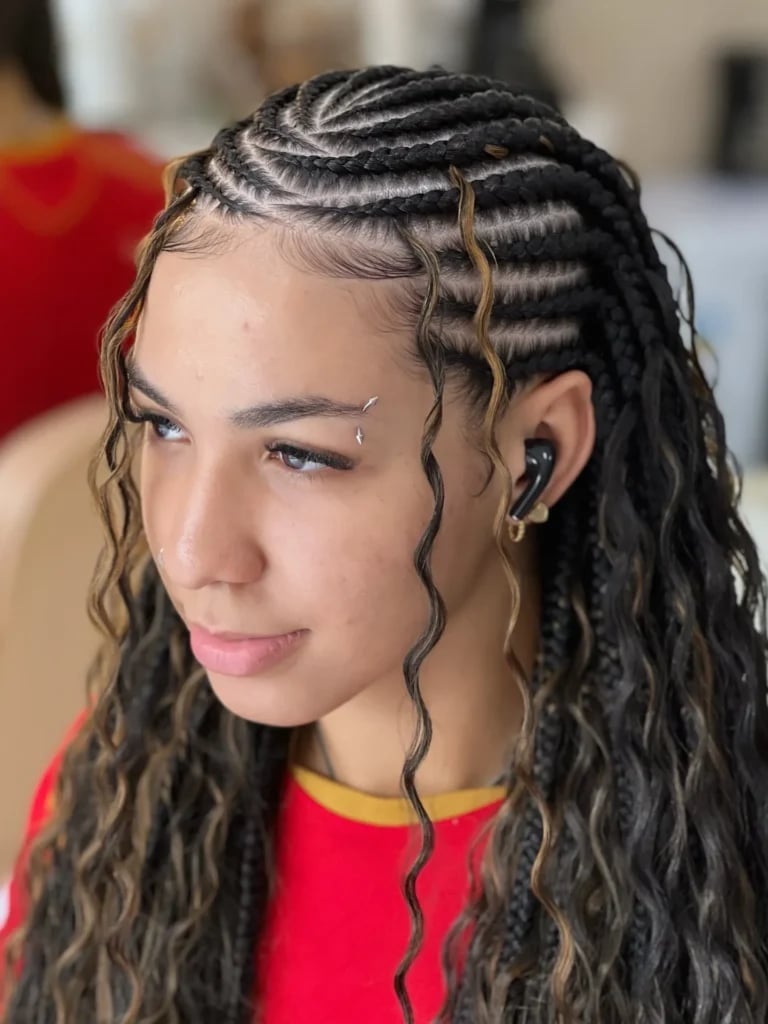
The swirled pattern on top changes the direction, so the blonde highlights catch differently with each turn. Coily hair with good thickness gives the curls at the ends enough weight to hold. The hold relies on tight braiding at the scalp. Ask your tech for: fulani braids with swirled cornrows, blonde highlights, curly ends.
Geometric parting braids with loose curly ends
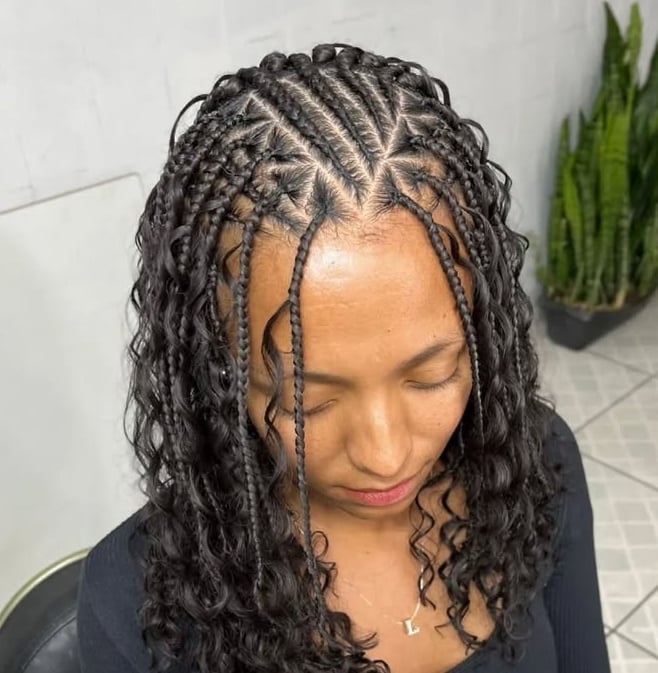
Eight clean angles meet at the crown. From there, cornrows feed into individual plaits that end in loose curls. The geometric part needs a stylist who maps sections precisely. Curly hair with good thickness works best; the part shows clearly against the scalp. Skip it for a simple middle part or uniform braid texture. The hold lives in the tight cornrow base.
Geometric parting with caramel highlights and curly tendrils
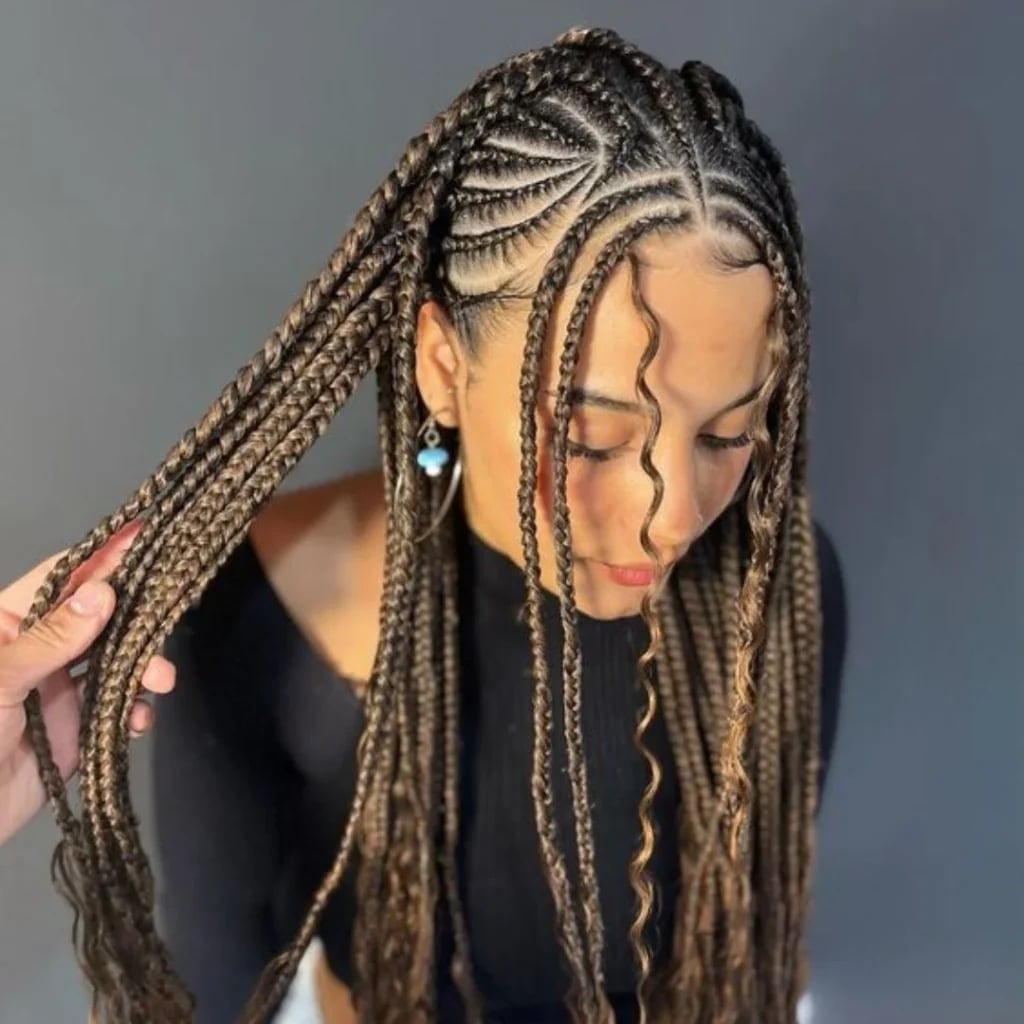
This one looks deliberate. The geometric crown parting and caramel highlights against dark brown hair make the pattern pop. Coily hair with good thickness holds the curly tendrils that frame the face. The downside: the geometric parting needs a skilled hand, so plan for a longer appointment. Upkeep is a trim every four weeks to keep the tendrils defined. A satin bonnet at night protects the curls.
Black braids with brown highlights and curly ends
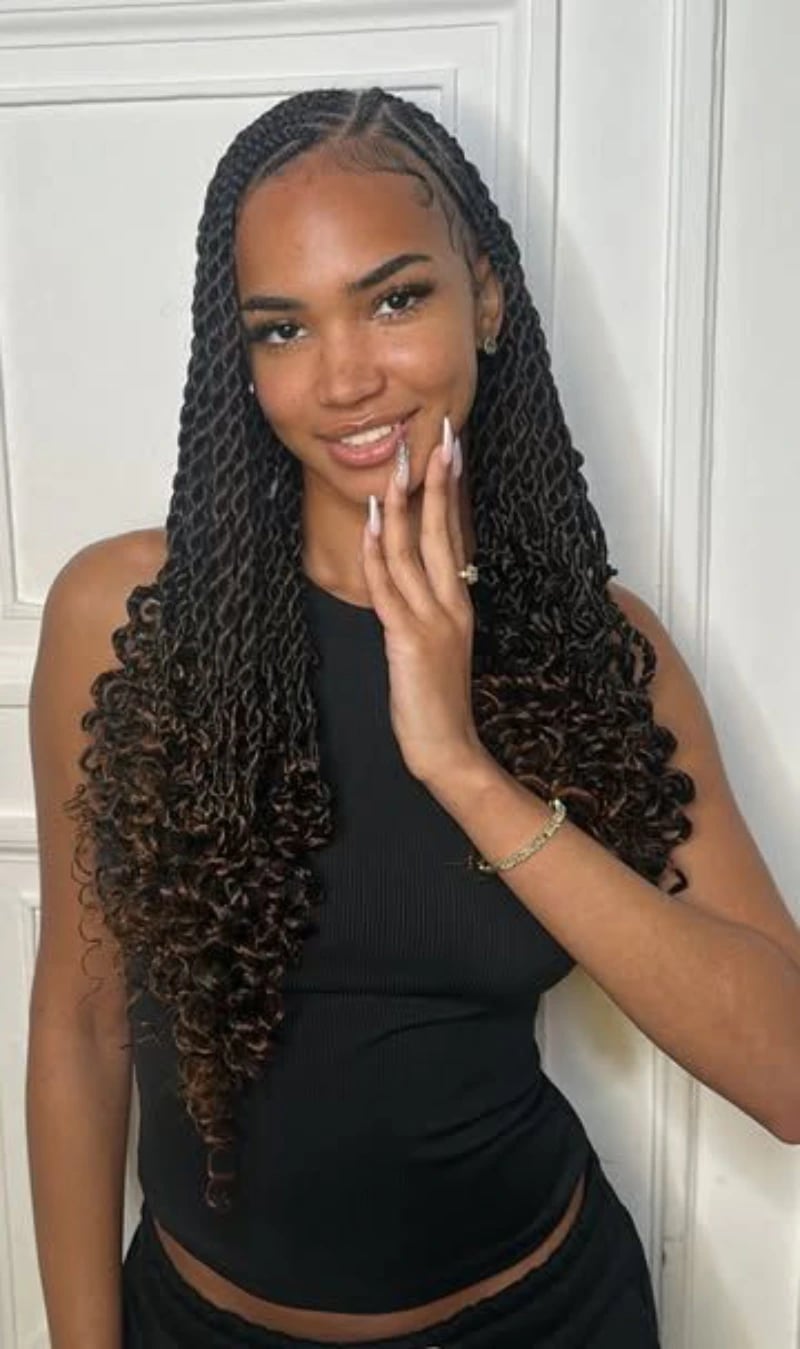
Neat middle part, then braids that transition into loose, bouncy curls at the ends. The brown highlights add depth against the black base without a full color change. Wispy baby hairs soften the hairline. You need thick, wavy hair for the curls to hold volume. Skip it if you prefer solid colors or braids without baby hairs. The hold depends on tight braiding to the mid-length, then a curl set.
Geometric cornrow pattern with loose curly hair
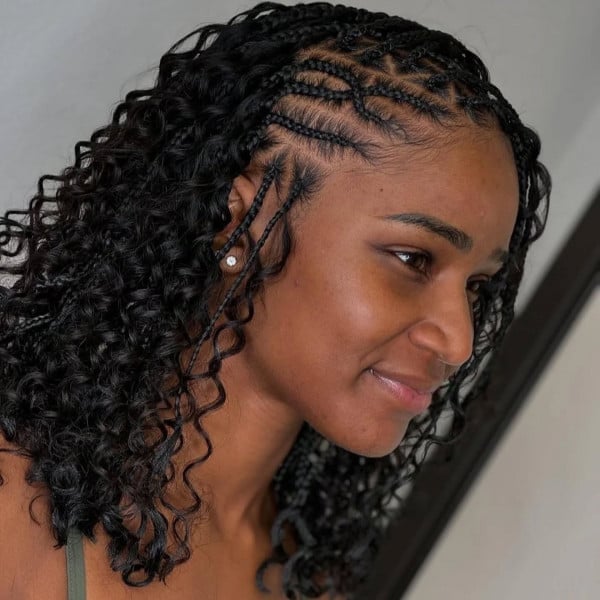
The geometric cornrow pattern at the crown stays tight and precise, while the hair drops into thick, curly lengths. That contrast defines the look. It suits curly hair with good thickness that can carry the volume on one side and the scalp detail on the other. A uniform texture or a simpler scalp design would not create the same effect. This one demands a skilled hand to map the angles. Ask your stylist for: fulani braids with geometric cornrow pattern, loose curly hair.
Medium brown braids with geometric scalp braids
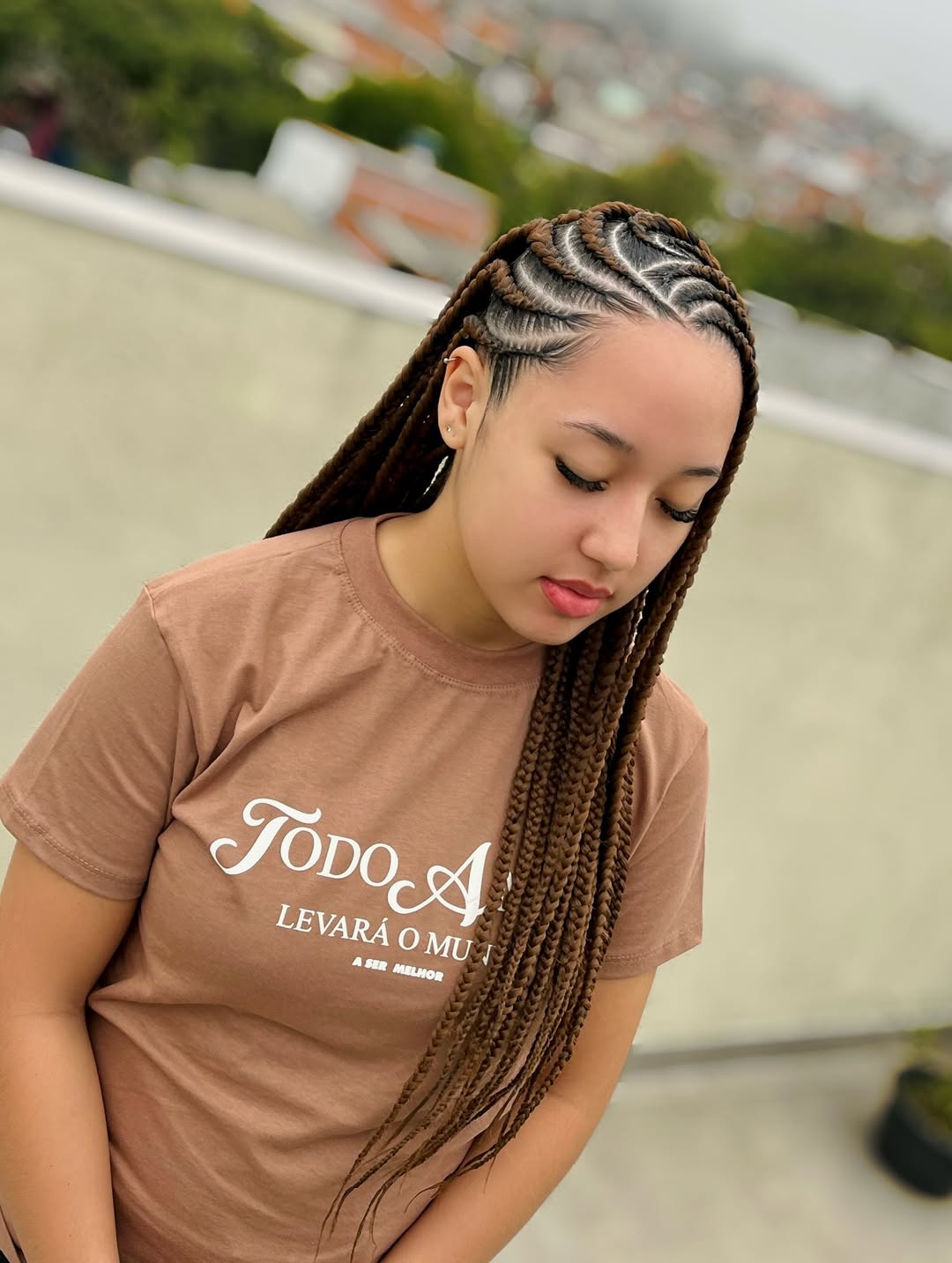
You need to say the right words in the chair. A medium brown shade is straightforward. It looks a natural base, not a statement. The geometric scalp braids are the part that gets specific. Thick hair carries the pattern cleanly; the braids sit visible and defined against the scalp. Skip it if you prefer darker shades or braids without geometric patterns. The color holds its warmth without toning, but the scalp work means a salon visit, not a kitchen job.
Textured braids with tightly braided and curly ends
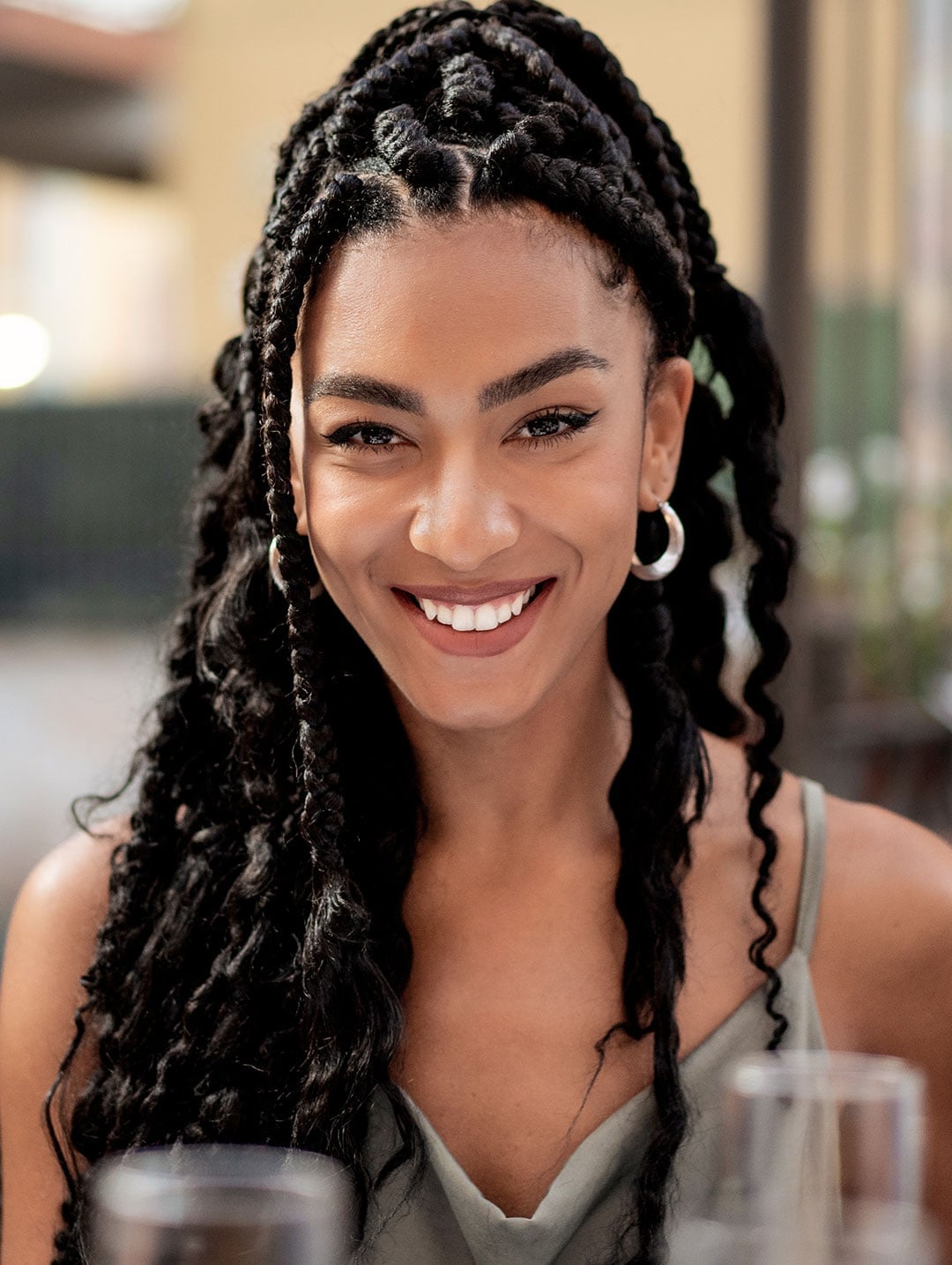
This is a two-texture style, and the hold is honest about it. The tightly braided sections from the root to mid-length stay neat for about five weeks. The curly ends frizz sooner. That is the trade-off for the volume. A centered parting keeps the braids symmetrical, and the curly texture with good thickness means the ends have something to work with. You refresh the curls with water and a light cream, not heat. The look stays voluminous as long as the braids hold, but plan the takedown when the ends start matting at week six.
Copper brown braids in high ponytails with curly coils
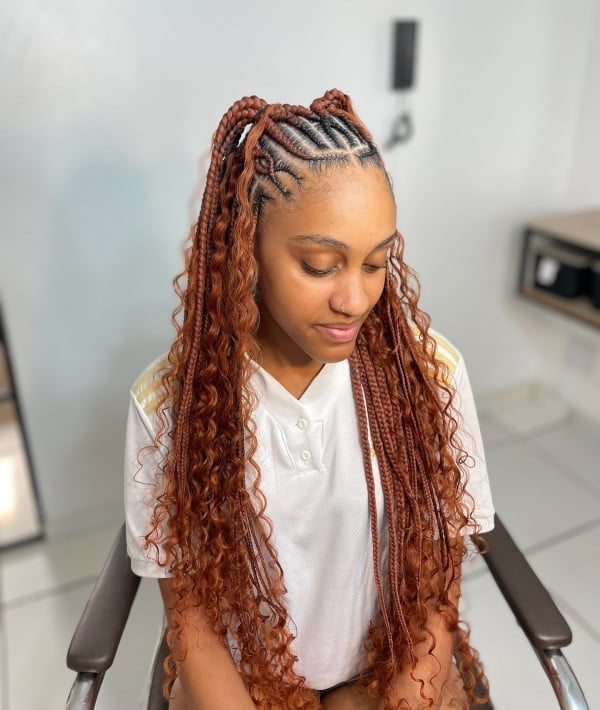
Copper brown lands well in fall, when the warm tone matches the season’s palette. The braided pattern on the scalp is the structural part. It keeps the two high ponytails anchored without pulling. Coily hair with good thickness fills the curly coils that hang loose from each ponytail. Ask your stylist for: copper brown fulani braids, scalp pattern, two high ponytails. The color works best on natural dark bases; it shows as a rich overlay rather than a flat dye. Skip it if you prefer natural hair colors or a different style. The copper is specific and the ponytails are intentional.
Geometric cornrow pattern with loose wavy sections
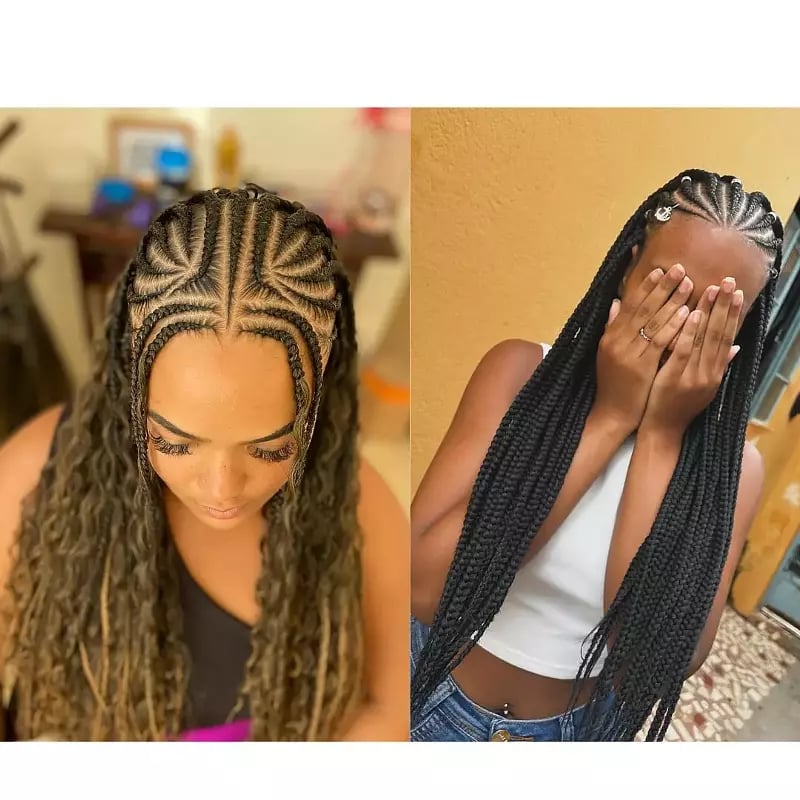
You can approximate this at home if you already cornrow. The geometric pattern radiates from a middle part, which is the easiest scalp layout to map yourself. The loose wavy sections are the payoff. They soften the structure. Wavy hair with good thickness works best; the waves hold their shape without extra curling. The cornrows stay tight for four to five weeks if you sleep with a scarf. The downside: the geometry requires even tension, so go slow on the first row. One mistake shifts the whole pattern.
Dark brown braids with honey blonde highlights and curls
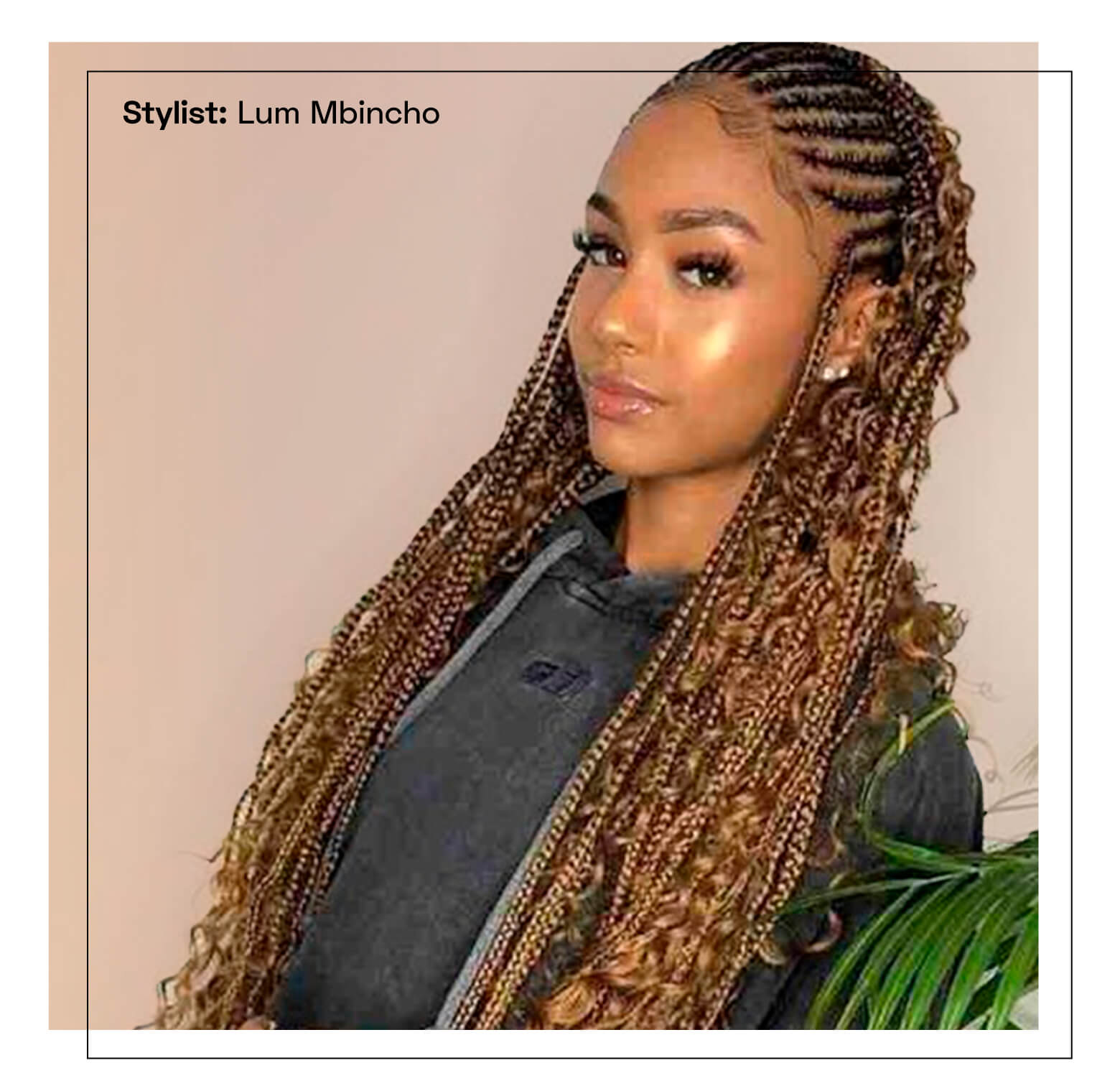
Start with the base color before the braider picks up a single extension. A dark brown base with honey blonde highlights needs contrast, not a matching game, so the warm strands stand out against the deeper sections. The cornrows at the crown transition into loose braids, with the honey blonde pieces threaded through for a subtle lift that does not overwhelm the overall look. Curly ends soften the finish, keeping the texture from feeling too uniform. It works best with a tonal shift between the base and highlights. Ask your stylist for: Fulani braids, dark brown with honey blonde highlights, cornrows to loose curls. Coily hair with good thickness holds this shape best, and the color placement takes about an extra thirty minutes in the chair.
Geometric cornrow pattern with thick coily texture
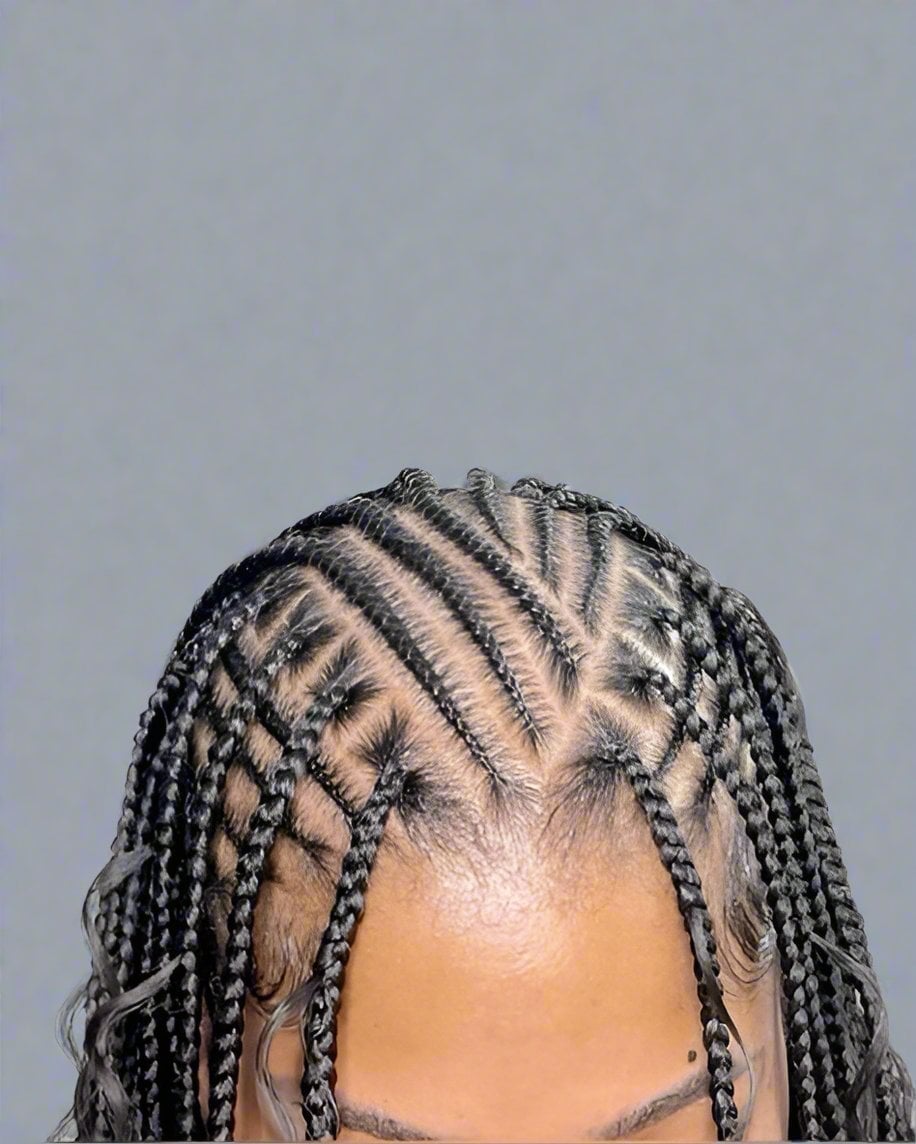
A clear one-line assessment: this design works because the geometry draws the eye, not the length. The striking geometric cornrow pattern radiates from the middle part, creating a focal point that stays sharp for weeks when the hair is thick and coily. The texture holds the pattern without slipping, which is why fine hair tends to blur the lines by week two. Skip it if you prefer simpler scalp designs, since the precision here demands a stylist who maps the pattern before braiding. Upkeep is every six weeks to keep the edges clean and the part lines defined. The coily thickness means the pattern reads clearly from across the room.
Black and blonde braids with beads and metal cuffs
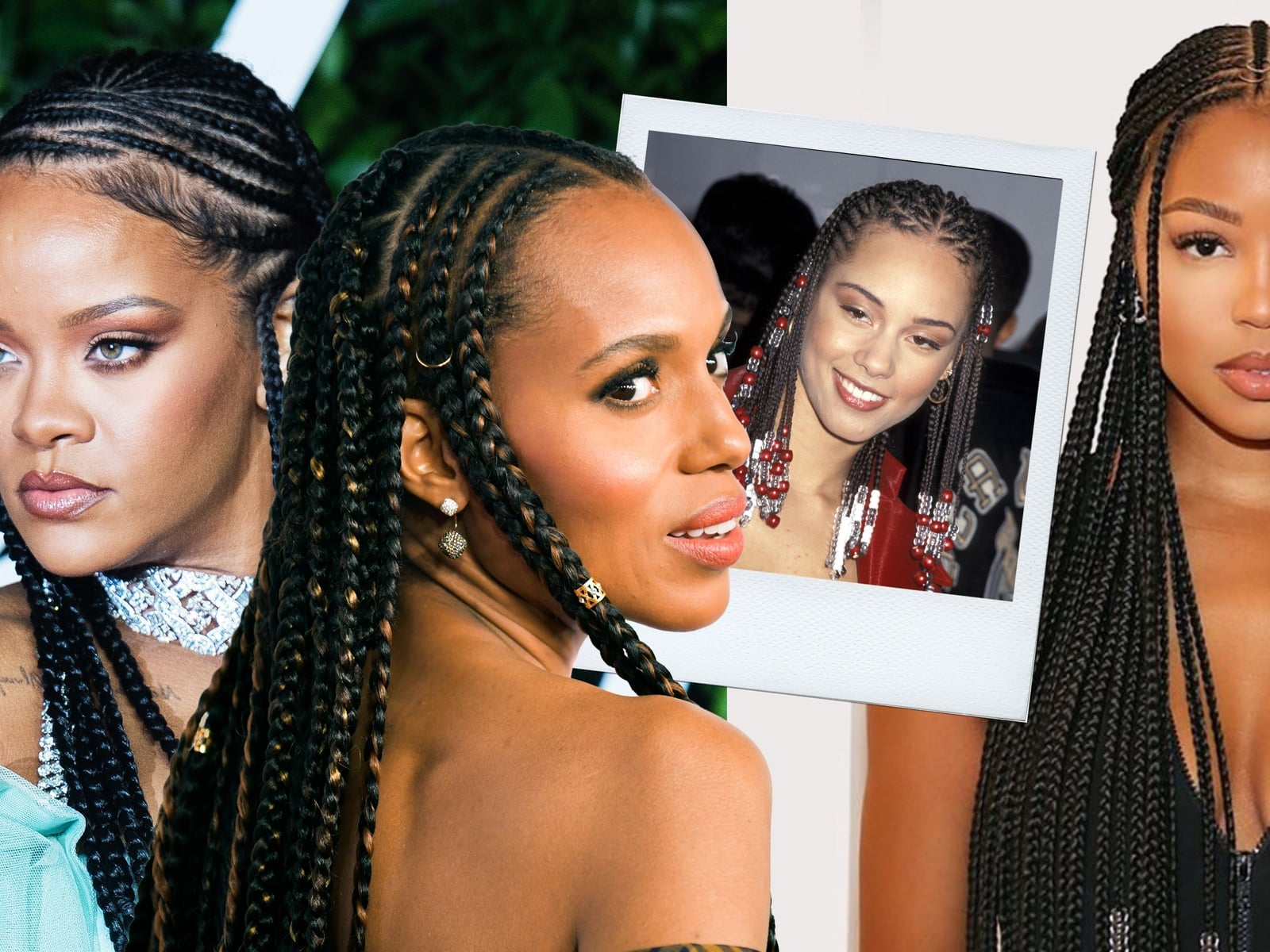
A practical rule for this design: let the color contrast do the heavy lifting, then add adornments sparingly. Black and blonde braids already have visual weight, so the beads and metal cuffs work as punctuation, not filler. The middle parting keeps the look balanced, while the coily thickness gives the adornments something to grip. Skip it if you prefer solid colors or styles without metal embellishments, since the cuffs are the focal point here. Ask your stylist for: Fulani braids, black and blonde mix, with beads and metal cuffs. The styling leans toward salon expertise because the beads need to be threaded onto the braids during the install, not clipped on after.
Geometric braid pattern with baby hairs and wavy texture
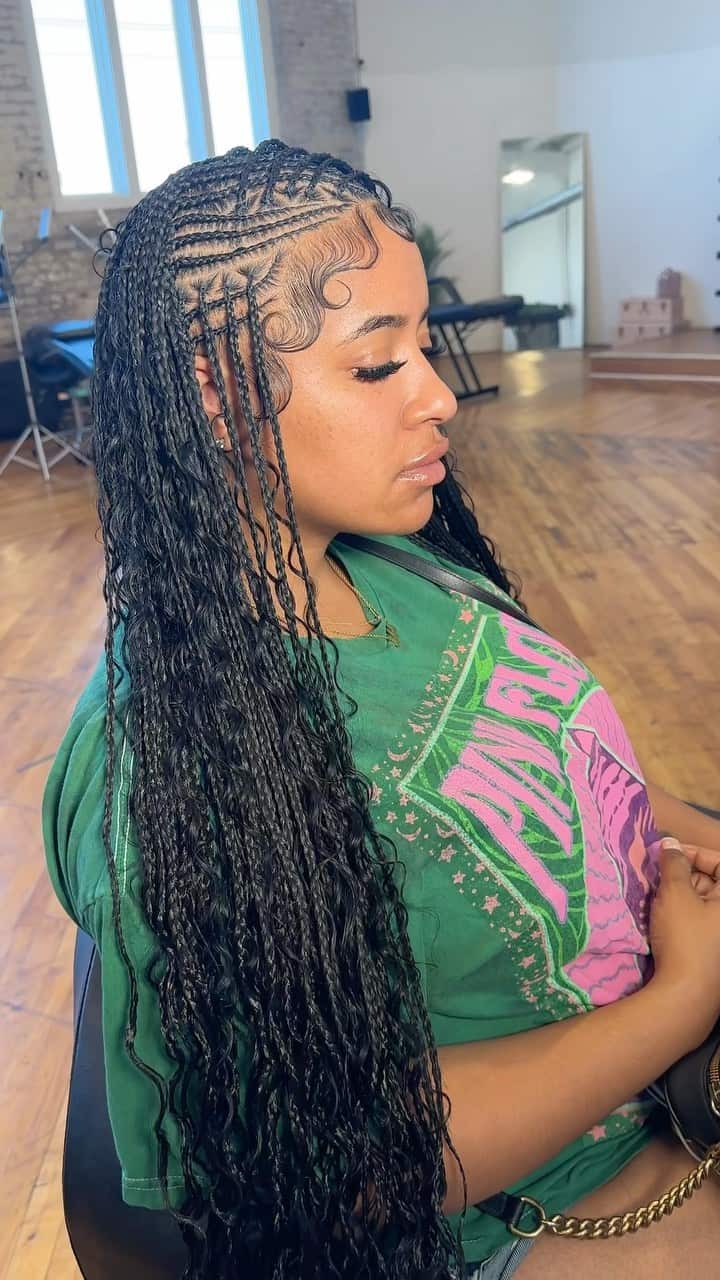
The mistake people make with this look is skipping the baby hair prep before the braid starts. Defined baby hairs frame the face, but they need a gel or edge control applied before the geometric pattern is installed, not after, or the edges look tacked on. The wavy texture of the braids softens the scalp geometry, preventing the design from feeling too rigid. Skip it if you prefer a uniform texture or styles without baby hairs, since the contrast between the structured pattern and the soft edges is what makes this work. Wavy hair with good thickness holds the waves without extra heat, and the geometric pattern stays sharp for about four weeks before the new growth starts.
Zig-zag parting braids with loose strands
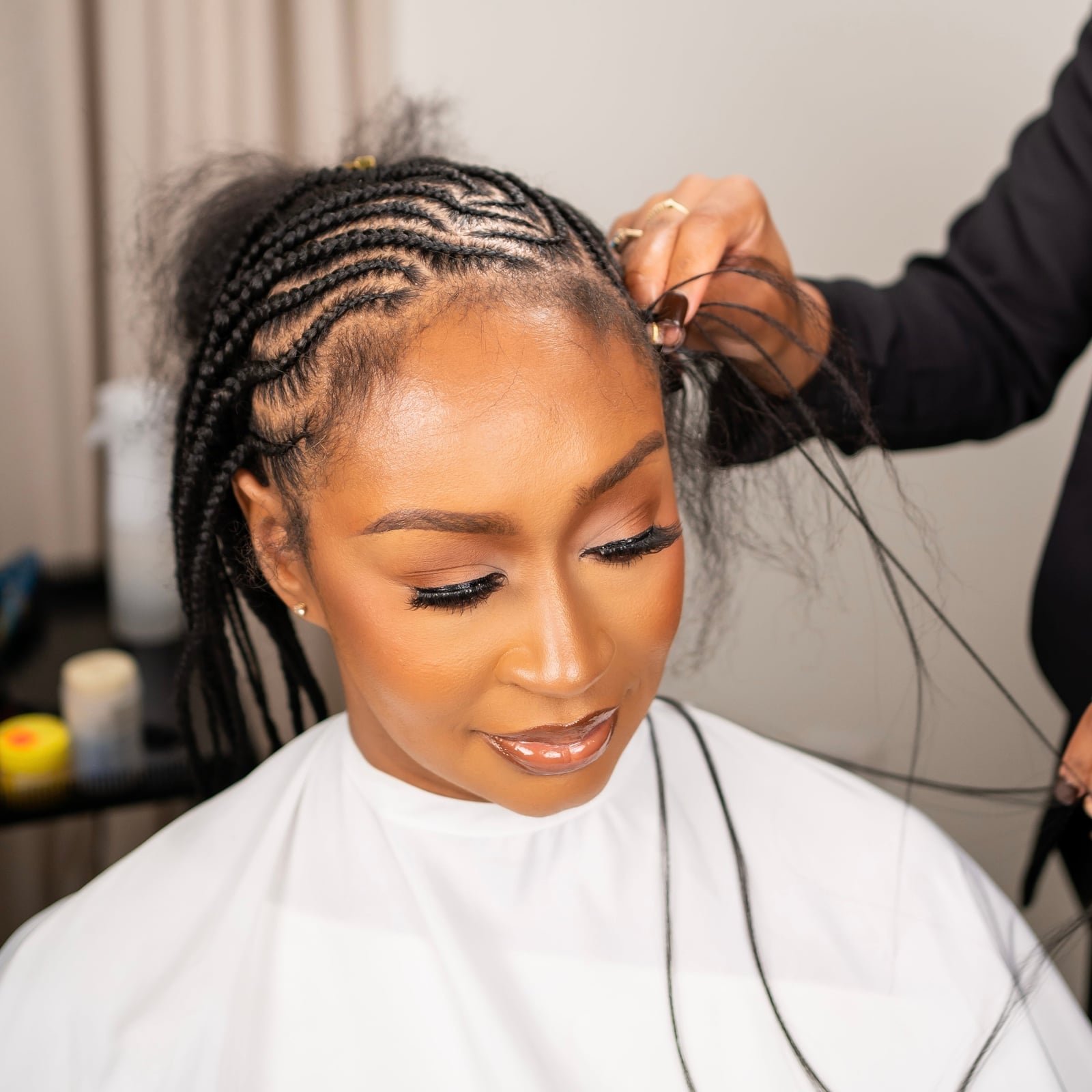
A practical rule for zig-zag partings: the more angles in the part, the more time the stylist needs to map the grid before braiding. The zig-zag pattern adds movement to the scalp, breaking up the usual straight lines without requiring a full geometric overhaul. Loose strands are visible throughout, adding a touch of softness that keeps the style from looking too precise. Coily hair with good thickness gives the loose strands enough weight to drape naturally rather than sticking out at odd angles. Skip it if you prefer a standard middle part or very uniform braids, since the zig-zag creates asymmetry by design. Ask your stylist for: Fulani braids with zig-zag parting. The loose strands mean less tension on the edges, which helps with long-term wear.
Final Thoughts
Pick your Fulani braid set by the pattern, the adornment, and the time you have to sit.
- Allow 6-12 hours for salon application depending on length and complexity.
- Maintain scalp health with regular cleansing and moisturizing.
- Avoid excessive pulling or tension to prevent breakage.
- Consider professional touch-ups for intricate patterns every 4-6 weeks.
Fulani braids offer endless creative possibilities for any occasion.