Blue hair no longer means a weekend project that fades after two washes. These are cuts and colors built for real life, a root line that grows out soft, a fringe that does not demand a flat iron every morning, a shade that still looks deliberate at week six. The difference is in the details: the placement, the depth, the texture you already have.
Which is why 32 Elegant Blue Hair Ideas 2027 fill so many saved boards. The collection spans low-upkeep ombres to full-coverage color, bobs to long layers, fine strands to thick waves. You get the chair words, the grow-out reality, and the honest fit for your face shape and schedule. No guesswork.
Bright blue highlights woven through long, wavy, office-safe version
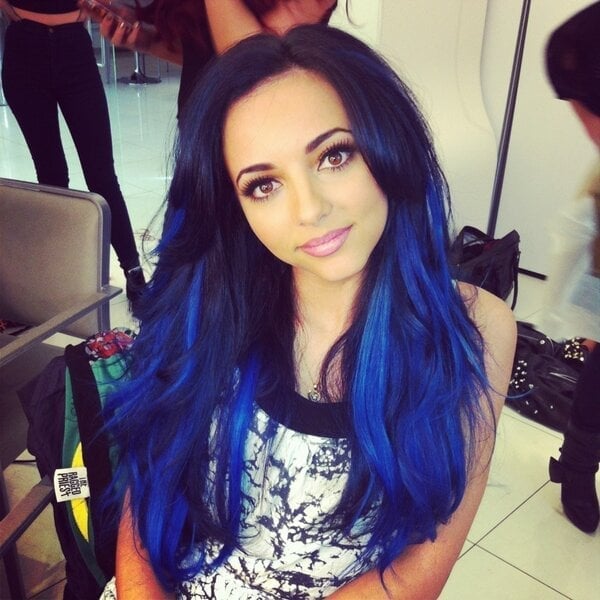
Notice how the bright blue highlights sit within the dark base rather than on top of it. Long layers cut through the length let the color look part of the hair, not an add-on. The middle part splits the volume evenly, and the loose waves catch the blue at different angles. Thick, wavy texture holds that wave pattern without needing much coaxing. No bangs here, just the front layers framing the face.
This works best on hair that already has some natural wave and enough density to carry both the dark base and the lighter pieces. Oval and heart face shapes benefit from the soft volume at the cheekbones. The catch: the highlights require lifting the hair first, which is a salon-only step. The contrast is the whole point.
Ombre blue hair from deep roots to electric ends
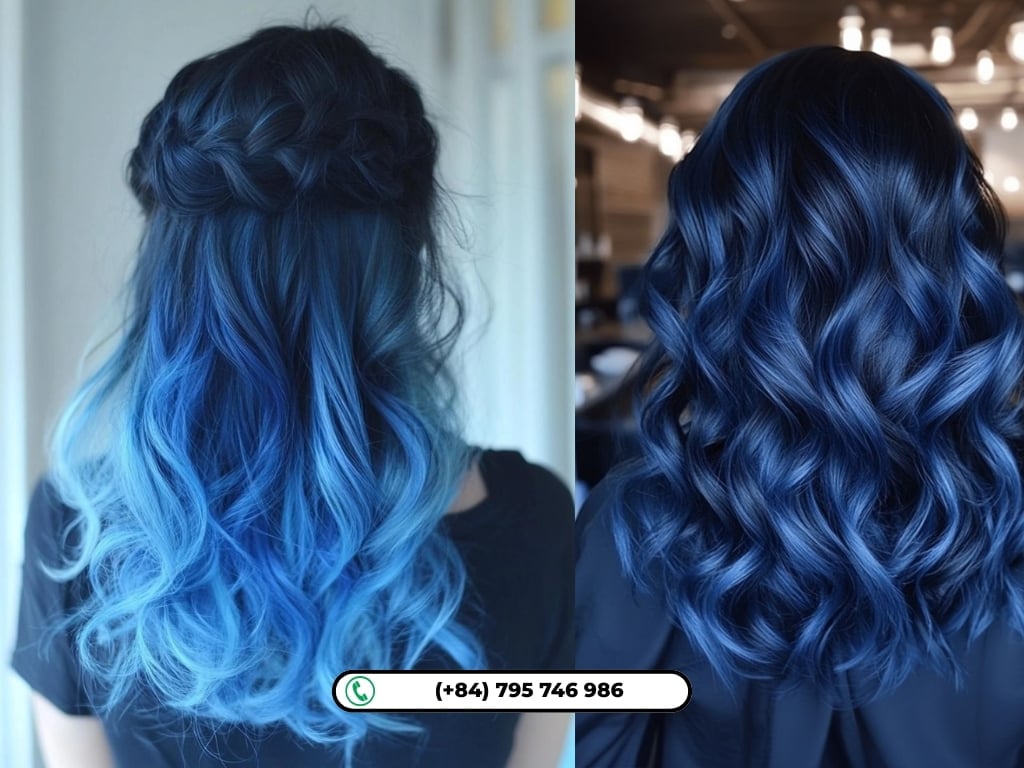
The soft layers and a middle part give the wavy texture room to move. No bangs, just that ombre line drifting down. Ask your colorist for: soft layers, dark blue to electric blue ombre. Toning every six to eight weeks keeps the ends from drifting toward green. A trim at the same interval stops the layers from getting ragged. Suits collarbone length or longer, thick hair. Skip it if you want a uniform color, the ombre demands contrast.
Pastel blue wavy fine-textured haircut with blunt bangs
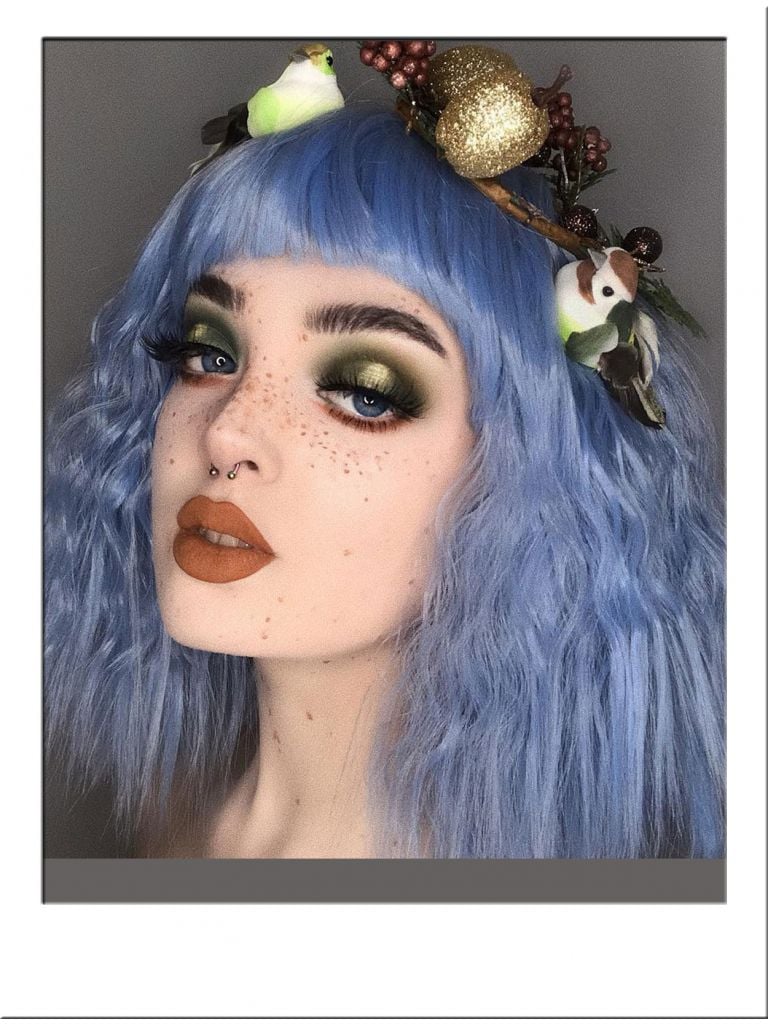
Can fine, wavy hair pull off pastel blue? Yes, if the cut does the lifting. Blunt bangs and layers that hit around the jaw keep the texture from looking sparse. The air-dried finish is the point, no heat styling required. Suits round faces because the bangs shorten the forehead while the length below balances the width. Skip it if you have thick or coarse hair that resists this fine, floaty texture.
Deeper roots transition to lighter blue highlights
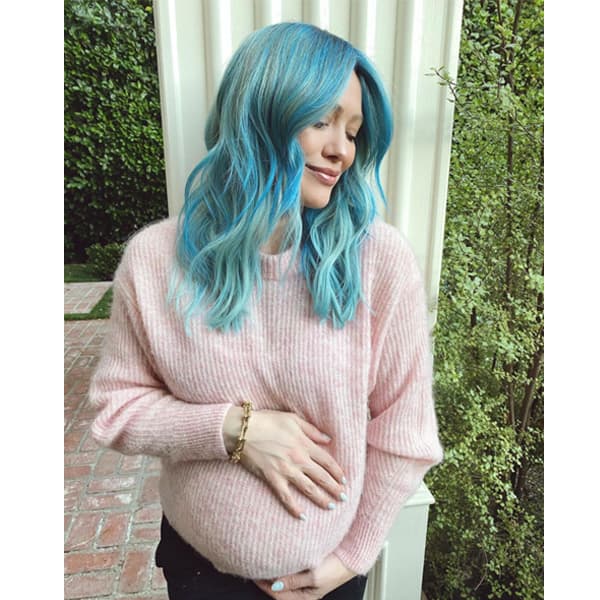
Long layers, a middle part, and a color that shifts from deep blue at the roots to lighter blue highlights near the ends. The teal undertone in the base stops it from looking flat. Fine, wavy texture holds this kind of loose wave well, a large-barrel wand and a few minutes of wrapping, and the color separation becomes obvious. Ask your colorist for: long layers, deep blue to lighter blue highlights, loose waves. Suits oval and long face shapes because the volume stays at the sides, not the top. Compare this to a solid blue: the highlights add depth without needing a full bleach.
Dark root transitions to vibrant blue balayage
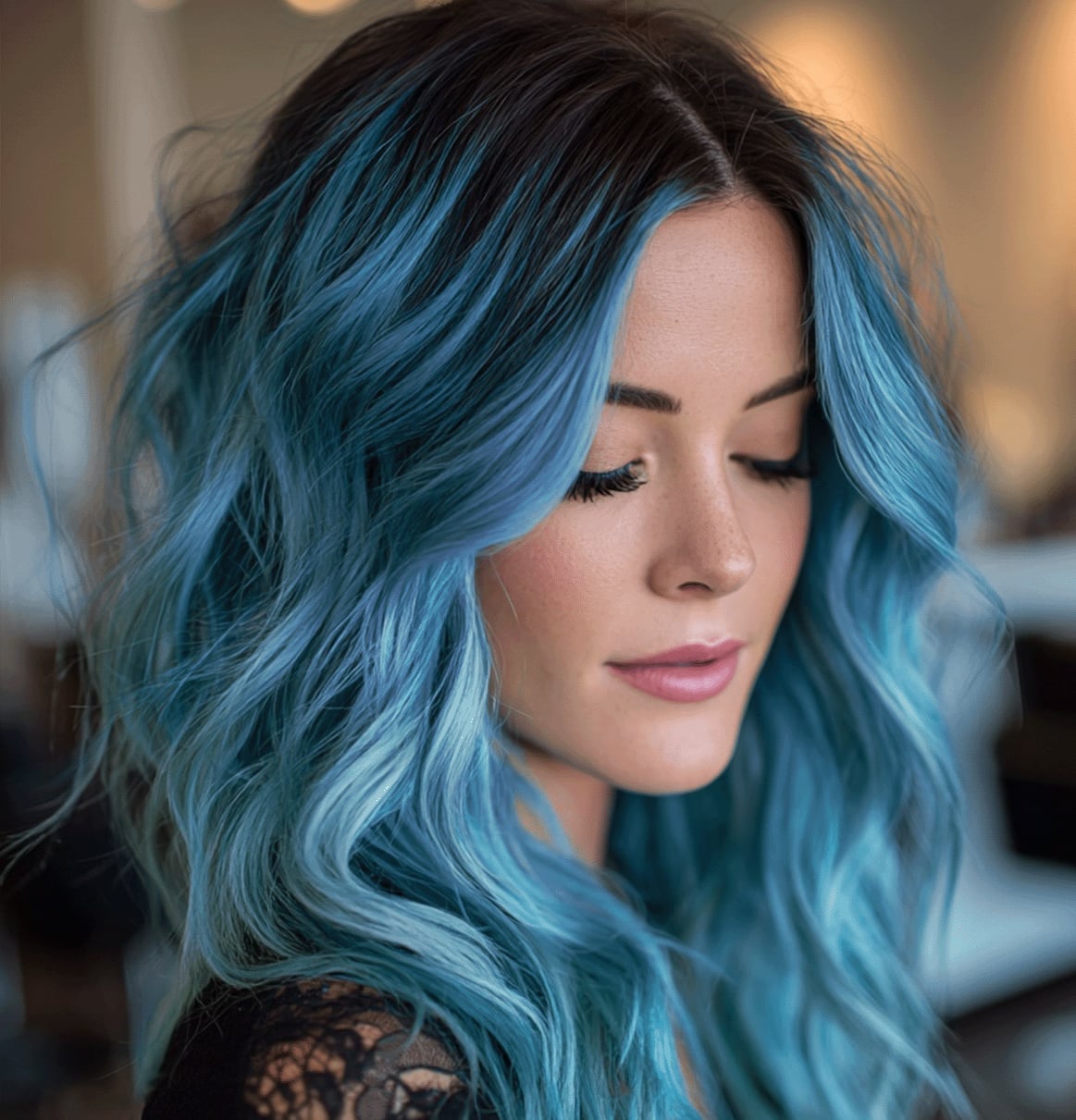
A dark root moves into a vibrant blue and light blue balayage, painted on layers. The middle part and wavy blowout give it a salon-fresh finish. No bangs, just the color providing contrast. A texturizing spray on the waves keeps the piece-y look alive between washes. Color touch-ups every eight to twelve weeks, the dark root buys you time. Suits fine, wavy hair at collarbone length or longer. A single-tone blue is an alternative.
Side swept bangs on long layered dark blue hair
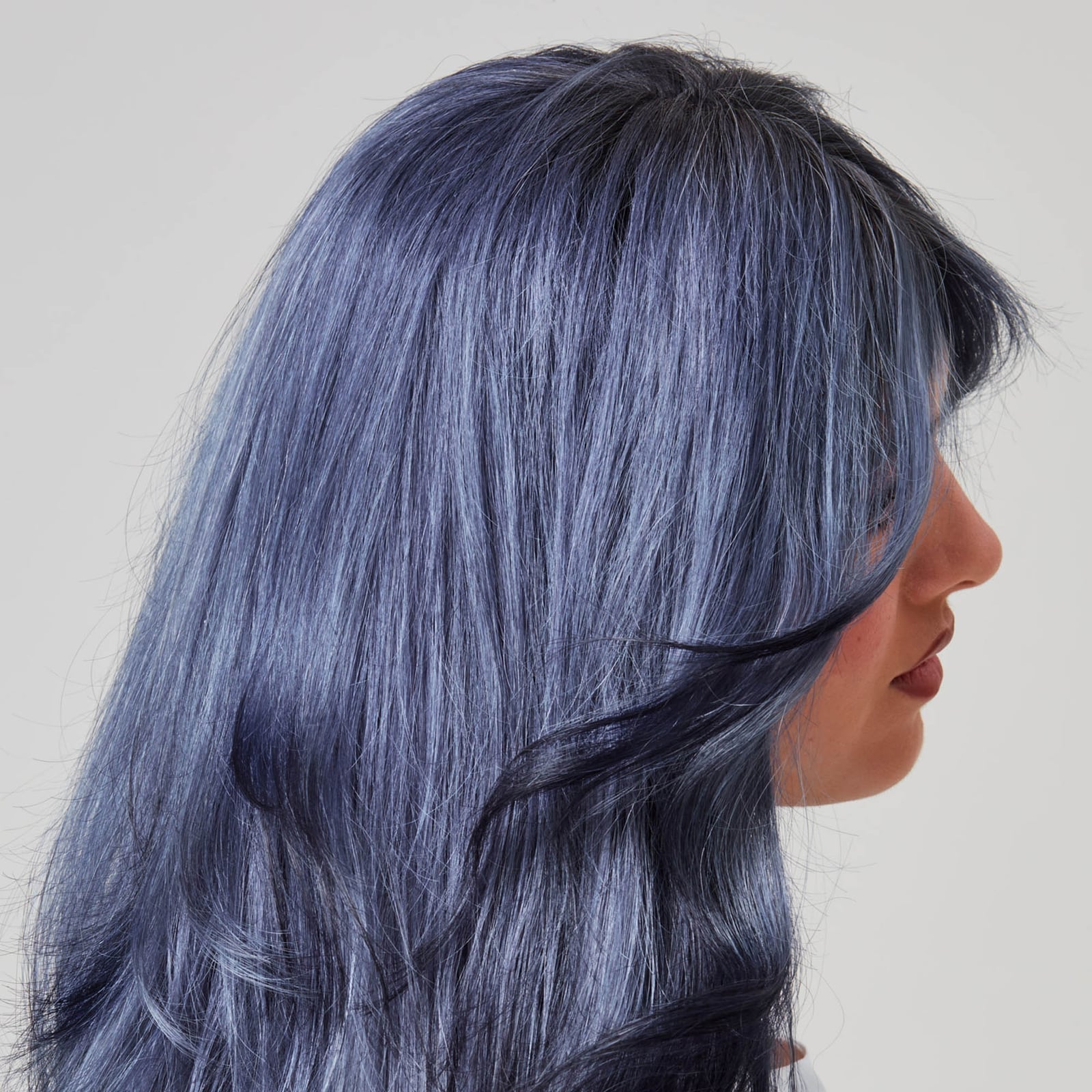
Layers create air-dried texture and a deep blue hue with lighter highlights. Side swept bangs soften the line where the color lightens, which is useful for square or round faces. Fine, wavy hair at shoulder length or longer holds the shape with minimal effort. This cut is best for those who want a casual, air-dried finish rather than a neat, heat-styled look every day. The style looks undone on purpose.
Trim the bangs every four to six weeks, or they land in your eyes by week five. The length grows out gracefully because the layers are long. Ask your stylist for: long layers, deep blue with lighter blue highlights, side swept bangs.
Blue Ombre effect on a wavy bob cut
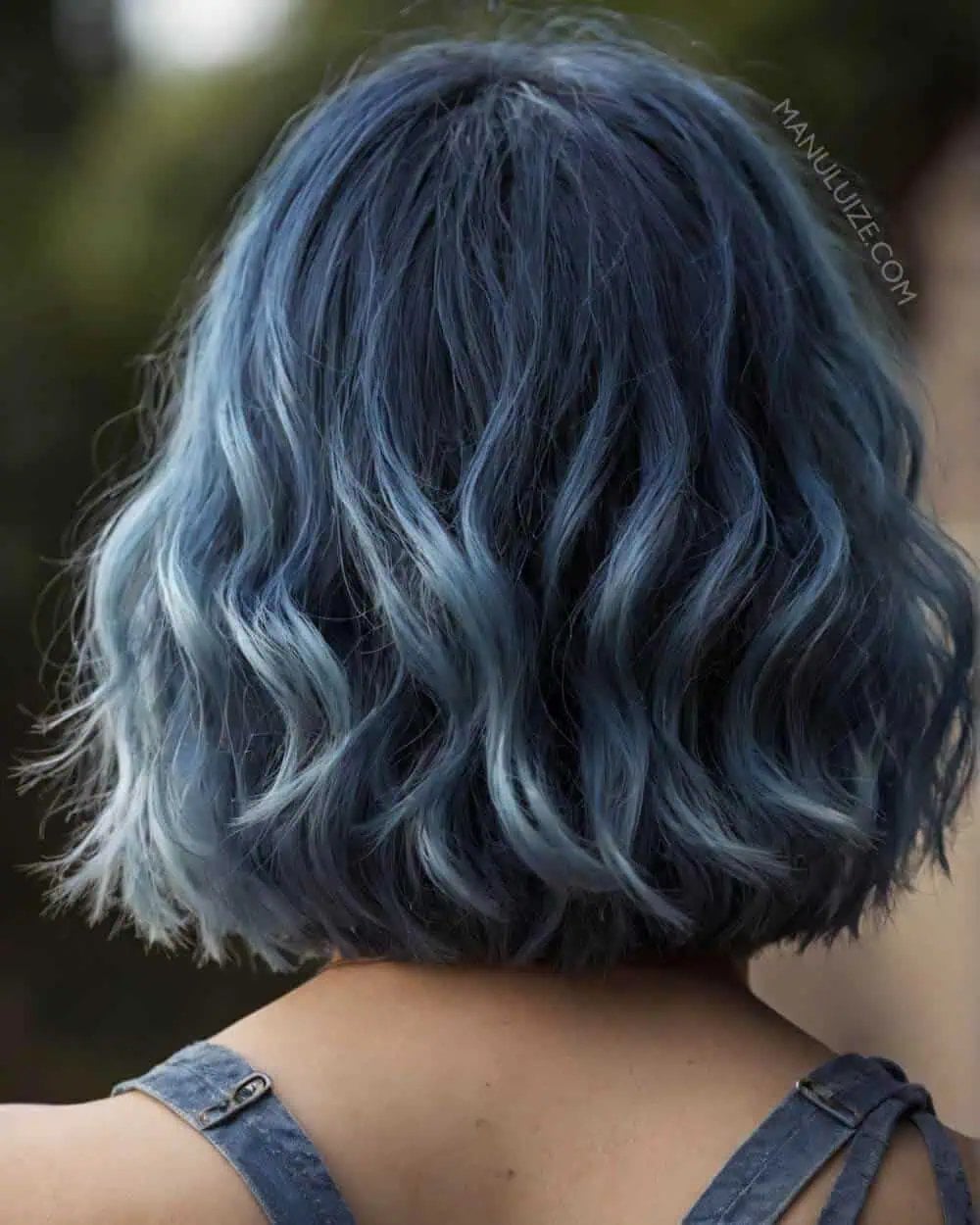
A dark blue base lightens toward the ends in a smooth ombre, which gives wavy, fine hair more depth than a single shade can. The middle part keeps the bob symmetrical, while subtle waves keep it from feeling severe. A salon job is the only route here. A box dye will not graduate from dark to light in one pass.
Lighter blue streaks on a dark blue pixie with undercut
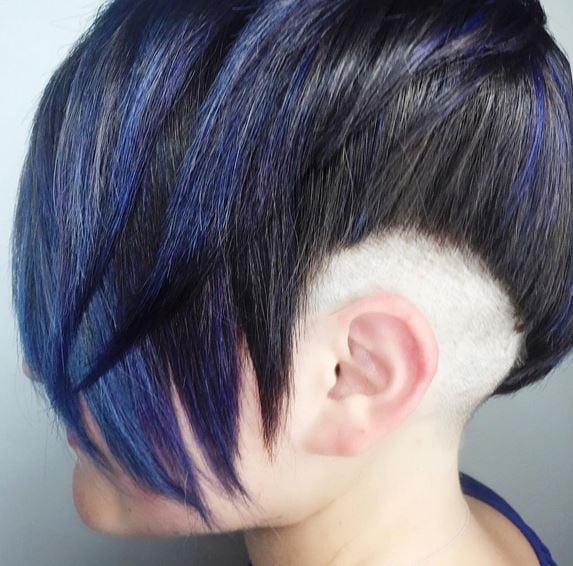
A pixie with an undercut is not a halfway decision. The dark blue base and lighter blue streaks create contrast that the bare nape exposes every time you move. Side swept bangs keep the front from feeling severe, but the upkeep is real. The undercut needs shaping every four to six weeks, and the streaks need toning. Skip it if you want to grow your hair out any time soon. Ask your stylist for: pixie cut, undercut, dark blue with lighter blue streaks.
Deep black transitions to vibrant blue Ombre
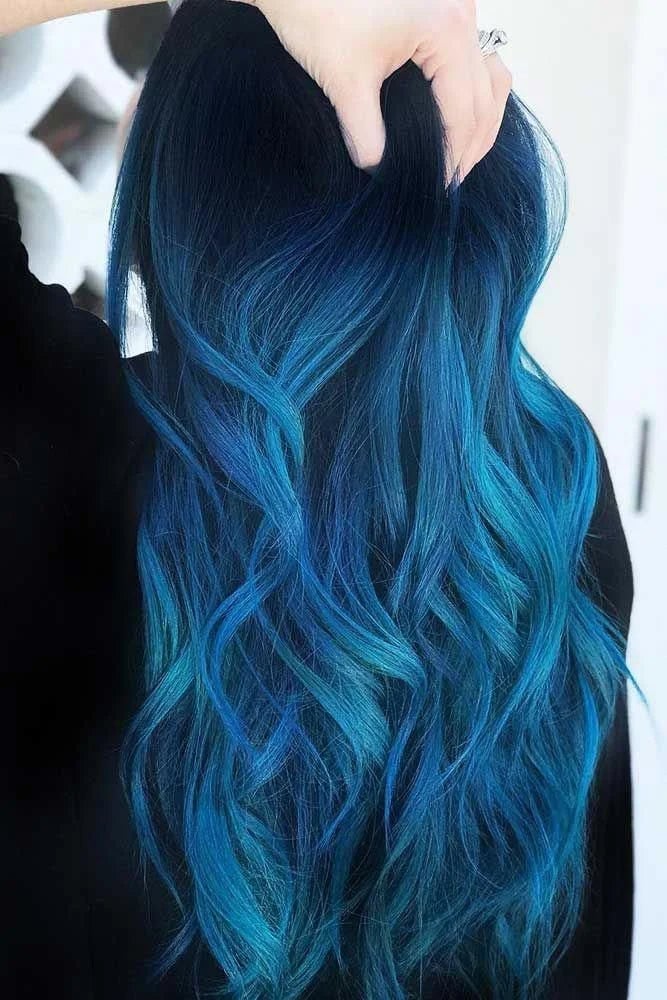
A black root melts into a vibrant blue ombre through long layers, and the loose waves give the gradient room to breathe. Thick, wavy hair starting at shoulder length carries the weight of the color without looking heavy. The black base means the grow-out is slow. You get eight to ten weeks between root touch-ups. Layers keep the ends from feeling blunt as the color lightens. Apply a curl-defining cream to damp hair and let it air-dry for the texture shown.
Vibrant blue Ombre in a half-up knot style
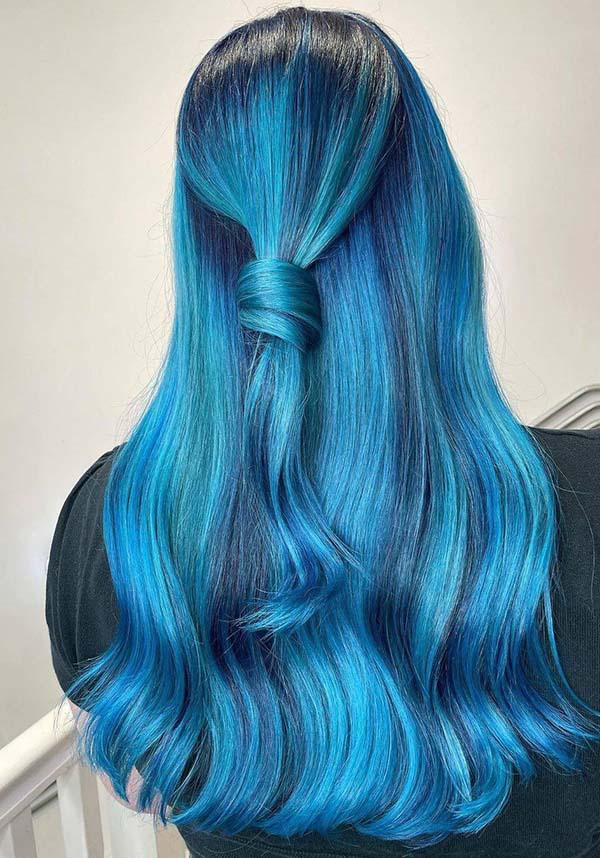
A half-up knot pulls the eye to the ombre transition. Dark blue at the roots shifts to a multi-tonal bright blue through the ends, and the wavy, thick texture keeps the knot from looking sparse. Layers are cut through the length so the pulled-back section has grip. This works best on hair past the collarbone, shorter lengths lose the knot shape. A texturizing spray before styling adds hold without stiffness. Ask your colorist for: layers, dark blue to bright blue ombre, half up knot.
Bright blue money piece on dark blue layered hair
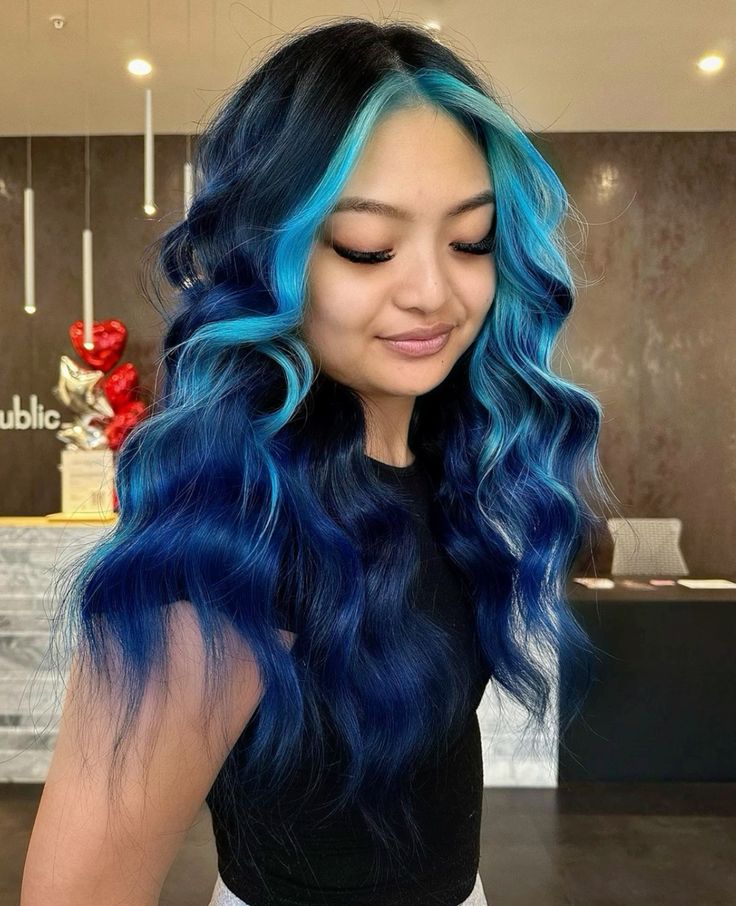
Does the money piece actually work on blue hair, or is it just a blonde thing? It works. Long layers keep the deep blue base heavy enough that the bright blue highlights look accents, not an all-over color. The thick, wavy texture gives the loose waves something to grip. A middle part splits the money piece cleanly, so both sides frame the front equally.
Skip it if your hair is fine, the volume needed for the wave pattern and the contrast of the money piece can look sparse rather than intentional. A shine serum on the front sections keeps the bright blue from fading first.
Vibrant blue color creates a bold statement
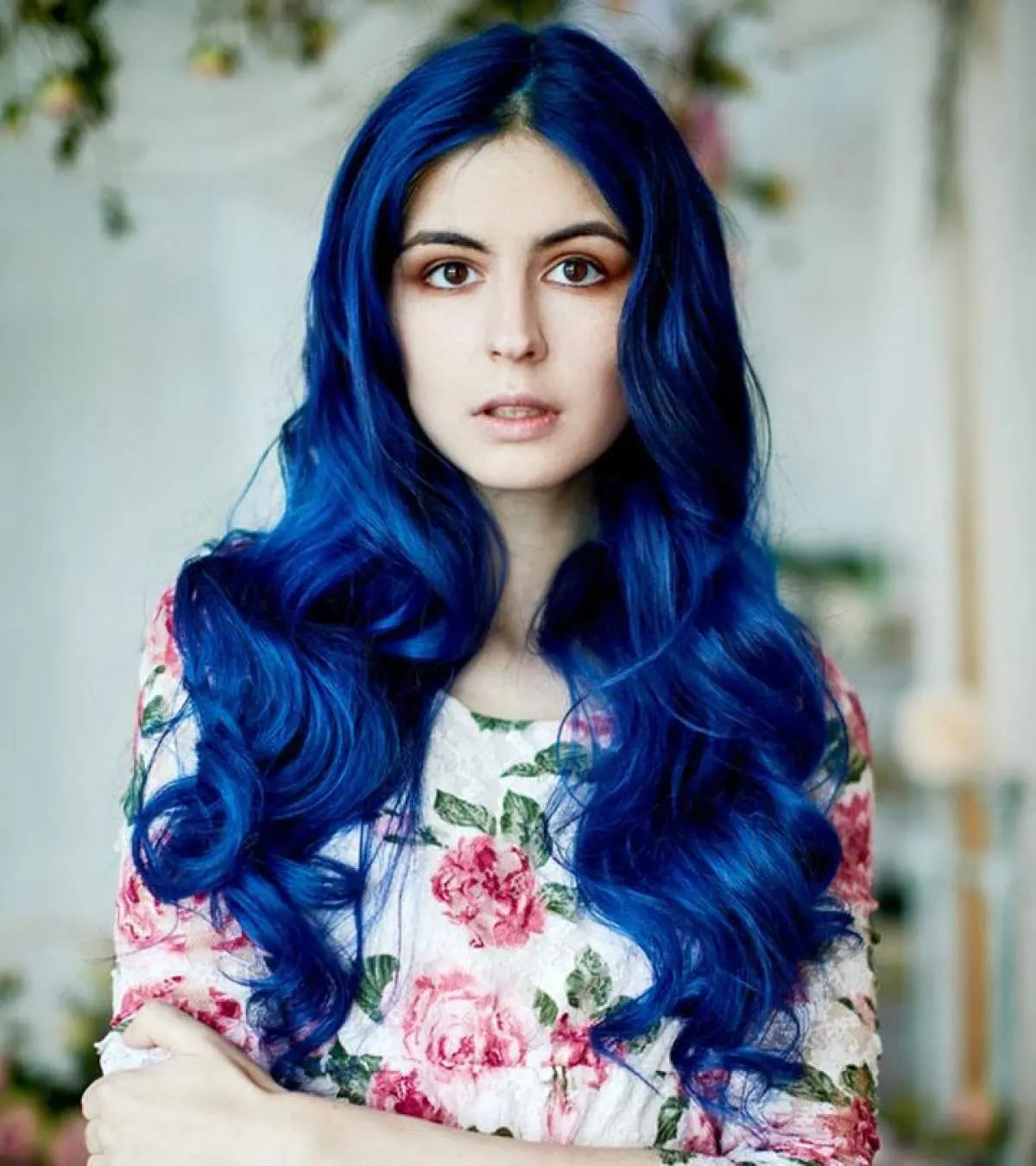
Vibrant blue sits right in the middle of the spectrum, not so light it washes out, not so dark it looks black. Long layers and loose waves let the color catch light across the whole length. Thick hair holds the wave pattern without product fighting gravity.
Upkeep is straightforward: a color-depositing conditioner every other wash keeps the tone from shifting green. A trim every eight weeks maintains the layer shape. This color announces itself and is best for those who want a bold statement.
Bright blue long layered hair with a full fringe
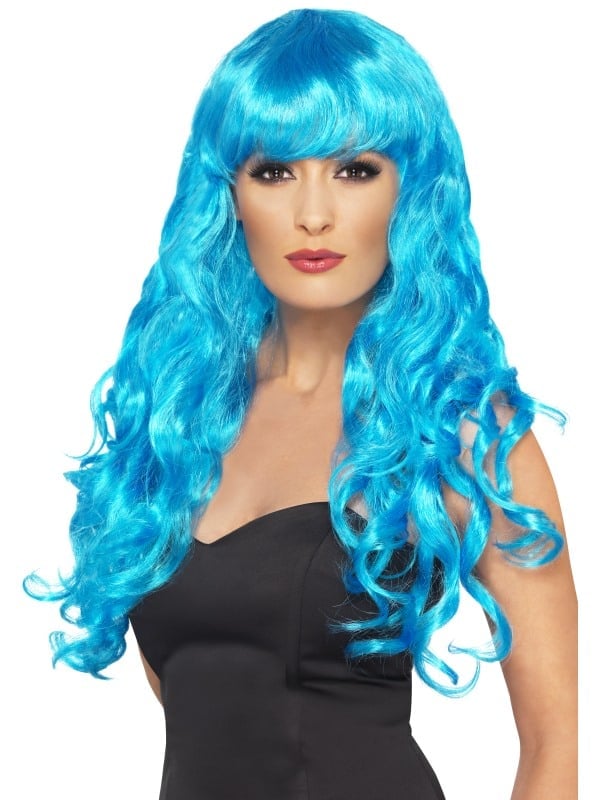
A full fringe in bright blue is a commitment to visibility. Long layers below the chin balance the density of the bangs, so the whole cut doesn’t feel top-heavy. Loose, voluminous curls add width at the cheekbones, which suits oval and square face shapes. Thick, wavy hair holds the curl pattern without needing a high-heat tool.
Styling steps: a volumizing spray at the roots, then a large-barrel iron for the curls. The fringe dries first, point-cut it yourself between appointments to keep it off the lashes. Skip it if you dislike the sensation of hair on your forehead or if your daily routine leaves no room for bang maintenance.
Subtle blue undertones on a fine textured bob
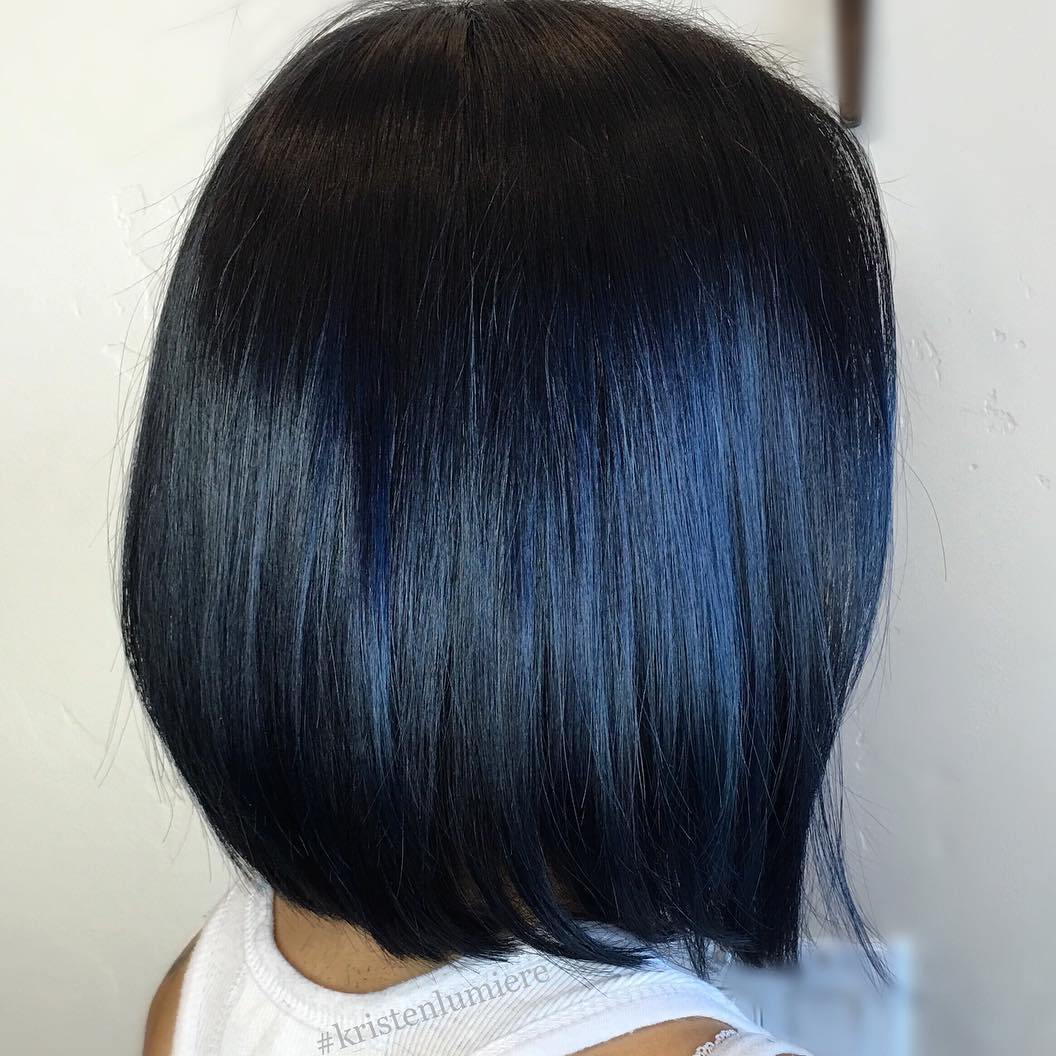
A bob on fine hair works when the cut is precise and the color stays subtle. No bangs here. The straight, blunt line from ear to jaw keeps the silhouette clean. The dark base has blue undertones that look a cool reflection rather than a separate color. A middle part splits the weight evenly, which helps fine hair appear denser.
Tell your stylist: bob cut, dark base with subtle blue undertones and highlights, straight styling. A smoothing serum controls flyaways without weighing the ends down. A blunt bob grows out fast and loses its shape at week seven.
Vibrant light blue air-dried wavy fine hair
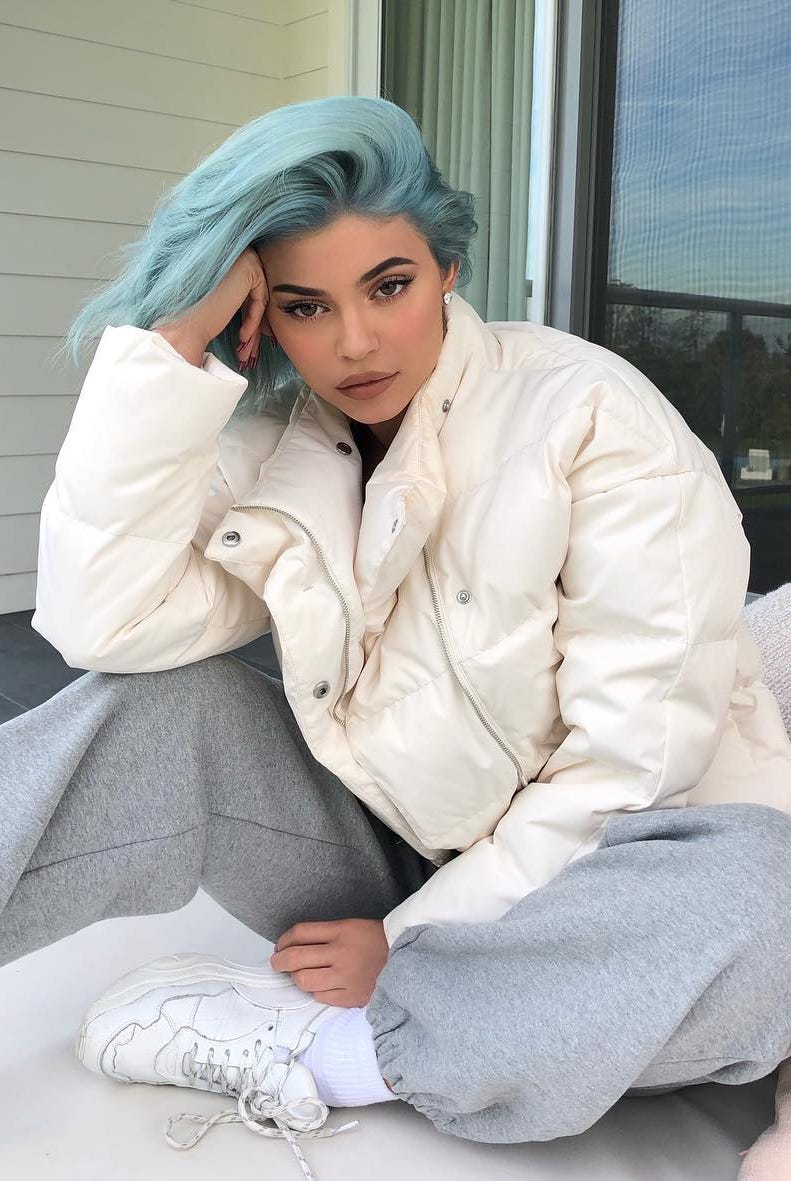
Light blue on fine hair is a gamble that pays off when the cut has subtle layers. Air-dried waves with a centered parting keep the texture loose rather than limp. The vibrant light blue color requires lifting the base to a very pale blonde first. That step is not optional and not fast. Fine hair absorbs color quickly, so the shade stays true longer than on coarse hair.
The catch: light blue fades to a greenish tint if the water has copper or if the toner isn’t refreshed. A color-safe shampoo and cool water extend the window between touch-ups. Skip it if you swim in chlorinated pools or wash your hair daily.
Blunt bangs on a dark blue blunt bob
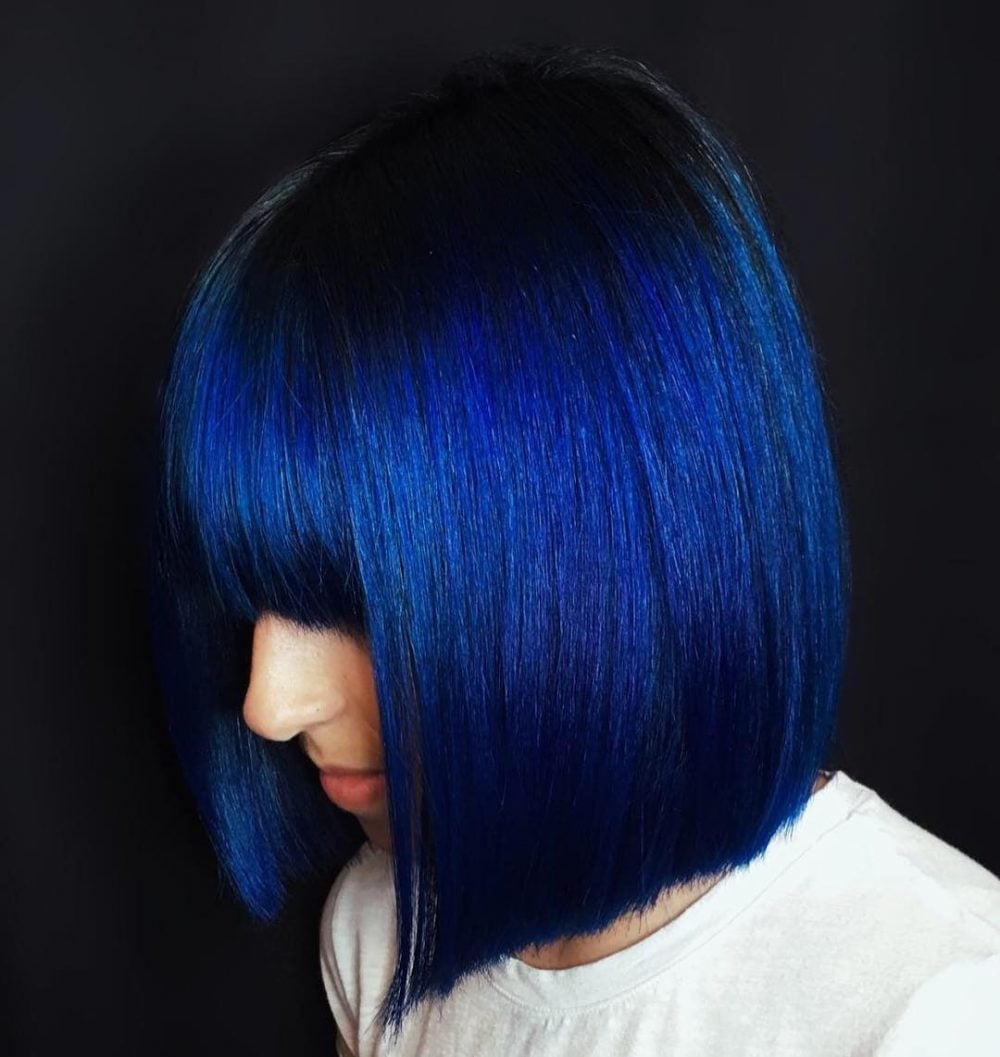
A blunt bob with blunt bangs relies on precision, not texture. The cut lands at jaw length, the bangs hit right above the brows, and the middle part keeps the geometry clean. The dark blue base gets a jolt from lighter blue highlights woven through the front. Fine, straight hair holds the shape best. The catch: this cut shows every uneven section. Tell your stylist: blunt bob, blunt bangs, dark blue with lighter blue highlights.
Vibrant blue blunt bob with a straight finish
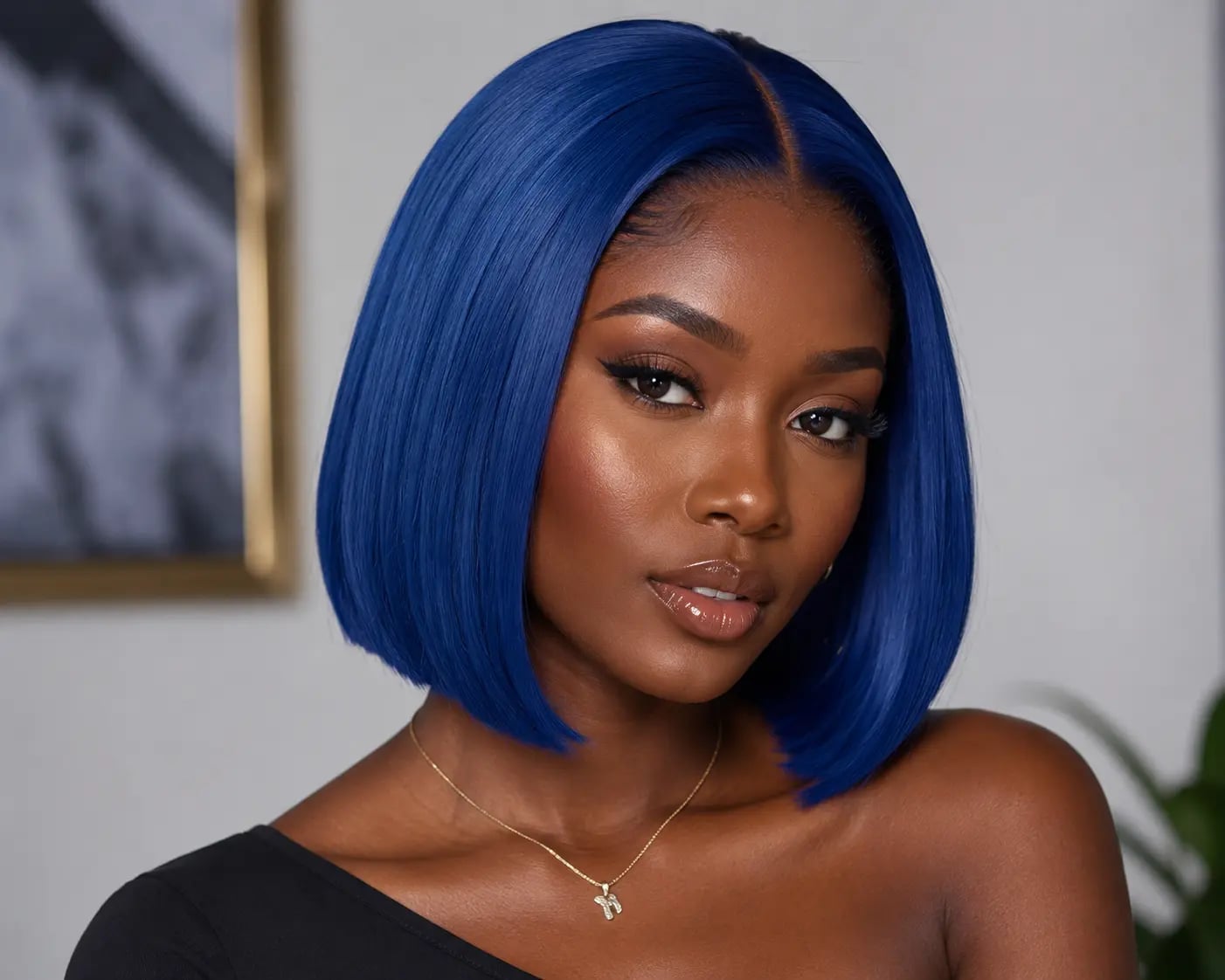
Notice the precision of the line. The blunt bob sits at collarbone length, cut to a sharp, straight finish with a precise middle part. The vibrant blue color is the star, and the sleek, straight styling lets the cut do the talking. Fine hair takes this shape well. Skip it if you prefer layers or a softer style. Achieving this clean color and cut is a salon job. Between appointments, a smoothing cream and a flat iron maintain the sleek look.
Bright blue layered hair styled in waves
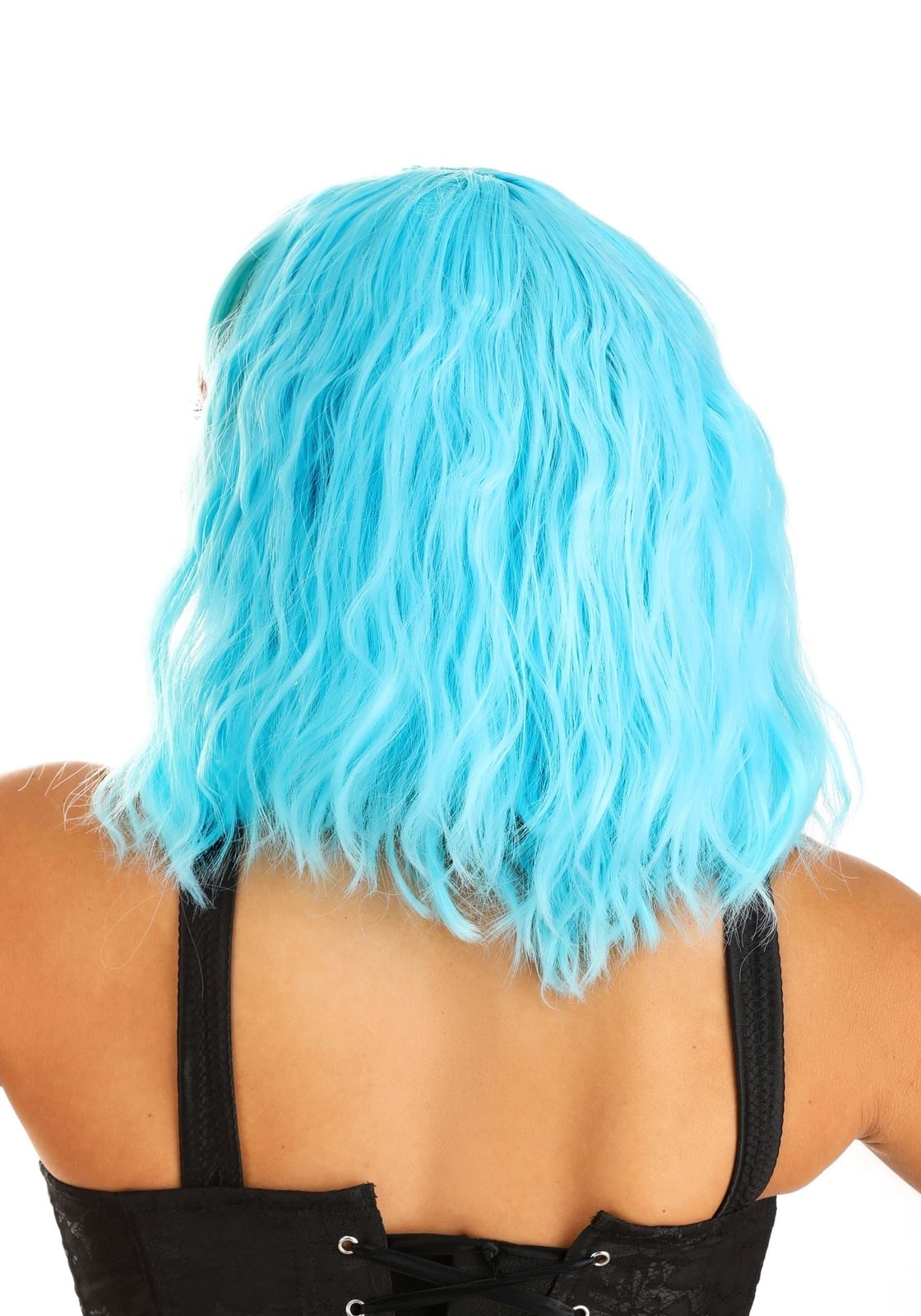
Layers change the game. Where a blunt cut emphasizes line, this look uses layers to build volume. The bright blue color runs from roots to ends, and the wavy, air-dried styling gives the hair a relaxed finish. Thick, wavy hair at collarbone length or longer has the density to carry the layers. The waves keep the shape from feeling heavy. A texturizing spray on damp hair enhances the natural wave pattern.
Deep blue wavy fine textured hair
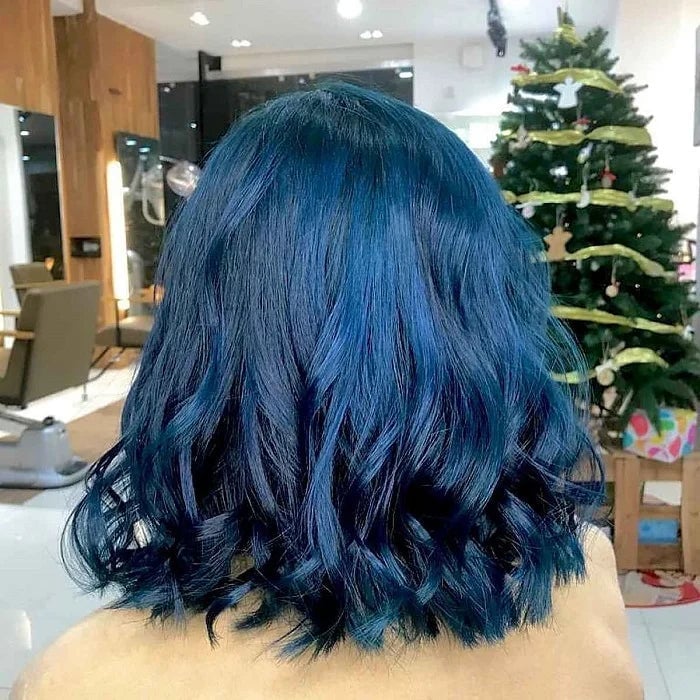
Fine hair needs the right approach to hold a wave. Layers that start around the jaw create volume without losing length. The deep blue color adds richness, and the soft waves give the fine texture a boost. The cut reaches at least collarbone length. It suits most face shapes because the layers soften the line.
Pass when you prefer lighter colors or a solid, non-layered cut. The deep blue requires professional coloring to stay even. A lightweight conditioner keeps the fine strands from tangling.
Blue highlights on dark brown layered fine hair
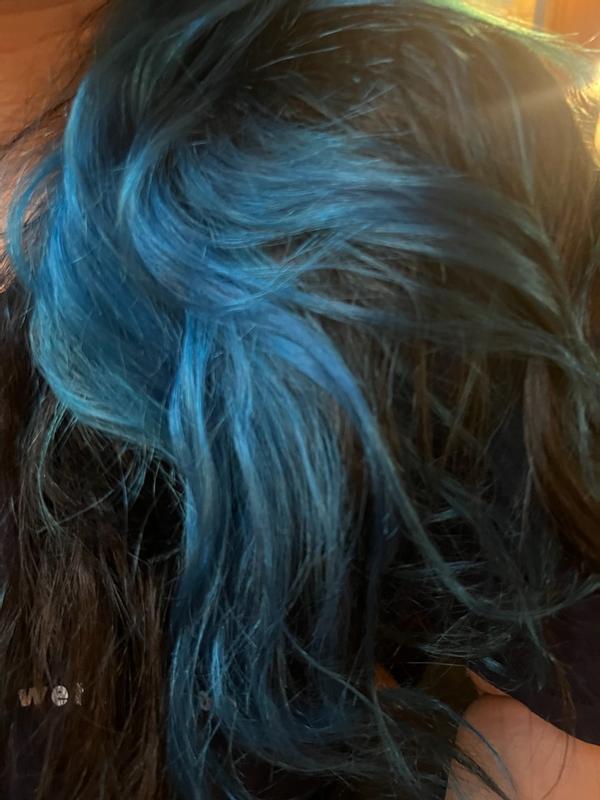
Layers in fine hair create the appearance of density. The dark brown base gives depth, and the vibrant blue highlights add contrast without overwhelming the cut. The wavy, air-dried texture emphasizes the natural movement. It suits fine, wavy hair at least collarbone length. The catch: the blue highlights require bleaching, so the base stays dark. A texturizing spray on damp hair defines the waves.
Vibrant blue curled fine hair
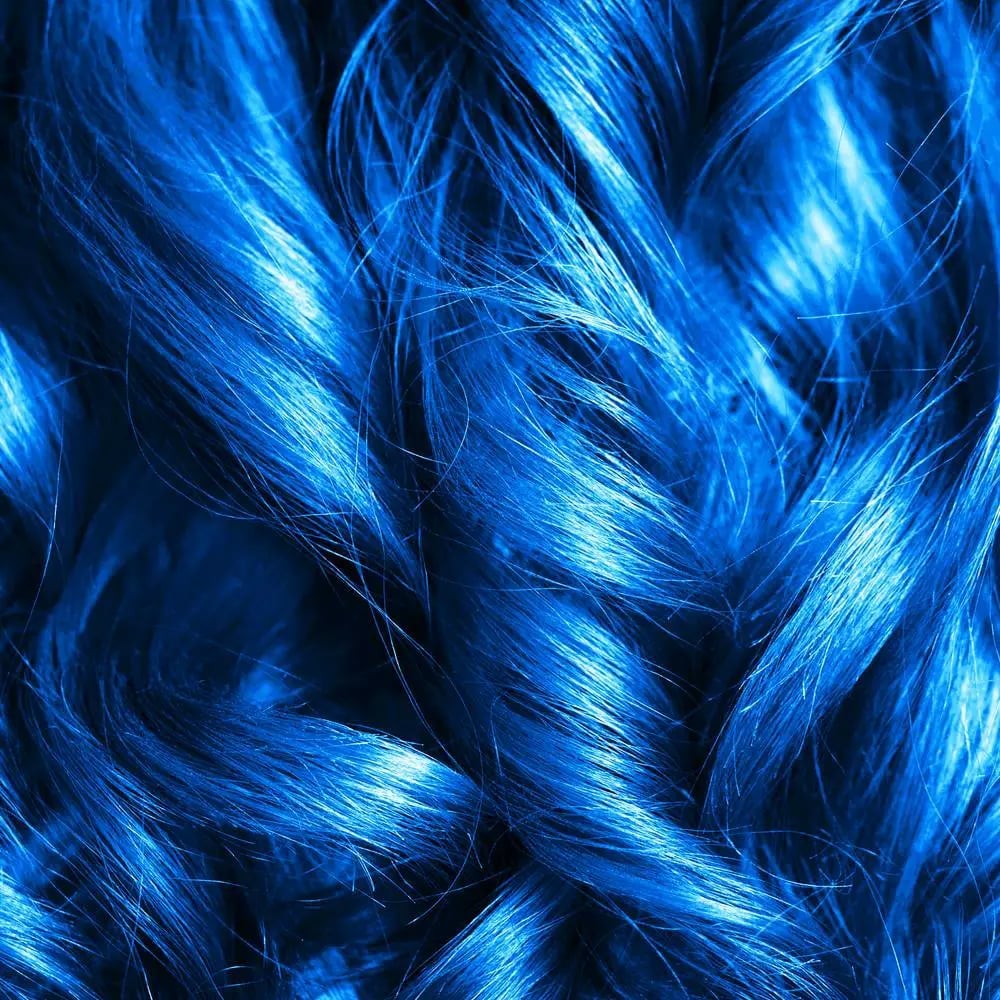
Fine hair needs a color this intense to look deliberate. The vibrant blue shade coats each strand evenly, so the loose curls catch it from every angle. Layers keep the shape from falling flat. No bangs here. The color is the focal point. Skip it if you prefer straight hair or a more subtle wash of color. The catch: fine hair shows root growth faster, so plan for touch-ups at six weeks.
Bright blue Ombré on long layered wavy hair
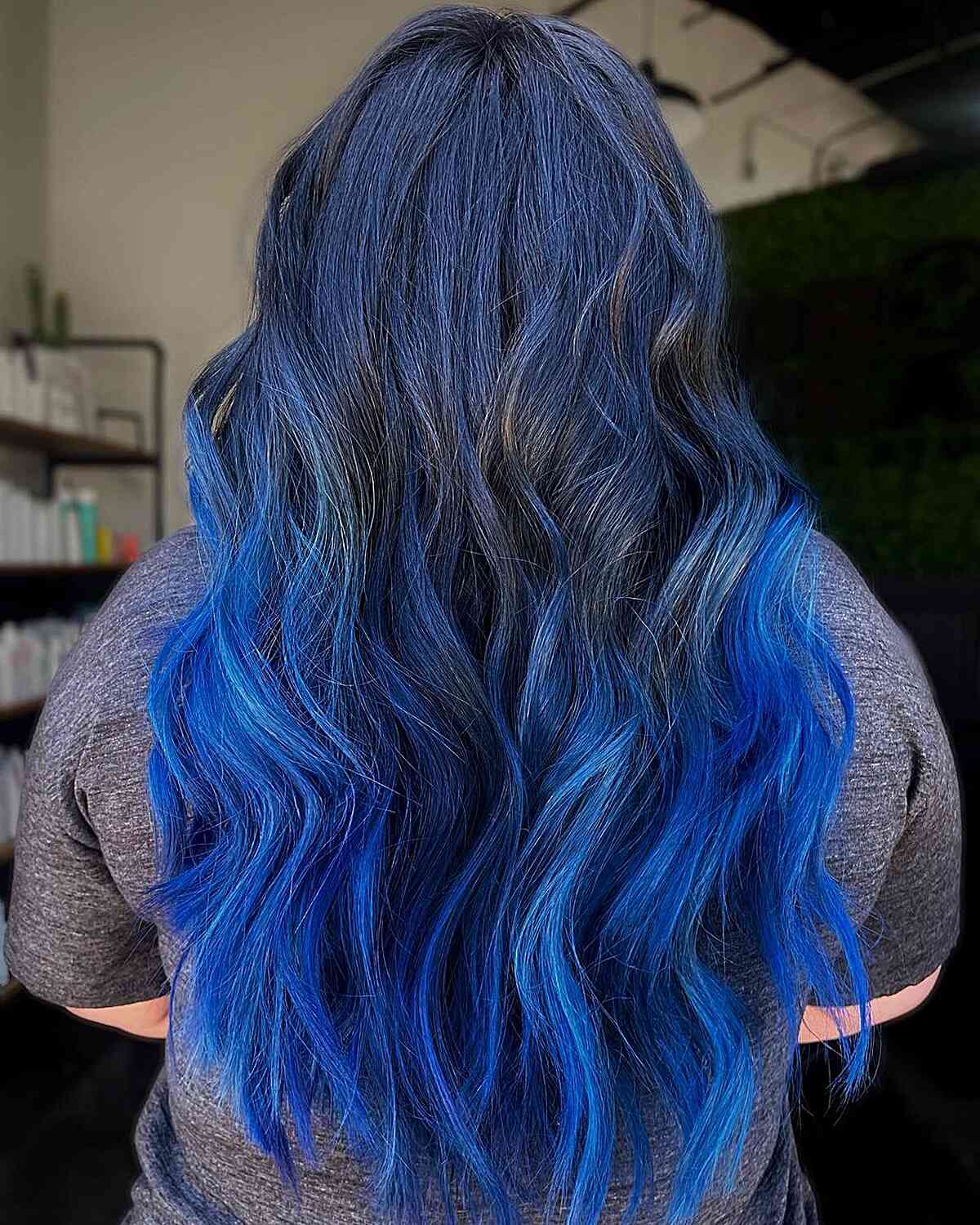
A deep dark base keeps the roots low-maintenance while the electric blue ends deliver the drama. Long layers let the ombré gradient breathe; the middle part shows the transition evenly. Wavy texture softens the shift between tones. Fine hair at shoulder length or longer is the ideal starting point. The ombré adds volume where you need it.
Ask your colorist for: long layers, dark blue to electric blue ombré. Use a purple shampoo every fourth wash to keep the ends from turning green. A toner every six to eight weeks preserves the brightness.
Braids with silver accessories on blue to purple Ombre
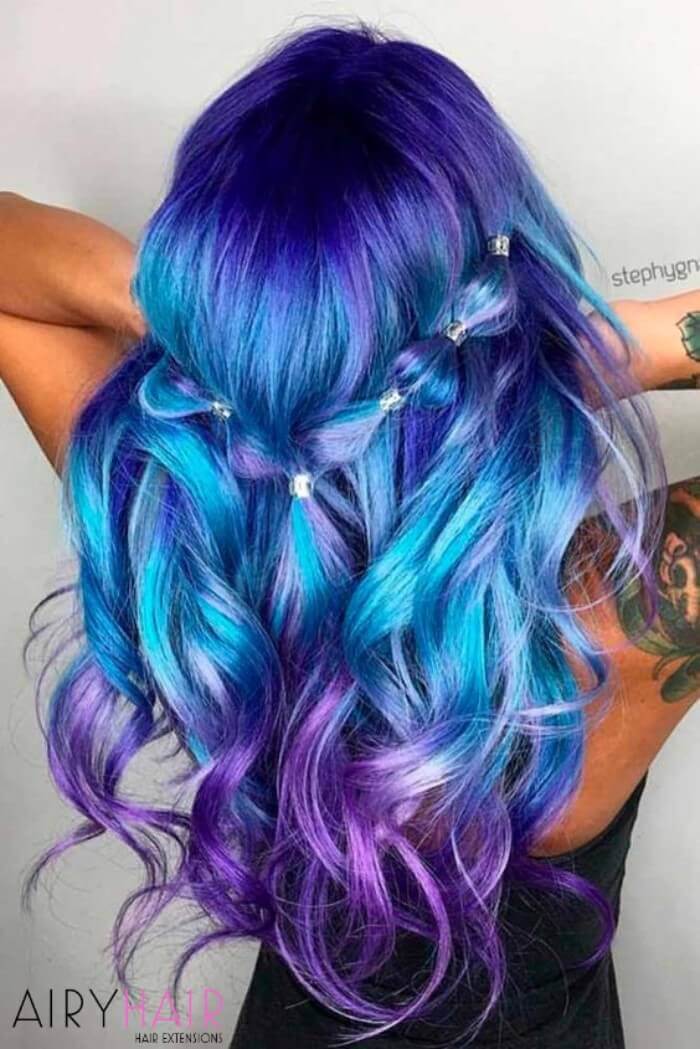
Two tones, one flowing gradient, and small braids with silver accessories threaded through the waves. The blue to purple ombre starts deep at the roots and shifts to violet at the ends, with the braids breaking up the color blocks. This works best on thick, wavy hair at least collarbone length. The weight holds the braids in place. Book it as: layers, blue to purple ombre, braids with accessories. The style suits festivals or any occasion where you want the hair to carry the outfit. Pass when you dislike braids or prefer a simpler finish.
Purple to light blue Ombre on fine wavy hair
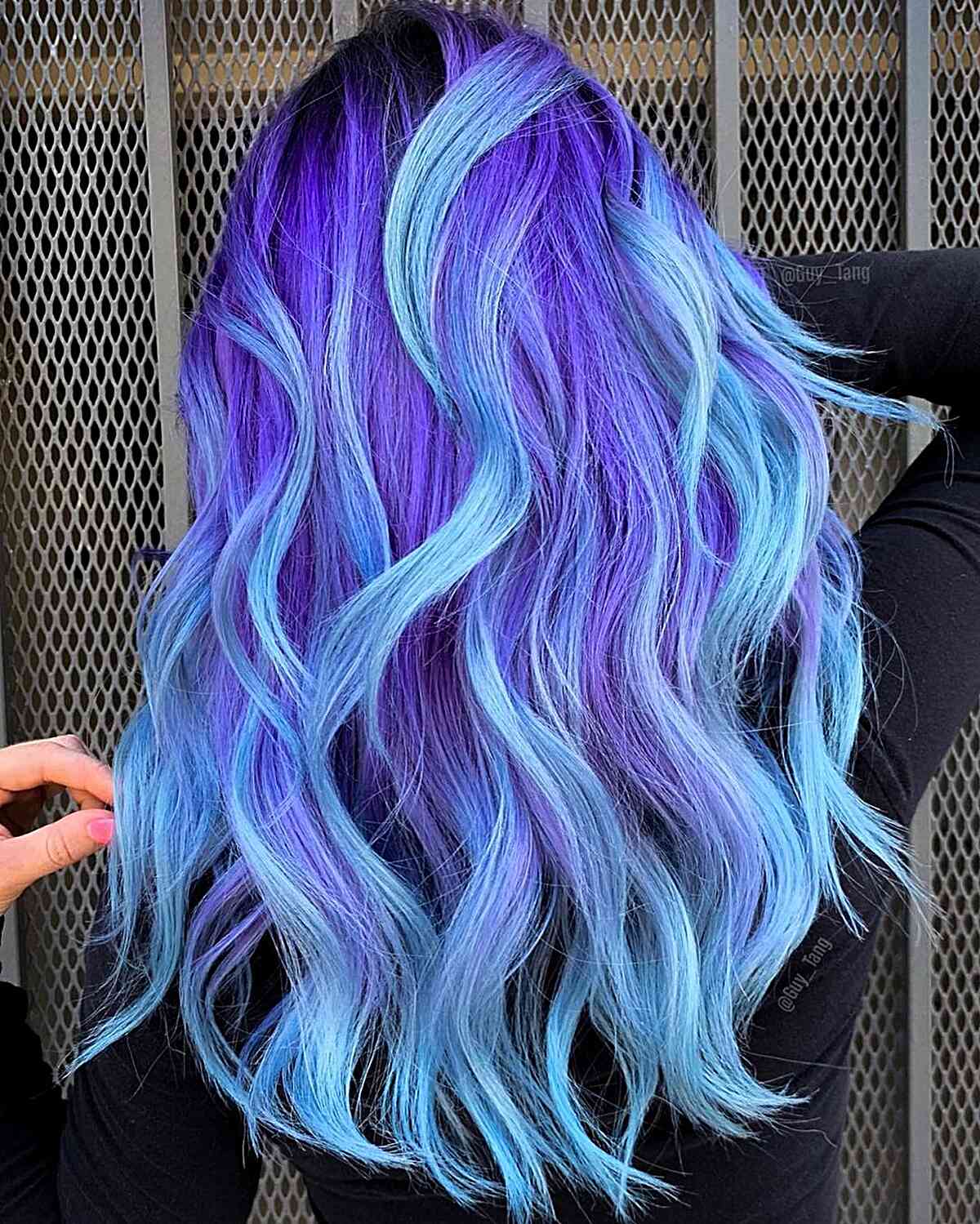
Fine wavy hair often struggles to hold a visible gradient, but this one works. The deep purple at the roots gives way to a bright light blue at the ends, with layers cutting through the color to show both tones. Set this against a solid pastel and you get more depth and less fading. The wavy texture carries the shift naturally, no curling iron needed.
Who it suits: fine hair at collarbone length or longer, any face shape. The catch: thick hair can overwhelm the delicate ombre, so this one is for the fine-haired crowd. Tell your stylist: layers, purple to light blue ombre. Use a color-depositing conditioner once a week to refresh the light blue ends.
Teal blue color with subtle blonde highlights
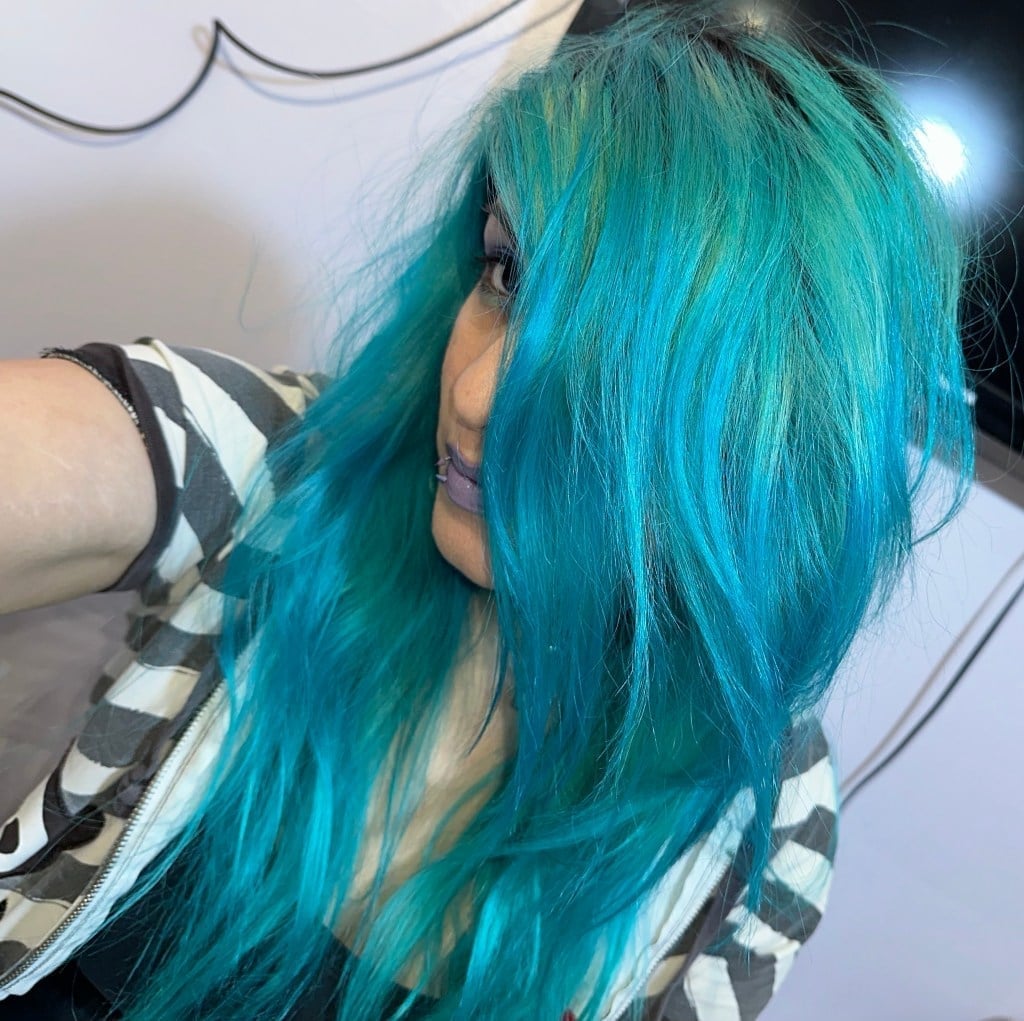
Teal blue with subtle blonde highlights: the highlights are sparse enough to look texture, not streaks. Layers and side-swept bangs frame the face without competing with the color. The air-dried finish gives it a lived-in feel that a flat iron cannot replicate. Fine, wavy hair starting at shoulder length handles this best. The side-swept bangs suit square and round faces by softening the jawline. Use a color-safe shampoo to protect the blonde pieces.
Blunt bangs on a vibrant blue blunt bob, fine
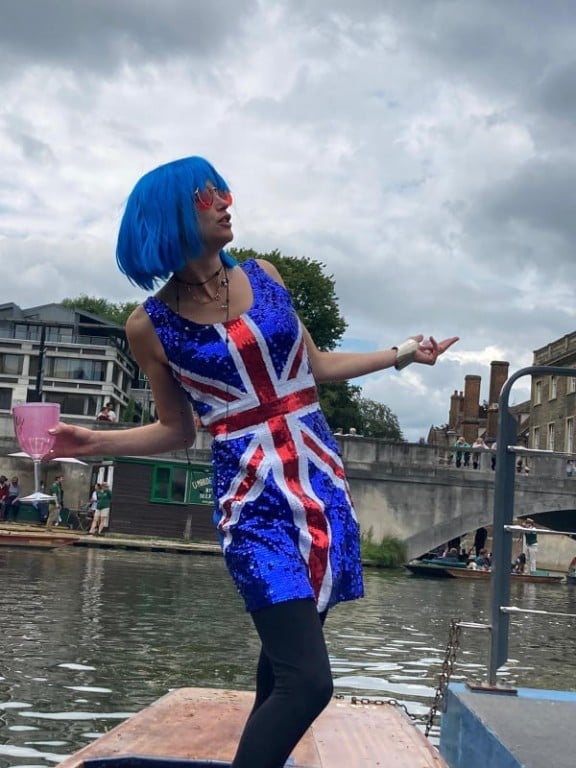
A blunt bob cut to ear length demands precision. The vibrant blue color needs a middle part and straight styling to show off those sharp ends. Fine texture works best here. The blunt line makes hair look thicker. Ask your stylist for: blunt bob, vibrant blue color, blunt bangs.
Blue and purple Ombre on dark layered wavy hair
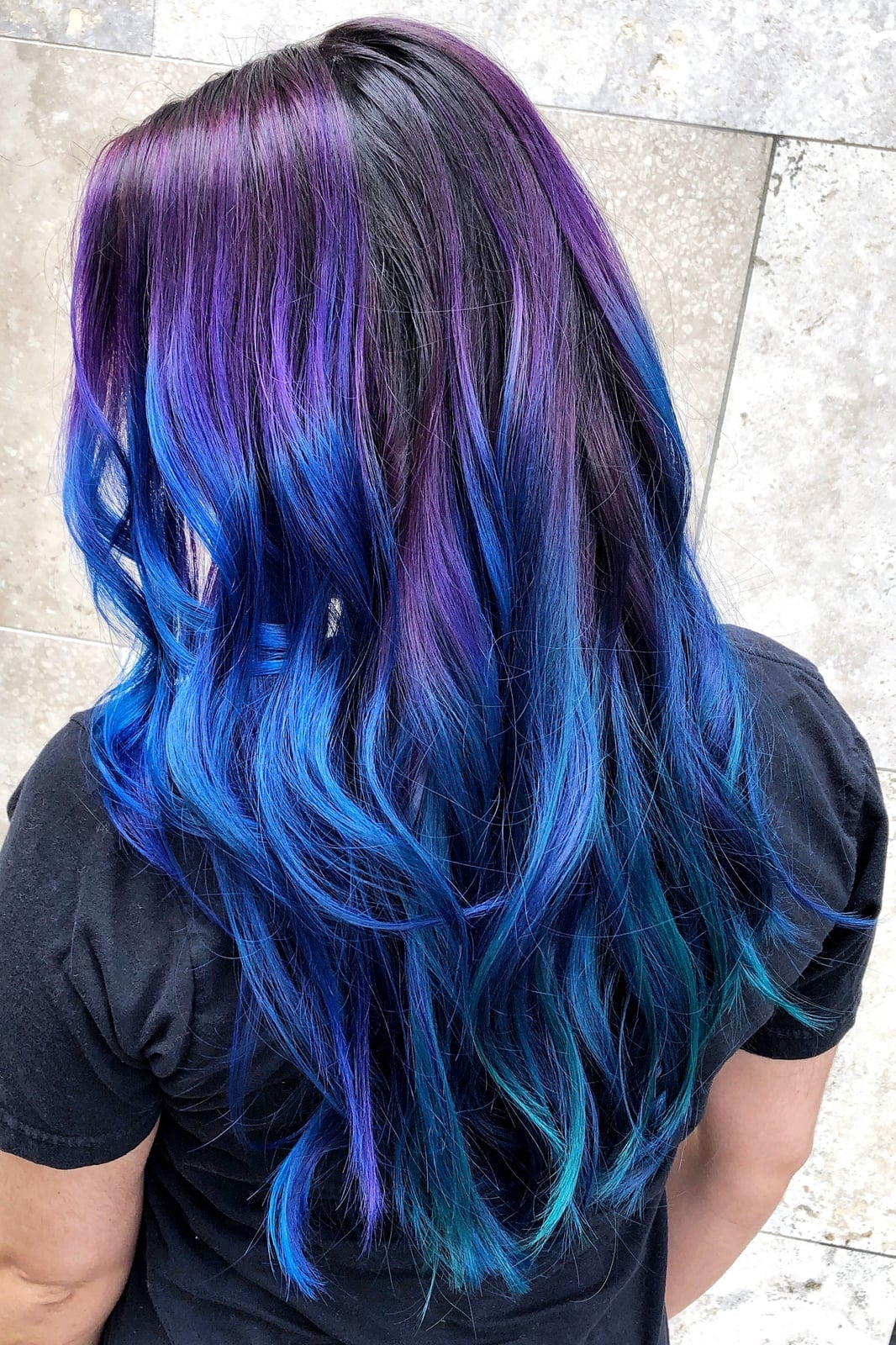
A dark base fades into vibrant blue and purple highlights, and the layers let both tones show through waves. Straight, fine texture takes the color evenly, but the ombre demands a salon visit for proper blending. The purple fades faster than the blue and needs a color-depositing conditioner by week three.
Long, layered hair gives the gradient room to breathe. Wavy styling helps the two colors merge without a harsh line. A single shade requires less upkeep.
Light blue base deepens to darker blue ends
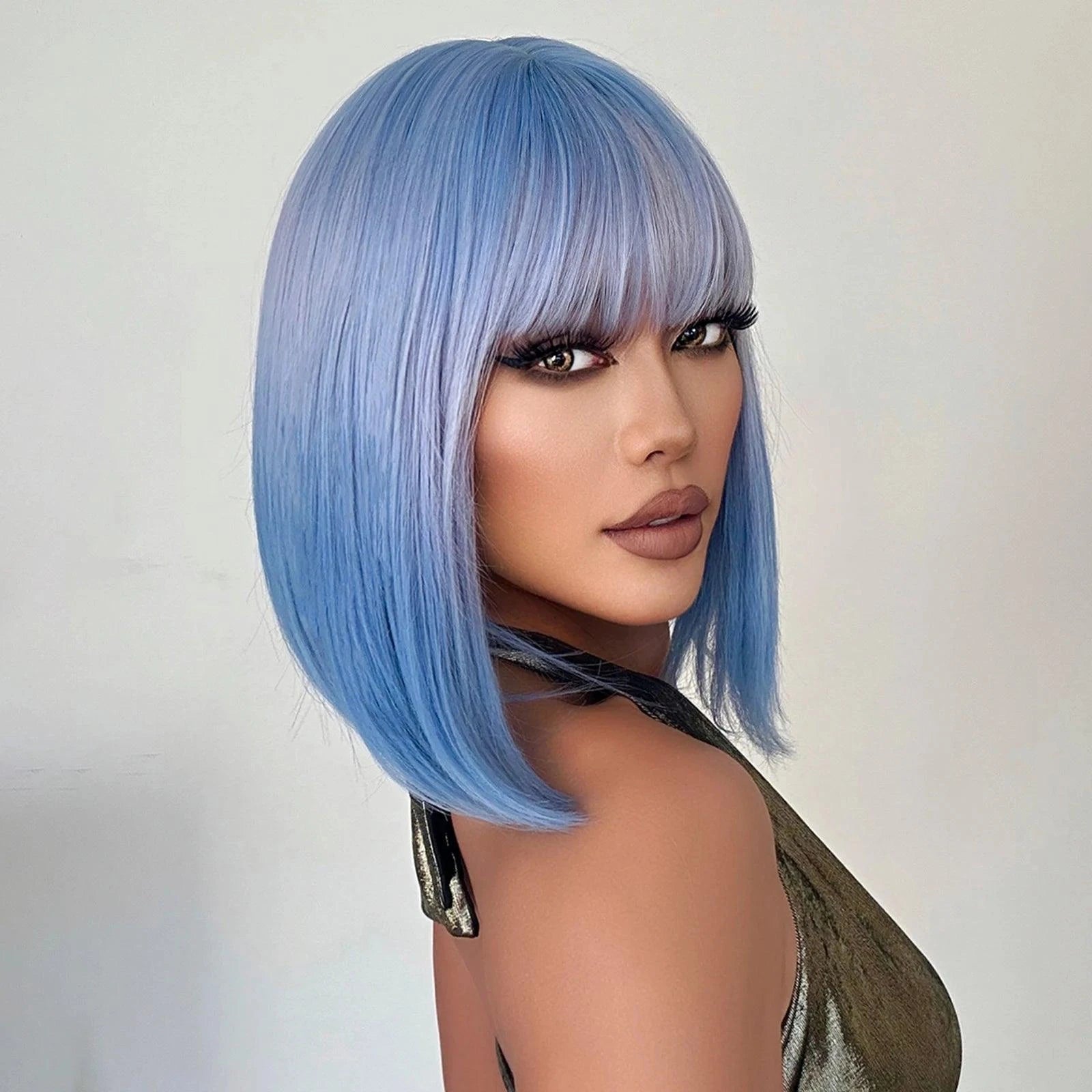
A blunt bob with blunt bangs gets a twist. The light blue base at the roots shifts to a darker blue at the ends, creating a reverse ombre effect. Straight styling and a middle part make the color transition the focal point. Ask your colorist for: light blue to darker blue ends. A weekly toning session keeps the lighter section from turning green.
Deep dark blue long layered straight hair
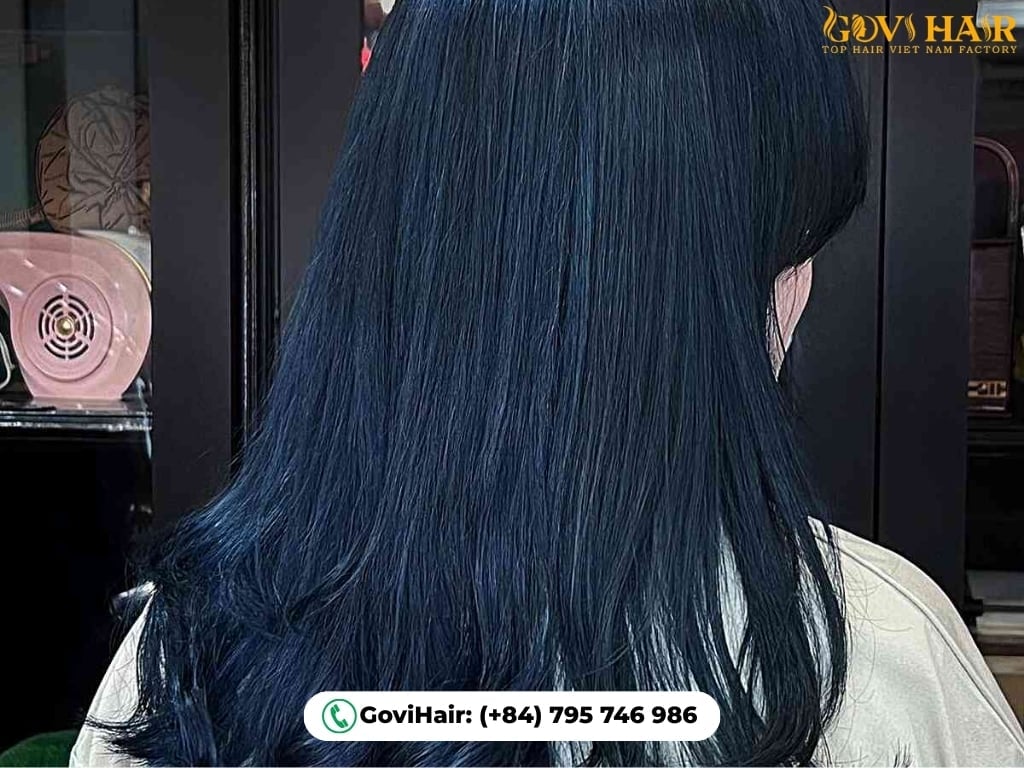
Fine, straight hair looks alive with long layers and a deep dark blue hue. The centered parting and air-dried texture give it a natural finish, no flat iron needed. This is the color for someone who wants blue without the maintenance of a lighter shade. A wavy texture or a brighter tone changes the look.
Long layers keep the shape from feeling heavy. The dark blue fades gracefully, so root touch-ups stretch to ten weeks.
Subtle lighter blue highlights on dark blue hair
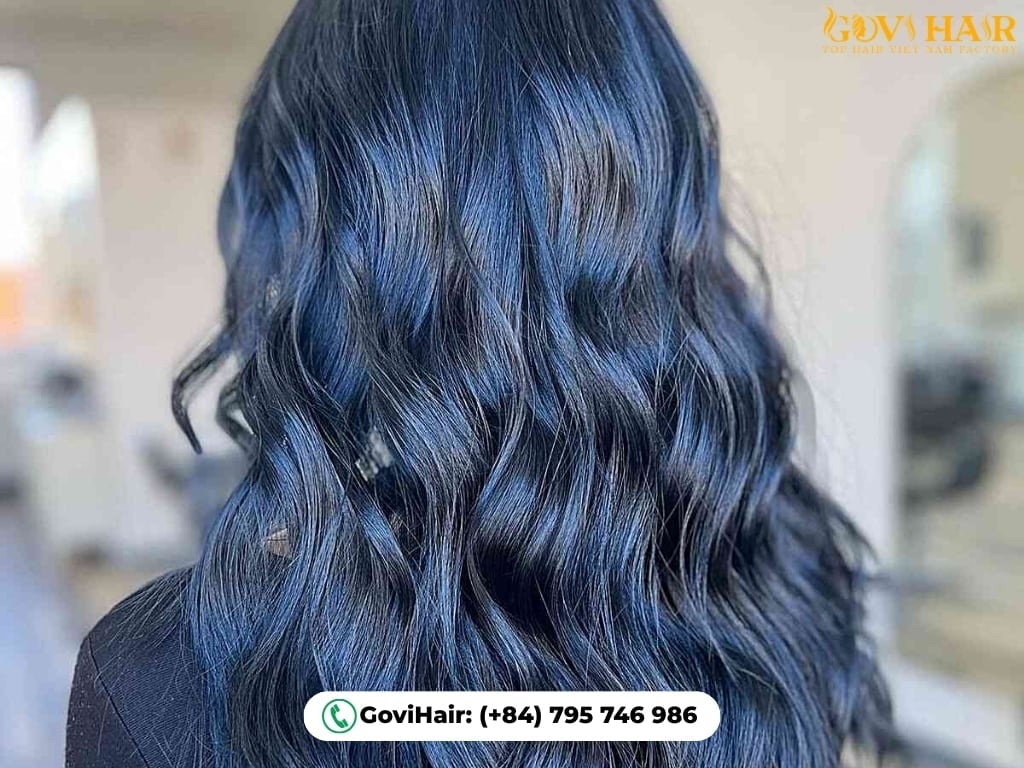
Thick, wavy hair can handle a dark blue base with subtle lighter blue highlights. The loose waves let the highlights catch light without looking chunky. Compare this to a full ombre. The effect is softer and easier to grow out. Ask your colorist for: dark blue with subtle lighter blue highlights. Skip it if you want an obvious color contrast, because the highlights blend into the base.
Striking bright aqua blue is the standout element
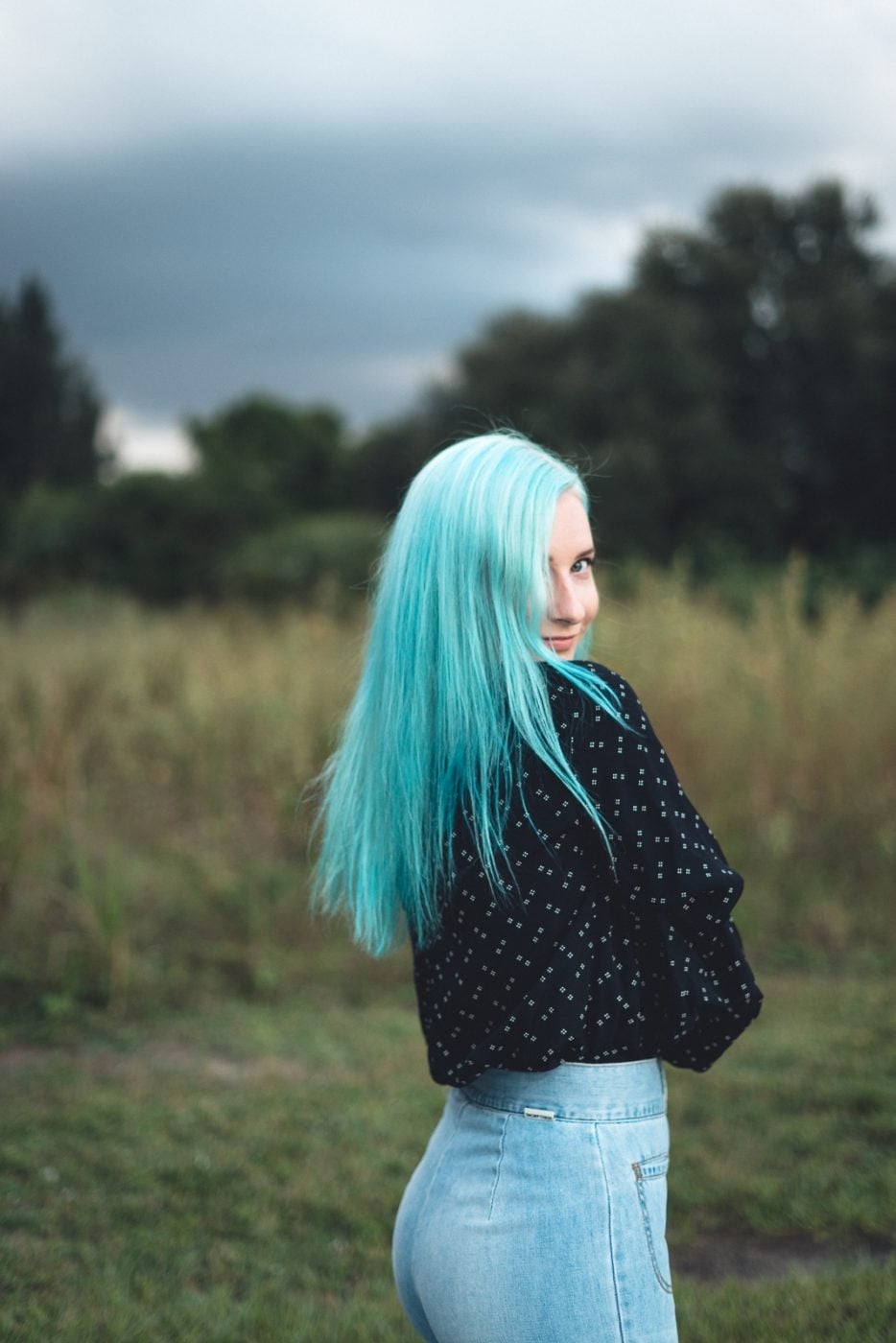
Bright aqua blue sits in a range that is bold but not moody. Fine, straight hair at shoulder length or longer carries the color evenly, and the air-dried finish keeps it from looking overdone. Long layers prevent the straight texture from falling flat, while the side part adds asymmetry.
All face shapes can wear this shade, but the upkeep matters. The base needs lifting to a pale blonde before the aqua can hold its true tone. The straight finish is part of the effect, so darker colors or wavy hair are not recommended.
Black roots transition to deep rich blue
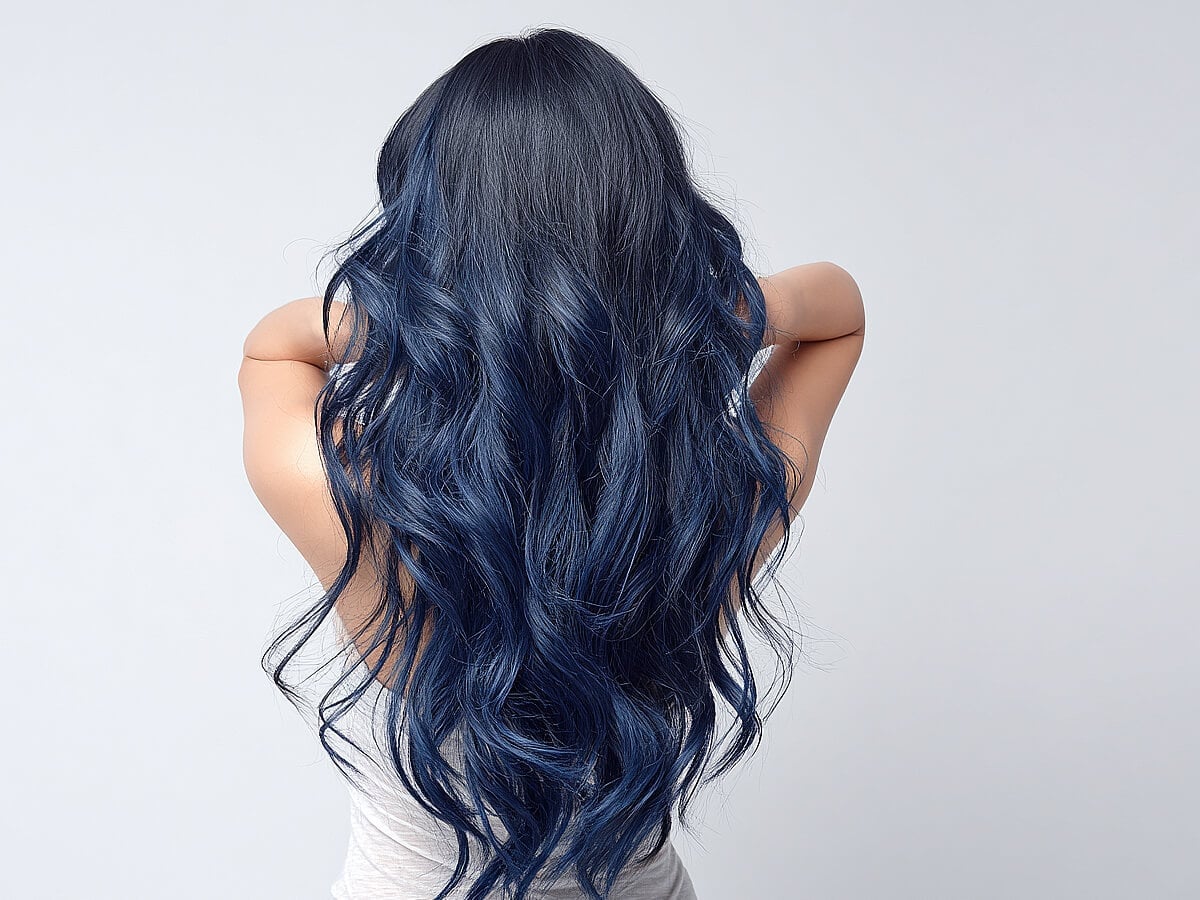
One honest assessment: the black roots make this look deliberate. Long layers through the mid-back length let the transition from dark to blue breathe, and the loose waves give the gradient something to travel across. Thick, wavy texture has the density to support both the dark root and the blue length without looking thin.
Here is the drawback: the deeper the root, the harder the blue is to maintain as a separate color. The black base is low-maintenance, but the blue section needs toning every six weeks to stay rich and avoid a green cast. It suits all face shapes because the volume sits at the sides. The layers are what make the ombre work.
Final Thoughts
The choice comes down to your comfort level with salon visits and daily styling.
- Fine hair: soft layers and a light blue wash preserve volume.
- Ten minutes in the morning: a blunt bob with dark roots hides grow-out.
- Cool base that pulls brassy: schedule a toner every four weeks.
- Low commitment: blue highlights on a dark base skip the full bleach.
Find your perfect shade of grown-up blue.