You are scrolling past the same chocolate and caramel combos, wondering if there is a brunette shade that does not look like everyone else’s. The trick is in the undertone and the placement, not just the base depth. A warm auburn or a cool ash blonde highlight can change the whole feel of dark brown without a full commitment.
That is why Pretty Brunette Hair Colors 2027 fill so many saved boards. The 35 ideas here cover the spectrum from glossy single-process to multi-tonal balayage, for every texture and length. The hard part is not finding a shade you like. It is narrowing down the one that works with your grow-out rhythm and morning routine.
Glossy dark chocolate brown with a middle part
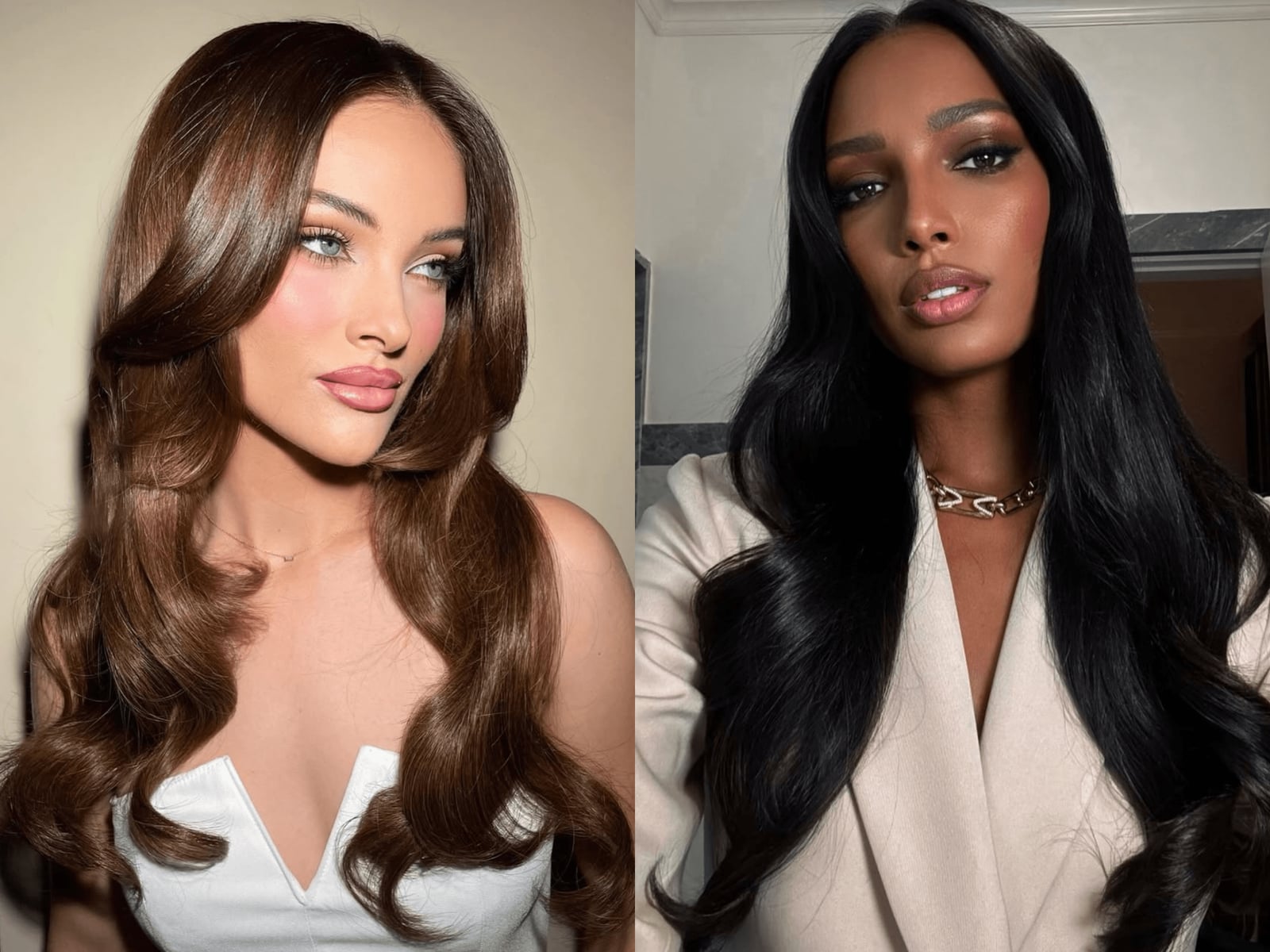
Dark chocolate brown at this depth works because it relies on shine rather than contrast. The middle part lets the color look one continuous piece, which makes the gloss the real focus. Loose voluminous waves catch the light across each curve without breaking the base into separate tones. Thick, wavy hair that starts at least at the shoulder can carry that weight. Skip it if you prefer a matte finish or have very fine hair that struggles with volume. Ask your colorist for: deep dark chocolate brown, glossy finish, loose waves. A shine serum on dry hair holds the effect for the evening.
Dark brown with subtle caramel highlights and waves
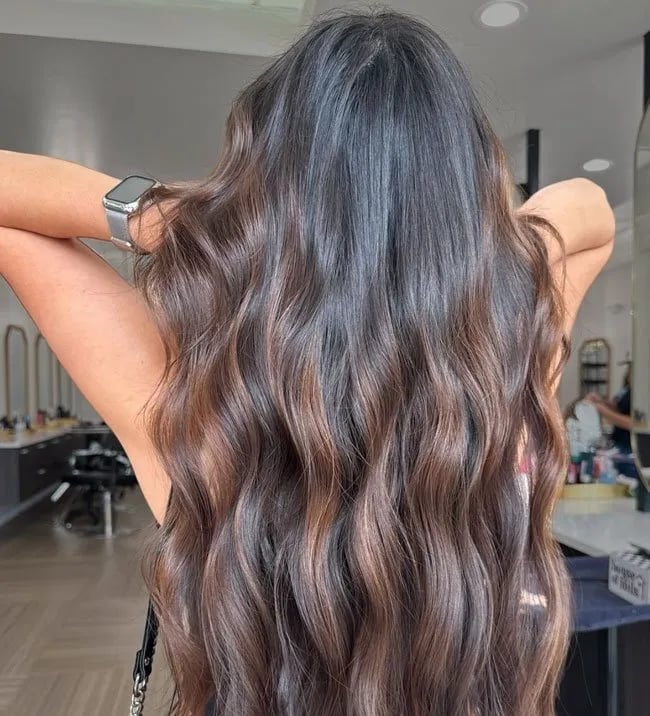
The highlights here are woven so finely they look texture rather than streaks, which keeps the dark brown base dominant. Wavy styling bends those lighter pieces into the shadow of the wave, so they appear and disappear as the hair moves. Thick, wavy hair that reaches the collarbone gives the technique enough surface to work with. A uniform color or very fine hair may not hold the same effect. A texturizing spray on dry waves keeps the separation visible.
Caramel highlights add warmth and dimension to dark brown
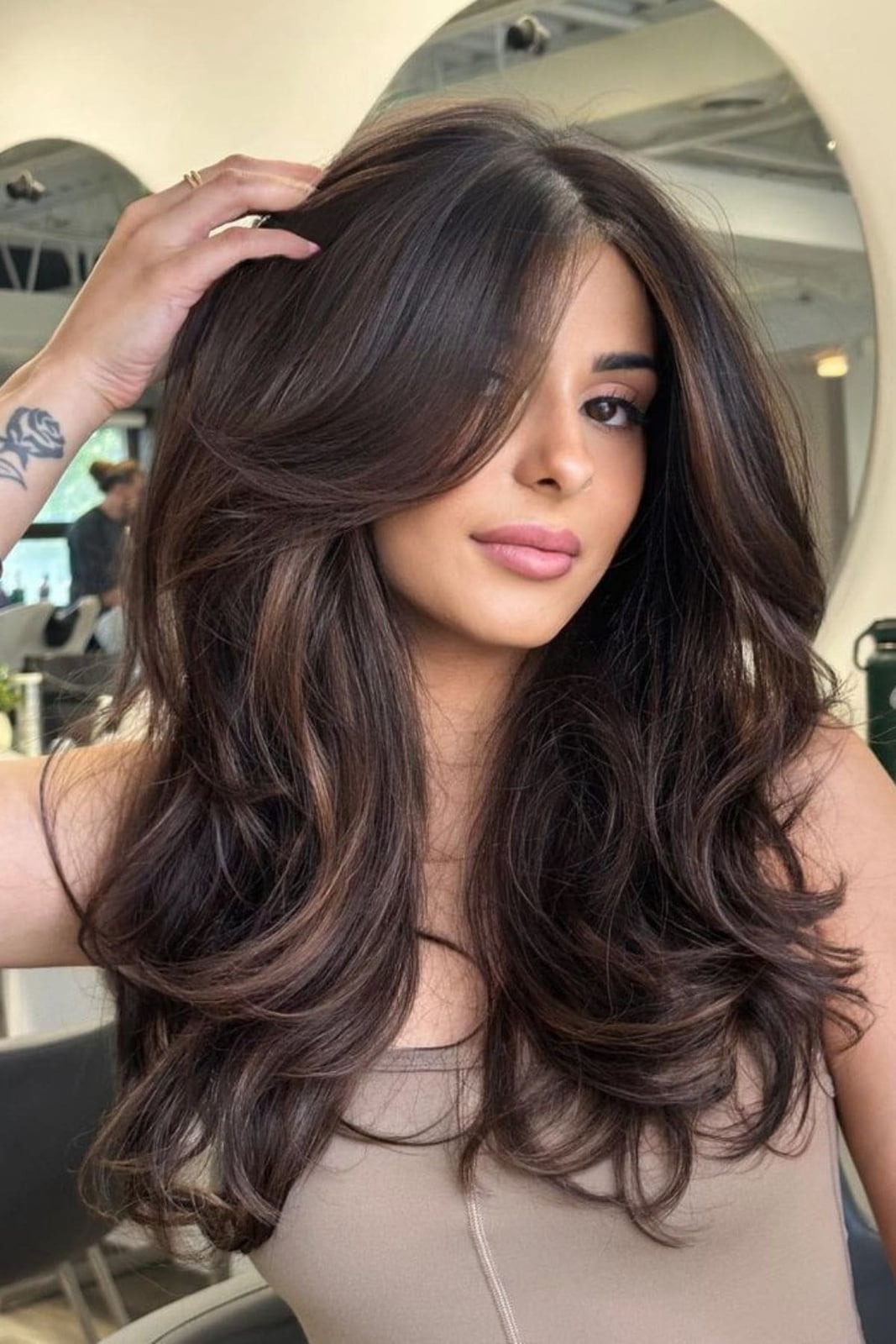
How do you get caramel to look like it grew there rather than arrived in foils? The answer is face-framing layers and curtain bangs. The lighter pieces sit on the layers that naturally catch sun, and the curtain bangs pull the warm tone forward around the face without committing the whole head to it. Curtain bangs soften round and heart faces. Skip it if you dislike fringe or have very fine hair that needs daily styling for the bangs. Ask your colorist for: dark brown base, caramel highlights, curtain bangs, face-framing layers. A round brush and a minute of heat on the bangs resets the shape.
Brunette with caramel highlights and long layers
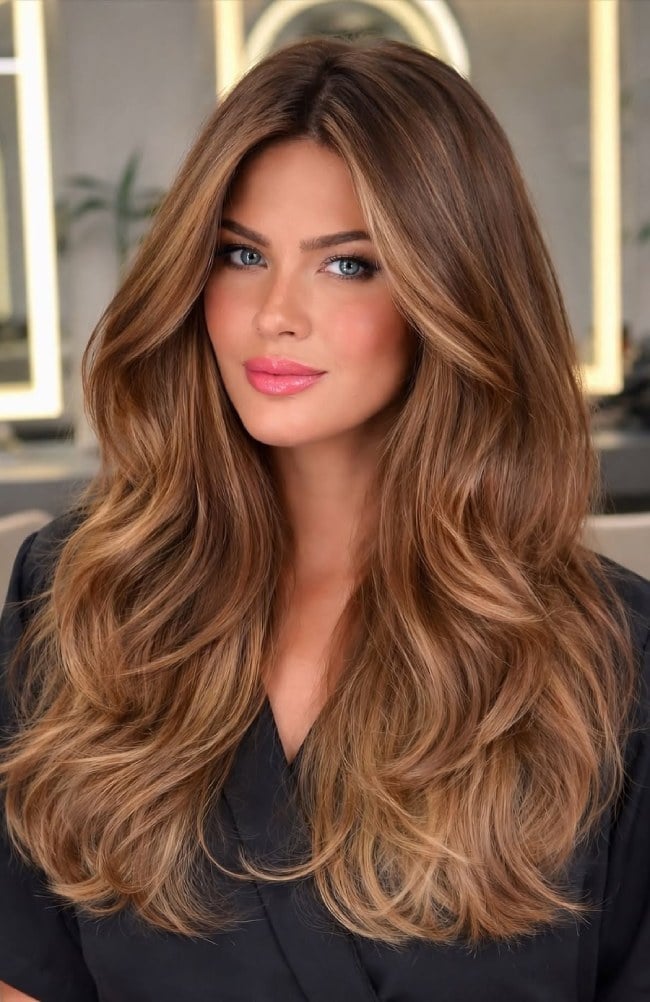
Long layers and a middle parting create a shape where the caramel highlights land at different heights. Some sit near the root, others lower down, so the color feels staggered rather than striped. The blowout smooths the surface and keeps the waves consistent from root to end. Thick, wavy hair has the density to hold those layers open without collapsing.
The upkeep is in the cut, not the color. Long layers lose their shape around week ten, and the highlights grow out as soft ribbons rather than a hard line, so the grow-out is wearable. Blunt cuts or very fine hair may not hold the volume.
Rich, multi-dimensional brown hue with loose waves
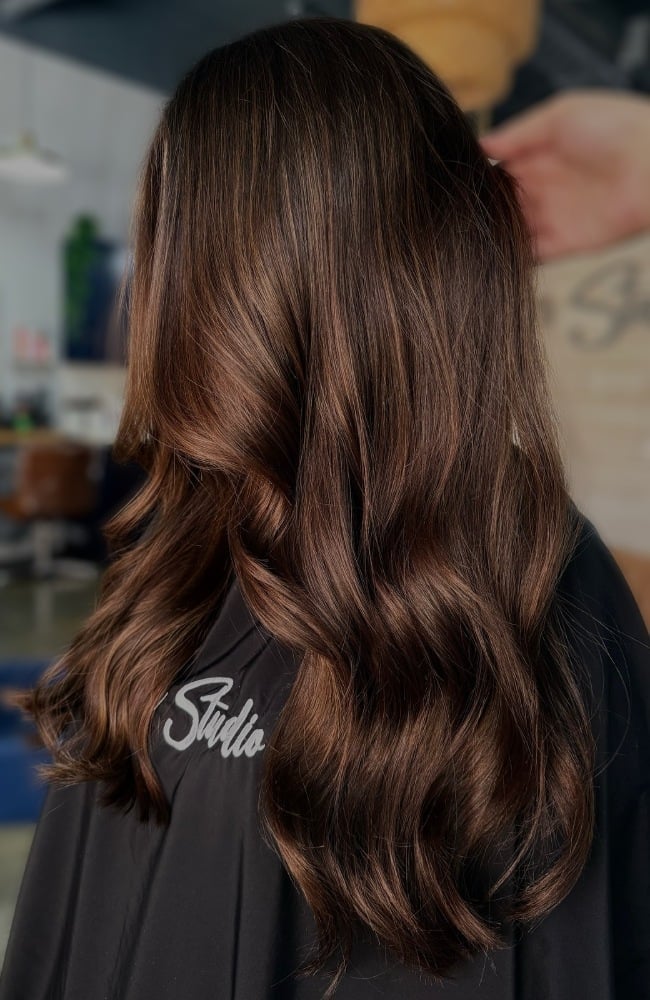
Dark chocolate brown with subtle caramel highlights works because the base is deep enough to anchor the lighter pieces without letting them dominate. Loose waves break up the surface into planes, so some catch the caramel and others stay in the brown. The effect is layered without being busy. Thick, wavy hair that reaches at least the collarbone can hold that wave pattern long enough to matter. Ash tones or very fine hair may appear weighed down. Ask your colorist for: dark chocolate brown base, subtle caramel highlights, loose waves. A sea salt spray on damp hair extends the wave life by a day.
Natural, lived-in look with warm undertones
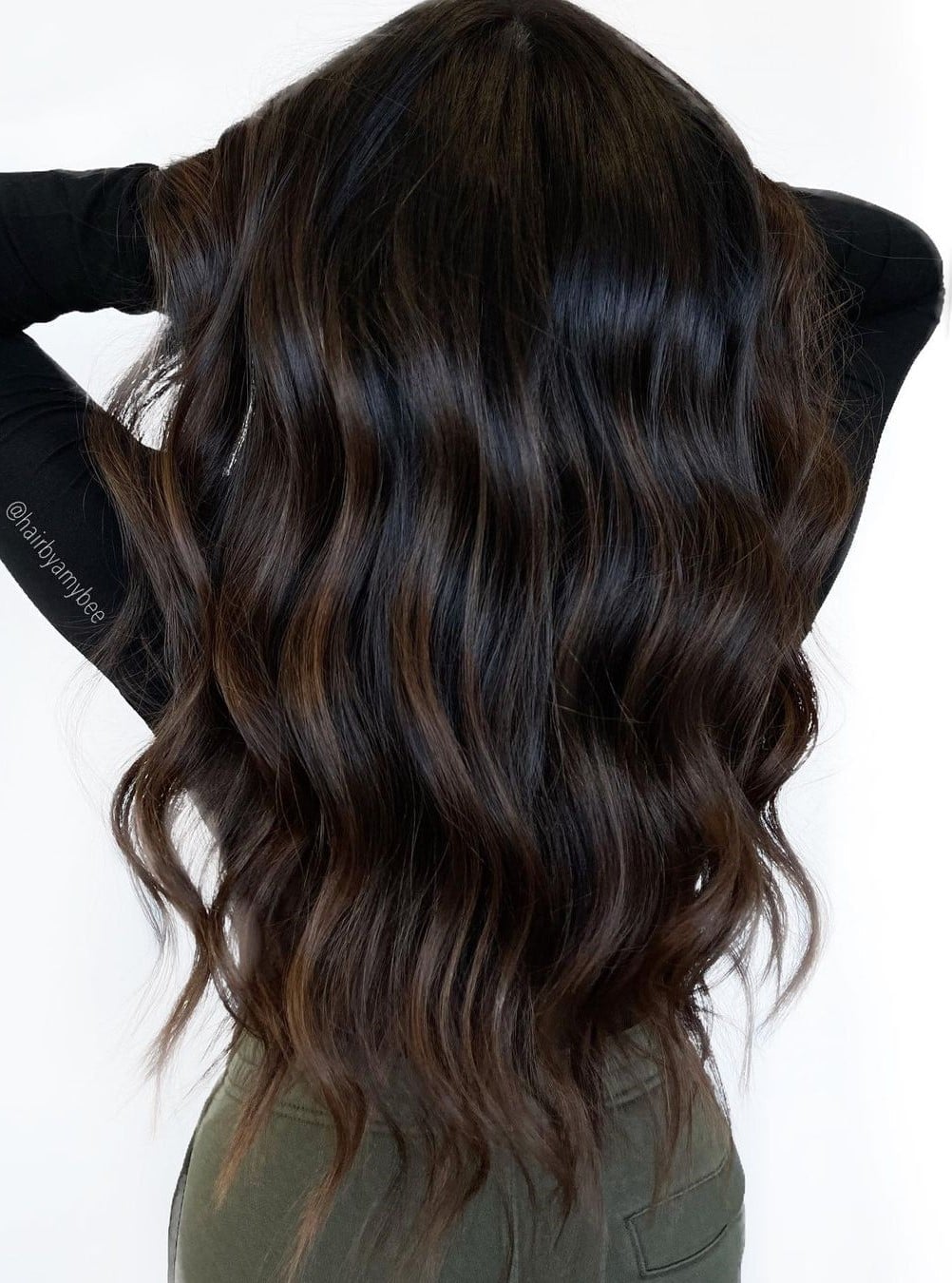
Warm undertones fade faster than cool ones. This rich dark brown base with subtle caramel highlights looks sunlit rather than brassy. The thick, wavy texture and middle part keep the color from feeling flat. The catch: you will need a toning gloss at week four or five, or the warmth starts looking orange. Air dry with a curl-defining cream and expect a trim every six weeks.
Balayage technique blends caramel hues into dark brown
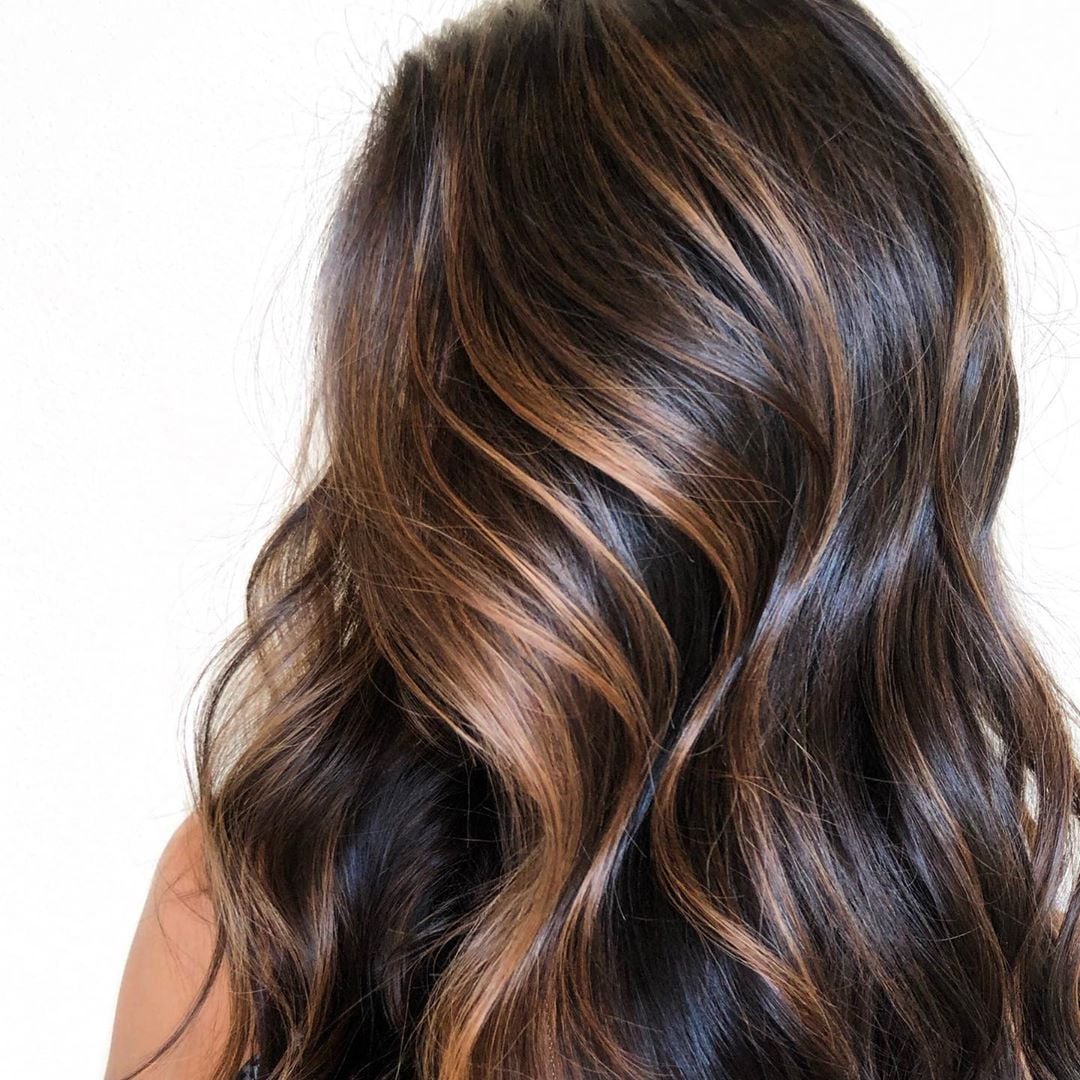
Balayage means the caramel sits heavier toward the ends and lighter near the root. This dark brown base with subtle caramel highlights uses that hand-painted placement to keep the regrow line soft. Wavy, thick texture helps the color transition look natural. Ask your colorist for: dark brown base, caramel balayage, wavy styling. The technique takes about two hours in the chair. No root touch-up needed for three months, which is the actual point.
Brunette with caramel balayage and loose waves
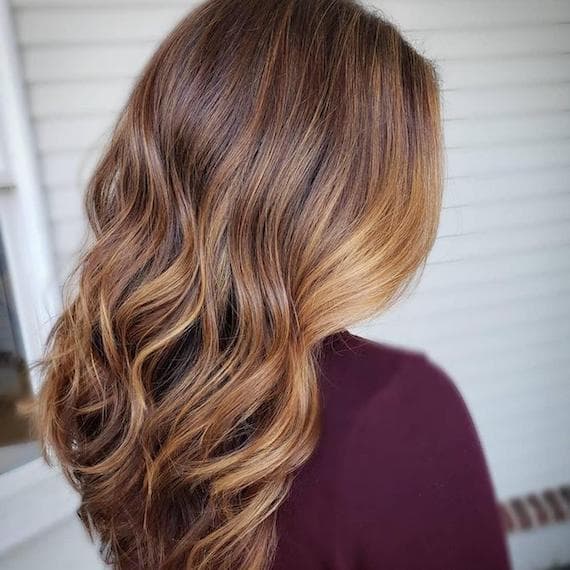
Caramel balayage on a brunette base works because the lighter pieces sit where the wave bends. From the side view, the loose waves catch those caramel sections at different heights, so the color looks deeper in the curve and lighter on the crest. Thick, wavy texture holds that shape without product. Skip it if you prefer a solid, single-tone brunette or your hair is fine enough that the lighter pieces look streaks rather than a blend.
Dark brown base with caramel highlights and waves and wavy blowout
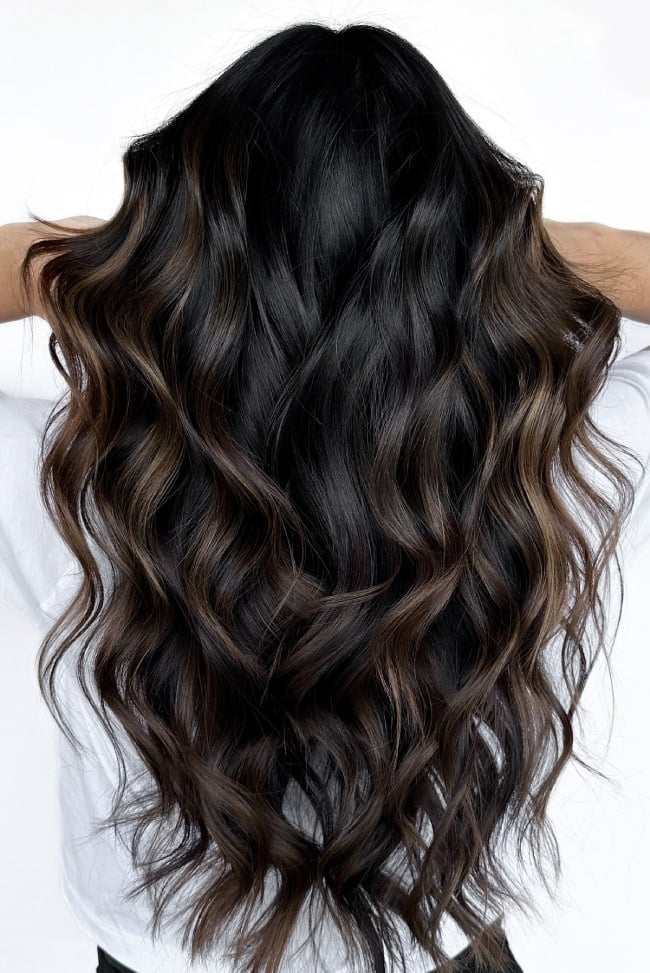
Can you get this dimensional color transition at home? No. The dark brown base with subtle caramel highlights requires a stylist who paints the caramel pieces narrowly enough that they do not look like stripes. Thick, wavy texture hides the transition point, which is why the back view looks a natural gradient. Ask your colorist for: rich dark brown base, caramel highlights, loose waves. Salon-leaning means a subtle balayage that needs skill. A DIY kit gives you a single flat shade.
Medium brown with warm undertones styled in waves
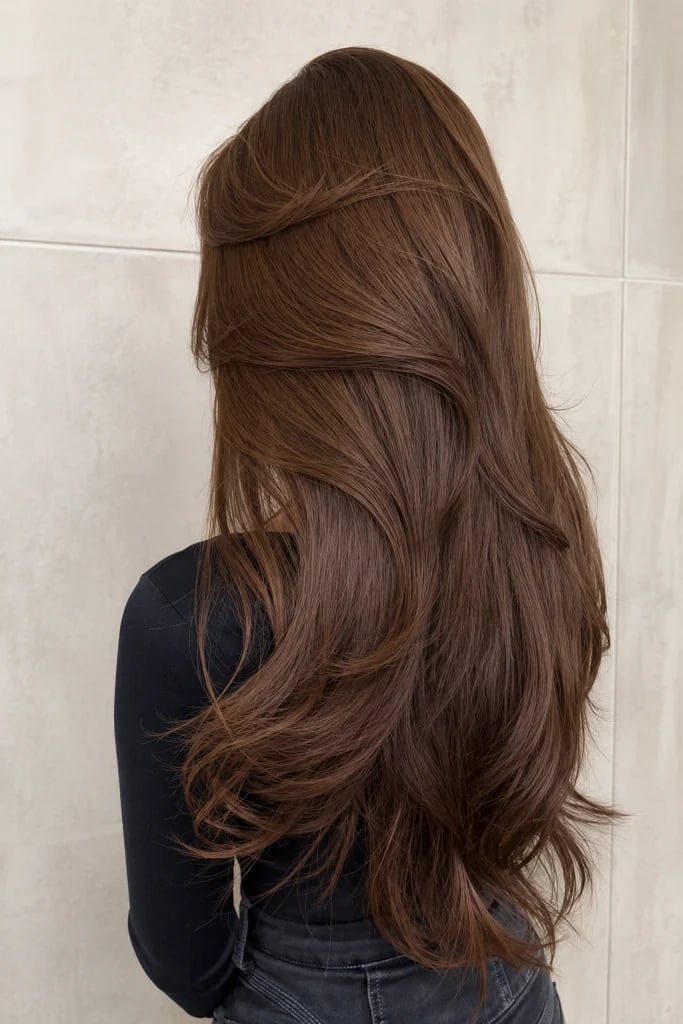
Medium brown with subtle warm undertones suits thick, wavy hair that holds a blowout. The side view shows how the layers break the color into sections, so the warm tone looks dimension rather than a solid block. Middle part and no bangs keep the look straightforward. Pass when your hair is fine and straight; the warmth will show as a single flat tone rather than the multidimensional hue it is meant to be.
Loose waves create natural textured brunette look
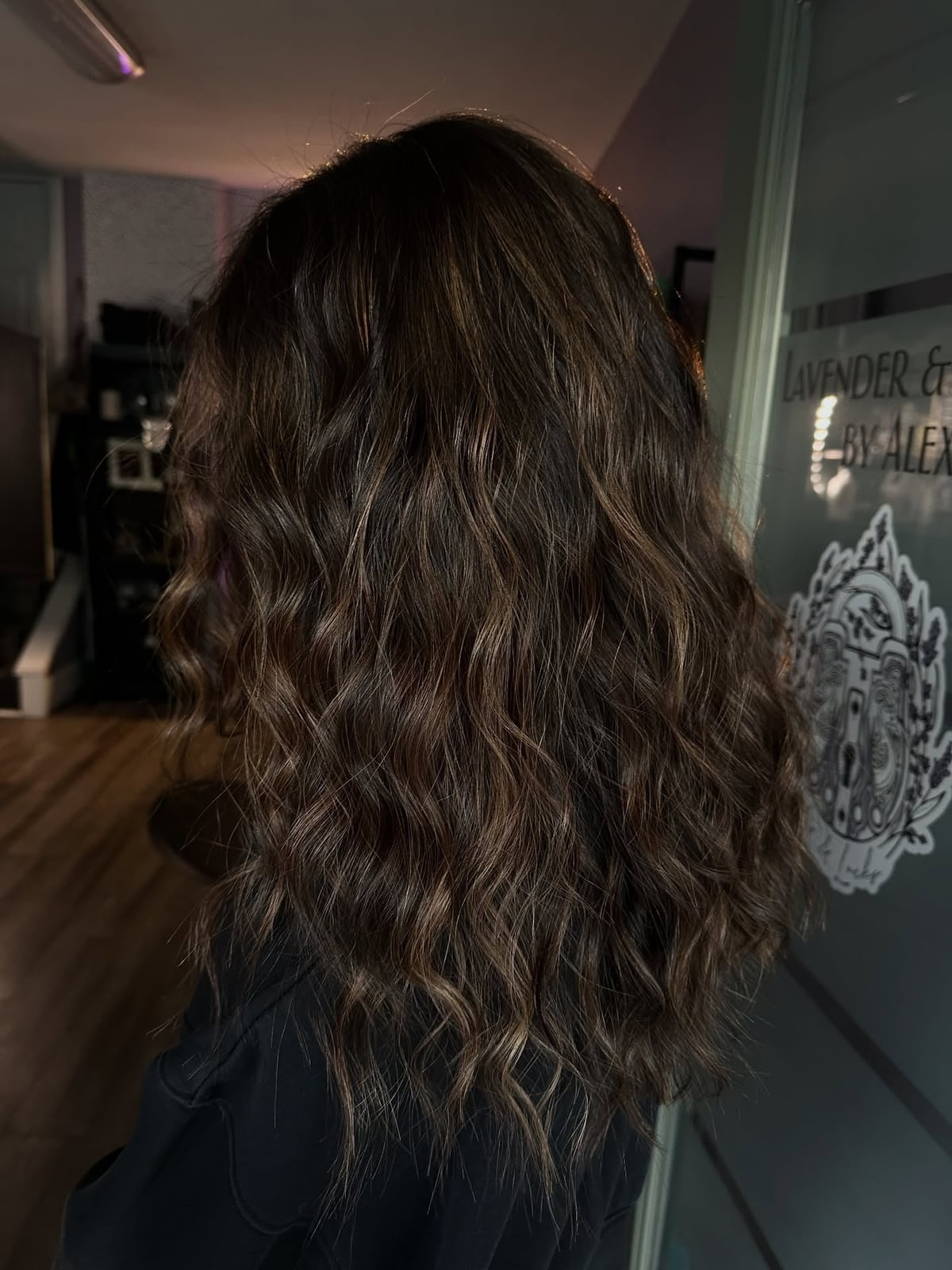
For a neat blowout, the finish here is different: air-dried waves that start from a dark brown base with caramel highlights woven through, so the lighter pieces catch the light without a round brush getting involved. Medium-density hair holds the texture best. Very fine hair may not hold the wave shape past lunch. A curl-enhancing cream scrunched in while damp does the job. Trim every six to eight weeks keeps the ends from looking stringy.
The dimensional highlights here are subtle enough that regrowth does not announce itself. That matters when the goal is a natural look you can repeat between salon visits. Wavy hair that starts at the collarbone gives the wave pattern room to form. The dark brown base keeps it grounded; the caramel is the accent, not the headline.
Dark brown with caramel highlights and layers
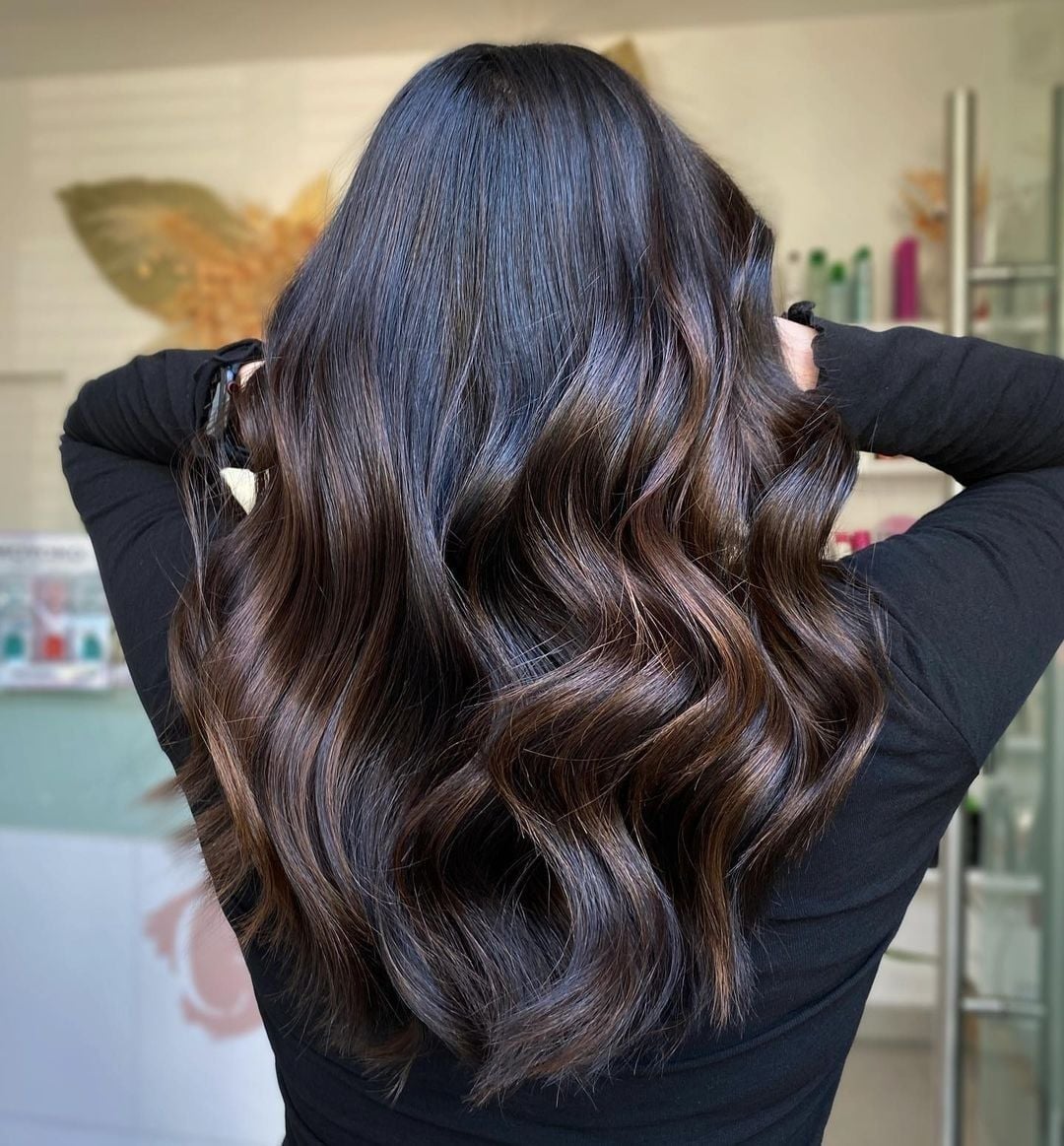
The back view tells the story. Dark brown with caramel highlights laid into a layered cut, the waves staggered so the lighter pieces land at different heights. A middle part keeps the weight evenly distributed. Thick, wavy hair benefits from the layering. It removes bulk without losing density. The caramel sits close to the base shade, so the contrast looks sunlit rather than streaky. Blowout styling finishes it, but the layers do the real work of creating movement. Skip the layers if you prefer a blunt hemline: the shape depends on them.
Dark brown with caramel highlights and air-dried waves, layers
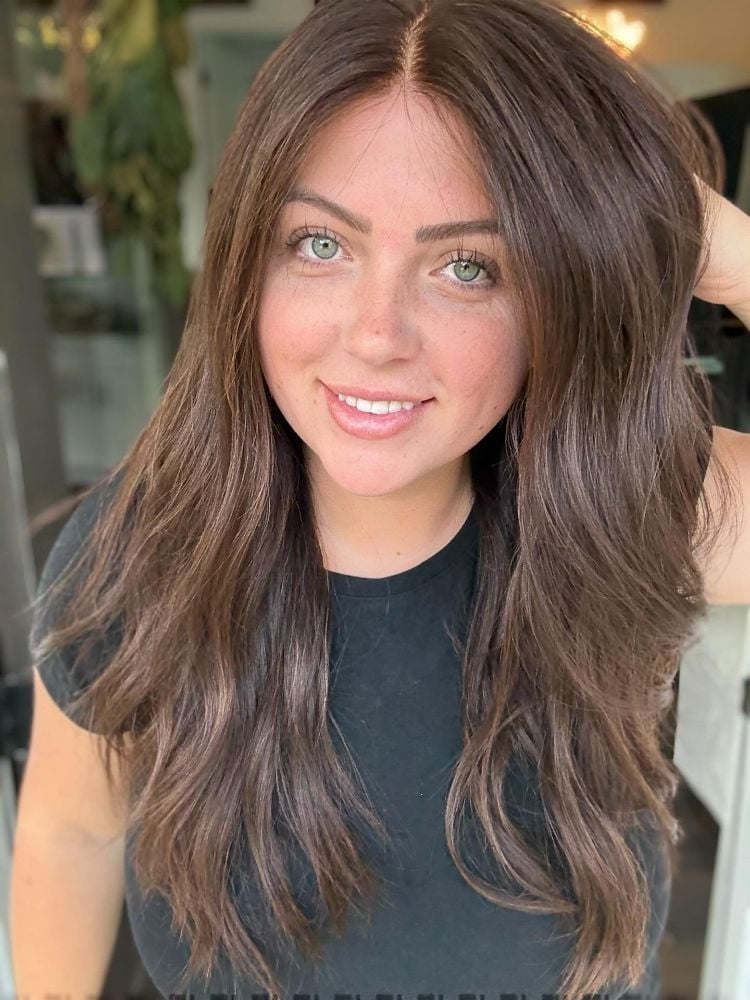
A practical rule: if you want color that works with air-dried texture, keep the highlights close to the base. Here, dark brown with caramel highlights and loose waves rely on a middle part and layered cut to give the shape some structure. The words for the chair: dark brown base with caramel highlights and layers, finished with a curl-defining cream. The drawback: caramel highlights need toning every six to eight weeks to keep them from pulling brassy. The texture stays natural, which means less heat styling but more product commitment.
Dark brown with auburn highlights and face-framing layers
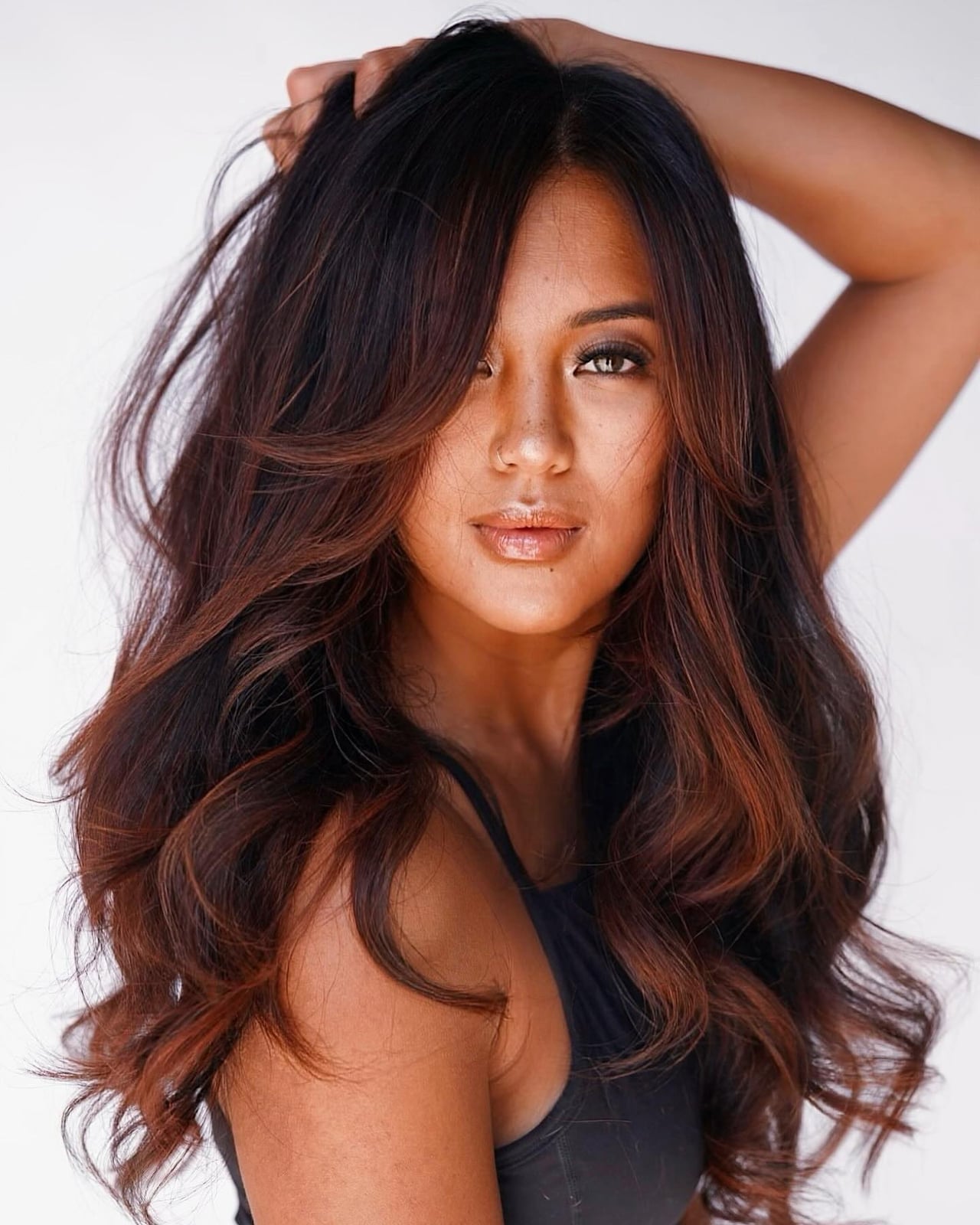
Set this against caramel highlights on dark brown. The difference: warm auburn highlights instead of caramel, which shifts the tone toward red rather than gold. The dark brown base stays the same, but the auburn pieces catch light with a warmer, more reddish glow. Face-framing layers start the color closer to the face, so the contrast lands where it matters most.
Thick, wavy hair suits this best because the layers need density to hold their shape. Square and heart faces benefit from the softness the front pieces create. For cooler-toned preferences, this is not the one. The warmth is deliberate and looks sunlit rather than neutral. A texturizing spray after drying keeps the layers from blending into one block.
Dark brown with auburn undertones and face-framing, close-up take
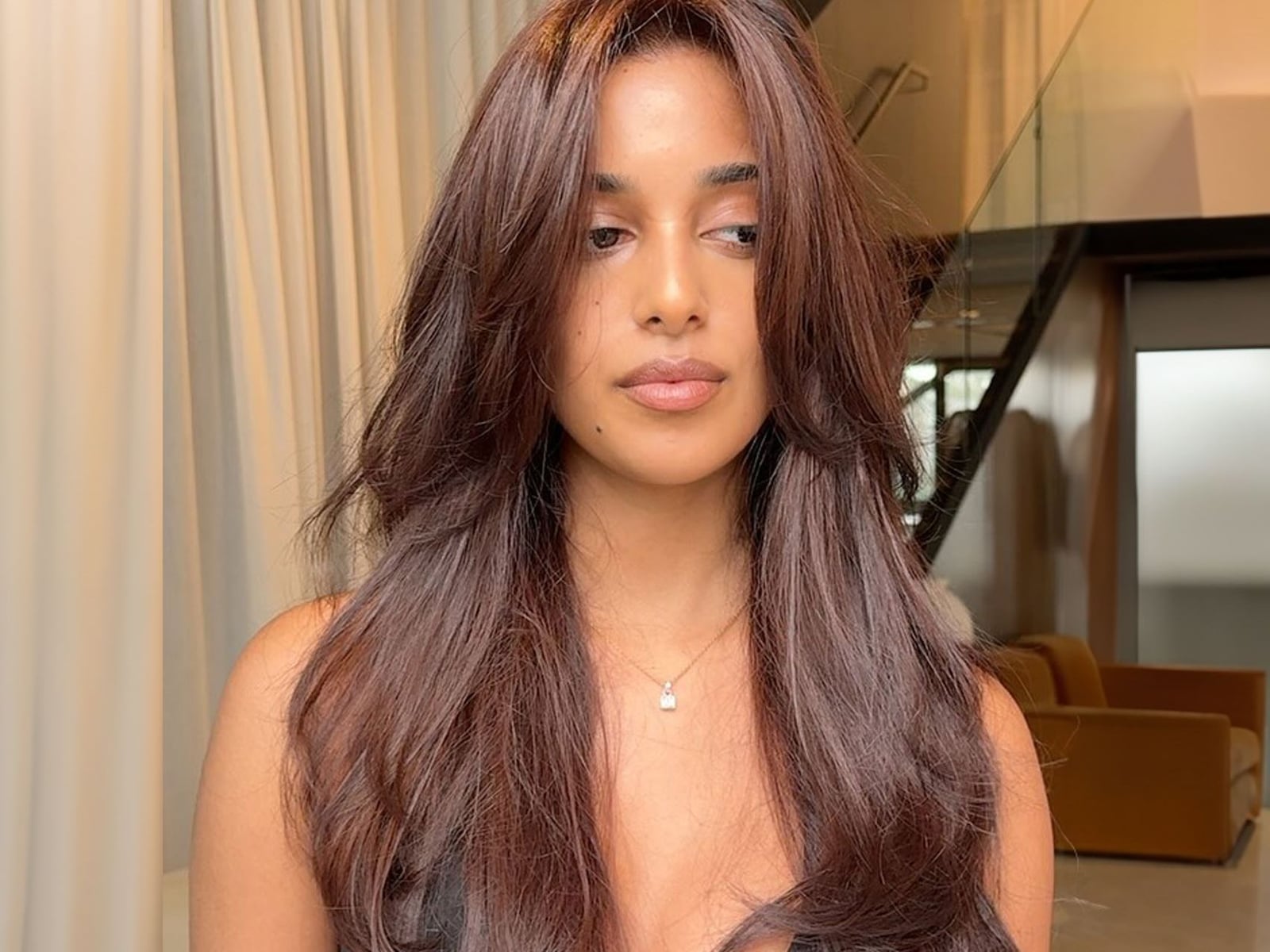
Up close, the auburn undertones in this dark brown hair are visible as a warm glow rather than separate strands. The color is one base shade with a red cast woven through it, not highlights sitting on top. Face-framing layers pull the warmth forward, and the middle parting keeps the distribution even. Thick, wavy texture helps the undertones register, fine hair tends to read the color as flat. The technique requires a professional hand because undertones need precise mixing to avoid looking accidental. A smoothing serum after drying brings out the red gloss without heat damage.
Dark brown with auburn highlights and long layers and creating a warm
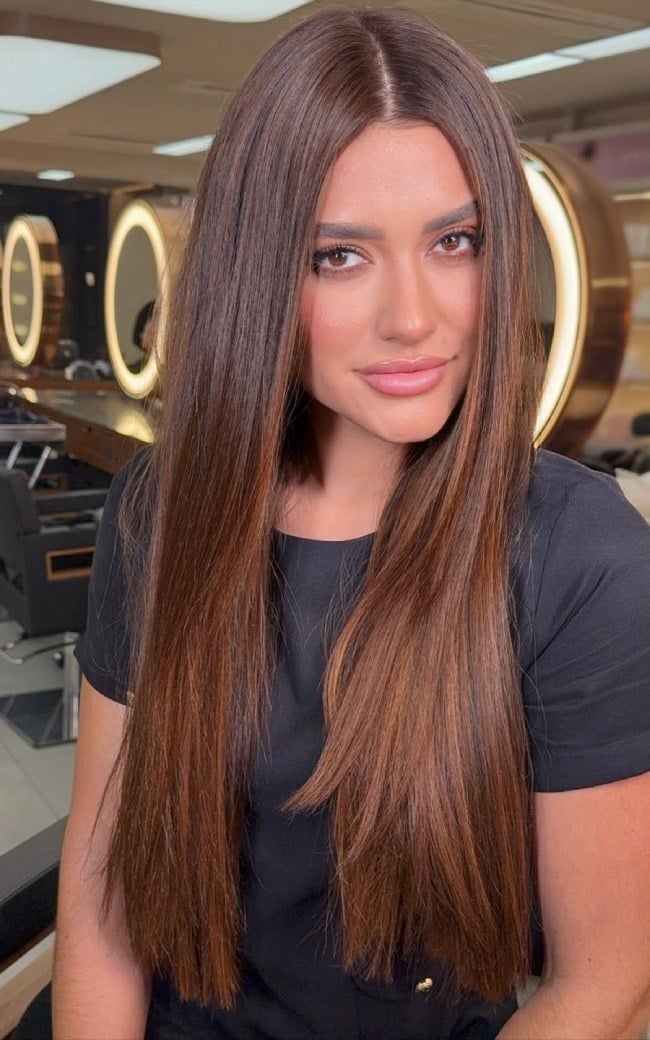
Fine, straight hair benefits from a technique that adds warmth without weight. The dark brown base keeps the overall depth, while auburn highlights are painted in soft ribbons, not chunks. A middle part lets the color fall symmetrically, and the long layers create gentle movement at the ends. Air-dried styling preserves the natural texture. Tell your colorist: dark brown base, subtle auburn highlights, long layers.
This approach works well for fine hair because the highlights are spaced apart, so the dark shade stays dominant and the strands don’t feel overloaded. Skip it if you prefer cool tones or have very thick hair that may not hold this natural style. A leave-in conditioner helps maintain smoothness between washes.
Deep auburn with copper highlights and layers
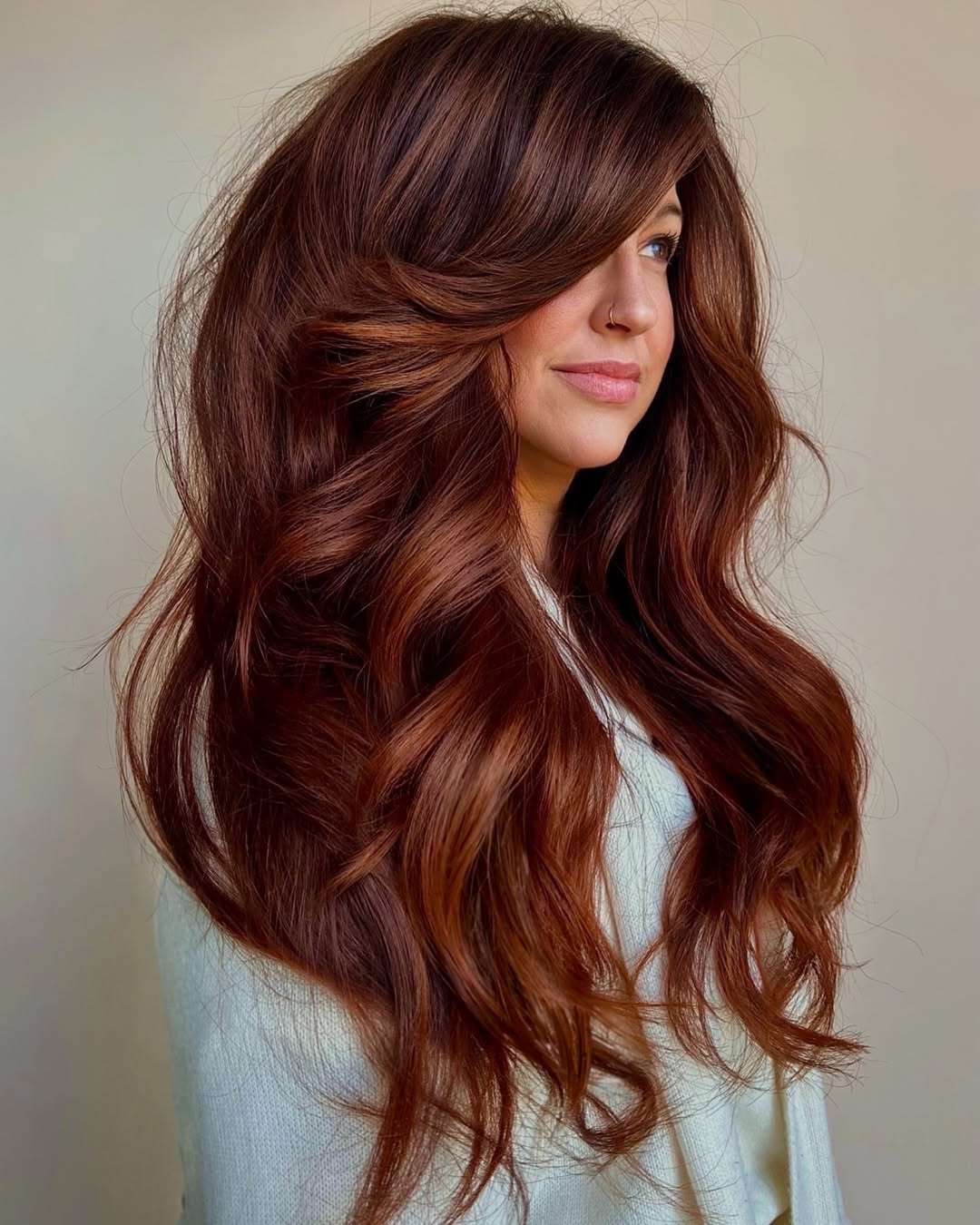
Deep auburn with subtle copper highlights relies on contrast between a rich red-brown base and lighter warm strands. The layers are cut to add volume, and a side-swept section frames the face without full bangs. Thick, wavy hair holds the shape from a blowout well. A volumizing spray at the roots helps maintain lift. Fine hair may not hold the volume.
Copper brown with auburn highlights and layers, wavy
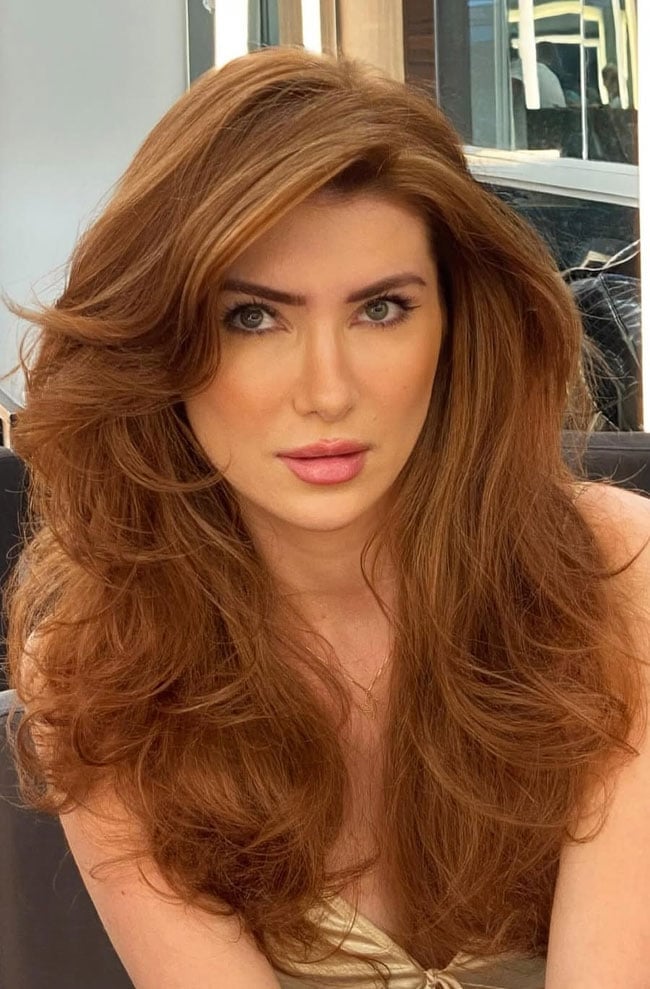
A warm copper brown base with subtle auburn highlights creates a color that shifts between orange and red depending on the light. The layers are cut to add movement, and the side parting directs the volume to one side. Thick, wavy texture holds a blowout well, so the soft waves stay defined. A smoothing serum on the ends prevents frizz. The copper tone fades faster than neutral browns, so plan for a toning visit every six weeks.
Warm brown with copper undertones and layers
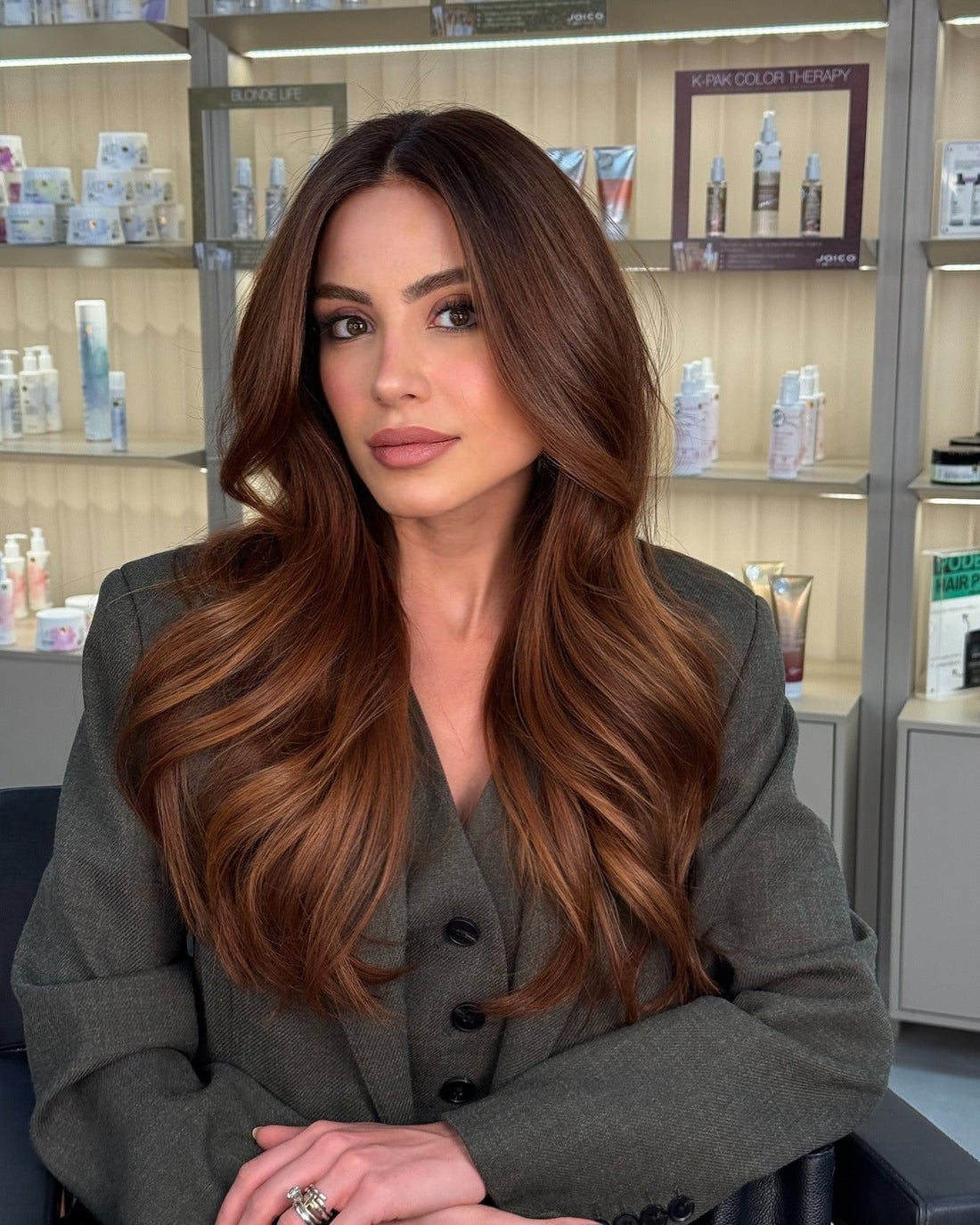
Rich warm brown with copper undertones looks like a solid shade until the light hits it, then the red flashes through. The middle part keeps the distribution even, and the layers add volume without sacrificing length. Thick, wavy hair supports the soft waves from a blowout. Ask your colorist for: warm brown base, copper undertones, layers. A heat protectant spray is essential before styling. This finish typically works best on medium to thick hair that can hold volume.
Golden highlights catch the light in warm brown
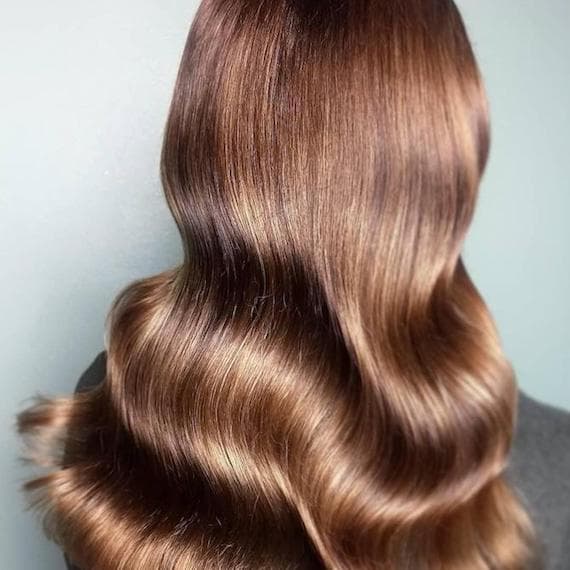
Golden highlights against a warm brown base create a sunlit effect that a single shade can’t achieve. The difference is in the placement: the lighter pieces are concentrated around the crown and ends, leaving the deeper brown at the roots. Thick, wavy texture holds the soft, glossy waves from a blowout without needing much product. Skip it if you prefer cool tones or have very fine hair that may appear weighed down. A shine serum enhances the glossiness between trims.
Compared to auburn or copper highlights, the golden tone is warmer and less red, so it suits those who want brightness without a strong orange shift. The effect is subtle enough for a workplace but visible enough to catch light in photos.
Ash-toned highlights add dimension to dark brown, wavy
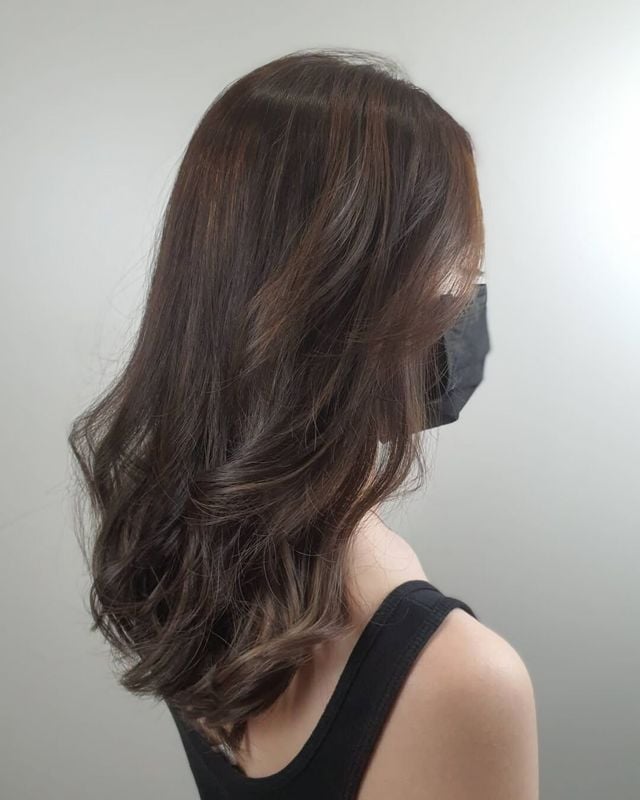
Fine, wavy hair with a dark brown base benefits from ash-toned highlights. Cool tones add dimension to fine strands. Ask your colorist for: dark brown base, ash highlights, layers. The middle part keeps the wave pattern symmetrical, so each side moves the same way. Suits most face shapes, provided your hair reaches the collarbone. It works best for those who prefer cool tones and have fine to medium hair. A texturizing spray on damp strands enhances the natural bend without weighing the fine texture down.
Ash blonde highlights create dimensional effect on dark brown
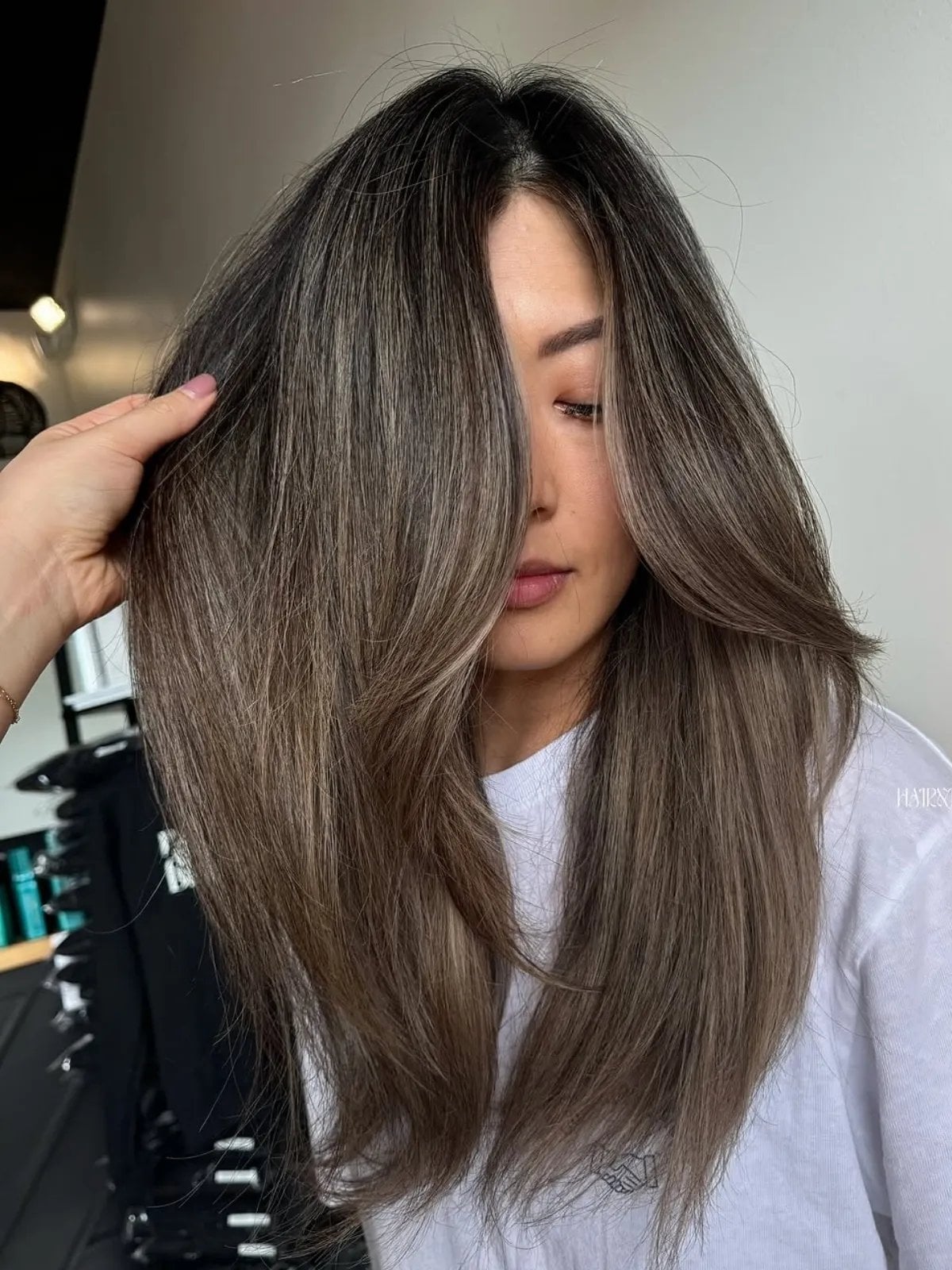
Ash blonde on a dark brown base goes cooler, not brighter. The layered cut and middle part let a smooth blowout fall straight and neat. Fine, straight hair carries the tone well. The result looks neat and deliberate, which is the goal of a salon blowout. No need for heat tools beyond the dryer and a round brush. A lightweight serum on the ends keeps the fine texture from looking stringy by midday.
Dark brown with ash blonde highlights and waves
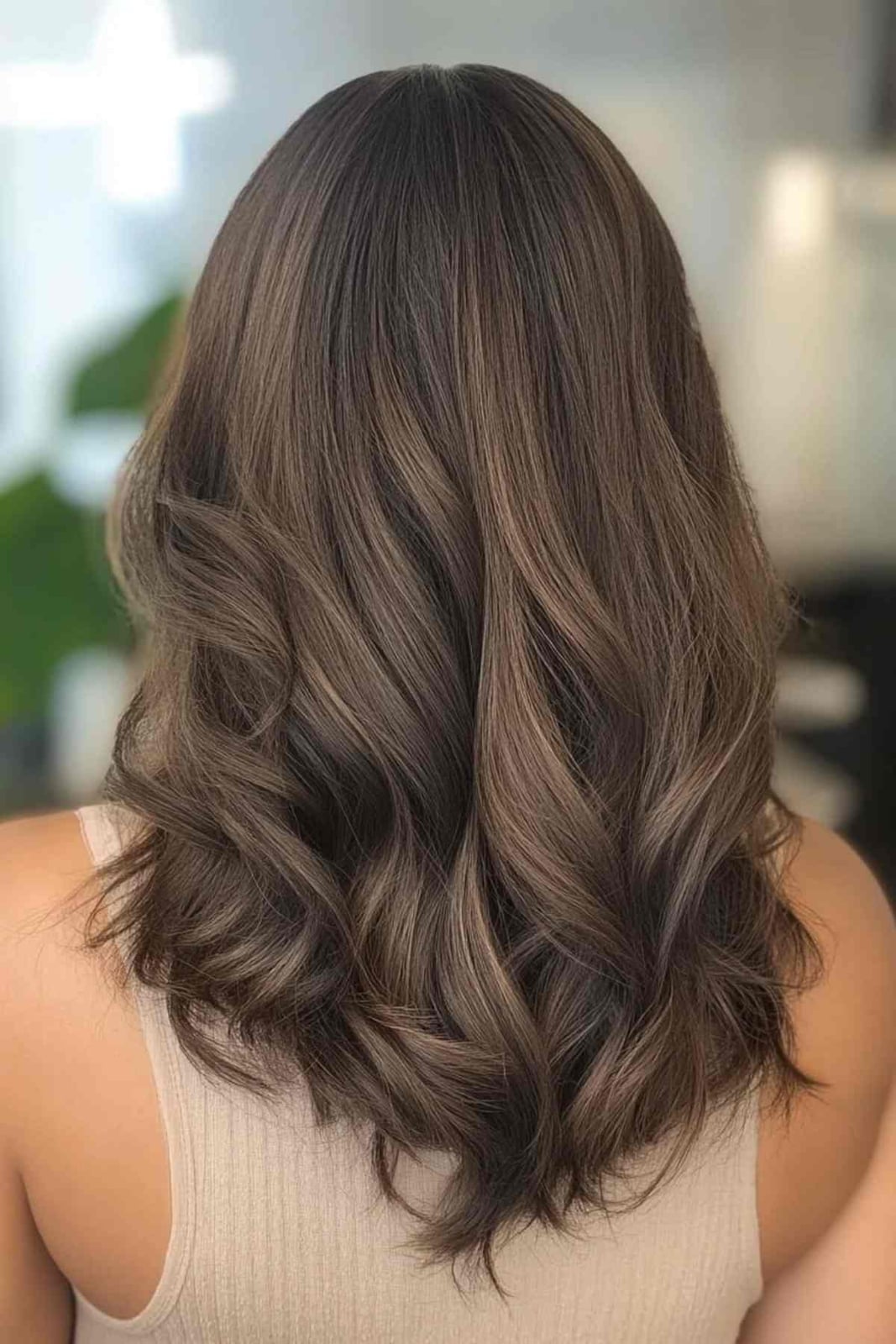
Thick, wavy hair takes ash blonde highlights differently than fine hair does. The wave pattern breaks up the lighter pieces, so the color looks movement rather than stripes. The dark brown base grounds the ash tones, keeping them from washing the face out. Ask your colorist for dark brown base, ash blonde highlights, layers. The layers are cut into the wave, not straightened and then curled, so the shape holds after air-drying. A texturizing spray on damp strands enhances the natural bend. The catch: ash tones on thick hair can look flat if the highlights are too fine. Stay with a slightly wider weave for contrast.
Dark brown with ash blonde highlights and curtain bangs, wavy
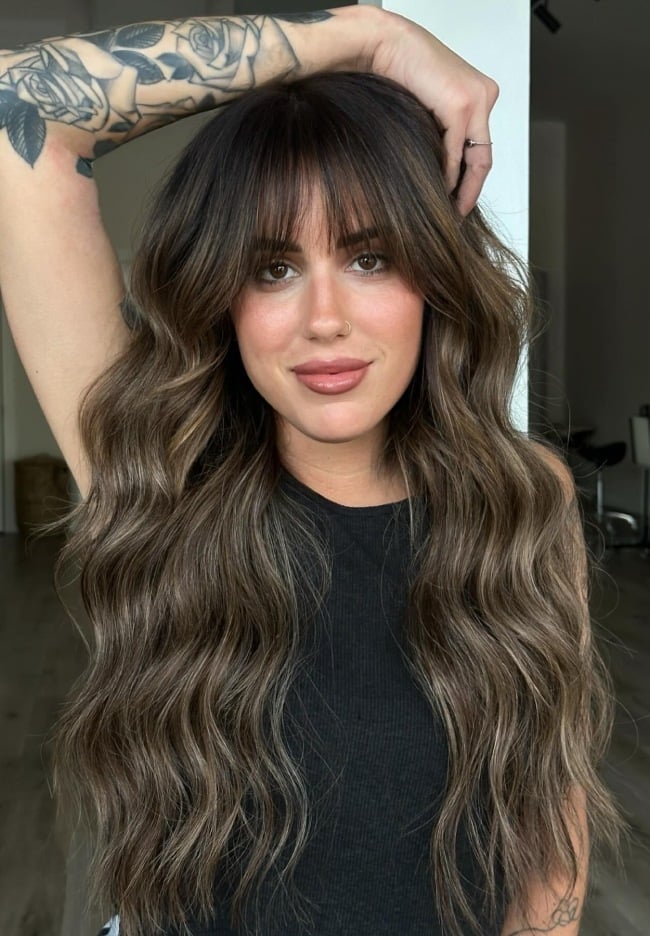
Curtain bangs on thick, wavy hair need a colorist who understands weight distribution. The dark brown base with ash blonde highlights works best when the lighter pieces start below the fringe line. The bangs frame the face, so the highlights there should be subtle. Suits round and heart faces, as the curtain shape softens the jaw. Skip it if you dislike fringe or have very fine hair that needs daily styling for the bangs. The trade-off: curtain bangs require a blow-dry with a round brush every morning, and the ash tones need a toning treatment every four to six weeks to stay cool.
Cool-toned highlights frame face on ash brown
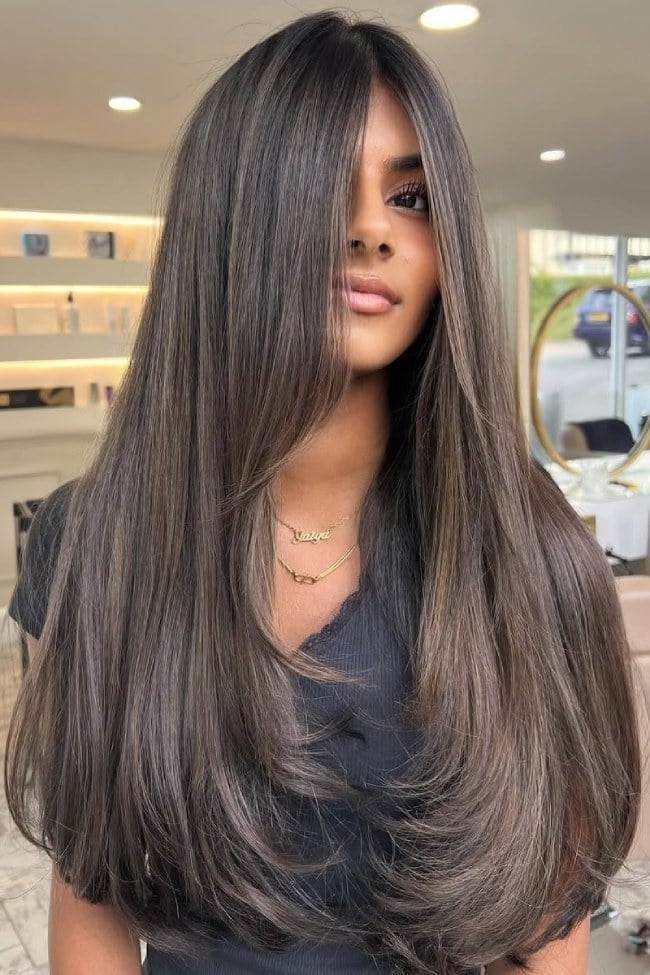
Face-framing layers on a dark ash brown base do not need chunky highlights to look dimensional. Cool-toned highlights woven into the layers around the face add subtle contrast. The curtain bangs complete the shape, softening the jaw on square and round faces. Ask your colorist for dark ash brown base, cool-toned highlights, face-framing layers, curtain bangs. The blowout keeps the straight, thick texture smooth and neat. It works best with a fringe and medium to thick hair that can hold a blowout. The ash base fades warmer over eight to ten weeks, so a purple shampoo once a week helps maintain the cool tone.
Blonde highlights add dimension to brunette style
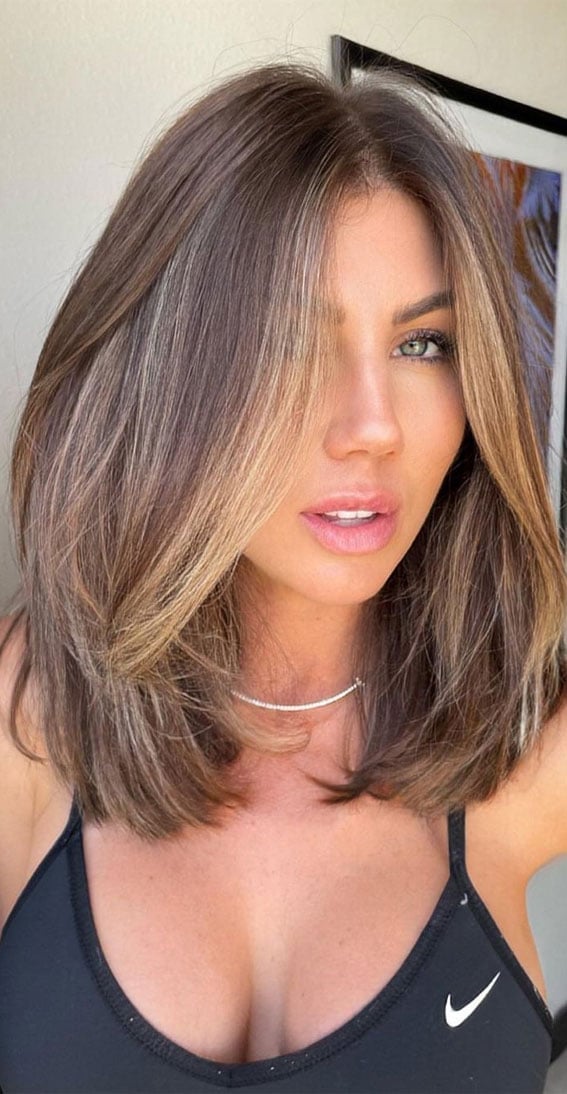
Set this brunette with blonde highlights against a solid single-process brown and the contrast is immediate. The blonde pieces sit close to the face, drawing the eye. Soft layers and a side-swept bang keep the whole thing moving, while the blowout adds volume at the roots and a gentle wave through the lengths.
Fine, straight hair that reaches the collarbone wears this best. The side-swept bang flatters most face shapes, softening a square jaw or balancing a long forehead. It works best for those who want dimension, not uniform color, and for hair that is not very thick and prone to holding its own shape.
Brunette with blonde balayage and layers
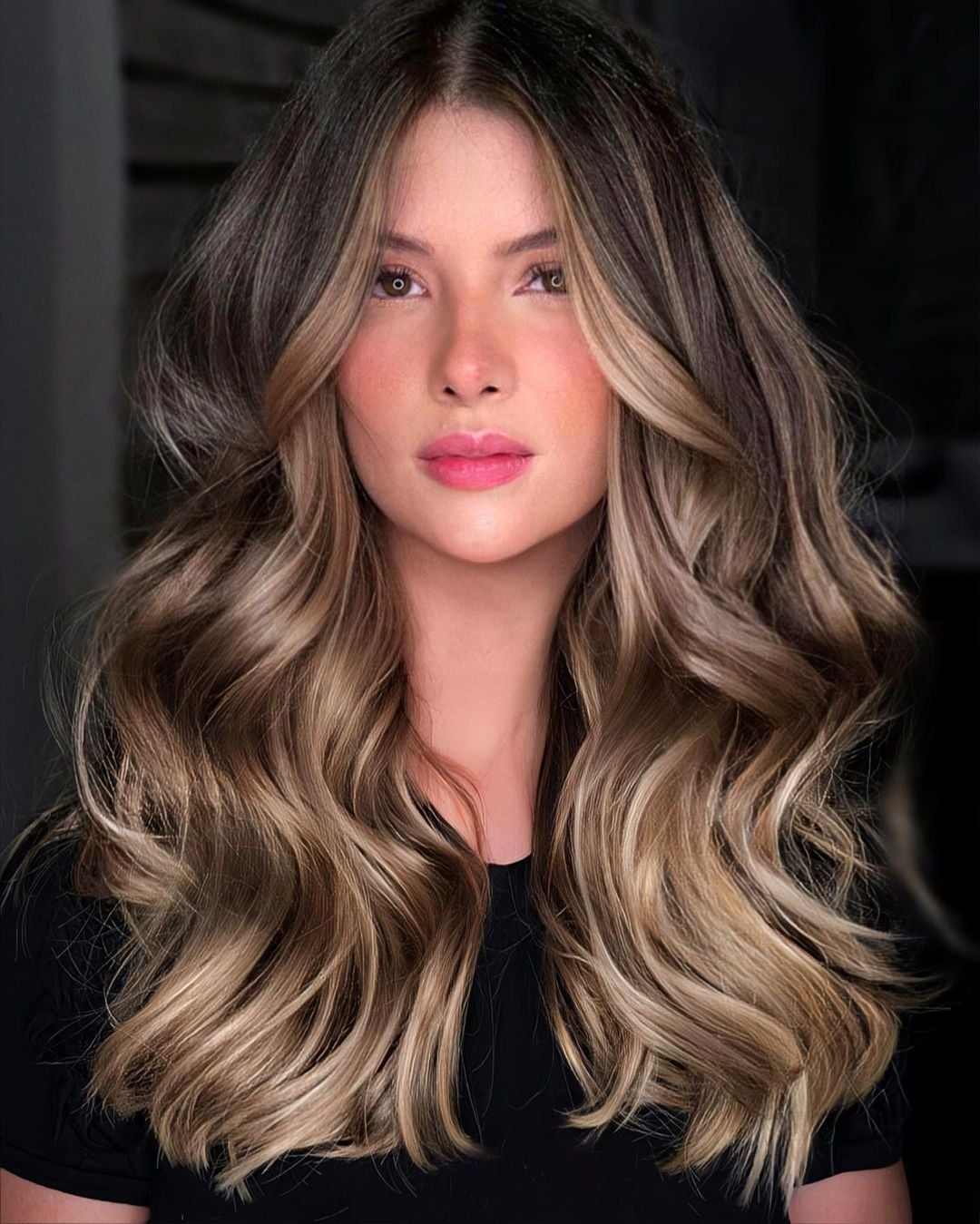
Start with the base, then let the balayage do the talking. A rich brunette base with blonde balayage works best when the colorist paints the lighter pieces freehand, so they land where the hair naturally falls. The layers here are cut to move with the wave pattern, not against it. Loose waves and a centered parting finish the look without extra fuss.
Thick, wavy hair holds the shape well, and the layers keep it from feeling heavy. Ask your colorist for: brunette base, blonde balayage, layers.
Medium-length brunette with blonde balayage
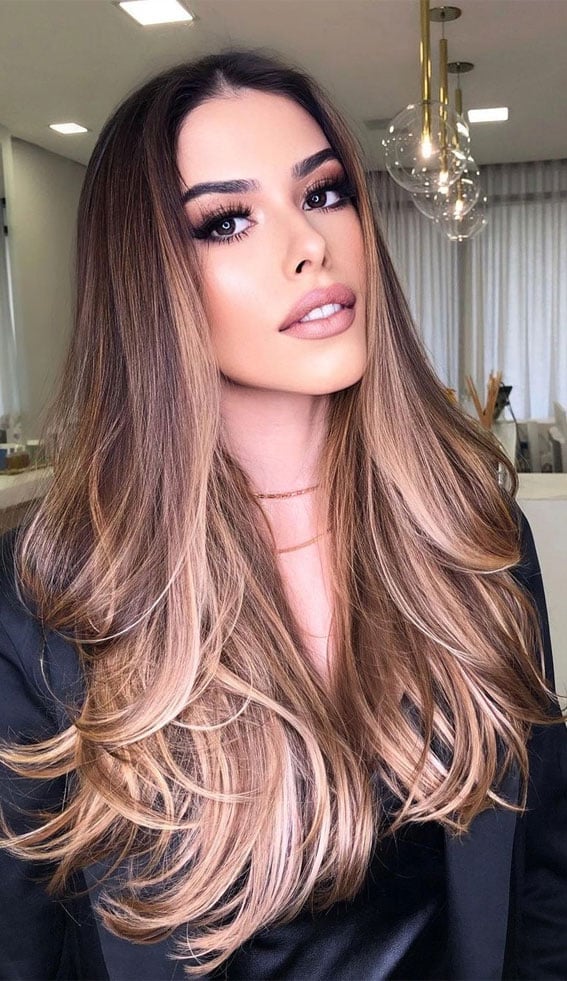
Compare this to a full foil and the difference is the grow-out. The balayage transition starts darker at the roots and melts into lighter blonde tones, so there is no harsh line when it grows. Medium-length, layered brunette hair with soft waves and a middle part makes the blend look natural rather than painted on.
Fine, wavy hair benefits from the lightness at the ends, which adds the appearance of volume without extra product.
Lighter blonde highlights enhance dark blonde lob
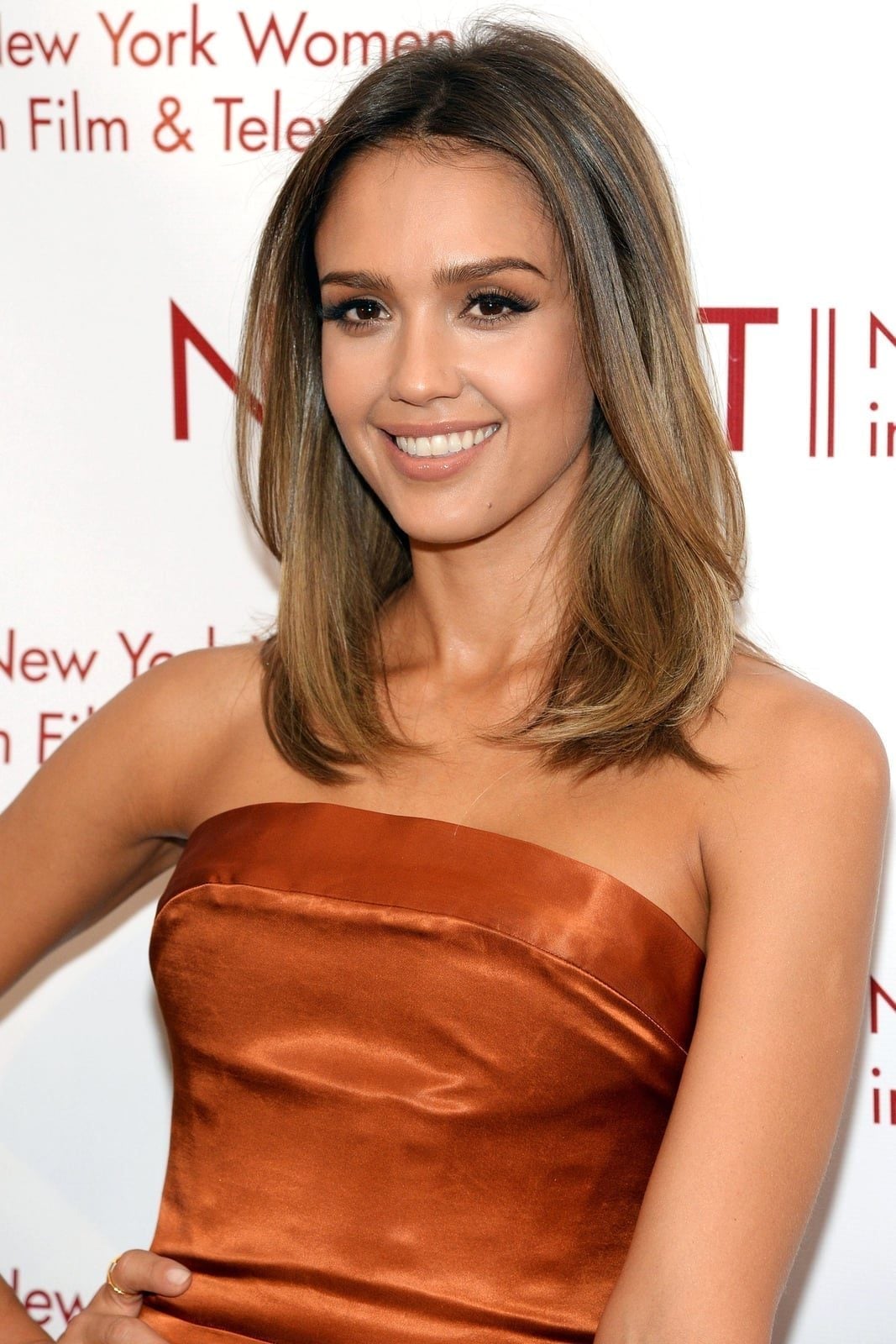
This dark blonde lob with subtle, lighter blonde highlights woven through keeps the color close to natural, so it works for the office and the weekend alike. The smooth blowout and middle part give it a clean line, and the fine, straight texture holds the shape without frizz.
Fine, straight hair that reaches the jawline suits this best. This shade leans cooler and more neutral. Ask your colorist for: dark blonde base, subtle blonde highlights, lob, blowout.
Asymmetrical bob in dark brown with highlights
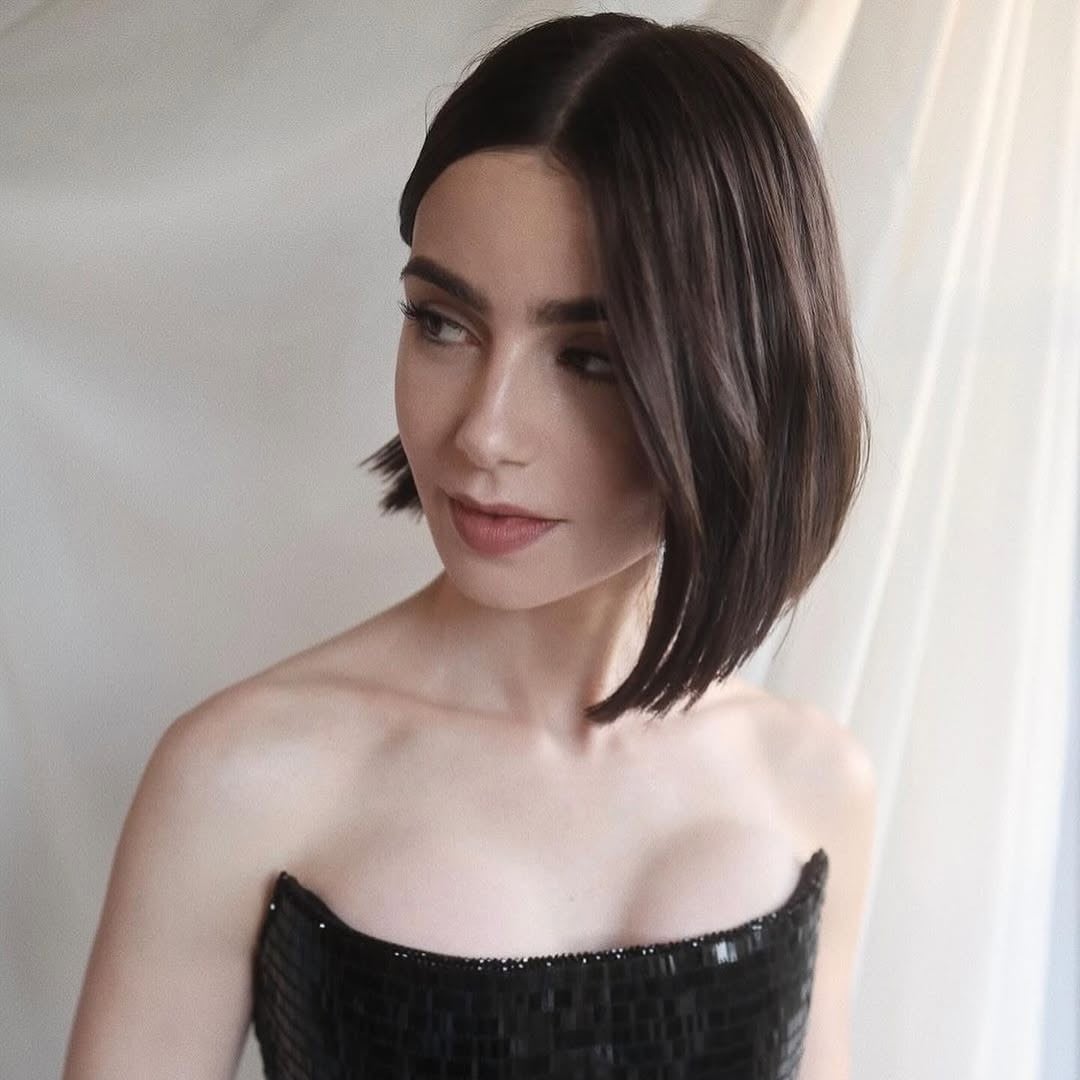
An asymmetrical bob in rich dark brown with subtle, lighter brown highlights is a cut that does the work for you. The shorter back and longer front create the shape, while the highlights add depth without changing the base. A smooth blowout keeps the line clean and the fine, wavy texture holds the style.
The catch: this shape needs maintenance.
Auburn brown bob with a side part
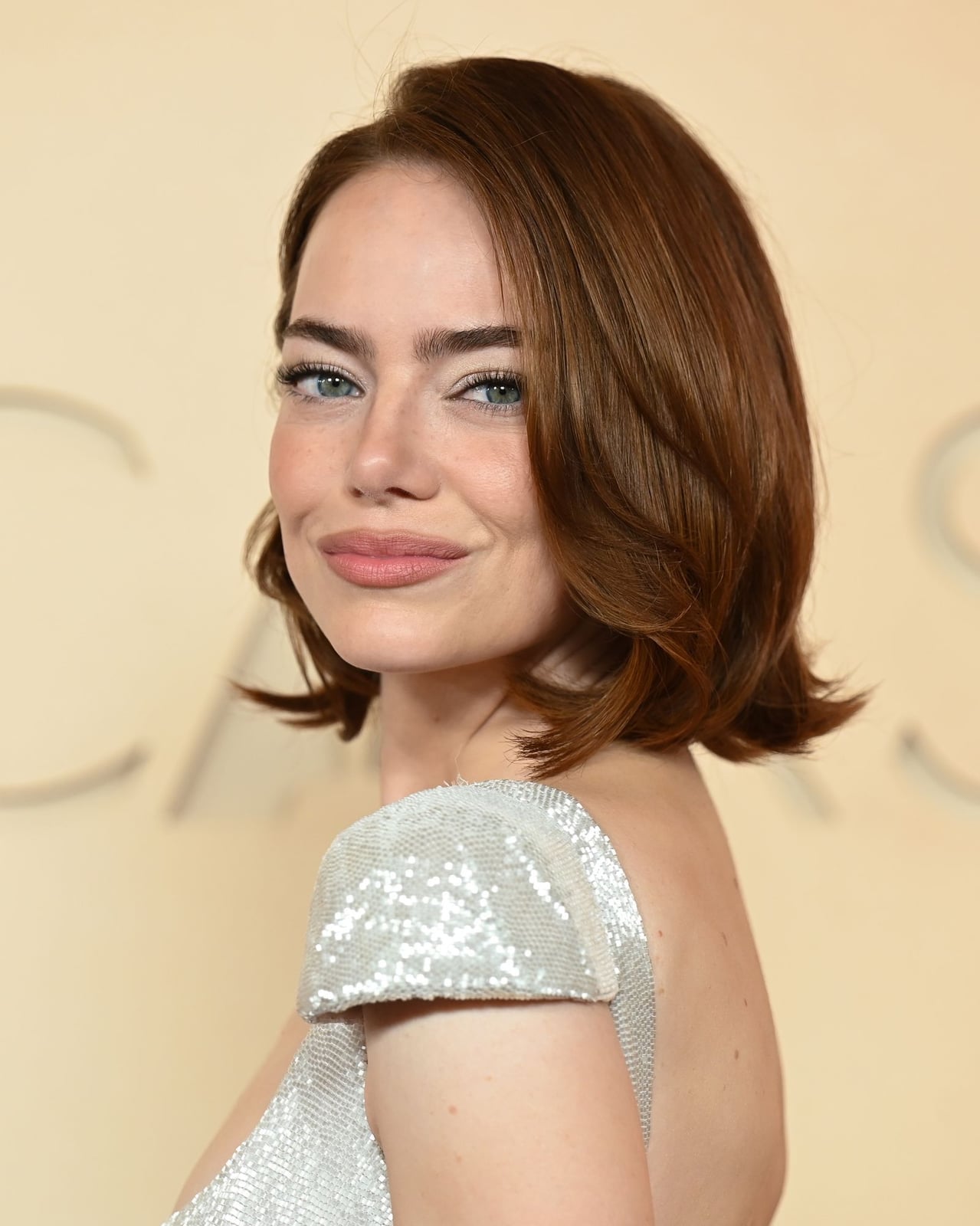
Set a rich auburn brown against a side part, and you get a neat look that still looks low-key. The fine, wavy texture keeps the cut from feeling severe. Skip it if you lean cool-toned or your hair runs very thick. The shape can feel too dense without regular texturing. Tell your colorist: auburn brown shade, side part, bob.
Violet undertones create plum hue in deep brunette
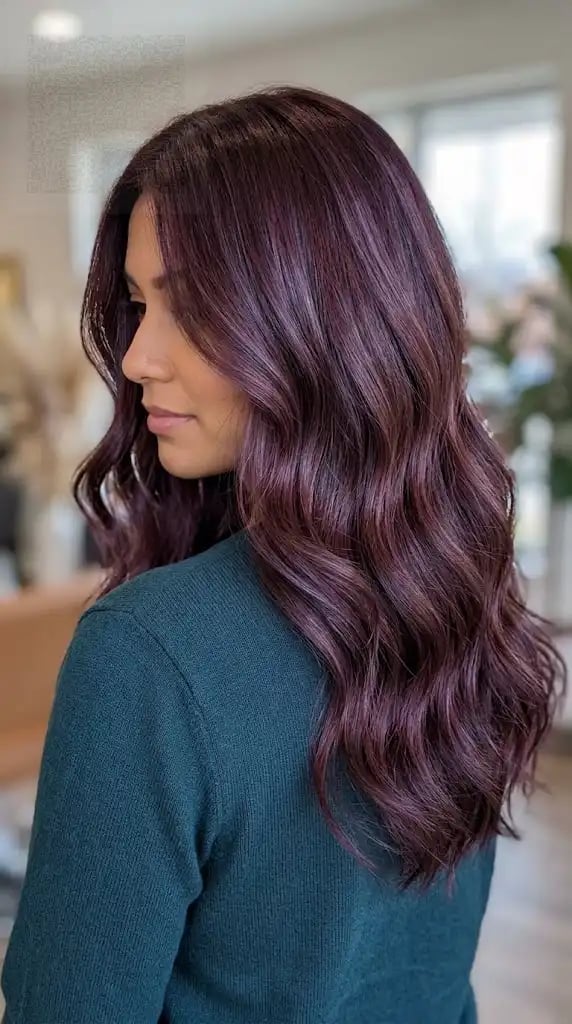
This version keeps the base deep and adds just enough cool undertone to shift the brown toward plum. The fine, wavy texture catches the tone differently in each wave. Not for anyone who prefers warm, golden browns. The violet will fight them. A color-depositing conditioner every second wash keeps the hue from pulling too gray.
Dark brown with deep red undertones and layers, close-up take
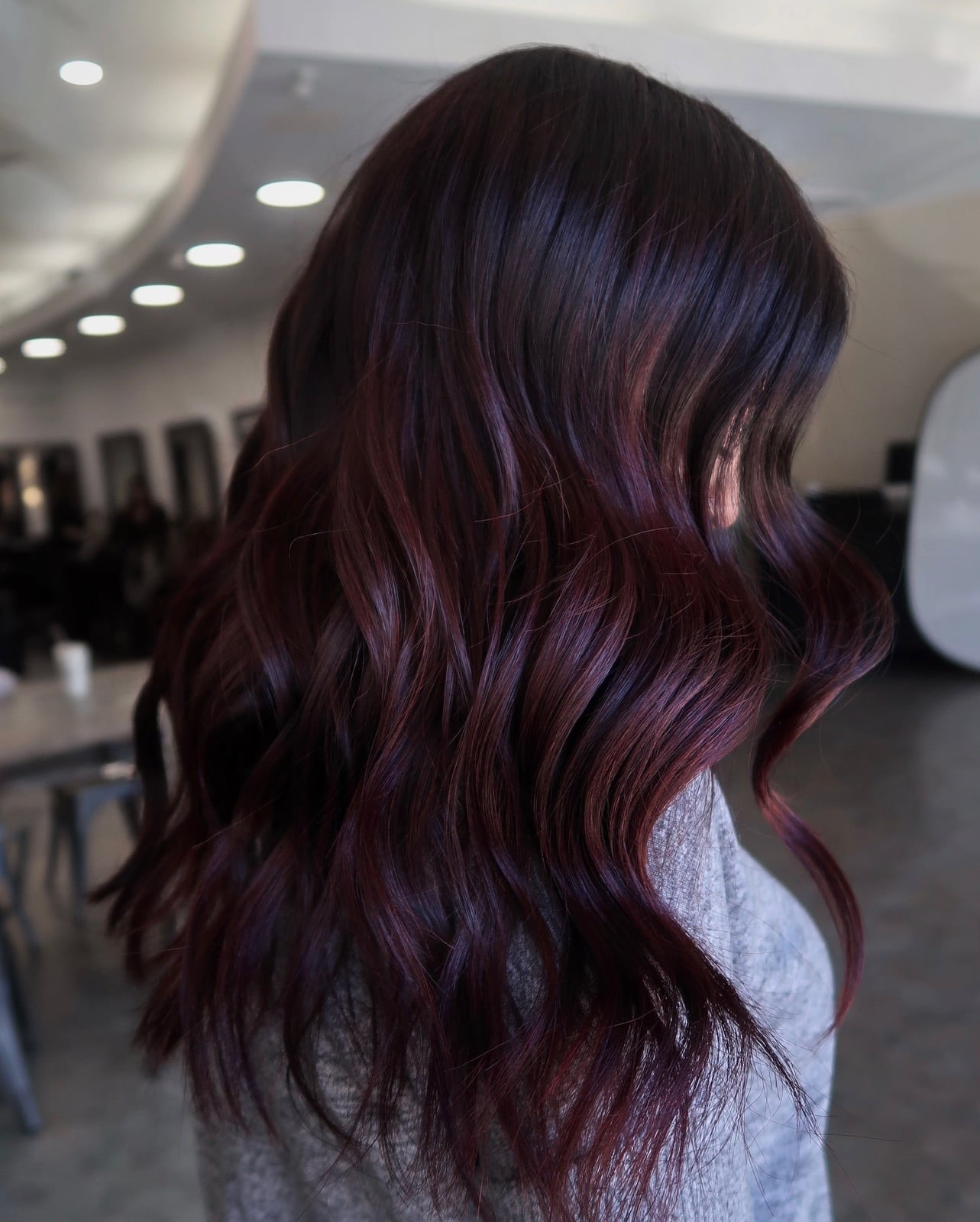
Deep red undertones shift a dark brown base into something richer, but the trick is keeping them subtle. The side part and wavy blowout let the red flash through without looking auburn or burgundy. Thick, wavy hair holds the wave pattern and the undertone together. Tell your colorist: dark brown base, deep red undertones. The tone is warm but not brassy, which means a purple shampoo would pull it too cool. Stick with a color-safe formula instead.
Auburn with copper undertones and side-swept bangs
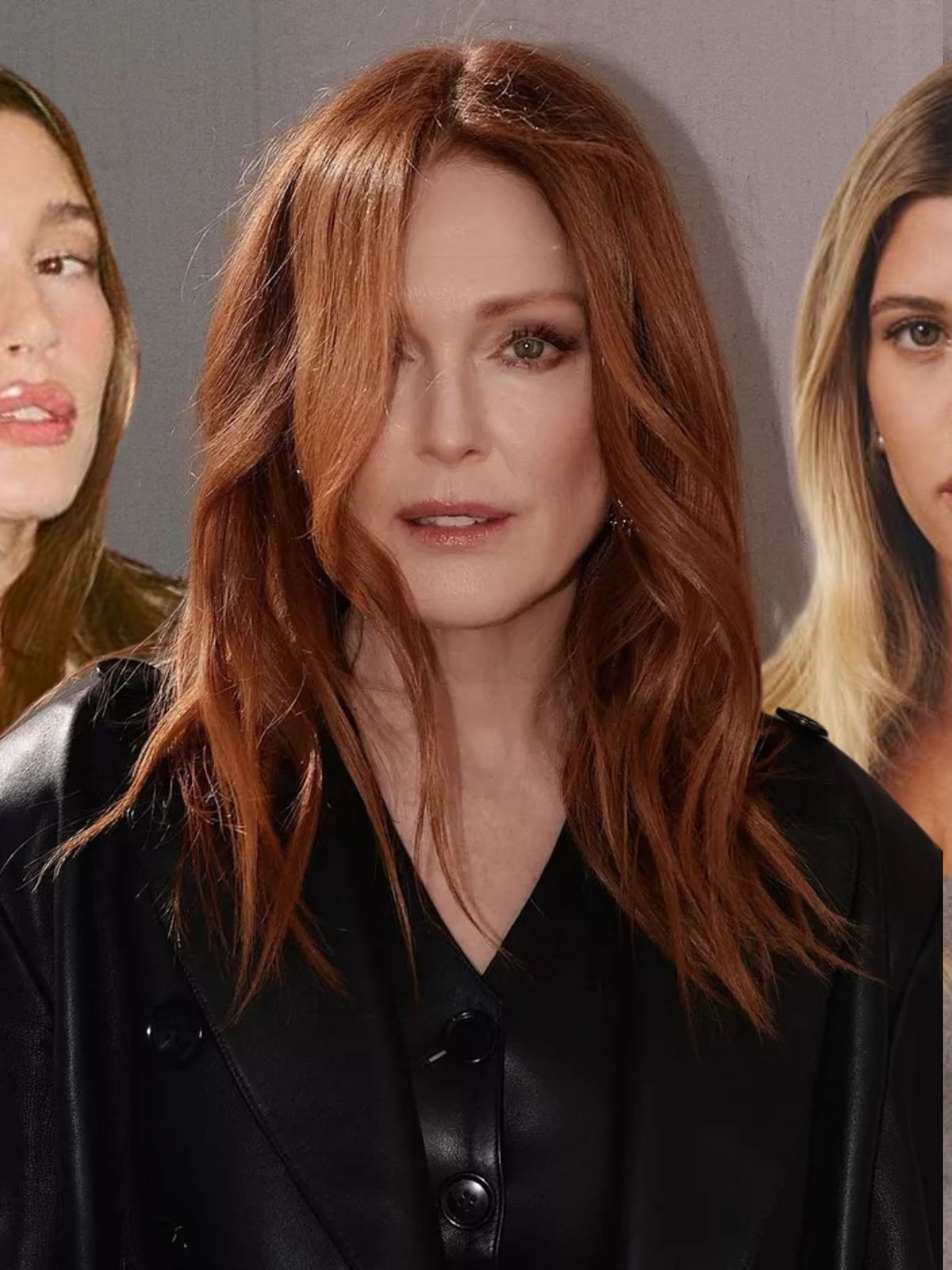
Your first instinct might be to blow-dry auburn with copper undertones into submission. The mistake is heat. This color reads better on fine, wavy hair left to air dry. The side-swept bangs soften the copper flash, so it lands warm rather than brassy. Skip it if you prefer cool, ashy tones; the copper will feel relentless. A curl-defining cream, then no touching. That is the whole routine.
Jet black hair with curtain bangs and thick texture
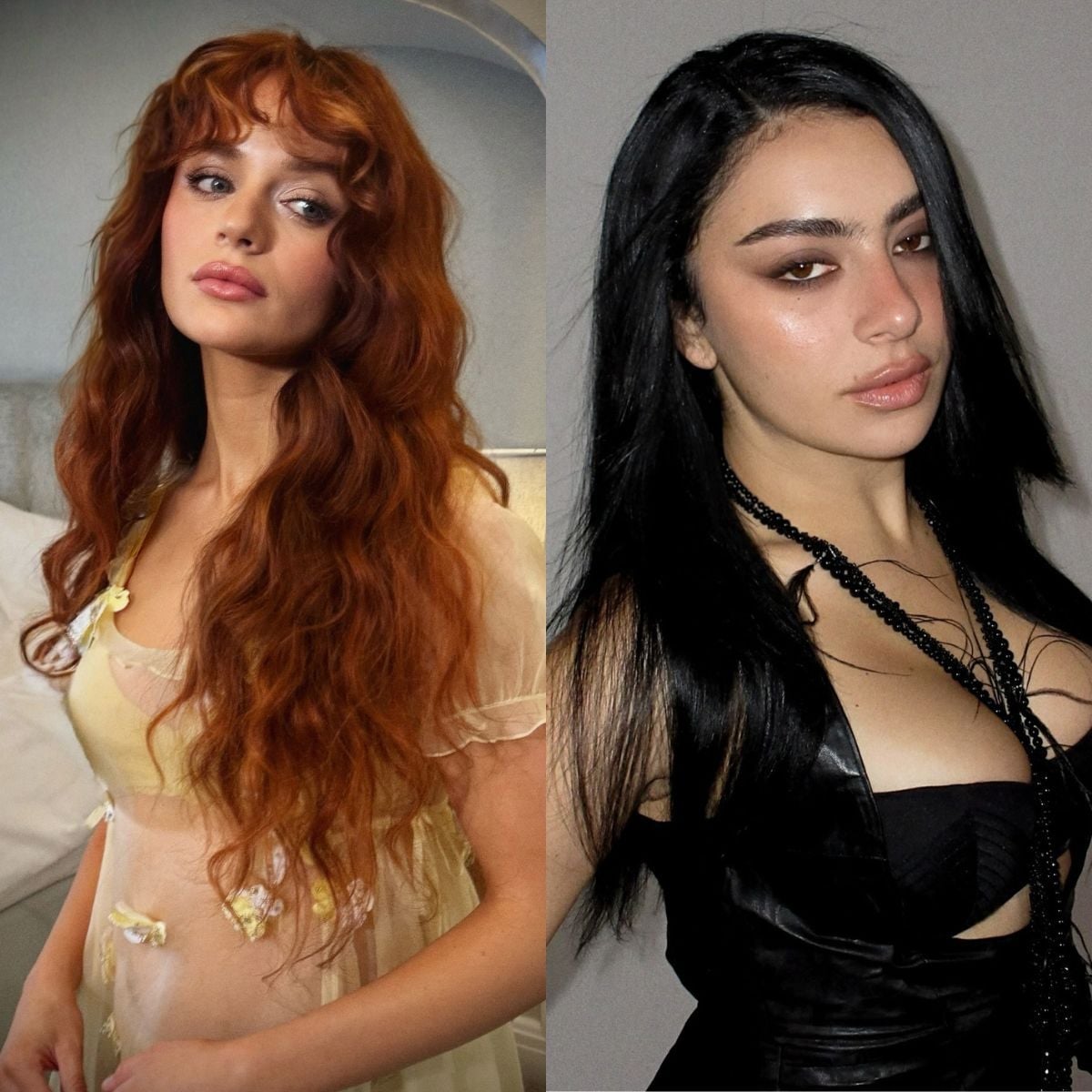
Jet black is a commitment, not a trend, and the uniform depth is the whole point. The thick, wavy texture does the work, air drying gives it movement, and the curtain bangs keep it from looking severe. This works year-round but really earns its keep in winter, when the contrast against lighter coats is sharp. Pass when your hair is very fine; the density of a single-tone black can look flat without texture underneath. Ask your colorist for: deep jet black color, curtain bangs, natural air-dried texture. A leave-in conditioner on damp hair, then walk out the door.
Skip the trim, and they drift into awkward territory fast.
Final Thoughts
Pick by your texture, your morning minutes and how often you want to see your colorist.
- Fine hair: darker base with fine highlights to add depth without weight.
- Wavy or curly hair: lived-in balayage that grows out soft.
- Ten minutes in the morning: a single-process gloss and air-dry.
- Cool base that pulls brassy: ash or violet undertones and a purple shampoo every other wash.
Brunette offers endless depth and dimension for every style.