You sit in the chair with a stack of saved screenshots, each one promising a loc style that looks good without a three-hour commitment. The trick is finding a cut that works with your texture and your schedule, which is why Simple Loc Styles 2027 fill so many saved boards right now.
30 ideas that span the full range: short and defined for low mornings, geometric partings for when you want precision, loose wavy ends for a softer finish, and updos that keep hair off your neck. Each one built for real life, not a photoshoot. The struggle this collection solves is the scroll: you stop looking once you find a style that actually works.
Short, defined locs styled naturally
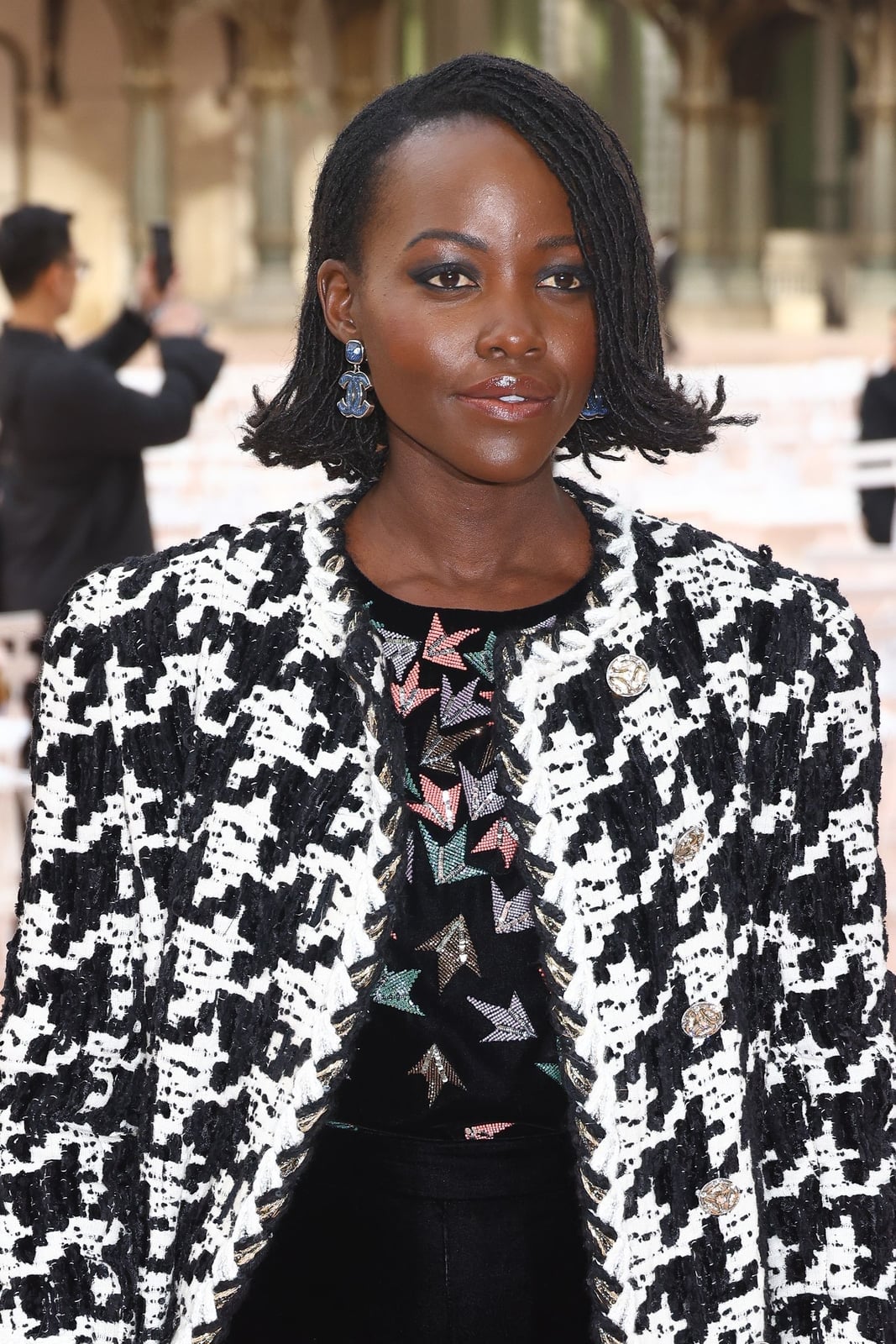
This is the loc version of a crisp white tee. Short defined locs sit above the shoulders with zero fuss, which means the shape does the talking. The decision: anyone with coily hair who wants a wash-and-go that still looks intentional. Skip it if you prefer length you can pull back or styles that require more sculpting than a morning shake. Tell your stylist: short, defined locs, middle parting, air-dried finish. Upkeep is a trim every six to eight weeks and the willpower to let it dry without touching it.
Thick, coily locs with geometric parting
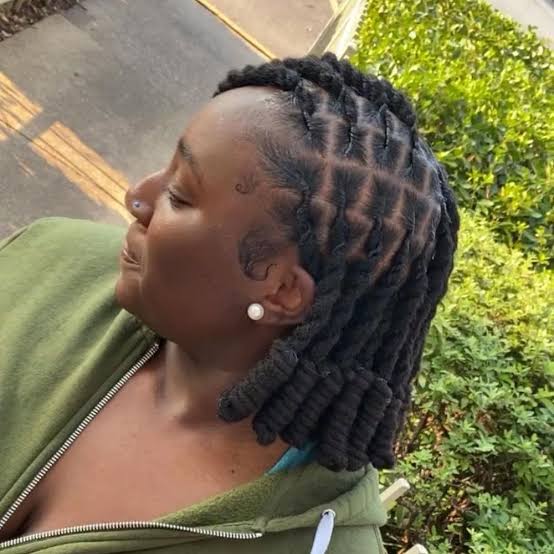
A geometric parting turns a standard loc set into a deliberate pattern. The sectioning here is sharp, straight lines carved into thick coily hair, each loc finished with a rolled end that keeps the silhouette clean. This is not a five-minute style. The precision requires a stylist who understands angles and can map the grid before the first part. Pass when you have a low tolerance for maintenance between appointments. The parting holds best on dense, coily texture; finer hair may lose the definition after a week. Book it as: geometric parting, rolled ends. Plan for a touch-up every four to six weeks to keep the lines crisp.
Bob shape with twisted locs and subtle highlights
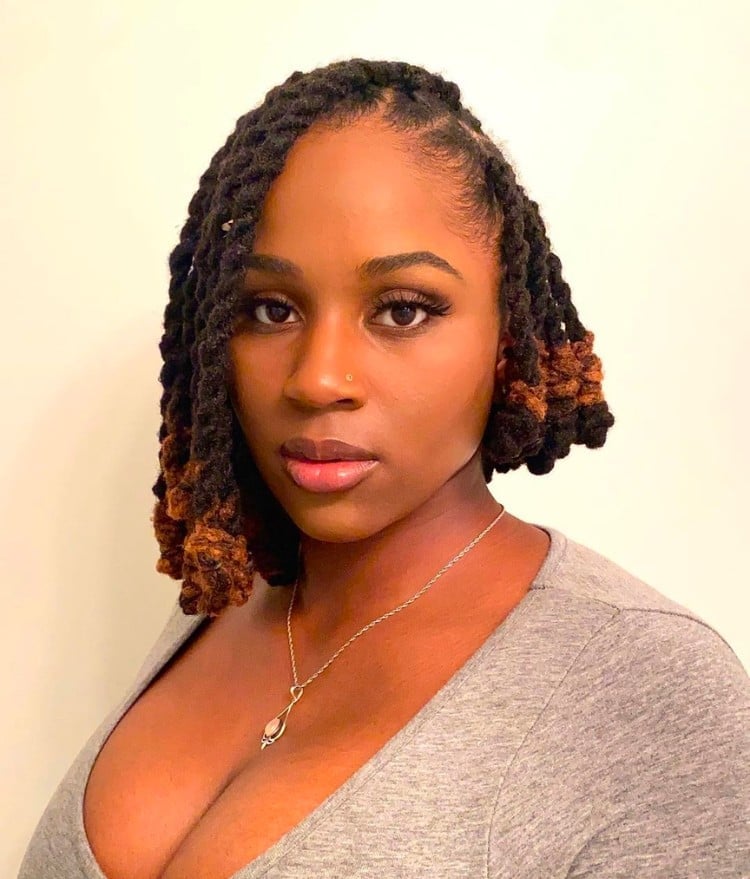
Twisted locs cut into a bob shape with a side parting land closer to a tailored garment than a casual style. The black base gets a lift from brown highlights near the ends, subtle enough that you notice them only when the light shifts. This works best on thick coily hair that holds the twist pattern without unraveling. A uniform color or a longer length that clears the shoulders is a different look. Ask your stylist for: twisted loc bob, side parting, subtle brown highlights. Refresh the twists every few weeks to keep the definition sharp.
Butterfly locs with loose, wavy ends
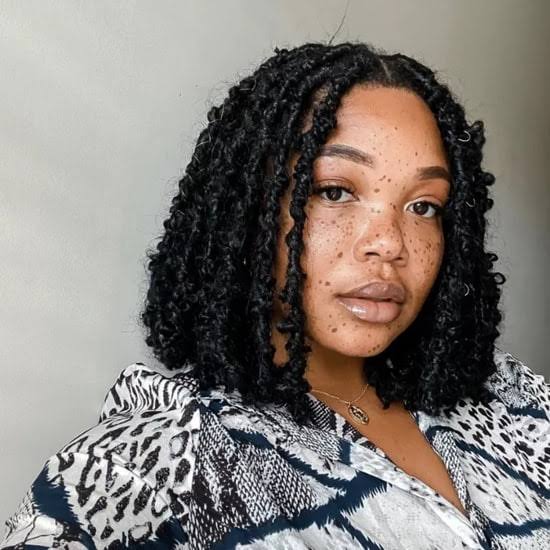
You want volume without weight? Butterfly locs with loose wavy ends deliver that. The technique wraps synthetic or human hair around your natural locs, leaving the ends free to wave. A centered parting keeps the look grounded while the wavy texture adds movement. This style looks fuller than standard locs, which matters if your hair is on the thinner side. A uniform diameter from root to tip or a finish that does not catch on collars may not be the goal here. The waves hold best when you air-dry and finger-comb rather than brush.
Two braids with curled ends and highlights
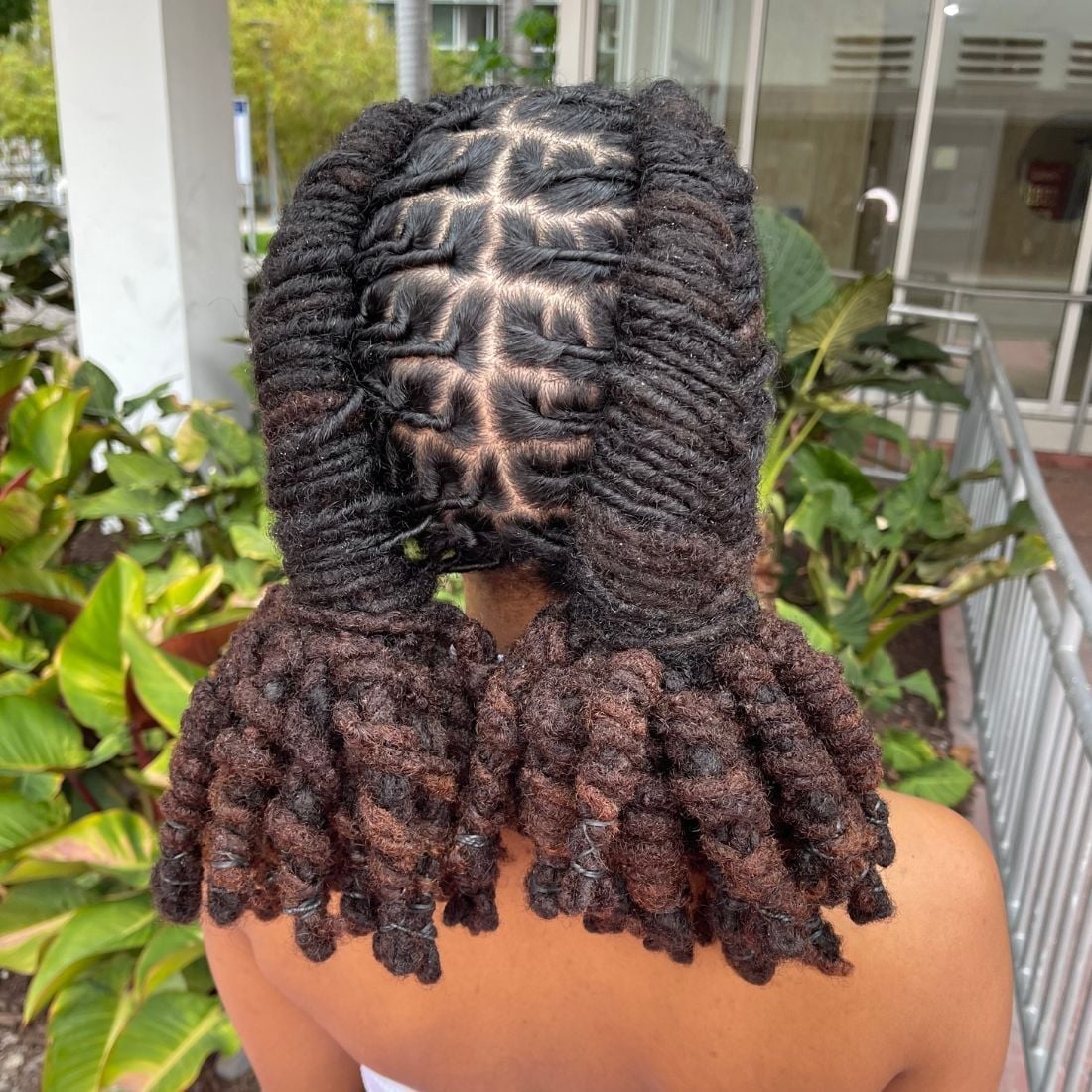
Geometric parting on the crown sets the stage for two large braids that fall down the back. The base is dark brown, with lighter brown highlights surfacing near the curled ends, a detail that reads clearly from the back view. This is a protective style that still lets you show off length and color. The catch: the braids take time to install, and the curled ends need a wand refresh every week or two to keep their shape. This style requires a time commitment for installation and maintenance. Ask your stylist for: two large braids, curled ends, geometric crown parting. Re-braid every two to three weeks to maintain the clean line.
Geometric scalp braids transitioning to wavy locs
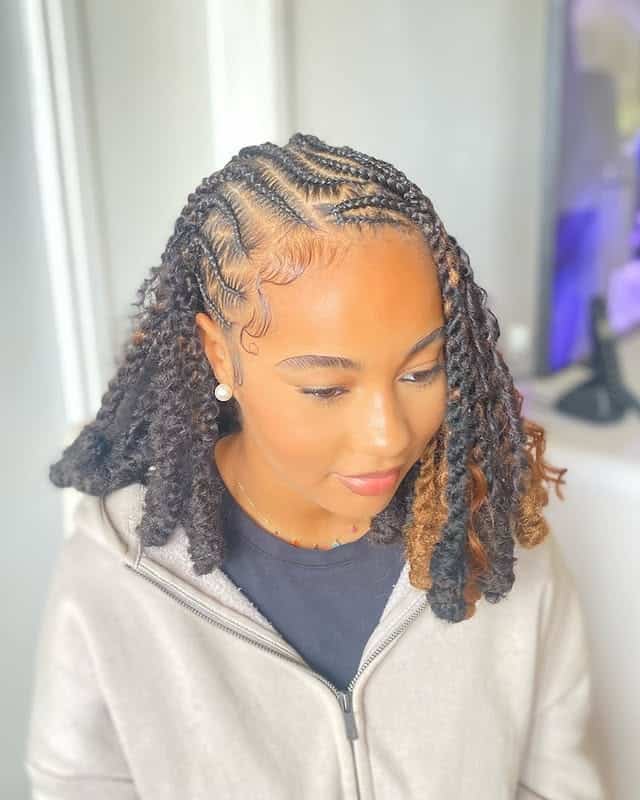
Geometric scalp braids demand precision. Each parting is a straight line that meets another at an exact angle. Here the pattern runs from the hairline back, then releases into loose, wavy locs with subtle blonde highlights scattered through the ends. The middle part keeps the geometry readable. Thick, coily or wavy texture holds the braid definition best; fine hair tends to let the parts blur by week two. This style asks the stylist to braid the top and curl the length, which means more chair time than a standard loc retwist. Keep the wavy section hydrated with a light leave-in to stop the loose ends from frizzing against the braided scalp.
Side swept locs with curled ends
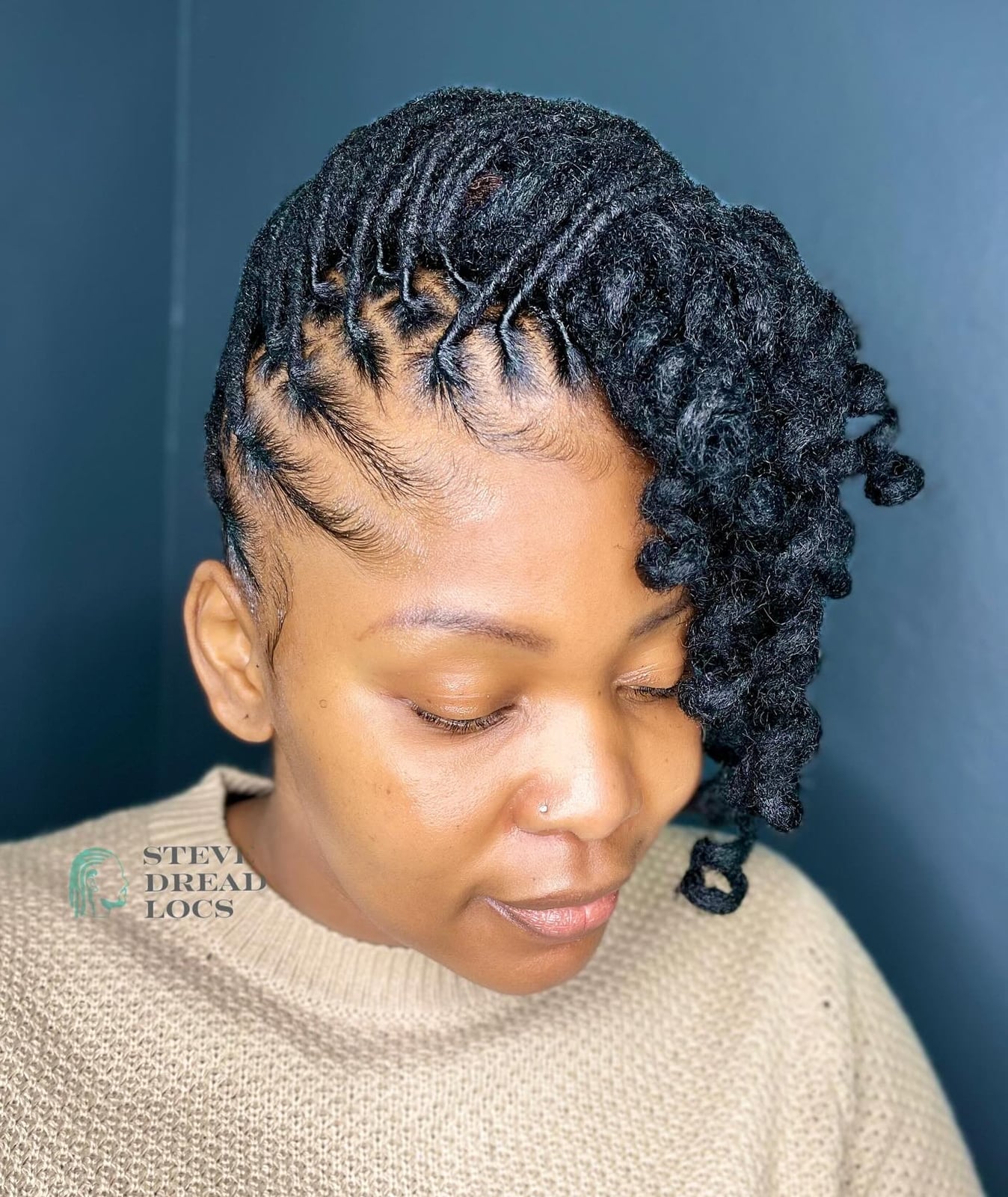
A deep side parting shifts the weight of thick, coily locs to one side, so the shape looks deliberate volume rather than bulk. The locs sweep across the forehead, and the ends are curled into loose ringlets that break the line at collarbone level. Slicked sides keep the silhouette clean. This works for most face shapes because the asymmetry draws the eye diagonally. Not for anyone who wants to toss hair behind both ears. The side part is the whole structure here. Tell your stylist: side swept locs, deep side parting, curled ends. The curl needs a heat tool each time you wash; a medium-hold gel holds the slick sections flat for two or three days.
Faux locs with loose wavy ends, black
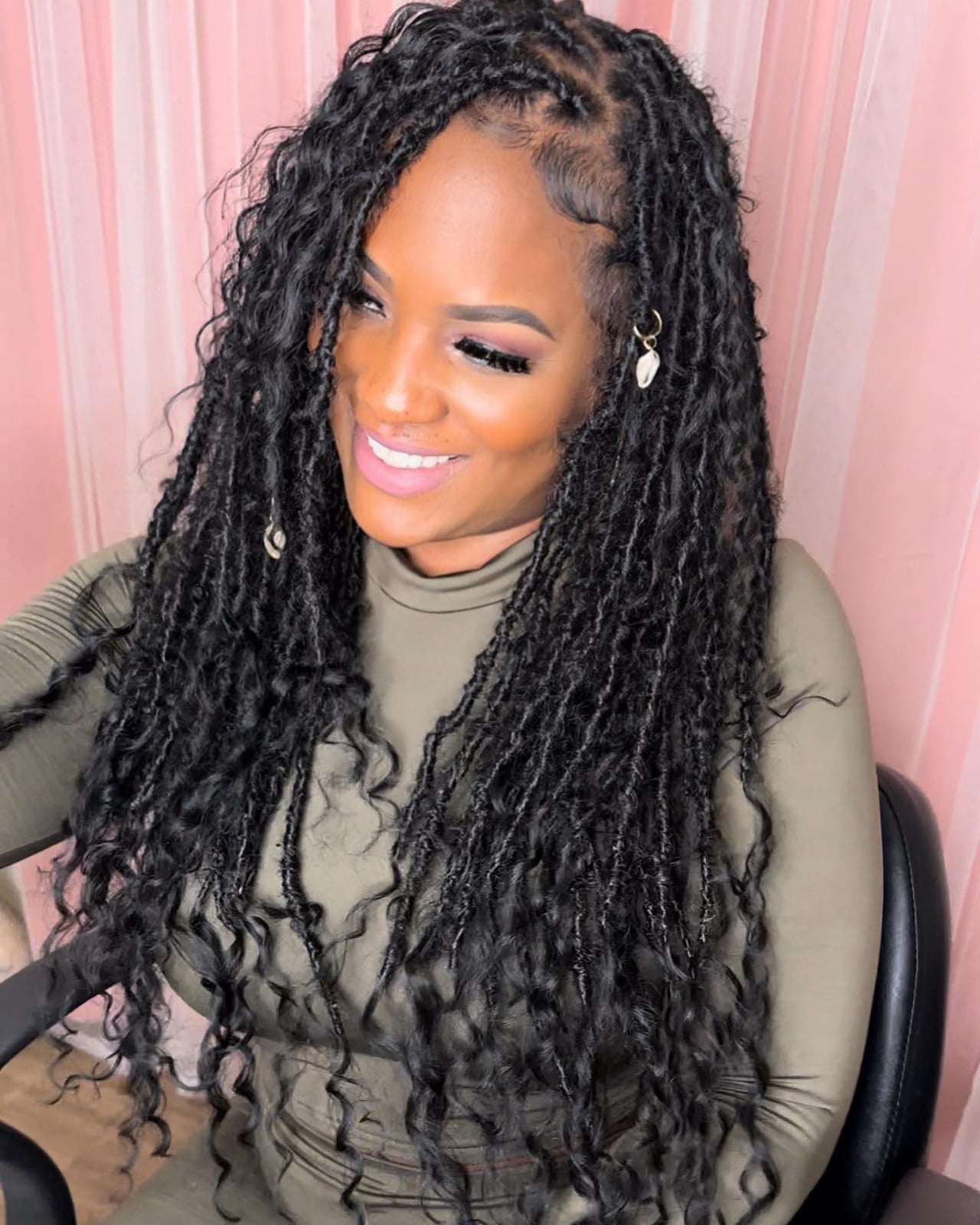
How much time do you want to spend in the chair? Faux locs with loose, wavy ends take a full install session, hours of wrapping and securing each strand. The result is long, black locs with a middle part and a few small braids tucked near the hairline for texture. The wavy ends soften what could otherwise look uniform. The real drawback: those waves will drop with humidity, and refreshing them requires a curling iron on a low setting, section by section. A salon does the install faster and cleaner than a DIY attempt, especially the braids near the hairline. Pass when you prefer a single texture from root to tip. This style lives on the contrast between the wrapped shaft and the loose finish.
Locs with an undercut and auburn highlights
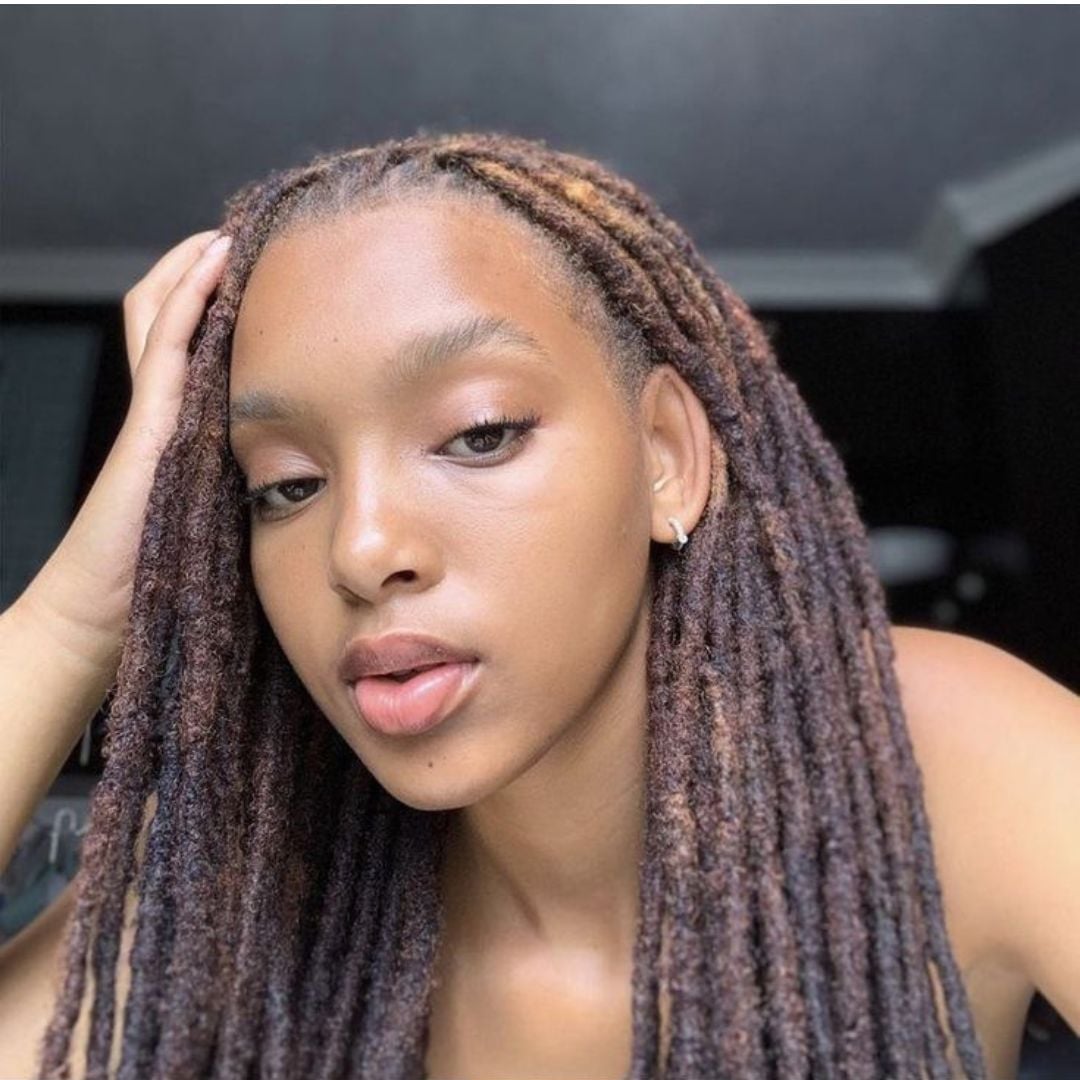
A standard middle-part loc set gets an edge from the undercut. Shaving both sides turns a familiar shape into something with edge, and the auburn highlights keep the long, wavy locs from looking flat against the dark brown base. The shaved sides mean the air-dried texture on top stands out more. A full set of locs relies on density for drama, but this version gets its impact from contrast, smooth skin against thick locs. The catch: the undercut needs a trim every three weeks to stay sharp. Choose this if you like the idea of locs but want a modern silhouette that does not hide behind volume.
Faux locs with metallic threads and blonde highlights
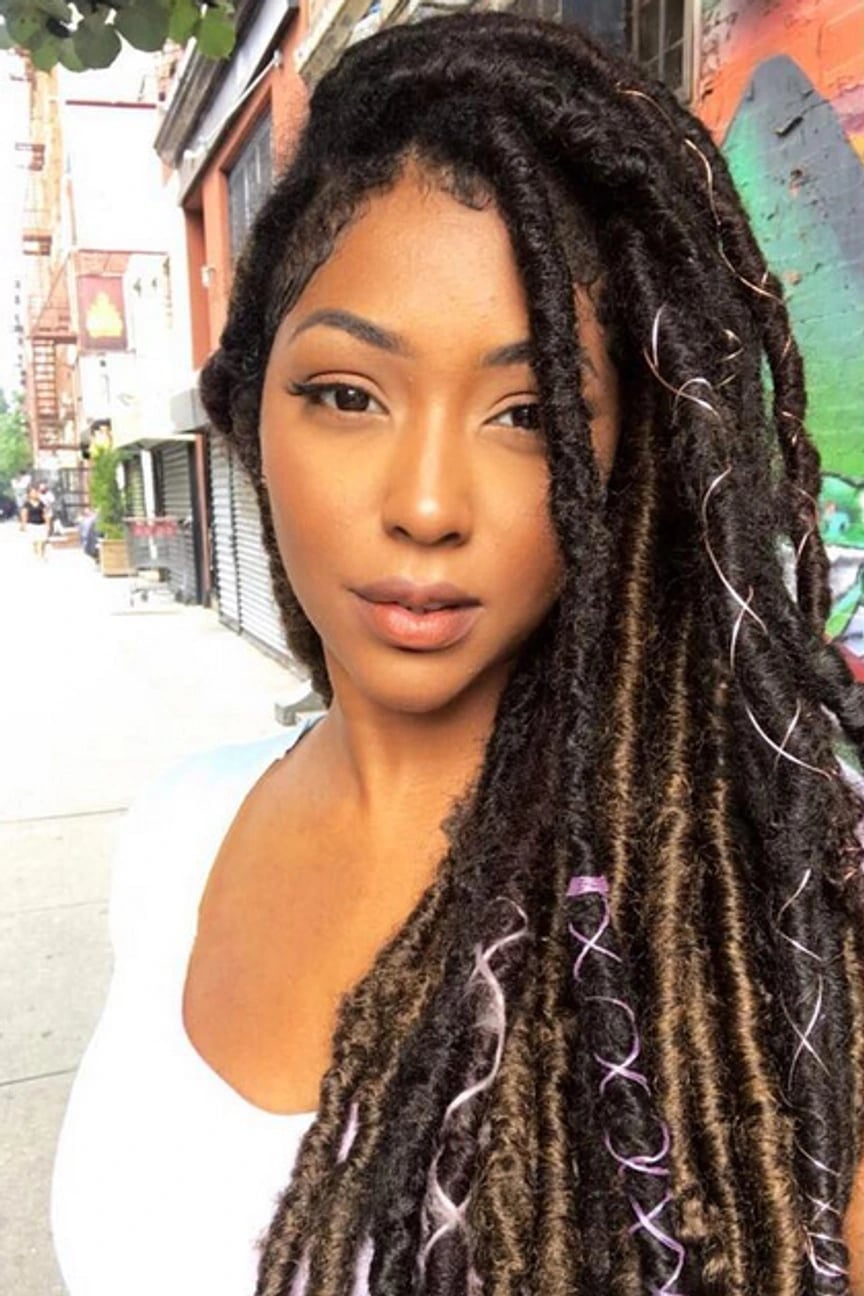
Metallic threads woven through faux locs change the light reflection without changing the weight. The dark brown base carries subtle blonde highlights, and the side part lets the metallic strands catch attention as the locs shift. The threads are thin enough that the wavy texture still looks natural. This is a salon technique. The threads are wrapped during the install, not added later. Book it as: faux locs with metallic thread accents, blonde highlights. Handle the locs gently when styling to avoid snagging the thread. The payoff is a style that reads different in direct light versus shade, which is about as close to low-effort glamour as locs get.
Defined spiral curls with neat cornrows at crown
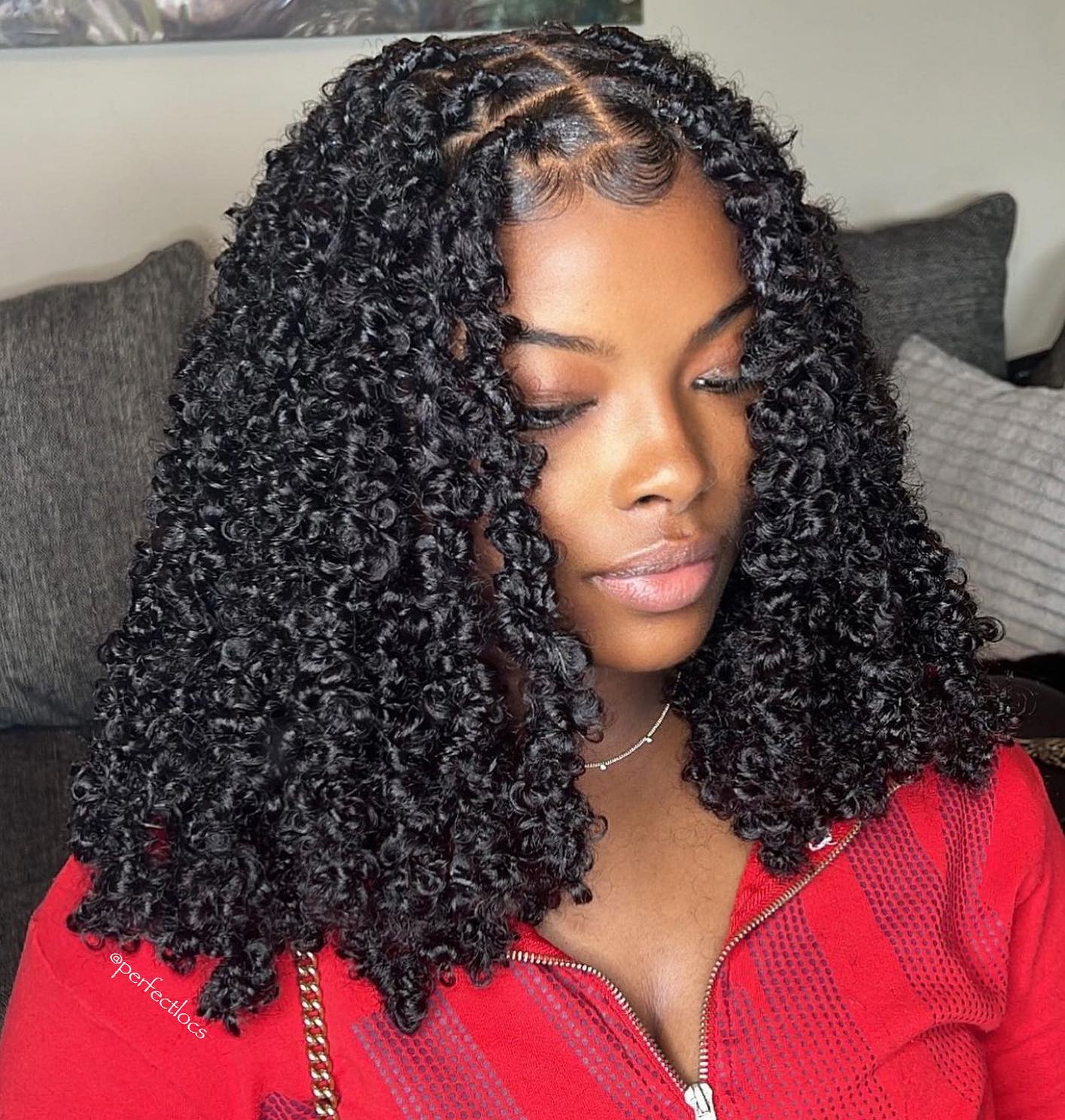
Cornrows at the crown anchor a middle part, while the rest drops into defined spiral curls. The thick, curly texture makes the pattern hold without effort. This style works for those who like tight curls and don’t mind cornrows against the scalp. Tell your stylist: defined spiral curls, cornrows at the crown. A curling iron sets the spirals; the cornrows need a salon touch-up every four to six weeks.
Thick, coily locs in zig-zag parting
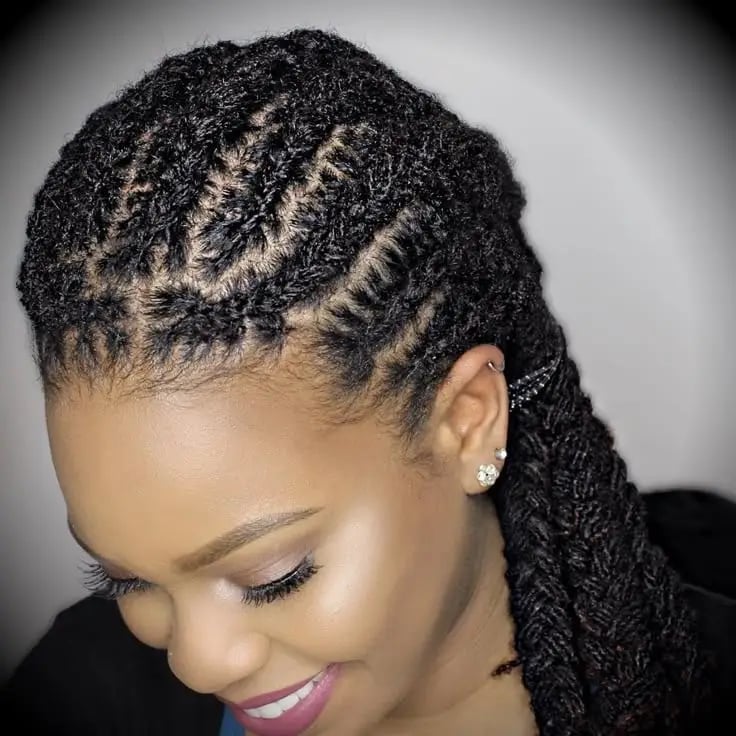
A zig-zag parting breaks the usual straight line, and the braided locs follow the angles precisely. The thick, coily texture fills the pattern, so no gaps show. Two weeks in, the edges of the zig-zag soften slightly, which is the look. The words for the chair: zig-zag parting, braided locs. That parting needs a re-do every four weeks to stay sharp.
Twist locs with defined scalp parts
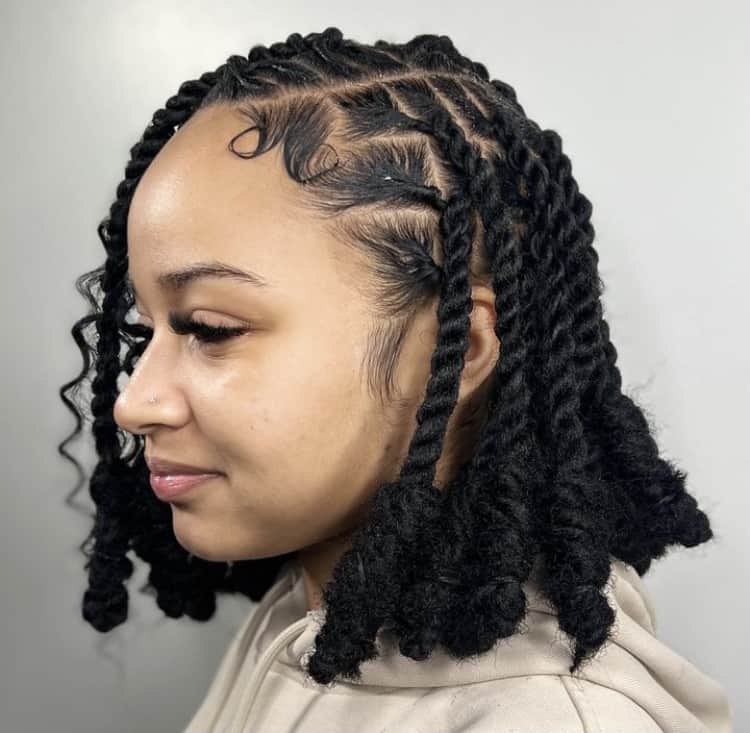
Defined scalp parts run from a centered parting, and the twist locs end in coily tips. The side profile shows the structure cleanly. Each twist sits in its lane. Tell your stylist: twist locs, centered parting, defined scalp parts. The defined parts blur after a few weeks, so book a refresh when the lines start to soften. No bangs here, just a clear front.
Locs with precise geometric parting
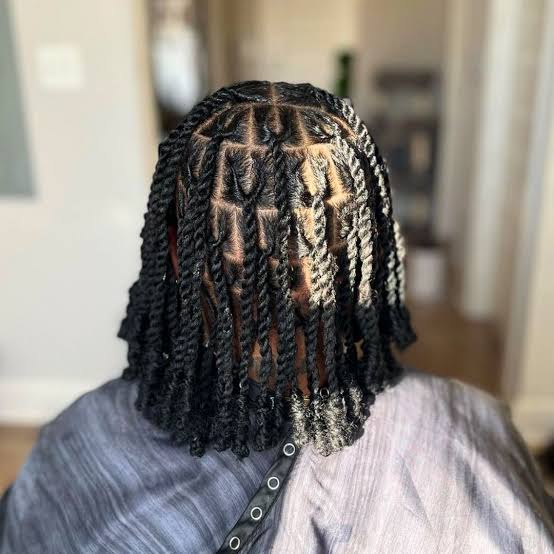
Geometric parting works best when you have the patience for a salon chair. The twisted locs are air-dried, so the thick, coily texture stays natural. No highlights, no color shift, just black locs and clean lines.
The catch: that precise parting shifts as the locs settle. A DIY refresh rarely matches the original angles. Pass when you want a style you can finger-comb between appointments. The words for the chair: geometric parting, twisted locs, air-dried finish.
Diamond grid parting creates a unique geometric pattern
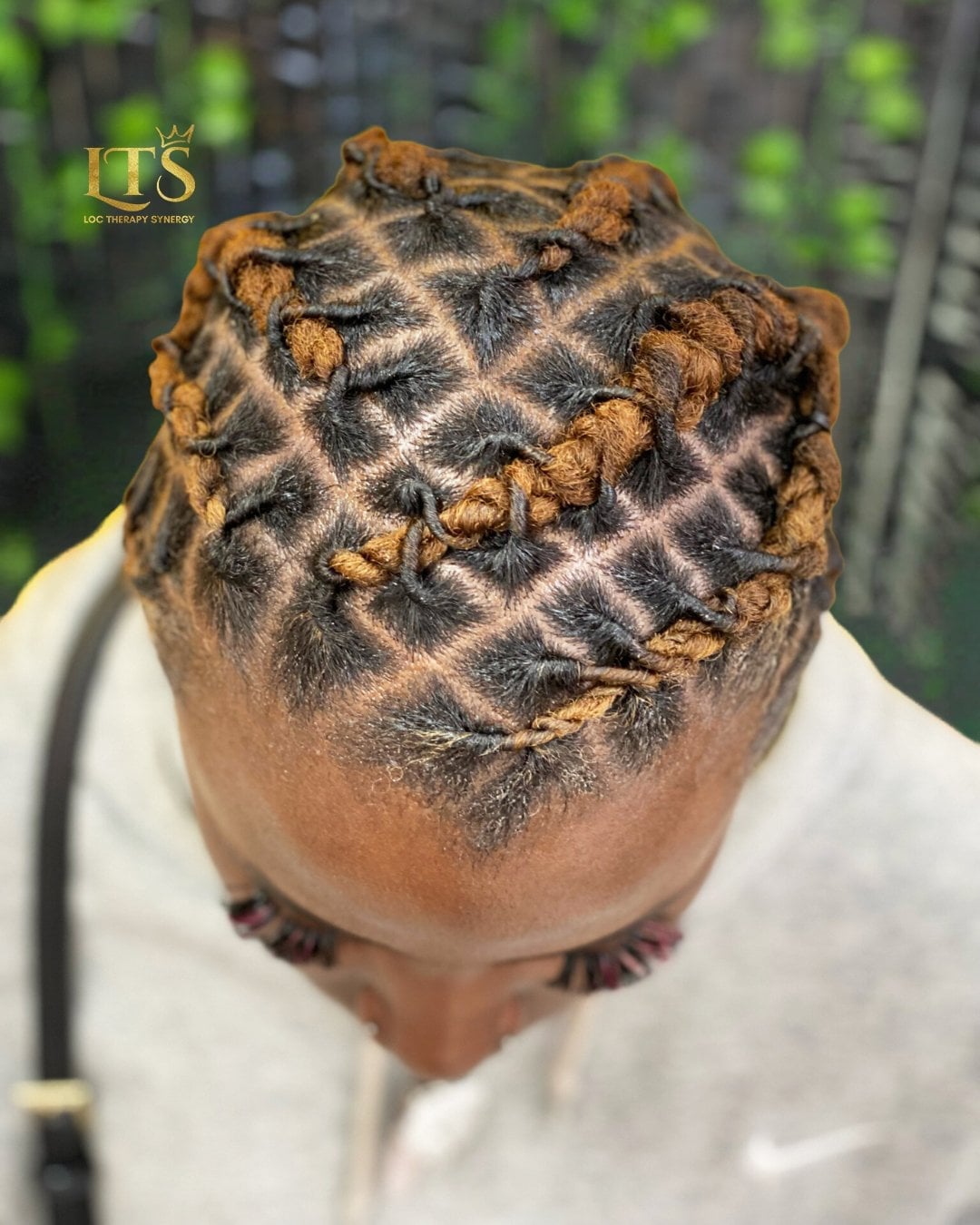
Diamond grid parting maps the scalp into small sections, and honey blonde highlights alternate with black locs for contrast. Some strands are braided, others left loose, which gives the grid texture instead of flat geometry. Tell your stylist: diamond grid parting, black and honey blonde highlights, braided locs. The grid stays legible for about four weeks before the roots need a touch-up.
Half up half down locs with twisted front sections
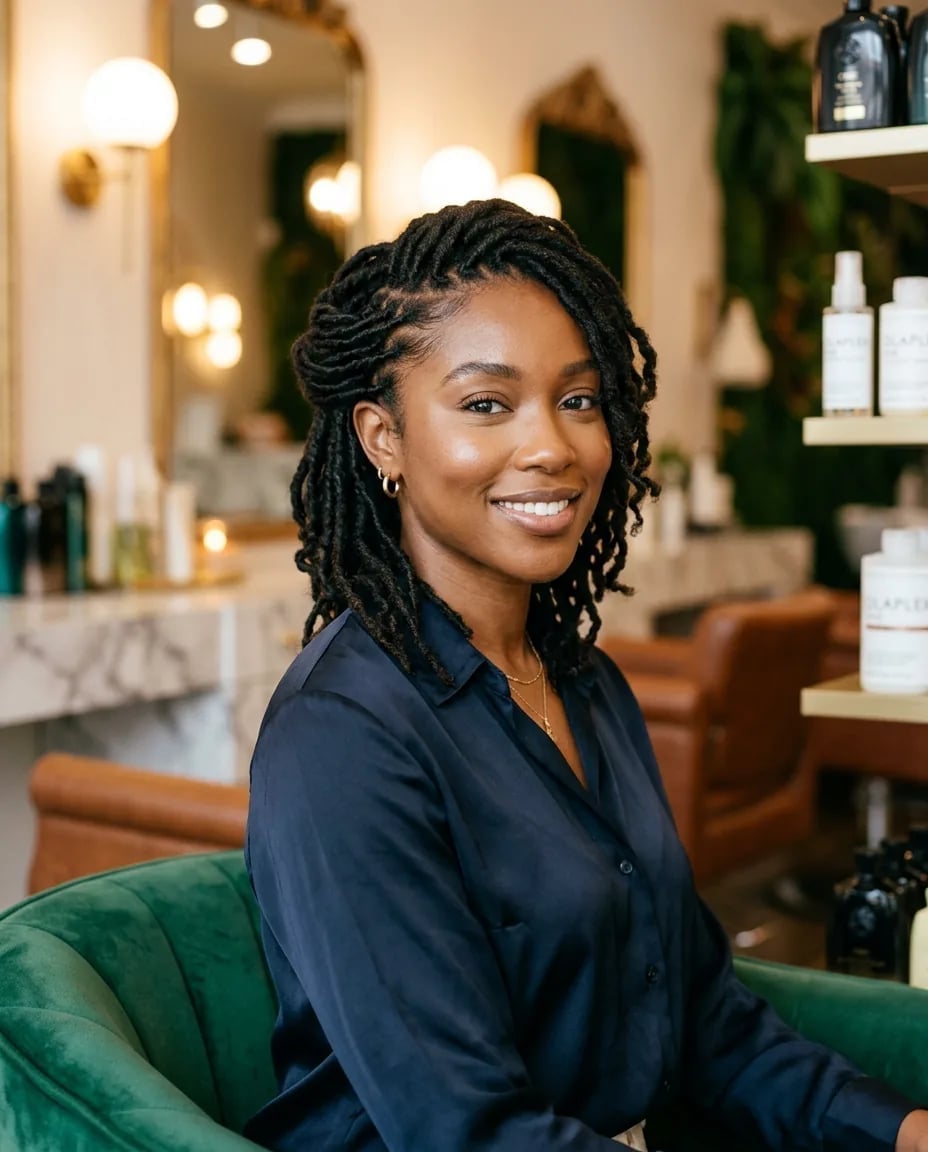
Side part, thick coily locs, and the front sections twisted back. That is the whole equation. The half-up half-down structure keeps the weight off your neck without losing the length below. Skip it if you prefer your locs completely down or fully up; this sits in the middle and stays there. Secure those twists firmly at the start of the day, because they will try to loosen by hour four. No bangs to trim, no layers to reshape, just the same neat silhouette you walked in with.
Half up half down ponytail with purple streaks
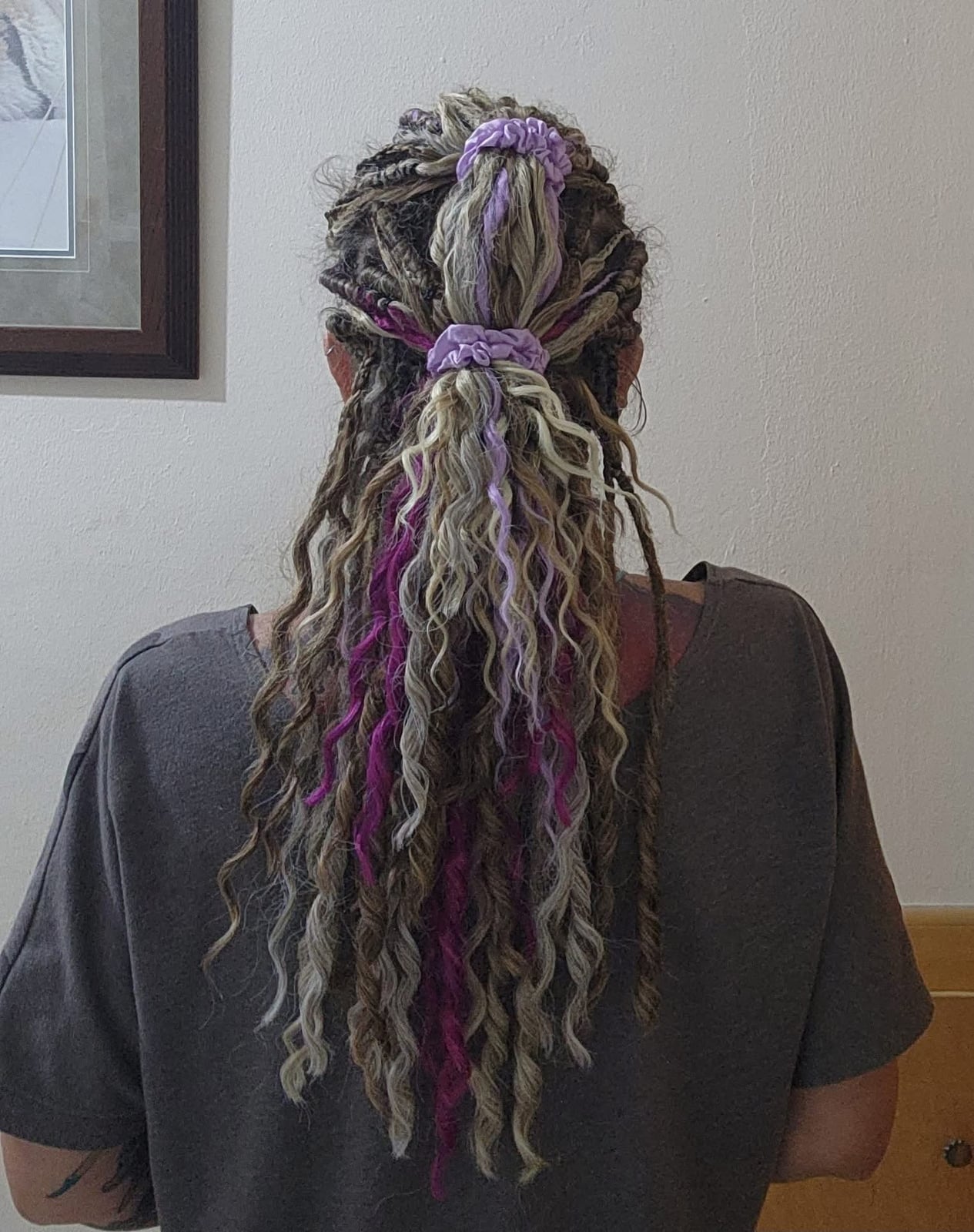
Plain brown locs look practical, while brown locs with blonde and purple streaks look deliberate. The lavender scrunchie adds a finishing touch. Long, wavy, thick texture handles the ponytail weight without pulling at the roots. The catch: vivid purple streaks demand a salon touch-up every six to eight weeks to stay that bright. Book it as a half up half down ponytail with purple streak locs. The back view shows the full color distribution, so your stylist sees exactly where the blonde ends and the violet begins.
Half updo with neatly sectioned scalp
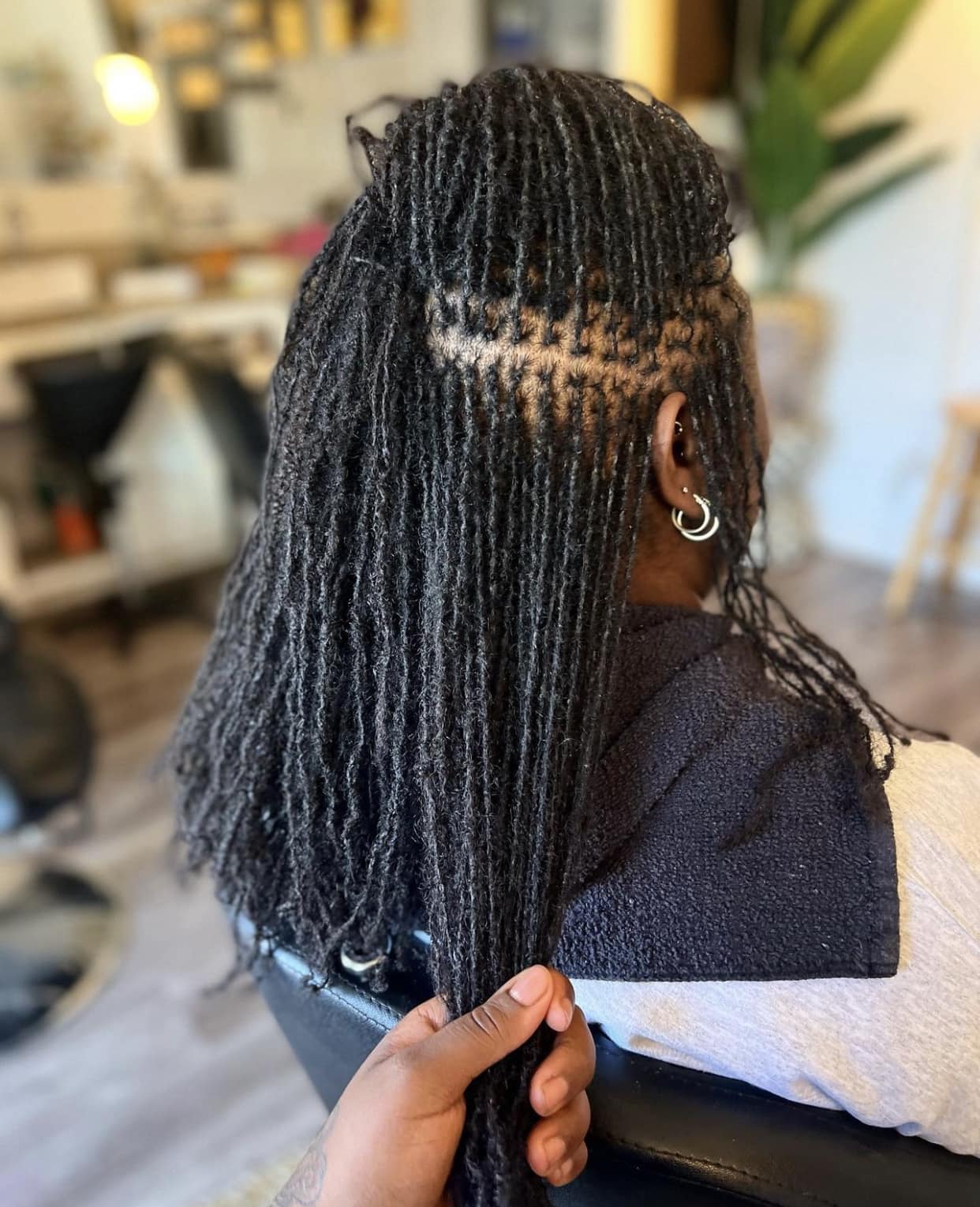
This is a salon-leaning design from scalp to tip. Long, thick, coily black locs pulled into a half-updo, but the real work is the parting: neat, precise, evenly spaced sections that look deliberate geometry from the side view. The middle part anchors the whole pattern. Skip it if you dislike intricate parting or prefer to finger-comb your locs into place. A tight updo holds the sections in line for the day. No bangs, no layers, just the clean scalp map and the locs falling below it.
High updo with loose tendrils
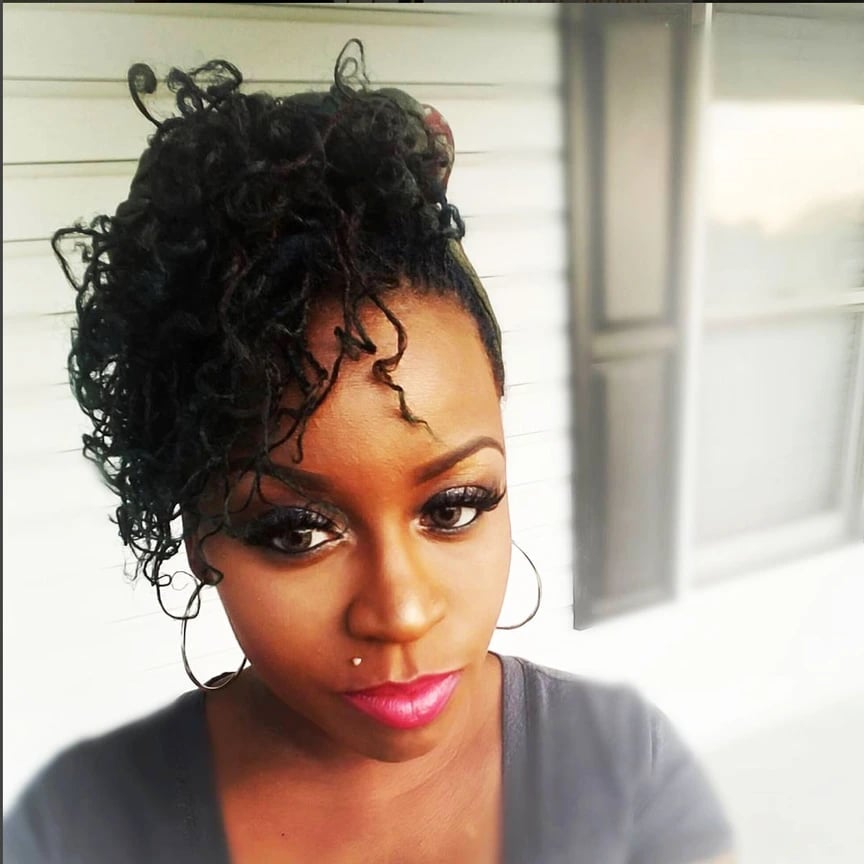
One practical rule: if you want an updo that looks intentional rather than rushed, leave out two or three locs at the front. Thick, coily black locs pulled high, with those loose tendrils framing the face. That is the detail that separates a finished style from a pulled-back one. Tell your stylist: high updo, loose tendrils. Secure the tendrils with a small elastic so they do not escape entirely. The updo itself requires salon expertise to distribute the weight evenly and avoid tension at the crown.
Updo with vibrant red and black locs
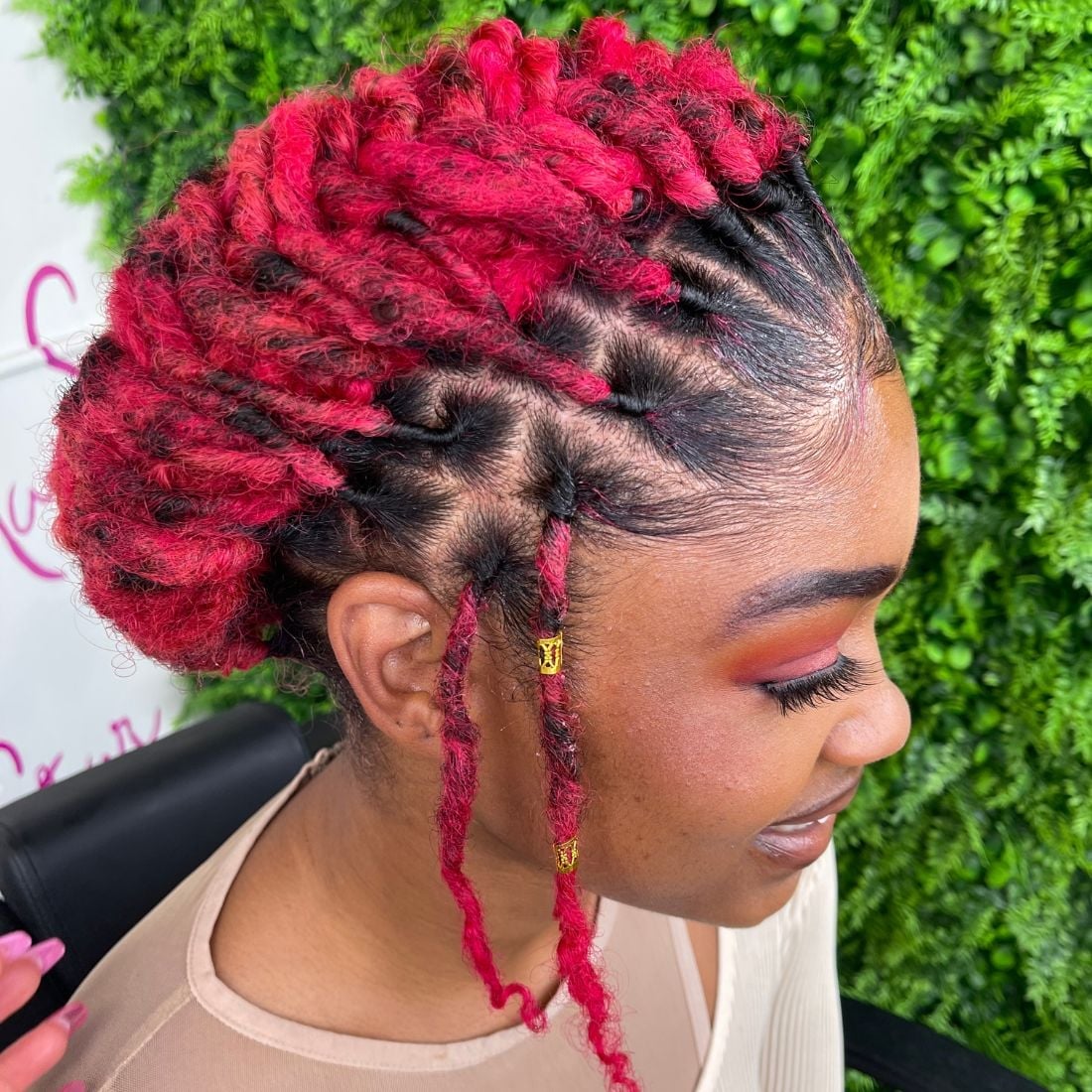
The red strands alternate with black, pulled back into a neat updo with a few face-framing pieces left out and gold beads at the ends. One real drawback: DIY red touch-ups on locs are a gamble, uneven color looks faded, not lived-in. Salon application keeps the red even. Skip it if you prefer natural hair colors or do not want to maintain the vibrancy schedule. The gold beads add weight to the ends, so check they are secured before the evening starts.
Vibrant green locs with blue highlights reach upwards
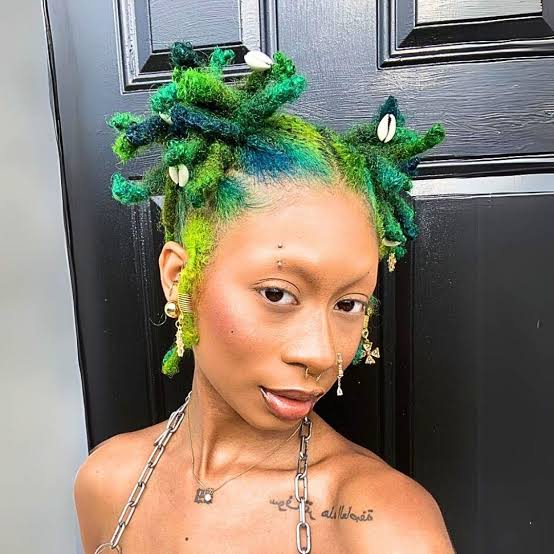
Green and blue locs, stacked into a playful updo, use thick texture to hold the shape without much pinning. Small white shells tucked between the locs add a tactile detail without changing the silhouette. Thick locs handle the upward sweep best, thinner locs might not anchor as firmly at the crown. The color pairing works because both shades stay cool-toned; warm green against cool blue would read muddy. A side part keeps the front volume controlled while the updo takes over the back. The shells need gentle handling when retwisting, but the updo itself holds for days.
Braided locs updo with gold accessories
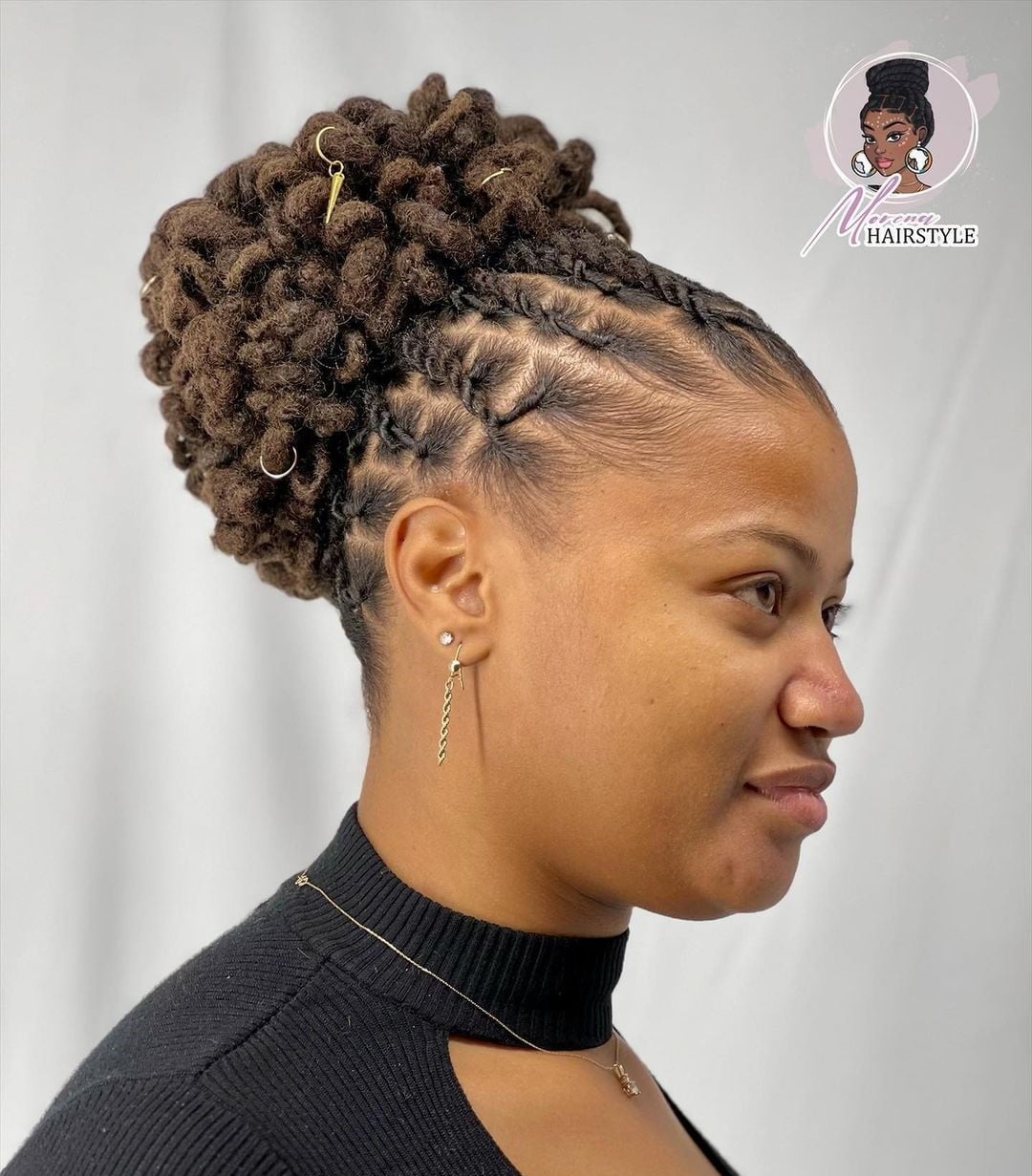
Dark brown coily locs get swept up and braided into the crown, creating a structured base that a regular twist can’t match. The middle part keeps both sides even, so the gold accessories sit symmetrically. Thick, coily texture holds the braids without slipping, which means less tension at the edges. The braiding process requires a few hours in the chair and the result is less flexible. The gold accents work best against dark brown; lighter bases can wash the metal out.
Tightly coiled locs updo with charm
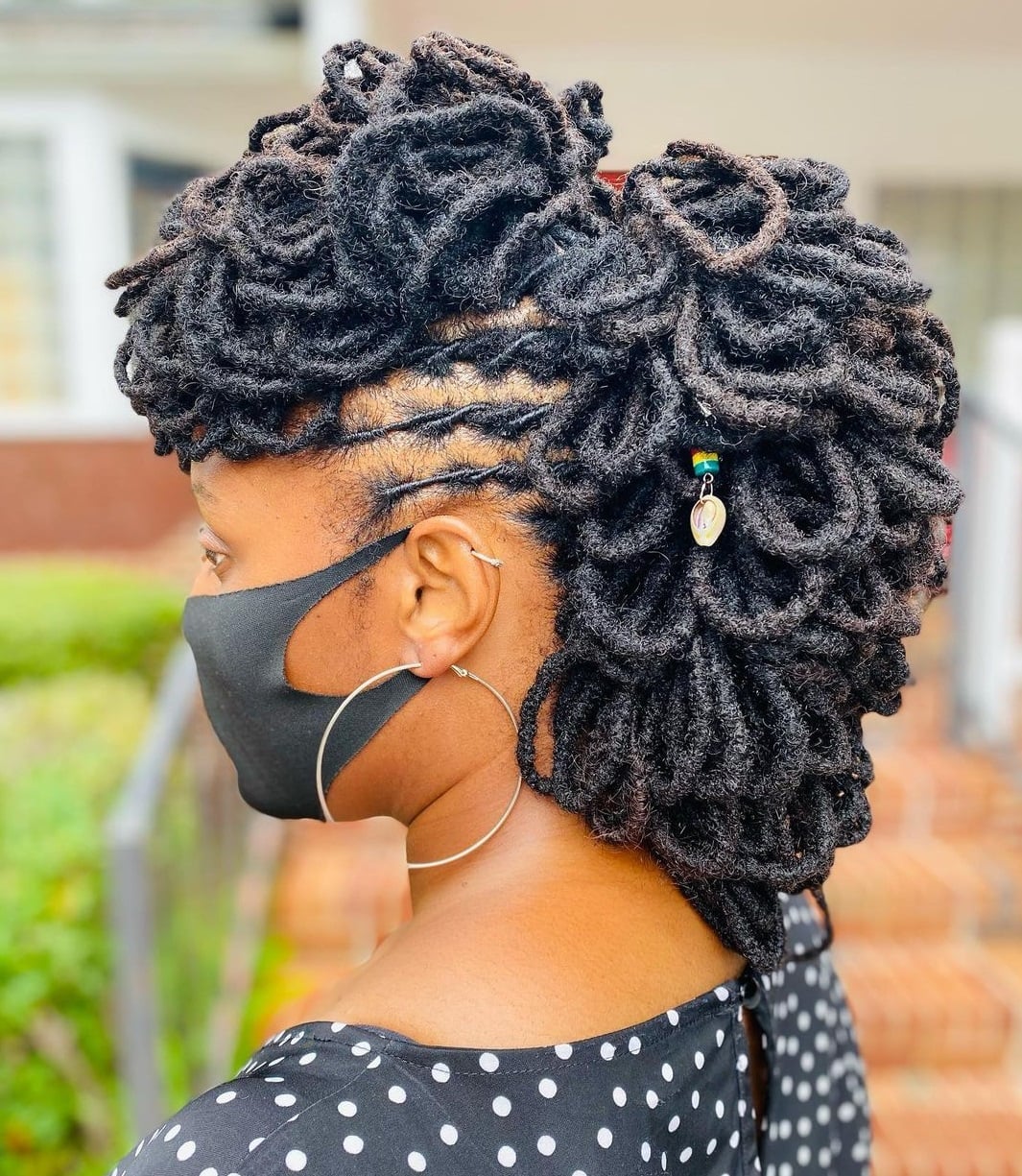
Tightly coiled locs make this updo hold its shape longer than looser textures would. The decorative charm on one side breaks the symmetry without looking accidental, a small detail that shifts the whole feel from formal to personal. Black locs against the charm keep the focus on the silhouette rather than the color.
Coily texture means the updo stays crisp for about a week before the edges soften. Retwisting the charm side takes care: the attachment point needs to sit flush against the loc so it doesn’t pull. Most face shapes work here because the updo clears the jaw entirely, elongating the neck. The catch is the styling time, expect a solid two hours to get the coils layered evenly.
Two high buns with pink beads
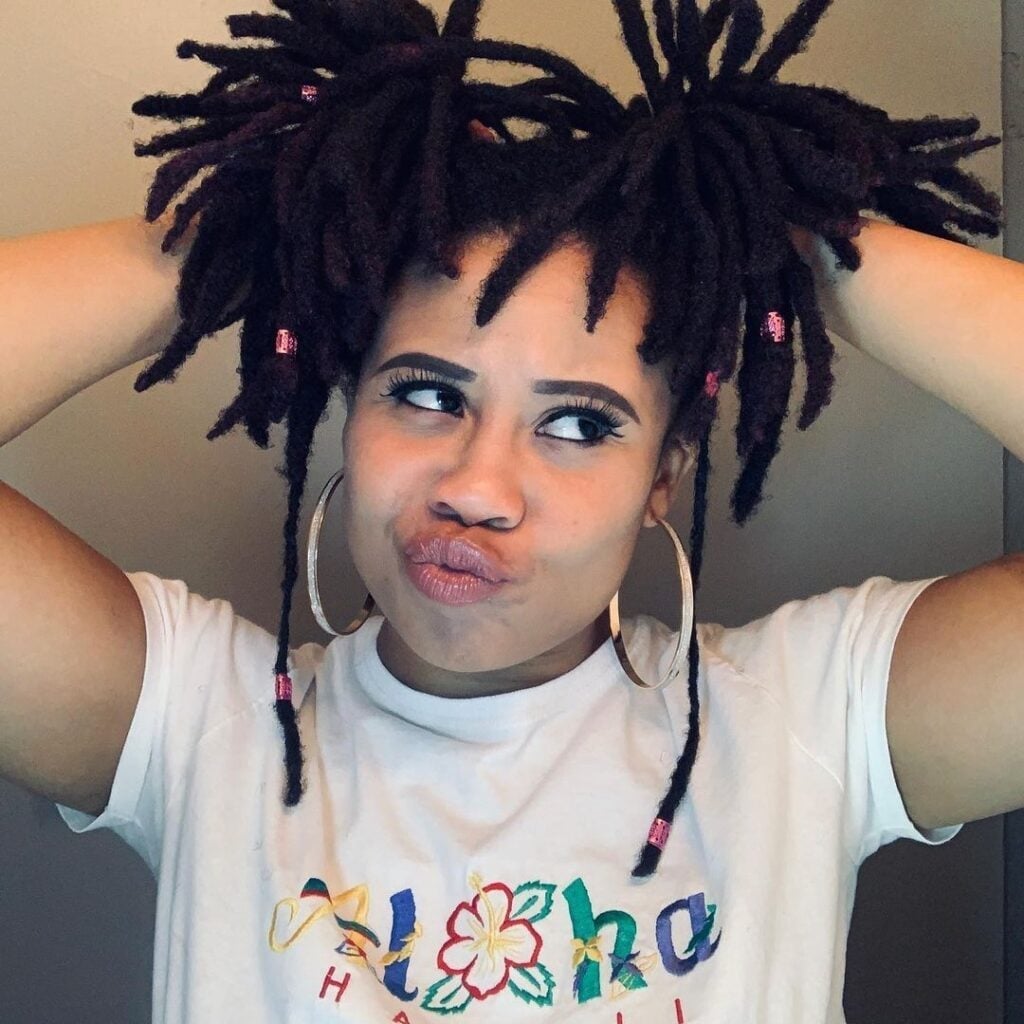
Two high buns work best when the locs are thick enough to fill each bun without stretching thin. Dark brown coily locs here create full buns that sit high on the crown, with a few locs left down to soften the edges. Pink beads on the loose locs add a playful accent without overwhelming the shape. Tell your stylist: two high buns, pink beads on front locs. The beads need securing at the base so they don’t slide down during the day. Thick, coily texture helps the buns stay round rather than drooping flat. A clean middle part keeps both sides balanced.
Long, wavy faux locs air-dried
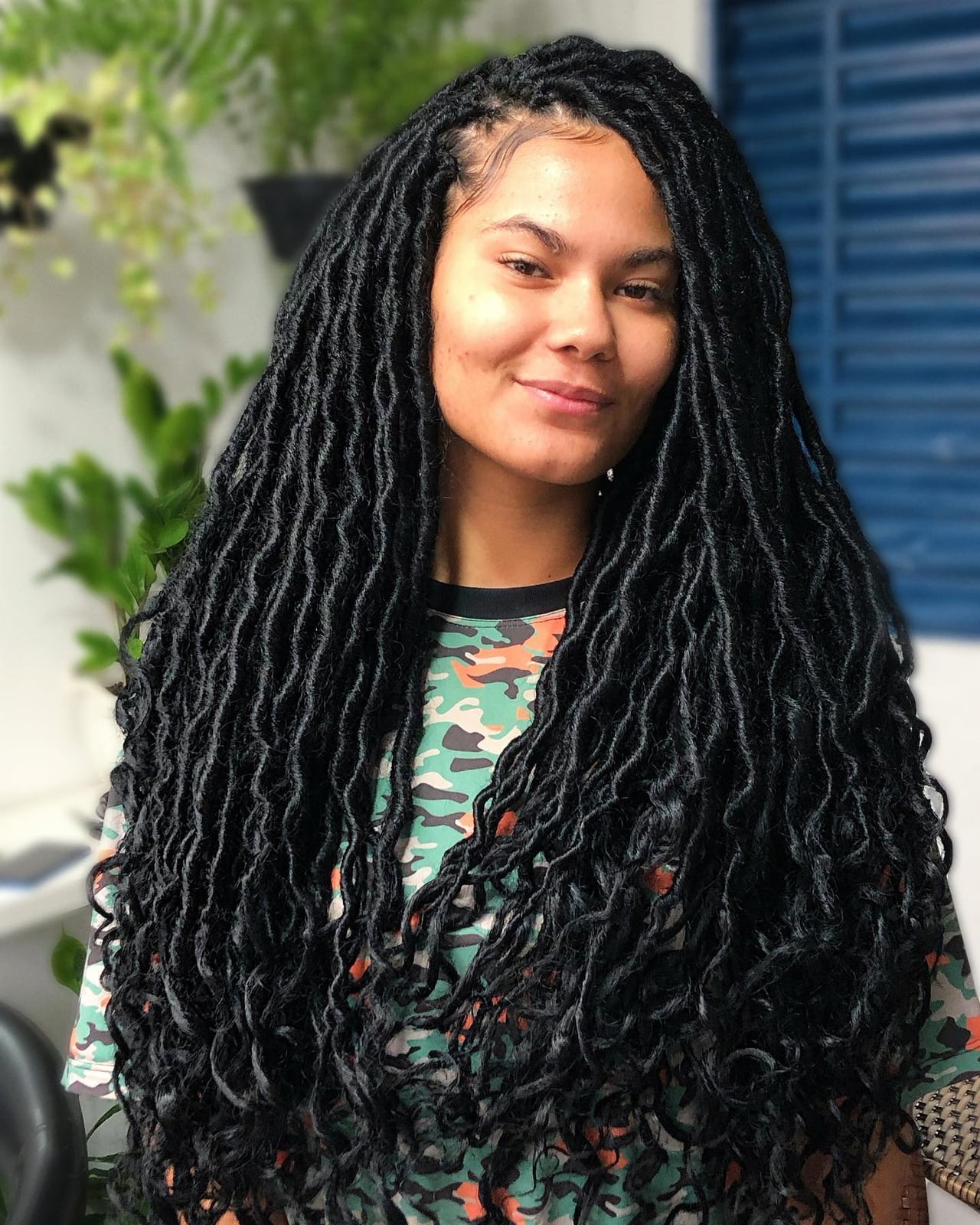
Long wavy faux locs offer a relaxed alternative to the sleek, uniform styles. The deep black hue and side part let the natural texture take over, no heat needed to set the wave pattern. Air-drying preserves the thickness and prevents the synthetic fibers from frizzing at the ends.
The trade-off is the weight. Long faux locs at this density pull on the scalp more than shorter versions, so a side part helps distribute the tension unevenly, reducing pressure on the crown. Skip it if you prefer a smoother finish or have a sensitive scalp. The air-dried texture stays slightly textured, and the weight can cause soreness by day three. A salon installs these in about four hours, but the daily upkeep is minimal: finger-detangle and go.
Long, textured locs with subtle highlights
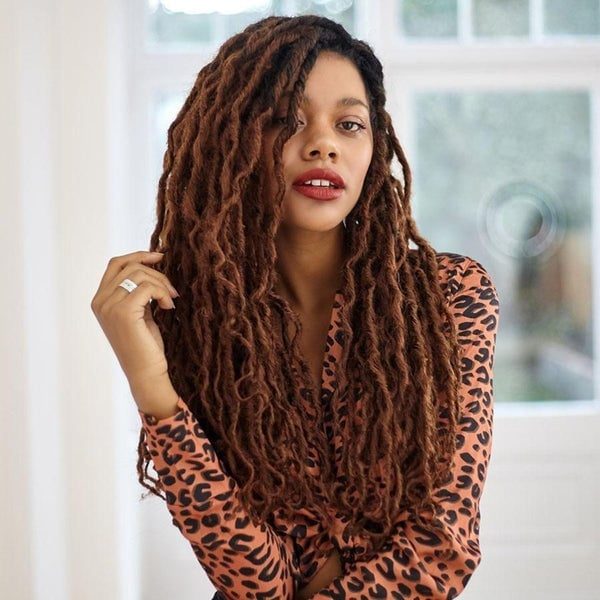
Wavy, thick locs at mid-back length get their weight from the lighter brown highlights woven through dark brown. The middle parting keeps everything symmetrical, which matters when the texture is this full. You need the density first; thin locs at this length look sparse. Book it as: long textured locs, mid-back length, subtle highlights.
There are no bangs here, so the face gets its frame from the front locs falling straight. The technique is straightforward: the stylist sections the hair, applies the lighter pieces at even intervals, and lets the natural wave carry the rest. No curling iron required. The result lands somewhere between neat and undone, which is exactly the territory this year’s simple loc styles occupy.
Coily locs transition to warm brown at tips
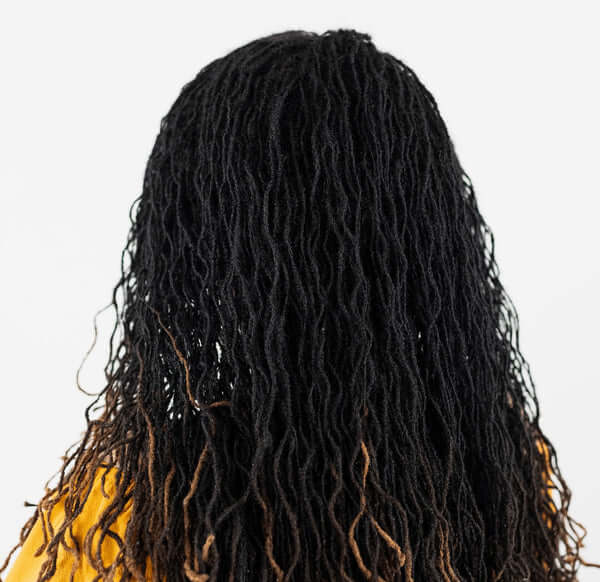
This one works best on long, thick, coily locs that can carry a color transition without looking top-heavy. The black base fades into a warm brown at the tips, which gives a natural ombre effect. The ombre effect lands because the texture is air-dried and the shift is gradual. Skip this style if you prefer a uniform shade or dislike any variation along the strand. Upkeep means a toner gloss every eight weeks to keep the brown warm and the black rich. Let the locs air dry; heat would flatten the coily texture the style depends on. The back view shows the gradient most clearly, so the stylist places the lighter color starting around the ears and deepening toward the ends.
Loose locs with gold and shell accessories
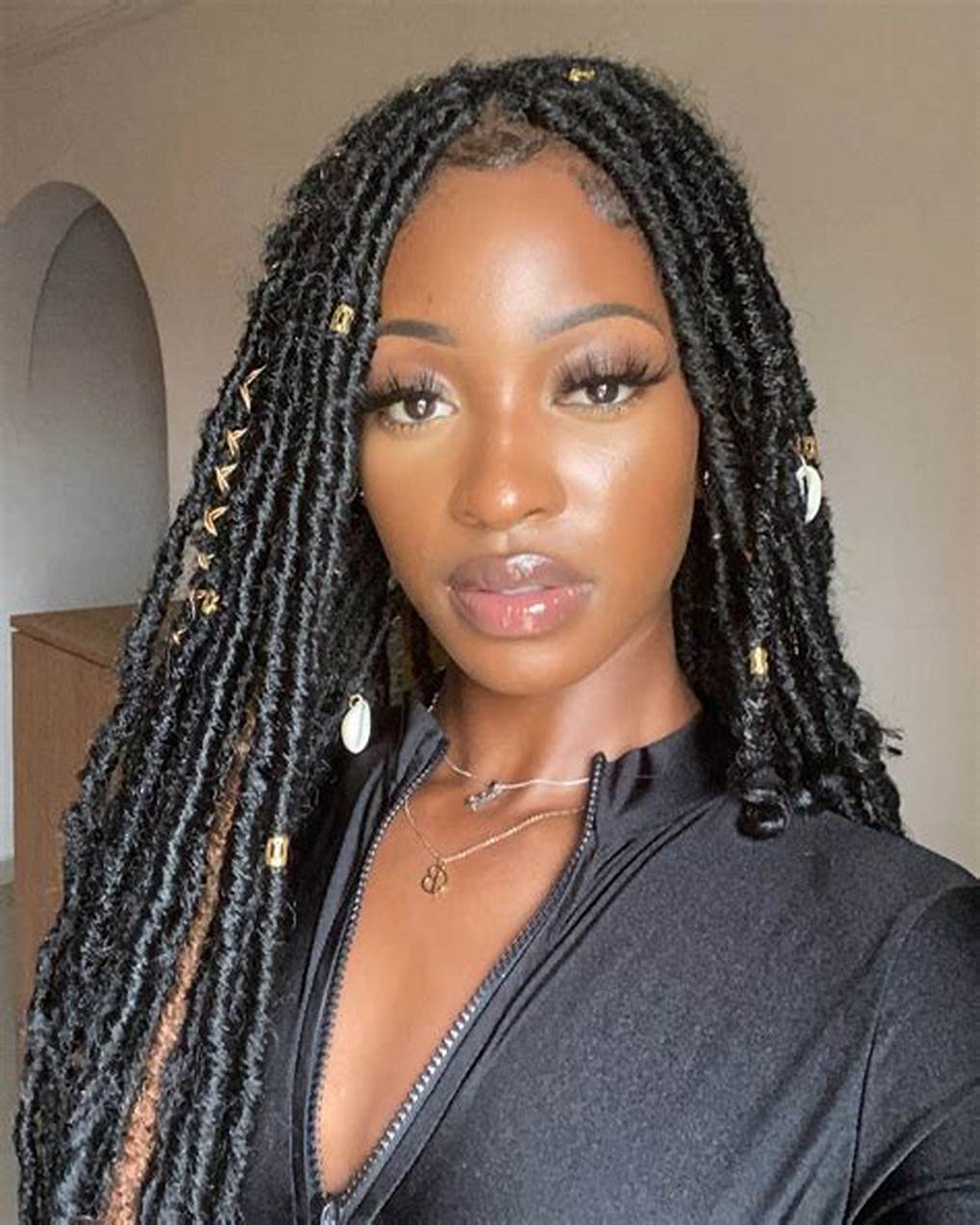
Gold and shell accessories woven into loose locs change the silhouette without changing the cut. The wavy, thick texture stays the star; the pieces just add a point of interest at intervals. Middle part, black with subtle brown undertones, no bangs. The accessories do the talking. Secure each piece tightly enough that it stays put but loosely enough that it moves with the loc. Salon installation is the standard here; DIY threading tends to slip or damage the loc over time. A quick check of each accessory every few days prevents any one spot from bearing too much weight. The look holds for about two weeks before the accessories need repositioning.
Thin, long locs air-dried
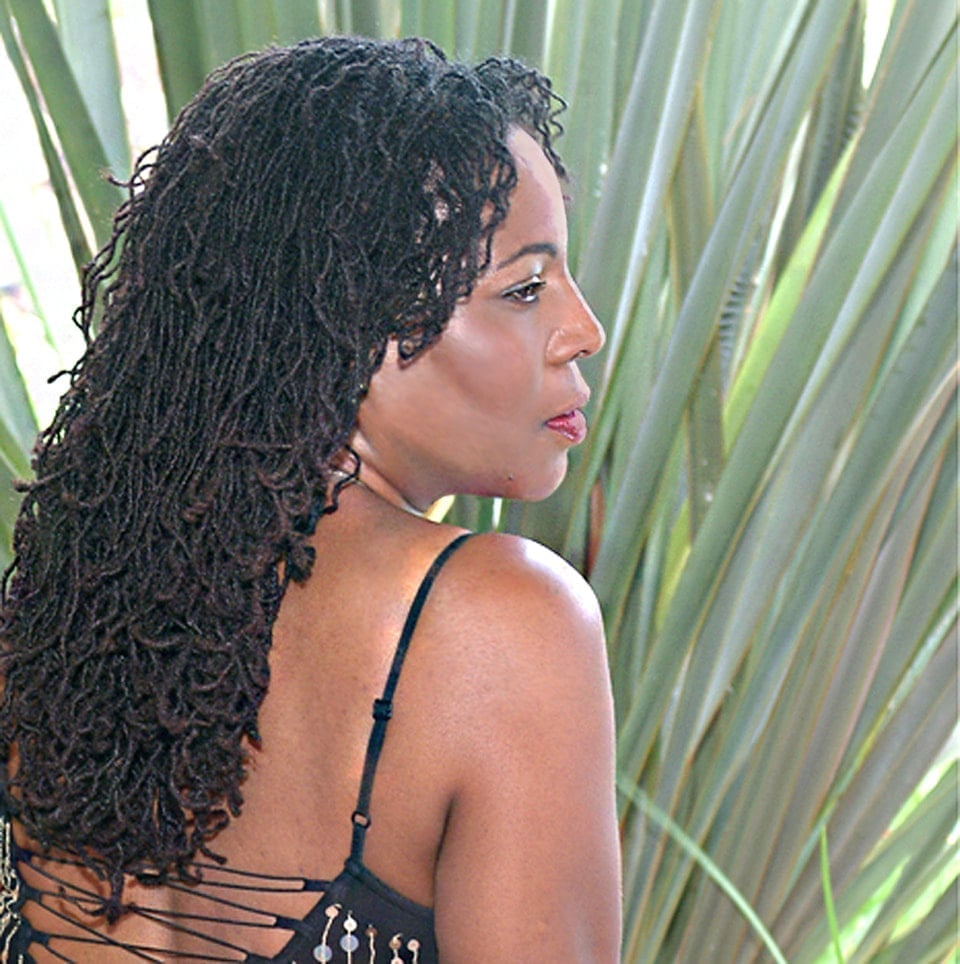
Thin locs at long length need the right texture to avoid looking scraggly. The wavy, thick quality here gives the locs body even when they are air-dried. Side part, dark brown, no bangs. Tell your stylist: thin long locs, side part, air-dried finish. The request is easy; the execution requires even parting and consistent tension. After washing, let the locs dry without manipulation, touching them while damp disrupts the wave pattern. A curling iron can refresh a few front sections if the air-dried wave falls flat, but the style is built to need very little.
The side part changes the weight distribution. More locs fall to one side, which creates asymmetry that suits round and square face shapes. The thin diameter means each loc dries faster than thicker versions, a practical advantage you notice on wash day.
Short locs styled as a sharp bob
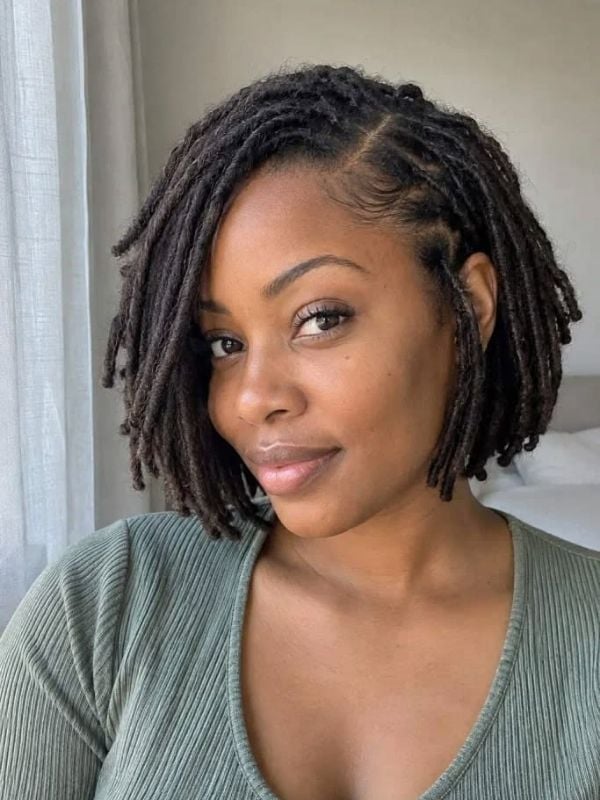
A short loc bob with a deep side parting and air-dried texture is the simplest version of the shape. Thick, coily locs cut to bob length sit cleanly without extra product. Salon maintenance is non-negotiable here. This is not a style you maintain at home with scissors. The deep side part adds volume on top, which balances a long face shape. No bangs, so the front locs frame the forehead without covering it. The trade-off is that this length limits styling options; you get the bob silhouette or an updo that is mostly scalp, not much loc.
Final Thoughts
The right simple loc style is the one you can live in.
- Ten minutes in the morning: two braids or a half updo.
- Intricate parting: schedule maintenance every 4-6 weeks.
- Air drying: preserves texture and prevents damage.
- Night protection: a satin bonnet keeps the style intact.
Simple loc styles offer beauty without the fuss.