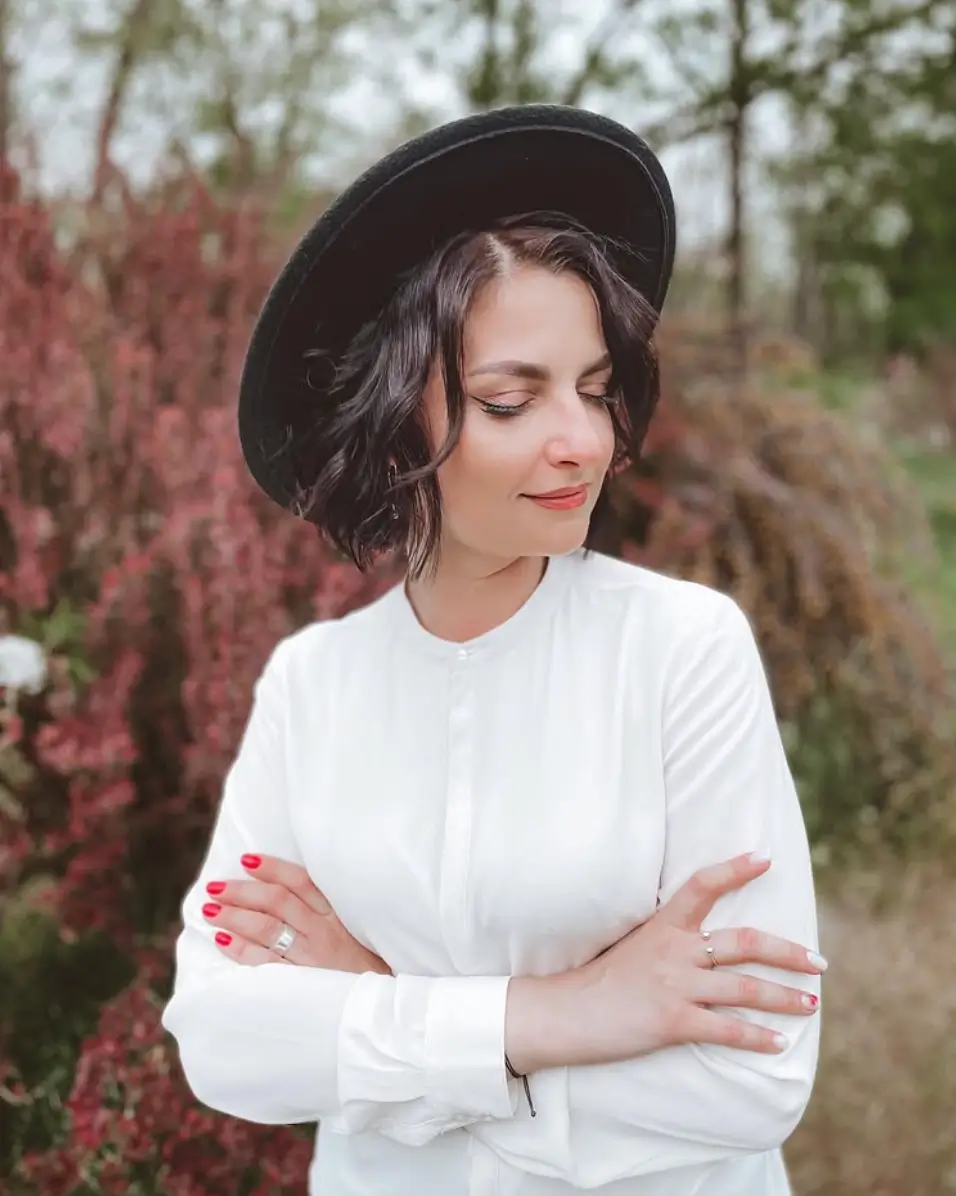
You sit in the chair with a photo of a color that isn’t quite brown and isn’t quite blonde. The colorist nods and pulls out foils. Bronde hair in 2027 means a blend that grows out softer, tones down brassiness, and gives you more weeks between appointments than a full highlight.
That practicality explains why Stylish Bronde Hair 2027 fill so many saved boards. The 33 looks here range from dark bases with caramel ribbons to ash-toned blends that need less maintenance. They work for straight, wavy, and curly textures, and for anyone who wants a color that doesn’t demand a salon visit every four weeks.
Dark brown base with caramel highlights
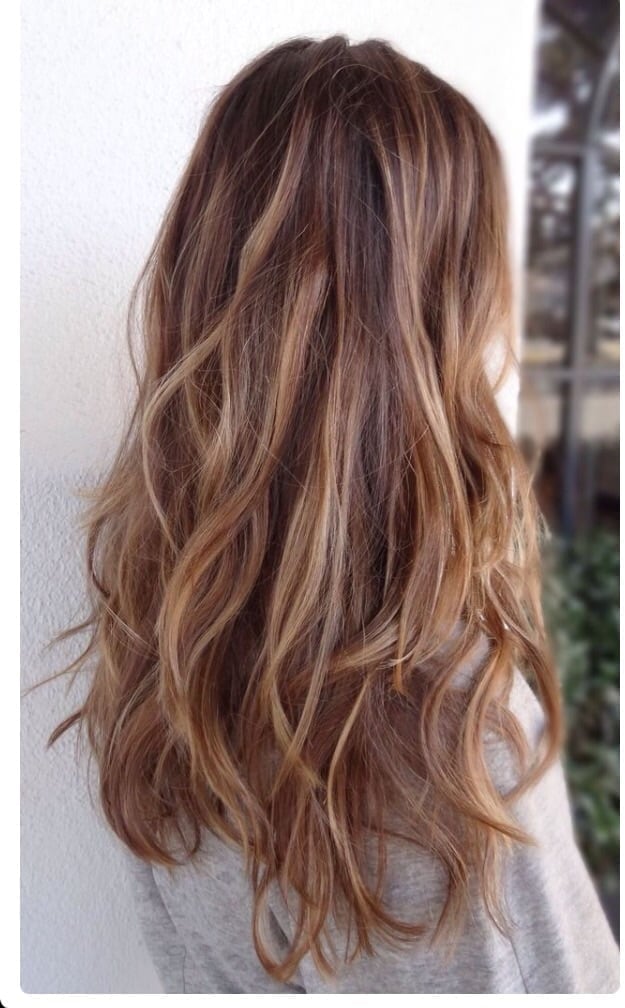
Dark brown base meets caramel highlights in a deliberate placement pattern. The lighter pieces thin out toward the roots, so the regrow looks shadow, not neglect. Wavy, thick texture is the ideal partner here, the bends catch the caramel at different angles. Not for you if you prefer very straight hair or have fine hair that lacks volume. Air drying works fine, but a quick diffuser pass keeps the waves defined.
Brown and blonde blend with blonde highlights
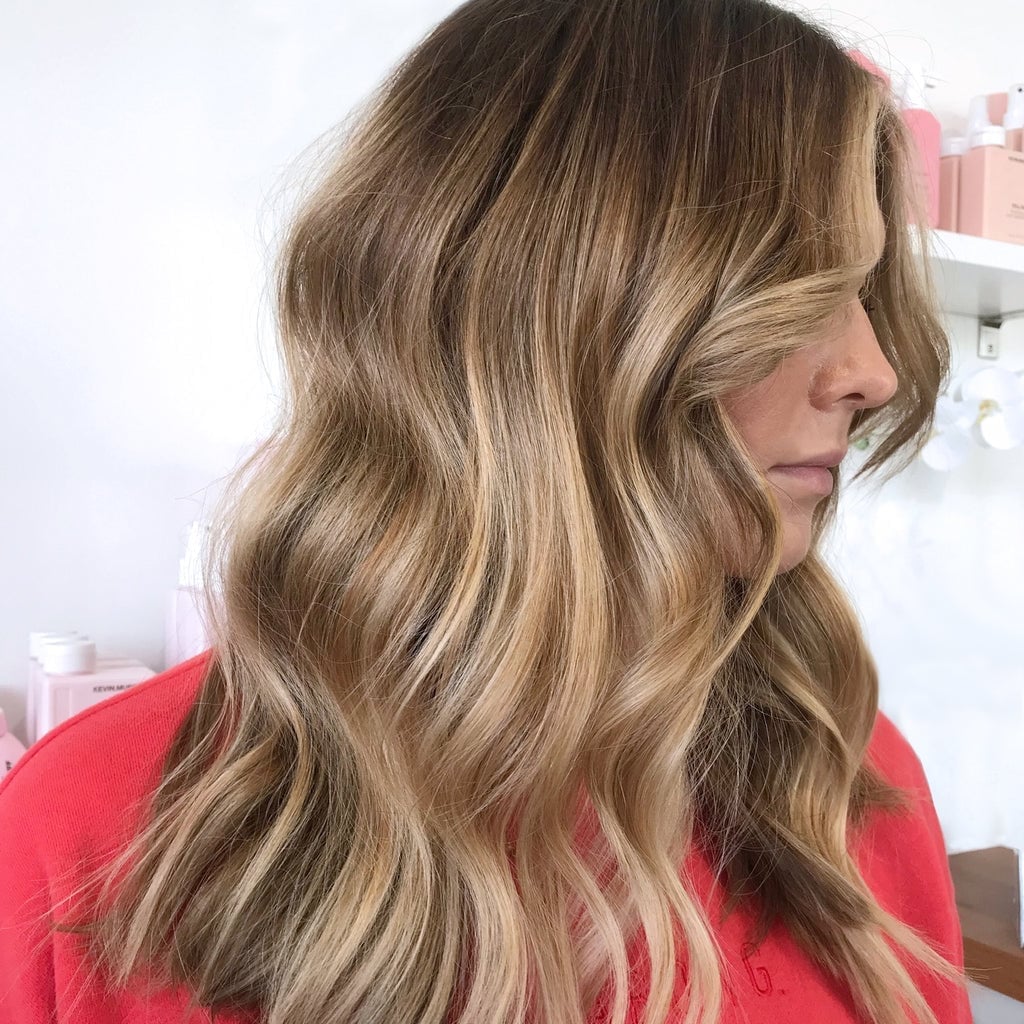
A solid block of one shade is a safer bet for some, but this blend of brown and blonde with distinct blonde highlights gives fine, wavy hair a density it does not actually have. The gentle blowout and middle parting keep the look neat without fighting the texture. Not for you if you want a one-dimensional color or have very coarse hair. A blowout takes about fifteen minutes; layers need trimming every six to eight weeks.
Blend of brown and blonde with lighter highlights
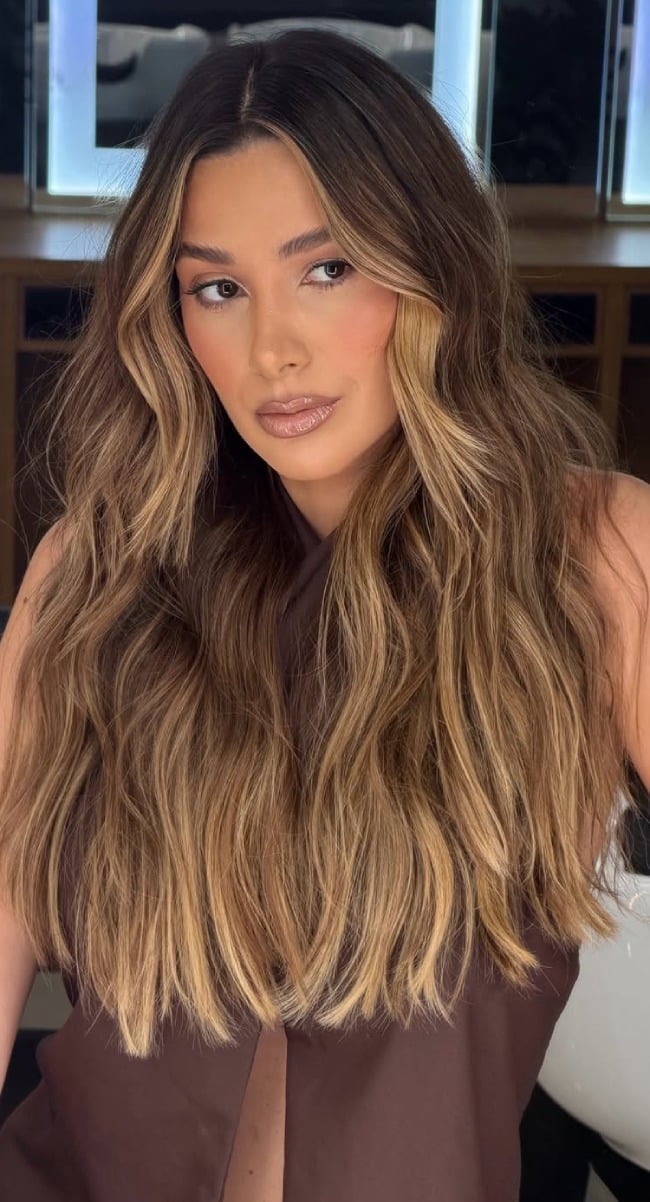
How do you describe lighter without sounding like a shampoo ad? Tell your colorist: bronde blend, lighter blonde highlights, wavy blowout. The key is the blending. The lighter pieces are woven through, not painted on top, so the effect is subtle dimension rather than obvious streaks. Thick, wavy hair at collarbone length or longer wears this best. A wavy blowout lasts two to three days with dry shampoo.
Easy appeal with rich brown and lighter blonde
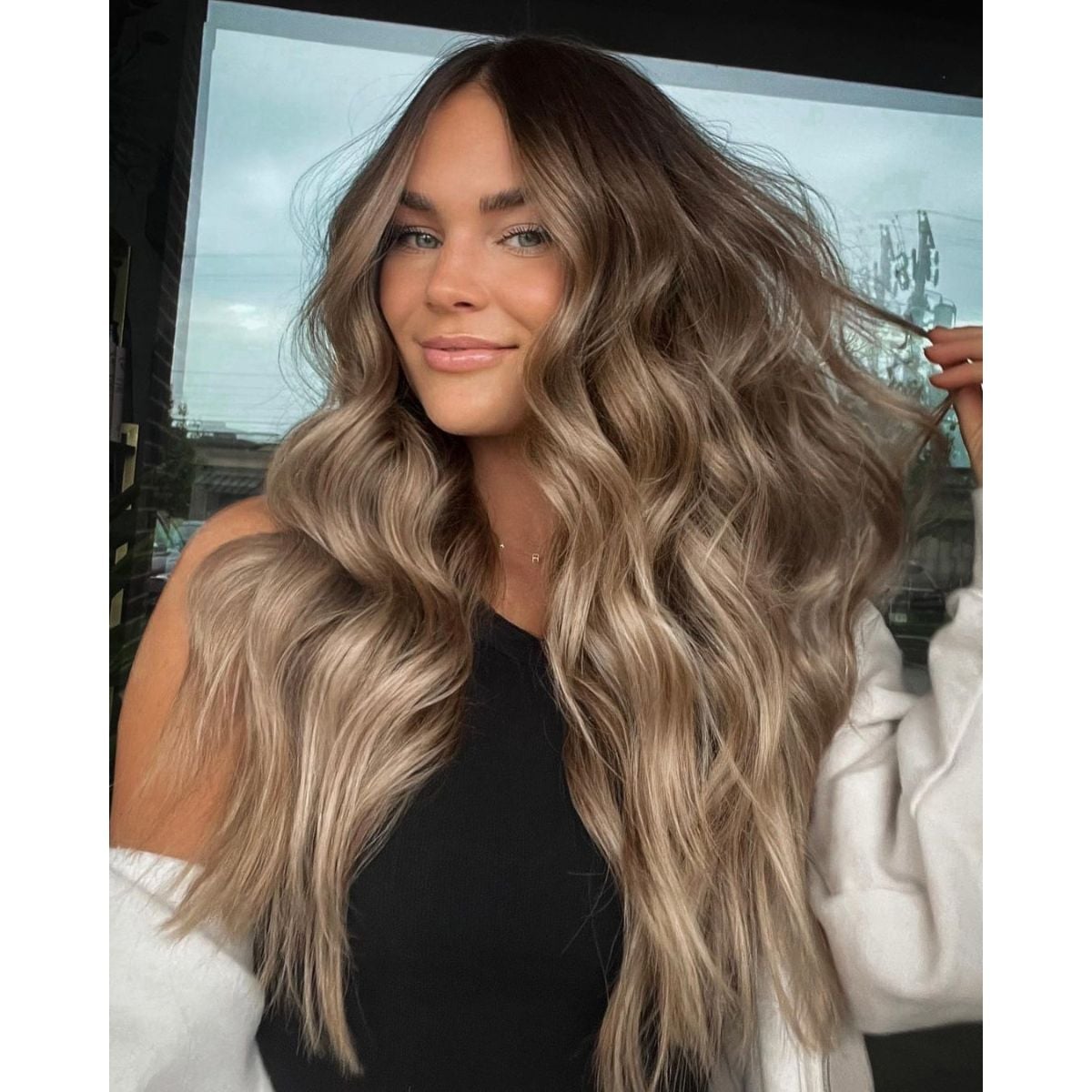
Rich brown base and lighter blonde highlights rely on the contrast between depth and brightness. The long, layered cut keeps the color from feeling heavy, and the loose waves give it volume without a full curl set. Works for thick, wavy hair that is long. Not for anyone who wants a short cut or has fine hair that struggles with volume. Loose waves can be refreshed with a curling wand; long layers need a trim every ten to twelve weeks.
Subtle lighter highlights on dark blonde base
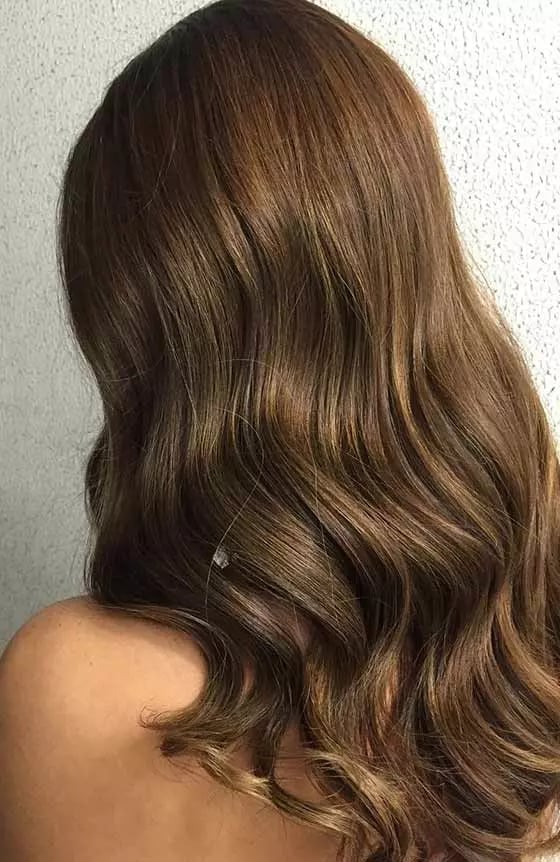
Dark blonde base with natural-looking lighter highlights is a low-contrast approach that looks grown-in, not highlighted. The catch: the subtlety means it can look like nothing happened if the stylist plays it too safe. Fine, wavy hair at collarbone length or longer benefits from the extra dimension. A dark base or very bold highlights require a different technique. A gentle blowout takes about twenty minutes; soft layers need a trim every six to eight weeks.
Brown and ash blonde highlights via balayage
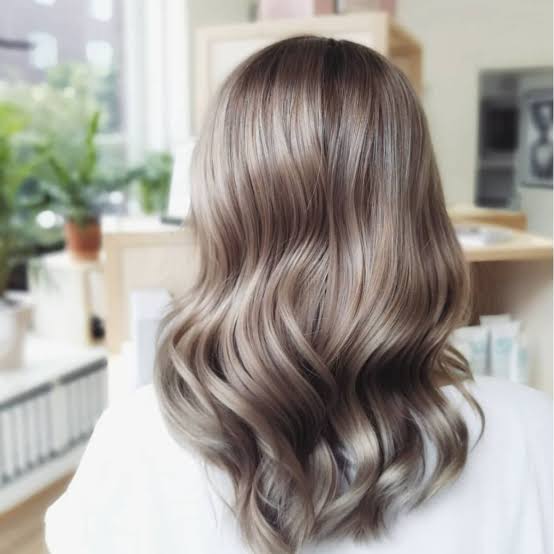
Balayage places the ash blonde highlights where light naturally hits, not in uniform rows. Fine, wavy hair shows the separation best. The technique keeps a middle part from looking flat. The ash pieces here stay distinct. Tell your colorist: bronde base, ash blonde balayage.
Brown and blonde blend with face-framing highlights
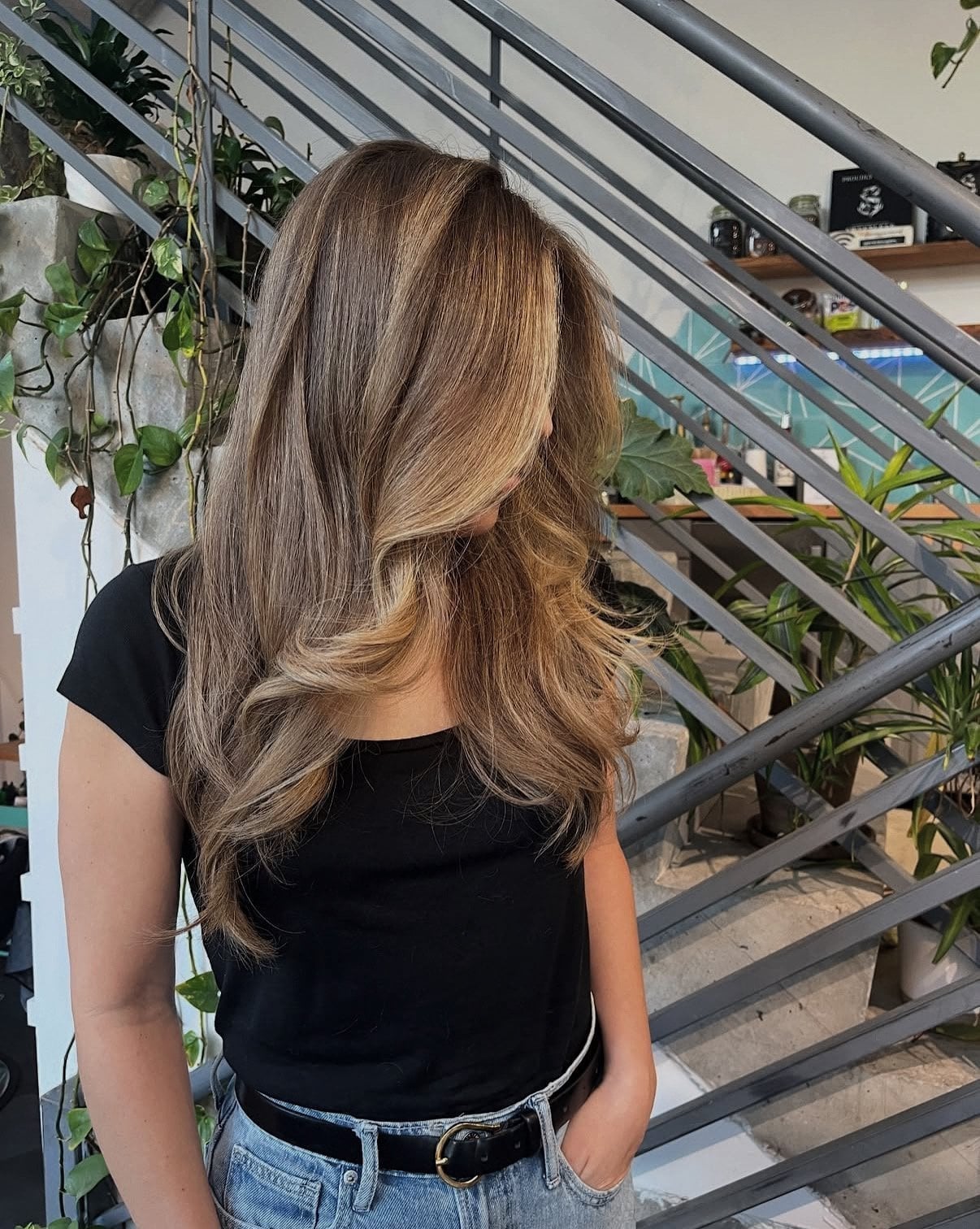
Face-framing highlights work because they sit on the thick, wavy sections that catch the most light from a side part. The voluminous blowout makes the contrast between brown base and blonde pieces read clearly. Pass when you have fine hair. The weight of this blend can overwhelm thin strands. The catch: this needs a round brush every wash.
Brown and blonde blend with lighter blonde, close-up take
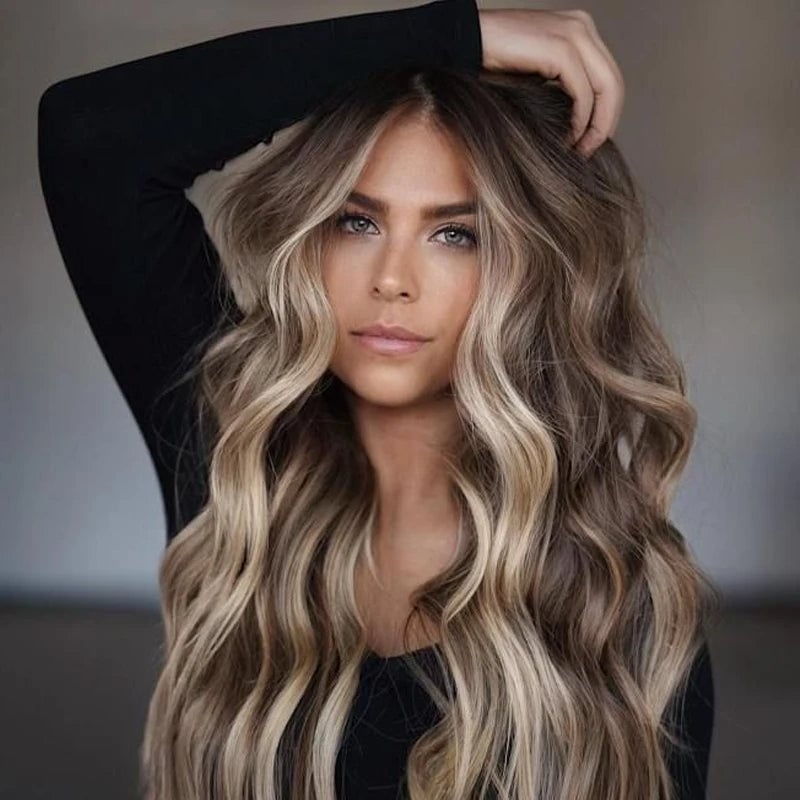
Distinct blonde highlights sit on a brown base, and the layers break them up so the lighter effect reads from root to end. Loose waves with a middle parting let each highlighted piece surface without blending into the next. Thick, wavy hair gives the highlights enough surface area to register. The words for the chair: bronde blend, lighter blonde highlights.
Dimensional bronde with blonde highlights and lowlights
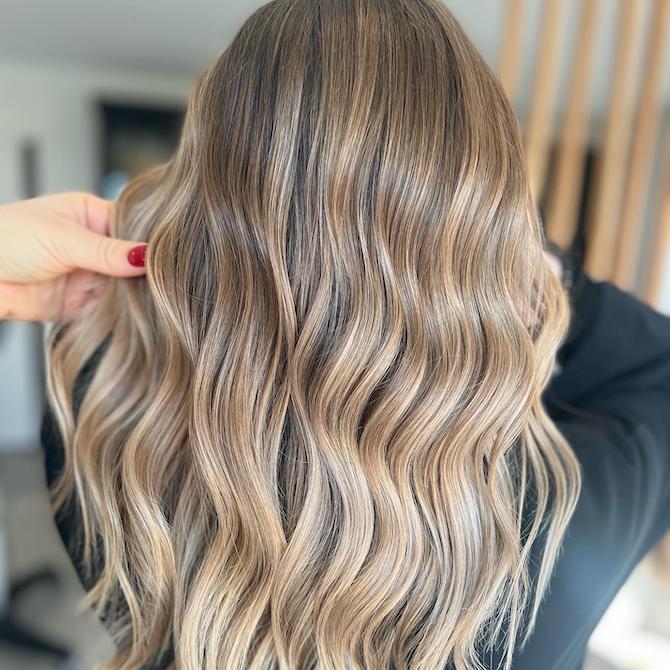
Two tones, not one: the blonde highlights lift while the lowlights deepen the base, so the wavy blowout looks layered rather than flat. Thick, wavy texture holds both ends of the spectrum without muddling. A single process color cannot build this kind of contrast. Tell your colorist: dimensional bronde, blonde highlights, blonde lowlights.
Smooth brown and blonde blend with side swept bangs
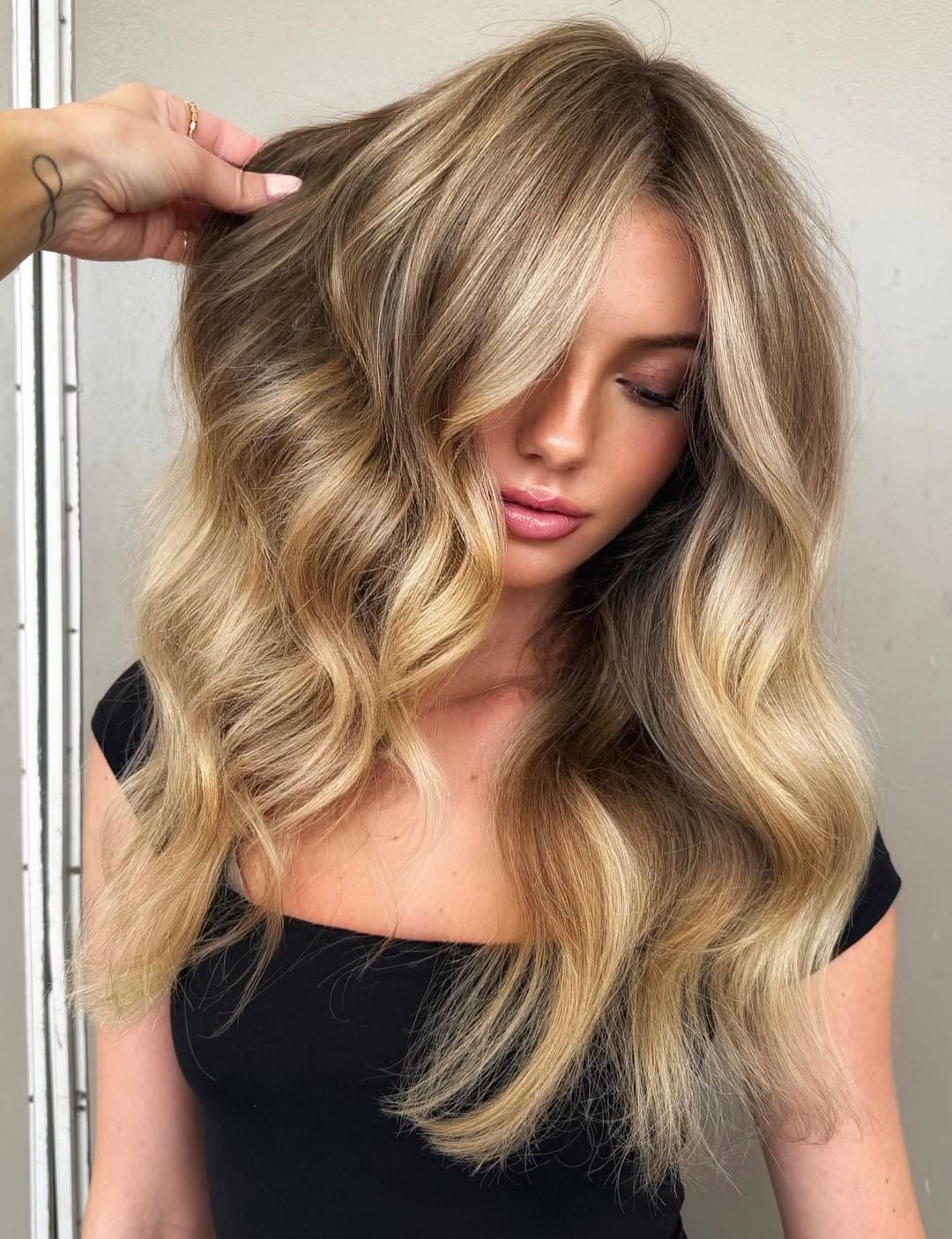
How do you get a smooth blend that still shows the lighter highlights? Side-swept bangs carry the lighter pieces forward, so the color reads from the front without a heavy money piece. Thick, wavy texture keeps the bangs from looking stringy. Book it as: smooth bronde, side swept bangs.
Bronde base with ash blonde highlights
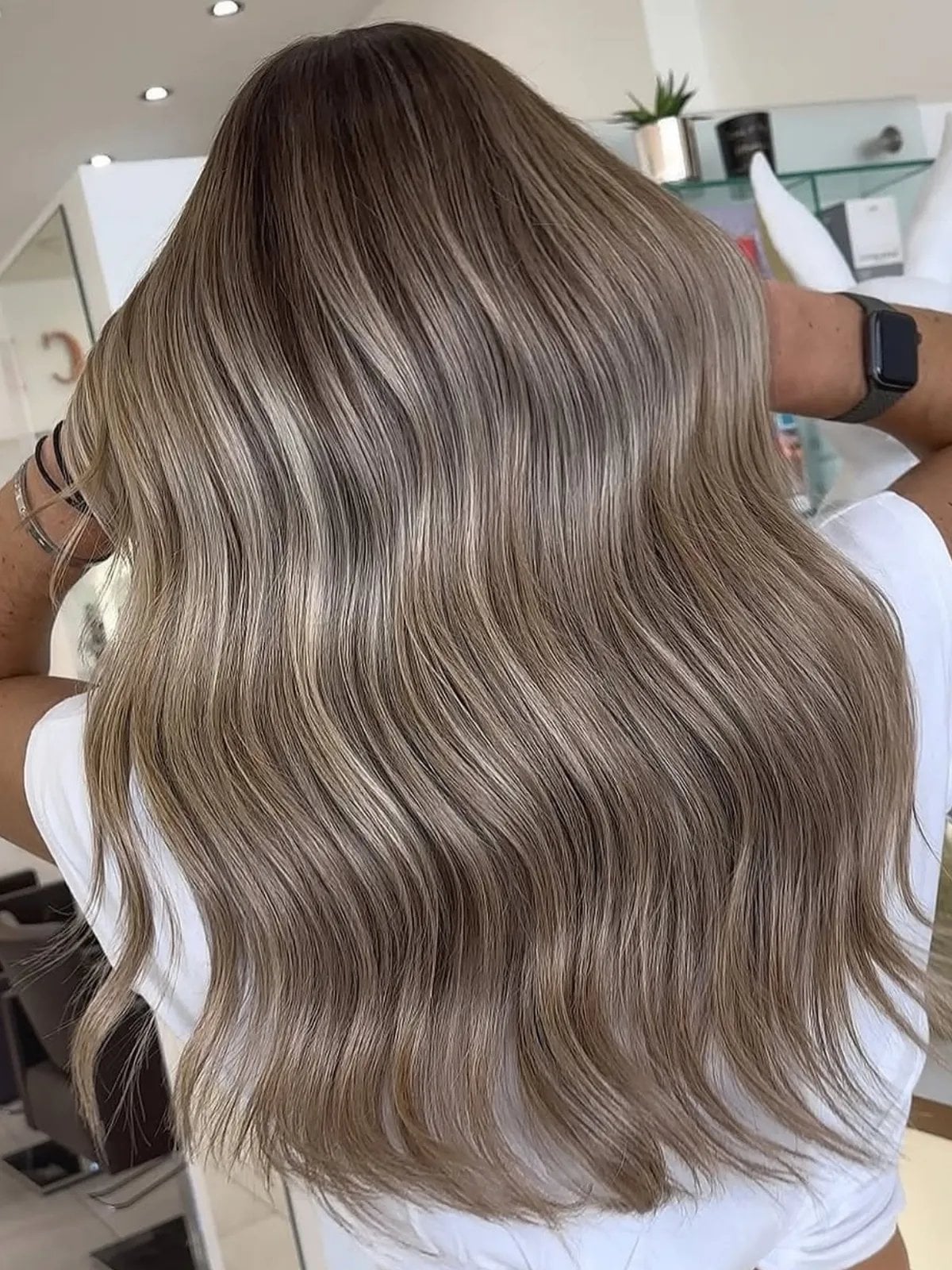
Ash tones sit cooler than a standard bronde, which is exactly the point. The base stays a warm brown while the highlights pull silver-beige, creating a contrast that is deliberate. Thick, wavy hair carries this look best. The texture lets each highlight register separately instead of blending into one flat stripe. It suits those who prefer cooler tones and have thick hair; ash can look muddy on a very light base. A toner every four to six weeks keeps the silver from drifting brassy.
Natural lighter effect with blended highlights
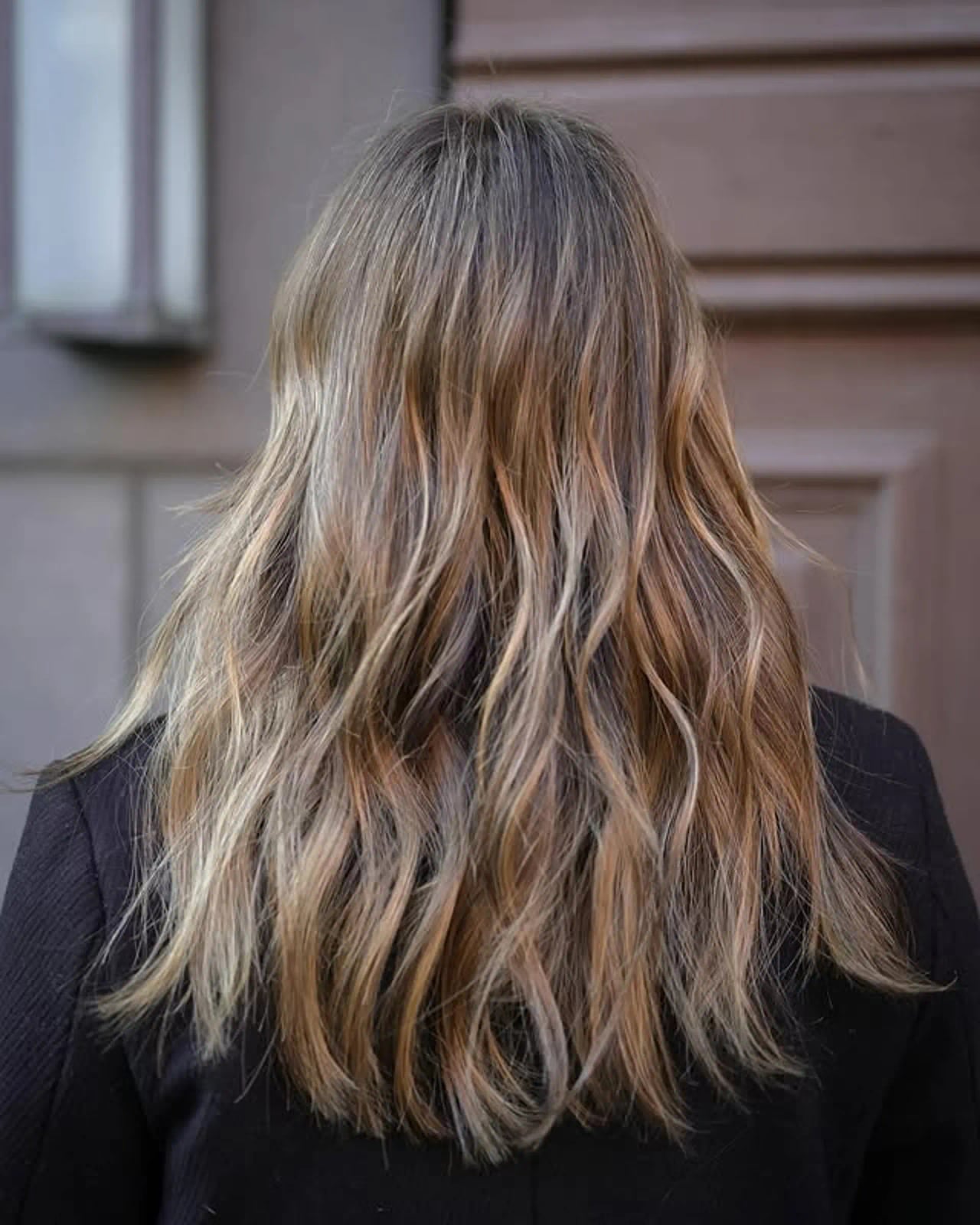
Lighter highlights here are painted closer to the root than a traditional balayage, so the color feels grown-in rather than placed. Fine, wavy hair at shoulder length or longer lets the blend read without looking heavy. The catch: air-dried texture is part of the deal, so if you reach for a flat iron regularly, the soft contrast flattens out. A sea salt spray encourages the wave pattern that makes these highlights register as natural.
Caramel highlights on dark brown base with waves and long layers
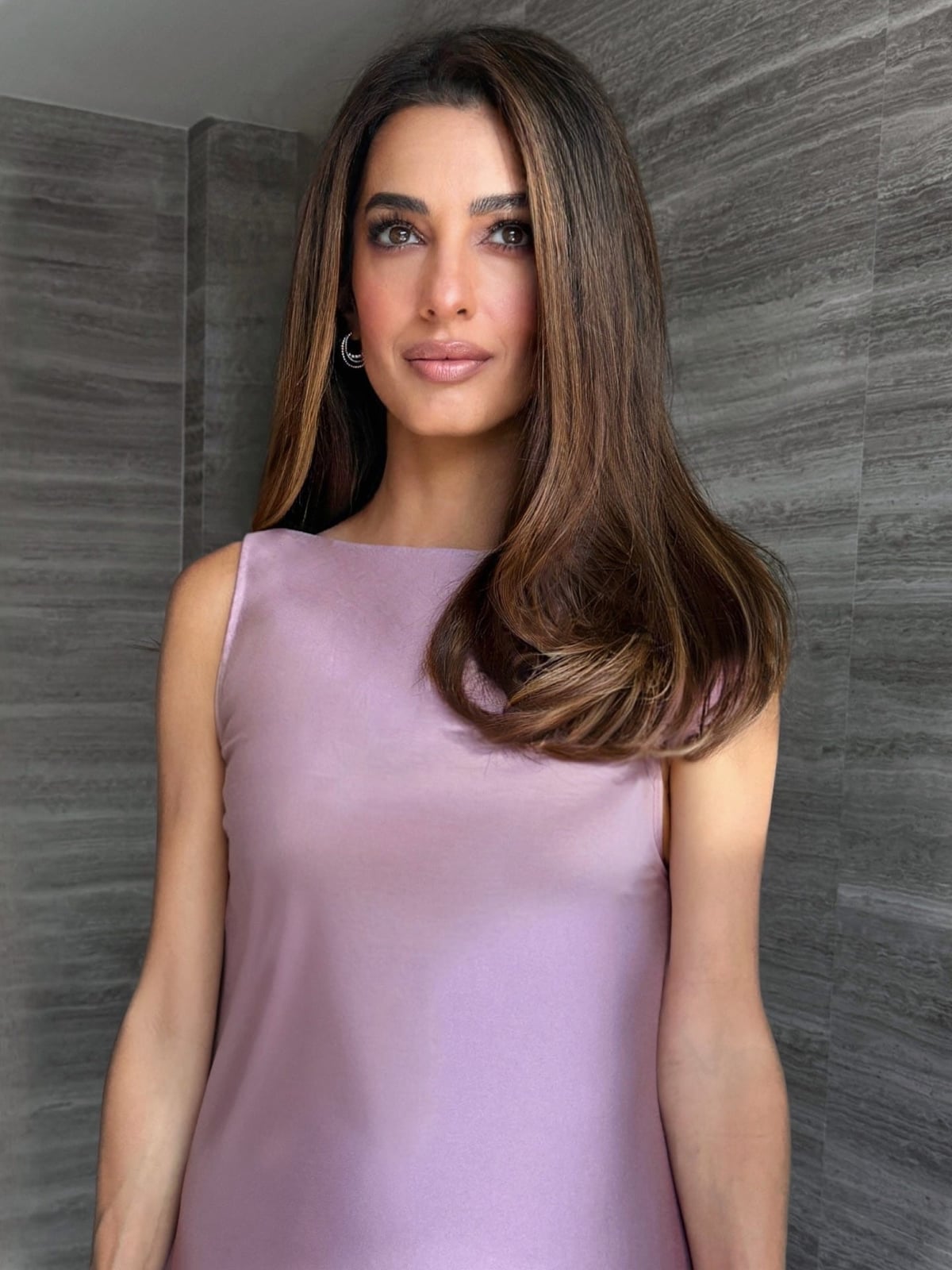
A centered part and long layers give this color room to travel. The dark brown base anchors the look while caramel highlights hit mid-lengths and ends, skipping the root area entirely. Thick, wavy hair benefits from the long layers. They prevent the weight from pulling the wave straight.
Ask your colorist for: dark brown base, caramel highlights, long layers. The blowout takes time, about twenty minutes with a round brush and texturizing spray.
Brown and blonde blend with contrasting blonde highlights, wavy
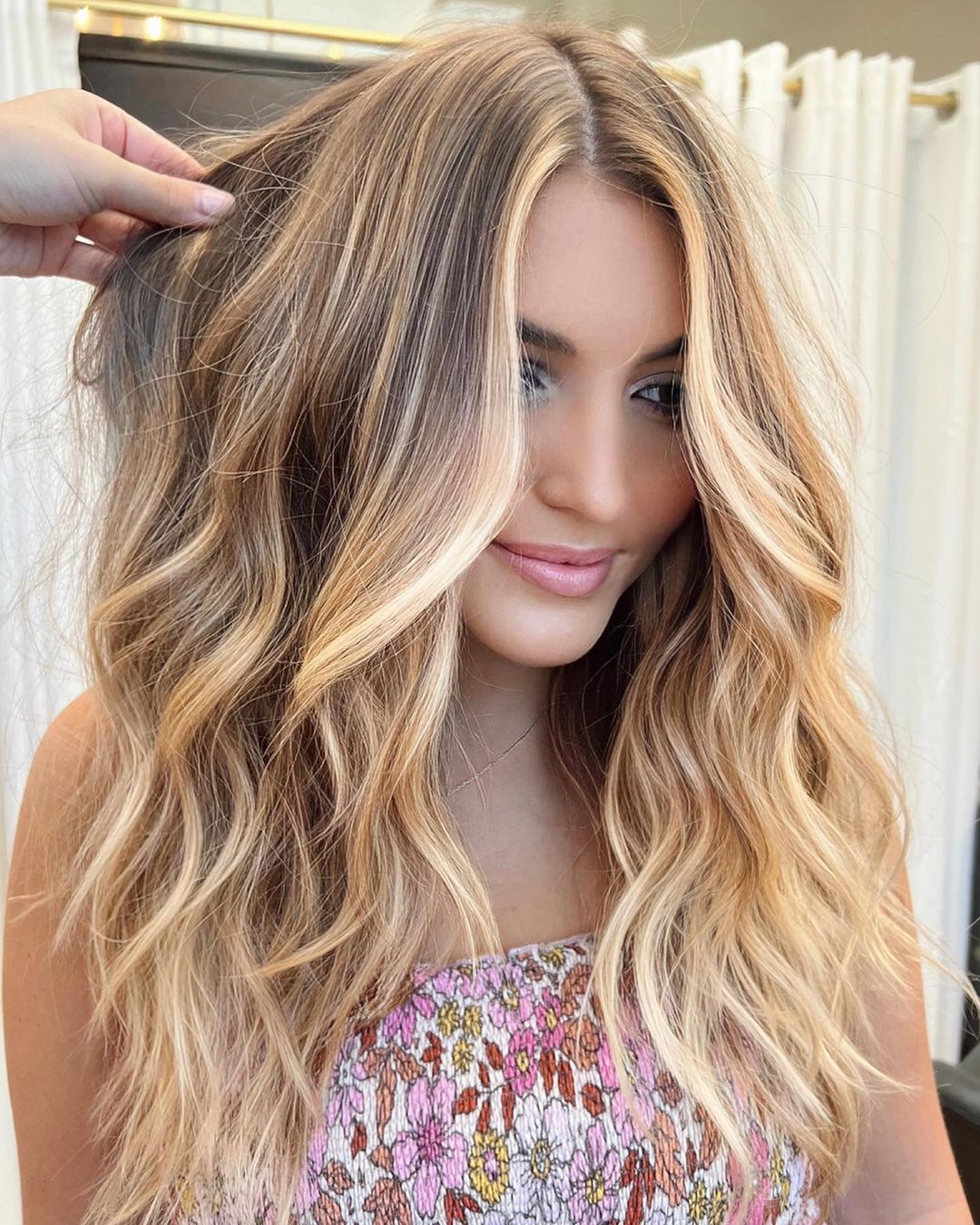
This is a high-contrast bronde. The blonde highlights are distinct against a deeper brown base, creating deliberate dimension. Thick, wavy hair at collarbone length gives the highlights enough surface to register. These highlights are bold and noticeable. Loose waves with a middle parting keep the contrast from feeling blocky.
Ash blonde highlights create dimension in soft waves
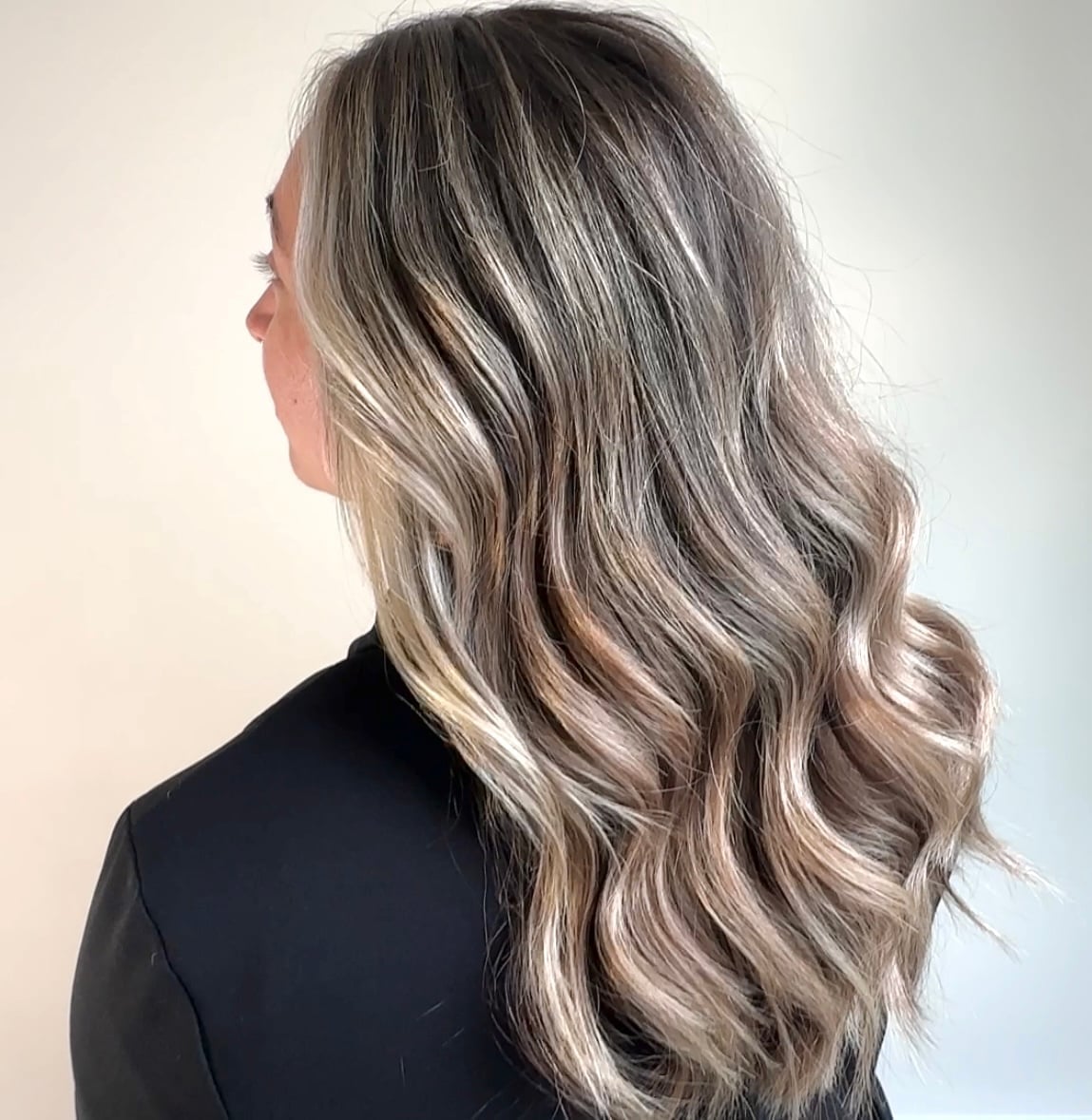
Soft waves and a middle parting let the ash blonde highlights look texture rather than stripes. The bronde base here leans neutral, so the ash tones lift without washing out the brown. Thick, wavy hair carries the dimension well, the wave bends each highlight, making the color shift as the hair moves. Ask your colorist for: bronde base, ash blonde highlights, subtle layers. Styling takes about fifteen minutes with a medium barrel iron.
Rich brown base with face-framing blonde highlights and wavy thick
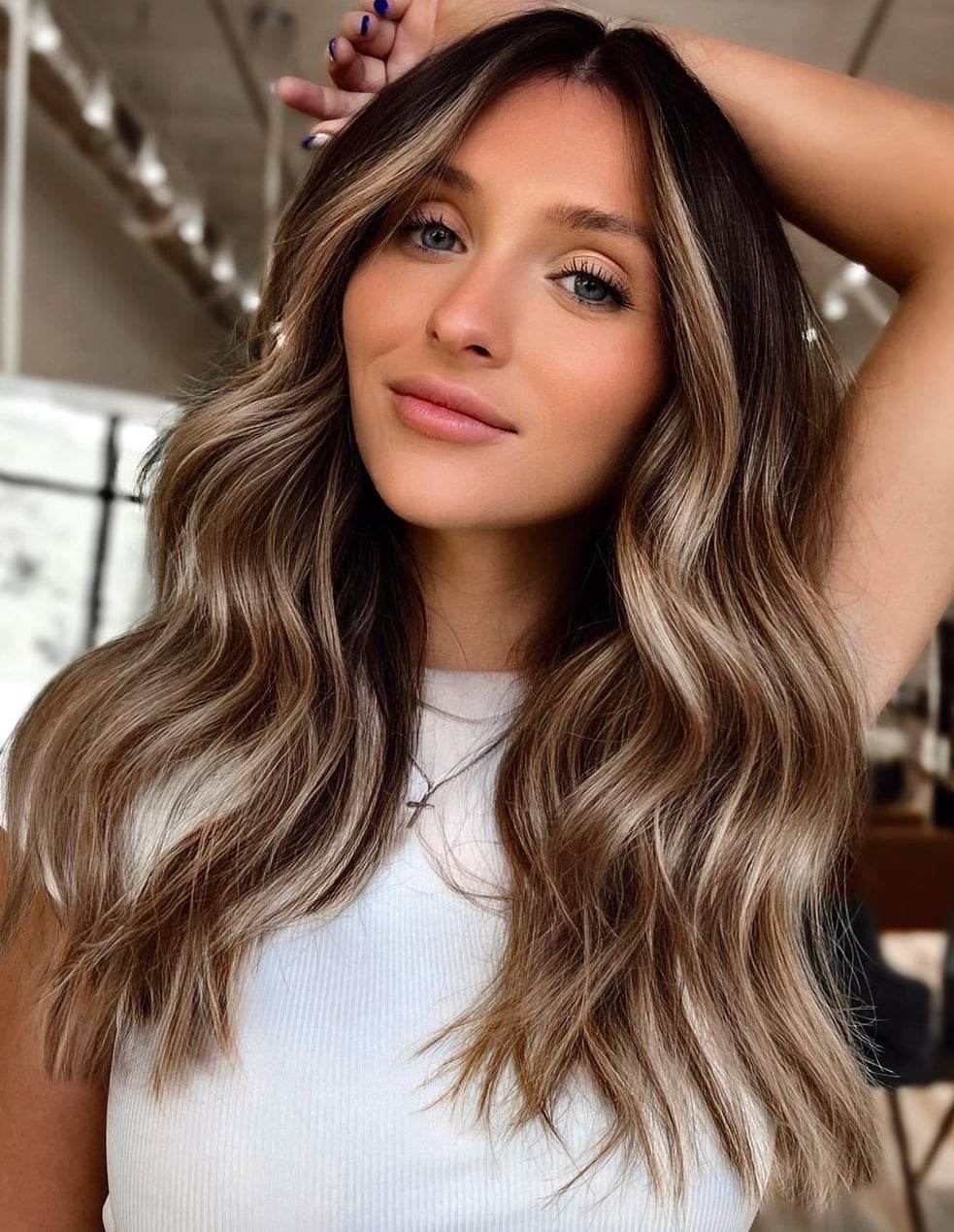
A rich brown base keeps the overall look deep while blended blonde highlights add lift exactly where you want it. The face-framing pieces are the whole point. Thick, wavy hair at least collarbone length shows off the contrast best. It suits medium to thick hair; fine hair or a uniform color preference may not suit it.
Dark brown base with ash blonde highlights and side swept bangs
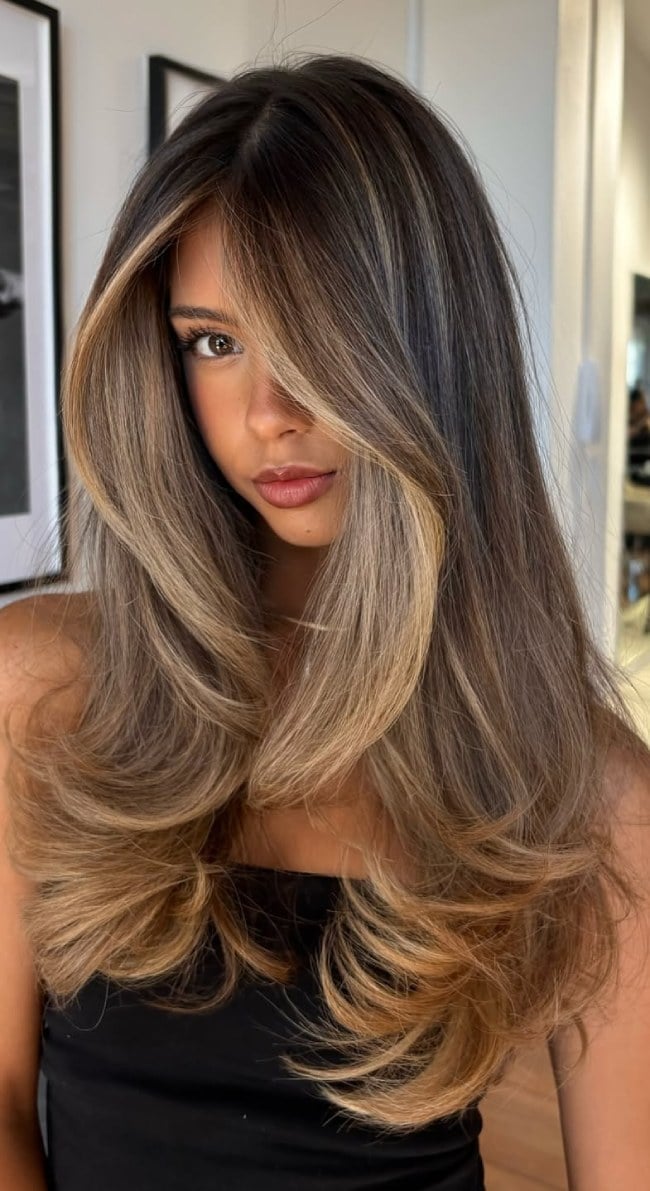
Ash blonde highlights on a dark brown base read cooler than caramel ever could. The layers keep the blowout voluminous without losing shape, and the side swept bangs are doing the work here. Side swept pieces need daily styling with a round brush to sit right. Ask your colorist for: dark brown base, ash blonde highlights, layers, side swept face-framing pieces.
Layered cut with soft curtain bangs and bronde highlights
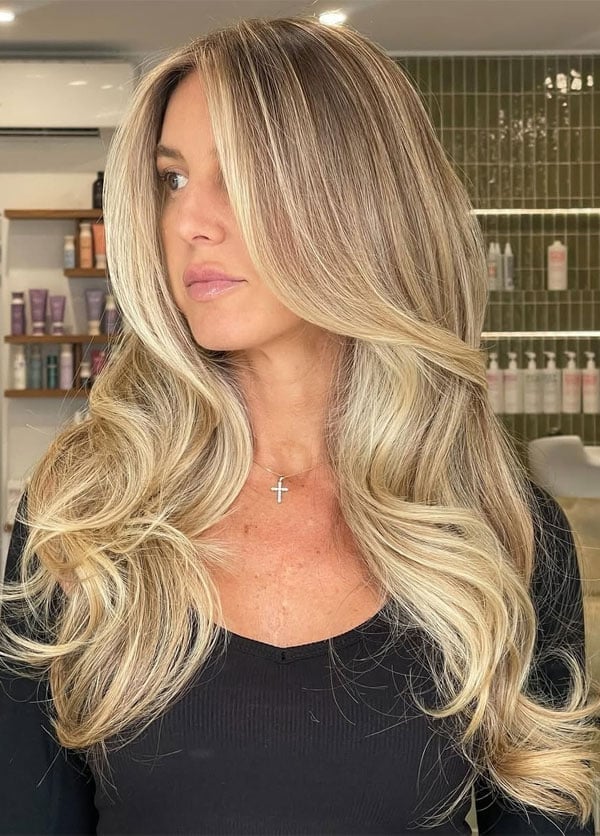
A layered cut with soft curtain bangs looks neat but not high-maintenance. The blend of brown and blonde with subtle highlights gives the waves a full, voluminous finish. You can air-dry the layers for a softer texture or blow them out for more shape. The catch: curtain bangs need a round brush every morning to avoid splitting apart. A salon visit every six to eight weeks keeps the weight line clean.
Lighter blonde highlights enhance rich dark blonde
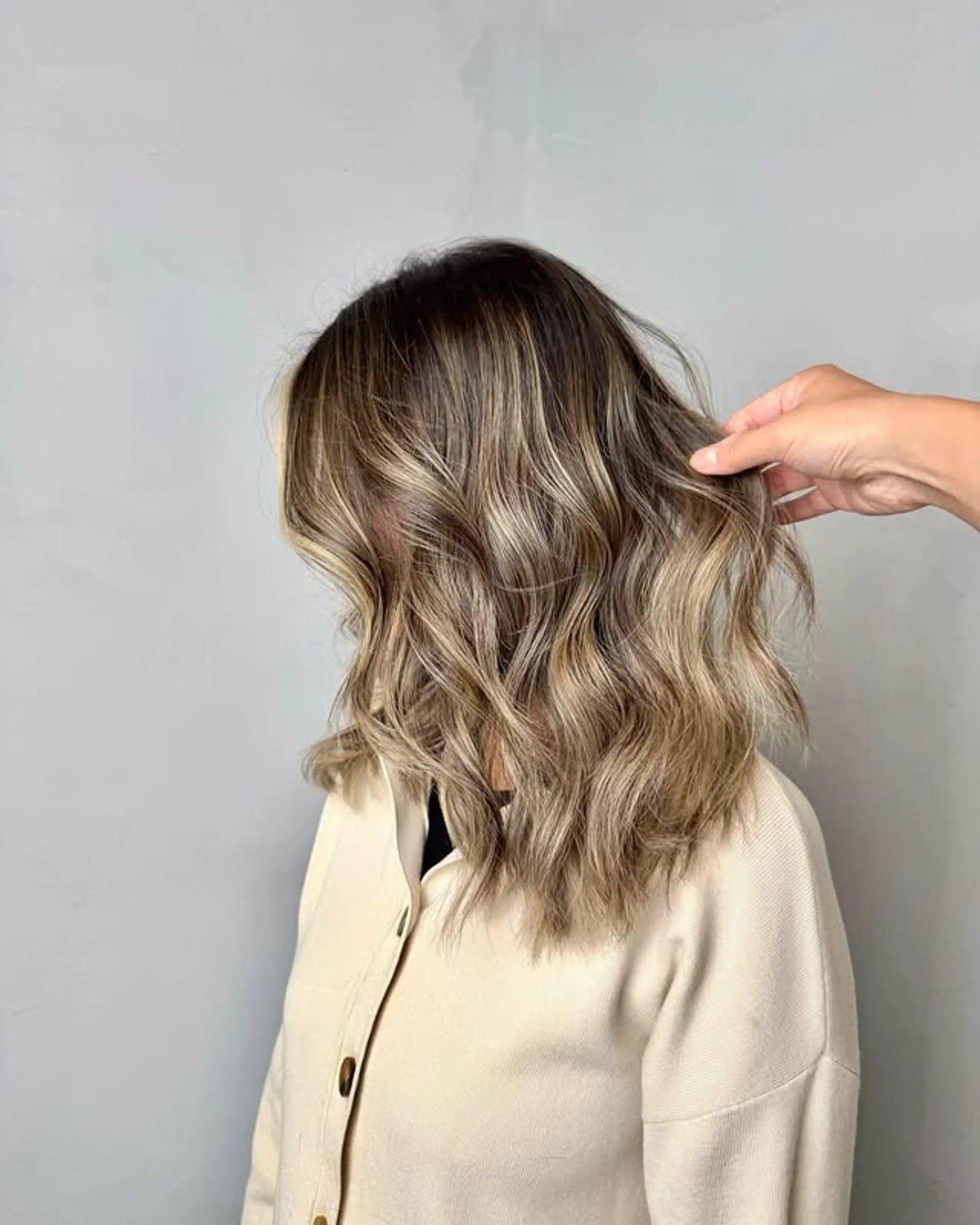
Rich dark blonde as a base is warmer than beige and cooler than honey. Soft lighter blonde highlights create a dimensional balayage effect that shows up best in loose waves. Fine, wavy hair at least collarbone length benefits from the lift without looking weighed down. Not for you if you want a dark base or have very coarse hair. Balayage touch-ups are needed every ten to twelve weeks. Ask your colorist for: rich dark blonde base, lighter blonde highlights, balayage.
Stylish bronde lob with subtle blonde highlights
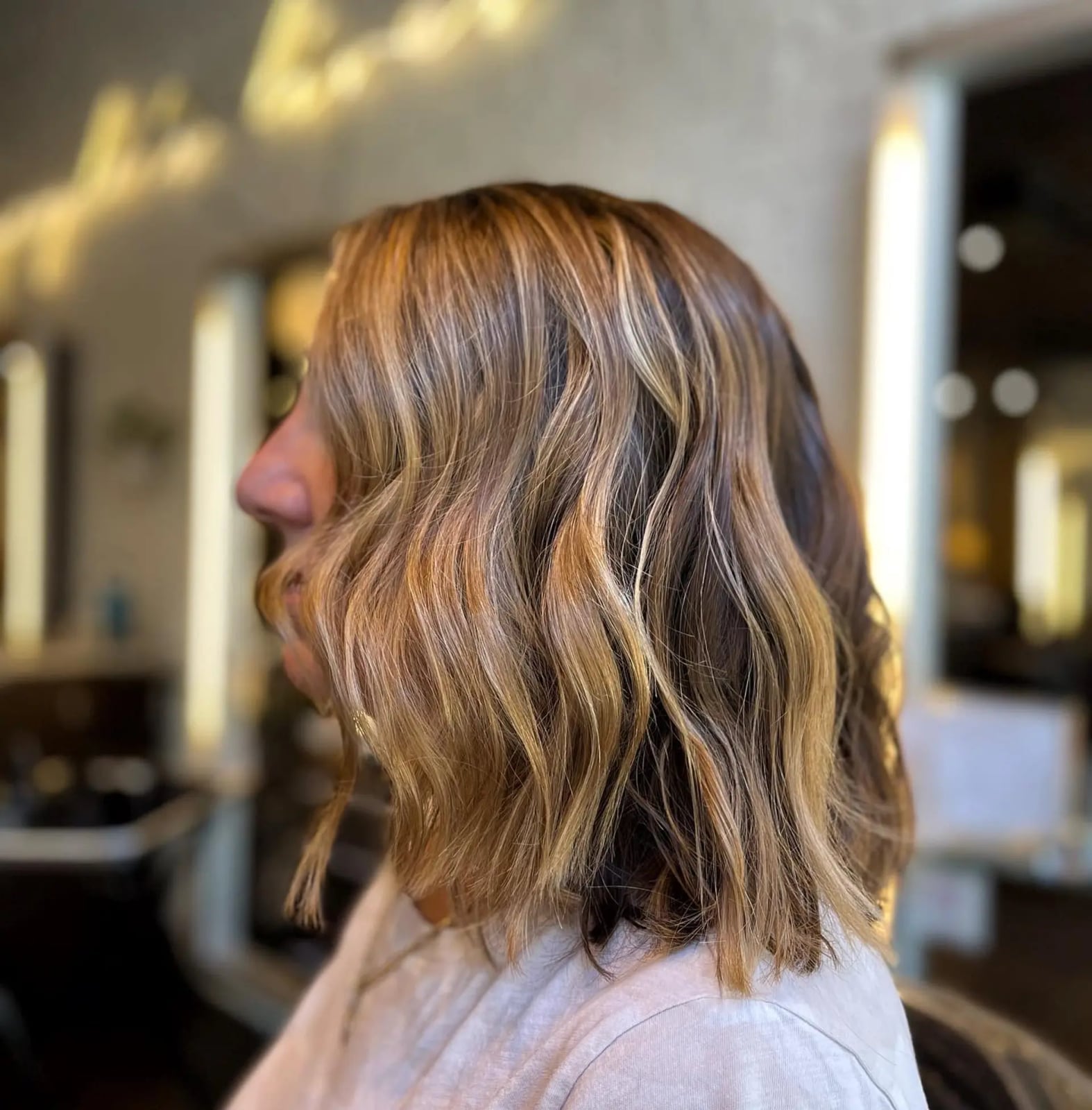
A bronde lob versus a longer cut: the lob holds wave better and shows the subtle blonde highlights from root to end. Fine, wavy hair at lob length gets enough body to keep the shape without product. The lighter effect comes from highlights woven through the base rather than placed on top. Pass when you want long hair or have very thick hair that needs more weight. Waves take about ten to fifteen minutes.
Root shadow and blonde highlights on bronde
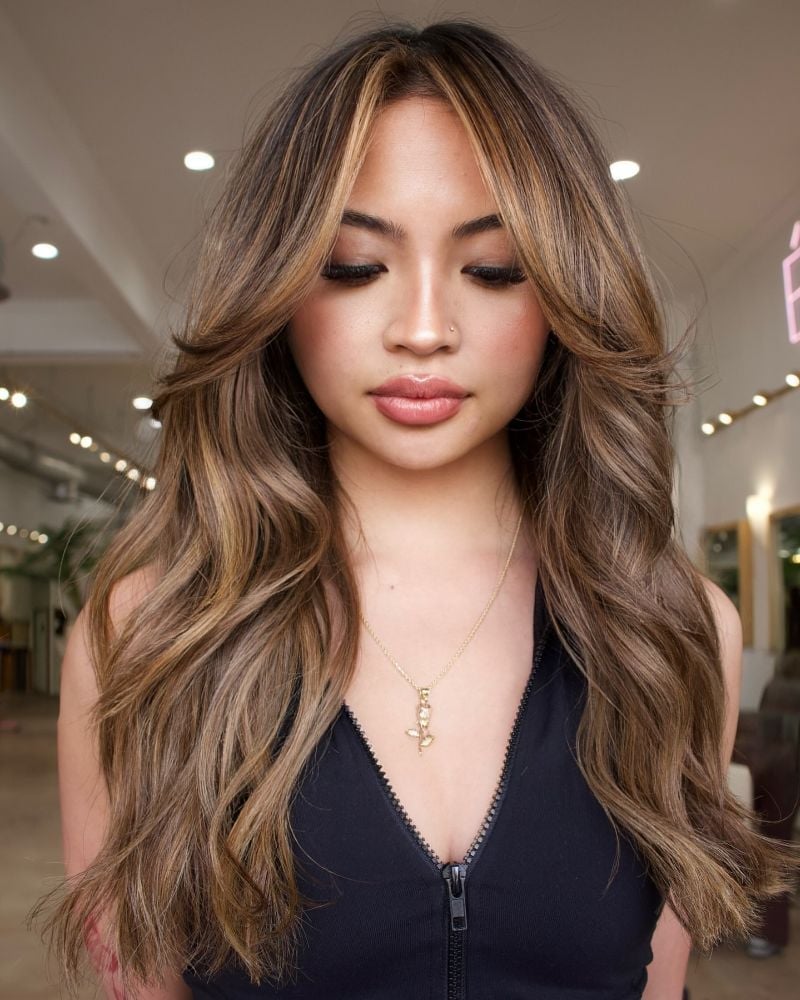
Face-framing layers and curtain bangs do the heavy lifting here, directing attention outward. The bronde base carries subtle blonde highlights, while a soft root shadow at the part keeps regrowth from looking harsh. Thick, wavy hair that reaches at least collarbone length handles this volume best. Not for you if you prefer no bangs or a color that starts light at the roots. Curtain bangs need daily styling, but the payoff is a built-in frame for your features. Ask your colorist for: face-framing layers, curtain bangs, bronde with root shadow.
Layered cut with dimensional bronde color
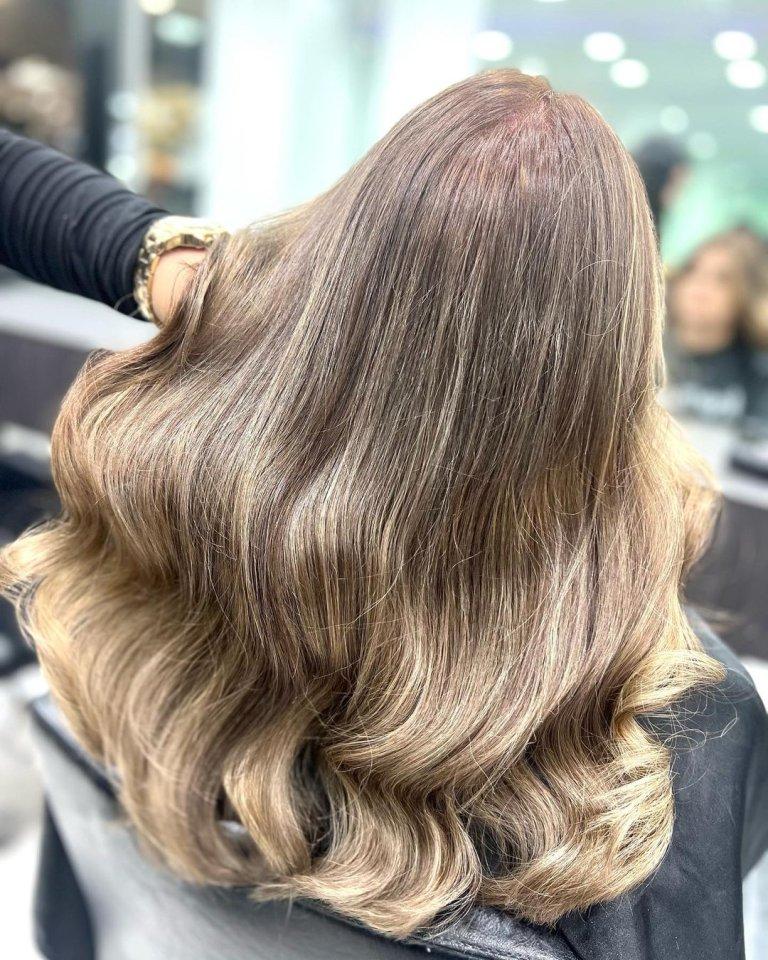
Layers cut through the density so the waves stack and sit with movement. The bronde color here uses subtle, blended highlights that shift from warm to neutral depending on the light. Thick, wavy hair suits this approach best; straight hair would hide the interplay. Bold, chunky streaks would not achieve this effect. Loose waves take about fifteen minutes.
Dark brown base transitioning into blonde balayage
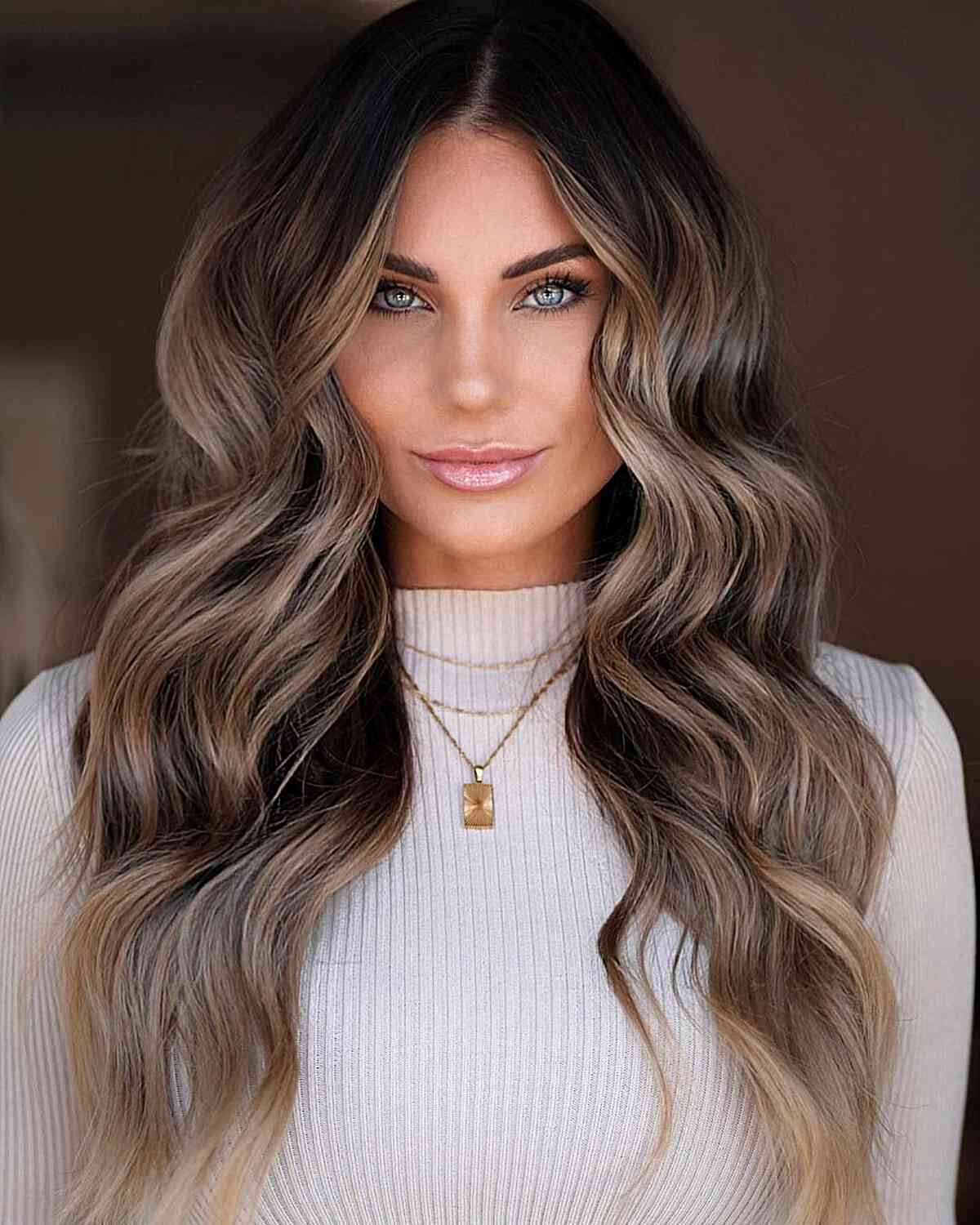
A dark brown base climbing into blonde balayage creates a deliberate gradient that looks sun-worked rather than salon-planned. Long, layered waves show off the shift from deep roots to lighter ends. Thick, wavy hair that is genuinely long makes this transition look natural. The catch: if you have fine hair, the dark base can look heavy and the blonde ends may feel sparse. Balayage allows a soft grow-out, so root touch-ups stretch to ten or twelve weeks. Ask your colorist for: dark brown base, blonde balayage, long layers.
Bronde base with subtle dimensional highlights
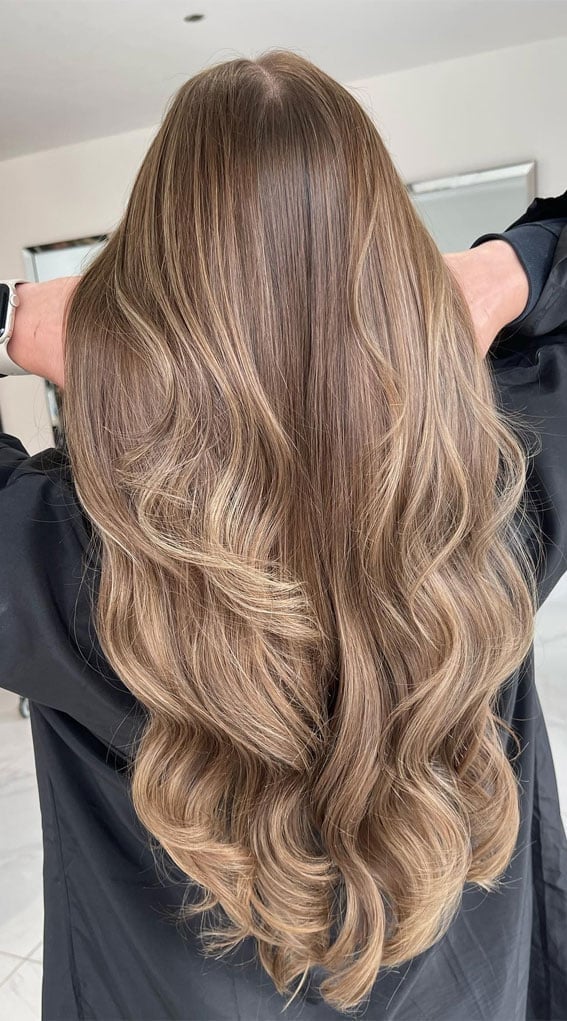
Soft, voluminous waves rely on a bronde base with subtle, blended highlights that land closer to the natural regrowth shade. The result is a lived-in texture that does not demand a fresh gloss every six weeks. Thick, wavy hair that reaches at least collarbone length carries this finish best. Pass when you prefer high-contrast color. Soft waves take about fifteen minutes with a curling wand.
Toffee balayage on brown and blonde blend
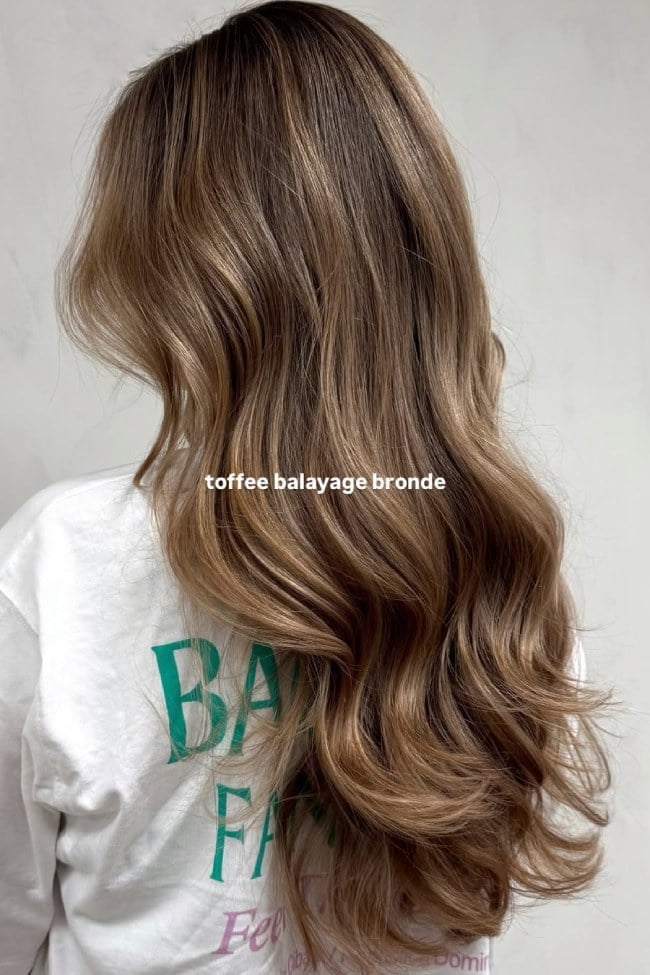
Toffee reads richer and less golden than warm honey balayage, with a brown undertone that anchors the blend. The middle parting and waves let the toffee streaks fall forward. Thick, wavy hair that is at least collarbone length holds the distinction well. Cool, ash-based highlights are a different look. Toffee balayage needs a refresh every ten to twelve weeks, and waves take about fifteen minutes to style. Ask your colorist for: bronde blend, toffee balayage, waves.
Dark brown base with caramel highlights and balayage, close-up take
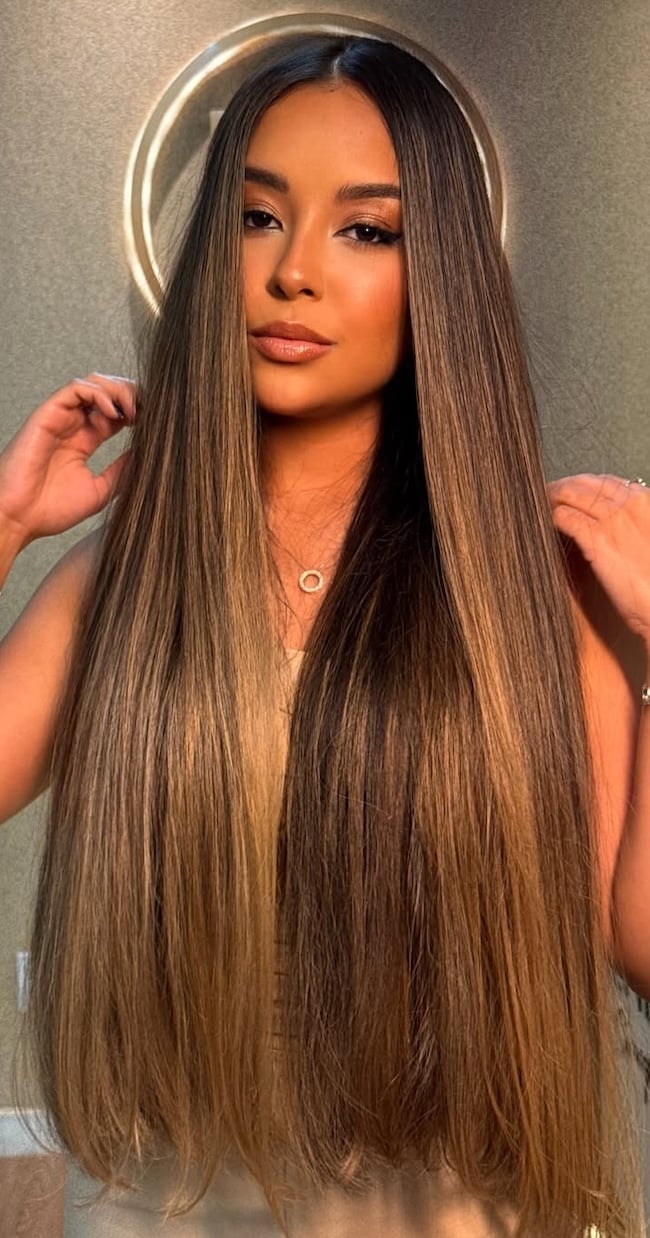
Fine, straight texture shows every color line. Which is exactly why this combination works. The dark brown base stays visible at the roots while caramel highlights and balayage soften the mid-lengths and ends. Long layers keep the smooth blowout from looking heavy. The middle part lets the color read evenly from both sides.
Not for you if you prefer waves or have very thick hair, the straight finish demands precise blending. Twenty minutes with a round brush and heat protectant and you are out the door.
Balayage creates a natural lighter effect
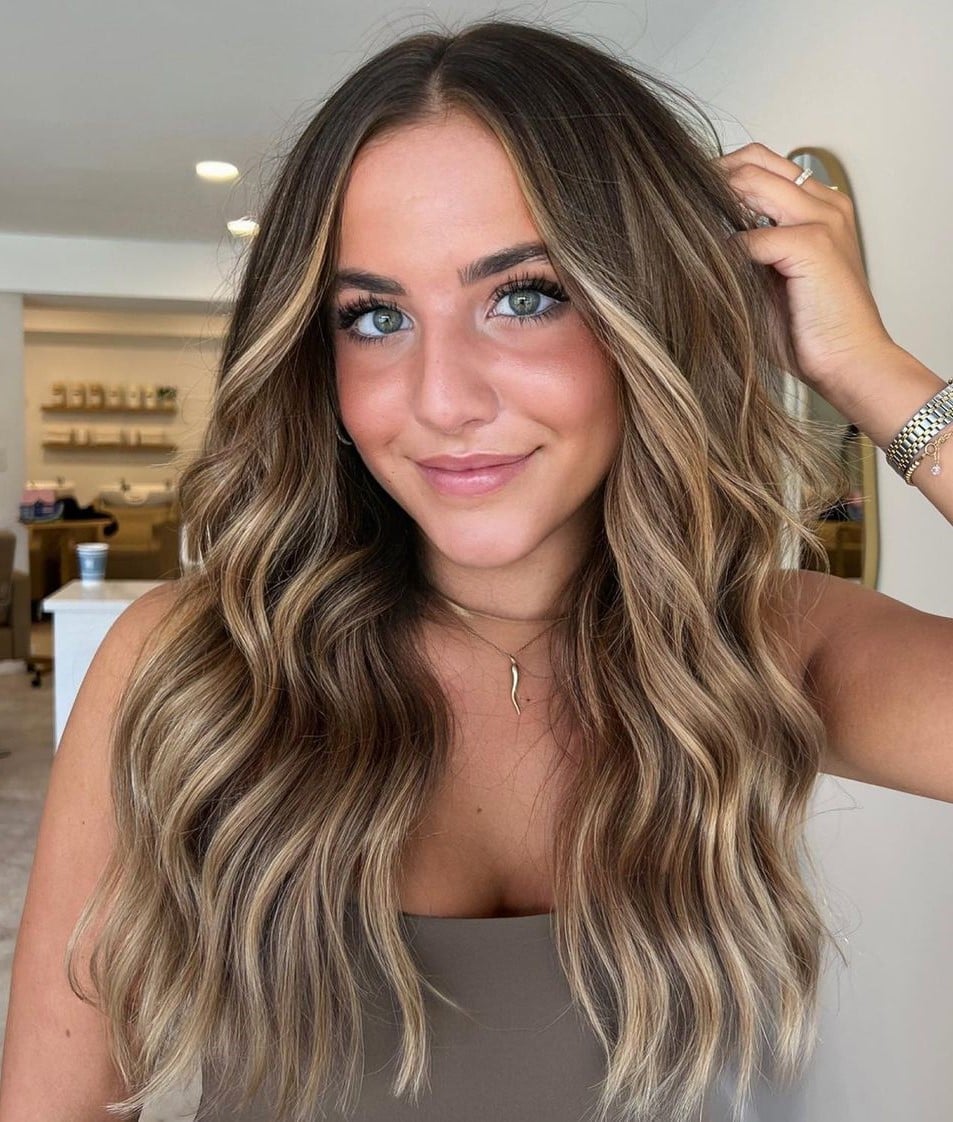
Compared to a full foil set, this approach lands softer and lower on maintenance. The blend of brown and blonde tones uses a balayage technique that paints the color onto the surface, so regrowth looks shadow rather than root line. Soft wavy styling spreads the lighter pieces across the surface. Ask your colorist for: bronde blend, balayage technique, soft waves. Fine wavy hair at collarbone length or longer carries the look best. Pass when you prefer bold, chunky highlights. This one stays subtle by design.
Face-framing layers and curtain bangs with bronde highlights
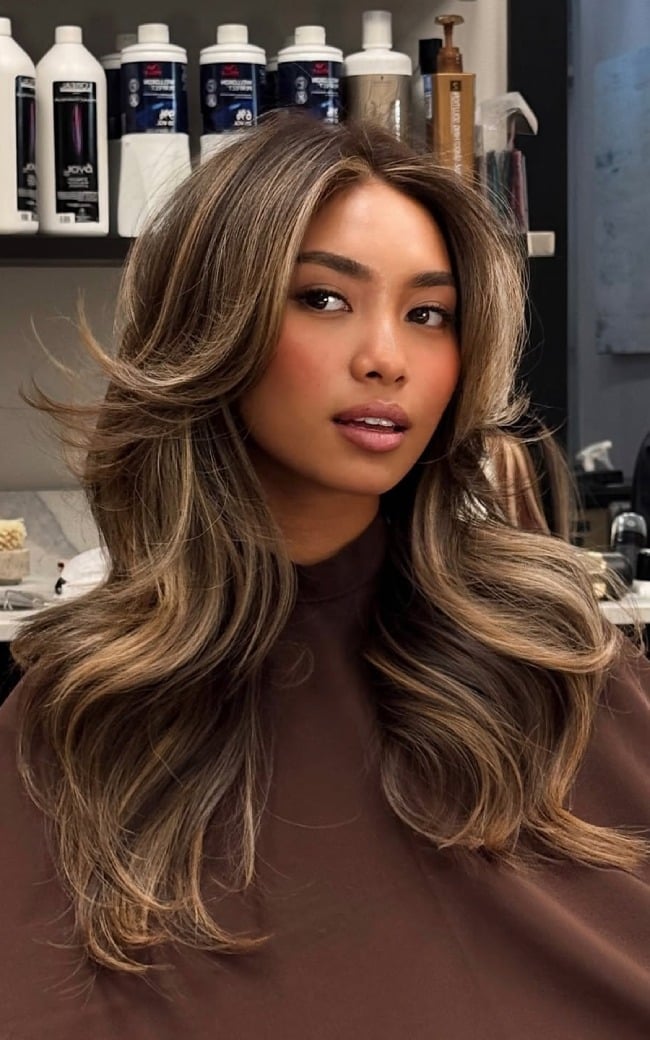
Curtain bangs and face-framing layers share a job: they pull the lighter pieces forward where they catch the eye. The blend of brown and blonde tones gets subtle highlights throughout, so the color shifts as the hair moves. A voluminous blowout with soft waves gives the layers something to land on. Thick wavy hair holds the shape without extra product. The catch: curtain bangs need a round brush and a cool shot every morning.
Golden highlights on rich bronde base appear wavy
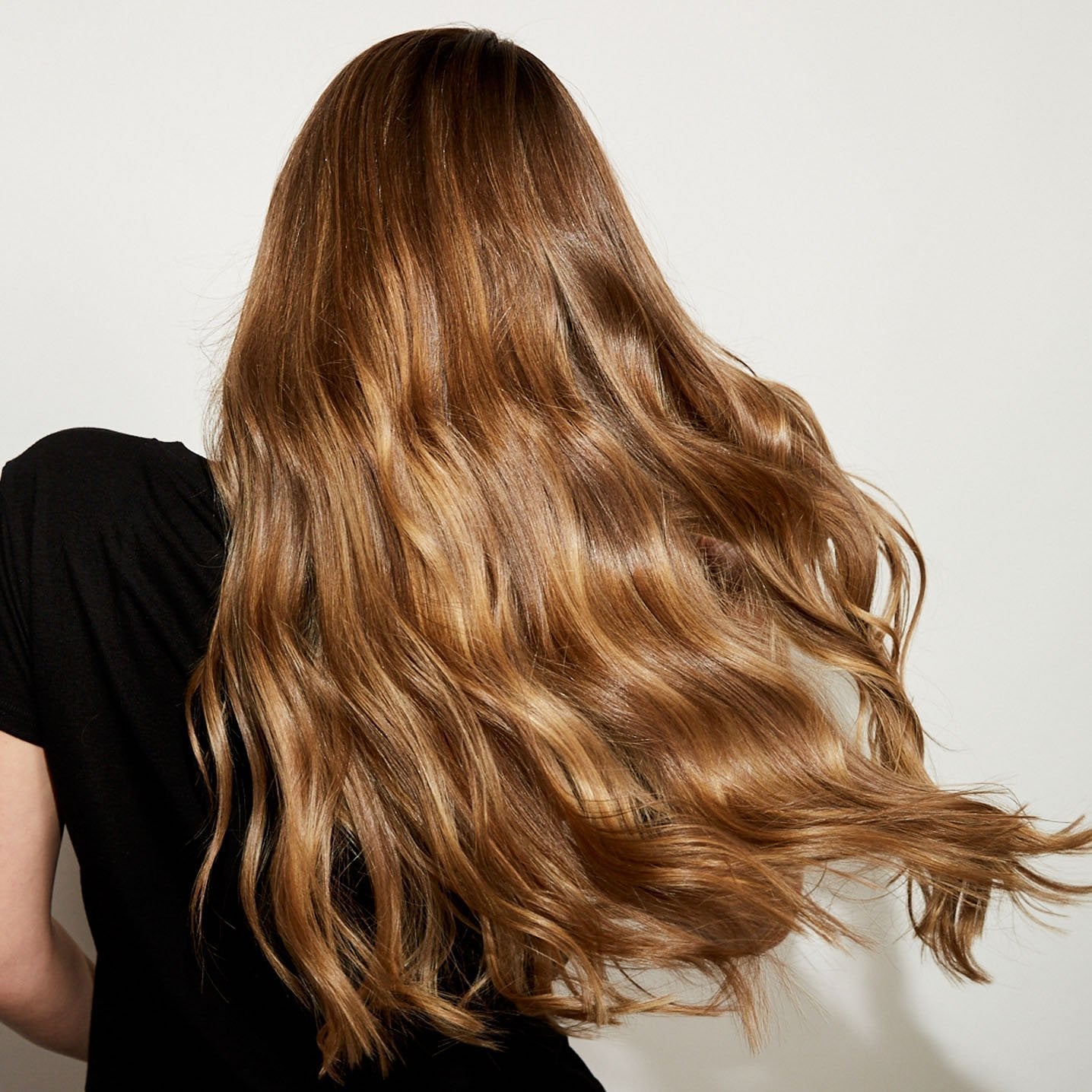
Golden highlights read warm without tipping into brassy. That is the trade-off. The rich bronde base keeps the overall tone grounded while the lighter pieces add surface interest. Soft layers and a wavy blowout let the gold show at different angles. Ask your colorist for: rich bronde base, golden highlights, soft layers. Thick wavy hair at collarbone length gives the waves enough weight to fall smoothly.
One real drawback: golden tones fade faster than neutral or ash shades. A purple shampoo used once a week extends the life, but expect a toning visit around week six. This one leans decidedly warm.
Dark brown base with caramel highlights and waves, office-safe version
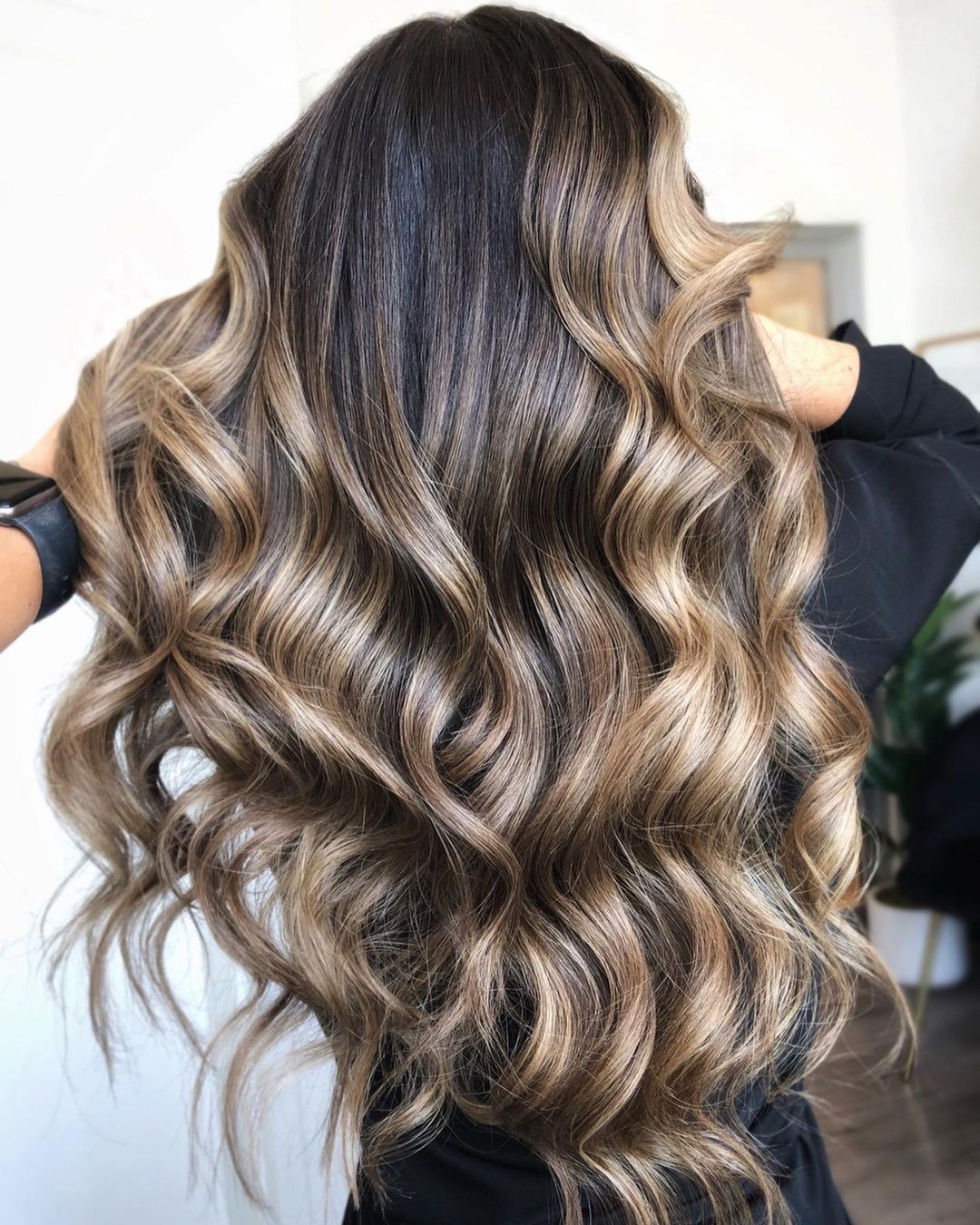
Two tones that sit close enough to avoid a stripe effect. The dark brown base stays rich at the roots while caramel highlights weave through the mid-lengths and ends. Thick wavy texture handles the subtle blending without looking muddy. The middle part and salon-leaning finish keep it professional. Not for anyone who wants a lighter all-over shade. The base stays firmly dark, and the caramel looks accent, not overall color.
Dark brown base with caramel balayage, wavy
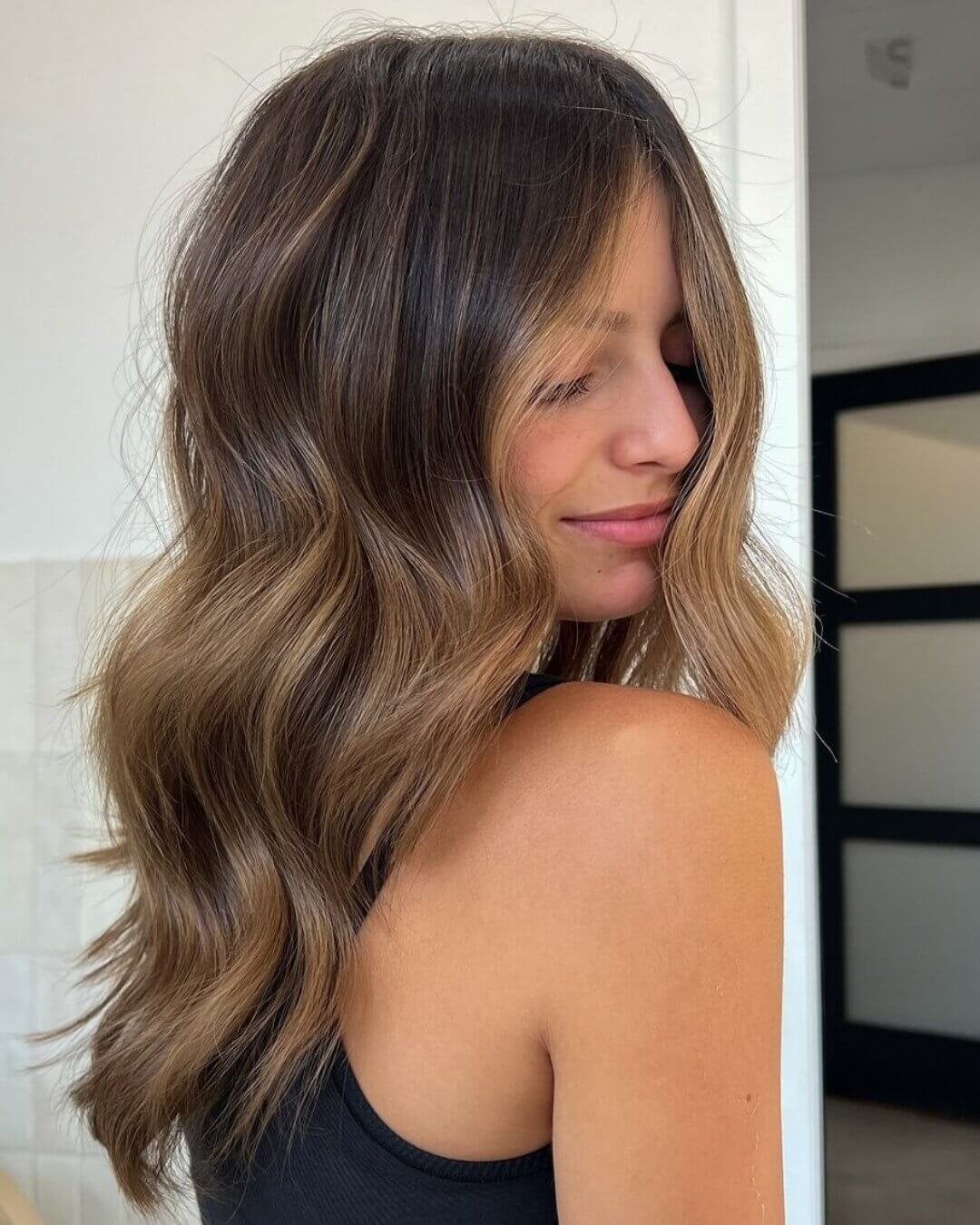
A dark brown base keeps the depth, while caramel balayage lifts the ends and mid-lengths in a graduated sweep. This creates a softer root line and less overall contrast than a full highlight. Fine, wavy texture picks up the warmth of the caramel. Ask your colorist for: dark brown base, caramel balayage. Layers in the cut help the waves fall open instead of stacking at one point. A middle part works here because the balayage is concentrated on the surface, not the part line.
Lighter blonde highlights on rich brown base, wavy
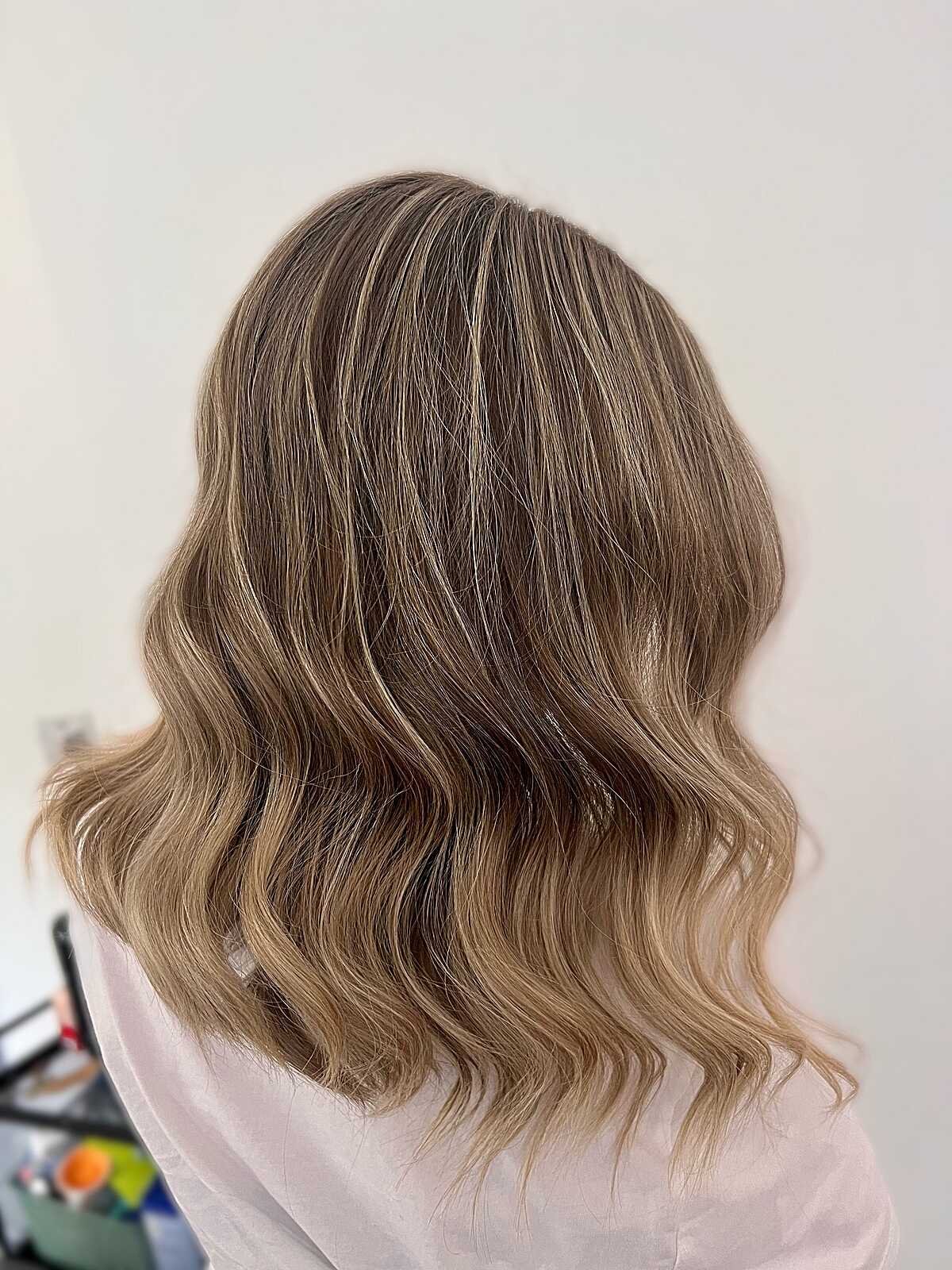
You need a thick, wavy texture to let lighter blonde highlights look natural rather than painted on. The rule: highlights should land where the sun hits first, the top surface and the outer curve of each wave. A rich brown base anchors the lighter pieces so the overall effect stays bronde, not blonde. Subtle layers break up the weight so the waves stack with volume, not bulk.
Pass when your hair is fine or sparse; the contrast between the dark base and the lighter pieces can look stark without enough density to blend them. Loose waves are the default styling here. They show the placement without making it look deliberate.
Easy air-dried appearance with lighter highlights
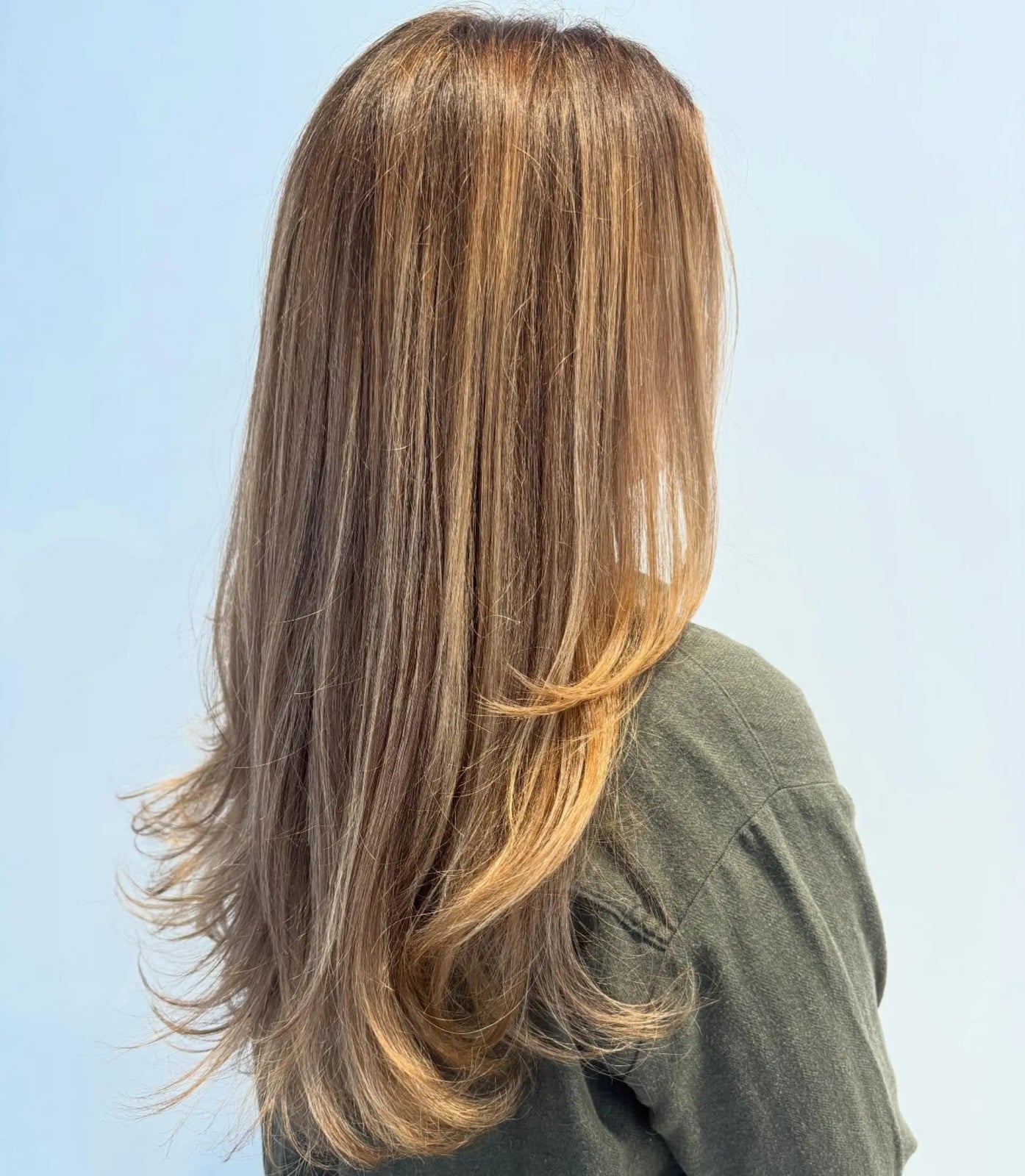
Air-dried texture depends on the cut holding its shape without heat, and this design banks on that fact. The blend of brown and blonde runs through layered sections, with lighter highlights concentrated on the surface pieces that catch light first. Fine, wavy hair responds to air drying by forming soft bends without frizz. It suits those who want a low-heat routine, but a neat blowout or very straight hair that falls flat without a curling iron is a different effect. Tell your colorist: bronde blend, lighter highlights, air-dried finish. A texturizing spray after washing encourages the waves to separate.
Final Thoughts
Choose the bronde that fits your routine, not the one that fits a photo.
- Fine hair: pick a lighter blend to add depth.
- Ten minutes in the morning: go for a shadow-rooted balayage.
- Cool base that pulls brassy: book toning every six weeks.
- Thick or curly hair: ask for layers to keep shape.
Find the bronde that suits your lifestyle and hair type.